
Solana's Unique Features: What Sets It Apart from Other Layer1 Blockchains


Welcome to Blockchain Trends, your gateway to understanding the evolving landscape of decentralized technologies. Dive deep into the transformative potential of blockchain, far beyond just cryptocurrencies.
Curious about what makes Solana stand out in the crowded field of layer1 blockchains? Explore the unique features that differentiate Solana and discover why it's becoming a key player in the future of decentralized systems. Let's unravel the innovations that are shaping the next generation of blockchain technology.
Solana's Unique Features: What Sets It Apart from Other Layer1 Blockchains
- Introduction to Solana and Layer1 Blockchain Technology
-
Solana's Core Innovations: Deep Dive into Key Features
- Proof of History (PoH): A Novel Consensus Mechanism
- Turbine: Solana's Block Propagation Protocol
- Gulf Stream: Mempool-less Forwarding Protocol
- Sealevel: Parallel Transaction Processing Engine
- Pipelining: Transaction Processing Unit
- Cloudbreak: Horizontally Scaled Accounts Database
- Archivers: Distributed Ledger Storage
- Solana vs. Ethereum: A Comparative Analysis of Layer1 Features
- Real-World Applications and Use Cases Leveraging Solana's Features
- The Future of Solana and Layer1 Blockchain Development
- Conclusion: Why Solana's Layer1 Blockchain Features Matter
-
Frequently Asked Questions
- How does Solana achieve its high transaction speeds compared to other Layer1 blockchains?
- What are some of the key features that differentiate Solana from other Layer1 blockchains?
- How does Solana address the scalability challenges often faced by Layer1 blockchains?
- What are some potential applications of Solana beyond just cryptocurrencies and DeFi?
- What are some of the risks and challenges associated with using Solana as a Layer1 blockchain?
- Final Reflection: Embracing Solana's Innovative Spirit
Introduction to Solana and Layer1 Blockchain Technology
Understanding Layer1 Blockchains and Their Role
Layer1 blockchains form the foundational layer of the decentralized web. These are the base protocols, like Bitcoin, Ethereum, and Solana, that are responsible for handling core functions such as transaction processing, consensus mechanisms, and data availability. They establish the fundamental rules and infrastructure upon which decentralized applications (dApps) and other blockchain-based services are built. Think of them as the operating systems of the blockchain world.
Layer1 blockchains are crucial because their performance and capabilities directly influence the scalability, security, and overall functionality of the entire ecosystem built upon them. Challenges faced by Layer1s, such as network congestion and high transaction fees, can significantly hinder the user experience and limit the widespread adoption of blockchain technology. Therefore, innovation at the Layer1 level is paramount for unlocking the full potential of decentralized systems and enabling them to handle real-world demands.
Layer1 blockchains aim to provide a secure and decentralized environment for transactions and applications. They typically employ various consensus mechanisms to validate transactions and maintain the integrity of the ledger. Early blockchains like Bitcoin demonstrated the feasibility of decentralized currencies but faced limitations in scalability.
As the demand for blockchain applications grew, it became evident that improving the throughput and efficiency of Layer1 blockchains was crucial. This led to the development of new Layer1 protocols that sought to address these limitations by introducing novel architectural designs and consensus mechanisms. The evolution of Layer1 blockchains is driven by the need to create platforms that can support a high volume of transactions, offer faster confirmation times, and maintain low transaction fees, all while preserving decentralization and security.
Why Solana Stands Out in the Layer1 Landscape
Solana has emerged as a prominent Layer1 blockchain, distinguished by its focus on delivering exceptional speed and throughput without compromising on security or decentralization. Unlike many other Layer1 solutions that rely on Layer2 scaling solutions to handle increased transaction volume, Solana is designed to be scalable at its base layer. This is achieved through a combination of unique technological innovations that work in concert to optimize transaction processing and network efficiency. These innovations address key bottlenecks typically encountered in blockchain networks, allowing Solana to achieve significantly higher transaction speeds and lower fees compared to many of its Layer1 counterparts.
What truly sets Solana apart is its architecture, which is built from the ground up with performance in mind. It incorporates a suite of groundbreaking technologies, including Proof of History (PoH), Turbine, Gulf Stream, Sealevel, Pipelining, Cloudbreak, and Archivers.
Each of these components plays a critical role in enhancing Solana's capabilities, contributing to its ability to process thousands of transactions per second with near-instant finality and minimal transaction costs. This focus on performance makes Solana particularly attractive for applications that demand high throughput and low latency, such as decentralized finance (DeFi), non-fungible tokens (NFTs), and online gaming, positioning it as a leading platform for the next generation of blockchain applications.
Solana's Core Innovations: Deep Dive into Key Features
Proof of History (PoH): A Novel Consensus Mechanism
Proof of History (PoH) is a groundbreaking consensus mechanism that is central to Solana's high-performance capabilities. Unlike traditional consensus mechanisms that rely on nodes communicating and agreeing on transaction order in real-time, PoH introduces a cryptographic clock that provides a verifiable record of time. This is achieved through a sequential hashing verifiable delay function (VDF). In essence, PoH creates a historical record that proves that an event occurred before another event. This timestamped record allows nodes to agree on transaction order without needing to communicate with each other for every transaction, significantly reducing consensus overhead and increasing network efficiency.
The core of PoH involves continuous hashing. A designated leader node sequentially hashes a piece of data, and this hashing process becomes the clock. Each hash is recorded, and it's cryptographically verifiable that a certain amount of time has passed between each hash. When transactions are added to this sequence, they are timestamped according to their position in the hash chain.
This creates a universally verifiable order of events, effectively eliminating the need for validators to spend time agreeing on transaction order. PoH does not replace the traditional Proof-of-Stake (PoS) consensus mechanism entirely in Solana; instead, it works in conjunction with Tower BFT, Solana's implementation of PoS, to enhance its efficiency. PoH pre-establishes order, and Tower BFT is then used to vote on the validity of these pre-ordered blocks.
How PoH Improves Transaction Speed and Efficiency
PoH drastically improves transaction speed and efficiency by reducing the time validators spend on consensus. In traditional blockchains without PoH, a significant portion of network latency is due to nodes needing to communicate and reach agreement on the order of transactions. This constant communication adds overhead and slows down the block creation process. PoH minimizes this overhead by pre-establishing a reliable and verifiable transaction order. Validators can efficiently verify the order of events by checking the PoH chain, rather than engaging in extensive back-and-forth communication.
By using PoH, Solana can achieve significantly faster block times. While blockchains like Ethereum have block times in the range of 13-15 seconds, Solana boasts block times as low as 400 milliseconds. This translates directly to faster transaction confirmation times for users.
Furthermore, the efficiency gains from PoH contribute to Solana's ability to handle a much higher throughput of transactions. By reducing consensus overhead, the network can dedicate more resources to processing actual transactions, resulting in a substantial increase in transactions per second (TPS). Estimates suggest Solana can theoretically achieve tens of thousands of TPS, far exceeding the capabilities of many other Layer1 blockchains.
Comparing PoH to Traditional Proof-of-Stake (PoS)
While both Proof-of-History (PoH) and Proof-of-Stake (PoS) are consensus mechanisms, they address different aspects of blockchain operation and have distinct characteristics. Traditional PoS relies on validators staking cryptocurrency to participate in block production. Validators are chosen to create new blocks based on the amount of stake they hold, and they earn rewards for validating transactions. PoS is known for its energy efficiency compared to Proof-of-Work (PoW), but it still requires validators to communicate and agree on block order, which can become a bottleneck as network demands increase.
PoH, on the other hand, is not a standalone consensus mechanism for block production but rather an innovation that enhances the efficiency of consensus. In Solana, PoH works in tandem with Tower BFT, a PoS variant. PoH provides a historical record of transaction order, while Tower BFT handles block validation and network security. The key difference lies in how transaction ordering is handled.
PoS systems typically rely on message passing between validators to agree on order, which can be time-consuming. PoH pre-establishes order cryptographically, significantly reducing the communication overhead. This allows Solana to achieve much faster consensus and higher throughput compared to pure PoS systems. However, PoS systems are generally well-understood and have been rigorously tested over time, while PoH is a relatively newer and more complex mechanism.
Turbine: Solana's Block Propagation Protocol
Turbine is Solana's block propagation protocol, designed to optimize the distribution of blocks across the network. In a blockchain network, after a block is created, it needs to be propagated to all other nodes in the network so they can update their ledgers. Traditional block propagation methods can become a bottleneck in high-throughput blockchains, especially as block sizes increase. Turbine addresses this challenge by dividing blocks into smaller packets and propagating these packets separately through a tiered network structure. This packetization and tiered propagation significantly reduce the bandwidth requirements for each node and accelerate the block propagation process.
Turbine leverages a User Datagram Protocol (UDP)-based protocol optimized for streaming data. When a validator produces a new block, Turbine breaks it down into up to 64,000 packets. These packets are then distributed to different validators in the network in a tiered fashion.
Instead of each validator needing to download the entire block from the block producer, they receive smaller packets from multiple peers. This process is similar to BitTorrent, where data is downloaded in pieces from multiple sources simultaneously. By parallelizing block propagation and reducing the size of data each node needs to handle at once, Turbine significantly improves network efficiency and reduces latency in block distribution.
Optimizing Block Distribution for Scalability
Turbine is crucial for Solana's scalability because it ensures that block propagation does not become a bottleneck as the network grows and transaction volume increases. In a blockchain with high transaction throughput, blocks can become larger, which can strain network bandwidth and slow down propagation times if using traditional methods. Turbine's packetization and tiered propagation method effectively mitigate this issue. By dividing blocks into smaller, manageable packets, Turbine reduces the bandwidth burden on individual nodes. This allows nodes with varying network capacities to participate effectively in the network.
The tiered propagation structure of Turbine further enhances scalability by distributing the load of block propagation across the network. Each validator only needs to forward a small subset of packets to a limited number of peers. This dramatically reduces the overall network congestion and speeds up the dissemination of blocks to all nodes. This efficient block propagation is essential for maintaining Solana's high transaction processing speeds as the network scales and the number of validators and transactions grows. Without an optimized block propagation protocol like Turbine, achieving Solana's targeted throughput would be significantly more challenging.
Gulf Stream: Mempool-less Forwarding Protocol
Gulf Stream is Solana's mempool-less transaction forwarding protocol, designed to reduce transaction confirmation times and network congestion. In many blockchains, transactions are first submitted to a mempool (memory pool), where they wait to be included in a block. This mempool can become congested during periods of high network activity, leading to delays in transaction processing and increased confirmation times. Gulf Stream eliminates the traditional mempool by forwarding transactions directly to validators even before the previous block is finalized. This proactive transaction forwarding significantly reduces confirmation times and improves overall network efficiency.
With Gulf Stream, each validator knows the order of upcoming leaders (validators who will produce the next blocks). Clients, when submitting transactions, can forward them directly to the expected leader validators, bypassing the need for a mempool. Validators can then begin executing transactions even before they are officially included in a block. This pre-execution and early forwarding of transactions dramatically reduces the time it takes for transactions to be confirmed. By eliminating the waiting time in the mempool and streamlining the transaction processing pipeline, Gulf Stream contributes significantly to Solana's low latency and high throughput.
Reducing Confirmation Times with Gulf Stream
Gulf Stream is a key innovation in Solana's architecture that directly contributes to its exceptionally fast transaction confirmation times. Traditional mempool-based systems introduce delays as transactions wait in the mempool, are selected for inclusion in a block, and then are processed. Gulf Stream bypasses this waiting period by allowing transactions to be forwarded and pre-processed by validators in anticipation of block creation. This results in near-instant transaction confirmations, often within seconds.
The reduced confirmation times provided by Gulf Stream enhance the user experience significantly, particularly for applications that require rapid transaction finality, such as trading platforms and payment systems. In DeFi applications, for instance, faster confirmation times can minimize slippage in trades and enable more efficient arbitrage opportunities. Similarly, in payment systems, near-instant confirmations improve the speed and usability of transactions. Gulf Stream is a critical component of Solana's architecture that enables it to deliver a user experience comparable to centralized systems in terms of speed and responsiveness, while maintaining the benefits of decentralization.
Sealevel: Parallel Transaction Processing Engine
Sealevel is Solana's parallel transaction processing engine, enabling the network to process thousands of transactions concurrently. Most blockchains process transactions sequentially, meaning one transaction must be fully processed before the next one can begin. This sequential processing limits the overall throughput of the network. Sealevel overcomes this limitation by allowing transactions to be processed in parallel. It achieves this by allowing transactions to specify which accounts they will read from or write to. This information enables Sealevel to identify non-overlapping transactions that can be executed simultaneously, significantly increasing transaction throughput.
Sealevel operates at the smart contract level, allowing developers to specify dependencies between transactions. By analyzing these dependencies, Sealevel can determine which transactions can be processed in parallel without causing conflicts or inconsistencies in the blockchain state. This parallel execution capability is a crucial factor in Solana's ability to achieve high throughput. Sealevel is not a general-purpose parallel processing solution applicable to all blockchains, but it is specifically designed to work with Solana's account model and transaction structure.
Achieving High Throughput with Parallelization
The parallel transaction processing enabled by Sealevel is a major contributor to Solana's high throughput. By processing transactions concurrently, Sealevel dramatically increases the number of transactions the network can handle in a given timeframe. Instead of being limited by sequential processing, Solana can leverage the multi-core processing capabilities of modern hardware to execute many transactions at the same time. This parallelization is essential for handling the demands of applications that require high transaction volume, such as decentralized exchanges, high-frequency trading platforms, and blockchain-based games with numerous concurrent users.
The impact of Sealevel on throughput is substantial. While sequentially processing blockchains might be limited to hundreds or even tens of transactions per second, Sealevel allows Solana to theoretically achieve tens of thousands of transactions per second. This order-of-magnitude increase in throughput unlocks new possibilities for blockchain applications that were previously impractical due to scalability limitations. Sealevel’s parallel processing engine is a core innovation that positions Solana as a leading platform for high-performance decentralized applications.
Pipelining: Transaction Processing Unit
Pipelining in Solana refers to a Transaction Processing Unit (TPU) optimization that streamlines the process of transaction execution. Similar to pipelining in CPU design, Solana's pipelining breaks down the transaction processing workflow into a series of stages and overlaps the execution of these stages for different transactions. This approach allows for more efficient utilization of processing resources and increases the overall throughput of the transaction processing pipeline. The stages in Solana's transaction processing pipeline include data fetching, signature verification, banking (transaction execution), and writing to memory.
In a pipelined system, while one transaction is undergoing signature verification, the next transaction can already be fetching data, and the transaction before that can be undergoing banking. This overlapping of stages significantly improves efficiency compared to processing each transaction through all stages sequentially. Solana's TPU is responsible for orchestrating this pipelined transaction processing, ensuring that transactions are processed in an efficient and optimized manner. Pipelining, combined with other Solana innovations, contributes to the network's overall speed and throughput.
Optimizing Transaction Execution
Pipelining optimizes transaction execution by eliminating idle time in the transaction processing pipeline. In a non-pipelined system, processing resources might be idle while waiting for a particular stage of transaction processing to complete. Pipelining ensures that different stages of the pipeline are constantly busy, processing different transactions concurrently. This continuous flow of transactions through the pipeline maximizes resource utilization and minimizes processing latency.
The benefits of pipelining are most pronounced in high-throughput environments like Solana, where a large volume of transactions needs to be processed continuously. By optimizing the utilization of processing resources, pipelining helps Solana maintain its high transaction processing speeds even under heavy network load. This optimization is crucial for ensuring consistent performance and responsiveness as the Solana network grows and transaction volume increases. Pipelining is a key architectural element that contributes to Solana's ability to handle a large number of transactions efficiently.
Cloudbreak: Horizontally Scaled Accounts Database
Cloudbreak is Solana's horizontally scaled accounts database, designed to address the storage challenges inherent in a rapidly growing blockchain. As a blockchain processes more transactions and its state grows, the size of the accounts database increases significantly. Traditional database architectures might struggle to handle the storage and access demands of such a large and constantly evolving dataset. Cloudbreak is engineered to scale horizontally, allowing Solana to handle the increasing storage requirements of its growing state efficiently and cost-effectively.
Cloudbreak is designed as a distributed ledger storage system that can be scaled by adding more storage nodes. It is optimized for concurrent reads and writes, which are essential for Solana's high-throughput transaction processing. The architecture of Cloudbreak allows for efficient retrieval of account data and ensures that storage does not become a bottleneck as the blockchain's state expands. By horizontally scaling the accounts database, Cloudbreak ensures that Solana can maintain its performance even with a massive and growing amount of data stored on the blockchain.
Addressing Storage Challenges on a Growing Blockchain
Cloudbreak directly addresses the storage challenges that arise as a blockchain like Solana experiences growth in transaction volume and state size. Traditional blockchain architectures might face limitations in terms of database scalability, potentially leading to performance degradation or increased storage costs as the blockchain grows. Cloudbreak's horizontal scaling capability allows Solana to overcome these limitations. By distributing the storage load across multiple nodes, Cloudbreak prevents any single node from becoming overwhelmed by the increasing data volume.
The design of Cloudbreak also focuses on optimizing data access patterns for blockchain operations. It is engineered to handle the high volume of read and write operations generated by Solana's high transaction throughput. This ensures that accessing account data remains fast and efficient even as the database scales. Cloudbreak is a critical infrastructure component that enables Solana to sustain its high performance and scalability over the long term, accommodating the continuous growth of the blockchain's state.
Archivers: Distributed Ledger Storage
Archivers are nodes in the Solana network responsible for distributed ledger storage. While validators in Solana need to maintain the current state of the blockchain to participate in consensus and transaction processing, Archivers provide a long-term, cost-effective solution for storing the complete historical ledger data. Archivers offload the burden of storing the entire blockchain history from validators, reducing the hardware requirements and operational costs for validators, and further contributing to network decentralization by allowing a wider range of participants to become validators.
Archivers are designed to store historical ledger data in a distributed and redundant manner. They do not participate in consensus or transaction processing but serve as a reliable and accessible archive of the blockchain's entire history. This separation of concerns between validators and archivers allows validators to focus on maintaining the current state and processing new transactions efficiently, while archivers ensure the long-term availability and integrity of the complete ledger. The use of Archivers makes data retention on Solana more cost-effective and scalable.
Enabling cost-effective data retention
Archivers enable cost-effective data retention by providing a dedicated and optimized solution for long-term ledger storage. Requiring validators to store the entire blockchain history would significantly increase their storage costs and hardware requirements, potentially hindering decentralization and increasing the barrier to entry for becoming a validator. Archivers alleviate this burden by providing a separate layer for historical data storage. This allows validators to operate with more manageable storage requirements and reduced operational expenses.
By distributing ledger storage across a network of Archiver nodes, Solana ensures the redundancy and long-term availability of historical data. This distributed approach enhances data security and resilience. Furthermore, Archivers can utilize more cost-effective storage solutions compared to the high-performance storage required by validators for current state data. This combination of distributed storage and cost-optimized hardware makes Archivers a crucial component for ensuring the long-term sustainability and scalability of Solana's data storage infrastructure.
Solana vs. Ethereum: A Comparative Analysis of Layer1 Features
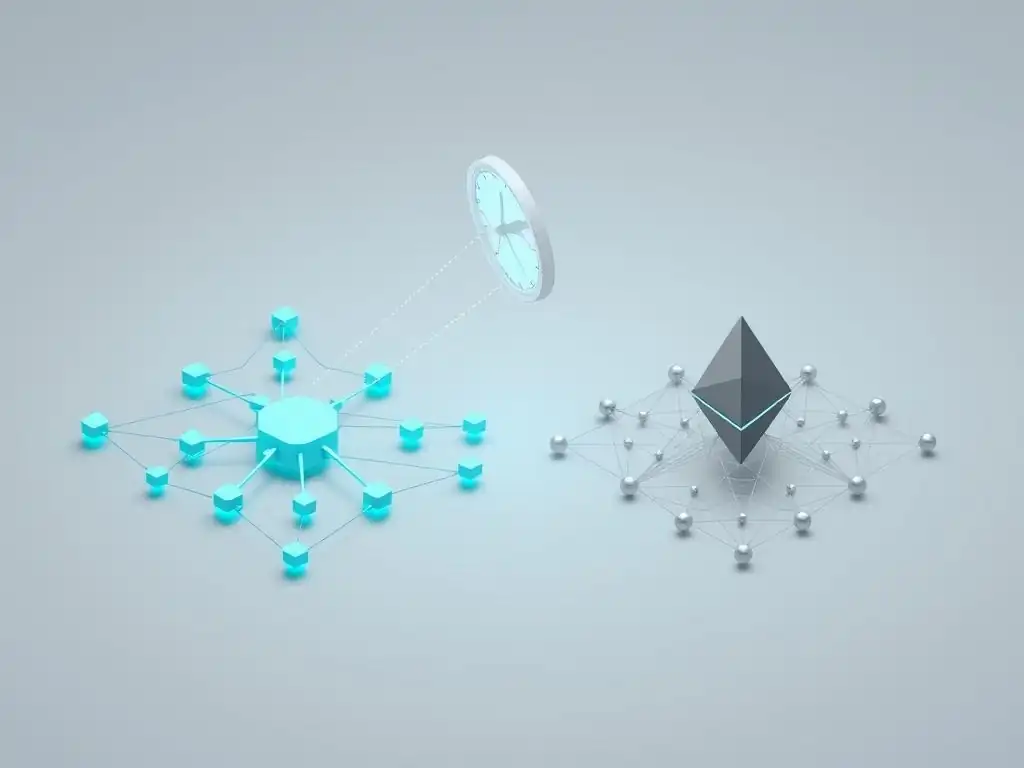
Transaction Speed and Throughput: Solana's Edge
When comparing Solana and Ethereum in terms of transaction speed and throughput, Solana exhibits a clear advantage. Solana is designed for high performance from its base layer, leveraging its unique architectural innovations to achieve significantly faster transaction speeds and higher throughput. Estimates indicate that Solana can handle thousands of transactions per second (TPS), potentially reaching upwards of 50,000 TPS in ideal conditions. In contrast, Ethereum's current Layer1, even after the Merge, is capable of processing around 15-30 TPS. This difference in throughput is substantial and reflects the fundamental architectural differences between the two blockchains.
Ethereum is actively working on scaling solutions, primarily through Layer2 technologies like rollups and sharding. These solutions aim to increase Ethereum's throughput without fundamentally altering its Layer1 architecture. However, even with Layer2 solutions, achieving the native throughput capabilities of Solana remains a significant challenge for Ethereum in the near term. Solana's higher TPS translates to faster transaction confirmation times and the ability to handle applications with high transaction volume more effectively. This speed advantage is a key differentiator for Solana, particularly for use cases requiring rapid transaction finality and scalability.
Scalability Solutions: Solana's Native Approach vs. Ethereum's Layer2
Solana and Ethereum approach scalability from different perspectives. Solana adopts a native Layer1 scaling approach, integrating innovations directly into its base protocol to achieve high throughput and low latency. This approach aims to provide scalability directly at the foundational level of the blockchain, minimizing the need for external scaling solutions. Solana's suite of technologies, including PoH, Turbine, Sealevel, and others, are all designed to enhance its Layer1 scalability.
Ethereum, on the other hand, is primarily focusing on Layer2 scaling solutions to address its scalability challenges. Layer2 solutions, such as rollups and sidechains, operate on top of the Ethereum Layer1 and process transactions off-chain before periodically settling them back on the main chain. This approach allows Ethereum to offload transaction processing to Layer2 networks, increasing overall throughput.
While Layer2 solutions offer a viable path to scalability for Ethereum, they introduce complexities related to bridging assets between layers, potential security considerations of Layer2 networks, and a slightly more fragmented user experience compared to Solana's integrated Layer1 approach. Both approaches have their trade-offs, with Solana prioritizing native Layer1 scalability and Ethereum focusing on a modular Layer2 scaling ecosystem.
Transaction Fees: A Cost Comparison
Transaction fees are another area where Solana demonstrates a significant advantage over Ethereum. Due to its high throughput and efficient architecture, Solana is able to maintain exceptionally low transaction fees, often fractions of a cent. This makes Solana highly attractive for users and applications that require frequent transactions, such as DeFi platforms, NFT marketplaces, and micro-payment systems. The low fee environment on Solana reduces the cost barrier for users and developers, facilitating broader participation and innovation within the ecosystem.
Ethereum, especially during periods of high network congestion, has experienced significantly higher transaction fees, sometimes reaching tens or even hundreds of dollars per transaction. While Ethereum's Layer2 solutions aim to reduce fees, the base Layer1 fees can still be substantial, particularly during peak demand. The high fee environment on Ethereum can be a barrier to entry for smaller users and can limit the feasibility of certain applications, especially those involving frequent and low-value transactions. Solana's consistently low transaction fees provide a more accessible and cost-effective platform for a wide range of blockchain use cases.
Decentralization and Security Considerations
While Solana excels in speed and cost-effectiveness, discussions around decentralization and security often arise in comparisons with Ethereum. Ethereum, as a more mature and established blockchain, benefits from a larger and more geographically distributed validator set, contributing to its robust decentralization. Ethereum's security model has also been extensively tested and proven over time. However, Ethereum's higher gas fees and slower speeds can sometimes impact user accessibility and experience.
Solana, in its pursuit of high performance, has made design choices that have led to some trade-offs in decentralization compared to Ethereum. For instance, Solana's hardware requirements for validators are higher, potentially limiting the accessibility of validator participation compared to Ethereum. Furthermore, Solana has experienced periods of network instability and outages in the past, raising some concerns about its network resilience and security.
However, Solana is continuously working on enhancing its network stability, increasing validator diversity, and strengthening its security model. Both Solana and Ethereum are evolving ecosystems, and the balance between performance, decentralization, and security remains a key area of focus for both platforms.
Real-World Applications and Use Cases Leveraging Solana's Features
DeFi Projects on Solana: Exploring High-Speed Trading and Lending
Solana's high speed and low transaction fees make it an ideal platform for Decentralized Finance (DeFi) projects, particularly those requiring high-frequency trading and efficient lending protocols. DeFi applications on Solana, such as Raydium and Serum, leverage Solana's speed to offer faster trading experiences and lower transaction costs compared to platforms built on slower blockchains. For example, decentralized exchanges (DEXs) on Solana can provide order book-based trading with near-centralized exchange speeds, enabling more sophisticated trading strategies and reducing slippage.
Lending and borrowing platforms on Solana also benefit from its speed and low fees. Faster transaction finality allows for quicker loan processing and more efficient collateral management. The low cost of transactions makes micro-lending and borrowing more feasible, opening up DeFi opportunities to a broader range of users. Solana's infrastructure supports the development of complex and high-throughput DeFi protocols that would be challenging to implement on slower and more expensive blockchains. The growth of the DeFi ecosystem on Solana demonstrates the practical advantages of its performance-oriented architecture.
NFT Marketplaces: Solana's Role in Low-Cost Minting and Trading
Non-Fungible Token (NFT) marketplaces on Solana have gained significant traction due to Solana's low transaction fees and fast transaction speeds, making NFT minting and trading more affordable and efficient. Platforms like Magic Eden have become popular NFT marketplaces on Solana, offering users a low-cost environment for buying, selling, and creating NFTs. The low gas fees on Solana are particularly beneficial for NFT creators, enabling them to mint NFTs at a fraction of the cost compared to platforms with higher fees.
The speed of Solana also enhances the NFT trading experience. Faster transaction confirmations lead to quicker NFT purchases and sales, improving user satisfaction and enabling smoother marketplace operations. The combination of low fees and high speed has attracted a vibrant NFT community to Solana, fostering innovation in digital art, collectibles, and other NFT use cases. Solana's infrastructure provides a compelling platform for the continued growth and evolution of the NFT space.
Gaming Applications: Solana's Potential for Scalable Blockchain Games
Solana's high throughput and low latency position it as a promising platform for scalable blockchain gaming applications. Blockchain games often require a high volume of transactions and fast response times to deliver a smooth and engaging user experience. Traditional blockchains with slower speeds and higher fees have struggled to support complex and interactive blockchain games. Solana's architecture, however, offers the potential to overcome these limitations.
The speed and low fees on Solana can enable the development of more complex and immersive blockchain games, including massively multiplayer online games (MMOGs) and real-time strategy games. The ability to process a large number of in-game transactions quickly and affordably opens up new possibilities for blockchain game mechanics and economies. While blockchain gaming on Solana is still in its early stages, the platform's technical capabilities make it a strong contender for the future of scalable and engaging blockchain-based gaming experiences.
Supply Chain Management: Enhancing Transparency and Efficiency
Beyond DeFi, NFTs, and gaming, Solana's features can also be applied to enhance transparency and efficiency in supply chain management. Blockchain technology, in general, offers the potential to improve supply chain traceability, authenticity verification, and overall efficiency. Solana's speed and low fees make it particularly well-suited for supply chain applications that require frequent data updates and high transaction volumes.
For example, tracking goods across a complex supply chain often involves numerous updates and data points. Solana's high throughput can handle the large volume of transactions associated with real-time supply chain tracking. The low transaction fees make it economically feasible to record every step of the supply chain process on the blockchain, enhancing transparency and accountability. Applications in areas like pharmaceutical supply chains, food traceability, and logistics can benefit from Solana's capabilities to improve efficiency, reduce fraud, and enhance trust in supply chain operations.
The Future of Solana and Layer1 Blockchain Development
Solana's Roadmap and Planned Upgrades
Solana is continuously evolving, with an active development roadmap focused on further enhancing its performance, stability, and features. Ongoing development efforts include optimizations to improve network resilience, reduce latency, and further increase throughput. Solana Labs and the Solana Foundation are actively working on upgrades to address past network congestion issues and enhance the overall robustness of the platform. Future upgrades may include further refinements to consensus mechanisms, network protocols, and virtual machine optimizations.
The Solana development community is also actively contributing to the ecosystem, building new tools, libraries, and infrastructure components. This continuous development and innovation are essential for Solana to maintain its competitive edge and address the evolving needs of the blockchain space. The roadmap reflects a commitment to ongoing improvement and a focus on solidifying Solana's position as a leading high-performance Layer1 blockchain.
The Growing Solana Ecosystem and Community
The Solana ecosystem is experiencing rapid growth, with a burgeoning community of developers, users, and projects building on the platform. The number of projects launching on Solana continues to increase across various sectors, including DeFi, NFTs, gaming, and infrastructure tools. The Solana Foundation and various ecosystem participants actively support developers through grants, educational resources, and community initiatives. This vibrant and expanding ecosystem is a testament to Solana's growing adoption and the increasing recognition of its technical capabilities.
The Solana community is known for its strong developer focus and its enthusiasm for pushing the boundaries of blockchain technology. The active and engaged community contributes to the ongoing growth and innovation within the Solana ecosystem. The increasing number of projects, developers, and users signals a positive trajectory for Solana's long-term growth and adoption.
Challenges and Opportunities for Solana's Continued Growth
While Solana has achieved significant advancements and experienced rapid growth, it also faces challenges and opportunities as it continues to evolve. One challenge is to maintain network stability and resilience as the ecosystem scales further. Past network congestion issues highlight the need for ongoing optimizations and improvements to ensure consistent network performance under high load. Another challenge is to continue to enhance decentralization and security while preserving its performance advantages.
However, Solana also has significant opportunities for continued growth. Its high performance and low fees position it well to capture a larger share of the blockchain market, particularly in sectors that demand high throughput and low latency. The growing ecosystem and active developer community provide a strong foundation for ongoing innovation and adoption. Solana's ability to address its challenges and capitalize on its opportunities will be crucial for its continued success and its role in shaping the future of the decentralized web.
Conclusion: Why Solana's Layer1 Blockchain Features Matter
Solana's Layer1 blockchain features collectively represent a significant leap forward in blockchain technology. Its unique combination of Proof of History, Turbine, Gulf Stream, Sealevel, and other innovations enables it to achieve unprecedented levels of speed and throughput compared to many other Layer1 blockchains. These features are not just theoretical advancements; they translate directly into real-world benefits, such as faster transaction confirmations, lower fees, and the ability to support a wider range of high-performance applications.
Solana's architectural focus on scalability at the Layer1 level distinguishes it from blockchains relying heavily on Layer2 solutions. This native scalability approach offers a streamlined and efficient platform for developers and users seeking high performance without the complexities of multi-layered architectures.
The real-world applications and use cases already emerging on Solana, from DeFi and NFTs to gaming and supply chain management, demonstrate the practical impact of its unique features. As Solana continues to evolve and its ecosystem expands, its Layer1 blockchain features will play a crucial role in shaping the future of decentralized systems and driving broader adoption of blockchain technology.
Frequently Asked Questions
How does Solana achieve its high transaction speeds compared to other Layer1 blockchains?
Solana utilizes a novel consensus mechanism called Proof of History (PoH) in conjunction with Proof of Stake (PoS). This allows for faster transaction processing by pre-ordering transactions, reducing the need for global consensus on transaction order.
What are some of the key features that differentiate Solana from other Layer1 blockchains?
Besides Proof of History, Solana boasts features like Tower Byzantine Fault Tolerance (BFT), Turbine block propagation protocol, and Sealevel parallel transaction processing. These features contribute to its high throughput and low latency.
How does Solana address the scalability challenges often faced by Layer1 blockchains?
Solana tackles scalability through its innovative architecture, enabling it to process thousands of transactions per second. Features like Gulf Stream transaction forwarding protocol further optimize network performance and scalability.
What are some potential applications of Solana beyond just cryptocurrencies and DeFi?
Solana's high speed and low cost make it suitable for applications like high-frequency trading, micro-payments, and real-time data streaming. These features position it well for enterprise adoption.
What are some of the risks and challenges associated with using Solana as a Layer1 blockchain?
Despite its advantages, Solana has faced some network stability issues and concerns regarding centralization tendencies. These are areas that require ongoing development and monitoring to ensure long-term viability.
Final Reflection: Embracing Solana's Innovative Spirit
The exploration of Solana's unique features underscores its disruptive potential in the blockchain landscape. While other Layer1 blockchains strive for scalability and efficiency, Solana's innovative approach, particularly its Proof of History consensus mechanism, positions it as a frontrunner in the race to build the future of decentralized applications. The current demand for faster, cheaper, and more scalable blockchain solutions makes understanding Solana's architecture more critical than ever.
The impact of Solana's technological advancements extends beyond mere transaction speeds; it's shaping the very possibilities of what can be built on a blockchain. Witnessing the growth of the Solana ecosystem, from DeFi protocols to NFT marketplaces, highlights the transformative power of its design. Innovation distinguishes between a leader and a follower.
- Steve Jobs. This quote resonates deeply with Solana's ambition to redefine the boundaries of blockchain technology and empower a new generation of developers and users.
As we conclude this exploration of Solana's defining characteristics, I invite you to consider the implications of its success. How can we, as individuals and as a community, leverage these advancements to build a more decentralized, accessible, and equitable future? Let us embrace the spirit of innovation that drives Solana and contribute to the evolution of blockchain technology, ensuring its benefits are shared by all.
Please provide the content of the article so I can craft an effective Call to Action that aligns with its theme. Once I have the article, I will create a tailored CTA for you.
Leave a Reply