
Decentralized Storage for DApp FrontEnds: IPFS and Beyond


Welcome to Blockchain Trends, your guide to the ever-evolving world of decentralized technology!
Are you ready to unlock the potential of truly decentralized applications? This article dives deep into the fascinating realm of IPFS decentralized storage DApps, exploring how they're revolutionizing frontend development and offering a glimpse into a future beyond centralized servers. Discover how these innovative solutions are reshaping data management and creating more resilient, censorship-resistant applications, and what challenges still need to be addressed. Intrigued? Let's explore!
Decentralized Storage for DApp Front-Ends
- Introduction to Decentralized Storage for DApp Front-Ends
- IPFS: A Deep Dive into Decentralized Storage
- Beyond IPFS: Exploring Alternative Decentralized Storage Solutions for DApps
- Choosing the Right Decentralized Storage Solution for Your DApp
- Best Practices for Optimizing DApp Front-Ends for Decentralized Storage
- The Future of Decentralized Front-End Hosting
- Conclusion: Embracing Decentralized Storage for Robust and Resilient DApps
-
Frequently Asked Questions
- What is IPFS and why is it relevant to DApp frontends?
- How does IPFS contribute to the overall decentralization of a DApp?
- What are the benefits of using decentralized storage like IPFS for DApp frontends compared to traditional hosting?
- Besides IPFS, what other decentralized storage solutions are available for DApp frontends?
- What are the key considerations when choosing a decentralized storage solution like IPFS for my DApp frontend?
- Final Reflection: Embracing the Decentralized Web
- Embrace the Future: Revolutionize Your DApp!
Introduction to Decentralized Storage for DApp Front-Ends
The Importance of Decentralization in DApp Front-End Hosting
Decentralization is a core tenet of blockchain technology and decentralized applications (DApps). While the back-end logic and data of many DApps reside on decentralized blockchains, a critical component often remains centralized: the front-end user interface. This centralization poses a significant vulnerability, creating a single point of failure that can lead to censorship, downtime, or even malicious alteration of the user experience. Hosting DApp front-ends on decentralized storage solutions like IPFS decentralized storage DApps is crucial to achieving true end-to-end decentralization, ensuring that the application remains accessible and resistant to external control or interference.
Ensuring the front-end is as resilient as the blockchain back-end is paramount for the integrity and availability of a DApp. A centralized server hosting the front-end can be taken down by a single entity, rendering the decentralized smart contracts inaccessible to users.
For instance, if a popular decentralized exchange (DEX) front-end is hosted on a traditional cloud server, a government or a malicious actor could potentially shut down access to that server, effectively censoring the DEX for users relying on that specific interface, even though the underlying trading protocol on the blockchain remains operational. Decentralized storage mitigates this risk by distributing the front-end files across a network of nodes, making censorship or takedown attempts significantly more difficult.
Traditional vs. Decentralized Front-End Storage Solutions
Traditional front-end storage typically involves hosting static assets (HTML, CSS, JavaScript, images) on centralized servers or Content Delivery Networks (CDNs) managed by large cloud providers like Amazon Web Services (AWS), Google Cloud, or Microsoft Azure. These solutions offer high performance and scalability but are inherently centralized. The content is served from specific data centers, and control over the data rests with the provider, subject to their terms of service and governmental regulations.
Decentralized front-end storage solutions, conversely, distribute these assets across a peer-to-peer network. Instead of relying on a single server location, files are broken into chunks and stored on multiple nodes participating in the network. When a user requests the DApp front-end, the files are retrieved from various nodes simultaneously.
This model, exemplified by IPFS decentralized storage DApps, removes the single point of failure, enhances censorship resistance, and can potentially improve availability, especially in scenarios where traditional infrastructure might be under duress or blocked in certain regions. The shift from a client-server model to a peer-to-peer model for front-end delivery aligns the entire DApp architecture with the principles of decentralization.
Understanding the Challenges of Centralized Front-End Hosting
Centralized front-end hosting presents several significant challenges for DApps aiming for true decentralization. The most prominent is the risk of censorship. Authorities or malicious actors can pressure or compromise centralized hosting providers to take down or alter a DApp's front-end, effectively blocking user access or even injecting malicious code. This undermines the core value proposition of decentralized applications, which are designed to be open and permissionless.
Another major challenge is the single point of failure, leading to potential downtime. If the centralized server or CDN experiences an outage, the DApp front-end becomes unavailable to all users, regardless of the blockchain's status. This dependency on traditional infrastructure introduces fragility into the DApp ecosystem.
Furthermore, centralized hosting can be subject to data breaches or tampering, potentially compromising the integrity of the front-end code served to users. For example, a compromised server could serve a malicious version of the DApp interface designed to steal user private keys or redirect transactions, a risk significantly reduced when using content-addressed, immutable decentralized storage solutions like IPFS decentralized storage DApps.
IPFS: A Deep Dive into Decentralized Storage
What is IPFS (InterPlanetary File System)?
IPFS, or the InterPlanetary File System, is a peer-to-peer network protocol and file system designed to create a permanent, decentralized method of storing and sharing files. Unlike traditional web protocols like HTTP, which locate content based on where it is stored (e.g., a specific server address), IPFS locates content based on what it is. This is known as content addressing.
Every file added to IPFS is given a unique cryptographic hash, which serves as its address. When you request a file via IPFS, you request it by its hash, and the network finds nodes storing that content and retrieves it.
This content-addressing model fundamentally changes how information is accessed and distributed. Instead of relying on a single server to provide a file, the IPFS network can retrieve pieces of the file from multiple nodes simultaneously, similar to how BitTorrent works. This makes the system more resilient to server outages and potentially faster for users located geographically closer to nodes that have the content. For IPFS decentralized storage DApps, this means the front-end code and assets are distributed, making them highly available and resistant to single points of failure inherent in traditional web hosting.
How IPFS Works: Content Addressing and Distributed Hash Tables (DHT)
The core mechanism of IPFS is content addressing. When a file is added to IPFS, it is split into smaller chunks, and each chunk is cryptographically hashed. These hashes are then combined to create a unique hash for the entire file. This final hash is the content identifier (CID) for the file. If even a single bit of the file changes, the CID changes, ensuring data integrity and immutability. When you request a file using its CID, the IPFS network doesn't ask a specific server; it asks who has the data corresponding to that CID.
The IPFS network uses a Distributed Hash Table (DHT) to keep track of which nodes are storing which content. The DHT is a decentralized lookup system where each node stores information about where to find data across the network. When a node receives a request for a specific CID, it queries the DHT to find the nodes that have that content.
It then connects to those nodes to retrieve the data chunks, verifies their integrity using the hashes, and reassembles the file. This peer-to-peer retrieval process, orchestrated by the DHT and content addressing, is what enables the decentralized nature of IPFS decentralized storage DApps.
IPFS for DApp Front-End Deployment: A Practical Guide
Uploading Front-End Assets to IPFS
Deploying a DApp front-end to IPFS involves adding the static files (HTML, CSS, JavaScript, images, etc.) that constitute the user interface to an IPFS node. This can be done using the IPFS command-line interface (CLI), a desktop application, or through various pinning services that provide a user-friendly interface and ensure data persistence. The basic process involves navigating to the root directory of your built front-end project and using the ipfs add -r . command. This command recursively adds all files and folders within the directory to your local IPFS node.
Upon successful addition, the IPFS node processes the files, chunks them, and generates a unique Content Identifier (CID) for the root directory. This CID represents the entire DApp front-end deployment. For example, a command might output something like /ipfs/QmYourNewCIDhere. This CID is now the immutable address of your front-end on the IPFS network. To make it discoverable by other nodes, your node announces that it has this content. Services like Infura, Pinata, or Textile provide APIs and dashboards to simplify this process, allowing developers to upload and pin content without running their own full IPFS node constantly, which is highly convenient for deploying IPFS decentralized storage DApps.
Accessing DApp Front-Ends via IPFS Gateways and Dedicated Nodes
Once a DApp front-end is uploaded and pinned on IPFS, users need a way to access it. The most common method for general users is via public IPFS gateways. An IPFS gateway is a server that acts as a bridge between the traditional HTTP web and the IPFS network. Users can access IPFS content by entering a URL like https://[gateway-address]/ipfs/[CID]. Popular public gateways include ipfs.io, cloudflare-ipfs.com, and infura-ipfs.io. These gateways fetch the content from the IPFS network on behalf of the user's browser and serve it over HTTP.
For a more direct and censorship-resistant experience, users can also access IPFS content directly by running their own IPFS node or using a browser with native IPFS support (like Brave). With a local node running, the user's browser can fetch content directly from the peer-to-peer network using the ipfs://[CID] scheme. This eliminates the dependency on a third-party gateway, further enhancing the decentralized nature of accessing IPFS decentralized storage DApps. While gateways are convenient for broader accessibility, direct node access offers the true benefits of the decentralized network.
Advantages of Using IPFS for DApp Front-Ends
Censorship Resistance and Immutability
One of the primary advantages of using IPFS for DApp front-ends is its inherent censorship resistance. Because the front-end files are distributed across a network of nodes and accessed via content identifiers rather than location-based URLs pointing to a single server, it becomes extremely difficult for any single entity to take down or block access to the front-end. As long as at least one node on the network is hosting the content (and it is pinned), it remains accessible.
The immutability provided by content addressing means that once a version of the front-end is uploaded and its CID is known, that specific version cannot be altered without producing a new CID. This guarantees users are accessing the exact, verified version of the DApp interface intended by the developers, which is a critical security feature for IPFS decentralized storage DApps.
Consider a scenario where a DApp's smart contracts are on Ethereum, but its front-end is on a centralized server. If a government or service provider decides to block access to that server, users in that region are effectively cut off from the DApp. By hosting the front-end on IPFS, even if some nodes or gateways are blocked, users can potentially find other gateways or access the content directly via a peer-to-peer connection, bypassing the censorship attempt. This resilience is fundamental for applications operating in sensitive or regulated environments.
Improved Availability and Reduced Downtime
Hosting DApp front-ends on IPFS significantly improves availability compared to traditional centralized hosting. In a centralized model, the failure of a single server or data center can lead to complete downtime for the application's front-end. With IPFS, the content is replicated across multiple nodes. If one node goes offline, other nodes that have the content can still serve it. This redundancy inherent in the distributed nature of IPFS means that the front-end remains available as long as the content is present on at least one active node in the network.
While not a guaranteed 100% uptime without proper pinning strategies, the distributed nature drastically reduces the risk of a single point of failure causing widespread outages. Furthermore, in a geographically diverse network, users might retrieve content faster from a nearby node than from a distant centralized server, potentially improving load times. This distributed availability is a key benefit for ensuring that IPFS decentralized storage DApps are accessible to users globally, minimizing the impact of local network issues or server failures.
Enhanced Security and Data Integrity
IPFS provides enhanced security and data integrity through its content-addressing mechanism. When you request a file by its CID, the network retrieves the data chunks and verifies that the hash of the assembled data matches the requested CID. If even a single bit of the data has been altered, the hash will not match, and the data will be rejected as corrupt or tampered with. This cryptographic verification ensures that the content received is exactly the content that was originally uploaded and associated with that specific CID.
This immutability and integrity check is a powerful security feature for DApp front-ends. It prevents malicious actors from tampering with the front-end code being served to users, such as injecting phishing scripts or altering transaction details. In contrast, traditional web hosting relies on trust in the server and the transmission channel (though HTTPS helps). With IPFS decentralized storage DApps, the integrity of the front-end code is cryptographically verifiable by the user's client, providing a higher level of assurance that they are interacting with the legitimate version of the DApp interface.
Limitations of IPFS for DApp Front-Ends
Pinning and Data Persistence Considerations
A significant limitation of using IPFS for DApp front-ends is ensuring data persistence. IPFS nodes do not inherently store content forever; they might garbage collect (delete) data that is not actively being requested or explicitly marked for retention. To guarantee that your DApp front-end remains available, the content's CID must be "pinned" by one or more IPFS nodes. Pinning tells a node to permanently store the content associated with that CID. If the content is not pinned by any active node, it can eventually disappear from the network.
Relying solely on your own node for pinning can still introduce a single point of failure if your node goes offline. Therefore, it is common practice to use professional IPFS pinning services (like Pinata, Infura, or Textile) or to coordinate with multiple nodes to pin the content redundantly. These services typically charge a fee based on storage usage and bandwidth. While essential for reliable hosting, managing pinning across multiple services or nodes adds complexity and potential cost compared to simply uploading files to a traditional web server, which is a key consideration for IPFS decentralized storage DApps.
Performance and Latency Issues
While IPFS can potentially serve content faster in some scenarios by retrieving chunks from multiple nearby nodes, it can also suffer from performance and latency issues, especially compared to highly optimized traditional CDNs. The process of discovering nodes hosting the content via the DHT and establishing peer-to-peer connections can introduce latency. The speed of retrieval also depends heavily on the number, geographic distribution, and bandwidth of the nodes currently hosting and pinning the content.
In practice, accessing content directly via the IPFS network might be slower for users without a local node or a well-connected peer. Accessing via public gateways can also experience performance bottlenecks if the gateway is overloaded or geographically distant. While technologies like IPFS Cluster and dedicated pinning services help, achieving consistently low latency globally, comparable to major commercial CDNs, remains a challenge. This is an important factor when considering the user experience for IPFS decentralized storage DApps, particularly for applications requiring very fast load times.
IPFS Gateway Reliance
Despite the goal of peer-to-peer access, a large portion of users currently access IPFS content, including DApp front-ends, through public IPFS gateways. As discussed, gateways act as intermediaries, fetching content from the IPFS network and serving it over HTTP. While convenient, this introduces a layer of centralization and a potential point of failure or censorship. If a widely used public gateway goes offline or decides to block access to certain CIDs, users relying solely on that gateway will lose access to the DApp front-end.
While users can theoretically access content directly via an IPFS node or browser extension, the majority of users are not yet equipped or comfortable doing so. This practical reliance on centralized gateways somewhat compromises the end-to-end decentralization ideal for IPFS decentralized storage DApps. While the content itself is decentralized and verifiable, the path to accessing it often goes through a centralized choke point. This highlights the need for continued development and adoption of native IPFS access methods within browsers and applications.
Beyond IPFS: Exploring Alternative Decentralized Storage Solutions for DApps
Arweave: Permanent and Decentralized Storage
Arweave is a decentralized storage network designed for the permanent storage of data. Its core innovation is the "blockweave," a data structure similar to a blockchain but optimized for storage, combined with a consensus mechanism called Proof of Access. Users pay a one-time fee upfront to store data indefinitely. This fee is used to fund a sustainable endowment that rewards miners for replicating and storing data over long periods.
Unlike IPFS, which requires active pinning to ensure data persistence, Arweave aims to provide truly permanent storage with a single upfront payment. This makes it particularly attractive for storing data that needs to be available forever, such as historical records, digital art (NFT metadata), or indeed, DApp front-ends that are expected to remain accessible indefinitely. For developers building IPFS decentralized storage DApps, Arweave offers an alternative approach to persistence, shifting the burden from continuous pinning to an upfront cost model.
Understanding Arweave's Blockweave Technology
Arweave's blockweave is a graph-like structure where each new block links back to a previous block and a randomly selected previous block from the network's history. This structure, combined with the Proof of Access consensus mechanism, incentivizes miners to store more data. To mine a new block, a miner must provide a proof that they have access to the data from the randomly selected "recall block." The more data a miner stores, the higher the probability they will be able to access the required recall block, thus increasing their chances of mining the next block and earning rewards.
The blockweave structure and Proof of Access mechanism ensure that miners are incentivized not just to store the most recent data, but the entire history of data on the network. The one-time storage fee paid by users is partially distributed to current miners and partially allocated to an endowment fund. This fund is designed to grow over time and provide ongoing rewards to miners, theoretically ensuring data is replicated and stored for centuries or even millennia, offering a compelling model for permanent IPFS decentralized storage DApps.
Arweave vs. IPFS for DApp Front-End Hosting
When comparing Arweave and IPFS for DApp front-end hosting, the key difference lies in their approach to data persistence and cost. IPFS is a protocol for addressing and distributing content; persistence requires active pinning, often through ongoing costs (running your own node or paying a service). Arweave is designed specifically for permanent storage with a single, upfront payment.
- Persistence: Arweave offers theoretical permanent storage with one payment. IPFS requires continuous pinning.
- Cost Model: Arweave uses a one-time fee. IPFS often involves ongoing costs for reliable pinning services.
- Flexibility: IPFS is more flexible for frequently updated content (a new CID is generated for each version, but updates are easy). Arweave is better suited for static content that needs to persist indefinitely. Updating a front-end on Arweave requires paying for the storage of the new version.
- Retrieval: IPFS retrieval can be faster for popular content replicated widely. Arweave retrieval speed depends on the network state and miner availability, though gateways exist.
For DApp front-ends that are highly static or represent a final, immutable version (like the front-end for an NFT contract interaction), Arweave's permanent storage might be ideal. For DApps with frequent front-end updates or those prioritizing lower initial cost and more flexible pinning options, IPFS might be preferred. Many projects use a combination, perhaps storing critical, unchanging assets on Arweave and more dynamic ones on IPFS decentralized storage DApps.
Sia: Decentralized Cloud Storage Platform
Sia is a decentralized cloud storage platform that connects users who need file storage with hosts who have spare hard drive capacity. It operates as a marketplace where storage providers are compensated in Siacoin (SC), Sia's native cryptocurrency, for renting out their storage space and bandwidth. Sia uses smart contracts to enforce storage agreements between users and hosts, ensuring that hosts reliably store the data and are paid accordingly.
Sia's architecture is built around these storage contracts. Users encrypt their data and divide it into segments, which are then redundantly uploaded to multiple hosts selected via the network's marketplace. The smart contracts require hosts to periodically provide proof that they are still storing the data. If a host fails to provide proof or goes offline, the user can recover their data from other hosts due to the redundancy, and the non-compliant host may be penalized, offering a robust system for decentralized cloud storage suitable for various data types, including potentially DApp front-end assets.
How Sia Utilizes Smart Contracts for Storage Agreements
At the heart of the Sia network are file contracts, which are smart contracts executed on the Sia blockchain. When a user wants to store data, they create a file contract with a host. This contract specifies the terms of the storage agreement, including the amount of storage, the duration, and the price. The user locks Siacoins into the contract as payment, and the host locks a small amount as collateral.
Throughout the contract duration, the host must periodically submit a "proof of storage" to the Sia blockchain. This proof cryptographically verifies that the host is still storing the user's data. If the host submits valid proofs, they are paid from the contract.
If they fail to submit proofs or the contract expires without all proofs being submitted, the host is penalized, and the user can recover their locked Siacoins (minus storage costs). This smart contract-based enforcement mechanism incentivizes hosts to provide reliable storage and forms the backbone of Sia's decentralized storage for applications, including potentially storing IPFS decentralized storage DApps front-ends.
Integrating Sia with DApp Front-Ends
Integrating Sia for DApp front-end storage is less direct than using IPFS, which is designed specifically for web content distribution via CIDs. Sia is more akin to a decentralized backend storage layer. To use Sia for a DApp front-end, a developer would typically use the Sia API or SDK to upload the front-end's static assets to the Sia network. The DApp itself, or a gateway service, would then need to retrieve these files from Sia when a user requests the front-end.
This could involve a custom setup where a server or decentralized gateway fetches the latest version of the front-end from Sia and serves it over HTTP, or a more complex client-side implementation that retrieves assets directly. While possible, this approach lacks the native browser and gateway support that IPFS benefits from.
Sia's strengths lie more in general-purpose decentralized cloud storage (e.g., storing large files, backups, or media) rather than optimized web content delivery, which is the primary focus when discussing IPFS decentralized storage DApps. However, for DApps requiring large amounts of associated data (like user-uploaded content) stored decentrally, Sia can be a powerful component.
Filecoin: Incentivized Decentralized Storage Network
Filecoin is a decentralized storage network built on top of IPFS. It adds an incentive layer to IPFS, creating a marketplace where users pay Filecoin tokens (FIL) to store data and miners earn FIL by providing storage space and proving that they are storing the data reliably. Filecoin aims to be the storage layer for Web3, providing persistent, verifiable, and economically viable decentralized storage.
While IPFS provides the content addressing and peer-to-peer data exchange protocol, Filecoin provides the economic layer that incentivizes nodes to store data long-term and guarantees that data is being stored correctly. Users make storage deals with miners, specifying price, duration, and redundancy. Miners must prove they are storing the data through cryptographic proofs. This combination of IPFS's content-addressing with Filecoin's incentivized layer offers a robust solution for verifiable and persistent decentralized storage, making it highly relevant for storing the assets of IPFS decentralized storage DApps.
Filecoin's Proof-of-Storage and Proof-of-Replication Mechanisms
Filecoin utilizes two key cryptographic proofs to ensure data integrity and storage reliability: Proof-of-Replication (PoRep) and Proof-of-Spacetime (PoSt). PoRep is a proof that a miner has received and uniquely replicated a piece of data, dedicating physical storage space to it. This prevents miners from claiming to store multiple copies when they only store one (a Sybil attack on storage). When a storage deal is made, the miner must submit a PoRep to the blockchain.
PoSt is a proof that a miner is continuously storing the data over time. Periodically, the Filecoin network challenges miners to prove they still have access to specific pieces of data they committed to storing. Miners must respond with a PoSt within a certain timeframe.
Failing to submit PoSts or submitting invalid ones results in penalties (slashing of staked FIL tokens) and loss of storage deal revenue. These proofs provide cryptographically verifiable assurance that data stored on Filecoin is indeed being stored correctly and persistently by the miners, offering a higher guarantee for the storage of IPFS decentralized storage DApps assets compared to un-incentivized IPFS.
Using Filecoin for Scalable DApp Front-End Storage
Filecoin can be used for scalable DApp front-end storage by making storage deals for the front-end assets' CIDs. Developers can package their DApp front-end, upload it to IPFS to get a CID, and then create a storage deal on the Filecoin network for that CID. Miners on the Filecoin network will then retrieve the data from IPFS (or directly from the user) and commit to storing it for a specified duration in exchange for FIL tokens.
This approach leverages IPFS for content addressing and retrieval flexibility while relying on Filecoin's economic incentives and proofs for guaranteed, persistent storage. For DApps with large front-end assets or those requiring a high degree of confidence in long-term availability, using Filecoin to back the IPFS CIDs provides a robust solution. It allows for scalable storage by tapping into a global network of storage providers motivated by economic rewards. This combined approach offers a powerful method for achieving robust and scalable IPFS decentralized storage DApps.
Swarm: Ethereum's Native Decentralized Storage
Swarm is a decentralized storage system developed as a native base layer service for the Ethereum ecosystem. Its goal is to provide a decentralized and censorship-resistant storage platform for DApps and Web3 services, integrating tightly with the Ethereum blockchain for domain names (ENS), payments, and service discovery. Swarm aims to provide a decentralized alternative to traditional cloud storage and serving infrastructure, including for DApp front-ends.
Swarm uses a network of nodes that store, serve, and route data. Data is chunked and distributed across the network, addressed by the hash of its content, similar in principle to IPFS. However, Swarm is being built with specific features relevant to the Ethereum ecosystem, such as built-in incentives via the BZZ token, feed updates (for mutable data like dynamic DApp content), and close integration with Ethereum smart contracts and identities. Swarm is designed to be the decentralized storage and communication system needed for a truly decentralized Web3, including hosting IPFS decentralized storage DApps.
Swarm's Architecture and Integration with Ethereum
Swarm's architecture involves a network of nodes communicating via the Swarm network protocol. Data is addressed using Swarm Hashes, which are derived from the content. Nodes store data chunks and route requests for content to nodes that possess it. Swarm uses a system of "stamps" (paid for with BZZ) to provide incentives for nodes to store and forward data, ensuring data availability and network health.
Swarm integrates with Ethereum in several ways. Swarm addresses (hashes) can be registered with the Ethereum Name Service (ENS), allowing human-readable names for content or DApp front-ends. Payments for storage and bandwidth within Swarm are handled using the BZZ token, which is an ERC-20 token on Ethereum.
Furthermore, Swarm aims to allow smart contracts on Ethereum to interact directly with data stored on Swarm, enabling decentralized data feeds and other use cases. This tight integration makes Swarm a natural fit for DApps built on Ethereum, potentially offering a more seamless experience for developers familiar with the Ethereum stack when building IPFS decentralized storage DApps.
Deploying DApp Front-Ends on Swarm
Deploying a DApp front-end on Swarm involves uploading the static files to a Swarm node. Similar to IPFS, this process chunks the data and provides a Swarm Hash (or manifest hash) for the root directory. This hash serves as the immutable address for the front-end on the Swarm network. Developers can use the Swarm CLI or client libraries to perform the upload.
Once uploaded, the DApp front-end can be accessed via Swarm Gateways (analogous to IPFS gateways) using URLs like https://[gateway-address]/swarm/[SwarmHash]. For users running a Swarm node or using a Swarm-enabled browser, direct access via the bzz://[SwarmHash] scheme is also possible. Swarm's built-in incentivization layer is intended to provide more reliable data persistence compared to basic IPFS without pinning services. While still under active development and adoption compared to IPFS, Swarm offers a promising, Ethereum-native option for hosting IPFS decentralized storage DApps front-ends, particularly for projects deeply embedded in the Ethereum ecosystem.
Choosing the Right Decentralized Storage Solution for Your DApp
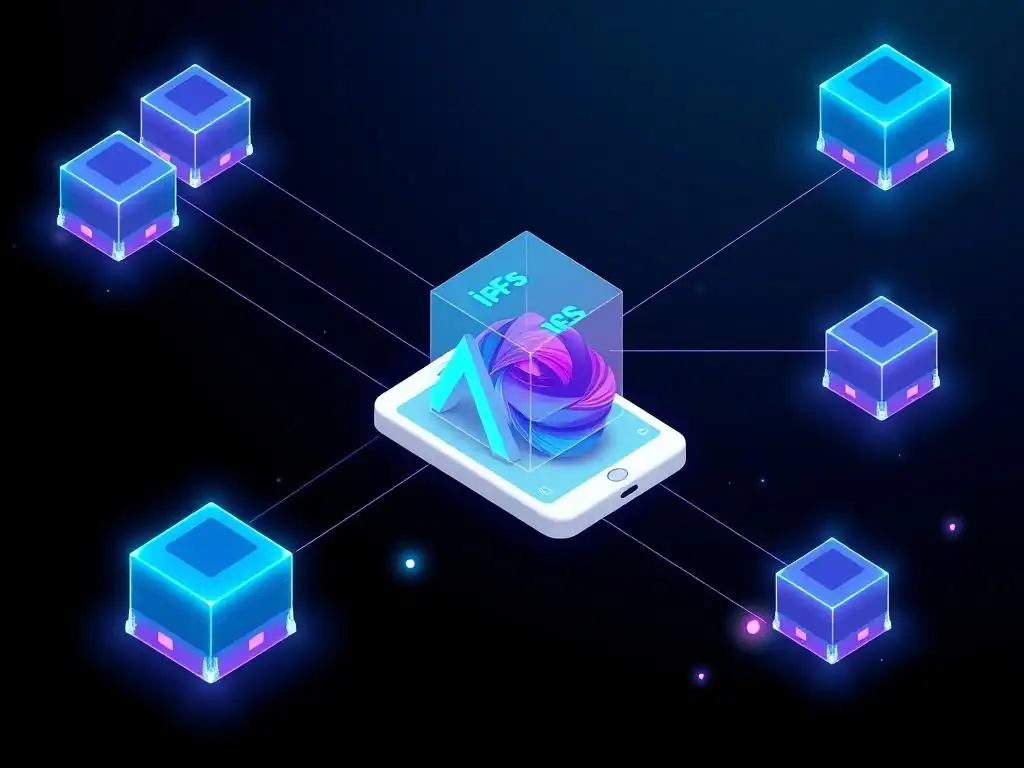
Key Factors to Consider: Cost, Performance, and Scalability
Selecting the optimal decentralized storage solution for a DApp front-end requires evaluating several key factors. Cost is a significant consideration; solutions like Arweave have an upfront, potentially higher, cost for permanent storage, while IPFS often involves ongoing costs for pinning services. Filecoin introduces a marketplace model where costs can fluctuate based on supply and demand, typically involving both upfront deal costs and potential penalties. Swarm's cost is tied to the BZZ token and usage. Developers must analyze their budget and the required duration of storage.
Performance is crucial for user experience. While decentralized solutions aim for high availability, latency and load times can vary. Factors include network topology, node proximity, data replication levels, and the efficiency of retrieval mechanisms (DHT lookup, gateway performance). Benchmarking different solutions with your specific front-end assets and target user locations is advisable.
Scalability refers to the ability to handle increasing amounts of data and traffic. Solutions like Filecoin and Sia are designed for large-scale storage, while IPFS and Swarm can also scale but require careful management of pinning and network participation. Evaluating the expected size and access patterns of your DApp front-end is essential when choosing among IPFS decentralized storage DApps options.
Security Considerations for Decentralized Front-End Storage
Security in decentralized storage primarily revolves around data integrity, availability, and resistance to tampering or censorship. Content addressing, used by IPFS, Filecoin, and Swarm, provides strong data integrity guarantees: any modification to the data results in a different address, making undetected tampering impossible. Arweave provides similar guarantees through its blockweave structure.
Availability is enhanced by the distributed nature of these networks, reducing the risk of a single point of failure. However, ensuring persistent availability often requires active management (pinning in IPFS, making deals in Filecoin/Sia, ensuring sufficient stamps in Swarm). Censorship resistance is a core benefit, as data is distributed and not under the control of a single entity.
Developers must also consider the security of the upload process and the management of CIDs/hashes to prevent accidental exposure or compromise before the content is fully distributed and secured on the network. The security model of IPFS decentralized storage DApps is inherently stronger against certain attacks than centralized hosting, but requires understanding the specific nuances of each decentralized network.
Data Redundancy and Backup Strategies
Decentralized storage networks inherently provide a level of data redundancy by distributing chunks across multiple nodes. However, the degree of redundancy and the strategy for ensuring it varies. IPFS relies on the natural replication that occurs when content is popular and manually enforced redundancy through pinning services or IPFS Cluster configurations. You might pin your content on multiple independent pinning services for higher redundancy.
Sia and Filecoin explicitly build redundancy into their storage contracts, allowing users to specify how many hosts should store their data chunks (often using erasure coding to reconstruct data from a subset of chunks). Swarm also aims for data redundancy through its network protocols and incentivization.
While these networks provide redundancy within their system, it's still prudent for developers to maintain backups of their DApp front-end source code and built assets locally or in a separate, secure location, independent of the decentralized storage network itself. This ensures recovery capabilities in unforeseen circumstances, complementing the redundancy offered by IPFS decentralized storage DApps and their alternatives.
Decentralized Storage Comparison: NFT Marketplace Front-End
Consider the front-end for an NFT marketplace DApp. This front-end needs to be highly available, censorship-resistant, and serve static assets (HTML, CSS, JS) as well as potentially link to or display NFT metadata/images also stored decentrally.
- IPFS: A strong candidate. The front-end assets can be easily uploaded and pinned. Integration with IPFS gateways is straightforward for broad access. Developers would need a robust pinning strategy (e.g., using multiple pinning services like Pinata and Infura) to ensure continuous availability. NFT metadata and images are commonly stored on IPFS, providing a consistent storage layer for the marketplace's assets and UI. This is a very common approach for IPFS decentralized storage DApps in the NFT space.
- Arweave: Suitable for storing the initial version or critical, unchanging parts of the front-end, or perhaps the associated NFT metadata itself, due to its permanent storage model. However, for a marketplace with frequent UI updates or feature rollouts, the one-time cost for each new version might become significant, and the update process is less fluid than simply re-pinning a new CID on IPFS.
- Filecoin: Could be used to provide guaranteed, long-term storage for the IPFS CIDs of the front-end assets, adding an extra layer of assurance beyond basic IPFS pinning. This is particularly useful for ensuring that the front-end remains accessible for years to come, perhaps as an archival copy or the primary source for critical assets. Filecoin is also commonly used for storing the larger NFT asset files themselves.
- Sia: Less commonly used directly for serving front-end assets compared to IPFS, but could serve as a decentralized backend for storing user-uploaded content or larger media files associated with the marketplace, while the front-end itself might be hosted on IPFS or Arweave.
- Swarm: A viable option, especially if the NFT marketplace is deeply integrated with the Ethereum ecosystem. It offers similar content-addressing benefits to IPFS with built-in incentives, potentially providing more reliable persistence than un-incentivized IPFS.
For an NFT marketplace front-end, a combination might be optimal: IPFS for easy deployment and access via gateways, backed by Filecoin for long-term persistence guarantees, and potentially using Arweave for critical, immutable components or metadata. This multi-solution approach leverages the strengths of different IPFS decentralized storage DApps technologies.
Best Practices for Optimizing DApp Front-Ends for Decentralized Storage
Minimizing Front-End Size and Dependencies
Optimizing the size of your DApp front-end is crucial when hosting on decentralized storage. Smaller front-ends load faster and are cheaper to store (especially on solutions with capacity-based costs like Filecoin or pinning services). Minimize code, use efficient asset formats (e.g., compressed images, SVGs), and remove unnecessary libraries or dependencies. Techniques like code splitting, tree shaking, and lazy loading can significantly reduce the initial load size.
Dependencies should be carefully managed. While traditional CDNs are often used for common libraries, relying on external centralized sources for dependencies can reintroduce a single point of failure. Ideally, bundle all necessary dependencies with your front-end code and upload them together to the decentralized storage network. This ensures that the entire DApp front-end package, including its dependencies, is available and verifiable via a single CID or hash on IPFS decentralized storage DApps.
Utilizing Content Delivery Networks (CDNs) for Improved Performance
While the goal is decentralized storage, traditional CDNs can paradoxically play a role in improving the performance of accessing content from decentralized networks, particularly IPFS. Some CDNs, like Cloudflare, act as IPFS gateways and cache frequently accessed IPFS content on their edge servers. When a user requests content via a Cloudflare IPFS gateway, if the content is cached at a nearby edge location, it can be served with very low latency, often faster than retrieving it directly from the IPFS network or a distant pinning service.
Using a CDN that integrates with IPFS allows developers to leverage the decentralized storage for availability and integrity while benefiting from the CDN's speed and global distribution for content delivery. Users access the DApp front-end via a URL like https://[cdn-domain]/ipfs/[CID]. This approach provides a hybrid model, using a centralized layer for performance optimization while the source of truth remains the decentralized network. However, it's important to acknowledge that relying on a CDN gateway reintroduces a degree of centralization for the delivery path, even if not for the storage itself, for IPFS decentralized storage DApps.
Implementing Caching Strategies
Caching is essential for improving the perceived performance of any web application, including DApp front-ends served from decentralized storage. Browser caching can be configured to store static assets locally for a period, reducing the need to refetch them on subsequent visits. When deploying a new version of the front-end to IPFS, a new CID is generated. This immutability simplifies caching strategies: browsers can aggressively cache content based on its CID, knowing that the content associated with that CID will never change. When the DApp is updated, the new CID invalidates the old cache.
Beyond browser caching, service workers can be used to implement more sophisticated offline caching strategies. A service worker can cache the DApp front-end assets and serve them directly from the cache, allowing the DApp to load instantly even if the user is offline or the network is slow. When a new version is deployed (new CID), the service worker can detect the update and fetch the new assets in the background. Effective caching significantly enhances the user experience for IPFS decentralized storage DApps, mitigating some of the potential latency challenges of decentralized retrieval.
Optimizing React Front-End Storage with Code Examples
Optimizing a React DApp front-end for IPFS decentralized storage DApps involves standard web performance techniques applied within the React build process.
-
Code Splitting: Use
React.lazyandSuspenseto split your bundle into smaller chunks loaded on demand. This reduces the initial download size.// Before import OtherComponent from './OtherComponent'; // After const OtherComponent = React.lazy(() => import('./OtherComponent')); // In your component <Suspense fallback={<div>Loading...</div>}> <OtherComponent /> </Suspense>
When building, this creates separate JavaScript files for
OtherComponent. -
Asset Optimization: Ensure images are compressed and in efficient formats (WebP, AVIF). Use SVGs for icons. Tools like Webpack or Create React App's build process handle some of this.
-
Dependency Management: Audit your
package.jsonfor unused libraries. Use tools likedepcheckorwebpack-bundle-analyzerto visualize your bundle size and identify large dependencies. -
Caching Headers: While IPFS itself is content-addressed, when serving via a gateway or a custom server acting as a gateway, configure appropriate HTTP caching headers (
Cache-Control,Expires) for your static assets (CSS, JS, images) to encourage browser caching. For immutable assets (those addressed by CID), a long cache duration is appropriate.
By implementing these optimizations during the build process ( npm run build or yarn build), the resulting static files in the build directory will be smaller and more efficient for uploading and serving from IPFS decentralized storage DApps or alternative decentralized storage solutions.
The Future of Decentralized Front-End Hosting
Emerging Trends in Decentralized Storage Technologies
The field of decentralized storage is rapidly evolving. Beyond the established players like IPFS, Arweave, Sia, and Filecoin, new projects and advancements are continuously emerging. Trends include:
- Improved Incentivization Models: Developing more robust and sustainable economic models to ensure long-term data availability and fair compensation for storage providers.
- Enhanced Performance: Research into faster data discovery, retrieval, and caching mechanisms within decentralized networks.
- Interoperability: Efforts to create bridges and standards that allow different decentralized storage networks to interact and potentially share data or services.
- Mutable Data Solutions: While content addressing is great for immutable data, developing efficient and secure ways to handle frequently changing data on decentralized networks (like Swarm's feeds or more advanced database layers) is a key area of focus.
- User-Friendly Interfaces: Building simpler tools, APIs, and user-facing applications (like browser extensions or native browser support) to make interacting with decentralized storage as easy as using traditional cloud storage.
These trends aim to address current limitations and make decentralized storage solutions like IPFS decentralized storage DApps more performant, reliable, and accessible for a wider range of applications and users.
The Role of Decentralized Storage in the Evolution of Web3
Decentralized storage is a fundamental pillar of the Web3 vision. Web3 aims to build a more open, decentralized, and user-centric internet, moving away from reliance on large, centralized platforms. While blockchains provide decentralized computation and state, decentralized storage provides the necessary layer for storing the vast amounts of data that modern applications require – from DApp front-ends and static assets to user-generated content, media files, and historical data.
Without decentralized storage, DApps remain partially centralized, vulnerable to censorship and downtime at the front-end layer. Solutions like IPFS decentralized storage DApps enable the entire application stack – from the smart contract backend to the user interface – to be decentralized. This is essential for building truly resilient, censorship-resistant, and permissionless applications that embody the core principles of Web3, paving the way for new models of data ownership, privacy, and application architecture.
Decentralized Storage: Future Developments in DApp Front-End Storage
Looking ahead, we can anticipate several key developments specific to DApp front-end storage on decentralized networks. We may see more sophisticated tools and frameworks that abstract away the complexities of interacting with networks like IPFS, Filecoin, or Swarm, making deployment as simple as pushing code to a repository. Browser support for native decentralized protocols ( ipfs://, bzz://) is likely to increase, reducing reliance on centralized gateways.
Furthermore, we could see the emergence of specialized decentralized storage solutions optimized specifically for web assets, perhaps incorporating features like automatic versioning, integrated build pipelines, and tighter coupling with decentralized identity and domain name systems (like ENS). As the Web3 ecosystem matures, the infrastructure for hosting IPFS decentralized storage DApps front-ends will become more robust, user-friendly, and performant, solidifying decentralized storage as the standard for DApp deployment.
Conclusion: Embracing Decentralized Storage for Robust and Resilient DApps
Recap of the Benefits of IPFS and Alternative Solutions
Decentralized storage solutions like IPFS, Arweave, Sia, Filecoin, and Swarm offer compelling advantages over traditional centralized hosting for DApp front-ends. IPFS, with its content addressing and peer-to-peer distribution, provides strong censorship resistance, immutability, and improved availability by removing the single point of failure. Alternatives like Arweave offer permanent storage, Filecoin provides incentivized persistence, Sia offers a decentralized cloud marketplace, and Swarm offers tight integration with Ethereum.
While each solution has its nuances, limitations (like pinning challenges in basic IPFS, or performance variations), and trade-offs in terms of cost, performance, and persistence model, they collectively represent a critical shift towards building truly decentralized applications. By hosting DApp front-ends on these networks, developers can ensure that the user interface is as resilient and permissionless as the underlying blockchain logic, fulfilling the promise of end-to-end decentralization for IPFS decentralized storage DApps and beyond.
Call to Action: Experimenting with Decentralized Storage for Your Next DApp Project
If you are building a decentralized application, take the crucial step of decentralizing your front-end storage. Explore the options discussed: start with IPFS for its ease of use and broad adoption, experiment with pinning services for reliability, or delve into Filecoin or Arweave for long-term persistence guarantees. Consider Swarm if you are deeply integrated into the Ethereum ecosystem.
Experimenting with IPFS decentralized storage DApps early in your development process will help you understand the workflow, identify potential challenges, and build a more robust and future-proof application. Hosting your front-end decentrally is not just a best practice; it's essential for aligning your DApp with the core principles of Web3 and ensuring it remains accessible and resistant to censorship for its users worldwide. Start by deploying a simple static site or a test version of your DApp front-end to one of these networks today.
Frequently Asked Questions
What is IPFS and why is it relevant to DApp frontends?
IPFS (InterPlanetary File System) is a decentralized storage protocol that allows DApp frontends to be hosted in a peer-to-peer network, making them resistant to censorship and single points of failure.
How does IPFS contribute to the overall decentralization of a DApp?
By storing the frontend on IPFS, you remove reliance on centralized web servers, ensuring the DApp's availability and accessibility even if the original host goes offline. This enhances the DApp's resilience.
What are the benefits of using decentralized storage like IPFS for DApp frontends compared to traditional hosting?
Decentralized storage offers increased censorship resistance, higher availability, and potentially lower costs compared to traditional hosting solutions. It also allows for version control and immutable storage.
Besides IPFS, what other decentralized storage solutions are available for DApp frontends?
While IPFS is popular, other options include Arweave, which offers permanent storage with a one-time payment, and Storj, a decentralized cloud storage network. These offer varying trade-offs in terms of cost and features.
What are the key considerations when choosing a decentralized storage solution like IPFS for my DApp frontend?
Consider factors such as cost, performance (latency), community support, and the specific requirements of your DApp. Evaluate how well each solution integrates with your existing development workflow.
Final Reflection: Embracing the Decentralized Web
The journey through decentralized storage solutions, particularly IPFS and its alternatives, reveals a fundamental shift in how we approach DApp frontends. No longer are we bound by centralized servers vulnerable to single points of failure; instead, we're empowered to build resilient and censorship-resistant applications that truly embody the spirit of Web3. This paradigm shift is not just a technological advancement; it's a philosophical one, challenging the traditional power structures of the internet.
The impact of decentralized storage extends far beyond mere technical improvements. It touches upon the very core of digital ownership and freedom of expression. Witnessing the rise of IPFS and similar technologies has been inspiring, reminding us that the internet can be a tool for empowerment rather than control. The Internet is becoming the town square for the global village of tomorrow.
- Bill Gates. This quote underscores the importance of ensuring that this digital town square is built on principles of decentralization and accessibility, principles that decentralized storage directly supports.
As we stand on the cusp of a more decentralized future, let us embrace the potential of these technologies to build a more equitable and open web. Consider how you can leverage IPFS and other decentralized storage solutions in your own projects, contributing to a future where data is truly owned by its creators and users. The power to shape the future of the internet lies within each of us; let's use it wisely and build a web that reflects our shared values of freedom, transparency, and resilience.
Embrace the Future: Revolutionize Your DApp!
Thank you for exploring the potential of decentralized storage solutions with us! We hope you've gained valuable insights into leveraging IPFS and other technologies to enhance your DApp's resilience and performance. Now, it's time to put that knowledge into action!
Here are some immediate steps you can take:
- Start experimenting! Deploy a simple front-end for your DApp on a decentralized platform and experience the benefits firsthand.
- Explore alternative decentralized storage solutions. Research platforms like Arweave, Filecoin, and Storj to understand their unique features and how they might suit your DApp's needs.
- Share this article with fellow developers and blockchain enthusiasts! Let's work together to build a more robust and decentralized web.
What are some creative ways you plan to utilize decentralized storage in your projects? Share your ideas in the comments below!
Leave a Reply