
Blockchain and Digital Identity: A Transformative Partnership


Welcome to Blockchain Trends, your gateway to understanding the real-world impact of blockchain technology. Beyond the hype of cryptocurrencies, lies a revolution reshaping industries and redefining trust. Are you ready to explore how blockchain is being leveraged to create secure, verifiable identities in the digital age? Dive into our analysis of Blockchain Digital Identity Management Solutions and discover how this transformative partnership is building a more secure and efficient future, one block at a time. What possibilities will this unlock for you?
Blockchain and Digital Identity: A Transformative Partnership
- Introduction: Unlocking the Potential of Blockchain for Secure Digital Identities
- Understanding Blockchain Technology for Identity
- The Challenges of Traditional Digital Identity Systems
- Blockchain Digital Identity Management Solutions: A Detailed Overview
- Use Cases of Blockchain in Digital Identity
- Benefits of Implementing Blockchain-Based Digital Identity Systems
- Challenges and Considerations for Blockchain Digital Identity Adoption
- The Future of Blockchain Digital Identity Management Solutions
- Conclusion: Blockchain's Transformative Impact on Digital Identity
-
Frequently Asked Questions
- How does blockchain enhance digital identity management?
- What are the key benefits of using blockchain for digital identity?
- What are some real-world applications of blockchain digital identity management solutions?
- What are the regulatory challenges surrounding blockchain digital identity?
- How is the future of blockchain digital identity management solutions looking?
- Final Reflection: Embracing Secure Digital Futures
- Unveil Your Digital Future Today!
Introduction: Unlocking the Potential of Blockchain for Secure Digital Identities
The Growing Need for Robust Digital Identity Management
In our increasingly interconnected digital world, the need for robust and secure digital identity management has never been more critical. Every online interaction, from accessing banking services to participating in social media, relies on digital identities. Traditional systems, often fragmented and centralized, struggle to keep pace with the evolving demands of the digital landscape.
Consider the sheer volume of online transactions: global e-commerce sales are projected to reach \$6.3 trillion in 2024, according to Statista. Each transaction necessitates identity verification, highlighting the immense scale of digital identity management required. Furthermore, the rise of remote work and global collaboration further amplifies the need for seamless and trustworthy digital identity solutions that can operate across borders and platforms.
The vulnerabilities of current systems are becoming increasingly apparent. Data breaches are rampant, exposing sensitive personal information to malicious actors. In 2023, the average cost of a data breach reached \$4.45 million globally, a 15% increase over three years, IBM's Cost of a Data Breach Report indicates. This figure underscores the financial and reputational risks associated with weak digital identity infrastructure.
Beyond financial losses, individuals face the risk of identity theft, fraud, and privacy violations. The lack of user control over personal data and the complexity of managing multiple online identities create friction and erode trust in digital systems. Therefore, the demand for more secure, user-centric, and efficient digital identity management solutions is not just desirable, but essential for the continued growth and trust in the digital economy.
Exploring the Synergy Between Blockchain and Digital Identity Solutions
Blockchain technology, initially recognized for its role in cryptocurrencies, offers a compelling paradigm shift for digital identity management. Its inherent characteristics – decentralization, immutability, and enhanced security – directly address the shortcomings of traditional systems. Blockchain provides a foundation for creating digital identities that are more secure, transparent, and user-controlled. Imagine a system where individuals have complete ownership and control over their digital identities, deciding who has access to their information and for what purpose. This is the promise of blockchain-based digital identity management solutions.
The synergy between blockchain and digital identity stems from the technology's ability to create a verifiable and tamper-proof record of identity information. Unlike centralized databases susceptible to single points of failure and manipulation, blockchain distributes identity data across a network of computers, making it incredibly resistant to attacks and fraud. Furthermore, cryptographic techniques inherent in blockchain ensure the integrity and confidentiality of identity data.
By leveraging blockchain, we can move towards a more user-centric model of digital identity, empowering individuals and fostering greater trust in online interactions. This transformative partnership holds the potential to reshape how we manage and interact with digital identities in the years to come, paving the way for a more secure and equitable digital future.
Understanding Blockchain Technology for Identity
How Blockchain Enhances Security and Transparency in Identity Management
Blockchain technology enhances security and transparency in identity management through its fundamental architectural principles. Security is significantly boosted by cryptography, which underpins blockchain operations. Each transaction and data entry on a blockchain is cryptographically hashed and linked to the previous block, creating a chain of records that is virtually tamper-proof. Any attempt to alter data in a block would require changing all subsequent blocks and controlling a majority of the network, a computationally infeasible task for most malicious actors in well-established blockchains. This cryptographic security is paramount for protecting sensitive identity information from unauthorized access and modification.
Transparency, in the context of blockchain, refers to the verifiable and auditable nature of transactions and data. While the actual identity data itself can be encrypted and access-controlled, the fact that an identity claim or verification event occurred is recorded on the blockchain and can be independently verified by authorized parties. This doesn't mean that personal data is publicly exposed, but rather that the process of identity verification becomes more transparent and accountable.
For instance, in a supply chain context, verifying the authenticity of a product using blockchain identity can be transparently tracked, allowing consumers to see the journey of the product and confirm its origin without exposing sensitive manufacturing secrets. This combination of cryptographic security and transparent verification processes makes blockchain a powerful tool for building trust and accountability into digital identity management systems.
Key Features of Blockchain Relevant to Digital Identity (Immutability, Decentralization, Security)
Blockchain technology possesses several key features that are particularly relevant and beneficial for digital identity management. Immutability is a cornerstone of blockchain. Once data is recorded on a blockchain, it becomes extremely difficult to alter or delete. This is crucial for digital identities, as it ensures that verified identity information remains consistent and reliable over time. For example, if a government issues a digital birth certificate recorded on a blockchain, its immutability guarantees its validity and prevents fraudulent modifications, offering a significant advantage over paper-based or centralized digital records.
Decentralization is another vital characteristic. In a decentralized blockchain network, data is distributed across multiple nodes, rather than being stored in a single, central repository. This eliminates single points of failure and reduces the risk of data breaches and censorship. For digital identity, decentralization means that no single entity controls or owns an individual's identity data. This empowers users with greater control and reduces their reliance on potentially vulnerable centralized identity providers. Consider the example of Estonia's e-Residency program, which utilizes blockchain-inspired technologies to manage digital identities in a decentralized manner, enhancing resilience and security.
Security, as previously mentioned, is intrinsically built into blockchain through cryptography. The use of cryptographic hashes, digital signatures, and consensus mechanisms ensures data integrity, authenticity, and confidentiality. These security features are essential for protecting sensitive personal information associated with digital identities. For instance, zero-knowledge proofs, a cryptographic technique often employed in blockchain identity solutions, allow for verifying identity claims without revealing the underlying identity data itself, further enhancing privacy and security. These three key features – immutability, decentralization, and security – collectively make blockchain a robust and compelling foundation for building next-generation digital identity management solutions.
The Challenges of Traditional Digital Identity Systems
Centralized Databases: Vulnerabilities and Single Points of Failure
Traditional digital identity systems often rely on centralized databases to store and manage user information. While seemingly efficient, these centralized architectures present significant vulnerabilities and create single points of failure. A centralized database acts as a honeypot for cybercriminals. If a hacker successfully breaches the security of this central repository, they can potentially gain access to vast amounts of sensitive personal data belonging to millions of users. Large-scale data breaches, like the Equifax breach in 2017 which exposed the personal information of approximately 147 million people, serve as stark reminders of the risks associated with centralized identity databases.
Furthermore, centralized systems are susceptible to single points of failure. If the central server or infrastructure experiences a technical malfunction, the entire identity system can become unavailable, disrupting services and operations that rely on it. This can lead to significant downtime and financial losses for businesses and inconvenience for users.
Consider the impact on e-commerce platforms or online banking services if their centralized identity systems were to fail. Beyond technical failures, centralized systems also pose risks related to data manipulation or misuse by the controlling entity. There is an inherent power imbalance when a single organization holds vast amounts of personal data, raising concerns about privacy and potential abuse of this power.
Privacy Concerns and Data Breaches in Existing Identity Solutions
Existing digital identity solutions frequently raise significant privacy concerns and are prone to data breaches, eroding user trust and creating systemic risks. The centralized nature of many identity systems, as discussed previously, is a primary driver of these privacy vulnerabilities. Users often have limited control over how their personal data is collected, used, and shared by centralized identity providers. Terms of service are often lengthy and complex, making it difficult for individuals to fully understand the privacy implications of using these services. This lack of transparency and user control is a major privacy concern in traditional identity systems.
Data breaches are a recurring and costly problem. The frequency and scale of data breaches are increasing, highlighting the inadequacy of current security measures in protecting sensitive identity information. According to Verizon's 2023 Data Breach Investigations Report, 83% of breaches involved external actors, and human error continues to play a significant role in security incidents. These breaches not only expose personal data to malicious actors but also undermine user trust in digital services.
The consequences of data breaches can be severe, ranging from financial losses and identity theft for individuals to reputational damage and regulatory fines for organizations. Moreover, the proliferation of siloed identity systems, where users have multiple online identities managed by different providers, further complicates privacy management and increases the attack surface for cybercriminals. This fragmented landscape necessitates a more user-centric and secure approach to digital identity, which blockchain technology aims to address.
Blockchain Digital Identity Management Solutions: A Detailed Overview
Decentralized Identity (DID) and Blockchain Technology
Decentralized Identity (DID) is a revolutionary concept that empowers individuals with greater control over their digital identities, and blockchain technology serves as a crucial enabler for realizing this vision. DIDs are essentially verifiable digital identifiers that are not controlled by any central authority. Instead, they are owned and controlled by the individuals or entities they represent.
Blockchain provides the underlying infrastructure to create and manage DIDs in a secure, transparent, and decentralized manner. Typically, a DID document, containing public keys and service endpoints associated with the identity, is anchored on a blockchain. This anchoring process establishes the DID's immutability and verifiability.
When a user creates a DID, they generate a cryptographic key pair. The public key is registered on the blockchain as part of the DID document, while the private key remains solely under the user's control. This private key is used to digitally sign identity claims and authorize access to services. Because the DID is anchored on a blockchain, it can be universally verified by anyone with access to the blockchain, without relying on a central identity provider.
Several blockchain platforms, such as Sovrin, Ethereum, and Hyperledger Indy, are being utilized to build DID solutions. The World Wide Web Consortium (W3C) has also standardized DID specifications, fostering interoperability and wider adoption of decentralized identity technologies. The combination of DID principles and blockchain technology offers a paradigm shift towards user-centric digital identity management.
Self-Sovereign Identity (SSI) and its Role in Blockchain Identity
Self-Sovereign Identity (SSI) is a closely related concept to DID and represents a further evolution in digital identity management, placing individuals firmly at the center of their identity ecosystem. SSI builds upon the foundation of DIDs and emphasizes the principle that individuals should have complete control over their digital identities, including creation, management, and usage. Blockchain technology is instrumental in enabling SSI by providing the necessary infrastructure for secure and decentralized identity ownership and control. In an SSI model facilitated by blockchain, individuals possess "digital wallets" where they store their identity credentials and selectively share them with relying parties.
These credentials, digitally signed and verifiable, can be issued by various authorities, such as governments, educational institutions, or employers. For example, a university could issue a verifiable degree credential to a student's SSI wallet, which the student can then present to a potential employer for verification. The employer can verify the credential's authenticity directly with the university's public key anchored on the blockchain, without needing to contact the university directly for each verification.
This process enhances privacy, as individuals only share the necessary information and minimize data exposure. SSI, powered by blockchain, aims to create a more user-centric, privacy-preserving, and efficient digital identity ecosystem, where individuals are truly in control of their own digital identities.
Use Cases of Blockchain in Digital Identity
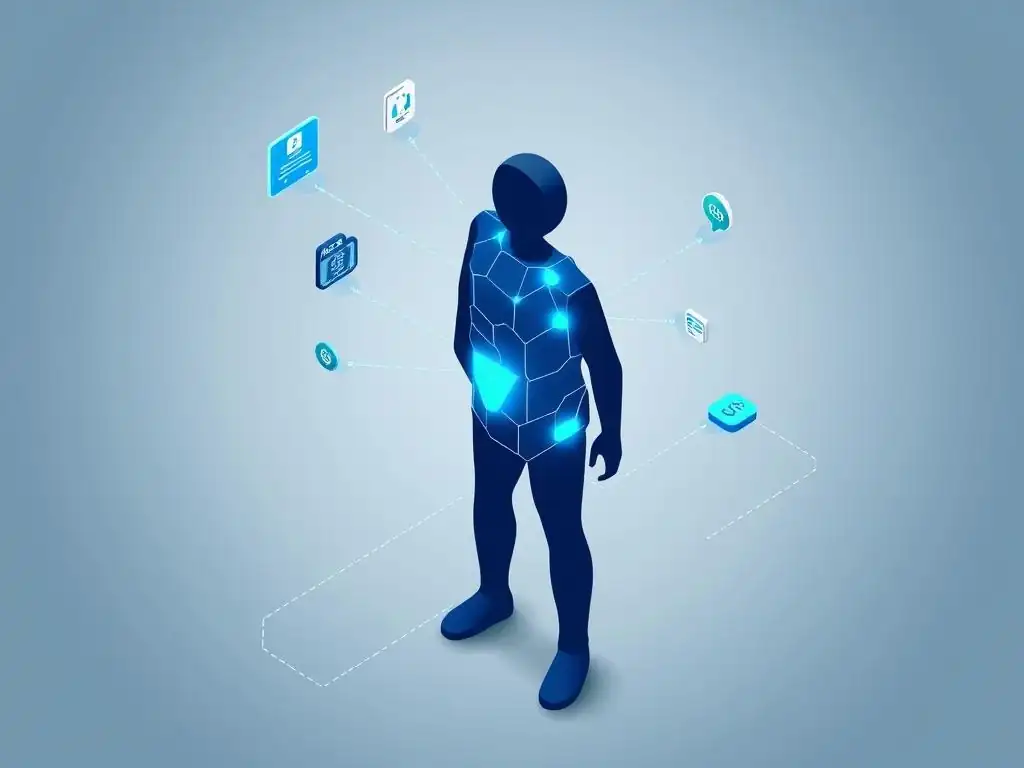
Secure Identity Verification for Cross-Border Payments
Blockchain-based digital identity offers a significant improvement in secure identity verification for cross-border payments, a sector plagued by fraud and inefficiencies. Traditional cross-border payment systems often involve multiple intermediaries, leading to increased costs, slower transaction times, and complex identity verification processes. By leveraging blockchain for identity verification, payment providers can streamline these processes, enhance security, and reduce fraud. Imagine a scenario where an individual needs to send money internationally. Using a blockchain-based identity system, their identity can be verified in real-time against a secure and immutable record, eliminating the need for lengthy and cumbersome manual verification processes.
For instance, a remittance company could utilize a blockchain-based identity solution to verify the sender's and recipient's identities, ensuring compliance with anti-money laundering (AML) and know your customer (KYC) regulations. This can significantly reduce the risk of fraudulent transactions and improve the speed and efficiency of cross-border payments. Companies like Ripple are exploring blockchain-based solutions for cross-border payments, highlighting the growing recognition of blockchain's potential in this domain.
By establishing a trusted and verifiable digital identity framework, blockchain can facilitate faster, cheaper, and more secure cross-border financial transactions, benefiting both individuals and businesses involved in international commerce. The reduction in fraud alone can lead to substantial cost savings and increased trust in the global financial system.
Streamlining Healthcare Data Management with Blockchain
Blockchain technology has the potential to revolutionize healthcare data management by providing a secure and patient-centric approach to handling sensitive medical information. Currently, healthcare data is often fragmented across different providers and systems, leading to inefficiencies, data silos, and challenges in data sharing and interoperability. Blockchain can create a unified and secure platform for managing patient identities and healthcare records, empowering patients with greater control over their medical data while improving data access for authorized healthcare professionals.
Consider a patient visiting multiple specialists and hospitals. With a blockchain-based identity system, their medical records can be securely linked to their digital identity, allowing authorized doctors to access a comprehensive and up-to-date medical history, regardless of where the data was originally generated.
This improved data accessibility can lead to better diagnosis, treatment, and overall patient care. Furthermore, blockchain's security features can enhance patient privacy and data security. By using cryptographic techniques and access controls, blockchain can ensure that only authorized individuals, such as the patient and their designated healthcare providers, can access sensitive medical information.
Companies like MedRec are exploring blockchain solutions for managing electronic health records, demonstrating the growing interest in leveraging blockchain for healthcare data management. By streamlining data management and enhancing security, blockchain can contribute to a more efficient, patient-centric, and secure healthcare ecosystem. The improved efficiency can also lead to reduced administrative costs and faster processing of insurance claims.
Enhancing Government Services and Citizen Identity with Blockchain
Governments worldwide are exploring the transformative potential of blockchain to enhance public services and improve citizen identity management. Traditional government identity systems often face challenges related to security, efficiency, and accessibility, particularly in developing nations. Blockchain can provide a more secure, transparent, and efficient infrastructure for issuing and managing citizen identities, enabling governments to deliver better services and reduce fraud.
Imagine a government issuing digital IDs to citizens using blockchain technology. These digital IDs could be used to access a wide range of government services online, such as voting, applying for permits, or accessing social welfare programs, securely and efficiently.
For example, Estonia, a leader in digital governance, has implemented blockchain-inspired technologies for its e-Residency program, providing digital identities to individuals worldwide. This demonstrates the feasibility and benefits of using blockchain for government-issued digital identities. Furthermore, blockchain can enhance the security and integrity of government records, such as land registries and birth certificates, reducing fraud and improving transparency.
Governments in countries like Georgia and Dubai are actively exploring blockchain applications for land registry and other public services. By leveraging blockchain, governments can build more efficient, secure, and citizen-centric public service delivery systems, fostering greater trust and accountability in governance. The increased efficiency can also translate into significant cost savings for governments and taxpayers.
Supply Chain Management and Product Authentication
Blockchain-based digital identity can play a crucial role in enhancing supply chain management and product authentication, addressing issues of counterfeiting, transparency, and traceability. In complex global supply chains, verifying the authenticity and origin of products can be challenging, leading to the proliferation of counterfeit goods and erosion of consumer trust. Blockchain can provide a secure and transparent platform to track products throughout the supply chain, from origin to consumer, using digital identities for products, materials, and stakeholders involved.
Imagine a consumer purchasing a luxury handbag. Using a blockchain-based product authentication system, they can scan a QR code on the product and verify its authenticity and origin by accessing its digital identity recorded on the blockchain.
This can help combat counterfeiting and provide consumers with greater confidence in the products they purchase. Furthermore, blockchain can improve supply chain transparency by providing a real-time and immutable record of product provenance, ownership, and movements. Companies like IBM and Walmart are using blockchain to track food products in their supply chains, enhancing food safety and traceability.
By assigning digital identities to products and tracking their journey on a blockchain, businesses can improve supply chain efficiency, reduce fraud, and enhance consumer trust. This increased transparency can also help businesses identify and address inefficiencies and ethical concerns within their supply chains. The ability to authenticate products also protects brand reputation and revenue streams.
Benefits of Implementing Blockchain-Based Digital Identity Systems
Enhanced Security and Reduced Identity Theft
Implementing blockchain-based digital identity systems offers a significant boost to security and a substantial reduction in identity theft, addressing critical vulnerabilities in traditional systems. The decentralized and cryptographic nature of blockchain provides inherent security advantages. By distributing identity data across a network and using strong encryption, blockchain makes it significantly more difficult for malicious actors to compromise identity information compared to centralized databases. The immutability of blockchain records ensures that once identity information is verified and recorded, it cannot be easily altered or tampered with, further enhancing security.
This robust security framework translates directly into a reduced risk of identity theft. Traditional identity theft often relies on exploiting vulnerabilities in centralized databases or phishing attacks to steal usernames and passwords. Blockchain-based systems, with their decentralized and cryptographic security, mitigate these risks. For instance, Decentralized Identity (DID) solutions empower users with control over their private keys, making it harder for attackers to impersonate them.
While no system is completely impenetrable, blockchain significantly raises the bar for cybercriminals attempting to steal digital identities. By reducing identity theft, blockchain-based systems protect individuals from financial losses, reputational damage, and the emotional distress associated with identity fraud. The enhanced security also fosters greater trust in digital interactions and online services.
Improved Privacy and User Control Over Personal Data
Blockchain-based digital identity systems prioritize user privacy and empower individuals with greater control over their personal data, addressing a key concern with current identity solutions. In traditional systems, users often have limited visibility and control over how their personal data is collected, used, and shared by identity providers. Blockchain, particularly Self-Sovereign Identity (SSI) models, shifts this paradigm by placing individuals at the center of their identity ecosystem. Users control their own digital identities and decide what information to share, with whom, and for what purpose. This user-centric approach significantly enhances privacy.
Furthermore, blockchain enables privacy-enhancing technologies like zero-knowledge proofs. These cryptographic techniques allow individuals to prove specific identity claims without revealing the underlying identity data itself. For example, a user can prove they are over 18 years old without disclosing their exact date of birth. This minimizes data exposure and enhances privacy.
By giving users greater control over their data and enabling privacy-preserving technologies, blockchain-based identity systems address fundamental privacy concerns associated with traditional solutions. This improved privacy not only benefits individuals but also fosters greater trust in digital services and promotes a more ethical and user-centric digital environment. The increased user control also reduces the risks associated with data breaches and misuse of personal information by centralized entities.
Increased Efficiency and Reduced Costs in Identity Verification Processes
Blockchain-based digital identity systems can significantly increase efficiency and reduce costs associated with identity verification processes, benefiting both businesses and individuals. Traditional identity verification methods are often manual, time-consuming, and costly, particularly in scenarios involving multiple intermediaries or cross-border transactions. Blockchain streamlines these processes by providing a secure, verifiable, and reusable digital identity framework. Once an individual's identity is verified and recorded on a blockchain, it can be reused for multiple transactions and interactions without requiring repeated verifications by different parties.
This "verify once, use many times" approach significantly reduces redundant verification efforts and associated costs. For businesses, this translates into faster customer onboarding, reduced operational expenses, and improved efficiency in various processes, such as KYC/AML compliance. For individuals, it means a smoother and faster user experience when accessing online services and conducting transactions.
For example, in the financial services sector, blockchain-based identity can streamline KYC processes, reducing the time and cost associated with verifying customer identities for regulatory compliance. Studies have shown that blockchain-based identity solutions can potentially reduce KYC compliance costs by up to 75%. By improving efficiency and reducing costs, blockchain-based identity systems offer tangible economic benefits and contribute to a more streamlined and user-friendly digital experience.
Greater Transparency and Trust in Identity Transactions
Blockchain technology inherently fosters greater transparency and trust in identity transactions, addressing a critical need in the digital age where trust is often lacking. The transparent and auditable nature of blockchain transactions builds confidence and accountability into identity verification processes. While the actual identity data can be kept private, the fact that an identity claim has been verified and recorded on the blockchain is transparent and verifiable by authorized parties. This transparency enhances trust by providing a clear and auditable record of identity-related events.
Furthermore, the decentralized nature of blockchain reduces reliance on central authorities and intermediaries, which can be perceived as opaque or untrustworthy. In a blockchain-based identity system, trust is distributed across the network, rather than being concentrated in a single entity. This decentralized trust model enhances user confidence and reduces the risk of manipulation or censorship.
For instance, in supply chain authentication, blockchain provides transparency into the product's journey and origin, building consumer trust in product authenticity. By fostering greater transparency and trust, blockchain-based identity systems create a more secure, reliable, and user-friendly digital environment, where individuals and businesses can interact with greater confidence and assurance. This increased trust is essential for the continued growth and adoption of digital services and the digital economy as a whole.
Challenges and Considerations for Blockchain Digital Identity Adoption
Scalability Issues with Blockchain Networks
Scalability remains a significant challenge for blockchain networks, which can impact the widespread adoption of blockchain-based digital identity solutions. Many existing blockchain platforms, particularly those using proof-of-work consensus mechanisms, have limitations in terms of transaction throughput and processing speed. For digital identity systems that need to handle a high volume of identity verifications and transactions, scalability is a critical concern. For example, if a national digital identity system were to be built on a blockchain, it would need to be able to handle millions of transactions per day to serve the entire population efficiently.
While various scaling solutions are being developed, such as layer-2 scaling solutions and sharding, they are still under development and not yet fully mature or widely adopted. The scalability limitations of current blockchain networks can lead to slower transaction times and higher transaction fees, potentially hindering the user experience and increasing the cost of operating blockchain-based identity systems. Furthermore, scalability challenges can impact the overall performance and responsiveness of identity systems, especially during peak usage periods.
Addressing scalability issues is crucial for ensuring that blockchain-based digital identity solutions can meet the demands of large-scale deployments and achieve widespread adoption. Ongoing research and development efforts are focused on improving blockchain scalability to overcome this challenge.
Regulatory Uncertainty and Compliance Requirements
Regulatory uncertainty and evolving compliance requirements pose significant challenges for the adoption of blockchain-based digital identity solutions globally. The regulatory landscape for blockchain and digital assets is still evolving, and there is a lack of clear and consistent regulations in many jurisdictions.
This regulatory uncertainty can create challenges for businesses and organizations seeking to implement blockchain-based identity systems, as they may face unclear legal and compliance obligations. For example, data privacy regulations, such as GDPR in Europe and CCPA in California, have specific requirements regarding the collection, use, and storage of personal data, which need to be carefully considered when designing and deploying blockchain-based identity solutions.
Furthermore, compliance requirements for specific industries, such as financial services and healthcare, may also impact the adoption of blockchain identity. For instance, KYC/AML regulations in the financial sector and HIPAA regulations in healthcare impose specific requirements for identity verification and data security. Navigating this complex and evolving regulatory landscape requires careful planning and legal expertise.
Industry collaborations and dialogue with regulators are crucial to develop clear and appropriate regulatory frameworks that foster innovation while ensuring consumer protection and compliance. Addressing regulatory uncertainty and ensuring compliance are essential for building trust and facilitating the widespread adoption of blockchain-based digital identity solutions.
Interoperability Challenges Between Different Blockchain Platforms
Interoperability challenges between different blockchain platforms present a hurdle for the seamless integration and widespread adoption of blockchain-based digital identity solutions. Currently, many blockchain platforms operate in silos, with limited or no interoperability between them. This lack of interoperability can create fragmentation and hinder the creation of a unified and universally accepted digital identity ecosystem. For example, if different organizations or countries adopt different blockchain platforms for their identity systems, it may be difficult for users to seamlessly use their digital identities across these different systems.
This lack of interoperability can limit the usability and value proposition of blockchain-based digital identity solutions. Efforts are underway to develop interoperability standards and protocols to enable different blockchain platforms to communicate and exchange data seamlessly. Initiatives like the Interledger Protocol and projects focused on cross-chain communication are aimed at addressing this challenge.
Achieving interoperability is crucial for creating a truly global and interconnected digital identity ecosystem, where users can seamlessly manage and use their identities across different platforms and applications, regardless of the underlying blockchain technology. Collaboration and standardization efforts are essential to overcome interoperability challenges and realize the full potential of blockchain-based digital identity.
User Adoption and Education
User adoption and education represent a significant challenge for the widespread success of blockchain-based digital identity solutions. While blockchain technology offers numerous benefits, it can be complex and unfamiliar to the average user. Widespread adoption requires users to understand the value proposition of blockchain identity, learn how to use digital wallets and manage their digital identities, and trust the security and privacy of these systems. Many users may be accustomed to traditional username/password-based identity systems and may be hesitant to adopt new technologies that require a different approach to identity management.
Effective user education and onboarding are crucial to overcome this adoption barrier. User interfaces need to be intuitive and user-friendly, abstracting away the underlying complexity of blockchain technology. Educational resources and support materials are needed to help users understand the benefits of blockchain identity and how to use these systems securely and effectively.
Building user trust is also essential. Users need to be confident that blockchain-based identity systems are secure, reliable, and protect their privacy. Addressing user adoption and education challenges through user-centric design, effective communication, and trust-building initiatives is critical for achieving the widespread adoption of blockchain-based digital identity solutions and realizing their transformative potential.
The Future of Blockchain Digital Identity Management Solutions
The Role of Decentralized Identity in the Metaverse
Decentralized Identity (DID) is poised to play a pivotal role in the development and evolution of the metaverse, offering a foundation for user-owned and interoperable digital identities within these immersive virtual worlds. The metaverse, envisioned as a network of interconnected virtual environments, will require robust and portable digital identities that users can control and use across different platforms and experiences. Traditional centralized identity systems are ill-suited for the metaverse, as they can create data silos, limit interoperability, and raise concerns about user privacy and control. DIDs, based on blockchain technology, offer a compelling alternative.
In the metaverse, users will need to manage various aspects of their digital identities, including avatars, virtual assets, reputation, and credentials. DIDs can provide a unified and user-controlled identity framework for managing these diverse elements across different metaverse platforms. For example, a user could use their DID to create a persistent avatar that they can use across different virtual worlds, or to prove ownership of virtual assets without relying on a specific platform's identity system.
The portability and interoperability of DIDs are crucial for creating an open and decentralized metaverse, where users are not locked into specific platforms and have true ownership of their digital identities and virtual assets. As the metaverse evolves, DID is expected to become an essential building block for user empowerment and interoperability within these immersive digital environments.
Blockchain and the Evolution of Digital Identity Standards
Blockchain technology is actively shaping the evolution of digital identity standards, driving the development of more user-centric, secure, and interoperable identity frameworks. The emergence of Decentralized Identity (DID) and Self-Sovereign Identity (SSI) concepts, enabled by blockchain, has spurred standardization efforts within organizations like the World Wide Web Consortium (W3C) and the Decentralized Identity Foundation (DIF). These organizations are working to develop open and interoperable standards for DIDs, verifiable credentials, and other blockchain-based identity technologies. The W3C, for example, has published the DID specification, providing a standardized framework for creating and managing decentralized identifiers.
These standardization efforts are crucial for fostering interoperability and wider adoption of blockchain-based digital identity solutions. Standardized protocols and data formats enable different identity systems and applications to communicate and exchange data seamlessly, creating a more interconnected and user-friendly digital identity ecosystem. Furthermore, standards promote innovation and competition by providing a common foundation for developers and organizations to build upon.
As blockchain technology matures and becomes more widely adopted for digital identity, standardization efforts will play an increasingly important role in shaping the future of digital identity and ensuring its interoperability, security, and user-centricity. The ongoing collaboration between industry stakeholders and standards bodies is essential for driving this evolution.
Advancements in Zero-Knowledge Proofs for Enhanced Privacy
Advancements in zero-knowledge proofs (ZKPs) are significantly enhancing privacy within blockchain-based digital identity systems, addressing a critical concern in the digital age. Zero-knowledge proofs are cryptographic techniques that allow one party to prove to another party that a statement is true without revealing any information beyond the validity of the statement itself.
In the context of digital identity, ZKPs can be used to verify identity claims without disclosing the underlying identity data, significantly enhancing privacy. For example, a user can prove they are over 18 years old without revealing their exact date of birth, or prove they have a certain credential without disclosing the credential itself.
Recent advancements in ZKP technology, such as zk-SNARKs and zk-STARKs, have made these techniques more efficient and practical for real-world applications. These advancements are enabling the development of more privacy-preserving blockchain-based identity solutions. For instance, ZKPs can be used to create anonymous credentials, where users can prove possession of a credential without revealing their identity or the credential issuer.
This level of privacy is particularly valuable in sensitive contexts, such as healthcare and finance. As ZKP technology continues to advance, it is expected to play an increasingly important role in enhancing privacy and building trust in blockchain-based digital identity systems, making them more appealing and widely adoptable. The ongoing research and development in ZKP is pushing the boundaries of what is possible in privacy-preserving identity management.
Conclusion: Blockchain's Transformative Impact on Digital Identity
Embracing Blockchain for a More Secure and User-Centric Digital Future
Blockchain technology is undeniably poised to have a transformative impact on digital identity management, offering a path towards a more secure and user-centric digital future. By addressing the inherent limitations and vulnerabilities of traditional centralized identity systems, blockchain provides a foundation for building next-generation identity solutions that prioritize security, privacy, user control, and efficiency.
The key features of blockchain – decentralization, immutability, and cryptography – are uniquely suited to address the growing challenges of digital identity in an increasingly interconnected world. From enhancing security and reducing identity theft to empowering users with greater control over their personal data, the benefits of blockchain-based digital identity are substantial and far-reaching.
While challenges such as scalability, regulatory uncertainty, and user adoption remain, the potential of blockchain to revolutionize digital identity is undeniable. Ongoing innovation, standardization efforts, and growing awareness of the limitations of traditional systems are driving the adoption and evolution of blockchain-based identity solutions. As we move towards a more digital and interconnected future, embracing blockchain for digital identity management is not just an option, but a necessity.
By leveraging the transformative power of blockchain, we can build a more secure, equitable, and user-centric digital future, where individuals have greater control over their digital lives and trust in online interactions is strengthened. The journey towards widespread adoption of blockchain digital identity management solutions is underway, promising a significant shift in how we manage and interact with digital identities in the years to come.
Frequently Asked Questions
How does blockchain enhance digital identity management?
Blockchain provides a decentralized and immutable ledger, ensuring that identity data is secure and tamper-proof. This leads to increased trust and transparency in identity verification processes.
What are the key benefits of using blockchain for digital identity?
Using blockchain leads to enhanced security, reduced fraud, and increased user control over their personal data. It also streamlines identity verification for various services.
What are some real-world applications of blockchain digital identity management solutions?
Applications include secure online voting, streamlined KYC/AML processes in finance, and improved healthcare data management. These examples showcase the versatility of the technology.
What are the regulatory challenges surrounding blockchain digital identity?
Current regulations are still evolving, posing challenges related to data privacy, cross-border data transfer, and compliance with existing laws. These need to be addressed for wider adoption.
How is the future of blockchain digital identity management solutions looking?
The future looks promising, with increased adoption driven by the need for secure and decentralized identity solutions. Expect further innovation and integration with other emerging technologies.
Okay, here's a final reflection you can use for your article "Blockchain and Digital Identity: A Transformative Partnership," optimized for the keyword "Blockchain digital identity management solutions":
Final Reflection: Embracing Secure Digital Futures
The exploration of blockchain's potential in revolutionizing digital identity management culminates in a powerful realization: the future of secure and trustworthy online interactions hinges on innovative solutions like blockchain digital identity management solutions. The convergence of these technologies isn't just a trend; it's a necessary evolution to combat escalating cyber threats and empower individuals with greater control over their personal data in an increasingly digital world.
The impact of this transformative partnership resonates deeply within our cultural and social landscape. The promise of self-sovereign identity, where individuals own and manage their digital footprint, is not just a technological advancement but a fundamental shift in power dynamics. It challenges the centralized models that have long dominated the internet and offers a pathway towards a more equitable and secure digital society. Identity is the new perimeter of security, and blockchain offers a robust foundation for building a more trustworthy and user-centric identity ecosystem.
This quote encapsulates the core belief that blockchain can reshape how we perceive and manage identity in the digital age.
As we stand on the cusp of this technological revolution, I invite you to reflect on the implications of blockchain digital identity management solutions for your own life and the lives of those around you. Consider how these technologies can empower you to reclaim control over your personal data, participate more securely in online interactions, and contribute to a future where digital identity is a source of empowerment, not vulnerability. Embrace the potential of this transformative partnership and become an advocate for a more secure, trustworthy, and user-centric digital world.
Unveil Your Digital Future Today!
Thank you for exploring the transformative potential of blockchain and digital identity. We hope you've gained valuable insights into how this innovative partnership is reshaping the digital landscape. Now, it's time to take the next step and be part of this revolution.
Here's how you can get involved:
- Secure your online presence by exploring decentralized identity solutions. This is the future of owning your digital self.
- Share this article with your network on social media to help raise awareness about the power of blockchain in digital identity.
- Visit the website for more articles, case studies, and resources on this groundbreaking technology.
What small step will you take this week to better understand or implement blockchain-based digital identity in your life or organization? Share your thoughts in the comments below!
Leave a Reply