
Scalability in Blockchain: The Quest for Faster and Cheaper Transactions


Welcome to Blockchain Trends, your compass in the rapidly evolving world of decentralized technology. Beyond the hype of cryptocurrencies, lies a universe of transformative applications.
Ever wondered how blockchain can handle the demands of a global economy? This article delves into the critical topic of blockchain scalability solutions benefits, exploring how innovations are paving the way for faster, cheaper, and more efficient transactions. Join us as we unravel the complexities and unlock the potential of a truly scalable blockchain future. What opportunities await with truly scalable blockchain? Let's find out!
Scalability in Blockchain: The Quest for Faster and Cheaper Transactions
Blockchain technology, while revolutionary for its decentralization and security features, faces significant hurdles when attempting to handle transactions at the scale required for widespread global adoption. This challenge is commonly referred to as the blockchain scalability problem. At its core, scalability refers to the ability of a system to handle a growing amount of work.
For blockchains, this translates to processing a high volume of transactions quickly and at a low cost, without compromising the core principles of security and decentralization. Addressing scalability is crucial for blockchain to move beyond niche applications and become a foundational technology for various industries.
The inherent design of many foundational blockchains, particularly those utilizing Proof-of-Work consensus, limits their transaction processing capacity. Every node in the network typically needs to validate every transaction and every block. This distributed validation process is what provides security and decentralization but creates a bottleneck as the number of transactions increases. As demand grows, the network can become congested, leading to slow transaction confirmation times and prohibitively high fees. Overcoming these limitations is paramount to unlocking the full potential of decentralized systems.
- Understanding Blockchain Scalability Challenges
- Exploring Blockchain Scalability Solutions
- Benefits of Blockchain Scalability Solutions
- Comparing Layer-1 and Layer-2 Scalability Approaches
- Blockchain Scalability Implementations
- The Future of Blockchain Scalability
-
Frequently Asked Questions
- What are some of the primary challenges hindering blockchain scalability?
- What are some examples of blockchain scalability solutions being developed?
- What are the benefits of successfully implementing blockchain scalability solutions?
- How does blockchain scalability impact the development of DeFi (Decentralized Finance)?
- What is the role of regulation in the development and adoption of blockchain scalability solutions?
- Final Reflection: Embracing the Future of Blockchain Efficiency
- Uncover Blockchain's Scalable Future!
Understanding Blockchain Scalability Challenges
The Blockchain Trilemma: Security, Decentralization, and Scalability
The blockchain trilemma is a widely discussed concept suggesting that it is challenging for a decentralized system to simultaneously achieve high levels of security, decentralization, and scalability. Traditional blockchains often prioritize security and decentralization, which unfortunately comes at the cost of scalability. Security is maintained through robust cryptographic methods and consensus mechanisms, making transactions immutable and the network resistant to attacks. Decentralization is achieved by distributing the ledger and control across a vast network of independent participants, preventing single points of failure or control.
However, maximizing security and decentralization often requires that all or a significant portion of network participants validate every transaction. This sequential processing limits the overall throughput of the network. Increasing one aspect, like scalability (e.g., by increasing block size significantly), can potentially strain decentralization (requiring more powerful nodes) or introduce security risks (making the network more susceptible to certain attacks). The quest for blockchain scalability solutions benefits therefore often involves navigating this trade-off, seeking innovative ways to optimize one or more aspects without critically compromising the others.
Current Limitations of Popular Blockchains: Transaction Throughput and Fees
Many of the most well-known blockchains currently exhibit significant limitations in transaction throughput when compared to traditional payment systems. Bitcoin, for instance, is typically limited to processing around 7 transactions per second (TPS). Ethereum, before significant upgrades, generally handled in the range of 15-30 TPS. While these speeds are adequate for certain applications, they pale in comparison to centralized payment networks like Visa, which reports an average of around 1,700 TPS and theoretical peaks much higher. This stark difference highlights a major barrier to blockchain's use in high-volume applications such as retail payments or large-scale gaming.
This limited capacity directly impacts transaction fees, especially during periods of high network activity. When the network is congested, users must offer higher fees to incentivize miners or validators to include their transactions in the next block. Ethereum's gas fees, for example, have historically surged to hundreds of dollars for a single transaction during peak demand periods, making microtransactions or frequent interactions prohibitively expensive for the average user. These high costs and slow speeds significantly hinder the practical application and widespread adoption of blockchain technology for everyday use cases.
The Impact of Slow Transactions and High Fees on Blockchain Adoption
The combination of slow transaction speeds and high fees creates a significant barrier to the mass adoption of blockchain technology. For consumers, waiting minutes or even hours for a transaction to confirm is impractical for point-of-sale purchases or time-sensitive applications. Imagine buying a coffee with cryptocurrency and having to wait ten minutes for the transaction to finalize – it's simply not a viable alternative to instant payment methods. This poor user experience limits the appeal of decentralized applications (dApps) and blockchain-based services for the general public.
Furthermore, high transaction costs make many potential blockchain use cases economically unfeasible. Micropayments, supply chain tracking of individual items, or frequent interactions within decentralized finance (DeFi) protocols become prohibitively expensive when each transaction costs several dollars or more. This prevents innovation and limits the types of applications that can be built and successfully deployed on current blockchain infrastructure. Addressing these issues through effective blockchain scalability solutions benefits developers and users alike by opening up a much wider range of possibilities for decentralized applications and services.
Exploring Blockchain Scalability Solutions
Layer-1 Scalability Solutions: Modifying the Blockchain Protocol
Layer-1 scalability solutions involve making changes directly to the base protocol or mainnet of the blockchain itself. These modifications aim to increase the network's capacity to process transactions without relying on off-chain protocols. Implementing Layer-1 solutions often requires significant consensus among network participants and can be complex, sometimes involving hard forks. The goal is to enhance the fundamental throughput of the blockchain layer itself.
Examples of Layer-1 approaches include increasing block size limits, changing the consensus mechanism, or implementing sharding. While these methods can potentially offer significant increases in capacity, they often come with trade-offs related to decentralization or the cost of running a node. The pursuit of blockchain scalability solutions benefits at Layer-1 focuses on optimizing the core engine of the decentralized network.
Sharding: Dividing the Blockchain for Parallel Processing
Sharding is a technique borrowed from database partitioning that involves dividing the blockchain network into smaller, more manageable segments called "shards." Instead of every node validating every transaction across the entire network, nodes are assigned to specific shards and only need to validate transactions within their assigned shard. This allows multiple transactions to be processed and validated in parallel across different shards simultaneously, dramatically increasing the overall transaction throughput of the network.
For sharding to work effectively, mechanisms are needed for shards to communicate with each other and for the main chain (often called a beacon chain) to coordinate the state across all shards and ensure overall network security. While sharding offers a promising path to significant scalability increases, its implementation is complex, requiring careful design to prevent security vulnerabilities like "shard attacks" where an attacker could potentially gain control of a single shard. Ethereum's ongoing upgrade to Ethereum 2.0 (now known as the consensus layer and execution layer transition) includes sharding as a core component of its long-term scalability roadmap.
Block Size Increases: Trade-offs and Considerations
One of the most straightforward Layer-1 approaches to increase transaction throughput is to simply increase the maximum size of each block. Larger blocks can accommodate more transactions, thereby increasing the number of transactions processed within a given time frame (assuming block production rate remains constant). For instance, if a block can hold twice as many transactions, the TPS could theoretically double. This was a major point of contention in the Bitcoin community, leading to the fork that created Bitcoin Cash, which significantly increased the block size limit compared to Bitcoin.
However, increasing block size comes with significant trade-offs. Larger blocks take more time and bandwidth to propagate across the network, which can increase the latency of transaction confirmations. More importantly, larger blocks require nodes to have more storage space and processing power to download, verify, and store the blockchain history. This increases the cost and technical requirements for running a full node, potentially leading to fewer nodes and thus reducing the network's decentralization. The debate over block size highlights the delicate balance between scalability and decentralization in Layer-1 modifications.
Consensus Mechanism Improvements: Proof-of-Stake (PoS) and Delegated Proof-of-Stake (DPoS)
Changing the consensus mechanism is another fundamental Layer-1 approach to enhance scalability. Traditional Proof-of-Work (PoW), used by Bitcoin, is secure and decentralized but computationally intensive and slow. Proof-of-Stake (PoS) mechanisms, where validators are chosen based on the amount of cryptocurrency they "stake" as collateral, consume significantly less energy and can often process transactions faster. Ethereum's transition from PoW to PoS (the Merge) is a prime example, laying the groundwork for future scalability upgrades like sharding. PoS networks like Solana and Cardano already demonstrate higher theoretical TPS than PoW chains.
Delegated Proof-of-Stake (DPoS) takes this further by having token holders elect a limited number of delegates or validators who are responsible for validating transactions and producing blocks. This significantly reduces the number of participants involved in consensus, leading to much faster block times and higher throughput. Networks like EOS and Tron utilize DPoS.
While DPoS offers substantial scalability gains, the smaller set of validators means a higher degree of centralization compared to PoW or pure PoS, again illustrating the trilemma's trade-offs. These improvements in consensus mechanisms are key blockchain scalability solutions benefits, enabling faster transaction processing and reduced energy consumption.
Layer-2 Scalability Solutions: Building on Top of the Blockchain
Layer-2 scalability solutions involve building protocols and frameworks on top of the existing blockchain (Layer-1) rather than modifying the base layer itself. These solutions handle transactions off-chain, processing them separately from the main blockchain and only using the Layer-1 chain as a secure settlement layer or for dispute resolution. By moving the bulk of transaction processing off-chain, Layer-2 solutions can achieve significantly higher transaction throughput and lower costs, while still inheriting the security guarantees of the underlying Layer-1 blockchain.
The primary advantage of Layer-2 solutions is that they can be implemented without altering the core blockchain protocol, making them easier to deploy and iterate on. They offer a flexible way to scale specific applications or use cases. Examples include state channels, sidechains, and various types of rollups. These solutions are increasingly seen as essential components in achieving the scale necessary for blockchain technology to support mainstream applications, delivering key blockchain scalability solutions benefits like speed and affordability.
State Channels: Off-Chain Transactions for Faster Processing
State channels allow participants to conduct multiple transactions off-chain within a secure, private channel, with only the initial setup and final settlement transactions being recorded on the Layer-1 blockchain. Think of it like opening a tab at a bar: you perform many small transactions (ordering drinks) and only settle the final balance at the end. Participants lock a portion of the blockchain's state (like funds) into a multi-signature address on the Layer-1 chain to open the channel. They can then transact instantly and freely within this channel, as long as all participants agree on the state changes.
When the participants are finished, they close the channel by submitting the final state (the net result of all off-chain transactions) to the Layer-1 blockchain. If there's a dispute, participants can use a previously signed state update to revert to a valid state or force settlement on the main chain. State channels, like the Lightning Network for Bitcoin or Raiden for Ethereum, offer near-instantaneous transactions with minimal fees once the channel is established. However, they require participants to be online to transact and are best suited for repeated interactions between a fixed set of users.
Sidechains: Independent Blockchains Linked to the Main Chain
Sidechains are independent blockchains that are connected to a main chain (like Bitcoin or Ethereum) via a two-way peg. This peg allows assets (like tokens) to be transferred from the main chain to the sidechain and back again. The sidechain operates under its own rules and consensus mechanism, which can be optimized for speed and scalability, often sacrificing some degree of decentralization or security compared to the main chain. Transactions on the sidechain are processed independently of the main chain, offering much higher throughput and lower fees.
Polygon (formerly Matic Network) is a prominent example of a sidechain solution designed to scale Ethereum. It provides a framework for building and connecting Ethereum-compatible blockchain networks, often using a PoS consensus mechanism. Users bridge their assets from Ethereum to the Polygon sidechain to interact with applications faster and cheaper, then bridge them back when needed. While sidechains offer significant scalability, their security is dependent on their own validator set, not directly inherited from the main chain, making them potentially less secure than the Layer-1 they are pegged to.
Rollups: Aggregating Transactions for Reduced On-Chain Footprint
Rollups are a class of Layer-2 scalability solutions that execute transactions off-chain but post compressed transaction data or proof of the off-chain state transition onto the Layer-1 blockchain. By bundling (rolling up) hundreds or thousands of transactions into a single batch and submitting a minimal amount of data to the main chain, rollups drastically reduce the amount of data and computation required on Layer-1, thereby increasing throughput and reducing gas costs. The security of rollups is derived from the Layer-1 chain because the critical data or proofs are anchored there.
There are two main types of rollups: Optimistic Rollups and Zero-Knowledge Rollups (zk-Rollups). Both aim to increase transaction capacity by moving computation off-chain, but they differ in how they ensure the validity of the off-chain state transitions posted to the main chain. Rollups are considered particularly promising for scaling general-purpose smart contracts and dApps on blockchains like Ethereum. They offer substantial blockchain scalability solutions benefits, enabling complex applications to run at a fraction of the cost and speed of direct Layer-1 execution.
Optimistic Rollups: Scalability with Fraud Proofs
Optimistic Rollups assume that all transactions processed off-chain are valid by default ("optimistic"). They execute transactions off-chain and then post the new state root (a cryptographic commitment to the state after the transactions) to the Layer-1 chain along with the compressed transaction data. To ensure security, there is a challenge period during which anyone monitoring the rollup can submit a "fraud proof" to the Layer-1 chain if they detect an invalid state transition. If a fraud proof is successful, the invalid transaction is reverted, and the party that submitted the invalid state is penalized.
This "optimistic" approach allows for high throughput, as computation is minimal on Layer-1. However, the challenge period introduces a withdrawal delay (typically around one to two weeks) when moving assets from the rollup back to Layer-1, as users must wait to ensure no fraud proofs are submitted against their withdrawal transaction. Examples include Optimism and Arbitrum, which are actively scaling dApps on Ethereum.
Zero-Knowledge Rollups (zk-Rollups): Enhanced Privacy and Scalability
Zero-Knowledge Rollups (zk-Rollups) execute transactions off-chain and then generate a cryptographic validity proof (specifically, a ZK-SNARK or ZK-STARK) that proves the correctness of the state transition without revealing the details of the transactions themselves. This proof is then posted to the Layer-1 chain along with the compressed transaction data. The Layer-1 smart contract can quickly verify the validity proof, confirming the integrity of the entire batch of off-chain transactions.
Because the validity of the off-chain computations is cryptographically proven on-chain, there is no need for a challenge period like in Optimistic Rollups. This allows for much faster withdrawals from the rollup back to Layer-1. Zk-Rollups also offer potential privacy benefits because the proof verifies the transaction's validity without exposing sensitive data. However, generating these zero-knowledge proofs is computationally intensive and complex, making zk-Rollups more challenging to implement, especially for general-purpose smart contracts. Examples include zkSync and StarkNet.
Benefits of Blockchain Scalability Solutions
Implementing effective blockchain scalability solutions brings a multitude of benefits that are crucial for the technology's evolution and mainstream adoption. These advantages directly address the limitations of early blockchain designs, making decentralized applications and services more practical, accessible, and appealing to a wider audience. The cumulative effect of these improvements transforms blockchain from a niche technology into a viable platform for global use cases across various sectors.
The primary benefits derived from improved blockchain scalability solutions include significantly increased transaction processing capacity, substantial reductions in transaction costs, a much better user experience through faster confirmations, and enhanced network capacity capable of supporting burgeoning demand. These benefits collectively lay the groundwork for decentralized systems to compete with and potentially surpass centralized alternatives in efficiency and reach.
Increased Transaction Throughput: Handling More Transactions per Second (TPS)
One of the most immediate and impactful benefits of blockchain scalability solutions is the dramatic increase in the number of transactions a network can process per second (TPS). As discussed, early blockchains were limited to single-digit or low double-digit TPS. Scalability solutions aim to boost this figure into the hundreds, thousands, or even tens of thousands of TPS. For instance, Layer-2 solutions like rollups on Ethereum are demonstrating potential throughputs of over 1,000 TPS, with theoretical limits potentially reaching much higher as the technology matures.
This exponential increase in transaction capacity is essential for supporting applications that require high volume, such as decentralized exchanges, online gaming, social media platforms, or global payment systems. A network capable of handling high TPS can accommodate a larger number of users and a greater frequency of interactions without becoming congested. This increased throughput is a foundational benefit of blockchain scalability solutions, unlocking use cases previously impossible on unscaled networks.
Reduced Transaction Fees: Making Blockchain More Affordable
Another critical benefit of blockchain scalability solutions is the significant reduction in transaction fees. High fees arise from network congestion – when block space is limited and demand is high, users bid against each other to get their transactions included. By increasing the network's capacity to process transactions, scalability solutions alleviate this congestion, leading to lower fees. For example, Layer-2 solutions like Polygon or Optimistic Rollups can reduce transaction costs on Ethereum from potentially tens or hundreds of dollars to just a few cents or even fractions of a cent.
Lower fees make blockchain interactions economically viable for a much wider range of activities, including microtransactions, frequent in-app actions, and participation in DeFi protocols for users with smaller amounts of capital. This affordability removes a major barrier to entry and usage, democratizing access to decentralized services. The cost savings associated with efficient transaction processing are among the most tangible blockchain scalability solutions benefits for end-users.
Improved User Experience: Faster Confirmation Times and Seamless Interactions
Slow transaction confirmation times are a major deterrent for users accustomed to the near-instantaneous nature of centralized digital services. Blockchain scalability solutions drastically improve user experience by reducing the time it takes for a transaction to be considered final or sufficiently confirmed. Layer-2 solutions, especially state channels and rollups, can offer transaction confirmations that are virtually instant or occur within seconds off-chain, with final settlement on Layer-1 happening later.
This speed enables seamless interactions within decentralized applications. Users can make quick payments, trade assets rapidly on decentralized exchanges, or perform in-game actions without frustrating delays. A faster, more responsive blockchain ecosystem feels more intuitive and familiar to users coming from traditional web and mobile applications, making the transition to decentralized technologies smoother. Enhanced user experience is a crucial, albeit often underestimated, advantage among blockchain scalability solutions benefits, fostering greater adoption and retention.
Enhanced Network Capacity: Supporting Growing Demand and Adoption
As blockchain technology gains traction, the number of users, applications, and transactions on networks grows exponentially. Scalability solutions are vital for ensuring that the network infrastructure can handle this increasing load without performance degradation. An unscaled blockchain can become a victim of its own success, becoming slow and expensive as demand surges, potentially driving users away.
By increasing throughput and efficiency, blockchain scalability solutions provide the necessary infrastructure capacity to support future growth and mass adoption. They allow more users to interact with the network simultaneously and enable more complex and data-intensive applications to be built. This enhanced capacity is fundamental to the long-term vision of blockchain as a global, pervasive technology, ensuring that the network remains performant and accessible even as it serves millions or billions of users worldwide. Supporting growing demand effectively is a core component of the blockchain scalability solutions benefits package.
Comparing Layer-1 and Layer-2 Scalability Approaches
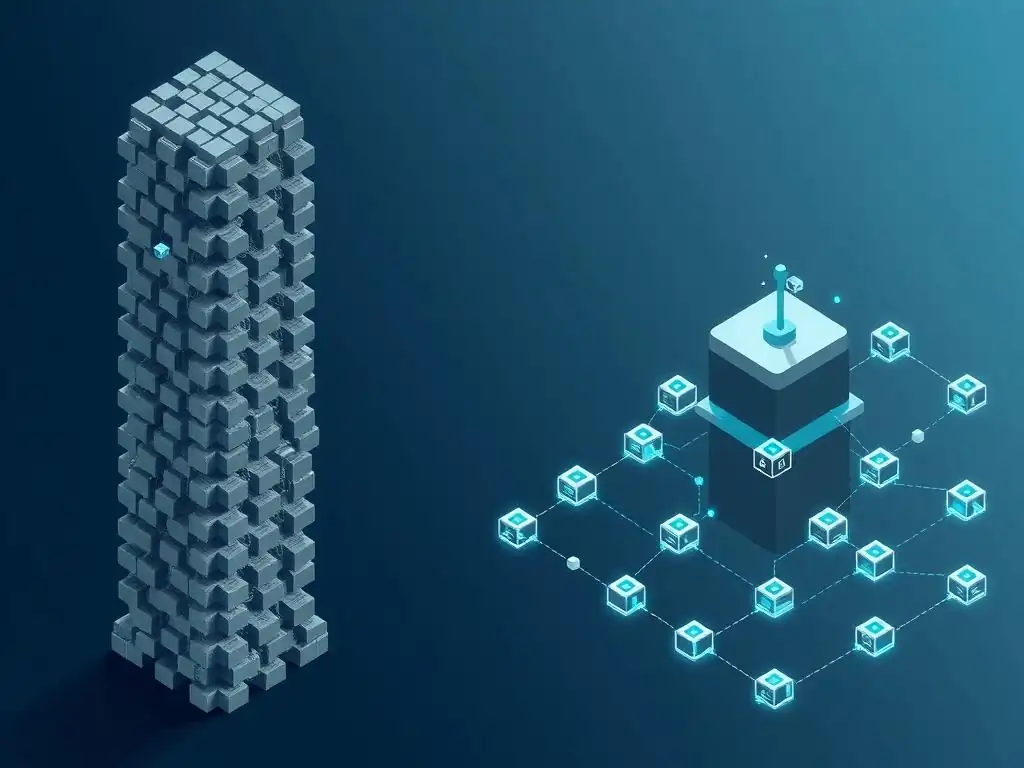
Layer-1 and Layer-2 solutions represent two fundamental strategies for tackling the blockchain scalability problem, each with its own set of advantages, disadvantages, and trade-offs. Layer-1 solutions aim to enhance the base protocol's capacity, while Layer-2 solutions build layers atop the existing chain to handle transactions off-chain. Understanding the differences between these approaches is crucial for evaluating specific scalability implementations and their suitability for different use cases.
The comparison often centers on trade-offs related to security, decentralization, implementation complexity, and the degree to which they modify the core blockchain. Deciding which approach, or combination of approaches, is best depends on the specific goals and requirements of a blockchain network or application. Both types contribute to the overall landscape of blockchain scalability solutions benefits, but they achieve them through distinct architectural patterns.
Trade-offs Between On-Chain and Off-Chain Solutions
The primary trade-off between Layer-1 (on-chain) and Layer-2 (off-chain) solutions lies in where the bulk of the work is performed and verified. Layer-1 solutions process all transactions directly on the main chain, leveraging its full security and decentralization. However, this global verification limits throughput. Layer-2 solutions move transaction processing off-chain, achieving high speed and low cost, but they rely on the Layer-1 chain only for final settlement or dispute resolution.
This distinction means Layer-1 solutions typically offer the highest degree of security and decentralization (assuming the Layer-1 design itself doesn't compromise these) but struggle with throughput. Layer-2 solutions excel at throughput and cost reduction but introduce new layers of complexity and potential points of failure or trust assumptions (though often minimal) not present in direct Layer-1 interactions. The choice between them often involves balancing the need for raw transaction volume and cost efficiency (Layer-2) against the desire for maximum base-layer security and censorship resistance (Layer-1).
Security Considerations for Different Scalability Methods
Security is a paramount concern for any blockchain scalability solution. Layer-1 solutions, by modifying the core protocol, must ensure that scalability improvements do not inadvertently create new attack vectors or weaken the fundamental security properties of the network. For example, poorly implemented sharding could potentially allow attackers to compromise individual shards. Changes to consensus mechanisms must maintain Byzantine fault tolerance and resistance to attacks like 51% attacks.
Layer-2 solutions inherit the security of the underlying Layer-1 but also introduce their own security models. State channels and rollups rely on the Layer-1 chain as an anchor for security, enabling users to withdraw funds or challenge invalid states if the Layer-chain operator misbehaves. Sidechains, however, typically have their own validator sets and consensus mechanisms, making their security independent of, and potentially less robust than, the main chain. Evaluating the security model is a critical part of assessing different blockchain scalability solutions benefits and risks.
Implementation Complexity and Development Challenges
The complexity of implementing scalability solutions varies significantly between Layer-1 and Layer-2 approaches. Layer-1 modifications, especially fundamental changes like sharding or transitioning consensus mechanisms (as seen with Ethereum's multi-year upgrade), are incredibly complex undertakings requiring significant research, development, testing, and coordination across the entire network ecosystem. They often involve network-wide upgrades or hard forks, which can be disruptive.
Layer-2 solutions can generally be developed and deployed more independently of the main chain, often as smart contracts or separate protocols. This makes them faster to innovate on and deploy. However, Layer-2 solutions introduce complexity at the application level, requiring developers to build dApps that interact with the Layer-2 protocol and users to manage assets bridged between Layer-1 and Layer-2. Integrating different Layer-2 solutions and ensuring seamless user experience across them also presents development challenges. Despite complexity, successful implementations yield significant blockchain scalability solutions benefits.
Blockchain Scalability Implementations
Real-world examples of blockchain scalability solutions are emerging and gaining traction, demonstrating the practical application of the concepts discussed. These implementations showcase how different approaches are being used to enhance the capacity of existing blockchain networks, primarily Ethereum, which has a large ecosystem of decentralized applications but faces significant scalability challenges on its base layer.
Examining specific projects provides insight into the design choices, progress, and potential impact of various scalability strategies. These case studies highlight the ongoing efforts to deliver the promised blockchain scalability solutions benefits to users and developers, paving the way for broader adoption of decentralized technologies.
Ethereum 2.0: A Layer-1 Sharding Implementation
Ethereum 2.0, now referred to as Ethereum's consensus layer and execution layer transition, represents a major Layer-1 initiative to improve the scalability, security, and sustainability of the Ethereum network. A key component of this multi-phase upgrade is the planned implementation of sharding. While the initial focus was on transitioning from Proof-of-Work to Proof-of-Stake (which was completed successfully with The Merge), future phases envision dividing the Ethereum network into 64 shards.
These shards are intended to increase transaction throughput by allowing parallel processing. Initially, shards might be used primarily for storing data (data sharding), which is crucial for scaling Layer-2 rollups by providing cheap and abundant data availability. Later phases could enable shards to process transactions and smart contracts independently. This complex engineering effort aims to provide a foundational Layer-1 layer capable of supporting a massive global ecosystem, delivering significant blockchain scalability solutions benefits at the base protocol level.
Polygon: A Layer-2 Sidechain Solution on Ethereum
Polygon is one of the most successful Layer-2 scaling solutions for Ethereum, primarily operating as a Proof-of-Stake sidechain. It provides a framework for building and connecting Ethereum-compatible blockchain networks, offering a scalable and flexible platform for developers. The Polygon PoS chain runs parallel to the Ethereum mainnet and is secured by its own set of validators. Users can bridge assets between Ethereum and Polygon to take advantage of Polygon's higher transaction speeds (often reaching hundreds or thousands of TPS) and significantly lower transaction fees (typically fractions of a cent).
Many popular decentralized applications, including DeFi protocols and NFT marketplaces, have deployed versions of their platforms on Polygon to escape the high gas costs and congestion of Ethereum Layer-1. Polygon's success demonstrates the effectiveness of the sidechain approach in providing immediate scalability relief and delivering tangible blockchain scalability solutions benefits to users by enabling faster and cheaper transactions for everyday use.
StarkNet: A Zero-Knowledge Rollup on Ethereum
StarkNet is a permissionless decentralized Validity Rollup (a type of zk-Rollup) operating as a Layer-2 network on Ethereum. Developed by StarkWare, it leverages STARK proofs to allow dApps to achieve massive scale without compromising Ethereum's security. StarkNet bundles thousands of transactions, computes their validity off-chain, generates a STARK proof for the entire batch, and then posts this proof and a minimal amount of data to the Ethereum mainnet. The Ethereum smart contract verifies the STARK proof, cryptographically guaranteeing the correctness of all transactions in the batch.
As a zk-Rollup, StarkNet offers high transaction throughput, low fees, and faster finality compared to Optimistic Rollups (no long challenge period for withdrawals). It aims to support general-purpose computation, allowing developers to deploy complex smart contracts in a specialized language called Cairo. StarkNet represents the cutting edge of zk-Rollup technology, showcasing the potential for delivering significant blockchain scalability solutions benefits while maintaining strong security guarantees inherited from Ethereum.
The Future of Blockchain Scalability
The pursuit of blockchain scalability is an ongoing process, with research and development continuously pushing the boundaries of what is possible. While significant progress has been made with current Layer-1 upgrades and the proliferation of Layer-2 solutions, the demand for decentralized applications is expected to grow dramatically, necessitating further innovation. The future of blockchain scalability will likely involve a combination of improved existing techniques and entirely new approaches.
Emerging trends focus on optimizing data availability, enhancing cross-layer communication, and exploring novel cryptographic techniques. The successful scaling of blockchain is not just a technical challenge but also a critical factor in determining the extent to which this transformative technology can achieve mass adoption and reshape various industries. The future hinges on realizing the full potential of blockchain scalability solutions benefits.
Emerging Trends in Blockchain Scalability Research
Current research in blockchain scalability is exploring several promising avenues. One major area is improving data availability layers, which are crucial for Layer-2 rollups to ensure that users can always access the data needed to reconstruct the state or challenge invalid transactions. Solutions like Ethereum's planned data sharding (Proto-Danksharding and Danksharding) aim to provide cheap and scalable data storage specifically for rollups.
Another trend is the development of interoperability protocols and bridges that allow different Layer-2 solutions and even different Layer-1 chains to communicate and transfer assets seamlessly. This is essential for creating a unified, scalable ecosystem rather than isolated scaling islands. Research is also ongoing into advanced cryptographic techniques, such as recursive proofs (where a proof can verify other proofs) to further compress data and computation, and even exploring alternative distributed ledger technologies that might offer different scalability paradigms.
The Role of Scalability in Mass Adoption of Blockchain Technology
Scalability is arguably the single most critical factor for achieving mass adoption of blockchain technology. Without the ability to handle millions or billions of users and process a high volume of transactions quickly and affordably, blockchain applications will remain confined to niche use cases or be limited to users who can tolerate high costs and slow speeds. For blockchain to become the backbone of future financial systems, supply chains, digital identity solutions, and the metaverse, it must scale to meet global demand.
Successful blockchain scalability solutions benefits include not only technical performance improvements but also the creation of an environment where developers can build innovative, user-friendly applications that can compete with centralized alternatives. Lower costs and faster speeds remove friction for end-users, making blockchain-based services more accessible and appealing to the general public. Scalability is the bridge connecting the powerful potential of decentralization with the practical requirements of a global user base.
Blockchain Scalability Solutions Benefits: A Summary and Outlook
The benefits of blockchain scalability solutions are profound and multifaceted. They directly address the core limitations that have hindered the widespread adoption of early blockchain networks. By significantly increasing transaction throughput, they enable high-volume applications. By drastically reducing transaction fees, they make blockchain interactions affordable for everyone and unlock new economic models. By improving confirmation times, they enhance user experience and enable seamless interactions. And by boosting overall network capacity, they provide the necessary infrastructure to support explosive growth and mass adoption.
The ongoing development and deployment of Layer-1 and Layer-2 scalability solutions represent a vital quest to fulfill the promise of decentralized technology. While challenges remain in areas like complexity, interoperability, and ensuring continued decentralization, the progress made demonstrates a clear path towards blockchains that are not only secure and decentralized but also scalable enough to power the applications of the future. The realized blockchain scalability solutions benefits are already transforming the ecosystem, and continued innovation promises an even more performant and accessible decentralized future.
This concludes the article section.
Frequently Asked Questions
What are some of the primary challenges hindering blockchain scalability?
The main issues include slow transaction speeds, high transaction fees, and limited throughput, preventing widespread adoption. These limitations stem from the consensus mechanisms and distributed nature of blockchains.
What are some examples of blockchain scalability solutions being developed?
Layer-2 solutions like rollups and sidechains, sharding, and improved consensus mechanisms are actively being developed. These aim to increase transaction processing capacity without compromising security.
What are the benefits of successfully implementing blockchain scalability solutions?
Improved scalability leads to faster transaction speeds, lower fees, and increased transaction throughput. This makes blockchain technology more practical for everyday use and enterprise applications.
How does blockchain scalability impact the development of DeFi (Decentralized Finance)?
Scalability is crucial for DeFi as it allows for more complex and frequent transactions without prohibitive costs. Improved scalability enables broader participation and the development of more sophisticated financial applications.
What is the role of regulation in the development and adoption of blockchain scalability solutions?
Clear and supportive regulation can foster innovation and investment in scalability solutions. Conversely, unclear or restrictive regulations can hinder progress and limit the potential benefits of these solutions.
Final Reflection: Embracing the Future of Blockchain Efficiency
The exploration of blockchain scalability solutions is not merely an academic exercise; it's a critical imperative for the widespread adoption of this transformative technology. The limitations of current blockchain networks, particularly in transaction speed and cost, pose significant barriers to their real-world application. Addressing these challenges unlocks the true potential of blockchain to revolutionize industries and empower individuals.
The journey towards scalable blockchain solutions is ongoing, and its impact is already being felt across various sectors. Witnessing the evolution of these technologies firsthand, from theoretical concepts to tangible implementations, underscores the profound potential they hold to reshape our digital landscape. The future of finance is decentralized, and blockchain technology is the key to unlocking that future.
This quote encapsulates the driving force behind the relentless pursuit of blockchain scalability, a pursuit that promises a more equitable and efficient world.
As we stand on the cusp of a new era of decentralized technology, I invite you to consider the role you can play in shaping its future. Reflect on the potential benefits of blockchain scalability solutions and how they might impact your own life and work. Embrace the opportunity to learn, innovate, and contribute to the development of a more accessible, efficient, and decentralized world powered by the transformative potential of blockchain.
Uncover Blockchain's Scalable Future!
Thank you for exploring the complexities of blockchain scalability with us. We hope you now have a clearer understanding of the challenges and potential solutions shaping the future of this transformative technology. Ready to take the next step?
Here are a few ways you can further explore the quest for faster and more cost-effective blockchain transactions:
- Deep Dive: Research a specific Layer-2 scaling solution such as Polygon, Optimism, or zkSync, and analyze its advantages and disadvantages compared to Layer-1 improvements. This will give you practical knowledge of different approaches.
- Share Your Insights: Discuss your thoughts on blockchain scalability in the comments below, or start a conversation on our social media channels using #BlockchainTrends.
- Explore Alternative Chains: Investigate blockchains designed with scalability in mind from the ground up, such as Solana or Avalanche, and consider how their architectures address common scalability issues.
What innovative solution do you believe holds the most promise for solving blockchain's scalability challenges, and how will it impact the future of decentralized applications?
Leave a Reply