
SelfSovereign Identity and Blockchain: Putting Individuals in Control of Their Data

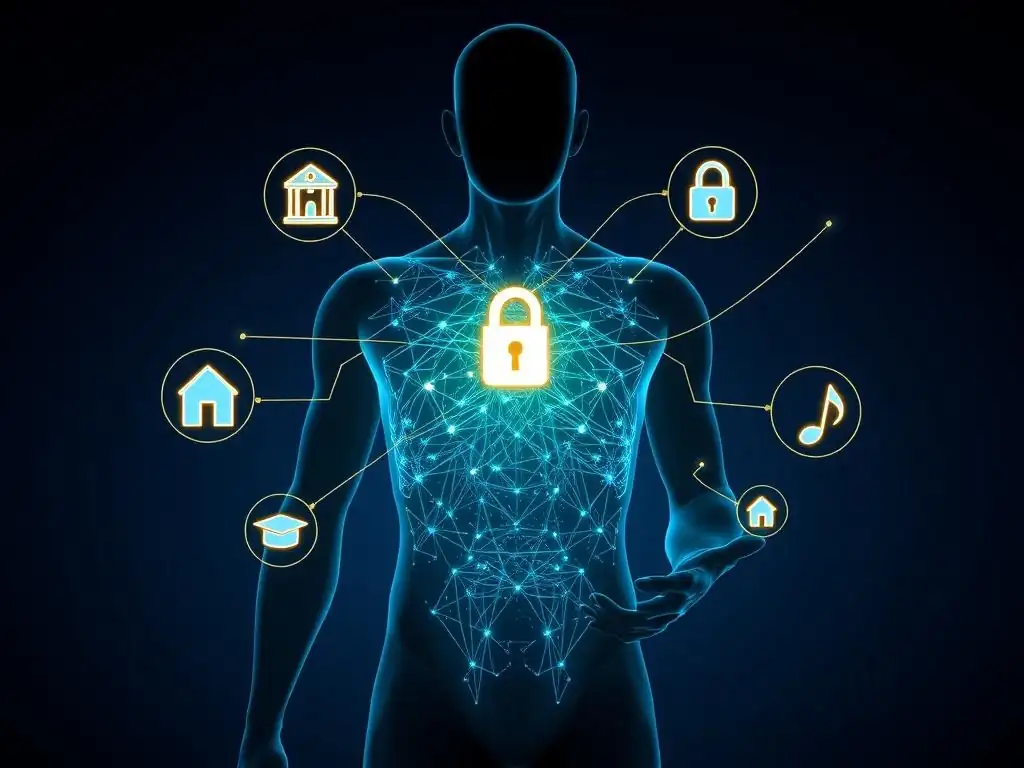
Welcome to Blockchain Trends, your guide to understanding the real-world impact of blockchain technology!
Imagine a future where you, and only you, control your digital identity. Our latest exploration delves into the transformative potential of blockchain selfsovereign identity control, a powerful tool that's reshaping how we think about data ownership and security. But how does this technology actually work, and what are its implications for individuals and enterprises alike? Discover the answers and unlock the future of decentralized identity within the realm of Enterprise Blockchain Solutions. Read on to learn more and begin your journey to understanding this groundbreaking concept!
Defining Self-Sovereign Identity: Key Principles and Characteristics
Self-Sovereign Identity (SSI) represents a paradigm shift in how digital identities are managed, moving away from centralized or federated systems towards a model where individuals have ultimate ownership and control over their digital identity data. At its core, SSI is built upon several fundamental principles: user control, privacy, security, portability, and interoperability.
Unlike traditional systems where identity is managed by external entities like governments, banks, or social media companies, SSI places the individual at the center, empowering them to manage their identifiers, control access to their personal data, and decide which information to share and with whom. This model fundamentally changes the relationship between individuals and the services they interact with online and offline, fostering a greater sense of agency and trust.
The defining characteristic of SSI is the emphasis on decentralized control. Instead of relying on a single authority to issue and verify identity attributes, SSI leverages technologies like blockchain to create a secure, tamper-evident, and distributed ledger. This allows individuals to possess unique identifiers (Decentralized Identifiers or DIDs) and verifiable credentials directly linked to these identifiers, without needing a central intermediary for every transaction or interaction.
This framework ensures that personal data is not stored in vulnerable, centralized databases, significantly reducing the risk of mass data breaches. The principle of minimal disclosure is also paramount, enabling users to share only the specific pieces of information required for a transaction or verification, rather than revealing their entire identity profile. This level of granular Blockchain selfsovereign identity control is a cornerstone of the SSI vision.
The Benefits of SSI: Enhanced Privacy, Security, and Control
The adoption of Self-Sovereign Identity offers substantial benefits, primarily revolving around enhanced privacy, robust security, and unprecedented individual control over personal data. In an era marked by escalating concerns over data privacy and the increasing frequency of large-scale data compromises, SSI provides a compelling alternative to current identity management practices.
By allowing users to store their credentials securely, often encrypted on their own devices or decentralized storage, and selectively share verified attributes, SSI drastically reduces the digital footprint left across various online services. This minimizes the risk of identity theft and unauthorized data usage, as there is no single honey pot of personal information for malicious actors to target.
Beyond privacy, SSI significantly bolsters security. Traditional systems often rely on passwords and centralized databases, which are susceptible to phishing attacks and breaches. SSI, especially when anchored by blockchain, leverages cryptographic proofs and decentralized architectures, making it significantly harder for attackers to compromise an identity.
Verifiable credentials, signed digitally by the issuer and verified cryptographically by the verifier, ensure the authenticity and integrity of shared data without exposing the underlying sensitive information unnecessarily. This secure framework empowers individuals with true Blockchain selfsovereign identity control, allowing them to manage their digital presence with greater confidence and safety. The ability to choose what data is shared and who it is shared with, without relying on intermediaries, fundamentally shifts the power dynamic back to the individual.
Contrasting SSI with Traditional Identity Management Systems
Self-Sovereign Identity stands in stark contrast to traditional identity management systems, which broadly fall into two categories: centralized and federated. Centralized systems, like government-issued IDs or employer databases, rely on a single authority to issue and manage identities. While seemingly straightforward, this model creates single points of failure, making users vulnerable if the central authority's database is compromised or if the authority acts maliciously.
Furthermore, individuals have little to no control over how their data is used or shared once it's in the hands of the central entity. A classic example is a national identity database, where a breach could expose the sensitive information of millions.
Federated identity systems, such as using social media accounts or Google to log into third-party websites, offer some convenience but still rely on a limited number of large identity providers. While they reduce the need for multiple passwords, they consolidate power and data with these large corporations. Users implicitly trust these providers with their login credentials and often share more data than necessary with linked services.
In contrast, SSI, especially when powered by blockchain, decentralizes identity management. Instead of a user's identity being tied to a few large platforms, it resides with the user, verifiable by anyone who trusts the original issuer of a credential. This model eliminates the reliance on central gatekeepers and enables fine-grained Blockchain selfsovereign identity control, allowing users to prove specific attributes (e.g., "over 18") without revealing their full identity (e.g., date of birth, name, address), a significant privacy improvement over traditional methods.
- Defining Self-Sovereign Identity: Key Principles and Characteristics
- The Benefits of SSI: Enhanced Privacy, Security, and Control
- Contrasting SSI with Traditional Identity Management Systems
- How does blockchain technology enable self-sovereign identity (SSI)?
- What are the key benefits of blockchain-based self-sovereign identity compared to traditional identity systems?
- How is Decentralized Finance (DeFi) impacted by the adoption of blockchain self-sovereign identity control?
- What role does regulation play in the widespread adoption of blockchain self-sovereign identity solutions?
- Beyond financial applications, what other industries could benefit from blockchain self-sovereign identity control?
Frequently Asked Questions
How does blockchain technology enable self-sovereign identity (SSI)?
Blockchain provides a decentralized and immutable ledger for verifying and managing identity credentials. This allows individuals to control access to their data without relying on centralized authorities. The distributed nature ensures greater security and transparency.
What are the key benefits of blockchain-based self-sovereign identity compared to traditional identity systems?
SSI offers enhanced privacy and security, as individuals directly manage their data. It reduces the risk of data breaches and identity theft. Furthermore, it fosters greater interoperability across different platforms and services.
How is Decentralized Finance (DeFi) impacted by the adoption of blockchain self-sovereign identity control?
SSI can streamline Know Your Customer (KYC) and Anti-Money Laundering (AML) processes within DeFi. It allows users to prove their identity without repeatedly submitting sensitive information. This can lead to increased efficiency and accessibility in DeFi.
What role does regulation play in the widespread adoption of blockchain self-sovereign identity solutions?
Clear and supportive regulations are crucial for building trust and confidence in SSI systems. Regulations should focus on data privacy, security, and interoperability. This will encourage businesses and individuals to adopt blockchain-based identity solutions.
Beyond financial applications, what other industries could benefit from blockchain self-sovereign identity control?
Healthcare, education, and supply chain management are prime candidates. SSI can securely manage medical records, verify educational credentials, and track products through the supply chain. This enhances transparency and efficiency across these sectors.
Final Reflection: Embracing Individual Data Sovereignty
The exploration of Self-Sovereign Identity (SSI) and its synergy with blockchain technology underscores a crucial shift in power dynamics. The promise of individuals regaining control over their personal data is no longer a futuristic aspiration, but a tangible possibility being actively shaped today. This paradigm shift, driven by technological advancements and a growing awareness of data privacy concerns, is poised to redefine how we interact with digital services and build trust in the online world.
The journey towards widespread adoption of SSI is undoubtedly complex, yet its potential impact on the cultural and social landscape is profound. Witnessing the burgeoning interest in decentralized identity solutions fills me with hope, knowing that individuals are increasingly empowered to navigate the digital realm with greater autonomy and security. Information is the oil of the 21st century, and analytics is the combustion engine.
- Peter Sondergaard. This quote highlights the value of data, and SSI empowers individuals to control that value, ensuring they benefit from its use.
As we stand on the cusp of this transformative era, I invite you to reflect on your own digital footprint. Consider the countless instances where your personal information is shared, stored, and potentially exploited without your explicit consent. Embrace the principles of Self-Sovereign Identity, advocate for data privacy, and actively seek out solutions that empower you to reclaim control over your digital identity. The future of the internet hinges on our collective commitment to building a more equitable and secure digital world, one where individuals are truly in control of their data.
Empower Yourself: Reclaim Your Digital Identity Today!
Thank you for exploring the potential of self-sovereign identity and blockchain technology. You've gained valuable insights into how individuals can truly own and control their data. Now, it's time to put that knowledge into action.
Here's how you can take the first steps toward reclaiming your digital identity:
- Start building your own digital wallet. Research available apps compatible with blockchain technology and begin securing your credentials.
- Explore online forums and communities dedicated to self-sovereign identity to learn from others and contribute to the conversation. Share an interesting insight from the article!
- Discuss the implications of self-sovereign identity with friends and family. Help them understand how they too can benefit from greater control over their personal information.
What are the first digital credentials you plan to secure with your new wallet, and why? Share your thoughts below!
Leave a Reply