
The Governance Galaxy: Exploring Community Power in Ethereum, Polkadot, and Cosmos


Welcome to Blockchain Trends, where we delve into the revolutionary power of blockchain technology that extends far beyond mere cryptocurrencies. Are you ready to explore how decentralized systems are reshaping industries and governance structures? This week, we're diving deep into the fascinating world of decentralized governance blockchain communities, examining the unique approaches of Ethereum, Polkadot, and Cosmos. Uncover the secrets to community power and the future of truly decentralized decision-making. Intrigued? Let's begin.
Decentralized Governance: Comparing Ethereum, Polkadot, and Cosmos
- Introduction: The Significance of Community Governance in Web3
- Ethereum Governance: EIPs and DAOs
- Polkadot Governance: A Multi-Layered Approach
- Cosmos Governance: Hubs, Zones, and IBC
- Comparing Governance Models: Ethereum, Polkadot, Cosmos
- Challenges and Opportunities in Decentralized Governance
- Case Studies: Community-Led Initiatives
- Impact of Decentralized Governance on Blockchain Adoption
- Conclusion: The Future of Community Power
-
Frequently Asked Questions
- How does blockchain technology empower decentralized governance in communities?
- What are some key differences in governance models across Ethereum, Polkadot, and Cosmos?
- How does decentralized governance impact the development and evolution of blockchain platforms?
- What are the main challenges facing decentralized governance in blockchain communities?
- How can individuals get involved in decentralized governance within blockchain communities?
- Final Reflection: Embracing the Decentralized Future
- Seize Your Voice: Shape the Future of Blockchain!
Introduction: The Significance of Community Governance in Web3
Decentralized Governance in Blockchain Ecosystems
Decentralized governance stands as a cornerstone of the Web3 vision, representing a fundamental shift from traditional hierarchical structures to community-driven decision-making. In blockchain ecosystems, this concept is paramount, ensuring that the evolution and direction of these networks are not dictated by a central authority but rather by the collective will of their users and stakeholders. This approach aims to enhance security, transparency, and resilience, distributing power and mitigating the risks associated with centralized control points.
The promise of decentralized governance is to create more equitable and adaptable systems, reflecting the diverse needs and interests of the blockchain community. By empowering users to participate in key decisions, these systems aim to foster a sense of ownership and collective responsibility, crucial for the long-term health and sustainability of any blockchain project.
The importance of decentralized governance is amplified in the context of blockchain's core principles: decentralization, immutability, and transparency. Without robust decentralized governance mechanisms, blockchain networks risk drifting towards centralization, undermining their foundational values. Effective decentralized governance ensures that protocol upgrades, resource allocation, and future developments are subject to community consensus, rather than the dictates of a select few. This not only aligns with the ethos of Web3 but also strengthens the network's legitimacy and user confidence. Ultimately, decentralized governance is not merely a feature, but a fundamental requirement for blockchain ecosystems striving to achieve true decentralization and community ownership.
Ethereum, Polkadot, and Cosmos: Key Platforms
Ethereum, Polkadot, and Cosmos stand out as leading platforms in the blockchain space, each championing distinct approaches to decentralized governance. While all three recognize the importance of community participation, their implementations and philosophies differ significantly, reflecting their unique architectures and goals. Ethereum, the pioneer of smart contracts, has historically relied on a more informal, off-chain governance process evolving towards on-chain mechanisms through DAOs.
Polkadot, designed for interoperability and scalability, boasts a sophisticated on-chain governance system with multiple layers of representation and voting mechanisms. Cosmos, the "Internet of Blockchains," emphasizes sovereign zones with independent governance, connected through the Inter-Blockchain Communication (IBC) protocol, creating a network of self-governing communities.
These three platforms represent diverse interpretations of decentralized governance, offering valuable case studies for understanding the spectrum of possibilities. Ethereum's journey from a largely off-chain to increasingly on-chain governance model showcases the organic evolution of decentralized decision-making in a mature ecosystem. Polkadot's meticulously designed on-chain governance framework exemplifies a structured and formalized approach, prioritizing efficiency and inclusivity.
Cosmos, with its focus on sovereign zones, presents a federated governance model, balancing autonomy with interconnectedness. By examining these platforms, we can gain a deeper understanding of the challenges, trade-offs, and innovations within decentralized governance, and how these models shape the development and future trajectory of decentralized blockchain communities.
Ethereum Governance: EIPs and DAOs
EIPs: Shaping Ethereum's Development
Ethereum Improvement Proposals (EIPs) are the backbone of Ethereum's protocol development, serving as the formal mechanism for proposing and implementing changes to the network. EIPs are meticulously documented design documents that describe proposed new features, standards, or improvements for the Ethereum platform. The process is open and transparent, inviting participation from the global Ethereum community, including developers, researchers, and users.
Anyone can submit an EIP, initiating a rigorous review and discussion process that involves community feedback, core developer consensus, and ultimately, implementation and network upgrades. EIPs cover a wide spectrum of changes, ranging from core protocol upgrades, like changes to the Ethereum Virtual Machine (EVM) or consensus mechanisms, to application-level standards, such as token standards (ERC-20, ERC-721) and interface specifications.
The EIP process is crucial for maintaining Ethereum's decentralized nature and ensuring that changes are carefully considered and broadly supported by the community. Each EIP goes through several stages, starting as a draft, moving to review, and potentially progressing to final status after community consensus and core developer agreement. Different types of EIPs cater to various aspects of the Ethereum ecosystem, including Core EIPs for consensus-layer changes, Networking EIPs for P2P network improvements, Interface EIPs for client API specifications, and ERC EIPs for application-level standards.
This structured and open process has been instrumental in Ethereum's continuous evolution and its ability to adapt to emerging challenges and opportunities in the blockchain space. For example, EIP-1559, which reformed Ethereum's transaction fee market, underwent extensive community debate and analysis before its successful implementation in the London upgrade, demonstrating the power and rigor of the EIP governance model.
Ethereum DAOs: Current Landscape and Impact
Decentralized Autonomous Organizations (DAOs) are increasingly playing a vital role in Ethereum's governance landscape, representing a move towards more formalized and on-chain community decision-making. While EIPs handle protocol-level changes, DAOs on Ethereum are primarily focused on governing specific projects, protocols, or communities built on the Ethereum platform.
These DAOs utilize smart contracts to encode governance rules, enabling token holders to vote on proposals related to resource allocation, protocol parameters, and future development directions. The Ethereum ecosystem boasts a diverse range of DAOs, from DeFi giants like MakerDAO and Uniswap DAO, governing billions of dollars in assets, to smaller, community-focused DAOs managing specific applications or initiatives.
The rise of DAOs on Ethereum signifies a significant shift towards greater community empowerment and decentralized control within the Web3 space. MakerDAO, for instance, pioneered decentralized stablecoin governance, allowing MKR token holders to vote on stability fees and other parameters crucial for maintaining the peg of DAI. Uniswap DAO governs the Uniswap protocol, one of the largest decentralized exchanges, with UNI token holders voting on protocol upgrades and treasury management.
These DAOs are not without their challenges, including low voter turnout and complexities in decision-making processes. However, they represent a powerful tool for decentralizing governance and fostering community ownership within the Ethereum ecosystem, paving the way for more robust and resilient decentralized applications and protocols. The impact of Ethereum DAOs is evident in their increasing influence over key DeFi protocols and their potential to shape the future of decentralized governance within the broader blockchain space.
Polkadot Governance: A Multi-Layered Approach
Polkadot's Governance Framework: Council, Technical Committee, and Referenda
Polkadot distinguishes itself with a highly sophisticated and on-chain governance framework, designed to be both efficient and inclusive. At the heart of Polkadot's governance are three key bodies: the Council, the Technical Committee, and the general Polkadot community participating through referenda. The Council is an on-chain body elected by DOT token holders, representing passive stakeholders and proposing referenda, cancelling potentially harmful or malicious proposals, and acting as a general check and balance in the governance process.
The Technical Committee, composed of development teams working on Polkadot, has the power to fast-track emergency proposals, especially security-critical fixes, ensuring rapid response to urgent issues. Referenda are the ultimate decision-making mechanism, allowing all DOT token holders to vote on proposals, including those originating from the Council or public.
This multi-layered approach ensures a balance between expert input, stakeholder representation, and community sovereignty. The Council adds a layer of efficiency and proactive governance, while the Technical Committee provides technical expertise and rapid response capabilities. Referenda, open to all DOT holders, guarantee ultimate community control and democratic decision-making.
This framework is designed to prevent governance gridlock and ensure that Polkadot can evolve and adapt effectively. Proposals can originate from various sources: the Council, the Technical Committee (in emergency cases), or directly from the public. This robust and well-defined governance structure is a key feature of Polkadot, aiming to create a truly decentralized and community-driven network capable of navigating complex decisions and ensuring long-term sustainability.
Referenda and Voting Mechanisms
Referenda are the core mechanism for decentralized decision-making in Polkadot, allowing DOT token holders to directly participate in governing the network. Any DOT holder can submit a proposal for a referendum, which can range from simple parameter changes to complex protocol upgrades. Once a proposal is submitted and passes initial checks, it enters a voting period, during which DOT holders can vote 'Aye' (yes) or 'Nay' (no).
Polkadot employs a sophisticated voting mechanism known as "adaptive quorum biasing" and "conviction voting." Adaptive quorum biasing adjusts the required majority based on voter turnout, making it more difficult to pass proposals with low participation, thus encouraging broader community involvement.
Conviction voting allows voters to express stronger conviction by locking up their DOT tokens for a longer duration, increasing the weight of their vote. The longer the tokens are locked, the greater the voting power, up to a maximum of 6x voting power for tokens locked for the maximum duration. This mechanism incentivizes long-term commitment and rewards stakeholders who are deeply invested in Polkadot's future.
Referenda can be categorized into different types, including public referenda, Council-originated referenda, and emergency referenda fast-tracked by the Technical Committee. The outcome of a referendum is determined by a combination of vote majority and quorum requirements, ensuring that decisions are not only supported by a significant portion of voters but also reflect a meaningful level of community participation. This comprehensive and nuanced voting system is designed to make Polkadot governance both robust and representative, fostering a truly decentralized and community-driven decision-making process.
Cosmos Governance: Hubs, Zones, and IBC
Cosmos Hub Governance
Cosmos governance operates on a unique model centered around the concept of hubs and zones, connected through the Inter-Blockchain Communication (IBC) protocol. The Cosmos Hub, the first hub in the Cosmos network, serves as a central point of coordination and shared security. Governance of the Cosmos Hub is primarily focused on the ATOM token holders, who can participate in on-chain governance proposals through staking and voting.
Proposals on the Cosmos Hub typically relate to upgrades to the Hub itself, allocation of ATOM inflation rewards, and strategic direction of the Cosmos network. ATOM holders can vote on proposals using their staked ATOM, with voting power proportional to the amount of ATOM staked.
Cosmos Hub governance follows a standard proposal and voting process. Anyone can submit a governance proposal, which then enters a deposit period. If the proposal gathers sufficient deposits, it moves to the voting period. During the voting period, ATOM stakers can cast their votes (Yes, No, Abstain, or NoWithVeto).
A proposal passes if it meets the quorum requirements and receives a majority of 'Yes' votes, without being vetoed by a significant minority. Governance on the Cosmos Hub is crucial for the overall health and evolution of the Cosmos network, setting precedents and providing foundational services for interconnected zones. For example, proposals related to IBC protocol upgrades or allocation of resources for network growth are key governance decisions made by the ATOM community.
Zone-Specific Governance and IBC Impact
Beyond the Cosmos Hub, each zone within the Cosmos network enjoys sovereign governance, reflecting the "Internet of Blockchains" philosophy. Zones are independent blockchains with their own validators, tokenomics, and governance mechanisms. This means that governance decisions for a specific zone are made by its own community of token holders, validators, and stakeholders, without direct interference from the Cosmos Hub or other zones.
This sovereignty allows zones to tailor their governance models to their specific needs and communities, fostering innovation and experimentation in governance design. Zone-specific governance can vary significantly, ranging from simple token-weighted voting to more complex DAOs or delegated governance systems.
The Inter-Blockchain Communication (IBC) protocol, which enables seamless communication and asset transfer between Cosmos zones, indirectly impacts governance across the network. While each zone governs itself, IBC facilitates the exchange of information and value, creating interdependencies and opportunities for cross-chain collaboration. Governance decisions in one zone can potentially have implications for other interconnected zones, particularly in terms of IBC compatibility and interoperability standards.
However, the principle of zone sovereignty remains paramount, ensuring that each blockchain maintains control over its own governance and evolution. This federated governance model, where the Cosmos Hub provides a shared foundation while zones retain autonomy, is a defining characteristic of the Cosmos network and its approach to decentralized governance in a multi-chain ecosystem. For instance, governance decisions within Osmosis DEX, a zone in Cosmos, are independent of the Cosmos Hub, focusing on optimizing the DEX protocol and its community.
Comparing Governance Models: Ethereum, Polkadot, Cosmos
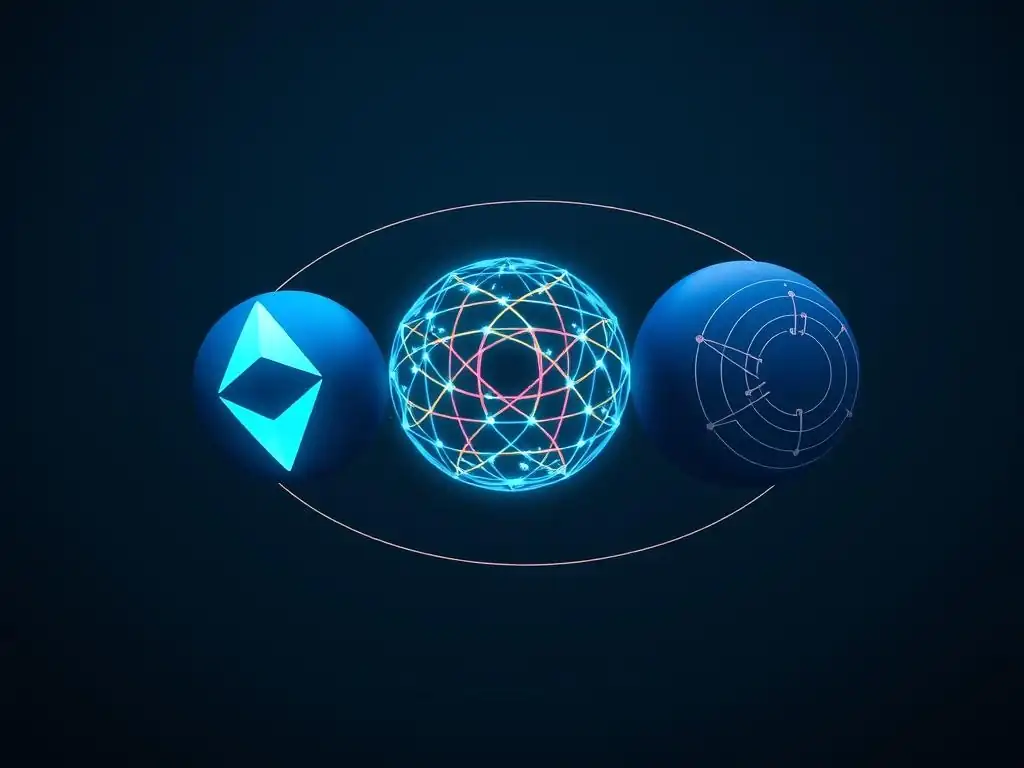
Decentralized Decision-Making: A Comparison
Comparing decentralized decision-making across Ethereum, Polkadot, and Cosmos reveals distinct approaches reflecting their core philosophies. Ethereum, historically, has leaned towards a more informal and off-chain governance model, primarily driven by core developers and community consensus formed through forums, calls, and the EIP process. While EIPs are formalized proposals, the decision-making process is largely social and relies on reaching broad agreement within the Ethereum community. Ethereum is progressively integrating on-chain governance through DAOs, particularly for application-level protocols, but core protocol changes still heavily rely on the EIP process and core developer implementation.
Polkadot, in contrast, champions a highly structured and formalized on-chain governance system. Every aspect of governance, from proposal submission to voting and implementation, is encoded on-chain and executed automatically. The Council, Technical Committee, and referenda system provide a clear framework for decision-making, ensuring transparency and audibility. Polkadot's governance is designed for efficiency and speed, with defined timelines and mechanisms for both regular and emergency proposals.
Cosmos, with its Hub and Zone model, presents a decentralized decision-making landscape where the Cosmos Hub governance focuses on network-level decisions, while individual zones have complete autonomy over their own governance. Decision-making in Cosmos is distributed and localized, reflecting its vision of an "Internet of Blockchains" where sovereign chains govern themselves. While Ethereum's approach is evolving and becoming more on-chain, Polkadot emphasizes structured on-chain governance, and Cosmos prioritizes distributed and zone-specific governance, each model catering to different priorities and ecosystem structures.
Community Participation and Voter Turnout
Community participation and voter turnout are critical metrics for evaluating the effectiveness of decentralized governance in blockchain communities. Ethereum, despite its large community, often faces challenges with voter turnout in DAO governance. While DAOs empower token holders, participation rates in voting can be relatively low, sometimes below 10% of eligible token holders. Factors contributing to this include the complexity of proposals, gas fees associated with voting, and voter apathy. Efforts are being made to improve Ethereum DAO participation through user-friendly voting interfaces, gas-efficient voting mechanisms, and community education initiatives.
Polkadot's on-chain governance framework is designed to encourage higher participation rates through mechanisms like conviction voting and adaptive quorum biasing. Conviction voting incentivizes long-term holders to participate, while adaptive quorum biasing adjusts requirements based on turnout. Polkadot's governance structure, with its clear roles and processes, also aims to make participation more accessible and impactful. Cosmos, with its zone-specific governance, faces varying levels of community participation depending on the zone.
Zones with active communities and strong token holder engagement tend to have higher voter turnout. The Cosmos Hub governance, while important for network-level decisions, may also experience varying participation rates. Across all three platforms, boosting community participation remains a key challenge. Strategies like simplified voting processes, educational resources, and incentivized participation are crucial for realizing the full potential of decentralized governance and ensuring that decisions truly reflect the will of the community.
Governance Efficiency and Speed
Governance efficiency and speed are crucial considerations, especially for rapidly evolving blockchain ecosystems. Ethereum's governance, relying heavily on off-chain consensus and the EIP process, can sometimes be slower and less predictable in terms of timeline. Reaching broad community agreement and coordinating core developer implementation for complex EIPs can take considerable time. However, this deliberate process aims to ensure thorough review and minimize risks associated with rushed changes. Ethereum's move towards on-chain DAOs for specific protocols can potentially improve governance speed and efficiency for those applications.
Polkadot's on-chain governance framework is designed for both efficiency and speed. The Council and Technical Committee roles, combined with defined referendum timelines and automated execution, enable relatively rapid decision-making and implementation. Polkadot's system is capable of handling both regular upgrades and emergency fixes efficiently. Cosmos, with its zone-specific governance, offers flexibility in governance speed.
Zones can implement governance changes at their own pace, tailored to their specific needs and community consensus. The Cosmos Hub governance, while impacting the broader network, still operates with defined proposal and voting periods. Comparing efficiency and speed, Polkadot's on-chain system is generally designed for faster and more streamlined governance processes compared to Ethereum's more deliberative and evolving model and Cosmos' distributed and zone-specific approaches. The optimal balance between governance speed and thoroughness depends on the specific needs and priorities of each blockchain ecosystem.
Challenges and Opportunities in Decentralized Governance
Overcoming Governance Participation Barriers
Decentralized governance, while promising, faces several challenges, particularly in overcoming barriers to community participation. One significant barrier is the complexity of governance proposals and processes. Understanding technical details, evaluating potential impacts, and navigating voting mechanisms can be daunting for many token holders, leading to lower participation rates.
Educational resources, simplified voting interfaces, and more accessible proposal summaries are crucial to address this knowledge gap and make governance more inclusive. High transaction fees, especially on networks like Ethereum, can also deter participation in on-chain voting, particularly for smaller token holders. Gas-efficient voting mechanisms and layer-2 solutions can help mitigate this cost barrier.
Another challenge is voter apathy, stemming from a perceived lack of impact or a feeling that individual votes are insignificant. Building a sense of community ownership and demonstrating the tangible impact of governance decisions is essential to motivate participation. Incentivizing participation through rewards, recognition, or delegation mechanisms can also help boost voter turnout.
Furthermore, ensuring representation and inclusivity is crucial. Decentralized governance should strive to represent the diverse perspectives within the community, avoiding dominance by whales or concentrated stakeholder groups. Mechanisms like quadratic voting, delegation options, and community outreach programs can promote broader and more equitable participation, ensuring that decentralized governance truly reflects the collective will of the blockchain community.
Mitigating Malicious Governance Attacks
Decentralized governance systems are vulnerable to various forms of malicious attacks, requiring robust mitigation strategies. Governance attacks can range from bribery and collusion to sybil attacks and hostile takeovers, aiming to manipulate governance outcomes for malicious purposes. Bribery attacks involve offering incentives to voters to sway their votes in favor of a harmful proposal.
Mitigation strategies include increasing transparency in voting patterns, implementing anti-collusion mechanisms, and fostering a strong ethical culture within the community. Sybil attacks, where a single entity creates multiple fake identities to gain disproportionate voting power, can be mitigated through identity verification mechanisms and stake-weighted voting, making it costly to create and maintain numerous fake identities.
Hostile takeovers, where a malicious actor accumulates a majority of voting power to control governance, are a significant concern. Token distribution models that promote decentralization, vesting schedules to prevent sudden token dumps, and governance mechanisms that require supermajorities for critical decisions can help mitigate this risk. Furthermore, continuous monitoring of governance activity, anomaly detection systems, and community vigilance are essential for identifying and responding to potential governance attacks.
Implementing robust security audits of governance smart contracts and regularly reviewing governance mechanisms to identify and address vulnerabilities are crucial proactive measures. A layered security approach, combining technical safeguards with community awareness and ethical norms, is necessary to protect decentralized governance systems from malicious actors and ensure their integrity and resilience.
The Future of Decentralized Governance
The future of decentralized governance is poised for significant evolution and innovation, driven by the ongoing maturation of Web3 and the lessons learned from existing governance models. One key trend is the increasing adoption of on-chain governance mechanisms, moving away from purely off-chain or informal processes. On-chain governance offers greater transparency, audibility, and automation, enhancing the integrity and efficiency of decision-making.
However, the optimal balance between on-chain and off-chain elements will continue to be explored, recognizing the value of off-chain discussions and community building in shaping governance outcomes. Liquid democracy, a system that allows token holders to either vote directly or delegate their votes to trusted experts, is gaining traction as a way to improve participation and leverage expertise within decentralized governance.
Quadratic voting, where voters can allocate more votes to issues they feel most strongly about, is another promising innovation for enhancing the expressiveness and fairness of voting systems. Further experimentation with different voting mechanisms, quorum requirements, and proposal processes will continue to refine decentralized governance models. The integration of decentralized identity (DID) solutions could play a crucial role in mitigating sybil attacks and enabling more personalized and secure governance participation.
Furthermore, the development of specialized governance tooling, including user-friendly voting interfaces, governance analytics dashboards, and proposal management platforms, will be essential for making decentralized governance more accessible and effective. The future of decentralized governance will likely be characterized by greater sophistication, inclusivity, and resilience, shaping the evolution of Web3 and empowering blockchain communities to collectively steer the future of decentralized technologies.
Case Studies: Community-Led Initiatives
Ethereum: MakerDAO Governance
MakerDAO stands as a pioneering example of decentralized governance in the Ethereum ecosystem, particularly within the DeFi space. MakerDAO governs the DAI stablecoin, a decentralized, collateral-backed stablecoin pegged to the US dollar. Governance is primarily driven by MKR token holders, who have the power to vote on key parameters that influence the stability and functionality of the DAI system. These parameters include the stability fee (interest rate on DAI loans), collateral types accepted, debt ceilings, and risk parameters for different collateral assets. MKR holders exercise their governance rights through on-chain voting using the Maker Governance Portal.
MakerDAO governance has been instrumental in managing the DAI stablecoin through various market conditions and challenges. For example, during periods of market volatility, MKR holders have voted to adjust stability fees to maintain the DAI peg and manage systemic risk. Governance proposals are rigorously debated in the MakerDAO community forums and governance calls before being put to a vote. This community-led approach has allowed MakerDAO to adapt and evolve, demonstrating the power of decentralized governance in managing complex DeFi protocols.
The effectiveness of MakerDAO governance is evident in the DAI stablecoin's resilience and its position as a leading decentralized stablecoin in the crypto market. However, MakerDAO governance has also faced challenges, including low voter turnout at times and debates about the speed and responsiveness of governance processes. Despite these challenges, MakerDAO remains a significant case study in successful decentralized governance within the Ethereum ecosystem.
Polkadot: Polkadot's Treasury Spending
Polkadot's on-chain treasury is a significant example of community-led initiative, funded by transaction fees, slashing penalties, and staking inefficiencies. This treasury is managed entirely through Polkadot's on-chain governance system, allowing DOT token holders to propose and vote on how treasury funds are allocated. Proposals for treasury spending can range from funding infrastructure development and ecosystem projects to marketing initiatives and community events. Anyone can submit a treasury proposal, and if it is endorsed by the Council, it proceeds to a public referendum for DOT holders to vote on.
Polkadot's treasury has funded a wide array of projects and initiatives aimed at growing and strengthening the Polkadot ecosystem. Examples include grants for development teams building on Polkadot, funding for security audits, sponsorships for Polkadot events, and investments in infrastructure projects. The transparent and on-chain nature of Polkadot treasury spending ensures accountability and community oversight.
The success of treasury proposals depends on community support and alignment with the overall goals of the Polkadot network. Polkadot's treasury exemplifies how decentralized governance can be used to collectively manage and allocate resources for the benefit of the entire ecosystem, fostering innovation and sustainable growth. The treasury spending process showcases the practical application of Polkadot's governance framework and its commitment to community-driven development.
Cosmos: Osmosis DEX Governance
Osmosis DEX, a leading decentralized exchange built within the Cosmos ecosystem, provides a compelling case study of zone-specific governance in action. Osmosis is governed by OSMO token holders, who have the power to vote on various aspects of the DEX protocol, including pool incentives, protocol upgrades, and treasury management. Governance proposals on Osmosis are submitted and voted on using the Osmosis governance module, leveraging the Cosmos SDK's governance functionality. OSMO holders can vote on proposals related to adjusting liquidity mining incentives for different pools, adding new features to the DEX, and allocating OSMO tokens from the community pool.
Osmosis DEX governance has been crucial in shaping the DEX's evolution and its position as a prominent decentralized exchange in the Cosmos ecosystem. For instance, OSMO holders regularly vote on adjusting pool incentives to attract liquidity to specific trading pairs and optimize trading volumes. Governance proposals are discussed within the Osmosis community forums and Discord channels, fostering community engagement and informed decision-making.
Osmosis DEX governance demonstrates the autonomy and flexibility of zone-specific governance within the Cosmos network, allowing communities to tailor governance to their specific needs and priorities. The success of Osmosis DEX and its vibrant community is partly attributable to its effective and community-driven governance model, highlighting the power of decentralized decision-making in shaping the trajectory of blockchain applications within the Cosmos ecosystem.
Impact of Decentralized Governance on Blockchain Adoption
Building Trust and Transparency
Decentralized governance is a crucial factor in building trust and transparency within blockchain ecosystems, directly impacting broader blockchain adoption. Traditional centralized systems often operate with opaque decision-making processes, fostering distrust and skepticism among users. Decentralized governance, in contrast, promotes transparency by making governance processes and decision-making logic publicly auditable on the blockchain. On-chain voting, proposal histories, and governance parameters are readily accessible, allowing users to verify the integrity and fairness of governance processes. This transparency builds confidence and trust in the system, as users can see how decisions are made and who is participating.
By distributing governance power across a community, decentralized governance also reduces the risk of single points of failure or manipulation associated with centralized authorities. The collective decision-making process inherent in decentralized governance enhances the legitimacy and credibility of blockchain networks. Users are more likely to trust and adopt systems where they have a voice and where governance is not controlled by a single entity.
This increased trust and transparency are essential for attracting wider adoption of blockchain technology, particularly in sectors where trust and accountability are paramount, such as finance, supply chain management, and digital identity. Decentralized governance, therefore, is not just a technical feature but a fundamental element in fostering the trust and transparency necessary for mainstream blockchain adoption.
Fostering Innovation and Adaptability
Decentralized governance plays a vital role in fostering innovation and adaptability within blockchain ecosystems, enabling networks to evolve and respond to changing needs and technological advancements. In centralized systems, innovation can be stifled by bureaucratic processes or the risk aversion of central authorities. Decentralized governance, by empowering communities to propose and implement changes, unlocks a broader spectrum of innovative ideas and perspectives. Anyone can submit a governance proposal, fostering a culture of open innovation and experimentation. This bottom-up approach to innovation can lead to more diverse and creative solutions compared to top-down, centralized innovation models.
Decentralized governance also enhances adaptability by enabling blockchain networks to respond more quickly and effectively to emerging challenges and opportunities. Community-driven decision-making allows for faster consensus-building and implementation of necessary changes, whether it's adapting to new technological trends, addressing security vulnerabilities, or responding to evolving user needs.
This adaptability is crucial for the long-term sustainability and competitiveness of blockchain platforms in a rapidly changing technological landscape. Decentralized governance empowers blockchain communities to collectively steer the direction of innovation and ensure that networks remain relevant, resilient, and at the forefront of technological advancement, thus driving further adoption and growth of blockchain technology.
Governance and Long-Term Sustainability
Decentralized governance is intrinsically linked to the long-term sustainability of blockchain projects, ensuring that networks can endure and thrive over time. Centralized systems are often vulnerable to single points of failure, including the potential for leadership changes, shifts in company priorities, or regulatory pressures. Decentralized governance, by distributing control and decision-making across a community, mitigates these risks and enhances the resilience of blockchain networks. Community ownership and participation foster a sense of collective responsibility for the long-term health and success of the project, incentivizing stakeholders to actively contribute to its sustainability.
Effective decentralized governance mechanisms enable blockchain networks to adapt to unforeseen challenges, manage resources sustainably, and evolve in response to changing environments. Decentralized governance also promotes long-term alignment of incentives between network participants, ensuring that decisions are made in the best interests of the community as a whole, rather than serving narrow or short-term interests. This long-term perspective is crucial for building robust and enduring blockchain ecosystems.
Projects with strong decentralized governance are better positioned to attract and retain users, developers, and investors, fostering a virtuous cycle of growth and sustainability. Decentralized governance, therefore, is not just a desirable feature but a fundamental requirement for ensuring the long-term viability and success of blockchain projects and driving sustained adoption of decentralized technologies.
Conclusion: The Future of Community Power
Key Takeaways
Decentralized governance is revolutionizing how blockchain networks are managed, shifting power from central entities to the community. Ethereum, Polkadot, and Cosmos exemplify diverse approaches to decentralized governance, each with unique strengths and trade-offs. Ethereum is evolving towards on-chain governance through DAOs, complementing its EIP process. Polkadot boasts a sophisticated on-chain system with Council, Technical Committee, and referenda. Cosmos emphasizes zone-specific governance within its interconnected network.
Comparing these models reveals varying levels of efficiency, participation, and decision-making styles. Challenges remain in overcoming participation barriers and mitigating governance attacks, but innovations like liquid democracy and quadratic voting offer promising solutions. Case studies like MakerDAO, Polkadot Treasury, and Osmosis DEX demonstrate the practical impact of community-led initiatives. Decentralized governance is crucial for building trust, fostering innovation, and ensuring the long-term sustainability of blockchain adoption, empowering communities to shape the future of Web3.
Choosing the Right Governance Model
Choosing the right governance model is a critical decision for any blockchain project, dependent on its specific goals, community structure, and priorities. There is no one-size-fits-all solution, and the optimal model often involves a blend of on-chain and off-chain elements. Projects prioritizing speed and efficiency might lean towards structured on-chain governance like Polkadot, while those valuing flexibility and community-driven evolution might adopt a more adaptable model like Ethereum's evolving approach or Cosmos' zone-specific sovereignty.
Consideration should be given to the trade-offs between efficiency and inclusivity, transparency and privacy, and centralization and decentralization. A robust governance model should be tailored to the specific needs of the blockchain community and designed to evolve alongside the project.
Factors to consider include the level of technical expertise within the community, the desired speed of decision-making, the importance of on-chain transparency, and the project's long-term vision for community ownership and control. Careful consideration of these factors is crucial for selecting a governance model that effectively empowers the community and drives the project's success.
Shaping the Next Generation of Web3
Decentralized governance is not merely a feature of Web3, but its very foundation. It is the mechanism through which blockchain communities will collectively shape the next generation of the internet, moving away from centralized control towards more equitable and user-centric systems. The evolution of decentralized governance is ongoing, with continuous experimentation and refinement of models and mechanisms. As Web3 matures, decentralized governance will become increasingly sophisticated, accessible, and impactful.
Empowering communities to govern blockchain networks fosters innovation, builds trust, and ensures long-term sustainability, driving the wider adoption of decentralized technologies. The future of Web3 hinges on the success of decentralized governance in creating resilient, adaptable, and community-owned ecosystems. By embracing and continuously improving decentralized governance, we can unlock the full potential of Web3 and build a more open, transparent, and equitable digital future, driven by the power of decentralized governance blockchain communities.
Frequently Asked Questions
How does blockchain technology empower decentralized governance in communities?
Blockchain enables transparent and immutable record-keeping of votes and proposals, fostering trust. This allows for direct participation and reduces the reliance on centralized authorities. The result is a more democratic and accountable system.
What are some key differences in governance models across Ethereum, Polkadot, and Cosmos?
Ethereum primarily relies on off-chain signaling and informal community consensus, while Polkadot utilizes on-chain governance with sophisticated voting mechanisms. Cosmos employs a delegated proof-of-stake system with validators playing a crucial role.
How does decentralized governance impact the development and evolution of blockchain platforms?
Decentralized governance allows for community-driven upgrades and modifications to the blockchain's protocol. This fosters greater innovation and adaptability to evolving needs and challenges within the ecosystem.
What are the main challenges facing decentralized governance in blockchain communities?
Scalability of decision-making, low voter turnout, and the potential for "whale" influence are significant challenges. Ensuring equitable participation and preventing manipulation remain key areas of focus.
How can individuals get involved in decentralized governance within blockchain communities?
By participating in community forums, voting on proposals (if applicable), and contributing to governance discussions. Some platforms offer rewards or incentives for active participation in governance processes.
Final Reflection: Embracing the Decentralized Future
The exploration of decentralized governance across Ethereum, Polkadot, and Cosmos reveals a powerful truth: the future of blockchain isn't just about technology, but about the communities that shape it. These platforms are not simply code; they are living ecosystems driven by the collective will of their participants, demonstrating a profound shift in how we organize and manage digital resources.
The rise of decentralized governance is more than a trend; it's a fundamental reshaping of power dynamics. Witnessing this evolution firsthand, and understanding the nuances of each community's approach, underscores the importance of active participation and informed decision-making in shaping the future of the internet. Never doubt that a small group of thoughtful, committed citizens can change the world; indeed, it's the only thing that ever has.
- Margaret Mead. This quote resonates deeply with the spirit of these decentralized communities, highlighting the potential for collective action to drive meaningful change.
As we stand at the cusp of a more decentralized future, I invite you to consider your role in shaping it. What values do you want to see reflected in the governance of these platforms? How can you contribute to building more inclusive and equitable systems? The power to shape the future of the internet lies within each of us. Embrace it, learn from these pioneering communities, and actively participate in building a decentralized world that reflects our shared values.
Seize Your Voice: Shape the Future of Blockchain!
Thank you for exploring the world of decentralized governance! We hope you've gained valuable insights into how communities are shaping the future of blockchain networks. Now it's time to put that knowledge into action!
Here's how you can get involved and make your voice heard:
- Research a governance proposal in your favorite blockchain—such as Ethereum, Polkadot, or Cosmos—and share your insights with the community. This is the most impactful way to contribute.
- Join discussions in governance forums on platforms like Discord, Telegram, or Reddit to share your perspectives and learn from others.
- Explore governance models in a blockchain ecosystem you haven't followed before. You might discover innovative approaches and new perspectives.
What burning question about blockchain governance are you taking with you, and what action will you take to find the answer?
Leave a Reply