
MultiSignature Security for Blockchain Identity: Protecting Against Key Compromise and Unauthorized Access


Welcome to Blockchain Trends, your guide to understanding the revolutionary impact of blockchain technology.
Imagine a future where your digital identity is unassailable, shielded from unauthorized access and key compromise. Our latest article delves into the vital role of Multisignature blockchain identity security in achieving just that. Discover how this powerful technique is reshaping digital security and paving the way for truly decentralized and secure systems. Ready to unlock the potential? Read on and explore the future of blockchain-based identity!
MultiSignature Security for Blockchain Identity: Protecting Against Key Compromise and Unauthorized Access
- Introduction: The Need for Enhanced Security in Blockchain Identity Management
- Understanding MultiSignature (MultiSig) Wallets and Their Role in Identity Protection
- Key Compromise: The Biggest Threat to Blockchain Identity and How MultiSig Mitigates It
- Implementing MultiSignature for Blockchain Identity Solutions: A Practical Guide
- MultiSig vs. Other Security Measures for Blockchain Identity: A Comparison
- Addressing the Challenges of MultiSig Adoption in Blockchain Identity Systems
- The Future of MultiSignature Security in Blockchain Identity: Trends and Innovations
- Conclusion: Embracing MultiSig for Enhanced Blockchain Identity Security
-
Frequently Asked Questions
- How does multisignature technology enhance blockchain identity security?
- What are the primary benefits of using multisignature for blockchain identity management?
- In what scenarios is multisignature blockchain identity security most valuable?
- How does multisignature compare to traditional single-signature blockchain identity security?
- What are some potential challenges or considerations when implementing multisignature blockchain identity security?
- Final Reflection: Fortifying Digital Identity
- Secure Your Digital Fortress: Embrace MultiSig Today!
Introduction: The Need for Enhanced Security in Blockchain Identity Management
Blockchain Identity: A Foundation for Decentralized Trust
Blockchain technology offers a revolutionary approach to digital identity, moving away from centralized databases towards self-sovereign models. In this paradigm, individuals or entities control their own identity data and cryptographic keys, enabling secure and verifiable interactions across decentralized networks. This shift is fundamental for building trust in digital environments, allowing users to prove attributes or control access without relying on single intermediaries.
The adoption of blockchain identity solutions is growing, driven by the need for enhanced privacy, security, and user control. Various initiatives and platforms are exploring decentralized identifiers (DIDs) and verifiable credentials (VCs) to represent identity attributes securely on or linked to blockchains. While still in nascent stages for mass consumer adoption, enterprise applications and specific use cases like supply chain verification, digital passports, and secure login systems are demonstrating the potential, with market projections suggesting significant growth in the coming years, potentially reaching billions in value.
The Risks of Single-Key Control in Digital Identity Systems
In many digital systems, including some blockchain-based ones, control over identity or assets is tied to a single private key. This single point of failure presents a significant vulnerability. If this private key is compromised due to phishing, malware, device theft, or poor key management practices, an attacker can gain complete control over the associated identity, potentially accessing sensitive data, impersonating the owner, or controlling linked digital assets.
The consequences of a single-key compromise in a blockchain identity context can be severe. It could lead to the loss of access to decentralized applications, theft of digital assets linked to the identity, unauthorized signing of transactions or attestations, and irreversible damage to reputation or trust. Unlike traditional systems where passwords can often be reset, a compromised blockchain private key is often irretrievable and the associated losses permanent, underscoring the critical need for robust Multisignature blockchain identity security.
Introducing MultiSignature (MultiSig) Security for Robust Blockchain Identity
To counter the inherent risks of single-key control, MultiSignature (MultiSig) security offers a powerful alternative. At its core, MultiSig requires multiple private keys to authorize a single transaction or action, rather than just one. This mechanism distributes control and eliminates the single point of failure associated with traditional key management.
By implementing MultiSig, the security of a blockchain identity is no longer solely dependent on the protection of a single key. An attacker attempting to compromise such an identity would need to gain control of a predefined number of separate keys, significantly increasing the difficulty and complexity of a successful attack. This multi-layered approach is becoming essential for building resilient and secure blockchain identity systems, forming a cornerstone of effective Multisignature blockchain identity security.
Understanding MultiSignature (MultiSig) Wallets and Their Role in Identity Protection
What is a MultiSignature Wallet? A Technical Overview
A MultiSignature wallet is a type of cryptocurrency wallet or smart contract that requires more than one signature (private key) to authorize a transaction. It operates based on an "M-of-N" configuration, where 'N' is the total number of keys involved, and 'M' is the minimum number of signatures required to approve an action. For example, a 2-of-3 MultiSig wallet involves three distinct keys, and any two of those three keys must be used to sign a transaction before it can be executed on the blockchain.
Technically, MultiSig is implemented differently across various blockchain protocols. On Bitcoin, it's built into the scripting language (Script). On platforms like Ethereum, MultiSig functionality is typically achieved through smart contracts. These contracts hold the assets or control the identity and are programmed to only release funds or perform actions (like signing a credential) if they receive a valid combination of signatures corresponding to the M-of-N threshold defined during setup.
How MultiSig Transactions Work: Requiring Multiple Approvals
The process for executing a transaction from a MultiSig setup involves several steps. First, one party initiates a transaction, specifying the details (e.g., recipient address, amount, or the specific identity action). This initiating party signs the transaction with their private key, creating a partial signature.
This partially signed transaction is then passed to other required key holders. Each subsequent key holder verifies the transaction details and, if they agree, adds their signature using their own private key. Once the transaction accumulates the required 'M' number of signatures, it becomes valid and can be broadcast to the blockchain network for verification and inclusion in a block. This collaborative signing process is fundamental to the security provided by Multisignature blockchain identity security.
Benefits of MultiSig for Securing Blockchain Identities
The primary benefit of MultiSig for blockchain identities is significantly enhanced security against key compromise. If one key is lost or stolen, the identity (and any linked assets or credentials) remains secure because the attacker does not possess enough signatures to take control. This distributes risk and protects against single points of failure.
Beyond security, MultiSig enables shared control and governance over an identity or associated resources. This is particularly valuable for organizational identities, joint accounts, or family identity management, where multiple parties need to authorize actions. It also provides a layer of protection against internal threats, as no single individual can act unilaterally. Furthermore, MultiSig can be part of a robust disaster recovery plan, allowing access to an identity even if one or two keys are inaccessible, contributing significantly to resilient Multisignature blockchain identity security.
Key Compromise: The Biggest Threat to Blockchain Identity and How MultiSig Mitigates It
Single Points of Failure: Vulnerabilities in Traditional Key Management
Traditional digital identity systems often rely on centralized servers and single usernames/passwords, which are prime targets for attackers. In the blockchain space, while users control their own keys, relying on a single private key for identity control reintroduces a similar single point of failure, albeit decentralized. Methods like phishing attacks targeting a user's seed phrase, malware infecting a device storing a private key, or physical theft of a hardware wallet containing the sole key can lead to total compromise.
Consider a blockchain identity used for accessing sensitive decentralized applications or proving professional credentials. If the single key controlling this identity is stolen, an attacker could potentially impersonate the owner, access private information linked to the identity, or misuse verifiable credentials. Incidents like the hundreds of millions lost in various cryptocurrency hacks over the years, often stemming from compromised private keys or hot wallets, highlight the severe financial and personal consequences of such single-point failures, a risk directly applicable to single-key blockchain identities.
MultiSig directly addresses the single point of failure by requiring a threshold of keys to authorize actions. If an attacker compromises one key in a 2-of-3 MultiSig setup, they still cannot control the identity or move assets because they lack the second required signature. The attacker would need to successfully compromise at least one more distinct key, which are ideally stored in different locations, on different devices, or controlled by different individuals.
This distributed control makes the attacker's task exponentially harder. It requires them to breach multiple security perimeters rather than just one. For Multisignature blockchain identity security, this means that even if a user's primary device is compromised, their identity and associated assets remain safe as long as the other required keys are secure. This defense mechanism is crucial for protecting high-value identities or those linked to significant digital assets.
Real-World Examples: MultiSig Preventing Theft
While specific public cases of MultiSig preventing a key compromise attack on an identity might be less publicized than successful hacks, the principle is widely applied in securing significant value. Major cryptocurrency exchanges and custodians, such as Coinbase and Gemini, utilize MultiSig technology extensively in their vault services to secure vast amounts of customer funds. These services often employ M-of-N schemes (like 3-of-5 or more) across geographically distributed hardware security modules.
The rationale is clear: even if an attacker manages to compromise one or two internal systems or physical locations, they cannot access the majority of funds because they cannot gather the required number of private keys held in separate, secure environments. This robust security measure has helped these platforms prevent large-scale thefts that could otherwise result from a single compromised hot wallet key. Applying this same Multisignature blockchain identity security principle to personal or organizational identities provides a similar layer of protection against unauthorized control and asset loss.
Implementing MultiSignature for Blockchain Identity Solutions: A Practical Guide
Choosing the Right MultiSig Configuration: Threshold Considerations
Selecting the appropriate M-of-N configuration is a critical first step in implementing MultiSig for blockchain identity. The choice depends on factors like the number of parties involved, the level of trust between them, the value of the identity/assets being secured, and the need for recovery. A common configuration is 2-of-3, suitable for individuals wanting backup keys or small groups. This setup allows access if one key is lost or compromised, but prevents unilateral action by any single key holder.
For organizations or higher-value identities, configurations like 3-of-5 or even higher may be preferred to distribute risk among more key holders and require broader consensus for actions. However, increasing 'N' and 'M' also increases complexity in key management and the risk of losing enough keys to render the identity inaccessible (an M-of-N setup fails if N-M+1 keys are lost). Carefully balancing security needs, quorum requirements, and recovery planning is essential for effective Multisignature blockchain identity security.
Integrating MultiSig into Existing Blockchain Identity Frameworks
Integrating MultiSig into blockchain identity solutions requires careful technical implementation, often leveraging smart contracts or specific protocol features. For decentralized identity (DID) systems based on blockchains like Ethereum, a MultiSig smart contract can be designated as the controller of a DID. This means any update to the DID document (e.g., adding or revoking verifiable credentials, changing service endpoints) would require the approval of the MultiSig key holders based on the defined threshold.
Compatibility with existing standards is also important. W3C DID methods can be designed to specify MultiSig addresses or smart contracts as controllers. Implementing this requires developing or using wallet software and identity management platforms that support the creation, management, and signing processes for MultiSig configurations compatible with the chosen blockchain and identity framework. This integration effort is key to enabling robust Multisignature blockchain identity security.
Best Practices for Key Management in MultiSig Environments
Effective key management is paramount in MultiSig setups. Each key within the configuration should be treated as a highly sensitive secret and stored using diverse and secure methods. This might include using hardware security modules (HSMs), dedicated hardware wallets (like Ledger or Trezor), offline "cold" storage (paper wallets or air-gapped computers), or secure cloud-based key management services.
Furthermore, keys should be distributed geographically and organizationally to prevent a single physical breach or insider threat from compromising the necessary quorum. Regular audits of key storage locations and access protocols are advisable. Establishing clear policies and procedures for key backup, recovery, and the process for signing transactions or identity updates is crucial. Training for all key holders on secure practices is non-negotiable to maintain the integrity of the Multisignature blockchain identity security system.
MultiSig vs. Other Security Measures for Blockchain Identity: A Comparison
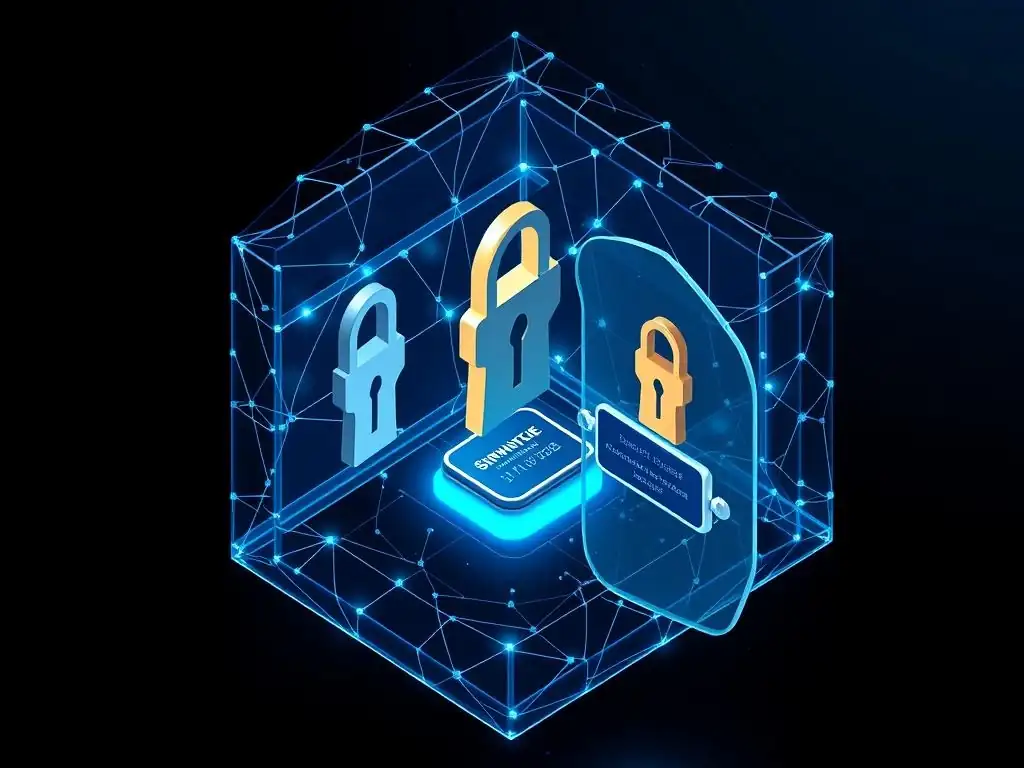
MultiSig vs. Single-Key Wallets: Security and Convenience Trade-offs
The most fundamental comparison is between MultiSig and single-key wallets. Single-key wallets offer maximum convenience; one key controls everything, making transactions fast and simple. However, this convenience comes at the highest security risk, as compromise of that single key means total loss or control.
MultiSig wallets, conversely, prioritize security by requiring multiple keys, drastically reducing the risk of a single point of failure. This comes at the cost of increased complexity and potentially slower transaction processes, as multiple parties or devices may need to be involved in signing. For critical blockchain identities or those linked to significant value, the trade-off leans heavily towards the enhanced Multisignature blockchain identity security provided by MultiSig, despite the reduced convenience.
MultiSig vs. Multi-Factor Authentication (MFA) in Blockchain Identity
Multi-Factor Authentication (MFA) is another common security measure, typically used to secure access to accounts or systems. MFA requires a user to provide two or more verification factors (e.g., something they know like a password, something they have like a phone for a code, something they are like a fingerprint). In the context of blockchain, MFA might secure access to a wallet interface or a platform managing an identity.
MultiSig and MFA serve different but complementary purposes. MFA secures the access to a platform or interface where identity management or transactions might occur. MultiSig secures the control mechanism of the identity itself and the authorization of on-chain transactions. An attacker who bypasses MFA might gain access to a user interface but cannot execute transactions or modify the identity on-chain without the required MultiSig signatures. Therefore, combining MFA for interface access with Multisignature blockchain identity security for underlying control offers a layered defense approach.
Social recovery is an alternative method for regaining access to a digital identity or wallet, often presented as a user-friendly alternative to managing seed phrases or multiple keys. In a social recovery model, users designate a set of trusted "guardians" (friends, family, other devices). If the user loses access to their primary key, a threshold of these guardians can approve a recovery process that allows the user to regain control, typically by changing the controller key.
While both MultiSig and social recovery involve a threshold mechanism (M-of-N keys vs. M-of-N guardians), their function differs. MultiSig requires a threshold of keys to authorize every transaction or action. Social recovery requires a threshold of guardians to recover the account if the primary key is lost. Social recovery is focused on accessibility and loss prevention, whereas MultiSig is primarily focused on transaction security and preventing unauthorized access or unilateral action under normal operation. Both can contribute to robust Multisignature blockchain identity security strategies, sometimes even used in combination.
Addressing the Challenges of MultiSig Adoption in Blockchain Identity Systems
User Experience Considerations: Simplifying MultiSig for End Users
One of the most significant hurdles for widespread MultiSig adoption in blockchain identity is the complexity it introduces for end users. Managing multiple private keys, understanding threshold configurations, and navigating the multi-step signing process can be intimidating for individuals accustomed to single passwords or keys. The risk of losing too many keys in a MultiSig setup (e.g., losing 2 keys in a 2-of-3 setup) leading to irreversible loss of identity control is also a major concern.
To overcome this, significant effort is needed in designing intuitive user interfaces and simplifying the underlying technical complexities. Abstracting away the key management details, providing clear visual workflows for signing, and offering robust, user-friendly tools for key backup and recovery are essential. Wallets and identity platforms need to make Multisignature blockchain identity security accessible without requiring users to be cryptography experts.
Scalability and Performance Issues with MultiSig Transactions
MultiSig transactions are generally larger in size than single-signature transactions on blockchains. This is because they must include multiple public keys and multiple signatures. On blockchains with limited block space and transaction throughput, like Bitcoin or Ethereum (prior to layer-2 scaling), larger transaction sizes can lead to higher transaction fees and potentially longer confirmation times, especially during periods of network congestion.
While advancements in blockchain technology and layer-2 scaling solutions are addressing these issues, the increased data load and computational requirements of verifying multiple signatures can still pose scalability challenges for systems processing a very high volume of MultiSig identity transactions. Efficient smart contract design and optimization of signature verification processes are ongoing areas of development to improve the performance of Multisignature blockchain identity security.
Regulatory Compliance and Legal Implications of MultiSig in Identity Management
Implementing MultiSig for blockchain identities raises complex questions regarding regulatory compliance and legal responsibility. When control over an identity or assets is distributed among multiple key holders, it can be challenging to pinpoint responsibility for specific actions or ensure compliance with Know Your Customer (KYC) and Anti-Money Laundering (AML) regulations. Identifying all beneficial owners or responsible parties in a MultiSig setup involving numerous entities or individuals can be difficult.
Furthermore, the legal status of decentralized identities and the validity of actions authorized via MultiSig need clearer definition in many jurisdictions. Issues surrounding liability in case of misuse or loss, the legal enforceability of MultiSig agreements between parties, and how regulatory bodies should interact with decentralized, multi-controlled identities are still evolving. Addressing these legal and compliance ambiguities is crucial for the broader acceptance and deployment of Multisignature blockchain identity security solutions in regulated environments.
The Future of MultiSignature Security in Blockchain Identity: Trends and Innovations
Advanced MultiSig Schemes: Threshold Signatures
The field of cryptography is continually evolving, and advanced MultiSig schemes like threshold signatures represent a significant step forward. Technologies such as Schnorr signatures (implemented in Bitcoin via Taproot) and BLS signatures allow multiple parties to produce a single, aggregated signature that is indistinguishable from a standard single signature on the blockchain.
This aggregation offers several benefits for Multisignature blockchain identity security. Firstly, it improves privacy by not revealing the specific number of participants or their public keys on-chain. Secondly, it enhances scalability by reducing the transaction size and verification cost compared to traditional MultiSig where multiple distinct signatures are included. These advancements make MultiSig more efficient and private, paving the way for broader adoption in identity systems.
MultiSig Integration with Decentralized Identity (DID) Standards
The integration of MultiSig with Decentralized Identity (DID) standards, such as those defined by the W3C, is a key trend for the future. MultiSig is increasingly being recognized as a robust method for securing the 'controller' of a DID. The controller is the entity or mechanism authorized to make changes to a DID document, such as adding or revoking verifiable credentials or updating service endpoints.
By using a MultiSig address or smart contract as the DID controller, the identity's integrity and the ability to manage associated credentials are significantly hardened against single-key compromise. Future identity wallets and platforms are likely to offer seamless MultiSig configuration options as part of their DID management features, making robust Multisignature blockchain identity security a standard practice for decentralized identities.
The Role of MultiSig in Building More Secure and Trustworthy Blockchain Ecosystems
MultiSig's impact extends beyond just individual or organizational identity security. It plays a vital role in enhancing the overall security and trustworthiness of decentralized ecosystems. From securing large treasuries in Decentralized Autonomous Organizations (DAOs) to providing secure escrow services and enabling joint control over critical smart contracts, MultiSig is a fundamental building block for secure decentralized governance and operations.
As blockchain technology matures and its applications broaden, the need for robust, multi-party authorization mechanisms will only increase. MultiSig, in its current and advanced forms, will remain an essential tool for mitigating risks, distributing power, and ensuring that decentralized systems, including those centered around identity, are resilient against compromise and built on a foundation of strong Multisignature blockchain identity security.
Conclusion: Embracing MultiSig for Enhanced Blockchain Identity Security
The Importance of Proactive Security Measures in Decentralized Identity
As individuals and organizations increasingly adopt decentralized identity solutions, the responsibility for security shifts from centralized authorities to the users themselves. This empowerment comes with the critical need for proactive and robust security measures. Relying on a single private key for controlling a valuable blockchain identity is inherently risky and contradicts the principles of building resilient decentralized systems.
Protecting decentralized identities against key compromise, theft, and unauthorized access is not merely a technical detail but a fundamental requirement for trust and adoption. Without strong security, the benefits of self-sovereign identity – privacy, control, and portability – can be easily undermined, leading to potentially irreversible consequences.
MultiSig: A Vital Tool for Protecting User Data and Preventing Fraud
MultiSignature security stands out as a vital tool in the arsenal for protecting blockchain identities. By eliminating the single point of failure associated with individual keys, MultiSig significantly enhances the security posture of decentralized identities, preventing unauthorized transactions, fraudulent credential issuance, and the loss of control.
Its ability to distribute key management and require multiple approvals makes it particularly suitable for high-value identities, organizational use cases, and scenarios where shared control or enhanced recovery options are necessary. Implementing Multisignature blockchain identity security is a strategic decision that substantially mitigates the risk of key compromise and safeguards the integrity of decentralized identities.
Call to Action: Implementing MultiSig to Secure Your Blockchain Identity Solutions
For developers building blockchain identity platforms, organizations managing decentralized identities, and individuals seeking to secure their digital presence, embracing MultiSig is a critical step. Evaluate your security requirements, understand the different MultiSig configurations, and integrate this powerful mechanism into your identity solutions.
Prioritize user-friendly implementations and provide clear guidance on key management best practices. By adopting Multisignature blockchain identity security, you contribute to building a more secure, resilient, and trustworthy decentralized web where users can control their identities with confidence, protected against the pervasive threat of key compromise and unauthorized access.
Frequently Asked Questions
How does multisignature technology enhance blockchain identity security?
Multisignature technology requires multiple private keys to authorize a transaction, significantly reducing the risk of unauthorized access. This enhances security because compromising a single key is insufficient to control the associated blockchain identity.
What are the primary benefits of using multisignature for blockchain identity management?
The main benefits are enhanced security against key compromise, improved account recovery options, and increased transparency and accountability through shared control over blockchain identities.
In what scenarios is multisignature blockchain identity security most valuable?
It's particularly valuable in scenarios involving high-value assets, shared accounts, and critical infrastructure where the risk of unauthorized access or single points of failure is unacceptable.
How does multisignature compare to traditional single-signature blockchain identity security?
Traditional single-signature security relies on a single private key, making it vulnerable to theft or loss. Multisignature offers superior protection by requiring multiple keys for authorization, creating a more robust security model.
What are some potential challenges or considerations when implementing multisignature blockchain identity security?
Implementation can be more complex and costly compared to single-signature approaches. Also, key management and coordination among multiple key holders can present logistical challenges.
Final Reflection: Fortifying Digital Identity
The exploration of multisignature security for blockchain identity underscores a critical need in today's digital landscape: robust protection against key compromise and unauthorized access. As blockchain technology permeates various aspects of our lives, from finance to governance, the security of digital identities built upon it becomes paramount. This article highlights the vulnerabilities inherent in single-key systems and champions multisignature schemes as a vital safeguard, a necessity now more than ever.
The shift towards decentralized identity solutions, while promising greater user control, also introduces new security challenges. The ongoing evolution of cyber threats demands a proactive approach to identity protection, and multisignature technology offers a powerful tool in this fight. Security is always excessive until it's not enough.
This quote perfectly encapsulates the need for layered security measures, and multisignature schemes provide that crucial extra layer, mitigating the risks associated with single points of failure in blockchain identity systems.
As you navigate the increasingly complex world of digital identity, consider the principles of multisignature security. Reflect on how you can apply these concepts to protect your own digital assets and identities. Embrace the power of shared control and distributed responsibility to build a more secure and resilient future for blockchain-based systems. Let us all strive to champion and implement these robust security measures, ensuring the integrity and trustworthiness of our digital identities for generations to come.
Secure Your Digital Fortress: Embrace MultiSig Today!
Thank you for exploring the importance of multi-signature security. We hope you now see how implementing multi-signature protocols can significantly enhance the safety of your blockchain assets and identity. Are you ready to strengthen your security measures?
Here are some immediate steps you can take:
- Implement multi-signature authentication for your most critical blockchain accounts. Don't wait until it's too late!
- Consider alternative key management solutions such as hardware wallets or secure enclave technology. Think of it as adding layers of protection to your digital assets.
- Share this information with your network! Help others understand the importance of proactive security in the blockchain space.
What strategies are you considering for implementing multi-signature security, and what challenges do you foresee? Let’s discuss in the comments!
Leave a Reply