
Why Decentralization Matters for Metaverse Interoperability: A Blockchain Perspective


Welcome to Blockchain Trends, your compass in the rapidly evolving world of decentralized innovation. Beyond the hype, lies the genuine transformative power of blockchain technology. Are you ready to delve into how blockchain is reshaping industries and redefining digital interaction? In this article, we unravel the crucial role of decentralization in shaping the future of the metaverse, focusing specifically on the emergent blockchain metaverse interoperability standards. Discover why these standards are essential for a truly open and interconnected virtual world, and what it means for the future of digital ownership and experience. Curious? Keep reading to unlock the potential.
Why Decentralization Matters for Metaverse Interoperability: A Blockchain Perspective
- Introduction: The Promise and Challenges of Metaverse Interoperability
- The Role of Blockchain in Achieving True Metaverse Interoperability
- Decentralization: Unlocking Key Benefits for Metaverse Interoperability
- Addressing the Challenges of Blockchain Metaverse Interoperability Standards
- Blockchain Metaverse Interoperability Standards: Current Initiatives and Future Directions
- Use Cases: Real-World Examples of Blockchain-Enabled Metaverse Interoperability
- The Future of Interoperable Metaverses Powered by Blockchain
- Conclusion: Embracing Decentralization for a Truly Interoperable Metaverse
-
Frequently Asked Questions
- How does blockchain technology contribute to metaverse interoperability?
- What are the key benefits of decentralized standards for metaverse interoperability?
- Why is data ownership a crucial aspect of blockchain-based metaverse interoperability?
- What role do smart contracts play in enabling interoperability between different metaverses?
- What are some of the challenges in establishing blockchain metaverse interoperability standards?
- Final Reflection: Embracing the Decentralized Metaverse
- Unleash Metaverse Freedom: Take Control Now!
Introduction: The Promise and Challenges of Metaverse Interoperability
Defining Metaverse Interoperability: Connecting Virtual Worlds
The metaverse, envisioned as a network of interconnected, persistent virtual worlds, promises a future where users can seamlessly traverse digital spaces, carrying their avatars, assets, and identities across different platforms. Metaverse interoperability is the cornerstone of this vision, representing the ability for users, data, and assets to move fluidly between these distinct virtual environments.
Imagine owning a digital artwork in one metaverse platform and being able to display it in your virtual home in another, or utilizing a game character developed in one world within a completely different gaming metaverse. This seamless experience is what interoperability aims to achieve, breaking down the walled gardens that currently characterize much of the digital landscape.
However, achieving true metaverse interoperability presents significant technical and conceptual challenges. Currently, many metaverse platforms operate as siloed ecosystems, utilizing proprietary technologies and data formats. This lack of standardization makes it difficult, if not impossible, for assets and identities created in one metaverse to be recognized or utilized in another. Think of it as trying to use a DVD in a Blu-ray player – the formats are incompatible, preventing seamless interaction. Overcoming these technological and structural barriers is crucial to realizing the full potential of a truly interconnected and open metaverse.
The Centralized vs. Decentralized Metaverse: A Key Distinction
The concept of metaverse interoperability is deeply intertwined with the underlying architecture of these virtual worlds, particularly whether they are built on centralized or decentralized principles. A centralized metaverse, typically controlled by a single entity or corporation, often prioritizes platform lock-in and control over user experience and data. Interoperability in such environments is often limited and dictated by the platform owner, potentially hindering innovation and user freedom. These platforms might offer limited forms of interoperability within their own ecosystem but are less likely to embrace open standards that would allow seamless interaction with competing platforms.
In contrast, a decentralized metaverse, often leveraging blockchain technology, aims to distribute control and ownership among its users. This approach inherently fosters a more open and interoperable environment. Decentralization promotes the use of open standards, shared protocols, and community-driven governance, all of which are essential for seamless data and asset transfer across different virtual worlds. The fundamental difference lies in the power dynamic – centralized systems concentrate power, while decentralized systems distribute it, leading to vastly different approaches to interoperability and user empowerment within the metaverse.
The Role of Blockchain in Achieving True Metaverse Interoperability
Blockchain as the Foundation for Decentralized Identities and Assets
Blockchain technology offers a robust foundation for establishing decentralized identities and managing digital assets in the metaverse, which are crucial for achieving interoperability. Decentralized Identities (DIDs), built on blockchain, allow users to control their digital identity without relying on centralized authorities. This means a user can have a single, verifiable identity that can be used across multiple metaverse platforms, eliminating the need to create separate accounts and profiles for each virtual world. Think of it as a universal passport for the metaverse, recognized and valid across different virtual nations.
Furthermore, blockchain enables the tokenization of digital assets, representing ownership and provenance in a transparent and immutable manner. Non-Fungible Tokens (NFTs), in particular, are instrumental in representing unique virtual items, from avatars and virtual land to in-game items and digital art. By storing ownership information on a blockchain, NFTs ensure that users truly own their digital assets and can verifiably prove their ownership across different metaverse environments. This is a significant departure from traditional centralized gaming platforms where in-game assets are often tied to the platform and cannot be freely transferred or traded outside of it.
Smart Contracts: Enabling Seamless Asset Transfers Across Metaverses
Smart contracts, self-executing agreements coded on a blockchain, are pivotal in facilitating seamless asset transfers and interactions between different metaverse platforms. These contracts can automate the process of verifying ownership and transferring digital assets when users move between virtual worlds. For example, a smart contract could be designed to automatically transfer an NFT representing a virtual sword from a gaming metaverse to a social metaverse, ensuring that the user retains ownership and access to their asset regardless of the platform they are using.
Moreover, smart contracts can enable more complex interactions between metaverses, such as cross-platform gaming experiences or decentralized marketplaces for virtual goods. Imagine a scenario where players from different blockchain-based games can compete against each other using their unique in-game assets, facilitated by smart contracts that manage the rules and rewards of the cross-game competition. This level of interoperability, powered by smart contracts, can unlock entirely new possibilities for metaverse experiences and economies.
Blockchain for Secure and Transparent Governance in the Metaverse
Governance in the metaverse, especially in an interoperable setting, requires mechanisms that are both secure and transparent. Blockchain technology offers tools for establishing decentralized governance frameworks that can ensure fair and equitable decision-making processes within and across metaverses. Decentralized Autonomous Organizations (DAOs), for example, can be used to govern metaverse platforms or interoperability protocols, allowing users and stakeholders to participate in decision-making through token-based voting.
Blockchain's inherent transparency and immutability also contribute to trust and accountability in metaverse governance. All transactions and governance decisions recorded on a blockchain are publicly auditable, reducing the risk of manipulation and ensuring that the rules are applied consistently. This is particularly important in an interoperable metaverse where multiple stakeholders and communities are involved, and trust in the underlying governance mechanisms is essential for long-term sustainability and adoption of blockchain metaverse interoperability standards.
Decentralization: Unlocking Key Benefits for Metaverse Interoperability
Enhanced Security and Reduced Risk of Censorship
Decentralization significantly enhances the security and resilience of metaverse interoperability frameworks. By distributing data and control across a network of nodes, blockchain-based systems are less vulnerable to single points of failure and attacks. In contrast to centralized systems where a single server breach can compromise vast amounts of user data, decentralized networks are inherently more robust and resistant to censorship. If one node fails or is compromised, the network continues to operate, ensuring the continuous availability of metaverse services and asset interoperability.
Furthermore, decentralization reduces the risk of censorship within the metaverse. In centralized platforms, a single entity can unilaterally decide to remove content, restrict access, or censor user activities. In a decentralized metaverse, content and data are distributed across the network, making it significantly harder for any single entity to censor or control information flow. This is crucial for fostering a truly open and democratic metaverse where users have the freedom to express themselves and interact without fear of arbitrary censorship, promoting the development of censorship-resistant blockchain metaverse interoperability standards.
Greater User Control and Data Ownership in Virtual Worlds
Decentralization empowers users with greater control over their data and digital assets within the metaverse. In centralized platforms, user data is often collected and controlled by the platform provider, raising concerns about privacy and data exploitation. Decentralized systems, leveraging blockchain, allow users to own and manage their data directly. Through DIDs and self-sovereign identity solutions, users can control what data they share and with whom, enhancing their privacy and agency in the metaverse.
Moreover, as discussed earlier, blockchain-based NFTs grant users true ownership of their digital assets. This ownership extends beyond mere in-game utility; it represents a verifiable and transferable right to the asset, independent of any single platform. Users can freely trade, sell, or move their assets across different metaverses, fostering a more user-centric and equitable digital economy, underpinned by blockchain metaverse interoperability standards. This shift from platform-centric to user-centric control is a fundamental benefit of decentralization in the metaverse context.
Fostering Innovation and Competition Among Metaverse Platforms
Decentralization promotes innovation and competition within the metaverse ecosystem by lowering barriers to entry and encouraging the development of diverse and specialized virtual worlds. Open and interoperable standards, facilitated by blockchain, allow new metaverse platforms to emerge and integrate seamlessly with existing ones. This creates a more dynamic and competitive landscape, driving innovation in metaverse experiences and functionalities.
In a decentralized and interoperable metaverse, developers can focus on creating unique and specialized virtual worlds without being constrained by the limitations of a single centralized platform. This fosters a diverse ecosystem of metaverses catering to different interests and needs, from immersive gaming environments to virtual social spaces and decentralized marketplaces. The competition among these platforms, driven by the pursuit of user adoption and engagement, ultimately benefits users by offering a wider range of choices and higher quality metaverse experiences, all supported by robust blockchain metaverse interoperability standards.
Addressing the Challenges of Blockchain Metaverse Interoperability Standards
Scalability Limitations of Current Blockchain Networks
While blockchain offers numerous advantages for metaverse interoperability, current blockchain networks face scalability limitations that can hinder the widespread adoption of blockchain metaverse interoperability standards. Many popular blockchains, particularly those utilizing proof-of-work consensus mechanisms, have limited transaction throughput, which can be insufficient to handle the high volume of transactions expected in a highly active and interoperable metaverse. For example, Ethereum's mainnet, while widely used for NFTs and decentralized applications, has faced congestion and high gas fees during periods of peak demand.
These scalability limitations can translate to slow transaction processing times and increased costs for users interacting within and across metaverses. Imagine waiting minutes or even hours for a simple asset transfer to be confirmed or paying exorbitant fees for cross-metaverse transactions. Addressing these scalability challenges is crucial for creating a seamless and user-friendly interoperable metaverse experience. Solutions like layer-2 scaling solutions and newer, more scalable blockchains are actively being developed to overcome these limitations and pave the way for more efficient blockchain metaverse interoperability standards.
The Need for Standardized Protocols and APIs for Cross-Chain Communication
A major challenge in achieving blockchain metaverse interoperability is the lack of standardized protocols and APIs for cross-chain communication. Currently, different blockchain networks operate in isolation, using different protocols and data formats. This makes it difficult to establish seamless communication and data exchange between them, hindering cross-chain asset transfers and interoperability. Imagine trying to communicate with someone who speaks a completely different language without a translator – that's the current state of cross-chain communication in many cases.
Developing and adopting standardized protocols and APIs is essential for enabling different blockchain networks to communicate and interact effectively. This includes standards for asset representation, identity verification, and cross-chain messaging. Initiatives like the Inter-Blockchain Communication protocol (IBC) and LayerZero are working towards establishing these standards, but widespread adoption and further development are needed to create a truly interconnected blockchain ecosystem that can support robust blockchain metaverse interoperability standards.
Governance and Regulatory Considerations for a Decentralized Metaverse
The decentralized nature of blockchain and the metaverse presents unique governance and regulatory considerations. Traditional regulatory frameworks are often designed for centralized entities and jurisdictions, and may not be easily applicable to decentralized, borderless metaverse environments. For example, questions arise regarding jurisdiction over virtual assets, user data, and cross-metaverse transactions in a decentralized setting.
Furthermore, governance within decentralized metaverses themselves requires careful consideration. While DAOs offer a mechanism for community-driven governance, challenges remain in ensuring fair representation, preventing malicious governance attacks, and resolving disputes in a decentralized and potentially anonymous environment. Establishing clear and effective governance frameworks, both at the protocol level and in terms of broader regulatory oversight, is crucial for fostering trust, security, and long-term sustainability in the decentralized and interoperable metaverse, and for the successful implementation of blockchain metaverse interoperability standards.
Blockchain Metaverse Interoperability Standards: Current Initiatives and Future Directions
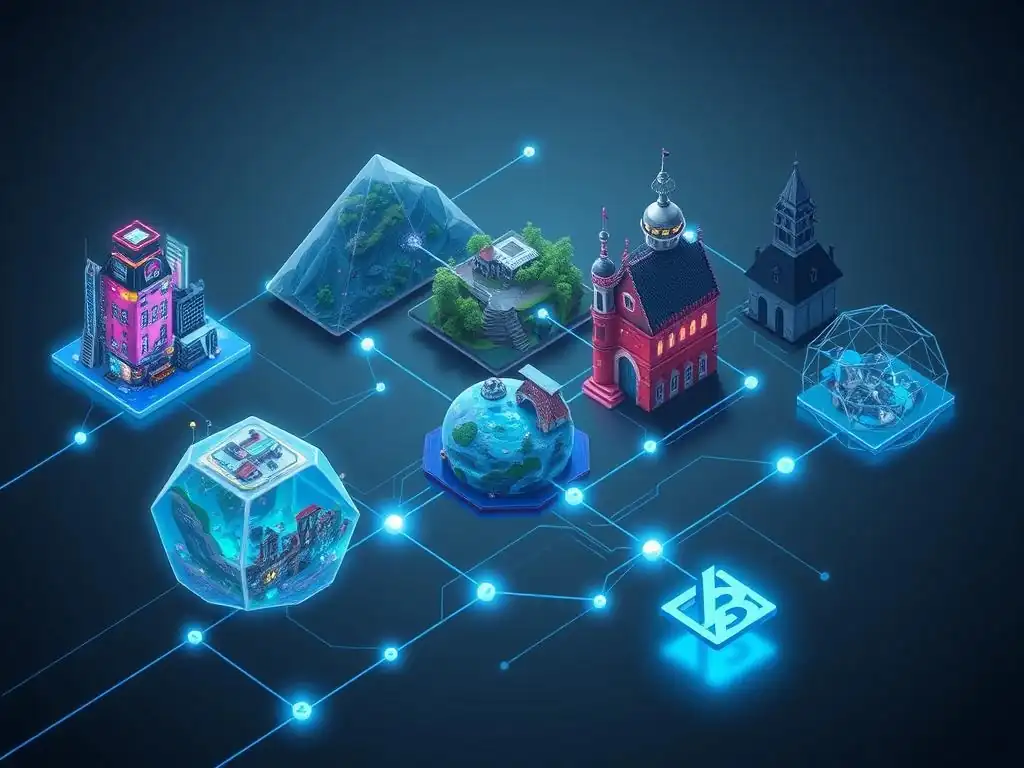
Exploring Existing Interoperability Protocols (e.g., IBC, LayerZero)
Several promising interoperability protocols are emerging that aim to bridge different blockchain networks and facilitate cross-chain communication, laying the groundwork for blockchain metaverse interoperability standards. The Inter-Blockchain Communication protocol (IBC), initially developed for the Cosmos ecosystem, allows for secure and reliable communication between independent blockchains. IBC enables the transfer of assets and data across connected chains, paving the way for cross-chain applications and interoperable metaverses within the Cosmos ecosystem and beyond.
LayerZero is another notable interoperability protocol that aims to provide a more general-purpose solution for cross-chain communication. Unlike IBC, which is primarily focused on chains within the Cosmos ecosystem, LayerZero is designed to connect a wider range of blockchains, including Ethereum, Avalanche, and others. By enabling efficient and secure cross-chain messaging, LayerZero and similar protocols are critical building blocks for achieving broad blockchain metaverse interoperability standards and enabling seamless asset and data flow across diverse virtual worlds.
The Importance of Open-Source Development and Community Collaboration
Open-source development and community collaboration are paramount for the successful development and adoption of blockchain metaverse interoperability standards. Open-source initiatives promote transparency, collaboration, and wider participation in the development process. By making interoperability protocols and standards openly accessible and auditable, open-source development fosters trust and encourages community contributions, leading to more robust and widely accepted standards.
Community collaboration across different metaverse platforms, blockchain projects, and industry stakeholders is also essential. Achieving true interoperability requires a collective effort to define common standards, share best practices, and work together towards a shared vision of an open and interconnected metaverse. Organizations and initiatives that foster collaboration and knowledge sharing, such as industry consortia and open metaverse alliances, play a vital role in driving the development and adoption of blockchain metaverse interoperability standards.
The Potential of Layer-2 Solutions for Scaling Metaverse Transactions
Layer-2 scaling solutions offer a promising approach to address the scalability limitations of current blockchain networks and enable efficient metaverse transactions, crucial for robust blockchain metaverse interoperability standards. Layer-2 solutions, such as rollups and sidechains, operate on top of a main blockchain (layer-1) to process transactions off-chain, significantly increasing transaction throughput and reducing gas fees. Optimistic rollups and zero-knowledge rollups are two prominent types of layer-2 solutions that are gaining traction in the blockchain space.
By processing a large volume of metaverse transactions off-chain and then periodically submitting summarized transaction data to the main blockchain for security and finality, layer-2 solutions can significantly enhance the scalability of blockchain-based metaverses. This improved scalability is essential for supporting the high transaction volume expected in an interoperable metaverse and for making cross-metaverse interactions and asset transfers fast, affordable, and user-friendly, thereby facilitating the practical implementation of blockchain metaverse interoperability standards.
Use Cases: Real-World Examples of Blockchain-Enabled Metaverse Interoperability
Cross-Metaverse Gaming: Sharing Assets and Experiences
Cross-metaverse gaming is a compelling use case that highlights the potential of blockchain metaverse interoperability standards. Imagine playing a popular MMORPG and earning in-game assets, represented as NFTs, that are not limited to that specific game world. With interoperability, these assets could be transferred and utilized in other compatible gaming metaverses, or even in non-gaming virtual environments. For example, a sword earned in a fantasy RPG could be displayed as a collectible in a social metaverse or traded on a decentralized marketplace.
Projects like The Sandbox and Decentraland, while still in their early stages of interoperability, demonstrate the potential of blockchain-based gaming metaverses where users own their in-game assets as NFTs. Future developments in interoperability protocols could enable seamless transfer of these assets between platforms, creating a more open and user-centric gaming ecosystem where players truly own their digital gaming experiences and assets, driven by blockchain metaverse interoperability standards.
Decentralized Commerce: Trading Virtual Goods Across Platforms
Decentralized commerce is another significant use case enabled by blockchain metaverse interoperability standards. In an interoperable metaverse, virtual goods and services can be traded seamlessly across different platforms and marketplaces. Users could purchase virtual clothing in one metaverse and sell it or trade it on a decentralized marketplace accessible from another metaverse. This cross-platform commerce eliminates the silos of current centralized platforms and creates a more efficient and liquid market for virtual assets.
Platforms leveraging NFTs and decentralized marketplaces are already emerging, such as OpenSea and Rarible, which facilitate the trading of digital collectibles and virtual assets. As interoperability protocols mature and become more widely adopted, these platforms can become increasingly integrated with different metaverses, creating a truly decentralized and cross-platform economy for virtual goods and services, underpinned by blockchain metaverse interoperability standards.
Digital Identity Management: A Unified Profile for Multiple Metaverses
Digital identity management is a foundational use case for blockchain metaverse interoperability standards. As users engage with multiple metaverses, managing separate identities and profiles for each platform becomes cumbersome and inefficient. Decentralized Identities (DIDs) and blockchain-based identity solutions offer a way to create a unified digital identity that can be used across multiple virtual worlds. This allows users to maintain a consistent persona and reputation as they navigate different metaverses, streamlining their metaverse experience.
Projects focused on self-sovereign identity, such as Sovrin and uPort, are working towards establishing standards and technologies for DIDs. Integrating these solutions with metaverse platforms can enable users to control their identity data and seamlessly access different virtual worlds with a single, verifiable identity. This unified digital identity management is crucial for creating a user-friendly and interoperable metaverse experience, facilitated by robust blockchain metaverse interoperability standards.
The Future of Interoperable Metaverses Powered by Blockchain
Convergence of Virtual and Physical Worlds Through Decentralization
The future of interoperable metaverses powered by blockchain points towards a convergence of virtual and physical worlds, blurring the lines between digital and real-life experiences. Decentralization plays a key role in this convergence by enabling the creation of persistent and interconnected virtual environments that are not controlled by any single entity. This allows for the development of metaverse experiences that are more deeply integrated with our physical lives, from virtual representations of real-world locations to augmented reality applications that bridge the digital and physical realms.
Imagine using your decentralized metaverse identity to access both virtual worlds and real-world services, or owning digital assets that have utility in both the metaverse and the physical world. This convergence, facilitated by blockchain metaverse interoperability standards, has the potential to transform how we interact with technology and the world around us, creating a more seamless and integrated digital-physical reality.
The Evolution of Digital Ownership and Asset Management
Blockchain-powered interoperability is driving a fundamental evolution in digital ownership and asset management within the metaverse. The shift from platform-centric ownership to user-centric ownership, enabled by NFTs and decentralized systems, is empowering users with greater control and agency over their digital assets. In an interoperable metaverse, digital assets are no longer confined to specific platforms but become portable and transferable across different virtual environments, increasing their utility and value.
This evolution is also leading to the emergence of new models for asset management and decentralized finance (DeFi) within the metaverse. Users can manage their virtual assets using decentralized wallets, participate in metaverse-specific DeFi protocols, and earn yield on their virtual holdings. The combination of blockchain-based ownership, interoperability, and decentralized finance is creating a more robust and user-empowering digital economy within the metaverse, all underpinned by blockchain metaverse interoperability standards.
The Impact on Creativity, Collaboration, and Economic Opportunities
The rise of interoperable metaverses powered by blockchain is poised to unleash a wave of creativity, collaboration, and economic opportunities. Interoperability lowers barriers to entry for creators and developers, allowing them to build upon existing metaverse platforms and assets, fostering innovation and experimentation. Cross-metaverse collaboration becomes easier as users and creators can seamlessly interact and share resources across different virtual worlds.
Economically, interoperability expands the potential market for virtual goods and services, creating new revenue streams for creators and businesses. Decentralized marketplaces and cross-platform commerce enable a more open and competitive virtual economy, fostering innovation and driving economic growth within the metaverse. The combination of enhanced creativity, collaboration, and economic opportunities positions blockchain metaverse interoperability standards as a catalyst for the next generation of digital experiences and economies.
Conclusion: Embracing Decentralization for a Truly Interoperable Metaverse
The Importance of Supporting Open Standards and Decentralized Solutions
Decentralization is not merely a technical preference but a fundamental prerequisite for achieving a truly interoperable metaverse. Centralized approaches to interoperability risk replicating the walled gardens of the current internet, limiting user freedom and innovation. Supporting open standards and decentralized solutions, particularly those leveraging blockchain technology, is crucial for building a metaverse that is open, accessible, and user-centric.
Embracing open standards ensures that different metaverse platforms can communicate and interact seamlessly, fostering interoperability and preventing vendor lock-in. Decentralized solutions, powered by blockchain, empower users with control over their identities and assets, enhance security and resilience, and promote a more equitable and innovative metaverse ecosystem. The future of the metaverse hinges on our collective commitment to open standards and decentralized principles, driving the development and adoption of blockchain metaverse interoperability standards.
The Potential of Blockchain to Revolutionize the Metaverse Experience
Blockchain technology holds immense potential to revolutionize the metaverse experience by enabling true interoperability, decentralization, and user empowerment. From decentralized identities and asset ownership to smart contract-enabled interactions and transparent governance, blockchain provides the foundational infrastructure for a more open, secure, and user-centric metaverse. By addressing the challenges of scalability and standardization and fostering community collaboration, we can unlock the full potential of blockchain to create a truly interoperable metaverse that benefits all users.
As blockchain metaverse interoperability standards continue to evolve and mature, we can expect to see a more interconnected and seamless metaverse experience, where users can freely explore virtual worlds, interact with each other, and manage their digital lives across different platforms. This revolution, powered by blockchain and guided by the principles of decentralization and open standards, promises to transform the metaverse from a collection of isolated virtual worlds into a truly interconnected and immersive digital universe.
Frequently Asked Questions
How does blockchain technology contribute to metaverse interoperability?
Blockchain ensures data ownership and verifiability across different virtual worlds. This allows for seamless transfer of digital assets and identities between metaverses.
What are the key benefits of decentralized standards for metaverse interoperability?
Decentralization fosters openness and inclusivity, preventing any single entity from controlling the metaverse. This promotes innovation and user empowerment by reducing dependencies.
Why is data ownership a crucial aspect of blockchain-based metaverse interoperability?
Data ownership grants users control over their digital identities and assets within the metaverse. It enhances security and reduces the risk of data manipulation by centralized authorities.
What role do smart contracts play in enabling interoperability between different metaverses?
Smart contracts automate the transfer of assets and execution of agreements across different platforms. This ensures trustless interactions and reduces the need for intermediaries.
What are some of the challenges in establishing blockchain metaverse interoperability standards?
Challenges include scalability issues, regulatory uncertainty, and the need for industry-wide collaboration. Overcoming these obstacles is crucial for realizing the full potential of the metaverse.
Final Reflection: Embracing the Decentralized Metaverse
The journey through the intricacies of blockchain metaverse interoperability standards reveals a fundamental truth: decentralization is not just a technological advantage, but a philosophical imperative for the future of the metaverse. As we stand on the cusp of a truly interconnected digital world, the principles of openness, transparency, and user empowerment, inherent in blockchain technology, are paramount to preventing the formation of centralized gatekeepers and ensuring a vibrant, equitable, and innovative metaverse ecosystem.
The pursuit of seamless interoperability, powered by blockchain, has profoundly shaped, and will continue to shape, the cultural and social landscape of the metaverse. This vision of a user-owned and controlled digital realm resonates deeply with the desire for autonomy and creative freedom. The future is already here – it's just not evenly distributed.
- William Gibson. This quote underscores the urgency of establishing robust blockchain metaverse interoperability standards to ensure that the benefits of this transformative technology are accessible to all, not just a select few.
Now, as you contemplate the potential of a decentralized metaverse, I invite you to consider your role in shaping its future. What contributions can you make to foster collaboration, promote open standards, and champion the principles of user empowerment? Let us collectively strive to build a metaverse that is not only technologically advanced but also ethically grounded, ensuring that the promise of a truly interconnected digital world is realized for the benefit of all.
Unleash Metaverse Freedom: Take Control Now!
Thank you for exploring the crucial role of decentralization in shaping a truly interoperable metaverse. You've gained valuable insights into how blockchain technology can empower users and dismantle the barriers of centralized platforms. Now, it's time to turn that understanding into action.
Are you ready to help build a decentralized future? Here's how you can get involved:
- Research decentralized metaverse projects. Discover initiatives that utilize NFTs and DAOs to create user-owned and governed experiences.
- Share this article. Spread the word within your network to encourage discussions about the future of the metaverse and the importance of decentralization.
- Get hands-on. Try creating your own digital asset, no matter how simple, and explore how to integrate it across various metaverse environments to gain practical experience with interoperability.
What is a decentralized metaverse concept or project you find most promising, and why? Share your thoughts in the comments below!
Leave a Reply