
Building Decentralized Marketplaces with DApps: Enabling PeertoPeer Transactions


Welcome to Blockchain Trends, your go-to source for unraveling the real-world impact of blockchain technology. Are you ready to explore how blockchain is revolutionizing more than just cryptocurrencies? Dive in to discover how decentralized marketplaces are being built using DApps, enabling secure and transparent peer-to-peer transactions. But how exactly do these DApps function, and what are the implications for the future of commerce? Keep reading to unlock the potential of this transformative technology.
Building Decentralized Marketplaces with DApps: Enabling Peer-to-Peer Transactions
- Introduction to Decentralized Marketplaces and DApps
- Key Components for Developing Decentralized Marketplace DApps
- Designing the User Interface (UI) and User Experience (UX) for a DApp Marketplace
- Implementing Core Marketplace Functionalities with Smart Contracts
- Security Considerations for Decentralized Marketplace DApps
- Scaling Decentralized Marketplaces: Challenges and Solutions
- Deploying and Maintaining a Decentralized Marketplace DApp
- Real-World Examples of Successful Decentralized Marketplaces
- The Future of Decentralized Marketplaces and Peer-to-Peer Commerce
- Conclusion: Empowering Peer-to-Peer Commerce with Decentralized Marketplaces
-
Frequently Asked Questions
- How do DApps facilitate decentralized marketplaces?
- What are the key benefits of using blockchain for decentralized marketplaces?
- What is the role of smart contracts in DApp transactions within decentralized marketplaces?
- What are some of the challenges in building and deploying decentralized marketplaces?
- How does blockchain contribute to the future of decentralized systems beyond cryptocurrencies?
- Final Reflection: Embracing the Future of Peer-to-Peer Commerce
- Ignite Your Decentralized Revolution!
Introduction to Decentralized Marketplaces and DApps
Understanding the Concept of Decentralized Marketplaces
Decentralized marketplaces represent a paradigm shift from traditional e-commerce platforms by removing central intermediaries. Instead of relying on a single company to facilitate transactions, manage user data, and enforce rules, these marketplaces operate on decentralized networks, primarily blockchains. This structure means that control and data are distributed across many participants, making the platform more resistant to censorship, single points of failure, and data breaches. Users interact directly with each other and with the marketplace's logic, which is encoded in smart contracts.
The core idea is to empower direct peer-to-peer (P2P) exchange without needing trust in a third party. For instance, a traditional platform like eBay acts as an intermediary, holding funds in escrow, resolving disputes, and setting fees. In a decentralized marketplace, smart contracts handle these functions automatically and transparently on the blockchain. This fundamentally alters the relationship between buyers, sellers, and the platform itself, giving users greater control and ownership over their data and transactions. Building decentralized marketplaces DApp transactions leverage this trustless environment.
Benefits of DApp-Based Marketplaces Over Traditional Platforms
DApp-based marketplaces offer several compelling advantages over their centralized counterparts. Foremost among these is enhanced security and transparency. Because transactions and marketplace logic are recorded on an immutable blockchain ledger, all activity is verifiable by anyone, reducing opportunities for fraud and manipulation. User data, often a target for hackers in centralized systems, can be managed differently in decentralized models, potentially offering users more privacy and control over their information. Recent data breaches at major centralized platforms, affecting millions of user records, underscore the security risks inherent in storing vast amounts of sensitive data in one place.
Another significant benefit is reduced fees. Traditional marketplaces often charge substantial fees to both buyers and sellers, sometimes ranging from 5% to over 20% of the transaction value, depending on the industry (e.g., digital goods vs. physical goods). Decentralized marketplaces, with their automated smart contracts, can operate with significantly lower overhead, translating into lower transaction costs for users.
While blockchain transaction fees (gas fees) exist, ongoing development in scaling solutions aims to reduce these dramatically. Furthermore, DApp marketplaces are inherently more resilient to censorship or shutdown by a single entity, as their operation is distributed across the network, ensuring continuous availability.
The Role of Blockchain in Peer-to-Peer (P2P) Transactions
Blockchain technology is the foundational layer enabling trustless P2P transactions in decentralized marketplaces. It provides a secure, transparent, and immutable ledger that records all transactions between participants. When a buyer and seller agree on a trade within a DApp marketplace, the transaction details are encapsulated within a smart contract. This contract, deployed on a blockchain like Ethereum or Polygon, automatically executes the terms of the agreement once predefined conditions are met (e.g., payment is received, goods are confirmed).
The blockchain ensures that once a transaction is recorded, it cannot be altered or deleted, providing a high degree of finality and security. This eliminates the need for a central authority to verify or guarantee transactions. Instead, the decentralized network of validators confirms the transaction according to the blockchain's consensus mechanism. This distributed validation process is what makes P2P transactions on blockchain-based marketplaces inherently trustless and efficient, facilitating direct exchanges without the need for intermediaries to hold funds or verify identities in the traditional sense. Decentralized marketplaces DApp transactions rely entirely on this cryptographic security and distributed consensus.
Key Components for Developing Decentralized Marketplace DApps
Smart Contracts: The Foundation of Trustless Transactions
Smart contracts are self-executing contracts with the terms of the agreement directly written into code. They are the operational backbone of any decentralized marketplace DApp, automating processes like listing items, handling payments, managing escrows, and even facilitating dispute resolution logic. Written in languages like Solidity (for Ethereum and compatible chains) or Rust (for Solana), these contracts define the rules and logic that govern all interactions within the marketplace. When a user initiates an action, such as purchasing an item, they interact directly with the relevant smart contract on the blockchain.
The critical aspect of smart contracts is their immutability and transparency once deployed. Anyone can view the code of a public smart contract, verifying its intended behavior. This transparency builds trust, as users do not have to rely on a hidden proprietary system.
For a marketplace DApp, a set of interconnected smart contracts is typically required: one for managing user profiles, another for listing items, a third for handling transactions and escrow, and potentially others for features like reviews or governance. For instance, a simple escrow smart contract might hold the buyer's payment until the seller confirms delivery, automatically releasing funds upon confirmation or returning them if a defined condition is not met within a timeframe.
Decentralized Storage Solutions: IPFS and Arweave
While blockchain is excellent for recording transaction data and contract logic, storing large files like product images, videos, or detailed descriptions directly on the blockchain is prohibitively expensive due to storage limitations and gas costs. This is where decentralized storage solutions come into play. The InterPlanetary File System (IPFS) and Arweave are prominent examples. IPFS is a peer-to-peer network for storing and sharing data in a distributed file system. Files are addressed by their content hash rather than a location, making the network more resilient to censorship and ensuring data integrity – if the content changes, the hash changes.
Arweave, on the other hand, offers permanent, decentralized data storage. Users pay a one-time fee to store data indefinitely, funded by endowments and block rewards. For a decentralized marketplace DApp, product metadata, images, and other non-transactional data can be stored on IPFS or Arweave. The smart contract on the blockchain would then store only the content hash of the file, linking the blockchain transaction record to the off-chain stored data. This hybrid approach keeps blockchain costs manageable while ensuring that associated data remains available, decentralized, and verifiable, crucial for building efficient decentralized marketplaces DApp transactions.
Oracles: Bridging the Gap Between Blockchain and Real-World Data
Blockchains are deterministic systems isolated from external data sources for security reasons. However, many real-world marketplace scenarios require information from outside the blockchain – for example, the current market price of a commodity, the outcome of a delivery status, or the verification of an event. Oracles are services that provide smart contracts with external data, acting as bridges between the blockchain and the real world. They fetch, verify, and relay information from off-chain sources onto the blockchain in a format that smart contracts can understand.
For a decentralized marketplace, oracles could be used in various ways. A marketplace for insurance products might use an oracle to get real-time weather data to trigger a claim payout based on specific weather conditions. A marketplace for tokenized real estate could use an oracle to verify property ownership changes recorded in traditional land registries.
Dispute resolution systems might use decentralized oracle networks to gather evidence or verify facts from external sources. Chainlink is a leading decentralized oracle network that provides reliable and tamper-proof data feeds to smart contracts, essential for enabling complex and conditional decentralized marketplaces DApp transactions that rely on external factors.
Choosing the Right Blockchain Platform: Ethereum, Polygon, and Alternatives
Selecting the appropriate blockchain platform is a critical decision in developing a decentralized marketplace DApp, as it impacts transaction speed, cost (gas fees), scalability, security, and the developer ecosystem. Ethereum has historically been the most popular choice due to its maturity, large developer community, and robust smart contract capabilities. However, its primary limitation has been high gas fees and network congestion, particularly during periods of high activity, making small or frequent decentralized marketplaces DApp transactions expensive.
Polygon, a Layer-2 scaling solution for Ethereum, offers significantly lower transaction fees and faster transaction speeds by processing transactions off the main Ethereum chain in a compatible environment. This makes it an attractive option for marketplaces expecting high transaction volume. Other platforms like Solana, Binance Smart Chain (now BNB Chain), and Avalanche offer alternative blockchain architectures with different trade-offs regarding speed, cost, decentralization, and security.
Solana, for instance, boasts very high transaction throughput and low costs, suitable for high-frequency trading marketplaces, though it has faced challenges regarding network stability. The choice depends heavily on the specific needs and priorities of the marketplace, such as target transaction volume, acceptable costs, and the required level of decentralization.
Designing the User Interface (UI) and User Experience (UX) for a DApp Marketplace
Importance of User-Friendly Design in DApp Adoption
While the underlying blockchain technology provides the security and decentralization benefits, the success and adoption of a decentralized marketplace DApp heavily depend on its user interface (UI) and user experience (UX). Historically, interacting with blockchain applications has been complex, requiring users to manage private keys, understand gas fees, and navigate technical jargon. A poor UI/UX can be a significant barrier, deterring potential users, especially those unfamiliar with blockchain technology.
An intuitive and familiar design that mimics the ease of use of traditional e-commerce platforms is crucial. Users should be able to browse listings, make offers, and complete transactions without needing deep technical knowledge of the blockchain. This includes simplifying complex processes like wallet interaction, explaining gas fees in understandable terms, and providing clear feedback on transaction status. Prioritizing user-friendly design makes the powerful capabilities of decentralized marketplaces, including efficient DApp transactions, accessible to a broader audience, driving adoption beyond early blockchain enthusiasts.
Key UI/UX Considerations for Decentralized Marketplaces
Designing a DApp marketplace requires careful consideration of several unique UI/UX aspects. Transparency is key; users should have clear visibility into the smart contract code (or at least audited reports), transaction details, and network status (like current gas fees). The process of connecting a wallet (e.g., MetaMask, WalletConnect) needs to be seamless and clearly explained. Users must understand that they control their private keys and are responsible for their security.
Managing transaction states is another critical area. Blockchain transactions are not instantaneous and can fail due to various reasons (e.g., insufficient gas, network congestion). The UI must provide real-time feedback on the status of a transaction (pending, confirmed, failed) and explain why a transaction might have failed, rather than just presenting an error message. Furthermore, designing for potential network variability, such as fluctuating gas prices or occasional network slowness, and communicating these effectively to the user is essential for a positive experience using decentralized marketplaces DApp transactions.
Integrating Wallets and Handling Cryptographic Keys
Wallet integration is fundamental to any DApp marketplace, as wallets are the user's primary interface for interacting with smart contracts and managing their cryptocurrency or tokens. The DApp must seamlessly connect with popular non-custodial wallets, allowing users to authorize transactions and manage their digital assets directly. This typically involves using browser extensions like MetaMask or mobile wallet connectors like WalletConnect. The design should guide users through the wallet connection process clearly and securely.
Crucially, the DApp should never ask users for their private keys or seed phrases. Educating users about the importance of securing their keys and warning them against sharing this information is vital. The UI should make it clear that transactions require user approval via their wallet signature. Implementing clear prompts for transaction confirmations, displaying the gas fee associated with the transaction, and explaining what the user is signing are necessary steps to ensure user security and build trust in the decentralized marketplace DApp transactions process.
Implementing Core Marketplace Functionalities with Smart Contracts
Listing Items for Sale: Managing Product Data and Metadata
Implementing the item listing functionality involves defining how sellers create and manage their product entries on the decentralized marketplace. This process is governed by smart contracts. A smart contract, perhaps named ItemListings, would contain functions allowing sellers to submit details about the item they wish to sell. These details, or metadata, would include the item name, description, price (in a specified token), quantity, and a reference (like a content hash) to off-chain data stored on IPFS or Arweave (e.g., images, detailed specs).
When a seller lists an item, they interact with this smart contract, broadcasting a transaction to the blockchain that records the item's core details and the seller's address. The smart contract ensures that only authorized users (sellers) can create listings and that the data conforms to predefined structures. For instance, the contract might enforce that a price is a positive value or that a valid IPFS hash is provided for associated media. This smart contract-based approach ensures transparency and immutability of listing data, preventing unauthorized modifications once recorded on the chain, vital for secure decentralized marketplaces DApp transactions.
Facilitating Secure Peer-to-Peer Transactions
The core mechanism for enabling secure P2P transactions in a decentralized marketplace is an escrow smart contract. When a buyer decides to purchase an item, they interact with a transaction or escrow smart contract, sending the agreed-upon payment amount (plus gas fees) to this contract. The smart contract holds the funds securely, visible on the blockchain, but inaccessible to either the buyer or the seller until the transaction is completed according to predefined rules.
Once the seller confirms shipment or the buyer confirms receipt of the item (depending on the marketplace's logic for physical vs. digital goods), the smart contract is triggered to release the funds from escrow to the seller's address. If a dispute arises or conditions are not met within a set timeframe, the contract might have logic to return funds to the buyer.
This automated, trustless escrow system eliminates the need for a central payment processor or escrow service, ensuring that funds are handled securely and transparently according to the code, which is the foundation of secure decentralized marketplaces DApp transactions.
Handling Dispute Resolution and Escrow Services
While smart contracts automate many aspects of transactions, disputes can still arise, particularly in marketplaces involving physical goods (e.g., item not as described, non-delivery). Handling these disputes in a decentralized manner is a complex challenge. One approach involves integrating a decentralized dispute resolution mechanism, often using a separate smart contract and potentially leveraging decentralized oracle networks or community-based arbitration.
For instance, a dispute contract could allow either party to flag a transaction for review. This might trigger a process where a decentralized network of jurors or community members (potentially incentivized with tokens) reviews evidence (like communication logs, tracking information stored off-chain) and votes on the outcome.
The escrow smart contract is then instructed by the dispute resolution contract based on the majority decision, either releasing funds to the seller or returning them to the buyer. This decentralized approach aims to provide a fair and transparent resolution process without relying on a single centralized authority's judgment, enhancing the trust model for decentralized marketplaces DApp transactions.
Implementing Reputation Systems and Feedback Mechanisms
Building trust within a P2P environment without a central authority often relies on reputation systems. Implementing a decentralized reputation system allows users to rate their transaction experiences with others, providing valuable information for future interactions. This can be done by recording feedback (e.g., star ratings, comments) on the blockchain, linked to the specific transaction and the involved parties' addresses.
A dedicated smart contract can manage the storage and aggregation of this feedback. After a successful transaction is completed and funds are released from escrow, the smart contract can enable both buyer and seller to submit feedback about the other party. This feedback, once submitted and recorded on the blockchain, is immutable and publicly verifiable, building a transparent history for each user. While early implementations might simply record ratings, more advanced systems could use weighted averages, decay functions, or even incorporate token-based incentives for providing honest feedback, fostering a reliable community around decentralized marketplaces DApp transactions.
Security Considerations for Decentralized Marketplace DApps
Smart Contract Vulnerabilities and Security Audits
Smart contracts, while powerful, are susceptible to vulnerabilities if not coded correctly. Errors in smart contract logic can lead to significant financial losses, as demonstrated by past incidents where bugs in contracts resulted in millions of dollars being drained (e.g., the infamous DAO hack). Common vulnerabilities include reentrancy attacks, integer overflows/underflows, unchecked external calls, and front-running. Because smart contracts on public blockchains are immutable once deployed, fixing critical bugs often requires deploying a new, corrected version and migrating users and assets, which is a complex and risky process.
Therefore, rigorous security auditing is paramount before deploying any smart contract for a decentralized marketplace. This involves having independent blockchain security experts review the smart contract code line by line to identify potential vulnerabilities. Automated tools can assist, but manual review is essential for detecting complex logical flaws. Investing in multiple audits from reputable firms (which can cost from tens of thousands to hundreds of thousands of dollars depending on complexity) and conducting extensive testing (unit tests, integration tests, formal verification) are critical steps to minimize the risk of exploits and ensure the security of decentralized marketplaces DApp transactions.
Protecting User Data and Preventing Fraud
While decentralized marketplaces aim to minimize the need for collecting extensive personal data, some information might still be handled, particularly if identity verification is required for certain types of transactions or regulatory compliance (KYC/AML). Storing sensitive user data directly on a public, transparent blockchain is generally not advisable due to privacy concerns. Instead, decentralized storage solutions with access control mechanisms or zero-knowledge proofs could be used to handle sensitive information off-chain while maintaining verifiability on-chain.
Preventing fraud involves a combination of smart contract design and potentially off-chain monitoring. The escrow mechanism within smart contracts is a primary defense against non-payment or non-delivery. Reputation systems help users assess the trustworthiness of potential trading partners. However, sophisticated fraud, like selling counterfeit goods or engaging in wash trading, may require additional measures. This could involve community reporting mechanisms, decentralized identity solutions, or even AI-based anomaly detection operating on public transaction data, all designed to protect users engaging in decentralized marketplaces DApp transactions.
Implementing Access Control and Authentication Mechanisms
Access control in a decentralized marketplace DApp is typically managed through blockchain addresses and smart contract permissions. Instead of traditional username/password systems, users are identified by their public wallet addresses. Authentication occurs when a user signs a transaction with their private key, proving they control the address. Smart contracts enforce permissions based on these addresses. For example, only the address listed as the seller for a specific item should be able to mark it as shipped or initiate a dispute.
Implementing granular access control within smart contracts ensures that users can only perform actions they are authorized to do. Functions within the contract can use modifiers (like onlyOwner or onlySeller) to restrict access. While this provides strong security at the contract level, the DApp's UI must also handle user authentication securely, ensuring that the correct wallet is connected and that transaction requests are legitimate. This includes using standard and secure wallet connection protocols and educating users about the importance of verifying transaction details before signing, crucial for securing decentralized marketplaces DApp transactions.
Scaling Decentralized Marketplaces: Challenges and Solutions
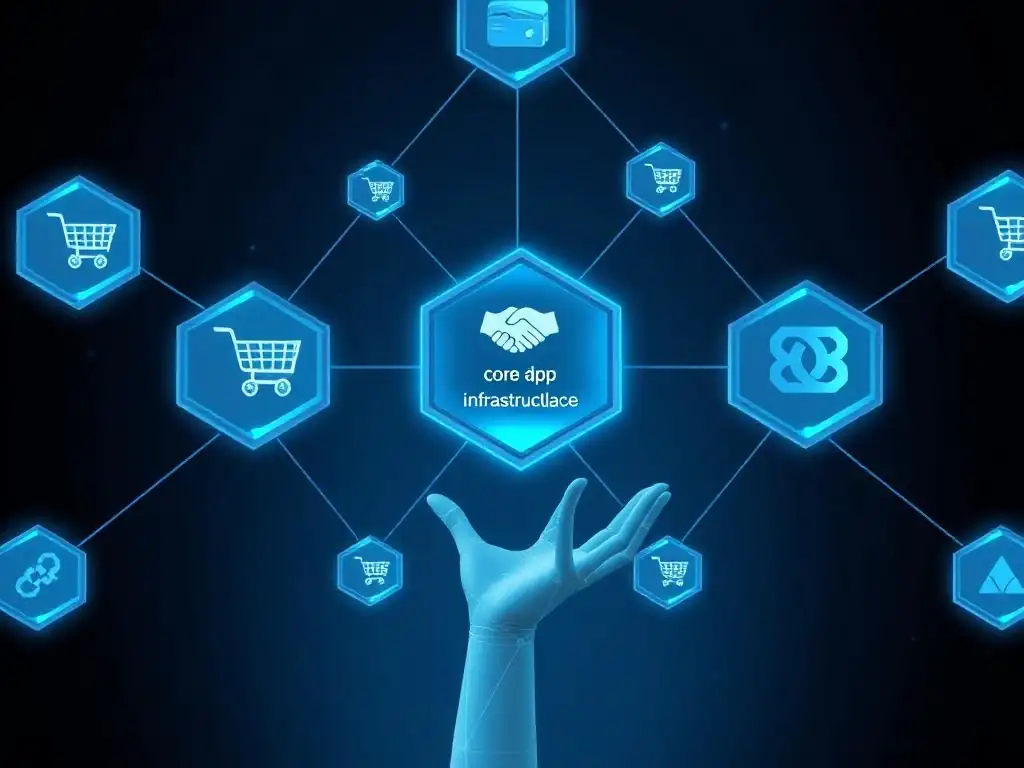
Addressing Transaction Speed and Gas Fees
One of the primary challenges for decentralized marketplaces, especially those built on blockchains like Ethereum Mainnet, is scalability. The limited transaction throughput (transactions per second) of many base-layer blockchains can lead to network congestion, slowing down transaction confirmation times. Furthermore, during periods of high network activity, transaction fees (gas fees) can skyrocket, making small value transactions economically unfeasible. For a marketplace aiming for mass adoption and frequent, low-value transactions (like buying small digital assets or inexpensive physical goods), high gas fees are a significant barrier to entry.
For example, deploying a smart contract or executing a complex transaction on Ethereum could cost hundreds of dollars in gas during peak times. This makes simple actions like listing an item or confirming delivery excessively expensive. The slow transaction speed also impacts user experience, as users may have to wait minutes or even longer for their transactions to be confirmed on the blockchain. These factors directly impact the feasibility and user-friendliness of decentralized marketplaces DApp transactions at scale.
Layer-2 Scaling Solutions for DApps
Layer-2 scaling solutions are technologies built on top of a base-layer blockchain (like Ethereum) to increase transaction throughput and reduce costs. They achieve this by processing transactions off the main chain and then submitting summarized or validated transaction data back to Layer-1. Prominent Layer-2 approaches include Optimistic Rollups (e.g., Optimism, Arbitrum) and ZK-Rollups (e.g., zkSync, StarkNet). Optimistic Rollups assume transactions are valid by default and run a fraud-proving period, while ZK-Rollups use complex cryptographic proofs to instantly verify transaction validity.
Integrating a decentralized marketplace DApp with a Layer-2 solution can dramatically improve performance. Transactions processed on Layer-2 can be confirmed much faster (potentially seconds) and at a fraction of the cost compared to Layer-1. For example, transactions on Polygon's PoS chain typically cost less than a cent. This makes frequent, low-value decentralized marketplaces DApp transactions economically viable and improves the overall user experience, bringing the potential for mass adoption closer to reality.
Optimizing Smart Contract Code for Efficiency
Beyond leveraging Layer-2 solutions, optimizing the smart contract code itself is crucial for minimizing gas costs and improving efficiency. Every operation performed by a smart contract consumes gas, and inefficient code can quickly drive up transaction costs. Developers must write lean and optimized Solidity (or other language) code, minimizing the number of computations, storage operations, and external calls within each transaction.
Techniques for optimization include using efficient data structures, avoiding unnecessary loops, minimizing state changes, and carefully considering the gas cost of different operations. For instance, reading from storage is significantly cheaper than writing to storage. Deploying multiple smaller, specialized contracts instead of one massive, monolithic contract can also help manage complexity and potentially reduce gas costs for specific interactions. Regular gas usage profiling during development and testing is essential to identify bottlenecks and optimize the smart contracts that power decentralized marketplaces DApp transactions.
Deploying and Maintaining a Decentralized Marketplace DApp
Testing and Auditing Smart Contracts Before Deployment
Before deploying a decentralized marketplace DApp to a live blockchain network, comprehensive testing and auditing of the smart contracts are non-negotiable. Thorough testing involves writing automated tests to cover all possible user interactions and edge cases, ensuring that the smart contracts behave as expected under various conditions. This includes unit tests for individual functions, integration tests for how different contracts interact, and scenario tests simulating typical user flows (listing, buying, dispute).
As mentioned previously, professional security audits by independent firms are critical. These audits identify vulnerabilities that automated tests might miss. It is common practice to undergo multiple rounds of audits and fix identified issues before final deployment. Some projects also utilize formal verification methods, which use mathematical proofs to rigorously verify that the smart contract code meets its specification, offering the highest level of assurance against certain types of bugs. This multi-layered approach to testing and auditing is vital to prevent exploits and ensure the integrity of decentralized marketplaces DApp transactions.
Monitoring DApp Performance and Addressing Issues
Once deployed, a decentralized marketplace DApp requires continuous monitoring to ensure its smooth operation and identify any issues promptly. This includes monitoring the health of the blockchain network it's deployed on, transaction confirmation times, and gas fee fluctuations. Tools like block explorers (e.g., Etherscan, Polygonscan) allow monitoring of smart contract interactions and transaction statuses.
Monitoring the DApp's smart contracts for unexpected behavior or errors is also crucial. While deployed contracts are immutable, monitoring can reveal issues in how users interact with the contract or potential vulnerabilities being probed. User feedback and bug reports must be actively collected and addressed. While core smart contract logic cannot be changed post-deployment without a planned upgrade mechanism, issues in the DApp's front-end or integration layer can be fixed and redeployed independently. Active monitoring is key to maintaining a reliable platform for decentralized marketplaces DApp transactions.
Updating Smart Contracts and Managing Upgrades
The immutability of smart contracts poses a challenge when updates or bug fixes are necessary. A common pattern for managing upgrades is using proxy contracts. A proxy contract is an intermediary contract that users interact with. This proxy contract delegates calls to an implementation contract, which contains the actual business logic. When an upgrade is needed, a new implementation contract with the updated logic is deployed, and the proxy contract is pointed to this new implementation. Users continue interacting with the same proxy address, unaware that the underlying logic has been swapped.
Implementing an upgradeable architecture adds complexity but provides flexibility for future improvements or critical bug fixes. However, the mechanism for triggering upgrades must be carefully designed to prevent malicious or unauthorized changes. This is often controlled by a multi-signature wallet requiring approval from multiple key holders or a decentralized governance mechanism where token holders vote on proposed upgrades. Managing upgrades securely and transparently is essential for the long-term viability and trust in decentralized marketplaces DApp transactions.
Real-World Examples of Successful Decentralized Marketplaces
Analyzing OpenSea: NFT Marketplace Functionality
OpenSea is one of the largest and most well-known decentralized marketplaces, specifically focusing on Non-Fungible Tokens (NFTs). Operating primarily on Ethereum and Polygon, OpenSea allows users to mint, buy, sell, and auction unique digital assets like digital art, collectibles, and virtual real estate.
While OpenSea itself operates a centralized front-end and indexing service, the core transactions – buying, selling, bidding – are facilitated through smart contracts deployed on the blockchain. When a user lists an NFT for sale, they are often interacting with a listing smart contract, enabling other users to purchase the NFT directly via a separate transaction contract.
The marketplace leverages smart contracts to manage ownership transfer and payment settlement securely. For example, a typical NFT sale involves a buyer interacting with an escrow-like contract that holds the payment until the NFT is transferred from the seller's wallet to the buyer's wallet on the blockchain. OpenSea's volume can be substantial; during peak periods in 2021-2022, it facilitated billions of dollars in transaction volume monthly across tens of thousands of users daily, demonstrating the potential scale of decentralized marketplaces DApp transactions, even with a partially centralized architecture for usability.
Analyzing Rarible: Creator-Centric NFT Marketplace Functionality
Rarible is another prominent decentralized NFT marketplace, known for its focus on empowering creators and its RARI governance token. Like OpenSea, Rarible's core buying and selling operations are executed via smart contracts on blockchains like Ethereum, Flow, and Tezos. Rarible provides tools for creators to mint NFTs directly on the platform and list them for sale, with the underlying transactions managed by smart contracts.
Rarible's approach highlights the flexibility of decentralized marketplaces DApp transactions. It utilizes smart contracts not only for basic buying/selling but also for features like creator royalties, where a percentage of secondary sales are automatically sent to the original creator via smart contract logic. The introduction of the RARI token allows community members to participate in the governance of the platform, voting on proposals and upgrades, showcasing a move towards further decentralization beyond just transaction execution. While transaction volumes fluctuate, Rarible has also processed significant sales, demonstrating a viable model for creator-focused decentralized commerce.
Key Takeaways from Existing DApp Marketplace Implementations
Analyzing platforms like OpenSea and Rarible provides valuable insights for building decentralized marketplaces. Firstly, while the underlying technology is decentralized, a user-friendly interface and reliable indexing service (even if centralized) are often necessary for widespread adoption, bridging the gap between complex blockchain interactions and typical user expectations. Secondly, smart contracts are incredibly effective for automating core marketplace logic like listing, buying, and escrow, enabling trustless P2P transactions.
Thirdly, the choice of blockchain and the consideration of scaling solutions are paramount for handling significant transaction volume and keeping costs manageable. Both OpenSea and Rarible integrated Polygon to address Ethereum's high gas fees. Finally, features beyond basic transactions, such as royalty payments, governance tokens, and decentralized reputation/dispute systems, can be built using smart contracts to create unique value propositions and foster community engagement within decentralized marketplaces DApp transactions.
The Future of Decentralized Marketplaces and Peer-to-Peer Commerce
Emerging Trends in DApp Development and Blockchain Technology
The field of DApp development and blockchain technology is rapidly evolving, promising significant advancements for decentralized marketplaces. One key trend is the continued development and adoption of Layer-2 scaling solutions, which will make decentralized marketplaces DApp transactions faster and significantly cheaper, removing major barriers to entry for users and developers alike. Innovations in zero-knowledge proofs are particularly exciting, offering the potential for highly scalable and private transactions.
Another trend is the increasing focus on cross-chain compatibility and interoperability. Future decentralized marketplaces may not be confined to a single blockchain but could allow users to trade assets across different networks seamlessly, expanding the potential user base and available inventory. Furthermore, advancements in decentralized identity solutions and privacy-preserving technologies could address current limitations regarding identity verification and data handling in a way that respects user privacy while enabling necessary functionalities. The maturation of decentralized autonomous organizations (DAOs) also suggests that future marketplaces could be entirely community-governed, further enhancing decentralization.
The Potential Impact of Decentralized Marketplaces on Various Industries
Decentralized marketplaces have the potential to disrupt numerous industries by enabling more direct, transparent, and efficient P2P commerce. In the creative industries, NFT marketplaces have already revolutionized how digital art, music, and collectibles are bought and sold, empowering creators with direct sales and royalties. Beyond digital assets, decentralized marketplaces could transform e-commerce for physical goods, reducing fees for sellers and providing greater transparency in supply chains and product authenticity verification using tokenization.
Other potential areas include decentralized finance (DeFi) marketplaces for trading tokenized real-world assets (like real estate or commodities), decentralized freelance marketplaces connecting service providers directly with clients, and peer-to-peer energy trading markets. By removing intermediaries, reducing costs, and increasing transparency, decentralized marketplaces could unlock new economic opportunities and empower individuals and small businesses globally. The ability to facilitate direct decentralized marketplaces DApp transactions across borders with minimal friction is a powerful driver for innovation across sectors.
Challenges and Opportunities for Mass Adoption
Despite the significant potential, decentralized marketplaces face several challenges on the path to mass adoption. User experience remains a hurdle; simplifying wallet management, understanding gas fees, and navigating blockchain concepts are still more complex than traditional online shopping. Regulatory uncertainty around cryptocurrencies and decentralized platforms in various jurisdictions poses another significant challenge, potentially impacting their legality and operation.
However, these challenges also present opportunities. Continued innovation in UI/UX design can make DApps as easy to use as centralized applications. Educational initiatives can help onboard new users to the concepts of web3 and self-custody. Furthermore, clearer regulatory frameworks, as they develop, could provide certainty and legitimacy, encouraging broader participation from businesses and consumers. As the technology matures and user-friendly interfaces become standard, the opportunities for decentralized marketplaces to capture significant market share in global commerce by enabling efficient decentralized marketplaces DApp transactions are substantial.
Conclusion: Empowering Peer-to-Peer Commerce with Decentralized Marketplaces
Decentralized marketplaces built on DApps represent a compelling vision for the future of commerce, one where peer-to-peer transactions are trustless, transparent, and resistant to censorship. By leveraging blockchain technology, smart contracts, decentralized storage, and oracles, these platforms eliminate the need for central intermediaries, reducing costs and empowering users with greater control over their assets and data.
While challenges related to scalability, user experience, and regulation exist, ongoing innovation in Layer-2 solutions, UI/UX design, and blockchain technology is steadily addressing these hurdles. Real-world examples like OpenSea and Rarible demonstrate the viability and potential scale of this model, particularly within niche markets like NFTs. As these technologies mature and become more accessible, decentralized marketplaces are poised to disrupt various industries, enabling a new era of efficient, secure, and equitable peer-to-peer commerce powered by seamless decentralized marketplaces DApp transactions.
Frequently Asked Questions
How do DApps facilitate decentralized marketplaces?
DApps enable peer-to-peer transactions by removing the need for centralized intermediaries, ensuring transparency and security through the blockchain.
What are the key benefits of using blockchain for decentralized marketplaces?
Blockchain offers enhanced security, transparency, and immutability in transactions, reducing fraud and increasing trust among participants in decentralized marketplaces.
What is the role of smart contracts in DApp transactions within decentralized marketplaces?
Smart contracts automate the terms of agreements, ensuring secure and reliable execution of transactions without the need for a central authority, directly impacting Decentralized marketplaces DApp transactions.
What are some of the challenges in building and deploying decentralized marketplaces?
Challenges include scalability limitations, regulatory uncertainties, and the complexity of DApp development, hindering widespread adoption of Decentralized marketplaces DApp transactions.
How does blockchain contribute to the future of decentralized systems beyond cryptocurrencies?
Blockchain fosters trustless environments and secure data management, enabling new applications in supply chain, healthcare, and governance, expanding the reach of Decentralized marketplaces DApp transactions.
Final Reflection: Embracing the Future of Peer-to-Peer Commerce
The rise of decentralized marketplaces, powered by DApps, isn't just a technological advancement; it's a fundamental shift in how we perceive and engage in commerce. This movement towards peer-to-peer transactions represents a powerful democratization of economic opportunity, breaking down traditional barriers and empowering individuals to connect directly with each other, fostering trust and transparency in ways previously unimaginable.
This shift has profoundly influenced the cultural landscape, fostering a renewed sense of ownership and control over our data and economic interactions. Witnessing the growth of these platforms, and the communities they foster, underscores the importance of empowering individuals in the digital age. The future of commerce is not about bigger corporations, but about smaller communities connecting directly.
This sentiment perfectly captures the essence of the decentralized marketplace movement, highlighting the potential for a more equitable and sustainable economic future.
As you consider the implications of decentralized marketplaces and DApp transactions, I urge you to reflect on your own role in shaping this future. How can you leverage these technologies to build stronger communities, foster greater transparency, and empower those around you? The potential is vast, and the opportunity to participate in this revolution is now. Embrace the power of decentralization and become an active architect of a more equitable and connected world.
Ignite Your Decentralized Revolution!
Thank you for exploring the potential of decentralized applications in transforming peer-to-peer transactions! You've gained valuable insights into building decentralized marketplaces. Now, it's time to apply that knowledge and help shape the future of commerce.
Ready to get started? Here are some steps you can take:
- Start brainstorming your own niche marketplace. Consider a specific community or product category that could benefit from a trustless, decentralized platform.
- Explore popular development frameworks and tools such as Truffle, Ganache, and Web3.js to deepen your understanding.
- Share this article with fellow blockchain enthusiasts. Together, we can foster innovation and uncover new opportunities in the decentralized space!
What challenges do you anticipate in creating a successful decentralized marketplace, and what innovative solutions are you considering? Share your thoughts below!
Leave a Reply