
Overcoming the Technical Barriers to Sustainable NFTs: Challenges and Solutions


Welcome to Blockchain Trends, your guide to understanding the real-world applications of blockchain technology!
Delve into the transformative potential beyond just cryptocurrencies. Are you curious about the technical hurdles standing in the way of a truly sustainable future for NFTs? In this article, we unpack the pressing challenges and explore innovative solutions to make digital ownership more environmentally friendly. Read on to discover how we can overcome these barriers and unlock the true potential of blockchain for a greener tomorrow.
Overcoming the Technical Barriers to Sustainable NFTs: Challenges and Solutions
- Introduction: Addressing the Environmental Impact of NFTs
- Understanding the Technical Challenges to Sustainable NFTs
- Exploring Technical Solutions for Sustainable NFTs
- Case Studies: Sustainable NFT Projects and Initiatives
- The Future of Sustainable NFTs: Trends and Predictions
- Conclusion: Paving the Way for a Greener NFT Ecosystem
-
Frequently Asked Questions
- How do NFTs currently contribute to environmental concerns, and what are the main technical challenges?
- What are some alternative blockchain technologies being explored to reduce the carbon footprint of NFTs?
- What role does Layer-2 scaling solutions play in addressing the sustainability challenges of NFTs?
- What are the key technical considerations for developing energy-efficient smart contracts for NFTs?
- How can NFT marketplaces and platforms implement solutions to promote sustainable NFT practices?
- Final Reflection: Forging a Greener Digital Future
- Embrace Eco-Friendly NFTs: Start Building a Greener Blockchain Today!
Introduction: Addressing the Environmental Impact of NFTs
The Growing Concern: Energy Consumption and Carbon Footprint of NFTs
The meteoric rise of Non-Fungible Tokens (NFTs) has brought unprecedented attention to digital ownership and blockchain technology. However, this surge in popularity has also highlighted a significant environmental concern: the substantial energy consumption associated with certain blockchain networks, particularly those relying on Proof-of-Work (PoW) consensus mechanisms. The process of minting, buying, and selling NFTs on these energy-intensive chains contributes to a considerable carbon footprint, sparking widespread debate and criticism from environmental advocates, artists, and the public. This has become one of the most pressing technical challenges facing the NFT space.
Studies and reports have attempted to quantify this impact. For instance, a single transaction on the Ethereum network (when it was PoW) was estimated to consume energy comparable to that of an average US household over several days. While NFTs often involve multiple transactions (minting, listing, selling), the cumulative effect across millions of NFTs created and traded globally resulted in a non-trivial environmental toll.
This high energy demand is intrinsically linked to the underlying technical architecture of the blockchain, creating a direct technical barrier to achieving truly sustainable NFTs at scale on such networks. Addressing these NFTs sustainable technical challenges solutions is paramount for the future.
The Need for Sustainable NFT Solutions: Balancing Innovation and Responsibility
The innovative potential of NFTs across art, gaming, collectibles, and beyond is undeniable, unlocking new economic models and creative possibilities. Yet, the environmental cost associated with some of these applications presents a fundamental conflict with growing global awareness and efforts regarding climate change. There is an urgent need to develop and adopt sustainable NFT solutions that allow the technology to flourish without imposing an unacceptable burden on the planet. This involves a critical examination of the technical underpinnings of NFT creation and transfer.
Balancing the exciting innovation that NFTs represent with the responsibility to minimize environmental impact requires a multi-faceted approach focused on technical improvements. This includes exploring alternative blockchain technologies, optimizing existing processes, and developing new, more efficient methods for handling NFT data and transactions. The conversation has shifted from simply acknowledging the problem to actively seeking and implementing technical solutions that make NFTs sustainable. The focus is now firmly on overcoming the technical barriers to sustainable NFTs and building a greener ecosystem.
Understanding the Technical Challenges to Sustainable NFTs
High Energy Consumption: Proof-of-Work (PoW) Blockchains and NFT Minting
At the core of the environmental debate surrounding NFTs is the energy consumption of the blockchain networks they reside on, particularly those utilizing the Proof-of-Work (PoW) consensus mechanism. PoW requires vast computational power to solve complex mathematical problems, a process known as mining. This mining secures the network but demands significant electricity, much of which historically came from non-renewable sources. Minting an NFT on a PoW chain like the original Ethereum network involved engaging with this energy-intensive process to record the transaction on the distributed ledger.
The energy cost per transaction on PoW chains is notoriously high. Before its transition, Ethereum's PoW network consumed energy at an annualized rate comparable to a medium-sized country. While attributing a precise energy cost to a single NFT mint is complex (as transaction costs are shared across all network activity), the act of adding data to the chain via PoW undeniably contributed to this overall energy demand. This fundamental technical design of PoW is a primary technical barrier to creating sustainable NFTs and has driven the urgent search for alternative consensus mechanisms and network architectures.
Storage Issues: The Environmental Cost of On-Chain NFT Data Storage
Beyond the energy required for transaction processing, the storage of NFT data presents another technical challenge with environmental implications. While the NFT token itself (representing ownership) is stored on the blockchain, the actual digital asset (the image, video, audio file, etc.) is often too large to be stored directly on the chain due to cost and technical limitations.
Instead, a link or hash pointing to the asset's data is stored on-chain. However, even storing this metadata and the token itself requires space and contributes to the overall data load on the blockchain, which must be replicated across thousands of nodes.
Storing large amounts of data, even just hashes and metadata, on a decentralized, replicated ledger like a blockchain has an environmental cost related to the energy required to power and maintain these distributed nodes and their storage infrastructure. While significantly less impactful than PoW mining, the cumulative effect of storing metadata for millions of NFTs on-chain contributes to the network's overall resource consumption.
Furthermore, if the asset data is stored on centralized servers, this introduces centralization risks and still has an environmental footprint associated with data centers. Finding efficient and decentralized yet low-impact storage solutions is another key technical challenge for NFTs sustainable technical challenges solutions.
Smart Contract Inefficiencies: Optimizing Code for Reduced Gas Fees
NFTs are fundamentally governed by smart contracts – self-executing code stored on the blockchain. The efficiency of these smart contracts directly impacts the "gas fees" required to execute transactions (like minting, transferring, or selling an NFT) on the network. Gas fees are essentially the cost of the computational effort required to perform an operation on the blockchain. Higher gas fees typically correlate with more complex or less optimized smart contract code, which in turn requires more processing power from the network's nodes.
Inefficient smart contracts, containing redundant operations or poorly structured logic, can lead to unnecessarily high gas consumption for every interaction. While the direct environmental link isn't as stark as PoW mining, reducing gas consumption translates to less computational work required across the network, thereby reducing the overall energy footprint associated with NFT transactions. Optimizing smart contract code for efficiency is a crucial technical step towards lowering the operational cost and environmental impact of NFTs, presenting a technical challenge that developers must actively address.
The Problem of NFT Waste: Unsold NFTs and Environmental Impact
A often overlooked technical challenge related to the environmental impact of NFTs is the phenomenon of "NFT waste." This refers to the large number of NFTs that are minted but never sold or even listed for sale. Each minting process, regardless of whether the NFT finds a buyer, consumes energy and computational resources on the blockchain network. When millions of NFTs are minted speculatively or as part of large collections, and only a fraction are ever traded or collected, the resources spent on the unpurchased tokens represent a form of digital waste with an associated environmental cost.
This issue is compounded by platforms or protocols that require NFTs to be minted before they are listed for sale, locking in the energy cost upfront. The sheer volume of digital assets being tokenized means that even small inefficiencies per mint can add up to a significant environmental footprint from unadopted or unsold NFTs.
Addressing this requires technical solutions that change when and how NFTs are minted, aiming to defer the resource-intensive steps until there is a confirmed buyer or genuine interest. This technical challenge highlights the need for more efficient minting practices to support NFTs sustainable technical challenges solutions.
Exploring Technical Solutions for Sustainable NFTs
Transitioning to Proof-of-Stake (PoS) Blockchains for NFT Minting
One of the most significant technical solutions for reducing the environmental impact of NFTs is the transition from energy-intensive Proof-of-Work (PoW) consensus mechanisms to more energy-efficient alternatives like Proof-of-Stake (PoS). In PoS systems, network validators are chosen based on the amount of cryptocurrency they "stake" as collateral, rather than their computational power. This eliminates the need for competitive, energy-hungry mining operations.
Moving NFT activities to PoS blockchains drastically reduces the energy consumed per transaction. This fundamental shift in network architecture directly addresses the primary technical barrier of high energy use associated with PoW. By leveraging PoS, platforms and creators can mint and trade NFTs with a significantly lower carbon footprint, paving the way for truly sustainable NFTs.
Ethereum's Merge: A Case Study in Reducing Energy Consumption
Ethereum, the dominant blockchain for NFTs for several years, successfully transitioned from Proof-of-Work to Proof-of-Stake in September 2022, an event known as "The Merge." This was a monumental technical undertaking aimed directly at addressing the network's substantial energy consumption. The impact was immediate and dramatic.
Following The Merge, Ethereum's energy consumption plummeted by approximately 99.95%. This technical upgrade instantly transformed the environmental profile of NFTs minted and traded on the Ethereum mainnet. A single Ethereum transaction, once consuming energy equivalent to an average US household's usage over days, now consumes a fraction of that, estimated to be roughly equivalent to watching a few hours of television. This case study demonstrates the profound impact that a large-scale technical shift to PoS can have on making NFTs sustainable.
Other PoS Blockchains for Sustainable NFT Creation: Cardano, Solana, Tezos
Beyond Ethereum, several other blockchain networks were built from the ground up using Proof-of-Stake or similar energy-efficient consensus mechanisms, positioning them as inherently more sustainable alternatives for NFT creation. Networks like Cardano (using Ouroboros PoS), Solana (using Proof-of-History combined with PoS), and Tezos (using Liquid Proof-of-Stake) offer platforms for minting and trading NFTs with significantly lower energy requirements compared to legacy PoW chains.
These blockchains boast different technical architectures and performance characteristics. Solana, for instance, is designed for high throughput, capable of processing tens of thousands of transactions per second with extremely low transaction costs, often fractions of a cent. Cardano focuses on formal verification and security, while Tezos emphasizes on-chain governance. All three, however, share the core technical advantage of PoS, making them viable options for creators and collectors prioritizing sustainable NFT solutions. Their existence and growing adoption provide concrete alternatives for overcoming the technical barriers to sustainable NFTs.
Implementing Layer-2 Scaling Solutions for NFTs
While the transition to PoS significantly reduces the energy footprint of the base blockchain layer (Layer 1), scaling solutions, particularly Layer-2 networks, offer another powerful technical approach to enhance efficiency and sustainability for NFTs. Layer-2 solutions operate on top of a Layer-1 blockchain (like Ethereum) by processing transactions off the main chain in a more efficient manner and then periodically settling bundles of these transactions back onto the Layer 1.
This technical approach drastically reduces the load on the main blockchain, leading to lower transaction costs (gas fees) and faster processing times. By handling the high volume of NFT minting, trading, and transfers off-chain before final settlement, Layer-2 solutions minimize the interaction with the underlying Layer-1's consensus mechanism, thereby reducing the cumulative energy consumption associated with these activities. Implementing Layer-2 scaling is a key technical strategy for making NFTs more sustainable and scalable.
Reducing Transaction Costs and Energy Usage with Layer-2 Solutions
Layer-2 technologies achieve efficiency by processing thousands or even tens of thousands of transactions in a batch off-chain and then submitting a single summary transaction to the Layer-1 blockchain. This single transaction represents the collective outcome of all the off-chain operations. The energy cost of that single Layer-1 transaction is then amortized across all the transactions included in the batch.
For example, if a Layer-2 solution bundles 10,000 NFT trades into one Layer-1 transaction, the effective energy cost per trade is roughly 1/10,000th of what it would have been if each trade was processed individually on Layer 1. This dramatic reduction in per-transaction cost directly translates to a lower energy footprint for the same volume of NFT activity. Layer-2 solutions thus offer a compelling technical pathway to significantly reduce the environmental impact and operational costs associated with NFTs, addressing critical NFTs sustainable technical challenges solutions.
Examples of Layer-2 Solutions for NFTs: Polygon, Immutable X, Arbitrum
Several Layer-2 solutions have gained traction within the NFT ecosystem, each employing different technical approaches to scaling. Polygon, a popular Layer-2 scaling platform, often utilizes a Proof-of-Stake sidechain architecture that is compatible with Ethereum. It supports a vibrant NFT ecosystem with substantially lower transaction fees and higher throughput than Ethereum Layer 1 before scaling.
Immutable X is another prominent Layer-2 solution specifically designed for NFTs, built using Zero-Knowledge Rollup technology. It offers instant trades and zero gas fees for NFT minting and trading within its ecosystem, settling transactions securely on Ethereum Layer 1 in batches. Arbitrum, a general-purpose Layer-2 using Optimistic Rollups, also supports NFT platforms and marketplaces, providing faster and cheaper transactions compared to the Ethereum mainnet. These examples demonstrate the practical application of Layer-2 technology in creating more sustainable NFT environments.
Optimizing NFT Smart Contracts for Energy Efficiency
While the choice of blockchain network and scaling solutions are major factors, the efficiency of the NFT smart contract code itself plays a role in overall energy consumption. Poorly written or unoptimized smart contracts can consume excessive "gas" (computational units) on the network, leading to higher transaction costs and greater computational load across nodes. Technical efforts focused on optimizing these contracts are crucial for reducing the environmental footprint at the individual transaction level.
Optimizing smart contracts involves writing code that minimizes the number of operations required to perform a specific task. This requires careful consideration of data structures, algorithmic efficiency, and adherence to best practices for smart contract development. By making smart contracts more efficient, developers can directly contribute to lowering the energy cost associated with every NFT mint, transfer, or sale, adding another layer to the technical solutions for sustainable NFTs.
Gas Optimization Techniques for NFT Contracts
Developers building NFT smart contracts on platforms like Ethereum (even post-Merge, as gas still represents computational work) employ various technical techniques to minimize gas consumption. These include:
- Minimizing state changes: Writing data to storage on the blockchain (state changes) is one of the most expensive operations. Optimizing contracts to reduce unnecessary state writes is critical.
- Efficient loop usage: Avoiding unbounded loops and optimizing loop iterations to reduce computational steps.
- Using efficient data types: Choosing appropriate data types (e.g.,
uint256vs. smaller types where applicable, though this has nuances post-compiler improvements) and packing data efficiently in storage. - Caching or calculating values off-chain: Performing complex calculations or data lookups off-chain where possible and only submitting the final result or hash to the blockchain.
- Optimizing function calls: Structuring functions to reduce overhead and external calls where feasible.
By applying these and other technical gas optimization strategies, developers can create NFT smart contracts that are not only cheaper to use but also more energy-efficient, contributing to NFTs sustainable technical challenges solutions.
Using Efficient Coding Practices for Sustainable NFT Development
Beyond specific gas optimization tricks, adopting a general philosophy of efficient and minimalist coding practices is essential for sustainable NFT development. This means writing clean, concise code that performs its function with the fewest possible operations. It involves careful design of the contract's logic to avoid redundancy and unnecessary complexity.
Furthermore, utilizing established and audited smart contract libraries (like OpenZeppelin standards for ERC-721 or ERC-1155) can also contribute to efficiency, as these libraries are typically well-optimized and widely tested. Developers should prioritize code quality and efficiency from the initial design phase of an NFT project to ensure its technical foundation supports sustainability goals. This focus on efficient development is a key part of addressing the technical challenges to sustainable NFTs.
Utilizing Off-Chain Storage Solutions for NFT Metadata
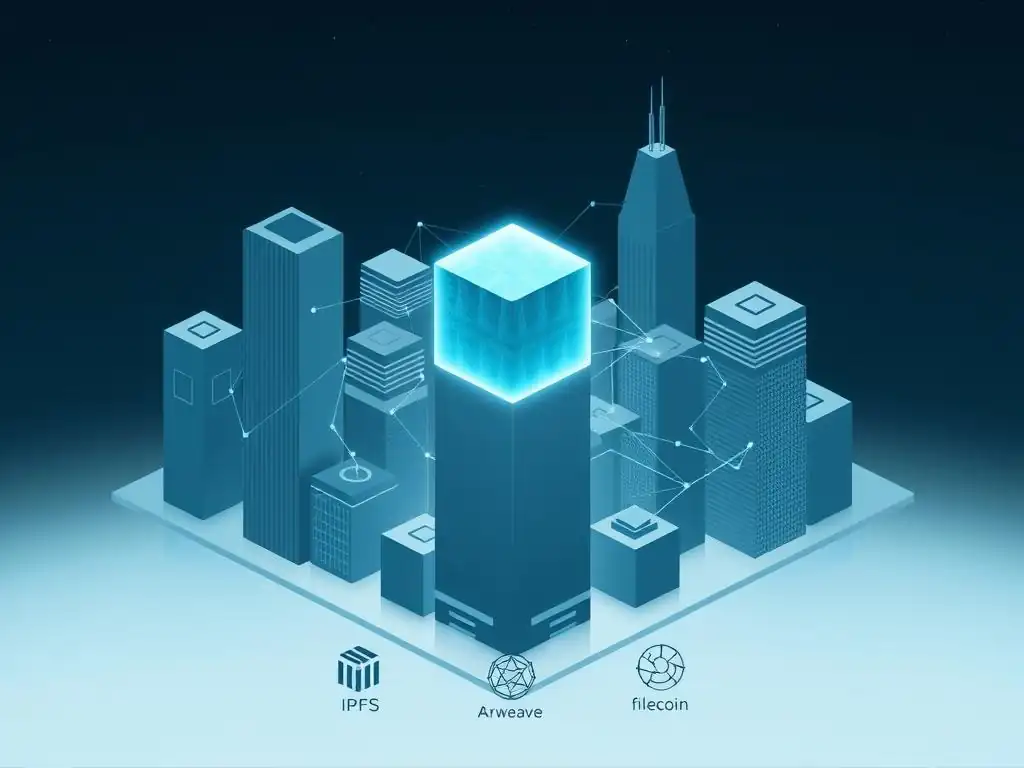
As mentioned, storing the actual digital asset data directly on the blockchain is often impractical due to size limitations and cost. The common practice is to store the asset data off-chain and include a pointer (like a URL or a hash) in the on-chain NFT metadata. The choice of off-chain storage solution has environmental implications and presents technical considerations regarding decentralization and permanence.
Centralized cloud storage solutions (like AWS, Google Cloud, etc.) have environmental footprints associated with data centers. While often more energy-efficient per terabyte than distributed blockchain storage, they introduce a point of control and potential failure (e.g., link rot). Decentralized off-chain storage solutions offer an alternative that aligns better with the decentralized ethos of blockchain while also having varying energy profiles.
IPFS and Arweave: Decentralized Storage Alternatives
InterPlanetary File System (IPFS) and Arweave are two prominent decentralized storage protocols used for storing NFT asset data. IPFS is a peer-to-peer network for storing and sharing data in a distributed file system. Data stored on IPFS is addressed by its content hash, meaning the link is tied to the content itself rather than a specific server location. While IPFS itself doesn't guarantee perpetual storage (data must be pinned by nodes), it offers a decentralized alternative to centralized servers.
Arweave is designed for permanent, decentralized data storage. It uses a "blockweave" structure and a proof-of-access consensus mechanism to ensure data remains accessible indefinitely after a one-time fee. Both IPFS and Arweave distribute data across a network of nodes, reducing reliance on single data centers. Their energy consumption models differ from PoW blockchains, generally being more focused on storage and retrieval efficiency. Utilizing these decentralized off-chain solutions is a technical strategy for managing NFT data more sustainably while maintaining decentralization.
Balancing Decentralization and Sustainability in NFT Storage
The choice of storage solution for NFT metadata and assets involves balancing the technical goals of decentralization and permanence with the environmental goal of sustainability. Storing everything on a PoW blockchain is decentralized and permanent (as long as the chain exists) but highly energy-intensive. Centralized storage is less energy-intensive but sacrifices decentralization and introduces risks.
Decentralized off-chain solutions like IPFS and Arweave offer a middle ground. They store the bulk of the data decentrally, and a link to this data is stored on the blockchain (often a more energy-efficient PoS chain or Layer-2). This approach reduces the energy footprint on the main blockchain while still providing a degree of decentralization for the asset data. The technical challenge lies in integrating these solutions seamlessly and ensuring the long-term availability and integrity of the off-chain data, which is crucial for the value and permanence of the NFT itself.
Innovative NFT Minting Techniques for Reduced Environmental Impact
Beyond changing the underlying blockchain or scaling layers, technical innovation in the NFT minting process itself can significantly reduce environmental impact. Traditional minting often involves executing a smart contract function that writes the NFT data to the blockchain immediately upon creation. However, alternative minting techniques can defer or batch this process to improve efficiency.
These innovative methods focus on minimizing the number of on-chain transactions or delaying the energy-intensive steps until they are absolutely necessary. By rethinking the technical workflow of how an NFT is brought into existence on the blockchain, developers can create more resource-efficient and sustainable NFT practices.
Lazy Minting: Minting NFTs Only Upon Purchase
Lazy minting is a technical innovation where the NFT is not actually created on the blockchain until it is purchased. The creator signs a digital signature representing the intent to mint the NFT and lists it for sale off-chain. When a buyer agrees to purchase, the transaction that transfers ownership and mints the NFT on the blockchain is initiated by the buyer (or the marketplace), often incorporating the creator's signature.
This technique significantly reduces NFT waste because resources are only consumed for NFTs that are actually sold. If an NFT is listed via lazy minting but never finds a buyer, no energy is spent minting it on the blockchain. This contrasts with traditional minting, where the energy cost is incurred upfront regardless of a sale. Lazy minting provides a technical solution to reduce the environmental impact associated with unsold or speculative NFT creations.
Batch Minting: Reducing Gas Fees and Energy Consumption
Batch minting is another technical approach that improves efficiency and reduces environmental impact, particularly when creating collections of NFTs. Instead of minting each NFT individually in separate transactions, batch minting allows a creator to mint multiple NFTs within a single blockchain transaction.
This technique leverages the fact that the fixed cost of initiating a transaction on a blockchain can be spread across multiple operations within that transaction. By minting 10, 100, or even more NFTs in one go, the per-NFT gas fee and associated energy consumption are dramatically reduced compared to executing separate minting transactions for each token. Batch minting is a straightforward technical optimization for creators releasing collections, contributing to more sustainable NFT practices by lowering the cumulative energy footprint.
Case Studies: Sustainable NFT Projects and Initiatives
Digital Climate Action: Carbon Offset NFTs
While many sustainable NFT initiatives focus on reducing the environmental footprint of NFTs, some projects utilize NFTs for environmental action. Digital Climate Action is an example of this, exploring the use of NFTs linked to verified carbon credits or climate projects. The technical implementation typically involves tokenizing carbon offsets on a blockchain.
This approach allows for transparent tracking and trading of carbon credits, potentially making climate action more accessible and verifiable. The NFTs represent ownership of a specific amount of carbon reduction or removal. While the environmental impact of minting and transferring these specific NFTs still depends on the underlying blockchain (ideally a PoS or Layer-2), the purpose of the NFT is directly tied to environmental benefit. The technical challenge here lies in ensuring the integrity and verification of the real-world carbon offset linked to the digital token.
World of Women: Community and Sustainability Initiatives
The World of Women (WoW) NFT collection, initially launched on the Ethereum blockchain (benefiting from its later transition to PoS), is known for its focus on diversity, inclusivity, and philanthropic efforts, including environmental causes. While not a technical solution per se for reducing energy consumption beyond leveraging the underlying chain's efficiency improvements, their initiative highlights how NFT projects can integrate sustainability into their mission and operations.
WoW has publicly stated commitments to environmental sustainability, including donating a portion of primary and secondary sales to environmental non-profits. Their choice to remain on Ethereum means they directly benefited from the significant energy reduction post-Merge. Furthermore, their engagement with the community often includes discussions around responsible blockchain use. This case study demonstrates that while technical solutions are key, project-level commitment and community engagement on sustainable practices are also vital components of the move towards sustainable NFTs.
Analyzing the Impact of These Initiatives on Reducing the Carbon Footprint of NFTs
Analyzing the impact of initiatives like Digital Climate Action and World of Women involves looking at both direct technical effects and broader ecosystem influence. For Digital Climate Action, the direct environmental impact is tied to the carbon offset represented by the NFT, assuming rigorous verification. The energy cost of the NFT itself is secondary to the environmental benefit it represents. The technical choice of blockchain is crucial here for minimizing that secondary cost.
For World of Women and similar large collections, the most significant technical impact on their carbon footprint came from Ethereum's shift to PoS. Before The Merge, their activity contributed to the high energy use of PoW Ethereum. Post-Merge, their operations became dramatically more energy-efficient due to the underlying technical upgrade.
Their initiatives also contribute by raising awareness and potentially influencing other projects and collectors to consider sustainability, indirectly driving demand for and development of NFTs sustainable technical challenges solutions. While quantifying the precise carbon reduction from project-level initiatives is complex, their adoption of or benefit from energy-efficient technical solutions is clear.
The Future of Sustainable NFTs: Trends and Predictions
The Role of Regulation in Promoting Sustainable NFT Practices
As the NFT market matures and its environmental impact becomes more scrutinized, it is increasingly likely that regulatory bodies will play a role in promoting sustainable NFT practices. While specific regulations are still nascent, potential approaches could include mandating disclosure of the energy consumption associated with NFT platforms or specific collections, incentivizing the use of energy-efficient blockchains, or even imposing carbon taxes related to blockchain activity.
Regulation could provide a strong external driver for the adoption of sustainable technical solutions. For example, a requirement to disclose energy use could push platforms towards PoS chains or Layer-2 solutions where figures are significantly lower. Government grants or incentives could also support the development of new eco-friendly blockchain technologies specifically tailored for NFTs. The technical community will need to be prepared to adapt to potential regulatory frameworks aimed at addressing the technical challenges of sustainable NFTs.
The Development of New Technologies for Eco-Friendly NFTs
The current technical landscape for sustainable NFTs, primarily centered around PoS and Layer-2 scaling, is just the beginning. Ongoing research and development in blockchain technology continue to explore even more energy-efficient consensus mechanisms and data structures. Future innovations could include:
- Further optimized PoS variants: Developing PoS algorithms that require even less computational overhead or staking requirements.
- Alternative consensus mechanisms: Exploring novel approaches beyond PoW and PoS, such as Proof-of-Authority (PoA) for specific use cases (though often less decentralized) or hybrid models.
- Improved data compression and storage techniques: Developing more efficient ways to store NFT metadata and asset pointers on-chain or off-chain with minimal environmental impact.
- Interoperability solutions: Creating seamless bridges and protocols that allow NFTs to be easily moved between different energy-efficient blockchains or Layer-2s.
These advancements will continue to lower the technical barriers to sustainable NFTs, making eco-friendly options more performant, cost-effective, and accessible.
The Growing Demand for Sustainable NFTs Among Collectors and Creators
Beyond technological push and potential regulatory pull, market demand is becoming a significant factor driving the adoption of sustainable NFT solutions. A growing segment of collectors and creators are expressing concerns about the environmental impact of their digital activities and are actively seeking out eco-friendly alternatives.
This increasing awareness translates into a preference for platforms and projects operating on PoS chains, utilizing Layer-2 solutions, or implementing energy-efficient minting techniques. As this demand grows, it incentivizes creators and marketplaces to adopt more sustainable technical practices to attract environmentally conscious users. This market-driven pressure complements the technical developments and regulatory considerations, collectively pushing the ecosystem towards a greener future for NFTs. The shift reflects a broader trend where users are demanding that the technical solutions they engage with are also sustainable solutions.
Conclusion: Paving the Way for a Greener NFT Ecosystem
The Importance of Collaboration in Addressing the Technical Challenges
Addressing the technical challenges to sustainable NFTs requires collaborative efforts across the entire ecosystem. This includes blockchain core developers innovating on consensus mechanisms and scaling solutions, smart contract developers writing efficient code, platform operators implementing energy-saving features like lazy minting and batch minting, and storage providers offering decentralized and efficient options.
Furthermore, artists, creators, and collectors play a crucial role by choosing and supporting platforms and projects that prioritize sustainability. Research institutions and environmental organizations also contribute by providing data, analysis, and advocating for greener practices. No single entity can solve these complex technical challenges alone; it necessitates a concerted effort involving knowledge sharing, standard setting, and collective adoption of best practices to truly pave the way for sustainable NFTs.
Moving Towards a More Sustainable and Responsible NFT Future
The journey towards a more sustainable and responsible NFT future is well underway, driven by significant technical advancements like the widespread adoption of Proof-of-Stake and Layer-2 scaling solutions. While challenges remain, particularly in standardizing practices and ensuring long-term data permanence in decentralized ways, the path forward involves continued technical innovation, increased awareness, and collective action.
The focus on overcoming the technical barriers to sustainable NFTs is not just about reducing energy consumption; it's about building a more resilient, ethical, and future-proof digital ownership ecosystem. By embracing energy-efficient blockchains, optimizing smart contracts, utilizing smart minting techniques, and choosing sustainable storage, the NFT space can evolve into a powerful force for innovation that aligns with global environmental responsibility. The ongoing development and implementation of NFTs sustainable technical challenges solutions are critical steps towards this greener future.
Frequently Asked Questions
How do NFTs currently contribute to environmental concerns, and what are the main technical challenges?
NFTs contribute to environmental concerns due to the energy-intensive processes involved in their creation and trading, particularly on Proof-of-Work blockchains. The main technical challenges include high energy consumption and the need for more efficient consensus mechanisms.
What are some alternative blockchain technologies being explored to reduce the carbon footprint of NFTs?
Several alternative blockchain technologies are being explored, including Proof-of-Stake (PoS) and Proof-of-Authority (PoA) blockchains. These alternatives significantly reduce the energy needed for transaction validation, leading to a smaller carbon footprint compared to Proof-of-Work.
What role does Layer-2 scaling solutions play in addressing the sustainability challenges of NFTs?
Layer-2 scaling solutions, like sidechains and rollups, help by processing transactions off the main blockchain, thereby reducing congestion and gas fees. This reduces energy consumption and makes NFTs more accessible and environmentally friendly.
What are the key technical considerations for developing energy-efficient smart contracts for NFTs?
Key considerations include optimizing code to minimize computational complexity, utilizing gas optimization techniques during smart contract development, and choosing efficient data structures for storing NFT metadata.
How can NFT marketplaces and platforms implement solutions to promote sustainable NFT practices?
NFT marketplaces can promote sustainability by offsetting carbon emissions, supporting projects that utilize eco-friendly blockchain technologies, and educating users about sustainable NFT options. They can also implement features to highlight and prioritize green NFTs.
Final Reflection: Forging a Greener Digital Future
The exploration of technical barriers hindering sustainable NFTs reveals a critical juncture in the evolution of digital ownership. The solutions we implement today will directly impact the environmental footprint of tomorrow's blockchain technologies, shaping the narrative of NFTs from a source of concern to a catalyst for positive change. The path forward requires a concerted effort from developers, artists, and collectors alike.
The journey towards sustainable NFTs is not merely a technical exercise; it's a reflection of our values and our commitment to a responsible digital future. This pursuit resonates deeply, reminding us that innovation should always be tempered with ethical considerations and environmental awareness. We do not inherit the earth from our ancestors; we borrow it from our children.
This proverb underscores the urgency and importance of mitigating the environmental impact of emerging technologies like NFTs.
As we stand at the cusp of a new era in digital art and ownership, let us not forget the lessons learned. Consider how you can contribute to a more sustainable NFT ecosystem, whether through supporting eco-conscious platforms, advocating for energy-efficient solutions, or simply making informed choices as a collector. The future of NFTs, and indeed the future of our planet, depends on our collective action and unwavering commitment to sustainable practices.
Here's a CTA designed to follow your article, "Overcoming the Technical Barriers to Sustainable NFTs: Challenges and Solutions," tailored for Blockchain Trends (blockchaintrends.org):
Embrace Eco-Friendly NFTs: Start Building a Greener Blockchain Today!
Thank you for diving deep into the technical aspects of sustainable NFTs! Now that you're equipped with this knowledge, it's time to put those insights into action and become part of the solution. Let's turn understanding into real-world impact.
- Commit to Minting at Least One Energy-Efficient NFT: Put your knowledge to the test! Choose a sustainable platform and create your first eco-conscious NFT.
- Share this article with fellow creators and developers who are passionate about sustainability in the blockchain space. Let's amplify the message together!
- Explore alternative consensus mechanisms (like Proof-of-Stake) and consider contributing to open-source projects focused on energy-efficient blockchain solutions.
What innovative strategies will you implement to reduce the environmental footprint of your next NFT project? Share your thoughts in the comments below!
Leave a Reply