
Exploring Niche DApp Use Cases: From Decentralized Voting to Decentralized Science


Welcome to Blockchain Trends, your guide to understanding the revolutionary power of blockchain beyond the hype! Are you ready to delve into the real-world applications of this groundbreaking technology? This week, we're unraveling the potential of Decentralized Applications (DApps), moving past the familiar and exploring exciting, niche decentralized application use cases. Prepare to be surprised – what if you could revolutionize voting or even accelerate scientific discovery through blockchain? Let's explore how!
Exploring Niche DApp Use Cases: From Decentralized Voting to Decentralized Science
- Introduction: Beyond DeFi - Unveiling Novel Decentralized Application Use Cases
- Decentralized Voting: Securing and Streamlining Elections with Blockchain
-
Decentralized Science (DeSci): Revolutionizing Research and Collaboration
- Problems with Traditional Scientific Research: Funding, Reproducibility, and Data Silos
- Decentralized Science DApps: Fostering Openness and Collaboration in Research
- Use Cases in DeSci: Decentralized Data Storage, Funding, and Peer Review
- The Potential of Blockchain in Accelerating Scientific Discoveries
- Decentralized Identity Management: Empowering Users with Self-Sovereign Identity
- Decentralized Supply Chain Management: Enhancing Traceability and Transparency
- Decentralized Social Media: Building Censorship-Resistant Platforms
- Other Emerging Niche Decentralized Application Examples
- Challenges and Opportunities for Niche DApp Adoption
- Conclusion: The Future of Decentralized Applications - Beyond the Hype
-
Frequently Asked Questions
- What are some niche examples of Decentralized Application (DApp) use cases beyond typical cryptocurrency applications?
- How can blockchain technology enhance the integrity and transparency of voting systems?
- What are the potential benefits of using DApps in the field of scientific research?
- What are some of the regulatory challenges facing the widespread adoption of DApps in various industries?
- How does the concept of decentralization contribute to the overall resilience and security of DApp ecosystems?
- Final Reflection: Embracing the Decentralized Frontier
- Unleash Your Inner DApp Innovator!
Introduction: Beyond DeFi - Unveiling Novel Decentralized Application Use Cases
The Expanding Landscape of DApps: Moving Beyond Financial Applications
While Decentralized Finance (DeFi) has dominated the conversation around decentralized applications (DApps) for several years, representing a significant portion of blockchain activity and value locked, the true potential of this technology extends far beyond financial instruments. Early DApp development primarily focused on exchanges, lending protocols, and asset management, demonstrating the power of disintermediation in financial services. However, the underlying principles of decentralization, transparency, and immutability offered by blockchain technology are applicable to a vast array of industries and problem domains that have historically been plagued by centralization, lack of trust, or inefficiency.
The evolution of blockchain infrastructure, including improvements in scalability, interoperability, and developer tools, is now enabling the exploration and implementation of more complex and specialized decentralized application use cases. This expansion signifies a maturation of the DApp ecosystem, moving from proof-of-concept financial experiments to real-world applications addressing specific, often overlooked, challenges in areas like governance, scientific research, identity management, and supply chains. Understanding these niche applications provides a clearer picture of the transformative impact blockchain can have on society beyond the speculative nature of cryptocurrencies.
Defining Niche DApps: Focusing on Specific Problem Domains
Niche DApps are decentralized applications designed to solve highly specific problems within particular industries or communities, often outside the mainstream financial sector. Unlike broad platforms, these DApps target narrow use cases, leveraging blockchain's unique properties – such as censorship resistance, verifiable transparency, and trustless interaction – to address pain points that traditional centralized systems either fail to solve effectively or exacerbate. Examples range from securing intellectual property rights for artists to managing decentralized energy grids or enabling verifiable charitable donations.
The defining characteristic of a niche DApp lies in its focused application. Instead of building a general-purpose social network, a niche DApp might focus specifically on decentralized academic publishing. Rather than a universal marketplace, it might create a transparent system for tracking ethical sourcing of goods. These applications often require deep domain knowledge to design effectively and highlight the versatility of blockchain technology when applied to specialized decentralized application use cases that demand high levels of trust, security, or immutability for specific data or interactions.
Decentralized Voting: Securing and Streamlining Elections with Blockchain
Challenges of Traditional Voting Systems: Fraud, Transparency, and Accessibility
Traditional voting systems, while foundational to democratic processes, face significant challenges that can undermine public trust and participation. Concerns about potential fraud, such as double voting or ballot manipulation, persist in various forms globally. The lack of real-time, easily verifiable transparency in vote counting processes can lead to disputes and lengthy audits.
Furthermore, accessibility remains an issue for many citizens, including overseas voters, individuals with disabilities, or those in remote areas, often resulting in lower voter turnout. For instance, voter turnout in the 2020 US presidential election, while relatively high, was still only around 66% of the voting-eligible population, leaving a substantial portion of citizens unheard.
The logistical complexity and cost of administering large-scale elections are also considerable burdens. Printing ballots, securing polling stations, managing voter registration databases, and transporting sensitive materials involve substantial financial investment, often running into millions or even billions of dollars for national elections. For example, the cost of administering elections in the United States is estimated to be over $4 billion per federal election cycle. These factors collectively point to a need for innovative solutions that can enhance the integrity, transparency, and efficiency of the electoral process, areas where decentralized application use cases like blockchain-based voting show promise.
How Decentralized Voting DApps Enhance Security and Transparency
Decentralized voting DApps leverage blockchain technology to create a highly secure and transparent electoral process. Each vote is recorded as an immutable transaction on a distributed ledger, making it virtually impossible to alter or delete votes without detection. This inherent immutability addresses concerns about ballot stuffing or manipulation. Transparency is enhanced because the public ledger allows anyone to verify that their vote was recorded correctly and that the total vote count is accurate, without revealing individual voting choices (through cryptographic techniques like zero-knowledge proofs). This public auditability significantly increases confidence in the election results.
Security is further bolstered by cryptographic principles. Voters can be issued unique, verifiable digital identities or tokens that prevent double voting.
The decentralized nature of the blockchain means there is no single point of failure that can be targeted by malicious actors to disrupt the election or tamper with results, unlike centralized electronic voting machines or databases. Pilot programs and studies have suggested that implementing blockchain voting could potentially reduce administrative costs by a notable margin, perhaps 10-30% in certain contexts, by streamlining logistics and reducing the need for extensive manual verification processes, offering compelling decentralized application use cases for public administration.
Examples of Decentralized Voting Platforms and Their Impact
While widespread adoption in national elections is still nascent, several projects and pilots have explored the potential of decentralized voting platforms. Estonia, a leader in digital governance, has experimented with blockchain-like technology for secure online voting, although not a fully decentralized public blockchain system. Sierra Leone used blockchain technology in its 2018 presidential election to track ballot box aggregation, enhancing transparency in a specific part of the process. Several startups and research initiatives are developing full-fledged decentralized voting DApps designed for shareholder meetings, organizational governance, and smaller-scale community elections.
These early examples demonstrate the potential impact. In corporate governance, blockchain voting can make shareholder votes more secure and verifiable. In smaller organizations or communities, it can increase participation by allowing remote voting while ensuring the integrity of the process. While challenges remain regarding identity verification, scalability for mass elections, and regulatory acceptance, the progress in these areas highlights the growing interest in blockchain as a tool to modernize and secure fundamental democratic and organizational processes, illustrating valuable decentralized application use cases.
The Future of Democratic Processes: Decentralized Voting Adoption
The path to widespread adoption of decentralized voting in major elections is complex and requires overcoming significant technical, social, and regulatory hurdles. Building systems capable of handling tens or hundreds of millions of votes securely and efficiently while maintaining privacy is a monumental task. Public trust in a novel technology for something as critical as elections also needs to be built through education and successful pilot programs. Regulatory frameworks need to be established or adapted to accommodate blockchain-based processes.
Despite these challenges, the inherent benefits of enhanced security, transparency, and accessibility offered by decentralized voting DApps make them a compelling option for the future. As blockchain technology matures and public understanding increases, we may see gradual adoption, starting with smaller-scale elections or specific aspects of the voting process, eventually building towards more comprehensive implementations. The continued development and testing of these decentralized application use cases are crucial steps towards potentially revolutionizing how societies make collective decisions.
Decentralized Science (DeSci): Revolutionizing Research and Collaboration
Problems with Traditional Scientific Research: Funding, Reproducibility, and Data Silos
The traditional scientific research ecosystem faces systemic challenges that can impede progress and innovation. Securing funding is often a highly competitive and lengthy process, with significant resources spent on grant applications and low success rates (e.g., NIH R01 grant success rates have hovered around 20-25% in recent years). The reproducibility crisis is another major issue; studies suggest that a substantial portion of published research, potentially over 50% in some fields like psychology or preclinical medicine, cannot be reproduced by independent researchers, wasting resources and slowing scientific advancement.
Furthermore, research data is often siloed within institutions or behind expensive journal paywalls, limiting access and collaboration. The peer-review process, while essential, can be slow, biased, and lacks transparency. Intellectual property issues and the difficulty of sharing data securely across institutions also pose significant barriers. These inefficiencies and bottlenecks highlight the need for a more open, collaborative, and verifiable approach to scientific discovery, presenting ripe ground for decentralized application use cases.
Decentralized Science DApps: Fostering Openness and Collaboration in Research
Decentralized Science (DeSci) utilizes blockchain and decentralized technologies to build a more open, transparent, and collaborative scientific ecosystem. DeSci DApps aim to address the inefficiencies of traditional systems by providing decentralized platforms for funding research, storing and sharing data, conducting peer review, and publishing findings. By leveraging blockchain's immutability, researchers can create verifiable records of experiments, datasets, and findings, addressing the reproducibility crisis by making methodologies and results transparent and auditable.
These platforms can facilitate direct funding mechanisms, allowing researchers to receive grants or crowdfunding directly from a global community, potentially bypassing traditional bureaucratic processes and increasing funding opportunities. Decentralized data storage solutions ensure that research data is accessible (when appropriate), secure, and resistant to censorship or manipulation. The use of tokens within DeSci ecosystems can incentivize collaboration, data sharing, and quality peer review, fostering a more dynamic and equitable research environment by creating novel decentralized application use cases specifically tailored for academia and research.
Use Cases in DeSci: Decentralized Data Storage, Funding, and Peer Review
Specific decentralized application use cases within DeSci are emerging rapidly. Decentralized data storage platforms built on blockchain or distributed file systems allow researchers to store large datasets securely and immutably, with clear provenance tracking. This is crucial for ensuring data integrity and facilitating open access where possible. Examples include systems for storing clinical trial data, genomic sequences, or experimental results in a verifiable manner.
Decentralized funding platforms are experimenting with new models like quadratic funding or decentralized autonomous organizations (DAOs) to allocate research grants based on community consensus or specific metrics. This can diversify funding sources and potentially prioritize research areas valued by the public or specific scientific communities.
Blockchain is also being explored for peer review, creating immutable records of reviews, potentially allowing reviewers to earn reputation or tokens for their contributions, and making the process more transparent while preserving anonymity where needed. Platforms are also emerging for decentralized publishing, allowing researchers to share findings without relying solely on traditional, often paywalled, journals.
The Potential of Blockchain in Accelerating Scientific Discoveries
By addressing fundamental issues in funding, reproducibility, access, and collaboration, blockchain technology has the potential to significantly accelerate scientific discoveries. A more open and collaborative environment, where data and methodologies are easily shared and verified, can lead to faster validation of findings and quicker identification of promising research avenues. Decentralized funding models could direct resources more efficiently to innovative projects that might struggle in traditional grant systems.
The ability to create immutable and verifiable records of the entire research lifecycle – from hypothesis and experimental design to data collection, analysis, and publication – builds a stronger foundation for future research and increases trust in scientific findings. As DeSci ecosystems mature, they could lower barriers to entry for researchers globally, particularly those in underfunded regions, and foster cross-disciplinary collaboration on a massive scale. This transformative potential highlights DeSci as one of the most impactful emerging decentralized application use cases.
Decentralized Identity Management: Empowering Users with Self-Sovereign Identity
Challenges with Centralized Identity Systems: Data Breaches and Privacy Concerns
In the digital age, our identities are fragmented across countless centralized databases managed by governments, corporations, and online service providers. This centralized model presents significant challenges. Data breaches are a constant threat, with millions or billions of user records exposed annually in incidents affecting major companies and institutions (e.g., the estimated cost of data breaches globally reached over $4 trillion in recent years). When these databases are compromised, sensitive personal information, from social security numbers to financial details, is vulnerable to theft and misuse.
Beyond security risks, centralized identity systems raise significant privacy concerns. Users often have little control over how their data is collected, stored, and shared. Companies can track online behavior, sell personal information, and restrict access to services based on proprietary identity verification processes. This lack of user control over one's own digital identity is a fundamental flaw in the current internet infrastructure, making the development of decentralized application use cases for identity management a critical need.
DApps for Decentralized Identity: Control and Security for Personal Data
Decentralized identity (DID) DApps aim to shift control of digital identity from centralized authorities back to the individual user. Based on the principle of Self-Sovereign Identity (SSI), these DApps allow users to create and manage their own unique digital identifiers and control access to their personal data. Instead of relying on a single entity to verify identity, a DID system uses decentralized identifiers registered on a blockchain or distributed ledger.
Users can collect verifiable credentials – digital proofs issued by trusted entities (like a university issuing a degree or a government issuing a driver's license) – and store them securely in a digital wallet controlled solely by the user. When proof of identity or a specific attribute is required (e.g., proving you are over 18 without revealing your date of birth), the user can selectively share only the necessary credential cryptographically, without exposing other personal information or relying on an intermediary.
This model significantly enhances privacy and security, as there is no single honeypot of data for hackers to target, making it a powerful example of decentralized application use cases focused on individual empowerment.
Use Cases: Verifiable Credentials, KYC/AML Compliance, and Secure Access
The applications for decentralized identity DApps are diverse and impactful. Verifiable credentials can be used for proving educational qualifications, professional certifications, employment history, or even health status (like vaccination records) in a secure and tamper-proof manner. This eliminates the need for paper documents or relying on third-party databases. For businesses, DID can streamline Know Your Customer (KYC) and Anti-Money Laundering (AML) processes. Instead of repeatedly submitting sensitive documents to different services, users can present a single, reusable, verifiable credential issued by a trusted identity provider, potentially reducing onboarding costs and improving compliance efficiency.
Secure access to online services and physical locations is another key use case. Users can use their decentralized identity to log in to websites or unlock smart locks, eliminating the need for passwords or centralized authentication systems that are vulnerable to breaches. In healthcare, DID can give patients control over their medical records. In supply chains, it can verify the identity of participants and the provenance of goods. These examples illustrate the broad utility of decentralized application use cases centered around putting users in control of their digital selves.
The Future of Digital Identity: User-Centric and Secure
The future of digital identity is moving towards a user-centric model where individuals own and control their identity data. Decentralized identity DApps are at the forefront of this shift. As more institutions and services adopt standards for issuing and verifying decentralized credentials, the current fragmented and vulnerable system of identity management can be replaced by a more secure, private, and efficient one.
Adoption will require collaboration between technology providers, regulatory bodies, and traditional institutions. Interoperability between different DID systems is crucial for seamless user experience. However, the clear benefits in terms of enhanced security, privacy, and user control provide a strong impetus for the continued development and implementation of these critical decentralized application use cases.
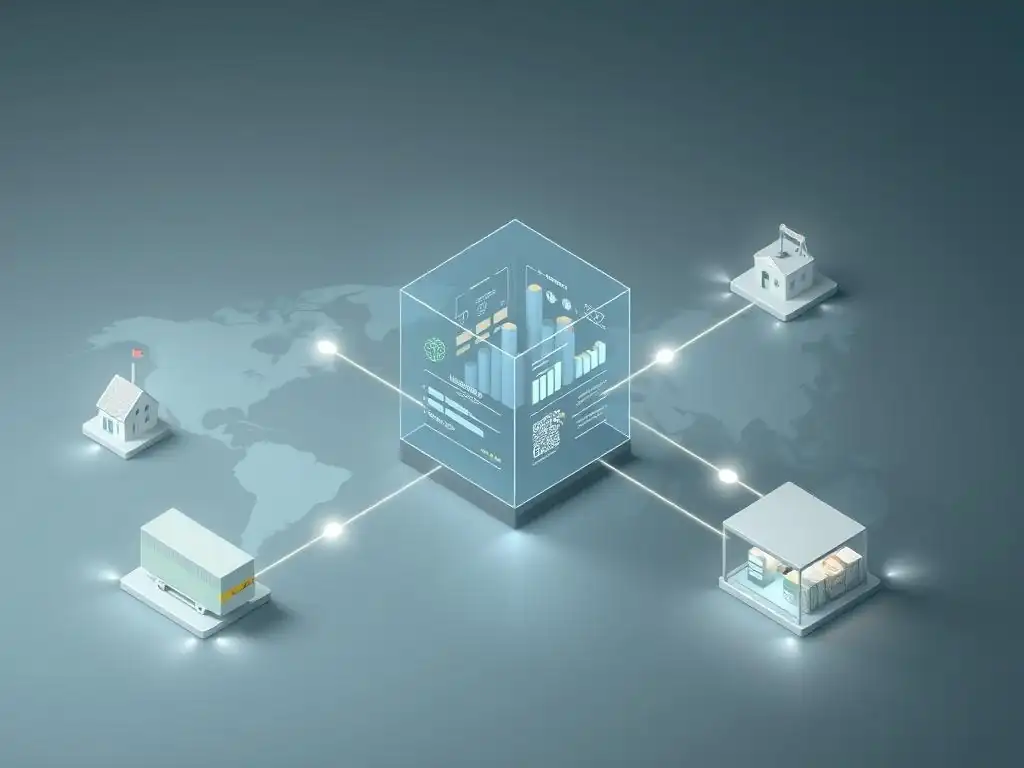
Decentralized Supply Chain Management: Enhancing Traceability and Transparency
Issues in Traditional Supply Chains: Lack of Transparency and Counterfeiting
Traditional supply chains are often complex, opaque networks involving numerous intermediaries across different geographies. This complexity leads to a significant lack of transparency and visibility regarding the origin, handling, and movement of goods. It's frequently difficult for consumers or even participants within the chain to verify the authenticity of a product or understand its journey from raw material to finished good. This opacity contributes to major problems like counterfeiting, which costs the global economy hundreds of billions of dollars annually (estimates vary, but figures often exceed $500 billion).
Inefficiencies also abound due to poor communication, manual data entry, and fragmented record-keeping systems. Disputes over shipments, quality control issues, and payment delays are common. Furthermore, verifying ethical sourcing or sustainability claims throughout the chain is challenging without a trustworthy, shared record. These systemic issues in traditional logistics and manufacturing create a strong need for innovative solutions, making supply chain management a prime area for decentralized application use cases.
How DApps Improve Supply Chain Visibility and Accountability
Decentralized applications built on blockchain technology offer a powerful solution to the challenges in supply chain management by providing a shared, immutable ledger for tracking goods and transactions. As products move through the supply chain, each step – from manufacturing and packaging to shipping and delivery – can be recorded as a transaction on the blockchain. This creates an end-to-end, transparent, and verifiable history of the product's journey.
Because the ledger is distributed and immutable, no single party can alter the records without detection, significantly increasing trust among participants. This enhanced visibility allows companies to track the location and status of goods in real-time, identify bottlenecks, and verify the authenticity of products at any point. Accountability is improved because every action and transfer of ownership is recorded, making it easier to pinpoint responsibility for delays or quality issues. This level of transparency and traceability represents a significant leap forward, powered by effective decentralized application use cases.
Use Cases: Tracking Products, Verifying Authenticity, and Optimizing Logistics
Specific decentralized application use cases in supply chain management are being implemented across various industries. Tracking high-value goods like pharmaceuticals or luxury items is a prominent example. By recording each transfer of custody on a blockchain, companies can ensure product integrity and prevent counterfeiting. IBM's Food Trust platform, for instance, has demonstrated how blockchain can reduce the time it takes to trace the origin of food items from days or weeks to mere seconds, drastically improving recall efficiency.
Verifying the authenticity of components or raw materials is another crucial use case, particularly in industries like aerospace or electronics. Blockchain can provide a verifiable pedigree for parts, ensuring they meet quality standards and are not counterfeit. Beyond tracking, DApps can optimize logistics by automating processes based on predefined conditions using smart contracts, such as releasing payment automatically upon verified delivery of goods. This reduces administrative overhead and speeds up transactions, showcasing diverse and practical decentralized application use cases for global trade.
The Impact of Blockchain on Supply Chain Efficiency and Trust
The implementation of blockchain-based DApps is poised to have a profound impact on supply chain efficiency and trust. Increased transparency and traceability lead to reduced losses from counterfeiting and theft. Improved visibility allows for better inventory management and logistics planning, potentially reducing costs and delivery times. The automation enabled by smart contracts can streamline processes and reduce the need for manual intervention and reconciliation between parties.
Crucially, blockchain builds trust among disparate parties in the supply chain who may not traditionally trust each other. The shared, immutable record provides a single source of truth that everyone can rely on. This increased trust can facilitate new forms of collaboration and business models within supply networks. While widespread adoption requires industry-wide collaboration and standardization, the demonstrated benefits in pilot programs indicate that supply chain management will be one of the most significant areas for future decentralized application use cases.
Centralized social media platforms have become dominant forces in online communication, but they come with significant drawbacks. A major concern is censorship, where platforms, controlled by a single entity, have the power to remove content or ban users based on their terms of service, which can sometimes be applied inconsistently or influenced by external pressures. This raises questions about free speech and the control of information flow. Another critical issue is data exploitation; these platforms collect vast amounts of user data, which is then used for targeted advertising or other commercial purposes, often with limited transparency or user consent.
Users effectively become the product, with their attention and personal information being monetized. Furthermore, the algorithms that govern content visibility are often opaque, leading to filter bubbles and potential manipulation of public discourse. The reliance on a single point of control also makes these platforms vulnerable to downtime or external interference. These issues highlight the need for alternatives that prioritize user control and open dialogue, paving the way for decentralized application use cases in social networking.
Decentralized social media DApps aim to create platforms where control is distributed among the users, rather than held by a single corporation. By building on blockchain or other decentralized network technologies, these platforms can offer censorship resistance. Content is often stored on distributed file systems (like IPFS) and linked via an immutable blockchain ledger, making it difficult for any single entity to remove it. Decision-making regarding content moderation or platform rules can be governed by decentralized consensus mechanisms or DAOs, giving the community a voice.
User data management is also fundamentally different. In many decentralized models, users have more control over their data, deciding what information to share and with whom. Monetization models can shift from data exploitation to direct user-to-user value exchange (e.g., tipping creators with cryptocurrency) or community-governed advertising models. This approach fosters user empowerment, promoting free speech and creating a more equitable online environment, representing compelling decentralized application use cases for online interaction.
Several decentralized social media platforms are currently in various stages of development and adoption, exploring different architectural models. Some utilize blockchain purely for identity and content indexing, while others decentralize content storage and moderation. Examples (without linking) include platforms focused on microblogging, video sharing, and general social networking, each leveraging decentralized principles to offer alternatives to mainstream platforms.
These platforms often feature token-based economies to incentivize user participation, content creation, and curation. While they currently have smaller user bases compared to giants like Facebook or Twitter, they are growing and demonstrating the viability of decentralized alternatives. Challenges include achieving scalability to handle millions of users and providing a user experience that is as intuitive as centralized platforms. However, the core promise of censorship resistance and user control continues to drive innovation in these decentralized application use cases.
The Future of Online Communication: Control Back in the Hands of Users
The future of online communication is likely to see increasing demand for platforms that respect user privacy and freedom of expression. Decentralized social media DApps offer a viable pathway to achieve this by fundamentally altering the power dynamics between platform and user. As these platforms mature and overcome technical hurdles, they are poised to attract users disillusioned with the current centralized model.
The shift towards decentralized governance and data ownership could redefine how we interact online, moving towards communities where users have a direct stake and say in the platform's direction. While mass adoption will require overcoming significant network effects enjoyed by incumbents, the fundamental value proposition of user control and censorship resistance positions decentralized social media as an important class of decentralized application use cases for the future of the internet.
Other Emerging Niche Decentralized Application Examples
Decentralized Insurance (DeInsure)
Decentralized Insurance (DeInsure) platforms are emerging as a promising decentralized application use case to address inefficiencies and lack of transparency in the traditional insurance industry. Traditional insurance often involves complex claims processes, potential conflicts of interest between insurers and policyholders, and opaque risk assessment models. DeInsure platforms leverage blockchain and smart contracts to create peer-to-peer or pooled risk-sharing protocols.
Policy terms are coded into smart contracts, ensuring automatic and transparent payout of claims based on predefined, verifiable triggers (e.g., flight delays verified by an oracle, weather conditions for crop insurance). This reduces administrative overhead, speeds up payouts, and removes the need for a centralized insurer acting as an intermediary. Risk pools are often managed by decentralized autonomous organizations (DAOs), allowing policyholders or token holders to participate in governance and claims assessment. While still in early stages, DeInsure has the potential to make insurance more accessible, affordable, and trustworthy for specific risks.
Decentralized Healthcare
Decentralized healthcare applications explore how blockchain can improve data management, privacy, and interoperability in the healthcare sector – a critical area for decentralized application use cases. Patient health records are often fragmented across different providers and systems, making it difficult for patients to access their own data or for healthcare professionals to get a complete view of a patient's history. Blockchain can create a secure, immutable, and patient-controlled record of medical history.
Patients can grant specific providers access to relevant parts of their record using decentralized identity principles, enhancing privacy and control. Blockchain can also facilitate secure sharing of medical data for research purposes (with patient consent), track the provenance of pharmaceuticals to combat counterfeiting, and manage supply chains for medical equipment. The potential to improve data security, patient privacy, and interoperability makes decentralized healthcare a significant area of development.
Decentralized Education
Decentralized education platforms are exploring decentralized application use cases to address issues like credential verification, access to educational resources, and fair compensation for educators and content creators. Traditional educational certificates can be difficult to verify and are susceptible to fraud. Blockchain can be used to issue verifiable digital credentials or diplomas that are immutable and easily verifiable by employers or other institutions globally.
Decentralized platforms can also provide open access to educational content stored on distributed networks, potentially lowering the cost of education. Tokenomics can be used to reward students for learning achievements or incentivize educators to create high-quality content. Furthermore, blockchain could enable more transparent and equitable systems for managing student loans or distributing educational grants. These applications aim to make education more accessible, verifiable, and potentially more affordable.
Challenges and Opportunities for Niche DApp Adoption
Scalability and Performance Considerations for Niche DApps
One of the primary challenges facing the widespread adoption of many niche decentralized application use cases is scalability. While significant progress has been made, many blockchain networks still struggle to process transactions at the speed and volume required for mass-market applications compared to centralized systems. A decentralized social media platform, for instance, would need to handle millions of concurrent users and high volumes of data. Similarly, a global supply chain tracking system would require immense transaction throughput.
Performance considerations extend beyond just transaction speed to include latency and data storage. Storing large datasets, such as high-resolution images for a decentralized art platform or extensive medical records, on a blockchain is often impractical and expensive. Solutions like Layer 2 scaling, sharding, and utilizing decentralized storage networks alongside blockchain are being developed and implemented, but these add complexity. Overcoming these technical limitations is crucial for niche DApps to move from pilot programs to mainstream use.
User Experience (UX) and Onboarding Challenges
Another significant hurdle for niche DApps is providing a user experience that is comparable to, or better than, their centralized counterparts. Current DApps often require users to manage private keys, understand blockchain wallets, pay gas fees (transaction costs), and navigate complex interfaces. This steep learning curve is a major barrier to entry for average users who are accustomed to the seamless, intuitive experiences provided by traditional web applications.
Simplifying the onboarding process is essential. Abstraction layers that hide the complexity of blockchain interactions, improved wallet designs, and gasless transactions (where applicable) are areas of active development. For niche DApps to succeed, they must not only offer the unique benefits of decentralization but also be easily accessible and usable by their target audience, requiring significant investment in UX design and user education to facilitate the adoption of these decentralized application use cases.
Regulatory Landscape and Compliance
The regulatory landscape for blockchain and decentralized applications is still evolving globally, posing uncertainty and challenges for niche DApp developers and users. Regulations designed for traditional financial institutions or internet companies often do not fit neatly with decentralized protocols and entities like DAOs. Issues around data privacy (e.g., GDPR's "right to be forgotten" vs. blockchain's immutability), consumer protection, and determining legal responsibility in a decentralized system need to be addressed.
Niche DApps operating in sensitive sectors like healthcare, finance (DeInsure), or identity management must navigate complex compliance requirements. The lack of clear guidelines can hinder innovation and investment. However, regulatory clarity, as it emerges, also presents opportunities by providing a framework for legitimate operations and fostering trust among potential users and partners. Understanding and proactively engaging with regulatory developments is critical for the successful deployment of many decentralized application use cases.
Opportunities for Innovation and Growth in the Niche DApp Space
Despite the challenges, the niche DApp space presents immense opportunities for innovation and growth. By focusing on specific problems that are poorly served by centralized systems, developers can create highly valuable and disruptive applications. The unique properties of blockchain – trustlessness, transparency, immutability, and censorship resistance – provide a foundation for building systems that were previously impossible or impractical.
The growing maturity of blockchain infrastructure, increasing developer tooling, and greater public awareness of the potential benefits of decentralization are creating a fertile ground for new decentralized application use cases. As solutions to scalability and UX challenges improve, and as regulatory frameworks become clearer, we can expect to see a proliferation of innovative DApps addressing everything from carbon credit tracking to decentralized energy trading and beyond, unlocking significant value across various sectors.
Conclusion: The Future of Decentralized Applications - Beyond the Hype
The Transformative Potential of Decentralized Application Use Cases Across Industries
The exploration of niche decentralized application use cases reveals the truly transformative potential of blockchain technology beyond its initial focus on cryptocurrencies and DeFi. From securing the integrity of democratic processes with decentralized voting to fostering open science through DeSci, empowering individuals with decentralized identity, enhancing transparency in supply chains, and building censorship-resistant social media, DApps are poised to disrupt and improve numerous industries. These applications leverage the core benefits of decentralization – trustlessness, immutability, transparency, and censorship resistance – to address fundamental problems that have long plagued centralized systems.
The examples discussed represent just a fraction of the potential applications. As blockchain technology continues to mature, we can anticipate the emergence of even more innovative and specialized DApps. The shift towards decentralized systems is not merely a technological trend but a movement towards building a more transparent, equitable, and user-centric digital world.
Key Takeaways: Decentralized Voting, DeSci, and the Broader DApp Ecosystem
Key takeaways from exploring these niche decentralized application use cases include the significant potential to enhance trust and transparency in critical systems like voting and supply chains. Decentralized Science (DeSci) offers a compelling vision for a more open and reproducible research ecosystem. Decentralized identity solutions promise to return control of personal data to individuals, addressing major privacy and security concerns.
The broader DApp ecosystem is evolving rapidly, demonstrating blockchain's versatility. While challenges related to scalability, user experience, and regulation persist, the ongoing innovation and development in these niche areas highlight the technology's capacity to solve real-world problems. The focus is shifting from speculative applications to building robust, functional DApps that deliver tangible value.
The Continued Evolution of DApps and Their Impact on Society
The journey of decentralized applications is still in its early stages. The continued evolution of blockchain protocols, Layer 2 scaling solutions, cross-chain interoperability, and decentralized storage technologies will pave the way for more sophisticated and performant DApps. As the technology becomes more accessible and user-friendly, adoption is likely to accelerate across various sectors.
The impact of these decentralized application use cases on society could be profound, leading to more secure elections, faster scientific progress, greater control over personal data, more efficient and ethical supply chains, and more resilient online communication platforms. Understanding and supporting the development of these niche applications is essential to realizing the full potential of decentralized technologies and shaping a more decentralized future.
Frequently Asked Questions
What are some niche examples of Decentralized Application (DApp) use cases beyond typical cryptocurrency applications?
DApps are expanding beyond crypto. Examples include decentralized voting for increased transparency and security, and decentralized science which aims to democratize research and data sharing.
How can blockchain technology enhance the integrity and transparency of voting systems?
Blockchain provides an immutable ledger to record votes, making them verifiable and resistant to manipulation. This increases trust in the electoral process.
What are the potential benefits of using DApps in the field of scientific research?
DApps facilitate open access to research data, promote collaboration, and provide a secure platform for sharing findings. This can accelerate scientific discovery.
What are some of the regulatory challenges facing the widespread adoption of DApps in various industries?
Regulatory uncertainty surrounding smart contracts, data privacy, and jurisdictional issues can hinder DApp adoption. Clearer legal frameworks are needed.
How does the concept of decentralization contribute to the overall resilience and security of DApp ecosystems?
Decentralization distributes control and prevents single points of failure. This makes DApps more resistant to censorship and attacks, enhancing security and resilience.
Final Reflection: Embracing the Decentralized Frontier
The exploration of niche decentralized application use cases, from voting to scientific research, reveals a profound truth: the potential of blockchain technology extends far beyond its initial financial applications. These examples illuminate how decentralized systems can foster transparency, security, and collaboration in areas previously limited by centralized control, offering a glimpse into a more equitable and efficient future.
The ongoing evolution of DApps is not merely a technological advancement; it's a cultural shift. Witnessing the rise of decentralized voting platforms and collaborative scientific research initiatives underscores the power of community-driven innovation and the democratization of access to information and resources. The future is already here – it's just not evenly distributed.
- William Gibson. This quote perfectly encapsulates the current state of DApps; their transformative potential is evident, but widespread adoption requires continued effort and exploration.
As we stand at the cusp of this decentralized frontier, let us not be passive observers. Consider how these emerging technologies can be applied within your own communities and fields of interest. Embrace the opportunity to contribute to the development and adoption of decentralized solutions, and together, we can build a more transparent, equitable, and innovative world.
Unleash Your Inner DApp Innovator!
Thank you for exploring the fascinating world of niche decentralized applications. We hope you've gained a new appreciation for their potential beyond common use cases. Now, it's time to turn that knowledge into action!
Here are some ways to continue your DApp journey:
- Brainstorm your own innovative idea for a niche decentralized application. Consider a problem you're passionate about solving or an existing process that could benefit from decentralization.
- Explore open-source DApp projects on platforms like GitHub and contribute to their development. You might find inspiration or discover a project that aligns with your interests.
- Share this article with a fellow tech enthusiast and challenge them to come up with a DApp idea within 24 hours. Let’s see who can imagine the most innovative solution!
What everyday task do you believe could be transformed by a DApp? Share your thoughts in the comments below!
Leave a Reply