
From Pilot to Production: Scaling Blockchain and AI Solutions for Enterprise


Welcome to Blockchain Trends, your compass in the ever-evolving world of decentralized innovation. Beyond the hype, blockchain is reshaping industries, and we're here to guide you through its transformative potential. Intrigued by how blockchain can revolutionize your business? Let's dive into the core of today's discussion: Blockchain enterprise scaling solutions benefits and discover how they're paving the way for a future where efficiency meets security. What if your scaling challenges could become your competitive advantage?
From Pilot to Production: Scaling Blockchain and AI Solutions for Enterprise
- Introduction: The Convergence of Blockchain and AI in Enterprise Applications
- Understanding the Pilot Phase: Proving Concept and Value
- Moving Beyond the Pilot: Preparing for Enterprise-Grade Scalability
- Architectural Considerations for Scaling Blockchain and AI
- Key Strategies for Successful Blockchain Enterprise Scaling Solutions Benefits
- Addressing Governance and Compliance in Scaled Blockchain & AI Deployments
- Real-World Examples: Case Studies of Successful Blockchain & AI Scaling
- Future Trends in Blockchain and AI Scaling for Enterprises
- Conclusion: Unlocking the Full Potential of Blockchain and AI in the Enterprise
-
Frequently Asked Questions
- What are the primary challenges faced when scaling blockchain solutions within an enterprise environment?
- How can enterprises leverage blockchain to improve supply chain management and traceability?
- What role does AI play in optimizing the performance and efficiency of blockchain-based enterprise solutions?
- What are the key regulatory considerations that enterprises should be aware of when deploying blockchain applications?
- What are the main benefits enterprises can expect from implementing blockchain enterprise scaling solutions benefits?
- Final Reflection: Embracing the Scalable Future of Innovation
- Ignite Your Blockchain & AI Journey!
Introduction: The Convergence of Blockchain and AI in Enterprise Applications
Blockchain & AI: A Synergistic Partnership for Enterprise Innovation
The integration of blockchain and artificial intelligence (AI) is rapidly emerging as a transformative force for enterprises across various sectors. Blockchain, with its inherent security, transparency, and immutability, provides a robust foundation for data integrity and secure transactions. AI, on the other hand, offers powerful capabilities for data analysis, automation, and intelligent decision-making. When combined, these technologies create a synergistic partnership that unlocks new levels of efficiency, trust, and innovation within organizations. This convergence allows enterprises to not only streamline existing processes but also to develop entirely new business models and services.
The potential for enterprise innovation through blockchain and AI is vast. For example, AI algorithms can be used to analyze the vast datasets stored on blockchains to identify patterns, predict trends, and optimize operations in real-time. Simultaneously, blockchain can ensure the provenance and trustworthiness of data used to train AI models, addressing concerns around data bias and manipulation. This powerful combination can lead to breakthroughs in areas such as supply chain management, financial services, healthcare, and beyond, fostering a new era of data-driven, secure, and intelligent enterprise operations.
The Challenges of Scaling Blockchain and AI Solutions for Business
While the promise of blockchain and AI integration is compelling, scaling these solutions from pilot projects to full-scale enterprise deployments presents significant challenges. Both technologies, in their own right, can be complex to implement and scale. Blockchain networks, especially public ones, often face limitations in transaction throughput and scalability, while AI models can be computationally intensive and require substantial infrastructure to operate effectively at scale. The combination of these technologies amplifies these complexities, demanding careful planning and architectural considerations.
Furthermore, the integration of blockchain and AI introduces new layers of complexity related to data management, security, and governance. Enterprises must address issues such as data interoperability between blockchain and AI systems, ensuring data privacy and compliance across both domains, and establishing robust governance frameworks to manage these interconnected technologies. Overcoming these challenges is crucial to realizing the full potential of blockchain and AI and achieving tangible business value from their combined deployment in enterprise environments.
Understanding the Pilot Phase: Proving Concept and Value
Defining the Scope and Objectives of Your Blockchain & AI Pilot Program
A successful blockchain and AI pilot program begins with clearly defined scope and objectives. Before embarking on development, businesses must articulate the specific problem they aim to solve and how the combined power of blockchain and AI is expected to address it. This involves identifying key business processes or pain points that can be improved through these technologies. For instance, a pilot program might aim to improve supply chain transparency, enhance fraud detection in financial transactions, or personalize customer experiences in retail.
Defining objectives also includes establishing measurable goals that will determine the success of the pilot. These goals should be specific, measurable, achievable, relevant, and time-bound (SMART). For example, objectives could include reducing operational costs by a certain percentage, improving transaction processing speed, or enhancing data accuracy. A well-defined scope and clear objectives provide a roadmap for the pilot program and ensure that efforts are focused and results can be effectively evaluated.
Selecting the Right Use Case for a Blockchain & AI Pilot
Choosing the right use case is paramount for a successful blockchain and AI pilot. The ideal use case should be one where the unique strengths of both technologies are truly leveraged and where the potential benefits outweigh the complexities of implementation. Focus on areas where data integrity, security, transparency, and intelligent automation are critical requirements. Use cases that involve multi-party collaboration, complex data analysis, and the need for trust and accountability are often well-suited for a combined blockchain and AI approach.
Examples of suitable pilot use cases include supply chain traceability for pharmaceuticals, where blockchain ensures product provenance and AI optimizes logistics; fraud detection in insurance claims, where blockchain secures claim data and AI identifies fraudulent patterns; or personalized healthcare recommendations, where blockchain protects patient data privacy and AI provides tailored treatment plans. Selecting a use case that is not only relevant to the business but also technically feasible within the pilot timeframe and resources is crucial for demonstrating early success and building momentum for broader adoption.
Key Performance Indicators (KPIs) for Pilot Project Success
Measuring the success of a blockchain and AI pilot project requires establishing relevant Key Performance Indicators (KPIs) aligned with the project's objectives. These KPIs should be quantifiable metrics that track progress and demonstrate the value delivered by the pilot. Choosing the right KPIs is essential for objectively evaluating the pilot's performance and making informed decisions about moving to production. KPIs should encompass both technical performance and business outcomes.
Technical KPIs might include transaction throughput, latency, data processing speed, system uptime, and security metrics like vulnerability detection rates. Business-oriented KPIs could focus on cost reduction, efficiency gains, revenue increase, customer satisfaction improvements, and risk mitigation. For example, in a supply chain pilot, KPIs could include reduced shipment delays, improved inventory accuracy, and lower operational costs. Regularly monitoring and reporting on these KPIs throughout the pilot project provides valuable insights into its effectiveness and areas for improvement.
Overcoming Common Pitfalls in Blockchain & AI Pilot Projects
Blockchain and AI pilot projects, while promising, are susceptible to common pitfalls that can hinder their success. One frequent challenge is a lack of clear understanding of both technologies and their integration complexities. Organizations may underestimate the technical expertise required, leading to delays and cost overruns. Another pitfall is inadequate data quality and availability. AI models are data-hungry, and blockchain solutions rely on accurate and consistent data input. Poor data quality can severely impact the performance and reliability of the integrated system.
Furthermore, pilot projects can falter due to insufficient stakeholder alignment and buy-in. Successful implementation requires collaboration across different departments, including IT, business units, and legal and compliance teams. Lack of clear communication and shared understanding of project goals can lead to resistance and slow down progress. Finally, focusing solely on the technology without adequately addressing business process integration and change management can limit the pilot's impact. Addressing these potential pitfalls proactively through careful planning, skilled resources, and strong stakeholder engagement is crucial for pilot project success.
Moving Beyond the Pilot: Preparing for Enterprise-Grade Scalability
Assessing the Scalability Requirements of Your Blockchain and AI Solution
Transitioning from a pilot project to a production-ready, enterprise-grade blockchain and AI solution necessitates a thorough assessment of scalability requirements. This involves understanding the anticipated transaction volume, data growth, user base, and performance demands the system will need to handle in a live environment. Scalability requirements are not static; they should consider both current needs and projected future growth to ensure the solution can adapt and scale as the business evolves.
A comprehensive scalability assessment should analyze various factors, including the expected number of transactions per second (TPS), the volume of data that will be stored and processed, the number of concurrent users accessing the system, and the required response times for critical operations. For example, a blockchain-based supply chain solution might need to handle thousands of transactions per minute during peak seasons, while an AI-powered fraud detection system in a large financial institution could require processing millions of transactions daily. Understanding these demands is crucial for designing a scalable architecture and selecting appropriate technologies.
Identifying Bottlenecks and Performance Limitations
Before scaling a blockchain and AI solution, it is essential to identify potential bottlenecks and performance limitations within the system. Bottlenecks can arise at various points, including the blockchain network itself, the AI model processing, data storage and retrieval mechanisms, and network infrastructure. Proactive identification of these limitations allows for targeted optimization and architectural adjustments to ensure smooth scaling.
Performance testing and load testing are crucial for identifying bottlenecks. These tests simulate real-world usage scenarios and stress the system to its limits, revealing areas where performance degrades. For instance, blockchain transaction processing speed can be a bottleneck in high-volume applications. Similarly, computationally intensive AI models might become a bottleneck if not optimized or if deployed on inadequate hardware. Analyzing test results and performance metrics helps pinpoint these limitations, enabling developers to implement appropriate scaling strategies such as code optimization, database tuning, or infrastructure upgrades.
Designing for High Availability and Fault Tolerance
Enterprise-grade blockchain and AI solutions must be designed for high availability and fault tolerance to ensure continuous operation and minimize downtime. High availability refers to the system's ability to remain operational and accessible even in the face of component failures. Fault tolerance is the system's capability to gracefully handle failures and continue functioning without significant disruption. These are critical considerations for business-critical applications where outages can have severe consequences.
Achieving high availability and fault tolerance typically involves implementing redundancy at multiple levels of the system architecture. This includes redundant hardware components, such as servers, network devices, and storage systems, as well as software redundancy through techniques like clustering and load balancing. For blockchain networks, consensus mechanisms and distributed architectures inherently contribute to fault tolerance. For AI components, techniques like model replication and failover mechanisms can ensure continuous availability. Designing for resilience from the outset is paramount for building robust and reliable enterprise-scale solutions.
Security Considerations for Enterprise Blockchain & AI Deployments
Security is a paramount concern when scaling blockchain and AI solutions for enterprise deployment. As systems scale and handle more sensitive data and critical operations, the potential attack surface expands, and security risks increase. A comprehensive security strategy must address vulnerabilities across both blockchain and AI components, as well as the integration points between them. Security considerations should be integrated into every stage of the solution lifecycle, from design and development to deployment and ongoing operations.
Key security considerations include securing blockchain smart contracts and consensus mechanisms, protecting sensitive data stored on the blockchain, ensuring the integrity and confidentiality of AI models and training data, and safeguarding APIs and interfaces between blockchain and AI systems. Enterprises must implement robust access controls, encryption mechanisms, intrusion detection systems, and regular security audits to mitigate potential threats. Furthermore, compliance with relevant data privacy regulations, such as GDPR or HIPAA, is essential, particularly when dealing with sensitive personal or healthcare information in scaled blockchain and AI deployments.
Architectural Considerations for Scaling Blockchain and AI
Choosing the Right Blockchain Platform for Enterprise Scalability
Selecting the appropriate blockchain platform is a crucial architectural decision when scaling blockchain and AI solutions for enterprise use. Different blockchain platforms offer varying levels of scalability, performance, security, and features. The choice of platform should align with the specific requirements of the enterprise application and its scalability goals. Factors to consider include transaction throughput, consensus mechanism, smart contract capabilities, privacy features, and the platform's maturity and ecosystem support.
For enterprise applications requiring high transaction throughput and scalability, permissioned or private blockchain platforms are often preferred over public blockchains. Platforms like Hyperledger Fabric, R3 Corda, and Quorum are designed for enterprise use cases and offer features like configurable consensus mechanisms, access control, and data privacy. When evaluating platforms, it's important to consider their performance benchmarks, scalability roadmaps, and the availability of tools and resources for development and deployment. The chosen platform should be capable of supporting the anticipated transaction volume and data growth as the solution scales.
Integrating AI Models with Blockchain Data
Effectively integrating AI models with blockchain data is a key architectural challenge in scaling combined solutions. Blockchain's inherent data immutability and distributed nature require careful consideration when designing AI model integration. AI models typically require access to large datasets for training and inference, and accessing data directly from a blockchain can be inefficient and complex, especially for large-scale deployments.
Common approaches to integrating AI models with blockchain data include using off-chain databases to store and process blockchain data, and then feeding this processed data to AI models. Alternatively, some platforms offer on-chain AI capabilities, allowing AI models to be deployed and executed directly within the blockchain environment. Choosing the right integration approach depends on factors such as data volume, latency requirements, security considerations, and the specific blockchain platform being used. Architectural decisions must ensure efficient data access for AI models while maintaining data integrity and security within the blockchain framework.
Data Management Strategies for Large-Scale Blockchain & AI Implementations
Data management becomes increasingly critical as blockchain and AI implementations scale. Large-scale deployments generate vast amounts of data, both on-chain and off-chain, requiring robust data management strategies to ensure data quality, accessibility, and efficient processing. Effective data management encompasses data storage, retrieval, indexing, and governance policies to handle the growing data volume and complexity.
Strategies for managing large-scale blockchain data include data partitioning and sharding to distribute data across multiple nodes or databases, improving query performance and scalability. For AI data, techniques like data lakes and data warehouses can be used to centralize and organize data from various sources, including blockchain, for efficient AI model training and inference. Implementing robust data governance policies is also essential to ensure data quality, compliance, and security across the entire blockchain and AI ecosystem. Well-defined data management strategies are crucial for maintaining the performance and reliability of scaled solutions.
Leveraging Cloud Infrastructure for Scalable Blockchain & AI Solutions
Cloud infrastructure plays a pivotal role in enabling the scalability of blockchain and AI solutions. Cloud platforms offer on-demand access to computing resources, storage, and networking infrastructure, providing the flexibility and scalability needed to support large-scale deployments. Leveraging cloud services can significantly reduce the complexity and cost associated with building and managing the infrastructure for scaled blockchain and AI applications.
Cloud providers offer a range of services specifically designed for blockchain and AI, including blockchain-as-a-service (BaaS) platforms, machine learning platforms, and scalable data storage and compute services. BaaS platforms simplify the deployment and management of blockchain networks, while cloud-based AI platforms provide tools and services for developing, training, and deploying AI models at scale. Utilizing cloud infrastructure allows enterprises to focus on application development and business logic rather than infrastructure management, accelerating the deployment and scaling of blockchain and AI solutions.
Key Strategies for Successful Blockchain Enterprise Scaling Solutions Benefits
Modular Design and Microservices Architecture
Adopting a modular design and microservices architecture is a key strategy for achieving scalable blockchain enterprise scaling solutions benefits. Breaking down complex applications into smaller, independent modules or microservices allows for greater flexibility, maintainability, and scalability. Each microservice can be developed, deployed, and scaled independently, enabling teams to focus on specific functionalities and optimize resource utilization.
In the context of blockchain and AI, a microservices approach allows for separating blockchain components, AI models, data processing services, and user interfaces into distinct modules. This modularity simplifies development, testing, and deployment, and enables independent scaling of individual components based on demand. For instance, the AI model processing microservice can be scaled up or down based on the volume of data to be analyzed, without affecting other parts of the system. This architectural pattern enhances agility and responsiveness to changing business needs, directly contributing to the benefits of blockchain enterprise scaling solutions.
Data Partitioning and Sharding Techniques for Blockchain
Data partitioning and sharding techniques are essential for scaling blockchain solutions to handle large volumes of data and transactions. As blockchain networks grow, the size of the ledger and the volume of transactions can impact performance and scalability. Data partitioning involves dividing the blockchain data into smaller, manageable segments, while sharding further divides these segments and distributes them across multiple nodes in the network.
Sharding techniques can significantly improve transaction throughput and reduce latency by allowing parallel processing of transactions across different shards. Various sharding approaches exist, including state sharding, transaction sharding, and network sharding. Choosing the appropriate sharding technique depends on the specific blockchain platform and application requirements. Implementing data partitioning and sharding is crucial for overcoming scalability limitations in blockchain and realizing the full potential of blockchain enterprise scaling solutions benefits.
Optimizing AI Model Performance for Scaled Environments
Optimizing AI model performance is critical for ensuring that AI components can handle the demands of scaled blockchain and AI solutions. AI models, especially deep learning models, can be computationally intensive and require significant resources for training and inference. In scaled environments, model performance directly impacts the overall system responsiveness and efficiency.
Optimization techniques for AI models include model compression, quantization, pruning, and efficient inference algorithms. Model compression reduces the size and complexity of AI models without significant loss of accuracy, making them faster and less resource-intensive. Quantization reduces the precision of model parameters, further reducing model size and inference time. Pruning removes less important connections in the neural network, simplifying the model structure. Employing these optimization techniques is essential for achieving high-performance AI inference in scaled blockchain and AI deployments, maximizing the benefits of blockchain enterprise scaling solutions.
Automated Deployment and Monitoring for Scalability
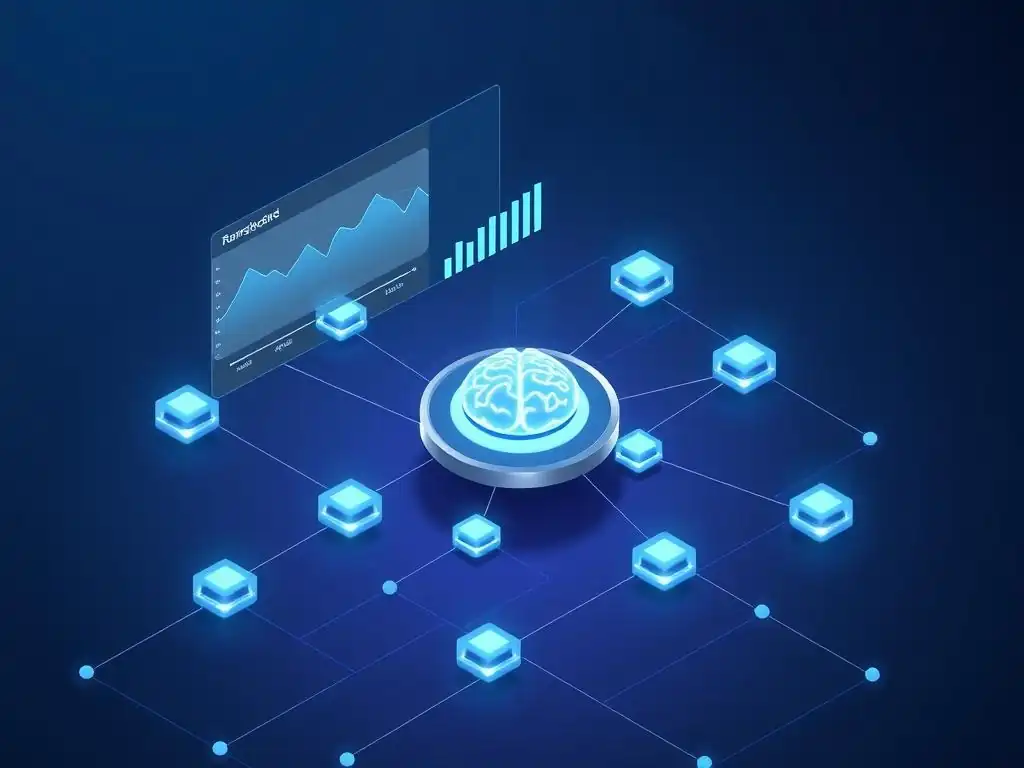
Automated deployment and monitoring are indispensable for managing and maintaining scalable blockchain and AI solutions. Manual deployment and monitoring processes become increasingly complex and inefficient as systems scale. Automation streamlines deployment workflows, reduces errors, and enables faster iteration cycles. Automated monitoring provides real-time insights into system performance, identifies potential issues proactively, and enables rapid response to incidents.
DevOps practices and tools, such as continuous integration/continuous delivery (CI/CD) pipelines, infrastructure-as-code (IaC), and automated monitoring systems, are crucial for achieving scalable deployment and monitoring. CI/CD pipelines automate the build, test, and deployment process, ensuring consistent and reliable deployments. IaC tools automate the provisioning and management of infrastructure resources, enabling rapid scaling and configuration management. Automated monitoring systems track key performance metrics, trigger alerts for anomalies, and facilitate proactive maintenance, contributing significantly to the benefits of blockchain enterprise scaling solutions.
Understanding the Benefits of Blockchain Enterprise Scaling Solutions
Understanding the benefits of blockchain enterprise scaling solutions is crucial for justifying the investment and effort required to achieve scalability. Successfully scaling blockchain and AI solutions unlocks significant advantages for enterprises, including enhanced efficiency, improved performance, reduced costs, increased security, and greater agility. Scalable solutions can handle larger transaction volumes, process data faster, and support a growing user base, enabling businesses to expand their operations and reach.
The benefits of blockchain enterprise scaling solutions extend to various aspects of the business. Improved transaction throughput and reduced latency lead to faster processing times and enhanced customer experiences. Scalability reduces operational costs by optimizing resource utilization and automating processes. Enhanced security and fault tolerance ensure business continuity and minimize downtime. Greater agility and flexibility enable businesses to adapt quickly to changing market demands and innovate more rapidly. These benefits collectively contribute to a stronger competitive advantage and improved business outcomes, making the investment in blockchain enterprise scaling solutions highly worthwhile.
Addressing Governance and Compliance in Scaled Blockchain & AI Deployments
Establishing Clear Governance Policies for Blockchain & AI Systems
Establishing clear governance policies is paramount for managing scaled blockchain and AI systems effectively. Governance policies define roles, responsibilities, decision-making processes, and protocols for operating and maintaining these complex technologies. Well-defined governance ensures accountability, transparency, and consistent management across the organization. Governance policies should cover various aspects, including data governance, access control, change management, and incident response.
For blockchain and AI systems, governance policies should address specific challenges related to data privacy, security, and ethical considerations. Data governance policies define rules for data access, usage, and sharing, ensuring compliance with data privacy regulations. Access control policies define who can access and modify different parts of the system, safeguarding sensitive data and critical operations. Change management policies establish procedures for implementing changes and updates to the system, minimizing disruptions and ensuring stability. Clear governance policies are essential for building trust and confidence in scaled blockchain and AI deployments.
Ensuring Regulatory Compliance in Scaled Environments
Regulatory compliance is a critical consideration when scaling blockchain and AI solutions, particularly in regulated industries such as finance, healthcare, and pharmaceuticals. As systems scale and handle more sensitive data and transactions, the need to comply with relevant regulations becomes even more important. Compliance requirements may vary depending on the industry, jurisdiction, and the specific use case. Enterprises must proactively address compliance requirements throughout the solution lifecycle.
Compliance considerations for blockchain and AI solutions include data privacy regulations (e.g., GDPR, CCPA), industry-specific regulations (e.g., HIPAA, GLBA), and security standards (e.g., ISO 27001, NIST Cybersecurity Framework). Enterprises must implement appropriate controls and safeguards to ensure compliance, such as data encryption, access controls, audit trails, and data retention policies. Regular compliance audits and assessments are necessary to verify ongoing compliance and identify any gaps or areas for improvement. Proactive compliance management is crucial for mitigating legal and reputational risks in scaled blockchain and AI deployments.
Data Privacy and Security Considerations in Enterprise Blockchain & AI
Data privacy and security are paramount concerns in enterprise blockchain and AI deployments, especially as solutions scale and handle larger volumes of sensitive data. Blockchain's inherent security features, such as cryptography and immutability, provide a strong foundation for data security, but additional measures are necessary to address specific privacy and security risks in scaled environments. AI systems also introduce unique security challenges, particularly related to model security and data privacy during training and inference.
Data privacy considerations include anonymization, pseudonymization, and differential privacy techniques to protect personal data. Security measures include robust access controls, encryption of data at rest and in transit, secure key management, and vulnerability management. Enterprises must implement a layered security approach that addresses both blockchain and AI components, as well as the integration points between them. Regular security assessments, penetration testing, and security monitoring are essential for maintaining a strong security posture in scaled blockchain and AI deployments.
Auditing and Monitoring for Compliance and Security
Auditing and monitoring are crucial for ensuring ongoing compliance and security in scaled blockchain and AI deployments. Comprehensive audit trails provide a record of all system activities, transactions, and data access events, enabling traceability and accountability. Real-time monitoring systems track key performance indicators, security metrics, and compliance indicators, providing early warnings of potential issues and facilitating proactive response.
Audit logs should be securely stored and tamper-proof, leveraging blockchain's immutability to ensure audit integrity. Monitoring systems should provide alerts and notifications for security incidents, compliance violations, and performance anomalies, enabling rapid detection and response. Regular security audits and compliance assessments should be conducted to verify the effectiveness of security controls and compliance measures. Auditing and monitoring are essential for maintaining trust, transparency, and accountability in scaled blockchain and AI systems, supporting both compliance and security objectives.
Real-World Examples: Case Studies of Successful Blockchain & AI Scaling
Scaling a Blockchain-Based Pharmaceutical Supply Chain Solution for Verification
The pharmaceutical industry faces significant challenges in supply chain transparency and verification, with counterfeit drugs posing a serious threat to patient safety. Blockchain technology offers a powerful solution for tracking and tracing pharmaceutical products throughout the supply chain, ensuring authenticity and preventing counterfeiting. One real-world example involves scaling a blockchain-based pharmaceutical supply chain solution to cover a larger network of manufacturers, distributors, and pharmacies.
In this case, the initial pilot project demonstrated the feasibility of using blockchain to track drug provenance and verify authenticity. Scaling the solution involved onboarding more participants to the blockchain network, increasing transaction throughput to handle larger volumes of product shipments, and integrating AI-powered analytics to optimize logistics and predict potential supply chain disruptions. By scaling the blockchain and AI solution, the pharmaceutical company achieved improved supply chain visibility, reduced counterfeiting risks, and enhanced patient safety. The scalability of the blockchain platform was crucial for accommodating the growing network and transaction volume.
Scaling an AI-Powered Fraud Detection System on Blockchain for Financial Institutions
Financial institutions face constant threats from fraud, requiring sophisticated detection systems to protect customers and assets. AI-powered fraud detection systems can analyze vast amounts of transaction data to identify fraudulent patterns and anomalies. Integrating these systems with blockchain can enhance data security and immutability, creating a more robust and trustworthy fraud detection solution. A real-world example involves scaling an AI-powered fraud detection system on blockchain for a consortium of financial institutions.
The pilot project demonstrated the effectiveness of using AI and blockchain to detect and prevent fraudulent transactions. Scaling the solution involved expanding the blockchain network to include more financial institutions, increasing the data volume processed by the AI models, and optimizing AI algorithms for real-time fraud detection at scale. Blockchain ensured the integrity and immutability of transaction data used for AI training and inference, while AI provided advanced fraud detection capabilities. Scaling this solution across multiple institutions improved fraud detection accuracy, reduced fraud losses, and fostered greater trust and collaboration among participating financial institutions.
Lessons Learned from Enterprise Blockchain & AI Scaling Initiatives
Numerous enterprise blockchain and AI scaling initiatives have yielded valuable lessons learned, providing insights for future deployments. One key lesson is the importance of starting with a well-defined use case and pilot project to validate the technology and demonstrate business value before attempting to scale. Another crucial lesson is the need for careful planning and architectural design to address scalability, security, and governance requirements from the outset.
Furthermore, successful scaling initiatives emphasize the importance of strong stakeholder alignment and collaboration across different departments and external partners. Effective change management and user training are also essential for ensuring smooth adoption and maximizing the benefits of scaled solutions. Organizations that prioritize these lessons learned and adopt a strategic approach to scaling blockchain and AI are more likely to achieve successful outcomes and realize the full potential of these transformative technologies. These experiences highlight the critical success factors for achieving robust and beneficial blockchain enterprise scaling solutions.
Future Trends in Blockchain and AI Scaling for Enterprises
Emerging Technologies for Enhanced Scalability
The landscape of blockchain and AI scaling is constantly evolving, with emerging technologies promising to further enhance scalability and performance. Layer-2 scaling solutions for blockchain, such as state channels, sidechains, and rollups, are gaining traction as ways to increase transaction throughput and reduce fees without compromising security. These technologies enable off-chain transaction processing, reducing the burden on the main blockchain network.
In the AI domain, advancements in hardware acceleration, such as GPUs and TPUs, and distributed AI training techniques are driving improvements in model performance and scalability. Federated learning, a technique that enables training AI models on decentralized data sources without sharing raw data, is also gaining prominence for privacy-preserving AI applications. These emerging technologies are paving the way for even more scalable and efficient blockchain and AI solutions in the future, further enhancing the benefits of blockchain enterprise scaling solutions.
The Role of Decentralized Autonomous Organizations (DAOs) in Scaling
Decentralized Autonomous Organizations (DAOs) are emerging as a novel governance model that could play a significant role in scaling blockchain and AI solutions. DAOs are organizations governed by rules encoded in smart contracts, operating autonomously and transparently without central control. DAOs can facilitate decentralized decision-making, resource allocation, and community governance in scaled blockchain and AI ecosystems.
In the context of scaling, DAOs can be used to manage and govern distributed blockchain networks, AI model development, and data sharing initiatives. DAOs can enable decentralized ownership and control of infrastructure, fostering greater participation and collaboration among stakeholders. For example, a DAO could govern a decentralized AI platform, allowing participants to contribute data, models, and computing resources in a transparent and incentivized manner. DAOs represent a promising approach to scaling blockchain and AI solutions in a decentralized and community-driven manner, potentially revolutionizing the way these technologies are governed and scaled.
The Impact of AI on Blockchain Scalability Solutions
AI itself is playing an increasingly important role in enhancing blockchain scalability solutions. AI techniques, such as machine learning and reinforcement learning, can be used to optimize blockchain network performance, improve consensus mechanisms, and enhance security. AI-powered monitoring and analytics can provide real-time insights into network performance, identify bottlenecks, and predict potential scalability issues.
AI can also be used to optimize sharding strategies, dynamic resource allocation, and smart contract execution in blockchain networks. For example, AI algorithms can analyze network traffic patterns to dynamically adjust sharding configurations and optimize transaction routing, improving overall throughput and efficiency. AI-driven security analytics can detect and respond to security threats in blockchain networks more effectively. The integration of AI into blockchain scalability solutions is creating a positive feedback loop, where AI enhances scalability, and scalable blockchain enables more powerful AI applications, further amplifying the benefits of blockchain enterprise scaling solutions.
The Future of Blockchain Enterprise Scaling Solutions Benefits
The future of blockchain enterprise scaling solutions benefits is bright, with continued advancements in both blockchain and AI technologies and increasing adoption across various industries. As blockchain platforms become more scalable and interoperable, and AI models become more powerful and efficient, the potential for combined solutions to transform enterprise operations will only grow. We can expect to see wider adoption of blockchain and AI in areas such as supply chain management, financial services, healthcare, manufacturing, and government.
The benefits of blockchain enterprise scaling solutions will continue to expand, encompassing not only efficiency gains and cost reductions, but also new business models, enhanced customer experiences, and greater societal impact. Scalable blockchain and AI solutions will empower enterprises to create more transparent, secure, and intelligent systems, fostering greater trust, collaboration, and innovation. The convergence of these technologies is poised to drive a new wave of digital transformation, unlocking unprecedented value and opportunities for businesses and society as a whole, solidifying the importance of blockchain enterprise scaling solutions benefits in the future.
Conclusion: Unlocking the Full Potential of Blockchain and AI in the Enterprise
The journey from pilot projects to production-ready, enterprise-grade blockchain and AI solutions requires careful planning, strategic architectural decisions, and a focus on scalability, security, and governance. While challenges exist, the potential benefits of combining these transformative technologies are immense. By adopting modular designs, leveraging cloud infrastructure, optimizing AI models, and implementing robust data management strategies, enterprises can successfully scale their blockchain and AI initiatives and unlock significant value.
The real-world examples and lessons learned from early adopters provide valuable guidance for organizations embarking on their scaling journey. As emerging technologies continue to advance and the ecosystem matures, the path to achieving scalable blockchain enterprise scaling solutions benefits will become clearer and more accessible. By embracing a strategic and proactive approach, enterprises can harness the synergistic power of blockchain and AI to drive innovation, enhance efficiency, and create a more secure and intelligent future for their businesses and the wider world.
Frequently Asked Questions
What are the primary challenges faced when scaling blockchain solutions within an enterprise environment?
Enterprises often encounter challenges related to interoperability with existing systems, data privacy concerns, and the need for robust governance frameworks to manage decentralized applications.
How can enterprises leverage blockchain to improve supply chain management and traceability?
Blockchain provides a transparent and immutable ledger, enabling enhanced tracking of goods, improved supply chain visibility, and reduced instances of counterfeit products.
What role does AI play in optimizing the performance and efficiency of blockchain-based enterprise solutions?
AI can automate smart contract execution, improve data analytics for blockchain networks, and enhance security protocols by detecting and preventing fraudulent activities.
What are the key regulatory considerations that enterprises should be aware of when deploying blockchain applications?
Enterprises must navigate evolving regulations related to data privacy (GDPR), AML/KYC compliance, and the legal status of smart contracts in different jurisdictions.
What are the main benefits enterprises can expect from implementing blockchain enterprise scaling solutions benefits?
Benefits include increased transparency and trust, improved operational efficiency, reduced costs associated with intermediaries, and enhanced security and data integrity.
Final Reflection: Embracing the Scalable Future of Innovation
The journey from a promising pilot project to a fully integrated enterprise solution is fraught with challenges, but the potential rewards of successfully scaling blockchain and AI technologies are transformative. The insights shared throughout this article highlight the critical importance of strategic planning, robust infrastructure, and a clear understanding of the benefits that these technologies can unlock for businesses ready to embrace the future.
The impact of blockchain and AI on the enterprise landscape is undeniable, reshaping industries and redefining operational efficiencies. Witnessing this evolution firsthand underscores the profound responsibility we have to guide its development responsibly and ethically. The future is already here – it's just not evenly distributed.
- William Gibson. This quote resonates deeply, reminding us that the benefits of blockchain enterprise scaling solutions should be accessible to all, fostering innovation and driving progress across diverse sectors.
Now, more than ever, is the time to consider how these technologies can be leveraged within your own organization. Reflect on the challenges you face, the opportunities you seek, and the potential for blockchain and AI to revolutionize your approach. The future of enterprise lies in embracing scalable solutions that drive efficiency, transparency, and innovation. Take the first step today and begin building a future where technology empowers your success.
Ignite Your Blockchain & AI Journey!
Thanks for diving into the world of scaling blockchain and AI solutions! We hope you've gained valuable insights into navigating the challenges and unlocking the potential of these transformative technologies. Now, let's turn that knowledge into action.
Here's how you can take the next step:
- Boldly lead the way: Implement a pilot project applying blockchain or AI in your own organization, even on a small scale. The future belongs to those who experiment!
- Explore the depths: Join the Blockchain Trends online forum at blockchaintrends.org to connect with fellow pioneers, share your challenges, and learn from real-world case studies.
- Share the spark: Discuss a key insight from this article with your colleagues. You never know whose mind you might ignite!
What's the first, concrete step you'll take to integrate blockchain or AI into your workflow this week? Let us know in the comments!
Leave a Reply