
Decentralized Identity on Blockchain: Solutions on Ethereum, Polkadot, and Cosmos


Welcome to Blockchain Trends, your trusted source for navigating the ever-evolving world of blockchain technology. Beyond the buzzwords, we delve into the real-world applications and transformative potential shaping our future. This week, we're exploring a crucial piece of that future: blockchain decentralized identity solutions. But how do these solutions differ across prominent platforms like Ethereum, Polkadot, and Cosmos? Prepare to uncover the nuances and advantages as we compare and contrast these leading blockchain ecosystems, leaving you with a clear understanding of the landscape and the possibilities that lie ahead.
Decentralized Identity on Blockchain: Solutions on Ethereum, Polkadot, and Cosmos
- Understanding Blockchain Decentralized Identity (DID)
- Decentralized Identity Solutions on Ethereum
- Decentralized Identity Solutions on Polkadot
- Decentralized Identity Solutions on Cosmos
- Ethereum vs. Polkadot vs. Cosmos: A Comparison of DID Implementations
- Use Cases for Blockchain-Based Decentralized Identity
- The Future of Decentralized Identity and Blockchain Technology
- Choosing the Right Blockchain for Your DID Solution
-
Frequently Asked Questions
- What are blockchain decentralized identity solutions and why are they important?
- How does blockchain decentralized identity solutions on Ethereum differ from those on Polkadot or Cosmos?
- What are some potential use cases for blockchain decentralized identity solutions beyond basic identity verification?
- What are the key regulatory considerations surrounding blockchain decentralized identity solutions?
- What are the future trends to watch in the development of blockchain decentralized identity solutions?
- Final Reflection: Embracing the Future of Identity with Blockchain Solutions
Understanding Blockchain Decentralized Identity (DID)
What is Decentralized Identity (DID)?
Decentralized Identity (DID) represents a paradigm shift in how individuals and entities manage their digital identities. Unlike traditional identity systems that rely on centralized authorities like governments or corporations to issue and control identities, DID empowers users with self-sovereign identity. This means individuals have complete control over their identity data, deciding what information to share, with whom, and for what purpose, without needing permission from intermediaries.
At its core, DID leverages cryptographic keys and decentralized technologies, often blockchain, to establish verifiable and secure digital identities. Each DID is a unique identifier that points to a DID document containing public keys, service endpoints, and other metadata necessary for interaction and verification. This system aims to restore user agency and privacy in the digital realm, moving away from data silos and centralized control points.
Decentralized identifiers are designed to be globally unique, resolvable, cryptographically verifiable, and decentralized. The World Wide Web Consortium (W3C) defines DID as a new type of identifier that enables verifiable, decentralized digital identity. Think of a DID as your digital passport, but one you control entirely.
It's not tied to any single organization and cannot be revoked by a central authority. This contrasts sharply with current systems where your online identity is fragmented across numerous platforms, each holding pieces of your personal data, often without your full knowledge or control. DID seeks to consolidate and secure your digital footprint, putting you back in the driver's seat.
The Need for Self-Sovereign Identity Solutions
The imperative for self-sovereign identity solutions arises from growing concerns about privacy, security, and control in the digital age. Traditional identity models are inherently vulnerable to data breaches, censorship, and surveillance. Centralized databases holding vast amounts of personal information are prime targets for cyberattacks, as evidenced by numerous large-scale data breaches affecting millions of users globally. For instance, in 2017, Equifax, a credit reporting agency, suffered a breach exposing the sensitive data of approximately 147 million individuals. This incident underscored the risks associated with centralized identity systems and highlighted the potential for catastrophic consequences when such systems are compromised.
Furthermore, the current web infrastructure often requires users to repeatedly prove their identity to various services, leading to data proliferation and a lack of user control. Individuals are often forced to create multiple accounts, each requiring passwords and personal information, creating a fragmented and insecure online experience. Self-sovereign identity directly addresses these issues by providing a user-centric model where individuals own and manage their identity data.
This not only enhances privacy and security but also simplifies the user experience by enabling seamless and secure interactions across different platforms. The need for self-sovereign identity is not merely a technological preference; it is becoming a fundamental requirement for a more trustworthy and equitable digital society.
Benefits of Decentralized Identity on Blockchain
Implementing decentralized identity solutions on blockchain technology offers a multitude of benefits, enhancing security, privacy, and user empowerment. Blockchain's inherent characteristics, such as immutability, transparency, and decentralization, make it an ideal foundation for DID systems. One key advantage is enhanced security.
By anchoring DIDs and associated cryptographic keys on a blockchain, the system benefits from the blockchain's robust security mechanisms. The distributed nature of blockchain networks makes them significantly more resistant to single points of failure and attacks compared to centralized databases. For example, the Ethereum blockchain, secured by a vast network of nodes, provides a highly secure environment for storing and managing identity data.
Moreover, blockchain-based DIDs enhance user privacy by minimizing data disclosure. Users can selectively share verifiable credentials derived from their DIDs, proving specific attributes without revealing unnecessary personal information. This concept of selective disclosure is crucial for privacy preservation. Imagine needing to prove you are over 21 to access age-restricted content.
With DID and verifiable credentials, you could prove your age without revealing your birth date or full identity. This granular control over data sharing is a significant improvement over current systems where users often have to provide excessive personal information. Finally, blockchain-based DID fosters greater user control and self-sovereignty. Individuals are in charge of their digital identities, deciding who has access to their data and for what purposes, fostering a more democratic and user-centric digital ecosystem.
Decentralized Identity Solutions on Ethereum
Ethereum's Approach to Decentralized Identity
Ethereum, as a leading blockchain platform, has been at the forefront of exploring decentralized identity solutions. Ethereum's approach to DID leverages its smart contract capabilities and established infrastructure to create robust and versatile identity management systems. The platform's foundation in smart contracts allows for the automation of identity-related processes and the creation of sophisticated identity frameworks. Ethereum’s ecosystem benefits from a large and active developer community, contributing to the rapid development and iteration of DID solutions. This vibrant community ensures continuous innovation and support for projects building on Ethereum.
Ethereum's strategy for DID is not monolithic but rather encompasses various approaches and standards, fostering flexibility and innovation. Instead of dictating a single standardized solution, Ethereum encourages the development of diverse DID implementations that can cater to different use cases and requirements. This approach acknowledges the multifaceted nature of identity and the need for adaptable solutions.
Ethereum's commitment to interoperability is also evident in its DID strategy, with efforts to ensure that DID solutions built on Ethereum can interact with other blockchain networks and traditional systems. This focus on open standards and interoperability is crucial for the widespread adoption of decentralized identity.
ERC-725 and ERC-735: Standards for Identity Management on Ethereum
Within the Ethereum ecosystem, ERC-725 and ERC-735 are pivotal standards for decentralized identity management. ERC-725, also known as the Proxy Account standard, defines a smart contract account that can act as a flexible and programmable identity. It essentially allows users to create a smart contract-based identity account that can be controlled by multiple keys or even other smart contracts, providing advanced control and recovery mechanisms.
This standard is foundational for building more complex and user-friendly DID solutions on Ethereum. Think of ERC-725 as the base layer for creating a self-sovereign identity on Ethereum, offering the fundamental structure for identity accounts.
Building upon ERC-725, ERC-735 specifies a standard for claiming and verifying identity attributes. This standard enables the issuance and management of verifiable credentials associated with an ERC-725 identity. ERC-735 defines how claims about an identity can be issued by trusted parties, stored, and verified by relying parties.
For example, a university could issue an ERC-735 compliant verifiable credential attesting to a graduate's degree. This credential can then be presented to potential employers or other institutions as proof of qualification, without needing to contact the university directly. The combination of ERC-725 and ERC-735 provides a powerful framework for creating comprehensive decentralized identity solutions on Ethereum, covering both identity ownership and verifiable credentials.
Key Ethereum-Based DID Projects: SpruceID, Civic
Several notable projects are leveraging Ethereum to build practical decentralized identity solutions. SpruceID is one prominent example, offering a suite of tools and services focused on decentralized identity and verifiable credentials. SpruceID's Credible platform, for instance, provides solutions for issuing, holding, and verifying credentials based on W3C standards, seamlessly integrating with Ethereum. They are actively involved in developing open-source tools and contributing to DID standards, fostering a collaborative and interoperable ecosystem. SpruceID aims to make DID accessible and usable for everyday applications, bridging the gap between theoretical concepts and real-world implementation.
Civic is another significant Ethereum-based project focusing on reusable KYC (Know Your Customer) and identity verification. Civic utilizes blockchain technology to create a secure and privacy-preserving ecosystem for identity verification, aiming to reduce the friction and costs associated with traditional KYC processes. Their platform allows users to verify their identity once and reuse that verification across multiple services, enhancing user convenience and reducing the need to repeatedly share sensitive information.
Civic’s approach focuses on practical applications of DID in areas like financial services and regulated industries, demonstrating the real-world utility of blockchain-based identity solutions on Ethereum. These projects, among others, showcase the diverse and innovative approaches being taken to realize the potential of decentralized identity on Ethereum.
Advantages and Limitations of Ethereum for DID
Ethereum offers several advantages as a platform for decentralized identity solutions. Its robust and mature ecosystem provides a secure and reliable foundation. Ethereum's extensive network of nodes and proven security mechanisms ensure the integrity and availability of DID systems built on it. The large developer community and readily available tooling also accelerate development and innovation in the DID space. The widespread adoption of Ethereum and its established infrastructure make it a compelling choice for organizations looking to implement blockchain-based identity solutions.
However, Ethereum also presents certain limitations for DID implementations. Scalability is a primary concern. While Ethereum is transitioning to Proof-of-Stake and exploring layer-2 scaling solutions, the base layer's transaction throughput can still be a bottleneck for high-volume DID applications.
Transaction fees on Ethereum, often referred to as "gas fees," can also be unpredictable and sometimes high, potentially increasing the cost of operating DID systems, especially for frequent identity operations. Furthermore, while ERC-725 and ERC-735 provide excellent standards, the Ethereum DID ecosystem is still evolving, and interoperability with DID solutions on other blockchains or traditional systems remains an ongoing area of development and standardization. Despite these limitations, Ethereum's strengths and ongoing improvements make it a significant platform for decentralized identity.
Decentralized Identity Solutions on Polkadot
Polkadot's Approach to Decentralized Identity
Polkadot, designed for interoperability and scalability, offers a distinct approach to decentralized identity solutions. Polkadot's architecture, featuring parachains and a relay chain, allows for the creation of specialized blockchains optimized for specific use cases, including decentralized identity. This modularity and flexibility are core to Polkadot's DID strategy. Instead of a one-size-fits-all solution, Polkadot facilitates the development of purpose-built parachains tailored to the unique requirements of identity management. This approach enables greater efficiency and customization compared to building DID solutions on general-purpose blockchains.
Polkadot's focus on interoperability is also central to its DID strategy. The platform is designed to connect different blockchains, enabling seamless interaction and data exchange between various DID systems built on Polkadot and even other networks. This inherent interoperability addresses a key challenge in the broader DID landscape, which is the fragmentation of identity solutions across different platforms. Polkadot aims to create a more interconnected and unified decentralized identity ecosystem, where users can seamlessly manage and utilize their identities across diverse applications and blockchains. This vision of interoperable DID solutions is a defining characteristic of Polkadot's approach.
Substrate and the Development of DID Solutions on Polkadot
Substrate, Polkadot's blockchain development framework, is a powerful tool for building customized decentralized identity solutions. Substrate provides a modular and flexible architecture that allows developers to create parachains specifically designed for DID functionalities. Its pre-built modules and customizable components significantly simplify the development process, reducing the time and resources required to build robust DID systems. Substrate's framework enables developers to optimize their DID parachains for specific performance requirements, security needs, and governance models.
Furthermore, Substrate facilitates seamless integration with Polkadot's relay chain, providing inherent interoperability and shared security. Parachains built with Substrate benefit from the relay chain's pooled security, enhancing the overall security posture of DID solutions. Substrate also supports various consensus mechanisms and governance models, allowing developers to tailor their DID parachains to specific use case requirements. The framework's flexibility and modularity make it an attractive choice for building sophisticated and scalable decentralized identity solutions within the Polkadot ecosystem. Projects leveraging Substrate can create highly optimized DID platforms that take full advantage of Polkadot's architecture and capabilities.
Key Polkadot-Based DID Projects: KILT Protocol, Litentry
Within the Polkadot ecosystem, KILT Protocol and Litentry are prominent projects focused on decentralized identity. KILT Protocol is a blockchain protocol specifically designed for issuing self-sovereign, verifiable credentials and decentralized identifiers. Built as a parachain on Polkadot, KILT Protocol focuses on providing a robust and user-friendly platform for managing digital credentials. It enables the creation of trust frameworks where issuers, holders, and verifiers of credentials can interact in a decentralized and privacy-preserving manner. KILT Protocol emphasizes ease of use and accessibility, aiming to make decentralized identity practical for a wide range of applications.
Litentry, another key Polkadot-based project, focuses on decentralized identity aggregation and management. Litentry aims to build a decentralized identity network that aggregates identities across multiple blockchains and Web2 platforms. It provides tools and services for users to manage their digital identities in a unified and privacy-preserving way.
Litentry leverages Polkadot's interoperability to connect different identity silos, creating a more comprehensive and user-centric identity management solution. Their approach aims to address the fragmented nature of current digital identity systems by providing a platform for aggregating and managing identities across various sources. Both KILT Protocol and Litentry represent significant advancements in decentralized identity within the Polkadot ecosystem, showcasing the platform's potential for DID solutions.
Advantages and Limitations of Polkadot for DID
Polkadot offers significant advantages for decentralized identity solutions, primarily stemming from its interoperability and scalability. Polkadot's parachain architecture allows for the creation of highly scalable and efficient DID systems, tailored to specific performance requirements. The inherent interoperability of Polkadot enables seamless communication and data exchange between different DID solutions built on its network and potentially with other blockchains. This interoperability is a crucial advantage in fostering a more unified and user-friendly decentralized identity ecosystem. Furthermore, Substrate simplifies the development process, allowing for faster iteration and deployment of DID solutions.
However, Polkadot also has limitations. As a relatively newer ecosystem compared to Ethereum, Polkadot's developer community and tooling for DID specifically are still maturing. While Substrate is powerful, it also requires a steeper learning curve compared to developing on more established platforms.
The Polkadot ecosystem, while growing rapidly, is still evolving, and the long-term stability and adoption of specific parachains and DID projects are yet to be fully determined. Additionally, the complexity of Polkadot's architecture, while offering flexibility, can also introduce challenges in terms of deployment and management of DID solutions, particularly for organizations new to blockchain technology. Despite these limitations, Polkadot's unique architecture and focus on interoperability position it as a promising platform for the future of decentralized identity.
Decentralized Identity Solutions on Cosmos
Cosmos' Approach to Decentralized Identity
Cosmos, known as the "Internet of Blockchains," presents a unique approach to decentralized identity solutions centered around interoperability and sovereignty. Cosmos' architecture, built on the principles of application-specific blockchains and the Inter-Blockchain Communication (IBC) protocol, enables the creation of independent blockchains tailored for DID. This philosophy of blockchain sovereignty is fundamental to Cosmos' DID strategy. Each blockchain within the Cosmos ecosystem has the freedom to define its own governance, consensus mechanism, and functionalities, allowing for highly customized DID solutions.
Cosmos emphasizes interoperability through IBC, which facilitates seamless communication and data transfer between independent blockchains. This is crucial for decentralized identity, as it enables the creation of DID systems that can interact with each other and with applications across different blockchain networks. Cosmos' approach aims to break down data silos and create a more interconnected and user-centric decentralized identity landscape. The focus on application-specific blockchains and IBC allows for the development of highly scalable and interoperable DID solutions within the Cosmos ecosystem, fostering a network of independent yet connected identity platforms.
Inter-Blockchain Communication (IBC) and DID Interoperability in Cosmos
Inter-Blockchain Communication (IBC) is the cornerstone of Cosmos' approach to DID interoperability. IBC enables secure and reliable communication between independent blockchains within the Cosmos ecosystem. For decentralized identity, IBC facilitates the exchange of verifiable credentials and identity data between different DID blockchains. This means a DID created on one Cosmos-based blockchain can be recognized and utilized by applications and services on another Cosmos blockchain, creating a seamless and interconnected identity experience. IBC is not just about data transfer; it's about establishing trust and interoperability at the protocol level.
IBC's role in DID interoperability extends beyond simply connecting Cosmos blockchains. It also lays the groundwork for potential interoperability with blockchains outside the Cosmos ecosystem through bridging technologies. While direct IBC communication is primarily within Cosmos, the principles of secure cross-chain communication established by IBC can inform and facilitate interoperability with other blockchain networks. This focus on interoperability at the core protocol level distinguishes Cosmos' approach to decentralized identity, aiming to create a truly interconnected and universally accessible DID ecosystem. IBC is the key enabler of this vision within the Cosmos network.
Key Cosmos-Based DID Projects: Cheqd, Provenance Blockchain
Within the Cosmos ecosystem, Cheqd and Provenance Blockchain are notable projects actively developing decentralized identity solutions. Cheqd is a blockchain specifically built for decentralized identity credentials and payment solutions. Cheqd focuses on creating a network for verifiable credentials, enabling the secure and privacy-preserving exchange of digital credentials between issuers, holders, and verifiers. Built using the Cosmos SDK, Cheqd leverages IBC for interoperability and aims to become a foundational layer for decentralized identity credentials within and beyond the Cosmos ecosystem. Cheqd emphasizes the economic aspects of decentralized identity, focusing on creating sustainable business models around verifiable credentials.
Provenance Blockchain, also built with the Cosmos SDK, is a blockchain focused on supply chain, financial services, and digital identity applications. Provenance utilizes decentralized identity as a core component of its platform, enabling businesses to manage and verify identities and credentials within their supply chains and financial transactions. Provenance's approach to DID is practical and enterprise-focused, aiming to address real-world business challenges with blockchain-based identity solutions.
They are actively working with various industries to implement decentralized identity for use cases such as supply chain traceability and digital asset management. Both Cheqd and Provenance exemplify the diverse and practical applications of decentralized identity being developed within the Cosmos ecosystem.
Advantages and Limitations of Cosmos for DID
Cosmos offers significant advantages for decentralized identity, particularly in terms of sovereignty and interoperability. The application-specific blockchain architecture allows for the creation of highly customized and sovereign DID solutions, tailored to specific needs and governance preferences. Cosmos' IBC protocol provides inherent interoperability, enabling seamless communication and data exchange between different DID blockchains within the ecosystem. This interoperability is a key differentiator, fostering a more connected and user-friendly decentralized identity landscape. The Cosmos SDK also provides a robust and modular framework for building blockchains, simplifying the development of DID solutions.
However, Cosmos also presents certain limitations. The ecosystem, while growing rapidly, is still relatively younger compared to Ethereum. The developer community and tooling specifically for DID within Cosmos are still developing. While IBC is a powerful interoperability solution, its adoption and integration across different blockchains require ongoing effort and collaboration.
The decentralized nature of the Cosmos ecosystem, with its emphasis on sovereign blockchains, can also lead to fragmentation and potential challenges in achieving universal standards and interoperability across all Cosmos-based DID solutions. Furthermore, the security model of Cosmos relies on the security of individual blockchains, which may vary depending on their specific configurations. Despite these limitations, Cosmos' unique architecture and focus on interoperability and sovereignty make it a compelling platform for the future of decentralized identity.
Ethereum vs. Polkadot vs. Cosmos: A Comparison of DID Implementations
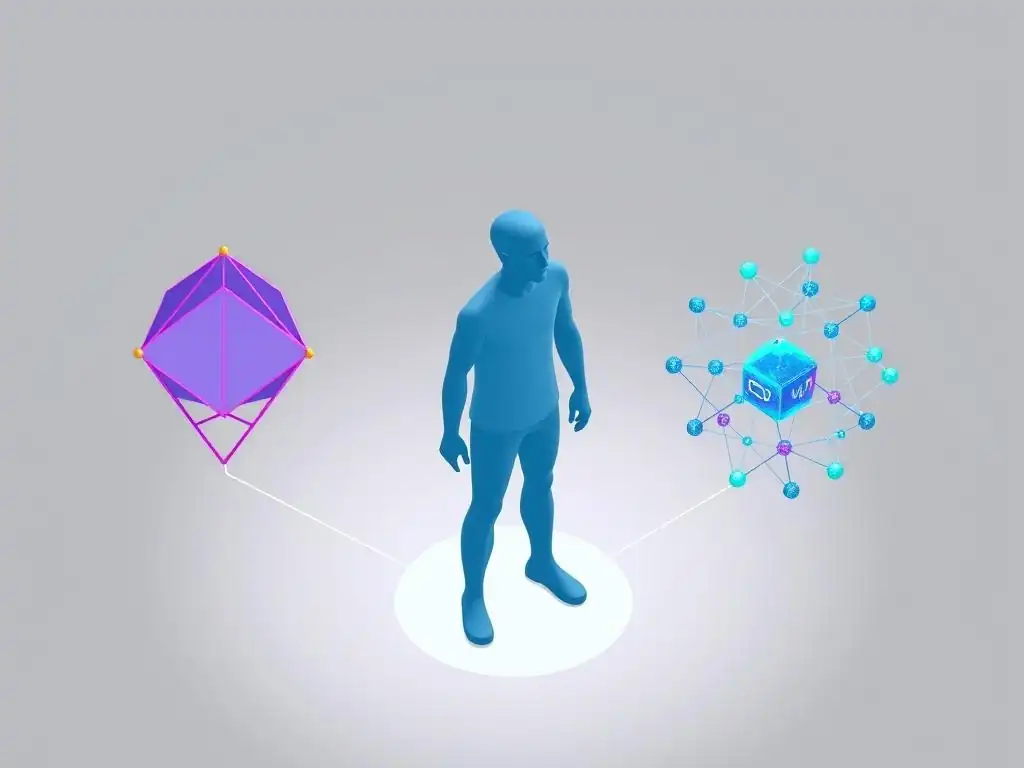
Architecture and Scalability for Identity Management
When comparing Ethereum, Polkadot, and Cosmos for decentralized identity management, their architectural differences significantly impact scalability and performance. Ethereum, while pioneering in smart contracts and DID standards, faces scalability limitations on its base layer. While layer-2 solutions are being developed, base-layer Ethereum can experience congestion and higher transaction fees, which can be a bottleneck for high-volume DID applications. Ethereum's architecture, while robust, was not initially designed for the scale required by widespread decentralized identity adoption.
Polkadot's parachain architecture is inherently designed for scalability. By distributing transaction processing across multiple parachains, Polkadot can achieve significantly higher throughput compared to Ethereum's base layer. Parachains dedicated to DID can be optimized for identity-related operations, enhancing efficiency. Cosmos, with its application-specific blockchain model, also offers scalability.
Each Cosmos zone is an independent blockchain, allowing for horizontal scaling by adding more zones. For DID, dedicated Cosmos blockchains can be designed for high performance and tailored to specific identity management needs. In terms of architecture and scalability, both Polkadot and Cosmos offer advantages over base-layer Ethereum for large-scale decentralized identity deployments.
Security Considerations for Decentralized ID Solutions
Security is paramount for decentralized identity solutions, and Ethereum, Polkadot, and Cosmos each offer different security models. Ethereum's security is underpinned by its large and decentralized validator network. As a mature blockchain, Ethereum has a proven track record of security and resilience. However, smart contract vulnerabilities can still pose risks to DID solutions built on Ethereum, requiring rigorous auditing and security practices. Ethereum's transition to Proof-of-Stake aims to further enhance its security.
Polkadot's shared security model is a key feature. Parachains benefit from the security of the relay chain, which is secured by a large pool of validators. This pooled security model reduces the security burden on individual parachains, making it easier to launch and secure DID solutions. Cosmos, on the other hand, relies on the security of individual blockchains within its ecosystem.
Each Cosmos zone is responsible for its own security, which can vary depending on the blockchain's design and validator set. While this offers sovereignty, it also means that the security of DID solutions on Cosmos is dependent on the security of the specific blockchain they are built on. In terms of security models, Polkadot's shared security offers a strong advantage, while Ethereum benefits from its maturity, and Cosmos relies on the robustness of individual blockchains.
Interoperability of DID Systems Across Blockchains
Interoperability is a crucial factor for the widespread adoption of decentralized identity, and Ethereum, Polkadot, and Cosmos approach it differently. Ethereum's interoperability is primarily focused on within its own ecosystem and through bridging solutions to other networks. While efforts are underway to improve cross-chain interoperability, Ethereum's native interoperability capabilities are less pronounced compared to Polkadot and Cosmos.
Polkadot is designed with interoperability as a core principle. Its parachain architecture and cross-consensus messaging (XCM) system enable seamless communication and data exchange between parachains. This makes Polkadot inherently interoperable for DID solutions built within its ecosystem. Cosmos, with its IBC protocol, is also fundamentally focused on interoperability. IBC provides a standardized protocol for secure and reliable communication between independent blockchains within the Cosmos ecosystem. Both Polkadot and Cosmos offer superior native interoperability for DID solutions compared to Ethereum, enabling more seamless cross-chain identity management.
Development Ecosystem and Community Support
The strength of the development ecosystem and community support is vital for the growth and adoption of decentralized identity solutions. Ethereum boasts the largest and most mature developer community in the blockchain space. Its extensive tooling, documentation, and resources make it relatively easier for developers to build DID solutions on Ethereum. The active Ethereum community ensures continuous innovation and support for projects.
Polkadot's development ecosystem, while rapidly growing, is still smaller than Ethereum's. Substrate offers a powerful framework, but it requires a steeper learning curve. However, Polkadot's community is highly engaged and supportive, with increasing resources and tooling becoming available. Cosmos also has a growing and dedicated developer community, particularly focused on the Cosmos SDK. The Cosmos community is known for its collaborative and supportive nature. While Ethereum currently has the largest and most mature ecosystem, both Polkadot and Cosmos are rapidly expanding their developer communities and resources, making them increasingly attractive platforms for DID development.
Use Cases for Blockchain-Based Decentralized Identity
Supply Chain Management with DID
Decentralized identity offers transformative potential for supply chain management by enhancing transparency, traceability, and trust. In complex global supply chains, verifying the provenance and authenticity of goods is a significant challenge. Blockchain-based DID can provide a secure and verifiable way to identify products, materials, and entities involved in the supply chain. For example, manufacturers, suppliers, distributors, and retailers can all have DIDs, and verifiable credentials can be issued to track the movement and processing of goods at each stage. This can combat counterfeiting, ensure ethical sourcing, and improve overall supply chain efficiency.
Imagine a consumer scanning a QR code on a product to instantly verify its origin and journey through the supply chain using DID. This level of transparency builds trust and empowers consumers to make informed purchasing decisions. For businesses, DID in supply chain management can reduce fraud, streamline logistics, and improve compliance with regulations. Real-world applications are emerging, such as tracking pharmaceutical products to prevent counterfeit drugs from entering the market or verifying the sustainability claims of ethically sourced goods. Blockchain-based DID provides a robust foundation for creating more transparent and trustworthy supply chains.
Healthcare Identity and Data Ownership
In healthcare, decentralized identity can revolutionize patient data management and ownership, addressing critical issues of privacy, security, and interoperability. Currently, patient data is often siloed across different healthcare providers, making it difficult for patients to access and control their own medical records. DID empowers patients with self-sovereign identity, giving them control over their healthcare data. Patients can use their DIDs to grant selective access to their medical records to doctors, hospitals, and researchers, ensuring privacy and data ownership.
This patient-centric approach can improve healthcare outcomes by facilitating better data sharing and interoperability between healthcare providers. For instance, a patient could grant a new doctor temporary access to their medical history, enabling more informed and efficient diagnosis and treatment. DID can also enhance the security of healthcare data, reducing the risk of data breaches and unauthorized access. Use cases include secure patient portals, verifiable medical credentials for healthcare professionals, and improved clinical trial data management. Blockchain-based DID in healthcare has the potential to create a more patient-empowered, secure, and efficient healthcare system.
Digital Credentials and Verifiable Claims
Decentralized identity is ideally suited for managing digital credentials and verifiable claims across various sectors. Traditional credential systems often rely on centralized issuers and are prone to fraud and inefficiency. DID, combined with verifiable credentials standards, enables the creation of tamper-proof and easily verifiable digital credentials. Educational institutions can issue verifiable diplomas and transcripts, professional organizations can issue certifications, and governments can issue digital IDs, all linked to individuals' DIDs.
These verifiable credentials can be presented digitally and instantly verified by relying parties without needing to contact the issuer directly, streamlining verification processes and reducing administrative overhead. For individuals, digital credentials offer greater control over their credentials and simplify sharing their qualifications and achievements. Use cases span education, employment, professional certifications, and government services. Imagine applying for a job and instantly providing verifiable proof of your qualifications and experience directly from your DID wallet. Blockchain-based DID is paving the way for a more efficient and trustworthy system of digital credentials and verifiable claims.
Secure Voting Systems and Civic Identity
Decentralized identity can enhance the security and transparency of voting systems and civic identity management. Traditional voting systems are often criticized for lack of transparency and vulnerability to fraud. Blockchain-based DID can provide a more secure and auditable foundation for digital voting. Voters can use their DIDs to verify their identity and cast votes securely, while the blockchain's immutability ensures that votes are recorded transparently and cannot be tampered with. This can increase trust in electoral processes and potentially improve voter turnout.
DID can also be used to manage civic identity more broadly, providing citizens with a secure and verifiable digital identity for accessing government services and participating in civic activities. Digital IDs linked to DIDs can simplify citizen interactions with government agencies, reduce bureaucracy, and improve efficiency. Use cases include online voting, secure digital IDs for government services, and verifiable credentials for civic participation. While challenges remain in implementing fully decentralized voting systems, blockchain-based DID offers a promising path towards more secure, transparent, and accessible civic identity and voting processes.
The Future of Decentralized Identity and Blockchain Technology
Emerging Trends in DID and Self-Sovereign Identity
Several emerging trends are shaping the future of decentralized identity and self-sovereign identity. One key trend is the increasing standardization and interoperability efforts. Organizations like the W3C are driving the development of open standards for DIDs and verifiable credentials, promoting interoperability across different DID systems and platforms. This standardization is crucial for widespread adoption and ensuring that DID solutions can seamlessly interact with each other.
Another trend is the growing focus on user experience and usability. Early DID solutions were often complex and technically challenging to use. Future DID solutions are prioritizing user-friendly interfaces and seamless integration with existing applications and services.
Privacy-enhancing technologies are also becoming increasingly important in DID. Techniques like zero-knowledge proofs and selective disclosure are being integrated into DID systems to further enhance user privacy and control over their data. Furthermore, the convergence of DID with other decentralized technologies, such as decentralized storage and decentralized computation, is opening up new possibilities for building more comprehensive and powerful decentralized applications. These emerging trends point towards a future where decentralized identity becomes a foundational component of the digital landscape, empowering individuals and organizations with greater control and privacy.
Regulatory Landscape and Adoption Challenges
The regulatory landscape for decentralized identity is still evolving, presenting both opportunities and challenges for adoption. Governments and regulatory bodies are increasingly recognizing the importance of digital identity and are exploring frameworks for regulating and supporting DID. Regulations like GDPR in Europe and similar data privacy laws globally are driving demand for privacy-preserving identity solutions, which DID can address. However, the lack of clear and consistent regulations across different jurisdictions can also create uncertainty and hinder adoption. Navigating the evolving regulatory landscape is a key challenge for DID projects and organizations seeking to implement DID solutions.
Adoption challenges also include user education and awareness. Decentralized identity represents a paradigm shift in identity management, and educating users about the benefits and how to use DID solutions is crucial for driving adoption. Technical complexity and interoperability issues, while being addressed, can still pose challenges for widespread implementation. Furthermore, the need for collaboration and standardization across different stakeholders, including technology providers, businesses, governments, and users, is essential for realizing the full potential of decentralized identity. Overcoming these regulatory and adoption challenges is critical for unlocking the transformative power of DID.
The Role of Decentralized Identity in Web3 and Beyond
Decentralized identity is poised to play a pivotal role in the evolution of Web3 and the broader decentralized web. Web3 aims to create a more decentralized, user-centric internet, and DID is a fundamental building block for this vision. In Web3, DID will empower users to own their data, control their digital identities, and interact with decentralized applications and services in a secure and privacy-preserving manner. DID will be essential for self-sovereign data ownership, decentralized governance, and the creation of more user-centric online experiences in Web3.
Beyond Web3, decentralized identity has the potential to transform various sectors and applications. From finance and healthcare to supply chain and government services, DID can enhance security, privacy, efficiency, and trust across diverse industries. As digital interactions become increasingly prevalent in all aspects of life, the need for secure and user-controlled digital identity solutions will only grow. Decentralized identity, powered by blockchain technology, offers a promising path towards a more secure, private, and user-empowered digital future, extending far beyond the realm of cryptocurrencies and into the fabric of the digital society.
Choosing the Right Blockchain for Your DID Solution
Factors to Consider When Selecting a Platform
Selecting the right blockchain platform for a decentralized identity solution is a critical decision, requiring careful consideration of various factors. Scalability is a primary concern, especially for DID solutions expected to handle a large number of identities and transactions. Evaluate the platform's transaction throughput, latency, and ability to scale to meet anticipated demand. Security is paramount for identity management. Assess the platform's security model, consensus mechanism, and track record of security incidents. Consider the platform's resilience to attacks and vulnerabilities.
Interoperability is increasingly important for DID solutions that need to interact with other systems and blockchains. Evaluate the platform's native interoperability capabilities and support for cross-chain communication. Development ecosystem and community support are crucial for the ease of development, availability of tooling, and long-term sustainability of the DID solution. Assess the size and activity of the developer community, the quality of documentation, and the availability of development resources.
Cost is also a factor, including transaction fees, deployment costs, and operational expenses. Compare the cost structures of different platforms and consider the long-term cost implications. Finally, consider the platform's governance model and long-term viability. Assess the platform's governance structure, roadmap, and community engagement to ensure its long-term sustainability and alignment with your DID solution's goals.
Evaluating the Trade-offs: Ethereum, Polkadot, and Cosmos
When evaluating Ethereum, Polkadot, and Cosmos for DID solutions, it's essential to weigh their respective trade-offs. Ethereum offers a mature and widely adopted ecosystem with a large developer community and robust tooling. Its strengths lie in its established infrastructure and extensive smart contract capabilities. However, Ethereum's scalability limitations and transaction fees can be drawbacks for high-volume DID applications. Ethereum is a strong choice for projects prioritizing a mature ecosystem and extensive tooling but needs to consider scalability and cost implications.
Polkadot excels in scalability and interoperability with its parachain architecture and shared security model. Substrate provides a powerful framework for building customized DID solutions. Polkadot's strengths are scalability, interoperability, and shared security. However, its ecosystem is still maturing, and Substrate has a steeper learning curve. Polkadot is well-suited for projects prioritizing scalability and interoperability and willing to invest in learning Substrate.
Cosmos offers sovereignty and interoperability through its application-specific blockchains and IBC protocol. Cosmos' strengths lie in sovereignty, interoperability, and customization. However, its ecosystem is also still developing, and security relies on individual blockchains. Cosmos is a good fit for projects prioritizing sovereignty, interoperability, and high customization, and willing to manage the security of their own blockchain.
Long-Term Viability and Community Support
The long-term viability and community support of a blockchain platform are crucial factors for the success of a decentralized identity solution. Ethereum, as the second-largest cryptocurrency and a well-established blockchain, has demonstrated strong long-term viability. Its large and active community, continuous development efforts, and ongoing transition to Ethereum 2.0 suggest continued growth and relevance. Ethereum benefits from a massive community and proven long-term viability.
Polkadot, while newer than Ethereum, has quickly gained traction and built a strong and engaged community. Its innovative architecture and focus on interoperability position it for long-term growth in the blockchain space. Polkadot's commitment to innovation and growing community indicate strong long-term potential. Cosmos also has a dedicated and growing community, focused on building an "Internet of Blockchains."
Its emphasis on interoperability and application-specific blockchains aligns with the evolving needs of the decentralized web. Cosmos' focus on interoperability and growing community suggest good long-term prospects. When choosing a platform, consider the platform's track record, community engagement, development roadmap, and overall ecosystem health to ensure long-term viability and support for your decentralized identity solution.
Frequently Asked Questions
What are blockchain decentralized identity solutions and why are they important?
They are systems that allow individuals to control their own digital identities without relying on central authorities. This is important for privacy and security in the digital age.
How does blockchain decentralized identity solutions on Ethereum differ from those on Polkadot or Cosmos?
Ethereum solutions often leverage smart contracts for identity management, while Polkadot and Cosmos offer interoperable blockchains that could facilitate cross-chain identity verification. Each platform presents different trade-offs in terms of scalability and security.
What are some potential use cases for blockchain decentralized identity solutions beyond basic identity verification?
Beyond simple verification, they enable secure data sharing, streamlined KYC (Know Your Customer) processes, and improved supply chain traceability through verifiable credentials.
What are the key regulatory considerations surrounding blockchain decentralized identity solutions?
Regulations are still evolving, but data privacy laws like GDPR are crucial. Compliance requires careful consideration of data storage, consent, and cross-border data transfer.
What are the future trends to watch in the development of blockchain decentralized identity solutions?
Expect more focus on user-friendly interfaces, improved interoperability between different blockchain platforms, and wider adoption in sectors like healthcare and finance.
Final Reflection: Embracing the Future of Identity with Blockchain Solutions
In an era where digital identity is paramount, the exploration of blockchain decentralized identity solutions has never been more relevant. As we navigate the complexities of online interactions and data privacy, the innovations presented by Ethereum, Polkadot, and Cosmos stand out as beacons of hope for a more secure and user-centric digital landscape. The urgency for robust identity solutions is underscored by increasing concerns over data breaches and privacy violations, making the advancements in decentralized identity not just a technological trend, but a necessity for the future.
The impact of decentralized identity solutions extends beyond technology; it reshapes our cultural and social frameworks. The ability to control one's identity and personal data empowers individuals, fostering trust and transparency in digital interactions. As we witness a shift towards self-sovereign identity, we are reminded of the words of Tim Berners-Lee: The web as we know it is a platform for sharing information, but it is also a platform for sharing identity.
This evolution encourages us to rethink our relationship with identity, urging us to advocate for systems that prioritize individual autonomy and security.
As we look to the future, I invite you to reflect on your own digital identity and the role you play in this transformative journey. Consider how you can engage with and support the adoption of blockchain decentralized identity solutions in your life and community. By embracing these innovations, we can collectively shape a more equitable digital world where individuals have the power to control their identities and data. Let us take action, not just as consumers of technology, but as advocates for a future where identity is secure, private, and truly ours.
Unleash Your Blockchain Identity Potential!
Thank you for exploring the world of decentralized identity with us! We hope you gained valuable insights into how leading blockchain platforms are transforming identity management. Are you ready to take the next step?
Here's how you can deepen your understanding:
- Start experimenting with decentralized identity solutions on a blockchain platform of your choice. Set up a test wallet and learn how to interact with decentralized applications using your new identity.
- Share your experiences or insights about working with decentralized identities in the comments below.
- Discuss this article with a friend who is passionate about blockchain technology.
Ready to take control of your digital identity? What innovative use cases do you see for decentralized identity in the future? Share your thoughts below!
Leave a Reply