
Unlocking Liquidity: How Blockchain Tokenization is Revolutionizing Real Estate Investment

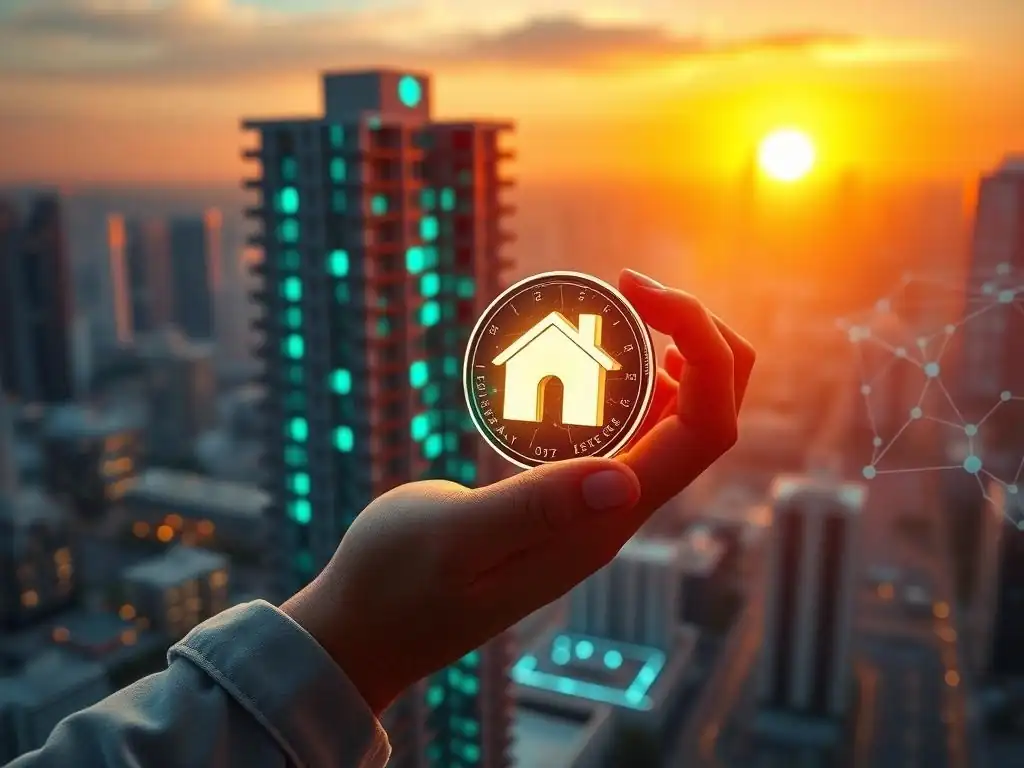
Welcome to Blockchain Trends, your definitive guide to understanding the revolutionary impact of blockchain technology, far beyond the realm of cryptocurrencies.
Intrigued by the potential of blockchain to reshape industries? Dive in to explore how this powerful technology is impacting everything from DeFi to enterprise solutions. Today, we're focusing on a game-changer: blockchain real estate tokenization benefits. Discover how this innovative approach is unlocking liquidity and transforming investment opportunities in the real estate market, and what the future holds for this exciting application. Prepare to uncover the profound advantages – what if owning a piece of prime property was as simple as buying a digital token? Let's explore.
Unlocking Liquidity: How Blockchain Tokenization is Revolutionizing Real Estate Investment
- Introduction: The Untapped Potential of Blockchain in Real Estate
- What is Blockchain Real Estate Tokenization?
-
The Core Benefits of Blockchain Real Estate Tokenization
- Enhanced Liquidity: Making Real Estate More Accessible
- Reduced Barriers to Entry for Investors: Democratizing Real Estate Investment
- Fractional Ownership: Investing in Real Estate with Smaller Capital
- Increased Transparency and Security through Blockchain Technology
- Automated Compliance and Reduced Administrative Overhead
- Exploring the Advantages of Tokenizing Real Estate Assets
- Use Cases: Real-World Examples of Blockchain Tokenization in Real Estate
-
Overcoming the Challenges of Blockchain Real Estate Tokenization
- Regulatory Uncertainty: Navigating the Legal Landscape
- Technological Hurdles: Ensuring Scalability and Security
- Investor Education: Raising Awareness and Building Trust
- Addressing Security Concerns in Tokenized Real Estate Transactions
- Valuation Challenges: Establishing Fair Market Value for Tokenized Assets
- The Future of Real Estate Investment: Tokenization as a Catalyst for Growth
- Conclusion: Embracing the Tokenization Revolution in Real Estate
-
Frequently Asked Questions
- What are the main Blockchain real estate tokenization benefits for investors?
- How does blockchain technology facilitate real estate tokenization?
- What are some potential regulatory challenges associated with tokenizing real estate assets?
- Beyond liquidity, what other Blockchain real estate tokenization benefits are there for property owners?
- How might DeFi platforms integrate with tokenized real estate in the future?
- Final Reflection: Embracing the Future of Real Estate
- Ignite Your Real Estate Revolution!
Introduction: The Untapped Potential of Blockchain in Real Estate
Beyond Cryptocurrency: Blockchain's Expanding Role in Enterprise Solutions
While blockchain technology initially gained prominence through cryptocurrencies like Bitcoin, its capabilities extend far beyond digital currencies. Enterprises are increasingly exploring blockchain for its potential to enhance transparency, security, and efficiency across various sectors. From supply chain management and healthcare records to voting systems and digital identity, blockchain's distributed ledger technology offers a robust framework for recording and verifying transactions in a decentralized and immutable manner.
This inherent trust mechanism is proving invaluable for businesses seeking to streamline complex processes, reduce fraud, and build greater confidence among stakeholders. The move towards enterprise blockchain solutions signifies a maturation of the technology, demonstrating its viability for real-world applications that require high levels of data integrity and operational efficiency, paving the way for innovative uses like blockchain real estate tokenization.
The adoption of blockchain in enterprise environments is driven by tangible benefits such as reduced costs, improved data accuracy, and faster transaction speeds. For instance, in supply chains, blockchain can track goods from origin to destination, providing an auditable trail that enhances accountability and reduces disputes.
According to some market analyses, the global enterprise blockchain market is projected to reach tens of billions of dollars in the coming years, indicating significant investment and interest from large corporations. This widespread exploration of blockchain in diverse industries underscores its potential to disrupt traditional business models and create new opportunities for value creation, setting the stage for its application in historically illiquid markets like real estate.
The Convergence of Real Estate and Blockchain Technology
Real estate has traditionally been characterized by its illiquidity, high transaction costs, and opacity. The process of buying and selling property involves numerous intermediaries, extensive paperwork, and lengthy settlement periods, often taking weeks or even months to complete a single transaction. These factors create significant barriers to entry for potential investors and limit the ability of property owners to quickly access the value locked within their assets.
Blockchain technology offers a compelling solution to many of these long-standing challenges. By providing a secure, transparent, and immutable ledger for recording ownership and transaction data, blockchain can fundamentally transform how real estate assets are managed, bought, and sold. The convergence of real estate and blockchain promises to streamline processes, reduce reliance on intermediaries, and unlock new avenues for investment, making the market more accessible and efficient. This powerful combination is the foundation upon which blockchain real estate tokenization benefits are built.
Understanding Real Estate Tokenization: A New Era for Investment
Real estate tokenization represents the process of issuing digital tokens on a blockchain, where each token represents a fractional ownership share or economic right in a specific real estate asset. Instead of buying an entire property outright, investors can purchase tokens corresponding to a portion of that property's value. This allows for fractional ownership, making real estate investment accessible to a much broader range of investors who may not have the capital to purchase a whole property.
This innovative approach leverages blockchain's core strengths – security, transparency, and efficiency – to address the inherent limitations of traditional real estate investment. By converting physical assets into digital tokens, tokenization removes geographical barriers, simplifies transactions, and creates opportunities for increased liquidity. It's ushering in a new era where real estate investment is more flexible, affordable, and potentially more profitable for participants worldwide.
What is Blockchain Real Estate Tokenization?
Defining Tokenization: Converting Real Estate Assets into Digital Tokens
At its core, blockchain real estate tokenization is the process of creating digital representations of real estate assets on a blockchain. These digital representations, known as tokens, are issued on a distributed ledger and represent ownership, economic rights (like rental income), or other interests in a specific property. Think of it as digitizing the traditional property deed or share certificate, but with the added benefits of blockchain technology. Each token is a programmable unit of value, capable of being easily transferred, divided, and managed on the blockchain network.
This conversion process involves legally structuring the ownership or economic rights of a property so they can be divided into smaller, tradable units. These units are then recorded on a blockchain, often using established token standards like ERC-20 or ERC-721 on platforms like Ethereum, or similar standards on other blockchain networks. The legal framework is crucial, ensuring that owning a token translates into legally recognized rights concerning the underlying physical asset.
How Tokenization Works: A Step-by-Step Breakdown
The process of tokenizing a real estate asset typically involves several key steps. First, a property owner or developer decides to tokenize a specific asset, such as a commercial building, residential complex, or land parcel. Second, a legal structure is established to link the physical property to the digital tokens. This often involves creating a Special Purpose Vehicle (SPV) or a similar entity that legally owns the property, and then issuing tokens representing shares in this SPV.
Third, a tokenization platform is used to create and issue the digital tokens on a chosen blockchain. This platform handles the technical aspects of token creation, smart contract development, and initial distribution. Fourth, investors purchase these tokens, acquiring fractional ownership or rights in the property. These tokens are held in digital wallets, and transactions (buying, selling) are recorded on the blockchain, providing a transparent and immutable history of ownership. Finally, the platform or a designated administrator manages the asset, distributing any rental income or sale proceeds to token holders proportionally based on their token holdings.
Key Components of a Real Estate Tokenization Platform
A robust real estate tokenization platform requires several core components to function effectively and securely. Central to the platform is the blockchain infrastructure itself, which provides the underlying ledger for token issuance, ownership tracking, and transaction recording. This could be a public blockchain like Ethereum or a permissioned enterprise blockchain depending on the specific requirements and target audience.
Another critical component is the legal and compliance framework integrated into the platform. This ensures that the tokenization process adheres to relevant securities regulations (like KYC/AML checks for investors) and that the legal link between the tokens and the physical asset is clearly defined and enforceable.
Smart contracts are also essential; these self-executing contracts written in code automate processes such as dividend distribution, voting rights, and token transfers, reducing the need for intermediaries and increasing efficiency. Finally, the platform needs a user interface or marketplace where investors can discover tokenized properties, purchase tokens, and potentially trade them in a secondary market, enhancing the blockchain real estate tokenization benefits.
The Core Benefits of Blockchain Real Estate Tokenization
Enhanced Liquidity: Making Real Estate More Accessible
One of the most significant blockchain real estate tokenization benefits is the dramatic increase in liquidity it brings to an otherwise illiquid asset class. Traditionally, selling a property can take months, involving lengthy negotiations, legal processes, and significant transaction costs. Tokenization breaks down property ownership into smaller, easily transferable digital units.
These tokens can be traded on secondary markets, similar to stocks, allowing investors to buy or sell their stake in a property relatively quickly and efficiently. This ease of transferability transforms real estate from a long-term, difficult-to-exit investment into a more dynamic asset class, potentially attracting a wider pool of investors seeking greater flexibility and faster access to their capital. The ability to trade tokens on a global scale further amplifies this liquidity, connecting buyers and sellers across different geographies.
Reduced Barriers to Entry for Investors: Democratizing Real Estate Investment
Traditional real estate investment often requires substantial capital, making it inaccessible to the average investor. Purchasing even a small property can involve down payments, mortgage approvals, and closing costs totaling tens or even hundreds of thousands of dollars. This high barrier to entry limits participation to wealthy individuals and institutional investors.
Blockchain real estate tokenization removes this hurdle by enabling fractional ownership. Instead of needing $200,000 for a down payment on a property, an investor might be able to purchase tokens representing just $1,000 or $5,000 worth of that same property. This democratization of real estate investment opens up opportunities for a much broader range of investors to participate in the market, diversify their portfolios with real assets, and benefit from property appreciation and rental income.
Fractional Ownership: Investing in Real Estate with Smaller Capital
Fractional ownership, facilitated by tokenization, is a direct consequence of reducing barriers to entry and is a key blockchain real estate tokenization benefit. It allows multiple investors to collectively own a single high-value property by purchasing tokens representing small percentages of the asset. For example, a $10 million commercial building could be divided into 10,000 tokens, each valued at $1,000.
This model allows investors with limited capital to gain exposure to premium real estate assets that would otherwise be out of reach. They can invest smaller amounts across multiple properties, achieving diversification without the massive capital outlay traditionally required. Fractional ownership through tokenization makes real estate investment more affordable and flexible, catering to individual investors, small investment clubs, and even pension funds looking for granular exposure.
Increased Transparency and Security through Blockchain Technology
Blockchain technology provides an inherent level of transparency and security that is often lacking in traditional real estate transactions. Every transaction involving the tokens – from initial purchase to subsequent trades – is recorded on the distributed ledger. This record is immutable, meaning it cannot be altered or deleted, providing a permanent and verifiable history of ownership and activity.
This transparency reduces the potential for fraud and disputes over ownership. Investors can independently verify transaction details on the blockchain. Furthermore, the cryptographic nature of blockchain transactions enhances security, protecting against unauthorized access and manipulation. This built-in trust mechanism reduces the need for reliance on multiple intermediaries to verify information, streamlining the process and increasing confidence among participants, which is a significant blockchain real estate tokenization benefit.
Automated Compliance and Reduced Administrative Overhead
Smart contracts, a core feature of blockchain platforms used for tokenization, can automate many of the manual and time-consuming processes associated with real estate management and investment. Compliance checks, such as Know Your Customer (KYC) and Anti-Money Laundering (AML) regulations, can be integrated into the token sale process, ensuring that only eligible investors can participate.
Furthermore, smart contracts can automate the distribution of rental income or sale proceeds to token holders based on their proportional ownership. They can also manage voting rights for decisions related to the property (if applicable) or handle the complexities of cap table management in a tokenized SPV. This automation reduces the administrative burden, lowers operational costs, and minimizes the potential for human error, further enhancing the efficiency and appeal of blockchain real estate tokenization.
Exploring the Advantages of Tokenizing Real Estate Assets
Blockchain Real Estate Tokenization Benefits: A Deep Dive
The advantages of tokenizing real estate assets are multifaceted, impacting investors, property owners, and the market as a whole. For investors, the primary blockchain real estate tokenization benefits include increased accessibility through lower entry points, enhanced liquidity compared to traditional real estate, and the ability to easily diversify across different property types and geographies. The transparency of the blockchain provides greater confidence in ownership records and transaction history.
For property owners and developers, tokenization offers a new and potentially more efficient way to raise capital. Instead of relying solely on traditional debt or equity financing, they can issue tokens to a global pool of investors. This can accelerate fundraising, reduce reliance on single large investors or banks, and potentially lower the cost of capital. The ability to sell fractional interests also provides flexibility in managing ownership stakes.
Lower Transaction Costs and Faster Settlement Times
Traditional real estate transactions involve numerous fees, including agent commissions (often 5-6% of the property value), legal fees, title insurance, and escrow fees. These costs can add up significantly, impacting the net return for both buyers and sellers. The settlement process, involving title searches, inspections, and financing, can also take several weeks or months.
Blockchain real estate tokenization has the potential to dramatically reduce these costs and accelerate settlement times. By eliminating or reducing the need for many intermediaries, transaction fees can be significantly lower. The transfer of token ownership on the blockchain is nearly instantaneous once agreed upon, potentially reducing settlement times from months to minutes or hours. While legal and platform fees still exist, the overall cost structure and speed of execution represent a significant improvement, highlighting key blockchain real estate tokenization benefits.
Global Reach: Expanding Your Investor Base Worldwide
One inherent limitation of traditional real estate investment is its often localized nature. Marketing a property and finding buyers or investors is typically confined to a specific geographical area. This limits the pool of potential capital available to property owners and developers.
Tokenization breaks down these geographical barriers. By issuing tokens on a global blockchain network, property owners can market their assets to investors anywhere in the world. An investor in Tokyo can easily purchase tokens representing a share in a property in London or Sydney. This global reach expands the potential investor base exponentially, increasing the likelihood of successful fundraising and potentially driving up asset valuations due to increased demand. This global accessibility is a powerful blockchain real estate tokenization benefit.
Improved Portfolio Diversification for Investors
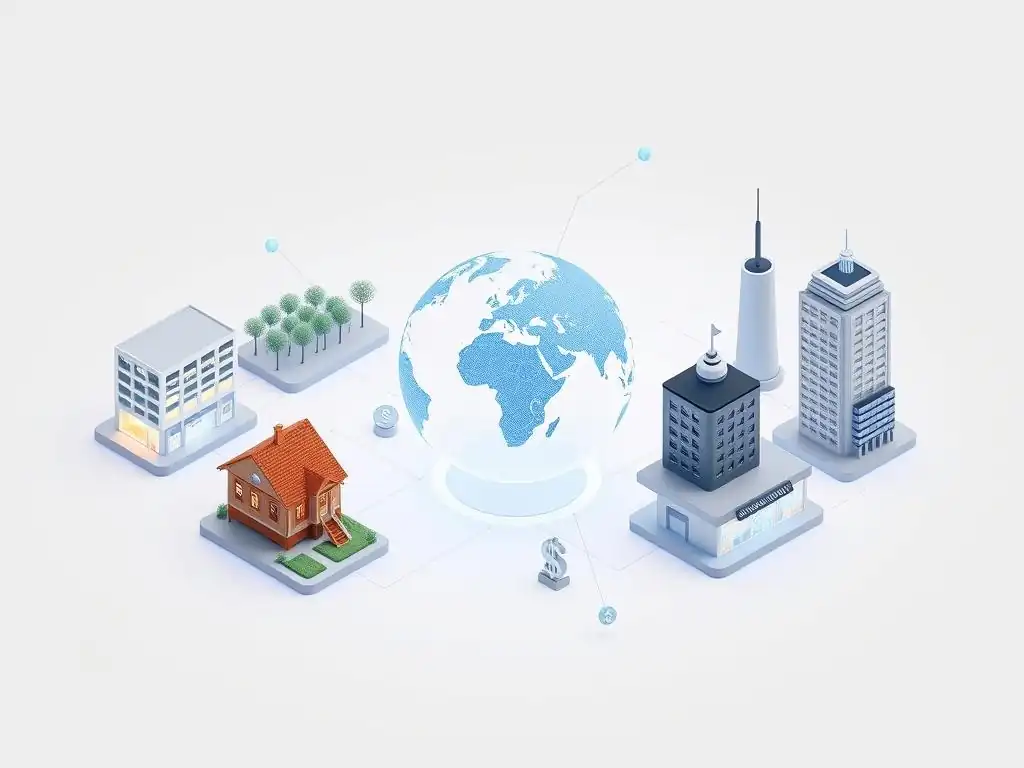
Diversification is a fundamental principle of sound investment strategy, helping to mitigate risk. However, traditionally, achieving significant diversification in real estate has required substantial capital to invest in multiple properties across different locations and asset classes (residential, commercial, industrial, etc. ).
Tokenization makes diversification much more accessible. Investors can allocate smaller amounts of capital across tokens representing shares in various properties – perhaps a tokenized apartment building in Berlin, a fraction of a retail space in Singapore, and a share in agricultural land in Brazil. This granular approach allows investors to build a highly diversified real estate portfolio tailored to their risk tolerance and investment goals, without needing millions of dollars, showcasing another of the potent blockchain real estate tokenization benefits.
Smart Contracts: Automating Processes and Ensuring Trust
Smart contracts are self-executing programs stored on the blockchain that automatically carry out the terms of an agreement when predefined conditions are met. In real estate tokenization, smart contracts are crucial for automating various processes, such as distributing rental income (dividends) to token holders based on their ownership percentage, managing voting rights on property-related decisions, or facilitating the transfer of tokens upon sale.
This automation reduces the need for manual intervention, minimizing the risk of human error and increasing efficiency. More importantly, because smart contracts are transparent and immutable on the blockchain, they provide a high level of trust and certainty for all parties involved. The rules of engagement are coded and executed automatically, ensuring that obligations are met without relying on intermediaries, thereby enhancing the overall blockchain real estate tokenization benefits.
Use Cases: Real-World Examples of Blockchain Tokenization in Real Estate
Case Study 1: Tokenizing a Commercial Property in New York City
One prominent example illustrating blockchain real estate tokenization benefits involves the tokenization of a commercial property, such as a building located at 30 Rockefeller Plaza in New York City. While specific details can vary, a potential scenario involves a portion of the building's equity or debt being tokenized. For instance, a real estate fund might decide to tokenize a $30 million equity stake in the property, dividing it into 30,000 tokens, each representing $1,000 of the stake.
This tokenization allows a broader range of investors, including accredited investors globally, to purchase fractional ownership. Instead of needing to invest hundreds of thousands or millions directly into the fund or property, individuals could invest as little as $1,000. Platforms like Harbor or Securitize have been involved in tokenizing real estate assets, enabling investors to gain exposure to high-value, prime location properties that were previously only accessible to large institutions. This enhances liquidity for the fund and democratizes access to prestigious real estate.
Case Study 2: Fractional Ownership of Luxury Villas in Bali
Another compelling use case for blockchain real estate tokenization benefits is the fractional ownership of high-value residential or hospitality assets, like luxury villas in popular tourist destinations such as Bali, Indonesia. A development company might build a set of luxury villas and tokenize the ownership or revenue rights. For example, a villa valued at $2 million could be tokenized into 2,000 tokens, each representing $1,000 of ownership.
Investors worldwide can purchase these tokens to gain fractional ownership of the villa. They might receive a share of the rental income generated from the villa when it's rented out, proportional to their token holdings. This model allows investors to participate in the lucrative luxury real estate and tourism market without the significant capital required to purchase an entire villa outright. Platforms facilitating such investments often handle property management, rental operations, and income distribution via smart contracts, showcasing the practical blockchain real estate tokenization benefits.
Case Study 3: Securitizing Real Estate Debt for Affordable Housing Projects
Blockchain real estate tokenization can also be applied to debt instruments related to real estate, such as mortgages or development loans. Consider a project focused on building affordable housing units. Traditionally, financing such projects might involve issuing bonds or securing large bank loans, processes that can be slow and limited to institutional lenders.
Tokenization allows the debt associated with these projects to be broken down into smaller, tradable tokens. For instance, a $10 million development loan could be tokenized into 10,000 tokens, each representing $1,000 of the debt. Investors, including individuals and smaller funds, can purchase these debt tokens, effectively lending money to the project in exchange for interest payments distributed via smart contracts. This provides a more accessible and potentially faster way for developers to secure financing for important projects, while offering investors a new avenue for fixed-income investment backed by real estate assets, demonstrating diverse blockchain real estate tokenization benefits.
Overcoming the Challenges of Blockchain Real Estate Tokenization
One of the primary challenges facing blockchain real estate tokenization is the evolving and often uncertain regulatory landscape. Real estate tokens can be classified differently depending on their structure – they might be considered securities, investment contracts, or other types of assets, each with different regulatory requirements. Navigating securities laws, property laws, and financial regulations across multiple jurisdictions is complex.
Governments and regulatory bodies worldwide are still developing frameworks to address digital assets and tokenized securities. This lack of clear, consistent regulations creates legal uncertainty for issuers, platforms, and investors. Ensuring compliance with existing and future regulations, such as registration requirements, disclosure rules, and suitability standards for investors, is crucial but challenging. Legal structuring and obtaining necessary approvals are critical steps that add complexity and cost to tokenization projects.
Technological Hurdles: Ensuring Scalability and Security
While blockchain technology offers significant advantages, it also presents technological challenges, particularly regarding scalability and security for real estate applications. Processing a high volume of transactions, especially if a secondary market for tokens becomes highly active, requires a blockchain network capable of handling throughput efficiently and cost-effectively. Some public blockchains can face congestion and high transaction fees during peak times.
Ensuring the security of the tokenization platform and the underlying smart contracts is paramount. Smart contracts, while powerful, can contain vulnerabilities if not coded correctly, potentially leading to loss of funds or unauthorized access. The security of investors' digital wallets also needs to be considered. While blockchain itself is secure, the interfaces and systems built around it must also be robust to prevent hacks and exploits, ensuring the integrity of blockchain real estate tokenization benefits.
Investor Education: Raising Awareness and Building Trust
Despite the growing interest in blockchain, many potential investors are still unfamiliar with the technology and the concept of tokenized real estate. Educating the market about what real estate tokens are, how they work, the associated risks and benefits, and how to invest securely is a significant challenge. Building trust in a new investment model requires clear communication and successful early examples.
Potential investors need to understand the legal rights associated with owning a token, how income is distributed, and how they can eventually exit their investment (sell their tokens). Overcoming skepticism about a novel approach to a traditional asset class requires considerable effort in marketing, transparency, and demonstrating the reliability and security of tokenization platforms.
Addressing Security Concerns in Tokenized Real Estate Transactions
Security concerns in tokenized real estate transactions extend beyond the blockchain itself to the entire ecosystem. While the immutable nature of blockchain prevents tampering with the transaction ledger, the security of the platforms used to issue and manage tokens is critical. These platforms must implement robust cybersecurity measures to protect against hacking, data breaches, and phishing attacks that could compromise investor funds or sensitive information.
Furthermore, the link between the digital tokens and the physical property must be legally secure. This involves ensuring the SPV or legal entity holding the property is properly structured and managed, and that the legal documentation clearly establishes the rights of token holders. Smart contracts must be thoroughly audited to prevent coding errors that could be exploited. Maintaining a secure environment for all aspects of the tokenization lifecycle is essential to realizing the full blockchain real estate tokenization benefits.
Valuation Challenges: Establishing Fair Market Value for Tokenized Assets
Determining and maintaining the fair market value of tokenized real estate assets can be complex. Unlike publicly traded stocks where value is constantly determined by market forces, tokenized real estate assets may initially trade on less mature secondary markets, potentially leading to lower liquidity or price volatility. Establishing an initial valuation requires traditional appraisal methods, but the ongoing valuation of fractional shares traded as tokens presents new challenges.
Factors influencing the value of the underlying property (market conditions, rental income, maintenance costs) must be accurately reflected in the token price. Developing reliable mechanisms for price discovery in secondary markets, especially for unique properties, is crucial. Ensuring that the token price accurately reflects the value of the fractional ownership interest is vital for investor confidence and is an area where valuation methodologies are still evolving.
The Future of Real Estate Investment: Tokenization as a Catalyst for Growth
Predictions for the Tokenized Real Estate Market
Predictions for the tokenized real estate market are overwhelmingly positive, pointing towards significant growth in the coming years. Many experts anticipate that tokenization will become a mainstream method for real estate investment, particularly for commercial properties and high-value residential assets. Market reports from firms like Deloitte and PwC have projected that tokenized assets, including real estate, could represent a multi-trillion dollar market in the next decade.
This growth will likely be driven by increasing investor awareness, the development of more sophisticated and compliant tokenization platforms, and the potential for greater liquidity compared to traditional real estate. As regulatory clarity improves in key jurisdictions, institutional investors are also expected to enter the market more significantly, further boosting its size and maturity. The expansion of blockchain real estate tokenization benefits will be a key driver.
The Impact of DeFi on Real Estate Tokenization
Decentralized Finance (DeFi) is expected to have a profound impact on the future of real estate tokenization. DeFi protocols aim to recreate traditional financial services like lending, borrowing, and trading using blockchain technology and smart contracts, without relying on centralized intermediaries. The convergence of DeFi and tokenized real estate could unlock new possibilities.
For example, tokenized real estate could be used as collateral within DeFi lending protocols, allowing property owners to borrow against their tokenized assets without selling them. Secondary trading of real estate tokens could occur on decentralized exchanges (DEXs), further increasing liquidity and accessibility. Yield-farming opportunities could emerge where investors earn passive income by providing liquidity for real estate token trading pairs. This integration with DeFi promises to enhance the financial utility and potential returns associated with tokenized real estate, amplifying blockchain real estate tokenization benefits.
The Evolving Regulatory Environment for Real Estate Tokens
The regulatory environment for real estate tokens is continuously evolving, with regulators in various countries working to provide clarity and frameworks. As the market grows, there is increasing pressure for more standardized and harmonized regulations. Expect to see clearer guidelines emerge regarding the classification of real estate tokens (e.g., as securities), requirements for token issuance platforms, rules for secondary trading, and investor protection measures.
Jurisdictions like the United States, Europe, and parts of Asia are actively exploring or implementing regulations specific to digital assets and tokenized securities. While regulatory uncertainty remains a challenge, the trend is towards greater clarity and structure, which will ultimately foster more confidence and facilitate broader adoption of blockchain real estate tokenization. Successful projects will prioritize compliance and work closely with legal experts to navigate this landscape.
Blockchain Real Estate Tokenization Trends: What to Expect
Several key trends are likely to shape the future of blockchain real estate tokenization. Firstly, expect increased institutional involvement as regulatory clarity improves and dedicated investment products emerge. Secondly, the integration with DeFi is set to deepen, creating more innovative financial applications for tokenized real estate. Thirdly, we will likely see tokenization applied to a wider range of real estate assets, including infrastructure projects, real estate funds, and even individual mortgage loans.
Another trend is the development of more sophisticated platforms offering enhanced features like integrated property management tools, automated compliance checks, and seamless secondary trading capabilities. Finally, expect greater focus on creating robust legal frameworks that clearly define ownership rights and enforcement mechanisms in the digital realm. These trends collectively point towards a future where blockchain real estate tokenization is a significant force in global real estate investment, expanding blockchain real estate tokenization benefits to a wider audience.
Conclusion: Embracing the Tokenization Revolution in Real Estate
The Transformative Power of Blockchain in Real Estate Investment
Blockchain technology possesses transformative power for the real estate investment landscape. By enabling the tokenization of assets, it directly addresses many of the long-standing inefficiencies and limitations of traditional real estate. The ability to convert illiquid physical assets into divisible, tradable digital tokens fundamentally changes how real estate can be owned, managed, and invested in.
This technological shift is not merely incremental; it represents a potential paradigm shift that can unlock significant value for both investors and property owners. From enhancing liquidity and democratizing access to increasing transparency and reducing costs, the benefits are substantial and far-reaching. Embracing this technology is crucial for stakeholders looking to remain competitive and capitalize on new opportunities in the evolving market.
Blockchain Real Estate Tokenization: A Win-Win for Investors and Developers
Blockchain real estate tokenization presents a compelling win-win proposition for both investors and real estate developers or property owners. For investors, it offers unprecedented access to real estate markets with lower capital requirements, improved diversification opportunities, and the potential for increased liquidity. It makes investing in tangible assets more accessible and flexible than ever before, expanding the pool of potential participants.
For developers and property owners, tokenization provides an innovative method for capital formation, potentially accelerating fundraising and reducing reliance on traditional financial institutions. It allows them to tap into a global pool of investors and create new revenue streams or exit strategies. By leveraging the efficiencies of blockchain, they can also reduce administrative overhead and transaction costs. The benefits of blockchain real estate tokenization create mutual advantages that drive innovation and growth in the sector.
Moving Forward: Opportunities and Considerations for the Future
As blockchain real estate tokenization continues to mature, significant opportunities lie ahead. The market is poised for growth as technology improves, regulatory clarity emerges, and investor confidence builds. Integrating tokenized real estate with the burgeoning DeFi ecosystem will unlock further financial innovation.
However, realizing the full potential requires addressing the remaining challenges, particularly navigating the complex regulatory environment across different jurisdictions, ensuring robust platform security, and continuing to educate the market. Building strong legal frameworks that connect digital tokens to physical assets is paramount. Stakeholders must approach tokenization strategically, focusing on compliance, transparency, and investor protection to ensure its long-term success and solidify the transformative blockchain real estate tokenization benefits.
Frequently Asked Questions
What are the main Blockchain real estate tokenization benefits for investors?
Tokenization provides fractional ownership, making real estate investment accessible to a wider range of investors. It also offers increased liquidity compared to traditional real estate investments.
How does blockchain technology facilitate real estate tokenization?
Blockchain ensures transparency and security through its immutable ledger. Smart contracts automate processes like dividend distribution and ownership transfer, reducing costs.
What are some potential regulatory challenges associated with tokenizing real estate assets?
Regulations are still evolving, creating uncertainty around compliance and legal frameworks. Navigating different jurisdictions and securities laws can be complex.
Beyond liquidity, what other Blockchain real estate tokenization benefits are there for property owners?
Tokenization can attract a global investor base, potentially increasing property value. It also streamlines property management and reduces administrative overhead.
How might DeFi platforms integrate with tokenized real estate in the future?
DeFi could enable peer-to-peer lending secured by tokenized real estate. This would create new investment opportunities and further enhance liquidity.
Final Reflection: Embracing the Future of Real Estate
The promise of democratized real estate investment through blockchain tokenization is no longer a distant dream, but a rapidly unfolding reality. The benefits, from increased liquidity and fractional ownership to reduced barriers to entry and enhanced transparency, are poised to reshape the landscape of property investment as we know it. The potential for this technology to empower both individual investors and large institutions is immense, and its impact is already being felt across global markets.
Witnessing the evolution of real estate through the lens of blockchain has been profoundly inspiring. It's not just about technological advancement; it's about creating a more equitable and accessible financial ecosystem. The ability to unlock previously illiquid assets and connect them with a wider pool of investors is a game-changer. The future of real estate is not just about bricks and mortar, but about the digital infrastructure that allows us to access and interact with these assets in new and innovative ways.
As we stand at the cusp of this revolution, let us embrace the opportunities that blockchain real estate tokenization offers. Consider how you can leverage these benefits to diversify your portfolio, access new investment opportunities, and contribute to a more inclusive and efficient real estate market. The future of real estate is being built today – are you ready to be a part of it?
Ignite Your Real Estate Revolution!
Thank you for exploring how blockchain tokenization is transforming real estate investment. You've seen how this innovative technology is lowering barriers and creating new opportunities. Are you ready to take the next step?
Here are some ways to get involved in shaping the future of real estate:
- Research platforms that facilitate tokenized real estate investments and identify opportunities that match your financial goals. This is your chance to become a pioneer in the industry!
- Join the Blockchain Trends community forum to share your thoughts on the future of real estate tokenization—what excites you and what concerns you might have.
- Did you know that some platforms allow you to propose tokenizing your own physical assets? Consider exploring how tokenization could help unlock liquidity from your current investments.
If you could tokenize any real estate asset, what would it be? Share your ideas in the comments below!
Leave a Reply