
The Democratization of Justice: AI Smart Contracts and Accessible Legal Solutions

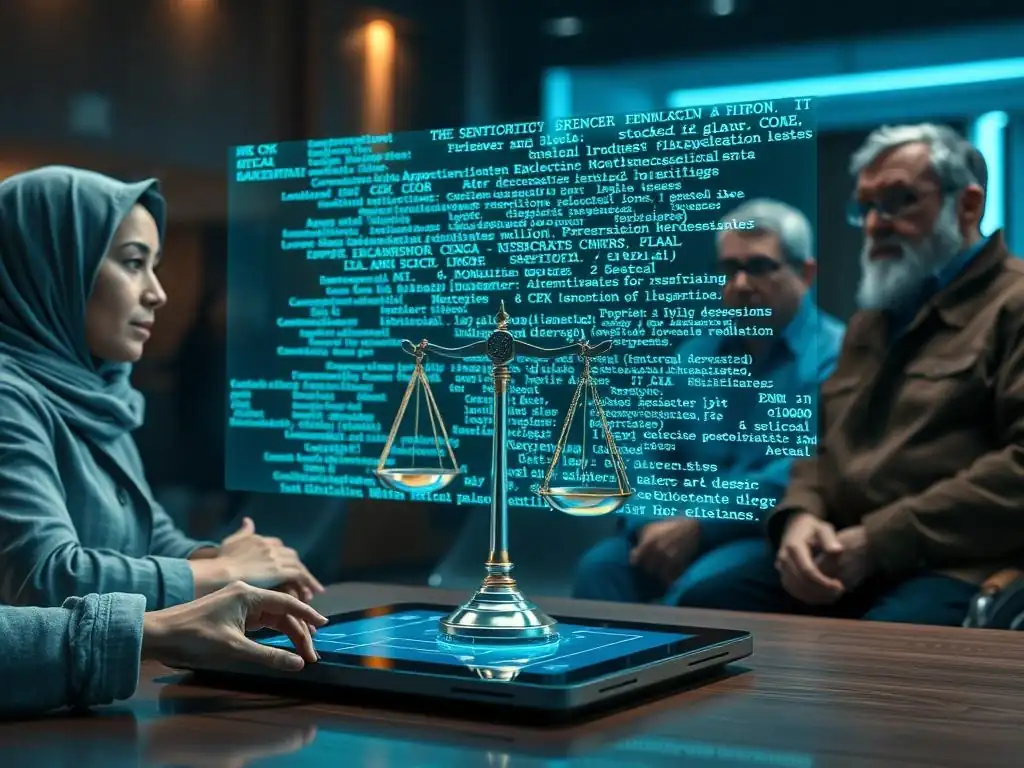
Welcome to Blockchain Trends, your compass in the rapidly evolving world of decentralized innovation. Beyond the hype, we delve into the real-world applications transforming industries. Ever wondered how blockchain and AI can converge to revolutionize legal access? Our latest exploration dives into the fascinating potential of AI smart contracts to democratize justice. Discover how this synergy could reshape the future of legal solutions and why it matters to you. Intrigued? Let's unravel the complexities and opportunities together...
- Introduction: AI Smart Contracts Revolutionizing Legal Access
- Understanding AI Smart Contracts and Their Legal Applications
- How AI Smart Contracts Enhance Legal Accessibility
- The Benefits of AI Smart Contracts for Legal Empowerment
- Challenges and Considerations for AI Smart Contracts in Law
- Real-World Examples of AI Smart Contracts Democratizing Justice
- The Future of AI Smart Contracts and Legal Access
- Overcoming Barriers to Adoption of AI Smart Contracts for Legal Access
- Conclusion: AI Smart Contracts – A Pathway to a More Just and Equitable Legal System
-
Frequently Asked Questions
- How can AI-powered smart contracts make legal access more accessible?
- What are the primary benefits of using AI in smart contract development and execution?
- How does the integration of AI into smart contracts impact legal compliance and regulatory oversight?
- What are the potential risks and ethical considerations associated with AI-driven smart contracts?
- How will AI-enhanced smart contracts shape the future of legal services and the role of lawyers?
- Final Reflection: Embracing the Future of Fair Access
- Revolutionize Your Access to Justice Now!
Introduction: AI Smart Contracts Revolutionizing Legal Access
The legal landscape, traditionally characterized by complex procedures and significant costs, is on the cusp of a profound transformation. The convergence of Artificial Intelligence (AI) and blockchain technology, specifically through AI smart contracts, is emerging as a powerful force for democratizing justice.
This innovative approach promises to bridge the accessibility gap in legal services, offering more efficient, transparent, and affordable solutions for individuals and businesses alike. By automating legal processes and providing intelligent guidance, AI smart contracts are not just streamlining the legal system but also fundamentally altering who can access and benefit from it, paving the way for a more equitable legal future.
The Promise of AI and Blockchain in Legal Services
The synergy of AI and blockchain is creating unprecedented opportunities within legal services. Blockchain technology, with its inherent security, transparency, and immutability, provides a robust foundation for storing and executing legal agreements. Smart contracts, self-executing agreements coded on a blockchain, automate the terms of a contract, eliminating the need for intermediaries in many instances.
When augmented with AI, these smart contracts become even more potent. AI algorithms can analyze vast datasets of legal information, understand natural language, and even make predictions about legal outcomes.
This combination allows for the creation of AI-powered smart contracts that can dynamically adapt to complex situations, learn from past cases, and offer intelligent legal assistance, moving beyond simple automation to provide genuinely smart legal solutions. For example, AI can be integrated to interpret nuanced clauses within a contract, predict potential disputes based on historical data, and even suggest optimal contract terms, enhancing the efficacy and accessibility of legal agreements.
Addressing the Accessibility Gap in Traditional Legal Systems
Traditional legal systems often present significant barriers to access, particularly for individuals and small businesses. High legal fees, complex bureaucratic processes, and a lack of understanding of legal jargon can deter many from seeking the justice they deserve. Studies indicate that in many developed nations, a significant portion of the population, sometimes exceeding 40%, does not seek legal help even when needed due to cost concerns.
This gap is even wider in developing countries where access to legal representation is severely limited. AI smart contracts offer a compelling solution to this problem.
By automating routine legal tasks, reducing the need for extensive human intervention, and providing easily understandable interfaces, AI-driven legal tech can significantly lower the cost of legal services. Furthermore, AI can be used to create user-friendly platforms that guide individuals through legal processes, offering information and assistance in plain language, thereby empowering them to navigate legal matters more effectively and affordably.
Understanding AI Smart Contracts and Their Legal Applications
What are AI Smart Contracts? A Deep Dive
At their core, AI smart contracts are self-executing agreements written in code and enhanced with artificial intelligence capabilities. Building upon the foundation of traditional smart contracts on blockchain, AI smart contracts integrate AI algorithms to make them more intelligent, adaptable, and capable of handling complex legal scenarios.
Unlike basic smart contracts that operate based on predefined rules, AI smart contracts can learn from data, make predictions, and even adapt their behavior in response to changing circumstances. This is achieved through the integration of machine learning models that can analyze legal data, understand natural language, and make inferences, enabling the smart contract to perform tasks previously requiring human legal expertise.
For instance, an AI smart contract for intellectual property management could automatically monitor the internet for copyright infringements, assess the severity of the infringement using AI image recognition, and initiate legal action based on pre-defined parameters, all without manual intervention beyond the initial setup.
Key Features of AI-Driven Legal Agreements
AI-driven legal agreements possess several key features that distinguish them from traditional contracts and even basic smart contracts. Firstly, they offer enhanced automation, going beyond simple execution of pre-set conditions to automate complex legal processes like document review, compliance checks, and even dispute resolution. Secondly, they provide intelligent decision-making capabilities. AI algorithms enable these smart contracts to analyze data, learn from past cases, and make informed decisions, leading to more efficient and effective legal outcomes.
Thirdly, they offer improved accessibility through user-friendly interfaces and natural language processing, making legal agreements more understandable and navigable for non-legal professionals. Finally, they offer increased transparency and security inherent to blockchain technology, ensuring that all actions and data related to the contract are securely recorded and auditable. These features collectively contribute to making legal processes more efficient, accessible, and trustworthy.
Use Cases: AI Smart Contracts Expanding Legal Access
The applications of AI smart contracts in expanding legal access are diverse and rapidly evolving. In real estate, AI smart contracts can automate property transactions, including title verification, escrow services, and contract execution, reducing costs and streamlining the process for buyers and sellers. For intellectual property, they can automate royalty payments to creators based on usage, ensuring fair compensation and reducing administrative overhead.
In supply chain management, AI smart contracts can ensure ethical sourcing and compliance with labor laws by automatically verifying supplier certifications and tracking product origins. Furthermore, in dispute resolution, AI-powered platforms utilizing smart contracts can offer online arbitration and mediation services, making dispute resolution faster, cheaper, and more accessible, particularly for small businesses and individuals who cannot afford traditional litigation. These use cases demonstrate the potential of AI smart contracts to democratize justice by making legal solutions more efficient, affordable, and readily available across various sectors.
How AI Smart Contracts Enhance Legal Accessibility
Reducing Costs and Streamlining Legal Processes
One of the most significant ways AI smart contracts enhance legal accessibility is by dramatically reducing costs and streamlining traditionally cumbersome legal processes. Traditional legal services often involve significant overheads, including lawyer fees, court costs, and administrative expenses. AI smart contracts, by automating many of these processes, can significantly cut down on these costs. For example, AI can automate contract drafting, review, and negotiation, tasks that typically require hours of lawyer time.
Studies suggest that AI-powered legal tech can reduce contract review time by as much as 90%. By streamlining processes such as contract generation, document verification, and compliance checks, AI smart contracts free up legal professionals to focus on more complex and strategic tasks, further enhancing efficiency and reducing overall legal expenditure. This cost reduction is crucial in making legal services accessible to a wider population, especially those who are priced out of the traditional legal market.
Automating Dispute Resolution with AI
AI smart contracts have the potential to revolutionize dispute resolution by automating many aspects of the process, making it faster, cheaper, and more accessible. Traditional dispute resolution methods, such as litigation and arbitration, can be lengthy, expensive, and adversarial. AI-powered smart contracts can incorporate dispute resolution mechanisms directly into the agreement itself. For instance, if a breach of contract occurs, AI can automatically analyze the situation based on pre-defined rules and evidence, and initiate a resolution process, potentially involving automated mediation or arbitration.
AI algorithms can be used to assess evidence, identify precedents, and even suggest fair settlements, significantly reducing the need for lengthy court battles. Online dispute resolution platforms powered by AI smart contracts are emerging, offering accessible and efficient alternatives to traditional legal proceedings, particularly for resolving commercial disputes and consumer complaints. This automation not only reduces costs but also makes dispute resolution more convenient and user-friendly.
Providing Legal Information and Guidance to Underserved Communities
AI smart contracts can play a crucial role in providing legal information and guidance to underserved communities who often lack access to basic legal resources. Many individuals and communities, particularly in remote or economically disadvantaged areas, face significant barriers in accessing legal information and guidance.
AI-powered platforms and chatbots, integrated with smart contract functionalities, can offer readily available legal information, answer frequently asked legal questions, and guide users through basic legal processes in multiple languages and in an easily understandable format. These AI-driven tools can act as a first point of contact for legal assistance, providing preliminary guidance on legal rights, procedures, and options.
For example, AI-powered legal chatbots can assist individuals in understanding their rights as tenants, employees, or consumers, empowering them to navigate legal issues more confidently. By leveraging AI to disseminate legal information and guidance, smart contracts can help bridge the legal knowledge gap and empower underserved communities to access justice.
The Benefits of AI Smart Contracts for Legal Empowerment
Increased Transparency and Accountability in Legal Agreements
AI smart contracts inherently enhance transparency and accountability in legal agreements. Built on blockchain technology, every action and term within a smart contract is recorded on an immutable ledger, making it auditable and transparent to all authorized parties. This eliminates ambiguity and reduces the potential for disputes arising from misunderstandings or hidden clauses. The code itself serves as the contract, and its execution is transparently verifiable by anyone on the blockchain network.
Furthermore, AI can enhance this transparency by providing clear explanations of complex legal terms and processes in plain language, accessible through user-friendly interfaces. This increased transparency builds trust and accountability among parties involved in legal agreements, as all terms and conditions are clearly defined, readily accessible, and automatically enforced by the smart contract code. This level of transparency is particularly beneficial in sectors like supply chain management and public procurement, where accountability is paramount.
Faster and More Efficient Legal Outcomes
AI smart contracts contribute to significantly faster and more efficient legal outcomes compared to traditional legal processes. Automation is at the heart of this efficiency. AI-powered smart contracts can automate numerous tasks that are traditionally time-consuming and labor-intensive, such as contract drafting, review, execution, and monitoring.
For example, AI algorithms can analyze vast amounts of legal documents in a fraction of the time it would take a human lawyer, accelerating due diligence processes and contract review. Smart contracts execute automatically upon the fulfillment of pre-defined conditions, eliminating delays associated with manual execution and intermediaries. This speed and efficiency translate into faster resolution of legal matters, quicker contract execution, and reduced waiting times for legal outcomes, benefiting both individuals and businesses who rely on timely legal processes for their operations and personal affairs.
Empowering Individuals and Small Businesses with Affordable Legal Solutions
Perhaps the most profound benefit of AI smart contracts is their potential to empower individuals and small businesses by providing affordable legal solutions. Traditional legal services can be prohibitively expensive, making them inaccessible to a large segment of the population. AI smart contracts, by reducing costs and streamlining processes, make legal solutions significantly more affordable.
For small businesses, AI-powered contract templates and automated compliance tools can significantly reduce legal expenses, allowing them to operate more efficiently and competitively. Individuals can access affordable legal guidance and automated contract generation services through AI-driven platforms, enabling them to handle routine legal matters without incurring hefty legal fees. This affordability democratizes access to justice, empowering individuals and small businesses to protect their rights, navigate legal complexities, and participate more fully in the legal system.
Challenges and Considerations for AI Smart Contracts in Law

Addressing Bias and Fairness in AI Algorithms
While AI smart contracts offer immense potential, it is crucial to address the challenges related to bias and fairness in AI algorithms. AI algorithms are trained on data, and if this data reflects existing societal biases, the AI system can perpetuate and even amplify these biases in its decision-making processes. In the legal context, biased AI algorithms could lead to unfair or discriminatory legal outcomes.
For example, if an AI system used for risk assessment in loan applications is trained on historical data that reflects discriminatory lending practices, it may unfairly deny loans to certain demographic groups. Therefore, it is essential to ensure that AI algorithms used in legal applications are rigorously tested for bias, trained on diverse and representative datasets, and continuously monitored for fairness. Transparency in the design and operation of AI algorithms is also crucial to identify and mitigate potential biases and ensure equitable legal outcomes.
Ensuring Data Privacy and Security in Legal Applications
Data privacy and security are paramount considerations for AI smart contracts in legal applications. Legal data is often highly sensitive and confidential, requiring robust security measures to protect against unauthorized access and breaches. Blockchain technology inherently provides a secure and tamper-proof environment for storing contract data, but additional measures are needed to ensure data privacy, particularly when AI algorithms are used to process and analyze this data. Techniques like data encryption, anonymization, and differential privacy can be employed to protect sensitive legal information.
Compliance with data protection regulations, such as GDPR and CCPA, is also essential. Furthermore, robust cybersecurity measures are needed to safeguard AI systems and blockchain networks from cyberattacks and data breaches. Balancing the need for data privacy with the benefits of AI-driven legal solutions requires careful consideration and implementation of appropriate security and privacy-enhancing technologies.
The regulatory landscape for AI-powered legal tech, including AI smart contracts, is still evolving and presents significant challenges. Existing legal frameworks were not designed to address the unique characteristics of AI and blockchain technologies, leading to regulatory uncertainty. Questions regarding legal liability, jurisdiction, and enforceability of AI smart contracts need to be clarified.
Regulators are grappling with how to adapt existing laws and regulations to accommodate AI legal tech while ensuring consumer protection, ethical considerations, and legal certainty. Some jurisdictions are beginning to develop specific regulations for AI and blockchain, but a globally harmonized regulatory framework is still lacking. Navigating this complex and evolving regulatory landscape requires collaboration between legal professionals, technology developers, and policymakers to create clear and appropriate regulations that foster innovation while mitigating potential risks associated with AI-powered legal tech.
Real-World Examples of AI Smart Contracts Democratizing Justice
Case Study 1: Smart Contracts for Automated Escrow in Real Estate Transactions
Real estate transactions, traditionally burdened by paperwork and intermediaries, are ripe for disruption by AI smart contracts. Consider a scenario where an AI smart contract automates the escrow process. Upon reaching key milestones in the property transaction, such as successful inspection and financing approval, the AI smart contract automatically releases funds from escrow to the seller.
This eliminates the need for manual intervention by escrow agents, reduces the risk of human error, and accelerates the transaction timeline. Platforms like Propy are exploring blockchain-based real estate transactions, incorporating smart contracts to streamline property sales.
While fully AI-integrated smart contracts in this domain are still developing, the potential for AI to enhance these smart contracts by automating document verification using AI image recognition and predicting property value fluctuations for more dynamic escrow management is significant. This would further democratize access to efficient and transparent real estate transactions, making them more accessible to a wider range of individuals.
Case Study 2: Smart Contracts for Royalty Distribution to Artists
The music and art industries often face challenges in ensuring fair and transparent royalty distribution to creators. AI smart contracts offer a solution by automating the process of tracking usage and distributing royalties. Imagine an AI smart contract that monitors the usage of a musician's song across various streaming platforms. When the song is played, the smart contract automatically calculates the royalties owed based on pre-agreed terms and distributes them directly to the artist's digital wallet.
Platforms like Ujo Music are experimenting with blockchain-based systems for music rights management and royalty distribution. AI can further enhance these systems by using AI-powered content recognition to accurately track usage across various platforms, even in cases of modified or remixed content. This automation ensures artists receive timely and transparent payments, empowering them and fostering a more equitable creative economy.
Case Study 3: Smart Contracts for Supply Chain Transparency and Ethical Sourcing
Ensuring ethical sourcing and transparency in supply chains is a growing concern for consumers and businesses. AI smart contracts can be used to track products throughout the supply chain, verifying ethical practices and providing consumers with verifiable information about product origins and sourcing. For instance, an AI smart contract can track coffee beans from farm to cup.
Sensors along the supply chain can record data on farming practices, transportation conditions, and processing methods, all stored on a blockchain and linked to an AI smart contract. Consumers can scan a QR code on the coffee packaging to access this information, verifying ethical sourcing and sustainability claims.
Companies like Provenance are using blockchain to enhance supply chain transparency. AI can further enhance these systems by using AI image recognition to verify certifications and AI-powered data analysis to identify potential risks of unethical practices in the supply chain, making supply chains more transparent and accountable, and empowering consumers to make informed purchasing decisions.
The Future of AI Smart Contracts and Legal Access
The Evolution of AI-Powered Legal Solutions
The future of AI-powered legal solutions is poised for significant evolution, with AI smart contracts playing a central role. We can expect to see more sophisticated AI algorithms integrated into smart contracts, enabling them to handle increasingly complex legal scenarios, understand nuanced legal language, and provide more personalized legal assistance. Natural Language Processing (NLP) will become more advanced, allowing users to interact with AI smart contracts in plain language, making them even more user-friendly.
Predictive AI will be used to forecast potential legal risks and outcomes, enabling proactive legal management. Furthermore, the interoperability between different blockchain platforms and AI systems will improve, creating a more seamless and integrated legal tech ecosystem. This evolution will lead to AI smart contracts becoming increasingly integral to legal processes, transforming how legal services are delivered and accessed.
AI Smart Contracts and the Changing Role of Lawyers
The rise of AI smart contracts will undoubtedly reshape the role of lawyers, but not in a way that makes them obsolete. Instead, it will likely lead to a shift in their focus and responsibilities. Routine legal tasks, such as contract drafting, document review, and basic legal research, will increasingly be automated by AI smart contracts and AI-powered legal tools.
This will free up lawyers to focus on higher-value tasks that require uniquely human skills, such as strategic legal advice, complex negotiation, client relationship management, and ethical considerations. Lawyers will need to become proficient in using and managing AI legal tech, acting as "AI supervisors" who oversee and guide AI systems, ensuring they are used ethically and effectively. The legal profession will likely see a greater emphasis on legal technology expertise, with lawyers needing to collaborate with AI developers and technologists to build and implement effective AI-powered legal solutions.
Predictions for the Growth of AI in Legal Tech
The growth of AI in legal tech, including AI smart contracts, is predicted to be substantial in the coming years. Industry analysts forecast significant growth in the legal tech market, with AI being a key driver. Factors contributing to this growth include the increasing demand for affordable legal solutions, the growing complexity of legal regulations, and the advancements in AI and blockchain technologies. We can expect to see wider adoption of AI smart contracts across various sectors, from real estate and finance to intellectual property and supply chain management.
Investment in AI legal tech startups is likely to increase, fostering innovation and accelerating the development of new AI-powered legal solutions. As regulatory frameworks for AI legal tech become clearer, adoption will likely accelerate further. Ultimately, AI is poised to become an indispensable tool in the legal profession, transforming how legal services are delivered and accessed globally.
Overcoming Barriers to Adoption of AI Smart Contracts for Legal Access
Building Trust and Understanding in AI Legal Tools
One of the primary barriers to the wider adoption of AI smart contracts for legal access is building trust and understanding in these relatively new technologies. Many individuals and legal professionals are unfamiliar with AI and blockchain, and may be hesitant to rely on AI-powered legal tools. Overcoming this barrier requires proactive efforts to educate the public and legal professionals about the benefits and functionalities of AI smart contracts, demystifying the technology and addressing concerns about its reliability and security.
Demonstrating the effectiveness and accuracy of AI legal tools through real-world case studies and pilot projects is crucial. Transparency in the development and operation of AI algorithms is also essential to build trust. User-friendly interfaces and clear explanations of how AI smart contracts work can further enhance understanding and encourage adoption.
Educating Legal Professionals on AI Smart Contracts
Educating legal professionals about AI smart contracts is crucial for their widespread adoption in the legal field. Law schools and legal professional development programs need to incorporate training on AI and blockchain technologies, equipping future and current lawyers with the knowledge and skills to effectively utilize AI legal tools. This education should cover the fundamentals of AI and blockchain, the functionalities of AI smart contracts, ethical considerations in using AI in law, and practical applications of AI legal tech in various legal domains.
Workshops, online courses, and certifications in legal technology can help bridge the knowledge gap and empower legal professionals to embrace and integrate AI smart contracts into their practice. Encouraging collaboration between legal professionals and AI developers can also facilitate knowledge sharing and accelerate the adoption of AI legal tech.
Fostering Collaboration between AI Developers and Legal Experts
Fostering collaboration between AI developers and legal experts is essential for the successful development and implementation of AI smart contracts for legal access. AI developers bring technical expertise in AI and blockchain technologies, while legal experts possess deep knowledge of legal principles, procedures, and ethical considerations. Collaboration between these two groups is crucial to ensure that AI legal tools are not only technically sound but also legally compliant, ethically responsible, and effectively address real-world legal needs.
Interdisciplinary teams comprising AI developers, lawyers, and legal scholars can work together to design, develop, and test AI smart contracts, ensuring they are robust, reliable, and beneficial for the legal system and its users. Funding initiatives and research grants that support collaborative projects in AI legal tech can further encourage this essential interdisciplinary cooperation.
Conclusion: AI Smart Contracts – A Pathway to a More Just and Equitable Legal System
The Transformative Potential of AI for Legal Access
AI smart contracts represent a transformative force in the quest for a more just and equitable legal system. By leveraging the power of artificial intelligence and blockchain technology, they offer the potential to democratize legal access, making legal solutions more affordable, efficient, transparent, and accessible to individuals and businesses of all sizes.
From automating routine legal tasks to providing intelligent legal guidance and streamlining dispute resolution, AI smart contracts are reshaping the legal landscape and empowering individuals to navigate legal complexities more effectively. While challenges related to bias, data privacy, and regulation need to be addressed, the benefits of AI smart contracts in promoting legal accessibility are undeniable.
Embracing Innovation for a More Accessible Legal Future
Embracing innovation in legal technology, particularly AI smart contracts, is crucial for building a more accessible and equitable legal future. By fostering collaboration between legal professionals, technology developers, policymakers, and educators, we can overcome barriers to adoption, build trust in AI legal tools, and ensure their responsible and ethical implementation.
As AI technology continues to evolve and mature, its potential to transform the legal system and democratize justice will only grow stronger. By embracing this innovation and working collaboratively, we can pave the way for a legal system that is more inclusive, efficient, and truly accessible to all members of society.
Frequently Asked Questions
How can AI-powered smart contracts make legal access more accessible?
AI can automate contract creation, review, and enforcement, significantly reducing the cost and complexity associated with traditional legal processes. This enables wider accessibility for individuals and small businesses lacking resources for expensive legal counsel.
What are the primary benefits of using AI in smart contract development and execution?
AI streamlines the process by automating tasks, reducing errors, and providing insights based on data analysis. This leads to increased efficiency, improved accuracy, and faster resolution of disputes related to contracts.
How does the integration of AI into smart contracts impact legal compliance and regulatory oversight?
AI can be programmed to ensure regulatory compliance within smart contracts by automatically checking for legal adherence. It can also provide auditable records, facilitating transparency and accountability for regulatory bodies.
What are the potential risks and ethical considerations associated with AI-driven smart contracts?
Risks include biases in AI algorithms leading to unfair outcomes, data privacy concerns, and the need for robust security measures to prevent manipulation. Ethical considerations focus on algorithmic transparency and ensuring fairness in automated decision-making.
How will AI-enhanced smart contracts shape the future of legal services and the role of lawyers?
AI will likely automate routine legal tasks, allowing lawyers to focus on complex problem-solving and strategic advisory roles. This shift could lead to a more efficient and accessible legal system, but also requires lawyers to adapt to new technologies and skill sets.
Final Reflection: Embracing the Future of Fair Access
The promise of democratized justice through AI smart contracts is no longer a distant dream, but a rapidly approaching reality. As we've explored, these innovative technologies are poised to reshape the legal landscape, offering accessible and affordable solutions to individuals and communities previously underserved by traditional legal systems. The potential impact on fairness and equity is immense, and its continued development demands our attention and responsible guidance.
The ongoing influence of AI in legal tech is undeniable, shaping how we perceive and interact with the justice system. This evolution compels us to consider the ethical implications and ensure that these technologies are deployed in a way that truly benefits all members of society, not just a select few. The future of law is not about replacing lawyers, but about empowering them and the public with tools that make justice more accessible and efficient.
This sentiment underscores the importance of embracing innovation while remaining vigilant about its potential pitfalls.
Now, more than ever, it's crucial to consider your role in shaping this future. How can you contribute to ensuring that AI smart contracts truly democratize justice, making legal solutions accessible to everyone? Reflect on the potential of these technologies to empower individuals and communities, and consider how you can advocate for their responsible development and implementation. The future of justice is being written now, and your voice matters in shaping its narrative.
Okay, I will craft a Call to Action (CTA) for the end of a web article titled "The Democratization of Justice: AI Smart Contracts and Accessible Legal Solutions" on Blockchain Trends (blockchaintrends.org), following the provided instructions. Here it is:
Revolutionize Your Access to Justice Now!
Thanks for delving into how AI smart contracts are reshaping legal accessibility! We hope you've gained valuable insights into the potential for a more equitable and efficient justice system. Ready to take the next step?
Here's how you can champion this revolution:
- Dive Deeper: Explore existing AI-powered legal platforms to understand their capabilities and limitations. Research companies building these technologies.: This is your primary action: direct engagement.
- Share This Vision: Spread the word! Share this article on social media to spark conversations about the future of legal accessibility and the role of blockchain.
- Voice Your Thoughts:Contribute to the conversation. Join the comments section below to share your thoughts on the ethical considerations and potential benefits of AI in the legal field.
What innovative application of AI in legal services excites you the most, and how can we ensure equitable access for all? Let's discuss!
Leave a Reply