
Token Supply Dynamics: Understanding Inflation, Deflation, and Token Burn Mechanisms


Welcome to Blockchain Trends, your go-to source for navigating the evolving world of blockchain technology!
Dive deep into the transformative applications of blockchain, far beyond the realm of simple cryptocurrencies. We're exploring DeFi, enterprise solutions, regulatory landscapes, and the future of decentralized systems. Intrigued by the forces shaping your blockchain investments? Then you'll want to explore our analysis on blockchain token supply inflation – a critical factor impacting value and long-term sustainability. Discover how inflation, deflation, and token burn mechanisms are reshaping the digital asset landscape and what it means for your portfolio. Ready to unlock the secrets behind token economics?
Cryptocurrency Supply Dynamics: Understanding Inflation, Deflation, and Token Burn Mechanisms
- Introduction to Cryptocurrency Supply and Tokenomics
- Cryptocurrency Supply Inflation: A Comprehensive Overview
- Deflationary Tokenomics: Reducing Cryptocurrency Supply
- Inflationary vs. Deflationary Cryptocurrency Models: A Comparison
- Cryptocurrency Supply Management: Strategies and Considerations
- The Impact of Cryptocurrency Supply Dynamics on Cryptocurrency Value
- Real-World Examples of Cryptocurrency Supply Strategies
- Risks and Challenges Associated with Cryptocurrency Supply Manipulation
- Future Trends in Cryptocurrency Supply Management
- Conclusion: Mastering Cryptocurrency Supply Dynamics for Informed Investing
-
Frequently Asked Questions
- What is blockchain token supply inflation, and why is it important?
- How does token supply inflation affect the value of a token?
- What are some common mechanisms that cause blockchain token supply inflation?
- What is the difference between token supply inflation and token burning?
- How do blockchain token supply inflation rates impact the overall DeFi ecosystem?
- Final Reflection: Navigating the Evolving Blockchain Economy
- Unearth Your Token Strategy!
Introduction to Cryptocurrency Supply and Tokenomics
The Importance of Understanding Supply in Cryptocurrency Investments
Understanding the supply dynamics of a cryptocurrency is paramount for investors aiming to make informed decisions. Unlike traditional assets where supply might be managed by a central bank or a single corporation, the supply of cryptocurrencies is governed by code and network consensus rules.
This means the rate at which new tokens are created (inflation) or existing tokens are removed from circulation (deflation) is often predictable, though sometimes subject to governance votes or network activity. Grasping these mechanisms is fundamental to evaluating a token's long-term value proposition and potential price appreciation, as changes in supply directly affect scarcity and market capitalization.
Ignoring the supply side of tokenomics can lead to significant miscalculations in investment potential. A project with seemingly strong fundamentals and high demand might still see its token value diluted if its inflation rate outpaces growth or adoption. Conversely, a well-designed deflationary mechanism, such as a consistent token burn, can create scarcity over time, potentially driving up the value of remaining tokens even with moderate demand. Therefore, a deep dive into a token's emission schedule, burning mechanisms, and overall supply cap (or lack thereof) is as critical as analyzing its technology, team, and market fit.
Cryptocurrency Trends Focus: Tokenomics and Decentralized Finance
The growing complexity and innovation within the decentralized finance (DeFi) space have significantly amplified the importance of tokenomics. DeFi protocols rely heavily on native tokens for governance, utility, and incentivization, making their supply dynamics central to the ecosystem's health and the token's value. Understanding how tokens are minted, distributed, staked, and potentially burned within a DeFi protocol is crucial for participants, whether they are yield farmers, liquidity providers, or simple holders. The interplay between lending protocols, decentralized exchanges, and synthetic asset platforms often involves intricate token flows that impact the circulating supply.
Furthermore, the evolution of blockchain technology is constantly introducing new tokenomic models. From bonding curves and algorithmic stablecoins to complex staking and yield farming incentive structures, the ways tokens are created and managed are becoming more sophisticated. Staying abreast of these cryptocurrency trends requires a focus on analyzing how these novel mechanisms influence the total and circulating supply, and consequently, the potential for blockchain token supply inflation or deflation. This analytical approach is vital for navigating the opportunities and risks presented by the rapidly evolving landscape of decentralized finance.
Cryptocurrency Supply Inflation: A Comprehensive Overview
Defining Cryptocurrency Supply Inflation and its Impact
Cryptocurrency supply inflation occurs when the total number of tokens in existence increases over time. This is analogous to traditional fiat currency inflation, where central banks print more money, potentially decreasing the purchasing power of existing currency units. In the blockchain context, this increase in supply typically happens through mechanisms designed into the protocol, such as block rewards for miners (in Proof-of-Work systems like early Bitcoin) or staking rewards for validators (in Proof-of-Stake systems like Ethereum post-Merge). A pre-defined emission schedule might also dictate a fixed rate of new token creation over a set period.
The primary impact of blockchain token supply inflation on existing token holders is dilution. As more tokens enter circulation, the value represented by each individual token can decrease, assuming demand remains constant. High inflation rates can put significant selling pressure on a token's price, as recipients of new tokens (miners, stakers, etc.)
may sell them to cover costs or realize profits. For investors, understanding the inflation rate is crucial because it directly affects their share of the network's total value and the potential return on their investment over time. A project with high inflation needs a strong growth trajectory in adoption and demand to counteract the dilutive effect.
Factors Influencing Cryptocurrency Inflation Rates
Several key factors determine the inflation rate of a cryptocurrency. In Proof-of-Work systems, the primary driver is the block reward – the number of new tokens awarded to the miner who successfully adds a block to the blockchain. Events like Bitcoin's halving, which cuts the block reward by half approximately every four years, are designed specifically to reduce the rate of bitcoin blockchain token supply inflation over time. Early in Bitcoin's history, the inflation rate was relatively high, but it has steadily decreased with each halving event, moving towards its fixed supply cap of 21 million.
In Proof-of-Stake systems, inflation often comes from staking rewards distributed to validators who participate in securing the network. The rate of these rewards can depend on factors like the total amount of tokens staked, the number of validators, and the protocol's specific reward formula. Some protocols also have pre-programmed emission schedules that release a certain number of tokens from a treasury or reserve over a defined period, often used for ecosystem development, team vesting, or marketing. The combination of these mechanisms dictates the overall rate of new token issuance and, consequently, the project's level of blockchain token supply inflation.
Deflationary Tokenomics: Reducing Cryptocurrency Supply
Understanding Deflationary Mechanisms in Cryptocurrency
Deflationary tokenomics refers to economic models where the total supply of a cryptocurrency decreases over time. This is the opposite of inflation and is typically achieved through mechanisms that permanently remove tokens from circulation. The goal of deflationary models is often to increase the scarcity of the token, which, assuming constant or increasing demand, can potentially lead to price appreciation. While truly deflationary models where supply always decreases are less common than those with mechanisms counteracting inflation, the term is broadly used to describe protocols that actively reduce supply.
These mechanisms are intentionally designed into the protocol's rules or implemented through specific actions by the project team or community. Unlike the automatic issuance of new tokens in inflationary models, deflationary pressures usually require specific events or actions to occur. The most common and impactful deflationary mechanism is the token burn, where tokens are sent to an unspendable address, effectively removing them from the circulating supply forever.
Token Burn Strategies: How They Work and Why They're Used
Token burning is the process of permanently removing tokens from circulation. This is done by sending tokens to a "burn address," which is a public wallet address for which no one holds the private keys, making the tokens irretrievable. The primary reason projects implement token burns is to reduce the total and/or circulating supply, thereby increasing scarcity. This increased scarcity, in theory, makes the remaining tokens more valuable, assuming demand remains stable or grows. Burning can also signal commitment from the project team or community to support the token's value and long-term health.
There are several common strategies for implementing token burns, each with different triggers and impacts on supply reduction. These strategies can be scheduled, based on network activity, or tied to project revenue or profits.
Scheduled Token Burns: Predictable Supply Reduction
Scheduled token burns involve the destruction of a predetermined amount of tokens at specific, pre-announced intervals. This could be quarterly, annually, or on a fixed date until a certain percentage of the supply is burned or a target supply level is reached. These burns are predictable and transparent, allowing investors to anticipate the rate of supply reduction. For example, a project might commit to burning 1% of its total supply every quarter for the next five years.
The predictability of scheduled burns provides a clear long-term outlook on supply dynamics. It allows market participants to factor future scarcity into their valuation models. However, the actual impact on price depends heavily on the amount burned relative to the total supply and the market's reaction. If the amounts are small or the market is bearish, scheduled burns might have minimal immediate price effect, but they contribute to long-term scarcity.
Transaction Fee Token Burns: Linking Supply to Network Activity
Some protocols implement a mechanism where a portion of the transaction fees collected on the network is automatically burned. This strategy directly links the rate of supply reduction to the level of network activity. The more the network is used, the more fees are generated and subsequently burned, leading to a higher deflationary pressure. This creates a positive feedback loop: increased utility of the network leads to more burns, which can increase token value, further incentivizing network usage.
Ethereum, with its EIP-1559 upgrade, implemented a mechanism where the base fee for transactions is burned instead of going to miners (now validators). This burn rate fluctuates based on network congestion; during periods of high activity, the base fee increases, leading to more ETH being burned. Since the Merge, Ethereum's supply change rate has become complex, sometimes experiencing net deflation (more ETH burned than issued as staking rewards) during peak usage, a significant shift from its prior inflationary model.
Buy-Back and Burn Programs: Supporting Cryptocurrency Value
A buy-back and burn program involves the project team or foundation using project revenue or reserves to purchase tokens from the open market and then burning them. This strategy has a twofold effect: it creates buying pressure on the market as tokens are purchased, and it reduces the circulating supply through the burn. This approach is often used by platforms that generate revenue, such as exchanges or dApps with fee structures.
Binance Exchange and its native token BNB are a prominent example. Binance historically committed to using a portion of its quarterly profits to buy back BNB and burn it until 50% of the total supply is removed. This links the token's deflationary pressure directly to the success and profitability of the associated business, providing a tangible mechanism by which platform growth can directly benefit token holders through supply reduction and market support.
Inflationary vs. Deflationary Cryptocurrency Models: A Comparison
Advantages and Disadvantages of Inflationary Tokenomics
Inflationary token models, where new tokens are constantly introduced, have several potential advantages. They can effectively incentivize network participants, such as miners or validators, for securing the network or providing services. This consistent reward structure can help ensure the network remains robust and decentralized by compensating those who contribute resources. Furthermore, a controlled rate of blockchain token supply inflation can be used to fund ecosystem development or ongoing operations without relying solely on initial funding or transaction fees.
However, the primary disadvantage is the potential for dilution of existing token holders' value. If the rate of new token issuance outpaces the growth in network adoption and demand, the price per token can stagnate or decline. High inflation can also create a constant selling pressure as recipients of new tokens liquidate them. Managing inflationary models requires careful calibration to ensure the incentives are sufficient without creating excessive supply pressure that undermines long-term value.
Deflationary token models, characterized by mechanisms that reduce supply over time, offer the potential for increased scarcity and value appreciation. As tokens are removed from circulation, the remaining tokens represent a larger share of the network's value. This can be particularly attractive to investors looking for assets with potential long-term price growth driven by supply constraints. Deflationary mechanisms like burn fees can also align the incentives of token holders with network usage; the more the network is used, the faster the supply shrinks, potentially benefiting holders.
Conversely, overly aggressive deflation can have drawbacks. If tokens are burned too quickly, it might make the token too expensive for everyday use or participation in the network, potentially hindering adoption. Deflationary pressures relying solely on burning might also not provide sufficient ongoing incentives for validators or service providers, requiring alternative compensation mechanisms. Furthermore, the expectation of future price increases due to deflation can sometimes lead to hoarding, reducing liquidity and velocity of the token.
Choosing the Right Cryptocurrency Model for a Project
The choice between an inflationary, deflationary, or a hybrid tokenomic model depends heavily on the specific goals and use case of the blockchain project. Projects requiring significant and ongoing security incentives for a large, distributed set of validators (like many base-layer blockchains) may find a controlled inflationary model necessary to ensure network security and decentralization. The inflation rewards compensate participants for their efforts and investment in hardware or staked capital.
Projects focused on utility within an ecosystem or generating revenue from services might lean towards deflationary mechanisms like fee burns or buy-back-and-burns. These methods can tie the token's value more closely to the success of the platform or service, aligning incentives between users, holders, and the project team. Many successful tokens utilize hybrid models, combining moderate inflation (e.g., for staking rewards) with deflationary pressures (e.g., transaction fee burns) to balance security incentives with value accrual for holders. The optimal model is one that sustainably supports the network's function while providing a compelling value proposition for participants and investors.
Cryptocurrency Supply Management: Strategies and Considerations
Centralized vs. Decentralized Cryptocurrency Supply Control
The degree of control over a cryptocurrency's supply can vary significantly, ranging from highly centralized to completely decentralized. In some projects, particularly those with a strong foundation or company backing, the core team or a designated foundation might retain some authority to adjust parameters like emission rates, burn schedules, or allocate tokens from a treasury. This centralized control allows for flexibility in responding to market conditions or funding ecosystem development, but it introduces a point of trust and potential for manipulation if not governed transparently.
On the other end of the spectrum are fully decentralized models, like Bitcoin, where the supply schedule is hardcoded into the protocol and cannot be changed without a network-wide consensus upgrade (which is historically very difficult to achieve). In many modern DeFi protocols, supply management decisions, such as adjusting staking reward rates or implementing new burning mechanisms, are governed by decentralized autonomous organizations (DAOs). Token holders vote on proposals, distributing control and reducing reliance on a single entity, thereby enhancing censorship resistance and transparency.
The Role of Governance in Tokenomics Adjustments
Governance mechanisms play a critical role in managing the supply dynamics of many cryptocurrencies, especially in decentralized ecosystems. DAOs empower token holders to propose and vote on changes to protocol parameters, including those that directly affect token supply. This could involve proposals to adjust staking reward percentages, modify transaction fee structures that include burns, or even alter the total supply cap if the protocol allows for such flexibility.
Through governance, a community can collectively decide how to manage blockchain token supply inflation or implement new deflationary measures based on the network's performance, adoption rates, and economic conditions. This distributed control can foster a sense of ownership among token holders and ensure that decisions are made in the best interest of the network participants as a whole. However, governance can also be slow, subject to voter apathy, or susceptible to control by large token holders if not designed carefully.
Balancing Cryptocurrency Supply for Long-Term Sustainability
Achieving a balance in cryptocurrency supply dynamics is crucial for a project's long-term sustainability. Excessive inflation can devalue the token and discourage investment, while overly aggressive deflation might hinder network usability or fail to adequately incentivize participants. The goal is often to find a model that provides sufficient incentives for network security and participation while also offering a reasonable expectation of value retention or appreciation for holders.
Sustainable supply management involves considering factors like the project's stage of development, target user base, revenue generation potential, and competitive landscape. For instance, a new project might need higher initial inflation to bootstrap network security and distribute tokens widely, while a mature, revenue-generating protocol might transition towards deflationary mechanisms to reward long-term holders. Continuous monitoring and potential adjustment through governance are often necessary to maintain this balance in response to the evolving needs of the ecosystem and the broader market.
The Impact of Cryptocurrency Supply Dynamics on Cryptocurrency Value
How Inflation Affects Cryptocurrency Price and Market Capitalization
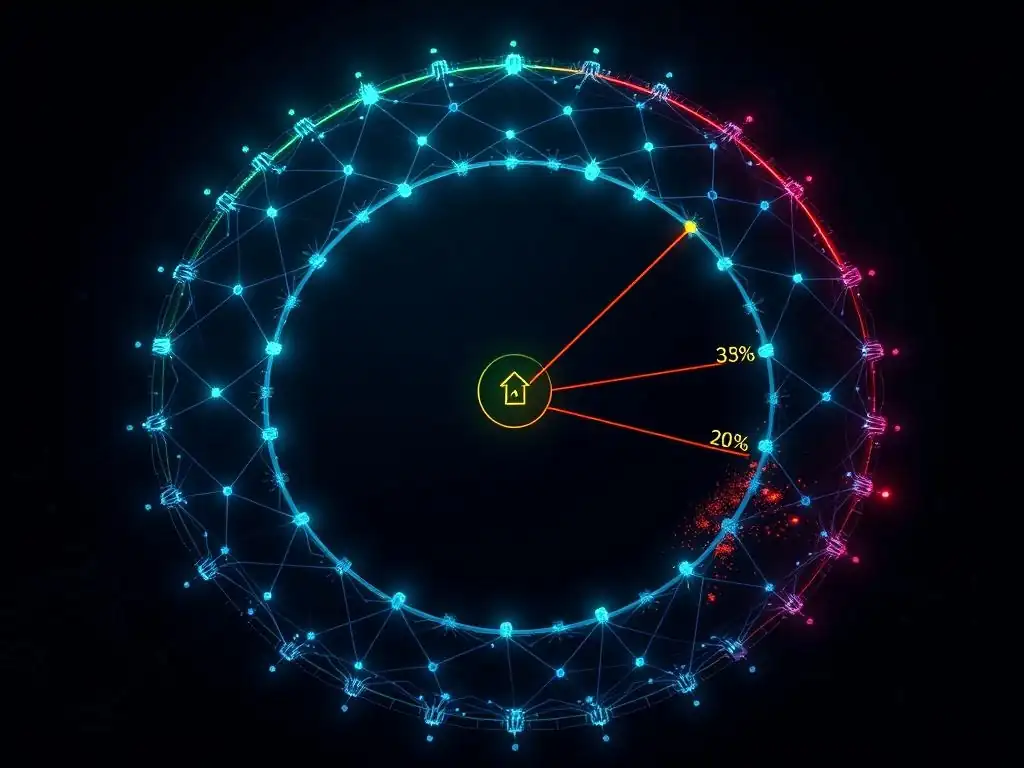
Blockchain token supply inflation fundamentally affects a cryptocurrency's price and market capitalization through the principle of supply and demand. When the supply of a token increases, each existing token represents a smaller percentage of the total network value. If demand remains constant, this increase in supply typically puts downward pressure on the price per token. For example, if a network issues 10% more tokens in a year, and the total value of the network remains the same, the value per token should theoretically decrease by roughly 10% due to dilution.
Market capitalization, calculated as Price per Token × Circulating Supply, is also directly impacted. While inflation increases the circulating supply, the effect on market cap depends on how the price reacts. If the price falls proportionally to the supply increase, the market cap might remain stable.
However, if demand is strong enough to absorb the new supply without a significant price drop, the market cap can increase. Conversely, if high inflation leads to strong selling pressure, the price drop might outweigh the supply increase, potentially causing the market cap to decline. Understanding the rate of blockchain token supply inflation is therefore essential for assessing the potential for price appreciation or depreciation.
The Relationship Between Cryptocurrency Burn and Price Appreciation
Token burning creates deflationary pressure by permanently removing tokens from the circulating supply. This reduction in supply, assuming demand remains constant or increases, tends to increase the scarcity of the remaining tokens, which can lead to price appreciation. When a project announces or executes a significant token burn, it signals a commitment to reducing supply, which can positively influence market sentiment and investor expectations regarding future value.
The effectiveness of a token burn in driving price appreciation depends on several factors: the amount of tokens burned relative to the total supply, the frequency of burns, the transparency of the burning process, and overall market conditions. A large, unexpected burn is likely to have a more immediate and significant impact than small, scheduled burns that the market has already priced in. Projects that link burns to revenue or network activity provide a clear mechanism by which ecosystem growth directly benefits token holders through increased scarcity.
Evaluating Cryptocurrency Supply as Part of Due Diligence
Thorough due diligence for any cryptocurrency investment must include a detailed evaluation of its supply dynamics. Investors should examine the total supply, circulating supply, and the projected emission schedule to understand the potential for future blockchain token supply inflation. Key questions to ask include: Is there a maximum supply cap? If so, when will it be reached? What are the mechanisms for new token creation (mining rewards, staking rewards, treasury releases)? What is the current inflation rate, and how is it projected to change over time?
Furthermore, investors should investigate any deflationary mechanisms, such as token burns. How are burns triggered? How many tokens have been burned to date, and what is the projected burn rate? Is the burn mechanism sustainable and significant enough to counteract inflation or create meaningful scarcity? Understanding these dynamics provides crucial context for evaluating the long-term value potential of a token, helping investors determine if the supply side presents a tailwind or a headwind for price growth.
Real-World Examples of Cryptocurrency Supply Strategies
Case Study: Analyzing an Inflationary Cryptocurrency (e.g., Ethereum)
Ethereum (ETH), particularly in its Proof-of-Work era, served as a prominent example of an inflationary cryptocurrency. Under PoW, miners received a block reward (initially 5 ETH per block, later reduced to 3 ETH, then 2 ETH) plus transaction fees, constantly introducing new ETH into circulation. While there was no hard cap on the total supply, the inflation rate was a known factor influencing its tokenomics. This inflation was necessary to incentivize miners to secure the network.
Post-Merge, Ethereum transitioned to Proof-of-Stake, replacing mining rewards with staking rewards. This dramatically altered the inflation profile. Staking rewards are significantly lower than the previous mining rewards.
Additionally, EIP-1559 introduced a mechanism where a portion of transaction fees (the base fee) is burned. This combination of lower issuance and fee burning has led to scenarios where Ethereum's supply can actually become deflationary during periods of high network activity, meaning more ETH is burned than issued. This case demonstrates how a network's fundamental consensus mechanism change can profoundly shift its supply dynamics from inflationary towards potentially deflationary states, directly impacting the outlook on blockchain token supply inflation for ETH.
Case Study: Examining a Deflationary Cryptocurrency with High Burn Rate (e.g., Binance Coin - BNB)
Binance Coin (BNB) is a well-known example of a token employing strong deflationary mechanisms through a consistent token burn program. Binance, the company behind BNB, historically committed to burning BNB every quarter based on its trading volume and profitability. This mechanism was designed to reduce the total supply of BNB from an initial 200 million to 100 million. More recently, Binance transitioned to an Auto-Burn mechanism, which adjusts the amount of BNB to be burned based on BNB's price and the number of blocks generated on the BNB Chain during the quarter, providing more transparency and predictability.
In addition to the Auto-Burn, BNB Chain also implements a real-time burn mechanism based on gas fees. A fixed ratio of gas fees collected by validators on the BNB Chain is burned in each block. These combined burn mechanisms create continuous deflationary pressure on the BNB supply. While new BNB is occasionally minted (e.g., for staking rewards on the BNB Beacon Chain), the significant and ongoing burns aim to reduce the net circulating supply over time, illustrating how business success and network activity can be directly tied to token scarcity and potential value appreciation.
Lessons Learned from Different Tokenomic Approaches
Analyzing diverse tokenomic models like Ethereum's evolving supply or BNB's consistent burn strategy offers valuable lessons. One key takeaway is that there is no single "best" model; the effectiveness of inflationary or deflationary approaches depends on the project's goals, technology, and ecosystem. Inflation can be necessary for bootstrapping security and distribution, while deflation can be effective for value accrual tied to utility or business success.
Another lesson is the importance of transparency and predictability. Investors benefit from clear information about emission schedules, burn mechanisms, and governance processes that can influence supply. Projects that clearly communicate their tokenomics and execute their stated supply management strategies build trust within their community. Finally, the case of Ethereum highlights that tokenomics are not static; they can evolve over time, sometimes dramatically, in response to technological upgrades, network growth, or community governance decisions.
Risks and Challenges Associated with Cryptocurrency Supply Manipulation
The Dangers of Excessive Inflation or Deflation
Both excessive inflation and overly aggressive deflation pose significant risks to a cryptocurrency ecosystem. Hyperinflation, where the supply increases rapidly and uncontrollably, can quickly destroy the value of a token, rendering it useless as a store of value or medium of exchange. This can happen if emission rates are set too high, or if there are unforeseen bugs or exploits that allow for unauthorized token minting. High blockchain token supply inflation can lead to a death spiral where holders panic sell, further driving down the price and exacerbating the inflation's negative impact.
On the other hand, excessive deflation can also be detrimental. If tokens are burned too quickly or if the total supply becomes extremely low, the token's price might become prohibitively high. This can make it difficult or expensive for users to acquire tokens for utility purposes (like paying transaction fees or participating in DeFi protocols), potentially hindering adoption and usage of the network. Extreme scarcity might also concentrate ownership among a few holders, increasing centralization risks.
Avoiding Cryptocurrency Supply "Pump and Dump" Schemes
Cryptocurrency supply dynamics can sometimes be exploited in "pump and dump" schemes. These scams involve inflating the price of a low-liquidity token through misleading promotions and artificial buying pressure, often highlighting features like a planned token burn or a low circulating supply to create a false sense of scarcity and impending price surges. Once the price is artificially inflated, the perpetrators sell their holdings, causing the price to crash, leaving other investors with significant losses.
Savvy investors must be wary of projects that overly emphasize future token burns or low initial circulating supply without demonstrating real utility, adoption, or a sustainable business model. Due diligence should extend beyond just the supply numbers to assess the legitimacy of the project, the experience of the team, and the genuine demand for the token's underlying use case. Transparency around token distribution, vesting schedules, and burn mechanisms is a key indicator of a project's legitimacy versus potential manipulation.
Transparency and Accountability in Tokenomics
Transparency and accountability are crucial for building trust in a cryptocurrency's tokenomics, especially concerning supply management. Projects should clearly document their token distribution, emission schedule, and any burning mechanisms in their whitepaper and public documentation. Information about the total supply, circulating supply, and tokens held in treasuries or reserve wallets should be easily accessible, often verifiable on the blockchain itself.
For mechanisms like token burns, the process should be transparent. Projects should provide transaction hashes or public addresses where burns occur, allowing anyone to verify that tokens have been removed from circulation. If supply adjustments are subject to governance, the process should be open and well-documented, with clear records of proposals and voting outcomes. Accountability involves the project team or foundation adhering to the stated tokenomics and governance rules, and being responsive to community concerns regarding supply dynamics. This level of openness helps mitigate risks of manipulation and builds long-term confidence among investors and users.
Future Trends in Cryptocurrency Supply Management
The Rise of Dynamic Tokenomics Models
The field of tokenomics is continuously evolving, with a growing trend towards more dynamic and adaptive supply models. Instead of fixed emission schedules or rigid burn rates, future tokenomics may incorporate mechanisms that automatically adjust supply based on real-time network conditions. For instance, staking rewards or burn rates could fluctuate based on network usage, transaction volume, or even external economic indicators.
These dynamic models aim to create more resilient and responsive ecosystems. By automatically adjusting supply based on demand or activity, protocols can better manage volatility, ensure network security during periods of high usage, and potentially optimize value accrual for token holders under varying conditions. Developing and implementing these complex dynamic models requires sophisticated protocol design and careful testing to avoid unintended consequences.
Integration of AI in Supply Optimization
Looking further ahead, the integration of Artificial Intelligence (AI) could play a role in optimizing cryptocurrency supply management. AI algorithms could potentially analyze vast amounts of data related to network activity, user behavior, market sentiment, and macroeconomic factors to predict optimal parameters for token issuance or burning. For example, an AI could recommend adjustments to staking reward rates to maintain a desired level of network security based on predicted future participation, or suggest an optimal burning rate based on forecasted transaction volume to target a specific deflationary target.
- AI could analyze historical data on network usage and token burns to predict future supply changes.
- Machine learning models might optimize staking reward distribution to encourage desired validator behavior.
- AI could help identify potential vulnerabilities or manipulation attempts in supply mechanisms by detecting anomalies.
While still largely theoretical for core supply mechanisms, AI's potential to analyze complex systems and make data-driven recommendations could lead to more sophisticated and potentially more stable tokenomic designs in the future.
The Impact of Regulation on Supply Mechanisms
Regulatory developments are increasingly influencing how cryptocurrency supply is managed, particularly concerning initial token distribution (ICOs) and ongoing token emissions. Regulatory bodies globally are scrutinizing token sales and the nature of tokens themselves, often classifying them as securities if they meet certain criteria. This can impose restrictions on how tokens are marketed, distributed, and potentially affect the design of emission schedules and vesting periods.
Future regulations might also impact mechanisms like token burns, especially if they are deemed to affect market price in ways considered manipulative or if they relate to revenue generation that could be seen as dividend-like distributions. Clarity on how regulators view different supply mechanisms will be crucial for projects designing future tokenomics. Compliance considerations will likely become an even more prominent factor in determining the structure and management of cryptocurrency supply, potentially influencing the prevalence of certain inflationary or deflationary models.
Conclusion: Mastering Cryptocurrency Supply Dynamics for Informed Investing
Key Takeaways on Inflation, Deflation, and Cryptocurrency Burning
Understanding cryptocurrency supply dynamics is fundamental to navigating the complex world of blockchain investments. Key takeaways include recognizing that blockchain token supply inflation, similar to fiat inflation, can dilute the value of existing tokens if not balanced by demand growth. Mechanisms like block rewards or staking rewards are primary drivers of inflation in many protocols. Conversely, deflationary models aim to reduce supply, often through token burns, to increase scarcity and potentially drive value appreciation.
Token burn strategies, such as scheduled burns, transaction fee burns, and buy-back and burn programs, are specific methods projects use to implement deflation. Each approach has different implications for predictability and the link between network activity/business success and supply reduction. Evaluating a token's supply schedule, inflation rate, and burn mechanisms is a critical part of due diligence, providing insight into the long-term potential and risks associated with the investment.
The Future of Tokenomics in the Cryptocurrency Ecosystem
The field of tokenomics is not static; it is a continuously evolving area of research and implementation within the cryptocurrency ecosystem. We are seeing a shift towards more dynamic models that react to real-time network conditions and potentially incorporate advanced technologies like AI for optimization. Regulatory clarity will also play a significant role in shaping future tokenomic designs, adding a layer of compliance considerations to technical and economic factors.
For investors, staying informed about these evolving supply management strategies is crucial. Mastering the concepts of inflation, deflation, and token burning, and understanding how they are implemented and governed within specific projects, provides a significant advantage. This knowledge empowers investors to look beyond short-term price movements and evaluate the long-term sustainability and value proposition of a cryptocurrency based on its fundamental supply dynamics, making informed decisions in the ever-changing blockchain landscape.
Frequently Asked Questions
What is blockchain token supply inflation, and why is it important?
Blockchain token supply inflation refers to the increase in the total number of tokens in circulation. Understanding this is crucial because it directly impacts the value and scarcity of the token. High inflation can devalue existing holdings.
How does token supply inflation affect the value of a token?
Generally, an increased token supply can lead to a decrease in the token's value, assuming demand remains constant. This is because a larger supply means each token represents a smaller fraction of the overall network or asset.
What are some common mechanisms that cause blockchain token supply inflation?
Staking rewards and mining rewards are primary drivers. These mechanisms incentivize participation in the network by issuing new tokens to users who contribute resources or validate transactions.
What is the difference between token supply inflation and token burning?
Token supply inflation increases the total number of tokens, while token burning permanently removes tokens from circulation, decreasing the total supply. They are essentially opposite mechanisms.
How do blockchain token supply inflation rates impact the overall DeFi ecosystem?
High inflation rates can incentivize short-term speculation and discourage long-term holding in DeFi. Conversely, controlled inflation can fund development and incentivize network growth while maintaining some stability.
The intricacies of token supply dynamics, as explored throughout this article, are not merely academic exercises; they are the very heartbeat of the decentralized financial revolution. Understanding inflation, deflation, and token burn mechanisms is no longer optional for participants in the blockchain ecosystem, but rather a fundamental requirement for informed decision-making and responsible participation in this rapidly evolving landscape. The future of decentralized finance hinges on our collective comprehension of these forces.
The ongoing influence of tokenomics on the cultural and social landscape is undeniable. The power to control and understand monetary policy, once held exclusively by central banks, is now being democratized and distributed to individuals. This shift empowers users but also demands a higher level of financial literacy and responsibility. Give me control of a nation's money supply, and I care not who makes its laws.
- Mayer Amschel Rothschild. This quote, though from a different era, resonates deeply with the implications of blockchain token supply inflation and the power it bestows upon token creators and holders.
As you navigate the complexities of the blockchain world, remember that knowledge is your most valuable asset. Take the insights gained from this exploration of token supply dynamics and apply them to your own investments and interactions within the decentralized ecosystem. Question the tokenomics of projects you support, understand the potential for inflation or deflation, and actively participate in shaping a more transparent and equitable financial future. The power to build a better financial system lies within your grasp.
Unearth Your Token Strategy!
Thank you for exploring the fascinating world of token supply dynamics! Now that you understand the nuances of inflation, deflation, and token burns, it's time to apply this knowledge and discover the opportunities within the blockchain ecosystem.
Here's how you can take the next step:
- Dive Deep: Research a specific cryptocurrency's tokenomics model, focusing on its inflation and deflation schedule and burn mechanisms. Analyze how these factors influence its long-term value.
- Explore: Review projects within decentralized autonomous organizations. Understand how they utilize token burns to manage treasuries and shape governance.
- Share: Discuss your insights with other investors. Write a post on LinkedIn or Twitter about an innovative approach you've learned regarding token strategies.
What innovative token burning mechanism have you found most intriguing, and how do you think it contributes to the long-term sustainability of projects? Share your thoughts in the comments!
Leave a Reply