
Tokenomics and Governance Tokens: Empowering Decentralized Communities

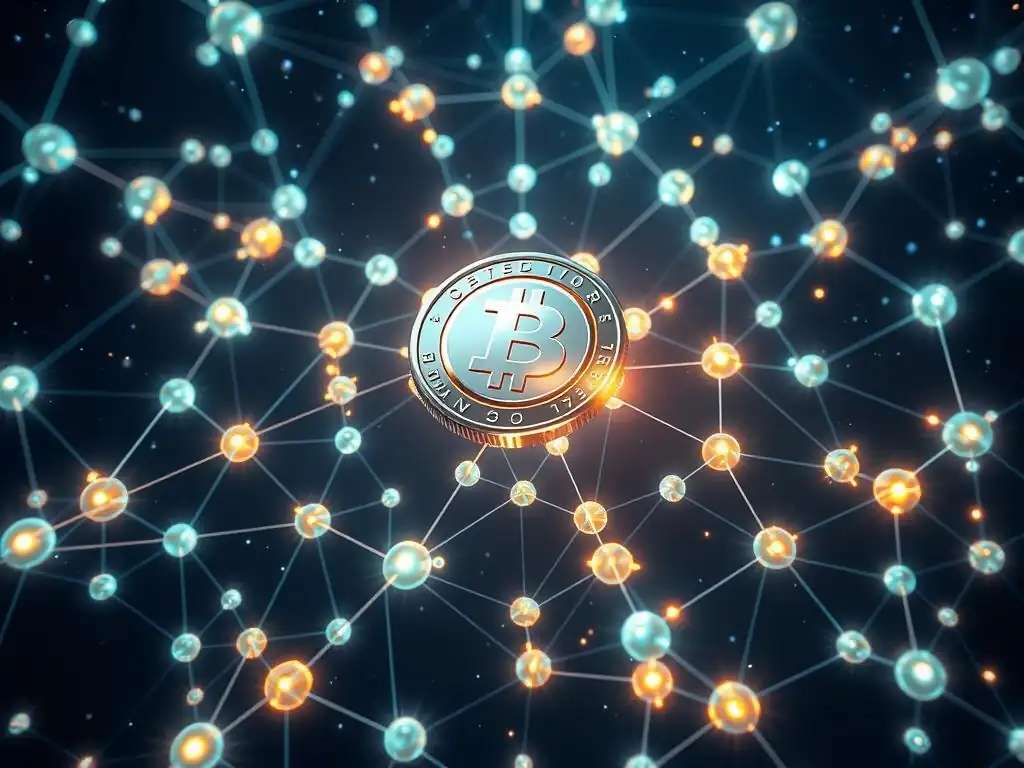
Welcome to Blockchain Trends, your compass navigating the ever-evolving landscape of decentralized innovation!
Beyond the hype surrounding cryptocurrencies, blockchain is quietly revolutionizing industries and reshaping governance structures. Intrigued by the power of Decentralized Community Governance Tokens? Dive into our latest article to discover how these digital assets are empowering communities and transforming the future of ownership. Discover the potential, understand the risks, and explore the future of truly decentralized systems. Read on and unlock the secrets of tokenomics!
Tokenomics and Governance Tokens: Empowering Decentralized Communities
- Understanding Decentralized Community Governance Tokens and Tokenomics
- Exploring the Core Principles of Tokenomics for Community Tokens
- The Power of Governance Tokens: Shaping Decentralized Futures
- Analyzing Different Governance Token Models and Their Impact
- Benefits of Decentralized Community Governance with Tokens
- Challenges and Considerations for Governance Token Design
- Case Studies: Successful (and Unsuccessful) Implementations of Governance Tokens
- The Future of Decentralized Community Governance Tokens
- Investing in Decentralized Governance Tokens: Key Considerations
-
Frequently Asked Questions
- What are Decentralized Community Governance Tokens?
- How do Tokenomics principles relate to Decentralized Community Governance Tokens?
- Beyond cryptocurrencies, where else can Decentralized Community Governance Tokens be applied?
- What are the potential benefits of using Decentralized Community Governance Tokens?
- What are the key regulatory challenges surrounding Decentralized Community Governance Tokens?
- Final Reflection: The Enduring Power of Decentralized Governance
- Unleash Your Inner DAO Architect!
Understanding Decentralized Community Governance Tokens and Tokenomics
Defining Decentralized Community Governance Tokens: A Deep Dive
Decentralized community governance tokens are a fundamental building block of decentralized autonomous organizations (DAOs) and other blockchain-based protocols aiming for community control. Unlike simple utility tokens used for accessing services or security tokens representing ownership in a traditional sense, these tokens specifically grant holders rights and influence over the future direction and operations of a decentralized project. Holding these tokens typically translates into voting power on various proposals, ranging from protocol upgrades and parameter changes to treasury allocation and strategic decisions. They embody the principle of distributed ownership and decision-making, moving power away from centralized entities.
The core function of a decentralized community governance token is to enable a meritocratic or at least distributed system of control where influence is proportional to stake or participation. Projects issue these tokens to their community members, contributors, and sometimes even users, empowering them to become active participants rather than passive consumers. This mechanism is crucial for fostering a sense of ownership and alignment between the project's development team and its user base, aiming to create a truly decentralized ecosystem where the community's voice is paramount in shaping its evolution and ensuring its long-term sustainability.
The Role of Tokenomics in Decentralized Governance
Tokenomics, the economics of tokens, plays a critical role in the effectiveness and health of decentralized community governance. It encompasses all aspects related to a token's creation, distribution, supply management, utility, and incentive mechanisms. For decentralized community governance tokens, well-designed tokenomics are essential to encourage active and informed participation, prevent undue concentration of power, and align the interests of token holders with the long-term success of the protocol or DAO they govern. Poor tokenomics can lead to issues like voter apathy, governance capture by large holders (whales), or insufficient incentives for community contribution.
Effective tokenomics for decentralized community governance tokens must consider factors like initial distribution fairness, vesting schedules for team and investors, mechanisms to reward active participation (like staking or voting rewards), and supply dynamics (inflationary or deflationary models). For instance, a token design that concentrates too much supply in the hands of a few early investors or the core team might undermine the decentralized nature of governance from the outset.
Conversely, a design that widely distributes tokens and incentivizes long-term holding and active voting can foster a more robust and truly decentralized community governance structure, ensuring decisions reflect a broader consensus.
Exploring the Core Principles of Tokenomics for Community Tokens
Token Supply: Managing Scarcity and Inflation in Decentralized Systems
The total supply and the rate at which new tokens are introduced (or existing ones removed) are crucial elements of tokenomics for decentralized community governance tokens. A fixed supply, similar to Bitcoin's 21 million limit, can create scarcity, potentially increasing token value over time if demand grows. This model can align token holders' interests with the network's growth, as their share of the fixed supply becomes more valuable. However, a fixed supply might not provide flexibility for ongoing incentives or community grants.
Alternatively, some decentralized community governance tokens utilize an inflationary model, where new tokens are minted over time. This inflation can be used to reward stakers, fund development, or incentivize participation in governance. While inflation can dilute the value of existing tokens if not managed carefully, it provides a flexible mechanism for funding and incentivization. Some protocols also implement deflationary mechanisms, such as burning tokens from transaction fees or specific events, which can counteract inflation and add another layer to supply management, impacting both token value and governance dynamics.
Token Distribution: Fair Launch and Equitable Access to Governance
The method of initial token distribution is perhaps one of the most critical factors determining the fairness and decentralization of a project's governance. A "fair launch" model, where tokens are distributed widely through mechanisms like yield farming, airdrops to active users, or public sales accessible to many participants, aims to avoid concentration of power in the hands of a few large investors or insiders. Projects like Uniswap famously conducted a large airdrop of their UNI decentralized community governance tokens to past users, providing a broad base for initial governance participation.
In contrast, a distribution heavily skewed towards venture capitalists, private sale participants, or the core team can lead to significant voting power being concentrated early on. While vesting schedules (releasing tokens gradually over time) can mitigate this to some extent by preventing immediate dumping and encouraging long-term commitment, the initial allocation remains paramount. An equitable distribution is vital for ensuring that the decentralized community governance system is resistant to capture and truly reflects the will of a diverse group of stakeholders, not just a few dominant players.
Utility and Incentives: Driving Engagement and Participation
Beyond granting voting rights, effective tokenomics for decentralized community governance tokens incorporate utility and incentive mechanisms to encourage active engagement. Simply holding a token might grant voting power, but additional features like staking, yield farming opportunities, or fee-sharing can motivate users to acquire and hold tokens for longer periods. Staking, for example, often requires locking up tokens to secure a network or participate in consensus, and in return, stakers might receive rewards, often including more governance tokens, further aligning their incentives with the protocol's success and governance.
These incentives are crucial for combating voter apathy, a common challenge in decentralized governance. If token holders receive rewards for staking or actively participating in voting, they are more likely to stay informed and contribute to governance decisions. Furthermore, some protocols allow decentralized community governance tokens to be used for paying transaction fees, accessing premium features, or participating in specific network functions, adding layers of utility that enhance demand and reinforce the token's role within the ecosystem.
The Power of Governance Tokens: Shaping Decentralized Futures
Voting Rights and Proposal Mechanisms: How Tokens Influence Decisions
The primary power bestowed by decentralized community governance tokens is the right to vote on proposals that shape the future of the protocol or DAO. Typically, voting power is proportional to the number of tokens held – one token, one vote (or sometimes weighted voting). Proposals can cover a vast range of topics, from technical upgrades and security fixes to changes in fee structures, marketing initiatives, and parameter adjustments within a decentralized finance (DeFi) protocol. For example, holders of COMP, the decentralized community governance token for Compound, vote on proposals to adjust interest rate models or listing new assets.
Governance platforms often facilitate this process, allowing token holders to submit, discuss, and vote on proposals. These platforms might be on-chain, where votes are recorded directly on the blockchain, or off-chain (like Snapshot), where voting occurs cryptographically signed but doesn't require gas fees, with results often executed later on-chain. Quorum requirements (a minimum percentage of total voting power needed to participate) and approval thresholds (a minimum percentage of votes needed for a proposal to pass) are common features designed to ensure that decisions represent a significant portion of the community and prevent low-turnout votes from making critical changes.
Staking and Rewards: Incentivizing Long-Term Commitment
Many decentralized community governance tokens can be staked, a process where token holders lock their assets in a smart contract to support network operations (in Proof-of-Stake systems) or simply signal long-term commitment. Staking often comes with rewards, which can be a percentage yield paid out in the native token or sometimes other assets.
This mechanism serves multiple purposes: it reduces the circulating supply, potentially increasing scarcity; it aligns the interests of stakers with the protocol's health; and it provides an incentive for token holders to retain their tokens rather than selling them, fostering a more stable and engaged governance base.
Beyond network security, staking is frequently tied directly to governance participation. In many DAOs, staking your decentralized community governance tokens is a prerequisite for submitting proposals or voting. The rewards earned from staking compensate holders for the opportunity cost of locking their assets and the effort involved in staying informed about governance matters. This integration of staking and governance voting creates a powerful loop where contributing to the protocol's security or stability is directly linked to gaining influence over its future direction.
Community-Driven Development: Empowering Users to Shape the Project
Decentralized community governance tokens fundamentally shift the paradigm of project development from a centralized team dictating direction to a model where the community holds significant sway. Through the proposal and voting process enabled by these tokens, users and token holders can directly influence the development roadmap, propose new features, suggest improvements, and even vote on funding for specific development initiatives from a community treasury. This empowers the user base, transforming them from passive consumers into active co-creators and stakeholders.
This community-driven approach fosters innovation and resilience. Users who are deeply embedded in the ecosystem often have valuable insights into needed features or potential issues. By giving them a formal mechanism to propose and vote on changes using their decentralized community governance tokens, projects can tap into this collective intelligence. While core teams often retain influence or specialized roles, the ultimate authority over major protocol changes or strategic pivots rests with the token holders, making the project more adaptable and responsive to the needs of its actual users.
Analyzing Different Governance Token Models and Their Impact
DAO Governance: Token-Based Voting in Decentralized Autonomous Organizations
Decentralized Autonomous Organizations (DAOs) are perhaps the most prominent implementation of token-based governance. In a DAO, rules are encoded in smart contracts, and decisions are made by token holders voting on proposals. The decentralized community governance token serves as the membership stake and voting share in the organization. Examples include protocol DAOs governing DeFi applications, investment DAOs pooling capital for collective investment decisions, or social DAOs focused on community building and shared goals. The effectiveness of a DAO heavily relies on its tokenomics and the active participation of its token holders.
The impact of token-based voting in DAOs is profound, enabling distributed control over significant assets and complex operations. For instance, MakerDAO, which governs the Dai stablecoin, uses its MKR decentralized community governance token to allow holders to vote on critical parameters like Stability Fees (interest rates for borrowing Dai against collateral) and debt ceilings. This allows the protocol to react to market conditions based on community consensus, rather than a single entity. However, challenges like low voter turnout or the influence of large token holders remain active areas of research and development within the DAO space.
Protocol Governance: Upgrading and Modifying Blockchain Protocols
Beyond application-level DAOs, decentralized community governance tokens are also used to govern the underlying blockchain protocols themselves, particularly in Proof-of-Stake networks or layer 2 scaling solutions. Holders of these protocol-level decentralized community governance tokens can often vote on significant protocol upgrades, changes to consensus mechanisms, adjustments to transaction fees, or the allocation of block rewards. This ensures that the evolution of the core infrastructure is guided by its users and stakeholders, not just the core development team.
A well-known example, though not purely token-based in the same way as a DAO token, is the governance process in some blockchain networks where stake (often represented by the native token) is used to vote on protocol-level changes or elect validators who then participate in governance. The principle is the same: distributing control over the protocol's future. This form of decentralized community governance is critical for maintaining the decentralized nature of the network itself, making it resistant to censorship and ensuring that upgrades serve the broader community's interests.
Community Treasury Management: Allocating Resources Based on Token Holder Input
Many DAOs and decentralized protocols accumulate significant treasuries, often funded by protocol fees, token inflation, or initial token allocations. Managing these treasuries is a key function of decentralized community governance. Token holders use their decentralized community governance tokens to vote on proposals detailing how these funds should be allocated. This could include funding grants for developers building on the protocol, paying for marketing campaigns, investing in ecosystem development, or even buying back and burning tokens.
This direct control over financial resources is a powerful demonstration of decentralized community governance in action. It allows the community to prioritize initiatives they deem most valuable for the protocol's growth and sustainability. For example, the Uniswap DAO treasury holds a substantial amount of UNI tokens and other assets, and token holders regularly vote on proposals ranging from funding specific development teams to setting up educational programs. This ensures that a significant pool of resources is managed transparently and democratically by the community it is intended to benefit.
Benefits of Decentralized Community Governance with Tokens

Increased Transparency and Accountability
One of the primary benefits of using decentralized community governance tokens is the inherent transparency they bring to decision-making. All proposals, votes, and the resulting outcomes are typically recorded on a public blockchain or a transparent governance platform like Snapshot. Anyone can view who submitted a proposal, who voted for or against it, and the final result. This level of transparency is a stark contrast to the opaque decision-making processes often found in traditional corporations or centralized organizations.
Furthermore, this transparency fosters accountability. With votes publicly recorded, token holders are accountable for their decisions (especially large holders), and the governance process itself is open to scrutiny. This makes it harder for malicious actors or special interests to manipulate the system unnoticed. The public record of governance activities builds trust within the community and provides a clear audit trail for how the protocol evolves and how treasury funds are managed through the use of decentralized community governance tokens.
Enhanced Community Engagement and Participation
Decentralized community governance tokens are designed to incentivize and enable community engagement. By giving users and stakeholders a direct voice and influence over the project's direction, they transform passive users into active participants. This sense of ownership encourages community members to contribute not just through voting but also by participating in discussions, proposing ideas, and even contributing code or content.
The potential for earning rewards through staking or active participation further enhances engagement. When community members feel their contributions matter and are valued, they are more likely to invest their time and effort into the ecosystem. This enhanced engagement leads to a more vibrant, resilient, and innovative community that is deeply invested in the long-term success of the project governed by its decentralized community governance tokens.
Resistance to Centralized Control and Censorship
The distribution of decision-making power among numerous token holders makes projects governed by decentralized community governance tokens inherently resistant to centralized control and censorship. Unlike traditional systems where a single company, government, or small group of executives can make unilateral decisions or be pressured to censor certain activities, a decentralized system requires reaching a consensus among a distributed set of token holders.
This distributed control makes it significantly harder for any single entity to seize control, shut down the protocol, or censor transactions or features. While challenges like 'whale' influence exist, the fundamental structure of requiring broad consensus via token voting provides a strong defense against external pressure and internal power grabs. This resilience is a core promise of blockchain technology and is particularly potent when applied to governance through decentralized community governance tokens.
Challenges and Considerations for Governance Token Design
Voter Apathy and Low Participation Rates
Despite the mechanisms designed to encourage participation, a significant challenge for many decentralized community governance systems is voter apathy. Many token holders, particularly smaller ones, may not have the time, knowledge, or inclination to stay informed about complex proposals and participate in every vote. This can lead to low voter turnout, potentially allowing a small percentage of token holders (or even large individual holders) to disproportionately influence outcomes.
Addressing voter apathy requires thoughtful design. Simplifying the voting process, providing clear and concise information about proposals, using off-chain voting tools (like Snapshot) that don't incur transaction fees, and implementing delegation mechanisms (allowing token holders to delegate their voting power to a trusted representative) are some strategies employed to increase participation in decentralized community governance.
Whale Influence and Governance Capture
A persistent concern in token-based governance is the potential for 'whales' – individuals or entities holding a large percentage of the total token supply – to dominate voting outcomes. If a small number of whales control a majority of the voting power, they could theoretically collude to pass proposals that benefit themselves at the expense of the broader community, a phenomenon known as governance capture.
While perfectly equal distribution is often impossible, tokenomics design can mitigate whale influence. Mechanisms like quadratic voting (where the cost of additional votes increases quadratically, making it more expensive for large holders to exert overwhelming influence) or limiting the maximum voting power of any single address are being explored. Diversifying token distribution during the initial launch and encouraging broad community participation through strong incentives for smaller holders are also crucial steps in building a robust decentralized community governance model resistant to capture.
Regulatory Uncertainty and Legal Compliance
The legal and regulatory status of decentralized community governance tokens and DAOs remains ambiguous in many jurisdictions. Questions about whether these tokens constitute securities, the legal liability of token holders or core contributors, and how DAOs should be treated legally (e.g., as partnerships, corporations, or entirely new entities) create significant uncertainty. This lack of clarity can hinder adoption and development.
Projects issuing decentralized community governance tokens must navigate this complex and evolving landscape carefully. While the decentralized nature aims to avoid traditional legal structures, real-world interactions, such as managing a treasury or interacting with traditional finance, often require engagement with existing legal frameworks. Future developments in regulation will significantly impact the design and operation of decentralized community governance systems.
Case Studies: Successful (and Unsuccessful) Implementations of Governance Tokens
MakerDAO: Stability Fee Adjustments and Governance of the Dai Stablecoin
MakerDAO stands as a pioneering example of successful decentralized community governance using its MKR token. MKR holders govern the Maker Protocol, which issues the decentralized stablecoin Dai. Key governance decisions include adjusting the Stability Fee (the interest rate users pay to borrow Dai against collateral), modifying accepted collateral types and their risk parameters, and managing the protocol's debt and surplus buffers.
Since its inception, MKR holders have actively participated in numerous votes to steer the protocol through various market conditions, including the significant volatility event in March 2020. While participation rates have varied, the mechanism has allowed the protocol to adapt and maintain the stability of Dai through collective decision-making, demonstrating the power of decentralized community governance tokens in managing a complex financial system. As of late 2023, MakerDAO's treasury management and strategic initiatives continue to be subjects of active MKR holder voting.
Compound: Protocol Upgrades and Parameter Adjustments via Token Voting
Compound, a leading DeFi lending protocol, utilizes its COMP decentralized community governance token to allow users and token holders to govern the protocol's parameters and upgrades. COMP holders can propose and vote on changes such as adding support for new assets, adjusting collateral factors, or modifying interest rate models. The governance process is entirely on-chain, requiring COMP tokens to submit proposals and vote.
Compound's governance has successfully managed significant changes to the protocol, including the addition of new markets and adjustments to risk parameters in response to market events. While facing challenges common to token-based governance, such as varying levels of participation, the system has proven effective in allowing the community to collectively steer the protocol's evolution, highlighting the practical application of decentralized community governance tokens in the DeFi space.
Yam Finance: Rebase Mechanism Failure and Governance Restructuring
Yam Finance provides a cautionary tale regarding the complexities and potential pitfalls in designing and implementing decentralized community governance. Launched in August 2020, Yam Finance featured an elastic supply token (YAM) and aimed for community governance from the start. However, a critical bug was discovered shortly after launch in the smart contract governing its rebase mechanism (which adjusts token supply).
Despite efforts by the community using the YAM decentralized community governance tokens to vote on a fix and delegate power, insufficient voting power was delegated in time to execute the necessary transaction before the bug rendered the governance module inoperable. This incident highlighted the importance of thorough smart contract audits, robust emergency mechanisms, and ensuring sufficient early engagement and understanding within the community to enable timely decentralized community governance actions. The project subsequently relaunched with a more audited and resilient structure.
The Future of Decentralized Community Governance Tokens
Trends in Tokenomics and Governance Design
The field of decentralized community governance tokens and their associated tokenomics is rapidly evolving. Future trends are likely to focus on improving participation, mitigating whale influence, and enhancing the efficiency of decision-making. This includes exploring alternative voting mechanisms beyond simple one-token-one-vote, such as quadratic voting, conviction voting (where vote strength increases the longer a token holder holds their vote), and liquid democracy (delegation of voting power).
Furthermore, we can expect more sophisticated incentive structures to encourage informed and active participation. This might involve reputation systems, rewarding users for quality contributions to governance discussions, or tying rewards more directly to the successful implementation of voted-on proposals. The integration of identity solutions, while respecting privacy, could also play a role in preventing sybil attacks and fostering more meaningful participation in decentralized community governance.
The Evolution of DAO Structures and Voting Mechanisms
DAOs themselves are becoming more sophisticated and diverse in their structures. We are seeing the emergence of meta-governance (where one DAO participates in the governance of another protocol), nested DAOs (sub-DAOs focused on specific functions), and frameworks designed to make DAO creation and management more accessible. Future evolution will likely involve exploring legal wrappers for DAOs to interact more safely with the traditional legal system and developing more user-friendly interfaces for participation.
Voting mechanisms will also continue to evolve, driven by lessons learned from current implementations. Research into areas like secure off-chain voting that is verifiable, gas-efficient voting strategies, and methods to ensure minority voices are heard will shape the next generation of decentralized community governance systems. The goal is to create governance systems that are not only decentralized and resistant to capture but also efficient, scalable, and truly representative of the community's will.
The Impact of Governance Tokens on the Broader Blockchain Ecosystem
Decentralized community governance tokens are poised to have an even greater impact on the broader blockchain ecosystem. As more protocols, platforms, and even real-world assets become tokenized and integrated into decentralized networks, the need for robust and decentralized governance mechanisms will grow. Governance tokens will likely play a central role in managing interoperability between different blockchains, governing cross-chain bridges, and determining standards for decentralized identity and data management.
The success of decentralized community governance models could also influence traditional organizational structures, offering a blueprint for more transparent, participatory, and resilient forms of collective action. As the technology matures and regulatory clarity improves, decentralized community governance tokens could become a standard feature for any project aiming for true decentralization and community ownership.
Investing in Decentralized Governance Tokens: Key Considerations
Evaluating Tokenomics and Governance Models
When considering an investment in decentralized community governance tokens, a thorough evaluation of the project's tokenomics and governance model is paramount. Look beyond just the market cap and price. Analyze the total supply and distribution schedule: Is the initial distribution fair? Are there significant unlocks for the team or investors in the near future? Understand the utility of the token beyond voting: Are there staking rewards, fee discounts, or other benefits that incentivize holding and participation?
Crucially, examine the governance structure itself. How are proposals submitted? What are the quorum and approval thresholds? Is the voting process accessible and affordable (e.g., off-chain voting)? Investigate how the project plans to address potential issues like voter apathy or whale influence. A well-designed governance model indicates a project committed to long-term decentralization and community health, which is vital for the sustainability and potential value of its decentralized community governance tokens.
Assessing Community Engagement and Participation
A strong decentralized community governance system relies on active and engaged token holders. Before investing, assess the health and activity of the project's community. Look at participation rates in past governance votes: Are quorums consistently met? Is there active discussion and debate on proposals in forums or social channels? A vibrant community that actively participates in governance is a positive sign, indicating a committed user base that cares about the project's future.
Consider the project's efforts to educate and involve its community in governance. Are proposals clearly explained? Are there resources available for token holders to understand the issues? A project that invests in fostering informed participation is more likely to have effective decentralized community governance. Low participation or a lack of meaningful discussion can be red flags, suggesting potential challenges in achieving true decentralization.
Understanding the Risks and Potential Rewards
Investing in decentralized community governance tokens carries unique risks and potential rewards. The rewards can be significant if the underlying protocol or DAO is successful and adoption grows, potentially increasing the token's value and offering participation rewards (like staking yield). Furthermore, being a token holder allows you to participate in and potentially influence the growth and direction of innovative decentralized technologies.
However, the risks are also substantial. Governance tokens can be highly volatile, subject to market fluctuations and the specific performance of the protocol. There's the risk of governance attacks or capture if the system isn't robust. Regulatory uncertainty could negatively impact the project. Furthermore, if the community becomes inactive or makes poor governance decisions, it could harm the protocol's viability. Investors must understand that they are not just speculating on a price; they are buying a stake in a decentralized community governance system and potentially taking on responsibility for its future.
Frequently Asked Questions
What are Decentralized Community Governance Tokens?
Decentralized Community Governance Tokens are digital assets that grant holders the right to participate in the decision-making processes of a decentralized community or project. They empower users to influence the future direction of the platform.
How do Tokenomics principles relate to Decentralized Community Governance Tokens?
Tokenomics defines the economic model of a token, including its supply, distribution, and utility. Understanding tokenomics is crucial for assessing the long-term viability and governance effectiveness of decentralized communities using governance tokens.
Beyond cryptocurrencies, where else can Decentralized Community Governance Tokens be applied?
They can be applied in DeFi (Decentralized Finance) platforms for protocol upgrades, in DAOs (Decentralized Autonomous Organizations) for budget allocation, and even in enterprise settings for collaborative decision-making regarding specific projects or initiatives.
What are the potential benefits of using Decentralized Community Governance Tokens?
The main benefits include enhanced transparency, increased community engagement, and a more equitable distribution of power within the network. This can lead to more innovative and resilient decentralized systems.
What are the key regulatory challenges surrounding Decentralized Community Governance Tokens?
Regulatory challenges involve classifying these tokens as securities, determining liability for governance decisions, and ensuring compliance with existing financial regulations. Clearer regulatory frameworks are needed to foster responsible innovation in this space.
Final Reflection: The Enduring Power of Decentralized Governance
The exploration of tokenomics and governance tokens reveals a fundamental truth: the future of community building lies in empowering individuals. The shift towards decentralized community governance tokens isn't just a technological trend; it's a societal evolution, granting stakeholders genuine agency and shaping the direction of the communities they belong to. This newfound power, while complex, offers a compelling alternative to traditional hierarchical structures, promising more equitable and representative decision-making processes.
The impact of decentralized community governance tokens extends far beyond the digital realm, influencing how we perceive ownership, participation, and collective action. Witnessing the rise of these systems has been profoundly inspiring, highlighting the potential for individuals to directly shape the future of their communities. Never doubt that a small group of thoughtful, committed citizens can change the world; indeed, it's the only thing that ever has.
- Margaret Mead. This quote resonates deeply, reminding us that even seemingly small contributions within a decentralized framework can collectively drive significant change.
As we navigate this exciting new landscape, let us embrace the principles of transparency, inclusivity, and active participation. Consider how you can leverage the power of decentralized community governance tokens, not only within digital spaces but also in your local communities, to foster a more equitable and empowered future for all. The potential for positive change is immense; it's up to each of us to seize it.
Okay, here's a CTA for the end of a web article on "Tokenomics and Governance Tokens: Empowering Decentralized Communities," tailored for Blockchain Trends (blockchaintrends.org):
Unleash Your Inner DAO Architect!
Thanks for exploring the power of tokenomics and governance tokens with us! We hope this article illuminated how decentralized communities are being shaped by these innovative tools. Now, it's time to take that knowledge and put it into action.
Here are a few ways you can contribute to the future of decentralized governance:
- Dive deeper by researching a DAO that resonates with you. Analyze its tokenomics model, governance structure, and community engagement tactics. What works well? What could be improved?
- Share your insights! Discuss your favorite DAO projects with fellow enthusiasts on social media using #BlockchainTrendsDAO.
- Consider participating in a governance forum. Engage in discussions on proposals and vote on important decisions, actively shaping the future of a DAO.
What's one creative way you think governance tokens can be used to incentivize positive community behavior within a DAO? Share your thoughts in the comments below!
Leave a Reply