
Supply Chain Revolution: Advanced Smart Contracts for Traceability

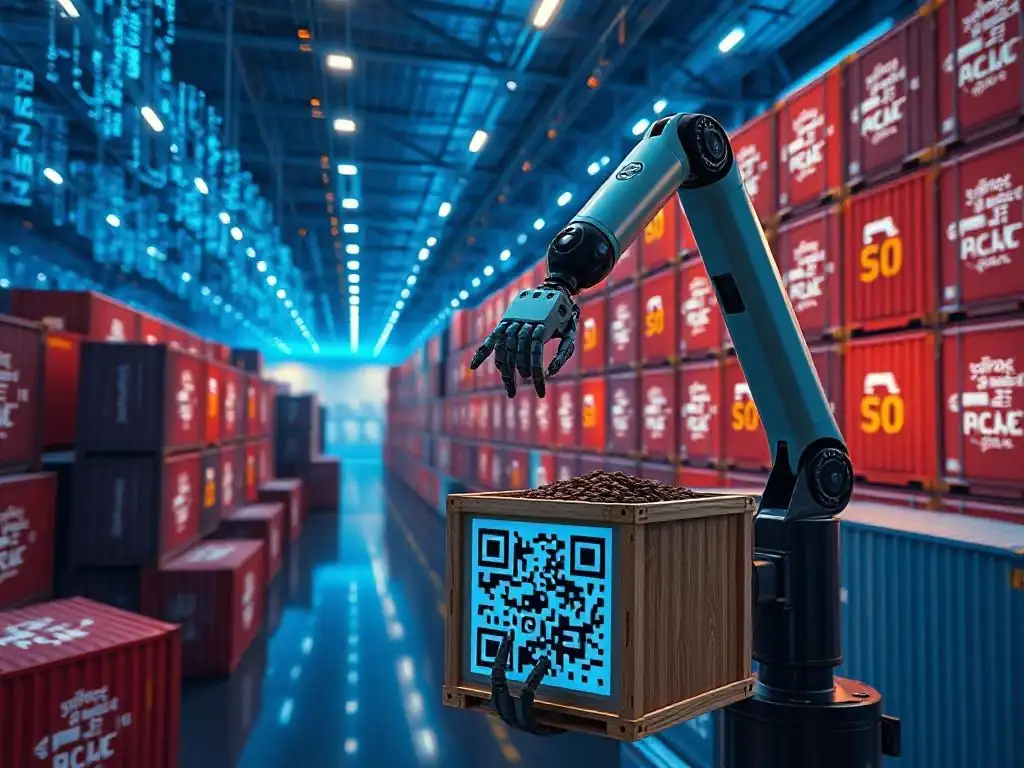
Welcome to Blockchain Trends, your compass in the rapidly evolving world of decentralized technologies!
Ever wondered how blockchain can revolutionize industries beyond just digital currencies? We delve into the transformative potential of this technology, exploring everything from DeFi innovations to enterprise applications and the ever-shifting regulatory landscape. Today, we're focusing on a particularly exciting development: blockchain supply chain smart contracts. Join us as we unpack how these advanced contracts are paving the way for unprecedented traceability and efficiency, and discover how they are poised to reshape global commerce. Ready to see the future of supply chains?
Supply Chain Revolution: Advanced Smart Contracts for Traceability
- Introduction: Transforming Supply Chains with Blockchain and Smart Contracts
- Understanding Blockchain Supply Chain Smart Contracts
- Advanced Smart Contract Techniques for Supply Chain Traceability
- Benefits of Using Blockchain Smart Contracts in Supply Chains
- Real-World Applications of Blockchain Supply Chain Smart Contracts
- Overcoming Challenges in Implementing Blockchain Supply Chain Smart Contracts
- The Future of Blockchain in Supply Chain Management: Trends and Innovations
- Conclusion: Embracing the Power of Blockchain Supply Chain Smart Contracts
-
Frequently Asked Questions
- How do smart contracts enhance supply chain traceability?
- What are the key benefits of using blockchain supply chain smart contracts?
- How can blockchain smart contracts help combat counterfeit goods in the supply chain?
- What are some of the challenges in implementing blockchain supply chain smart contracts?
- How does the use of smart contracts in supply chains impact regulatory compliance?
- Final Reflection: Embracing Transparency in the Chain
- Uncover the Future: Implement Smart Contract Traceability Today!
Introduction: Transforming Supply Chains with Blockchain and Smart Contracts
Supply chains, the intricate networks that move goods from raw materials to consumers, are the backbone of the global economy. However, they are often plagued by inefficiencies, lack of transparency, and vulnerability to disruptions. The journey of a product can involve dozens of intermediaries, each adding complexity and potential points of failure. This opacity makes it difficult to track provenance, verify authenticity, and respond quickly to issues like recalls or quality control failures.
The advent of blockchain technology offers a compelling solution to many of these long-standing challenges. By providing a decentralized, immutable, and transparent ledger, blockchain can create a shared, single source of truth for all participants in a supply chain. This foundational technology enables unprecedented levels of visibility and trust, paving the way for significant improvements in operational efficiency and risk management. It sets the stage for powerful applications that can automate processes and enforce agreements without intermediaries.
The Challenges of Traditional Supply Chains and the Need for Transparency
Traditional supply chains are inherently complex and often lack end-to-end visibility. Information silos exist between different parties – manufacturers, distributors, logistics providers, retailers – leading to delays, errors, and disputes. For instance, tracking the origin of goods, especially in multi-national supply chains, can be incredibly difficult, making it hard to combat counterfeiting or verify ethical sourcing claims. A report by the World Economic Forum in 2020 highlighted that improving supply chain visibility could reduce costs by up to 20%.
Furthermore, traditional systems often rely on paper-based records or disparate digital databases that are susceptible to tampering or loss. Verifying compliance with regulations or ensuring product authenticity becomes a manual, time-consuming, and often unreliable process. This lack of verifiable data makes it challenging to build trust among participants and creates a significant bottleneck in responding to supply chain shocks, such as natural disasters or pandemics, which can expose critical vulnerabilities and dependencies within the network.
Blockchain's Potential for Supply Chain Optimization
Blockchain technology introduces a paradigm shift by providing a distributed ledger that records transactions in a secure, transparent, and tamper-evident manner. Each transaction, representing a step in the product's journey or a change in ownership, is added as a block to a chain, cryptographically linked to the previous one. This creates an immutable history of the product's lifecycle. For example, a shipment of goods moving from point A to point B can have its status updates, location data, and inspection results recorded on a blockchain, accessible to all authorized parties simultaneously.
This shared, real-time visibility dramatically reduces information asymmetry and fosters collaboration. Participants no longer need to rely solely on the data provided by their direct counterpart but can verify information across the entire network. This capability is particularly powerful for tracking high-value goods, perishable items, or pharmaceuticals, where provenance and handling conditions are critical. The inherent security of the blockchain, using cryptography and consensus mechanisms, makes it highly resistant to fraud and manipulation, building a foundation of trust that was previously difficult to achieve.
Introducing Smart Contracts for Enhanced Traceability and Efficiency
While blockchain provides the immutable ledger for recording supply chain events, smart contracts bring automation and enforcement to the system. A smart contract is a self-executing contract with the terms of the agreement directly written into lines of code. This code resides on the blockchain, and its execution is automatically triggered when predefined conditions are met. In the context of blockchain supply chain smart contracts, these conditions could be anything from a product arriving at a specific location (verified by GPS data) to a quality inspection passing (recorded on the ledger).
The integration of smart contracts with the blockchain ledger allows for the automation of complex, multi-party processes. For example, a payment to a supplier could be automatically released once a shipment is confirmed to have arrived and passed inspection, eliminating manual invoicing and payment delays. This automation not only speeds up operations but also reduces administrative costs and minimizes the potential for human error or deliberate fraud. By encoding business logic directly into the blockchain, blockchain supply chain smart contracts create a more efficient, transparent, and trustworthy ecosystem.
Understanding Blockchain Supply Chain Smart Contracts
Blockchain supply chain smart contracts are essentially digital agreements designed to automate and manage interactions between parties involved in a supply chain network. They leverage the underlying blockchain's capabilities for secure, transparent, and immutable record-keeping. Unlike traditional contracts, which are written in legal language and enforced by intermediaries like lawyers or courts, smart contracts are written in code and executed automatically by the blockchain network itself when specific, verifiable conditions are met. This shift from human-mediated enforcement to automated execution on a decentralized ledger fundamentally changes how supply chain agreements are managed and trusted.
These contracts define the rules and workflows for various supply chain processes, such as purchase orders, shipments, payments, and quality checks. For instance, a smart contract could stipulate that a payment is released only after a successful delivery is logged on the blockchain and confirmed by a trusted source (an oracle). This eliminates the need for manual verification steps and reduces the risk of disputes or payment delays. The use of blockchain supply chain smart contracts ensures that all parties operate under the same set of predefined, transparent rules, enhancing accountability and reducing operational friction.
What are Smart Contracts in the Context of Supply Chain Management?
In supply chain management, smart contracts act as programmable agents that automate transactions and enforce agreements based on verifiable data recorded on the blockchain. Imagine a contract for shipping temperature-sensitive goods. A smart contract could be set up to automatically release payment to the carrier only if temperature logs (fed to the blockchain via sensors and oracles) show the goods remained within the acceptable range throughout transit. If the temperature deviates beyond the threshold, the contract could automatically trigger a penalty or a notification to the insurance provider.
These contracts encode the 'if-then' logic of supply chain agreements directly into the blockchain code. This eliminates ambiguity and the need for manual interpretation or intervention for routine tasks. For example, a large retailer might use blockchain supply chain smart contracts to manage inventory replenishment with suppliers. When inventory levels for a specific product recorded on the blockchain drop below a certain point, a smart contract could automatically trigger a new purchase order, streamlining the procurement process and preventing stockouts. This level of automation, built on a foundation of shared, immutable data, is a key driver of efficiency gains.
Key Features of Smart Contracts for Supply Chain Applications
Smart contracts for supply chains possess several key features that make them transformative. Automation is perhaps the most significant, enabling processes like payments, order fulfillment, and quality checks to occur automatically based on predefined conditions. This reduces manual effort and speeds up transaction cycles. Transparency is another crucial feature; the code and execution of smart contracts are visible on the blockchain to authorized participants, fostering trust and reducing the potential for hidden clauses or unfair practices. For example, the conditions for a bonus payment for early delivery can be explicitly coded and verified by all parties.
Immutability is inherent because smart contracts reside on the blockchain. Once deployed, the terms of the contract cannot be altered, ensuring that agreements are enforced as written. This provides a high degree of security and reliability. Security is further enhanced by cryptography, protecting the contract's code and execution from tampering. Lastly, Efficiency is improved by reducing reliance on intermediaries and manual processes, leading to faster transaction times and lower administrative costs. These features collectively make blockchain supply chain smart contracts a powerful tool for modernizing logistics and operations.
How Blockchain Ensures Data Integrity and Immutability in Supply Chains
The fundamental strength of blockchain technology lies in its ability to ensure data integrity and immutability, which are critical for reliable supply chain traceability. When data related to a supply chain event (like a shipment, a quality check, or a change in custody) is recorded on a blockchain, it is grouped into a block. This block is then cryptographically linked to the previous block using a unique hash, forming a chain. Any attempt to alter the data in a past block would change its hash, breaking the chain and immediately alerting the network to the tampering.
Furthermore, in a public or consortium blockchain typically used for supply chains, copies of the ledger are distributed across multiple nodes in the network. To successfully alter data, an attacker would need to simultaneously compromise a significant portion of these nodes, a task that becomes exponentially difficult as the network grows.
This distributed nature, combined with cryptographic linking, makes the blockchain ledger highly resistant to unauthorized modifications. This immutability ensures that the history of a product – its origin, movements, inspections, and ownership transfers – is a verifiable, untampered record, providing the foundation of truth necessary for effective traceability and trust among supply chain participants.
Advanced Smart Contract Techniques for Supply Chain Traceability
Moving beyond basic transaction recording, advanced techniques leverage smart contracts to build sophisticated traceability systems. These systems can track products with granular detail, reacting automatically to specific events or data inputs. Implementing effective traceability requires careful design of the smart contract logic, considering how different supply chain events translate into data points on the blockchain and how these data points trigger contract functions. This involves mapping physical processes to digital workflows governed by code.
Developing robust blockchain supply chain smart contracts for traceability often involves incorporating external data sources and handling complex conditional logic. For example, tracking perishable goods might require smart contracts that monitor temperature and humidity data from IoT sensors and trigger alerts or actions if conditions are violated. This requires secure and reliable methods for bringing real-world data onto the blockchain, known as using oracles. Advanced techniques also explore different consensus mechanisms to ensure the network can handle the volume and speed of transactions required by large, complex supply chains while maintaining security and decentralization.
Implementing Traceability with Smart Contracts: A Step-by-Step Guide
Implementing traceability using blockchain supply chain smart contracts typically involves several key steps. First, define the specific data points that need to be tracked for each product or batch – this could include origin, manufacturing date, location, temperature, ownership changes, and quality control results. Second, design the data model and structure for how this information will be represented and stored on the blockchain. This often involves assigning unique digital identities (like serial numbers or batch IDs) to physical products, perhaps using QR codes or RFID tags linked to blockchain entries.
Third, develop the smart contracts that will govern the lifecycle of the product on the blockchain. These contracts will contain functions to record events like 'ItemCreated', 'LocationUpdated', 'OwnershipTransferred', 'QualityChecked', etc. For example, a smart contract function triggered by a logistics provider scanning a product upon arrival at a warehouse would automatically update the product's location on the ledger.
Fourth, integrate the physical touchpoints in the supply chain (e.g., manufacturing lines, warehouses, shipping containers) with the blockchain network, often through APIs or IoT devices, to ensure real-time data capture. Finally, build user interfaces (web or mobile applications) that allow authorized participants to view the immutable history of a product recorded on the blockchain via the smart contracts, providing end-to-end traceability.
Utilizing Oracles to Connect Smart Contracts with Real-World Supply Chain Data
A significant challenge for blockchain supply chain smart contracts is their inability to directly access real-world data outside the blockchain network. Smart contracts are deterministic; they can only execute based on information already present on the chain. To track physical goods, monitor environmental conditions, or verify external events like shipments arriving or customs clearing, smart contracts need reliable data feeds from the physical world. This is where oracles come into play. Oracles are third-party services that provide external data to smart contracts.
In a supply chain context, oracles can collect data from various sources: GPS devices reporting location, IoT sensors measuring temperature or humidity, enterprise resource planning (ERP) systems confirming inventory levels, or even public databases with customs information. A trusted oracle service would retrieve this data, verify its accuracy, and then securely submit it to the blockchain, where it can be consumed by a blockchain supply chain smart contract.
For example, a smart contract managing payment for a shipment might rely on an oracle providing verified GPS coordinates indicating the goods have reached their destination before releasing funds. The security and reliability of the oracle are paramount, as a compromised oracle could feed false data and trigger incorrect smart contract execution, undermining the entire traceability system.
Exploring Different Consensus Mechanisms for Supply Chain Smart Contracts
The choice of blockchain network and its underlying consensus mechanism is crucial for implementing scalable and efficient blockchain supply chain smart contracts. Consensus mechanisms are the protocols that ensure all participants in a decentralized network agree on the state of the ledger, preventing double-spending and ensuring data integrity. Different mechanisms offer trade-offs between speed, scalability, security, and decentralization. Public blockchains like Ethereum (using Proof-of-Stake) offer high decentralization but can face scalability challenges and variable transaction costs, which might be prohibitive for high-volume, low-value supply chain transactions.
Consortium or private blockchains, often using mechanisms like Proof-of-Authority (PoA) or Practical Byzantine Fault Tolerance (PBFT), are frequently preferred for enterprise supply chains. These networks involve a limited number of known, authorized participants (e.g., major companies in a supply chain) who validate transactions.
While less decentralized than public chains, they offer significantly higher transaction speeds and throughput, lower costs, and greater control over data access and governance. For example, a PBFT-based consortium blockchain could process thousands of supply chain events per second with minimal latency, making it suitable for tracking large volumes of goods in real-time and ensuring that blockchain supply chain smart contracts execute promptly based on these events.
Benefits of Using Blockchain Smart Contracts in Supply Chains
The adoption of blockchain supply chain smart contracts offers a multitude of benefits that address core inefficiencies and risks in traditional supply chain management. These advantages stem directly from the inherent properties of blockchain technology – transparency, immutability, security, and decentralization – combined with the automation capabilities of smart contracts. Businesses implementing these solutions report improvements across various operational areas, from reduced administrative burdens to enhanced trust among trading partners.
The transformative potential lies not just in individual benefits but in their combined effect, creating a more resilient, efficient, and trustworthy global trade ecosystem. For instance, preventing counterfeiting through verifiable origin data can protect brand reputation and consumer safety, while automating payments can free up significant working capital. These tangible benefits are driving increasing interest and investment in blockchain supply chain smart contracts across diverse industries.
Increased Transparency and Accountability Across the Supply Chain
One of the most significant benefits of using blockchain supply chain smart contracts is the dramatic increase in transparency. Every recorded event, from the sourcing of raw materials to the final delivery, is logged on an immutable ledger accessible to all authorized participants. This shared, single source of truth eliminates information silos and provides unprecedented visibility into the entire product journey. For example, a consumer could scan a QR code on a product and see its complete history, verifying its origin and handling.
This enhanced transparency naturally leads to greater accountability. Because every action or event recorded on the blockchain is timestamped and associated with a specific participant's digital identity, it becomes much easier to identify who did what and when. If a quality issue arises, the blockchain record can quickly pinpoint the stage in the supply chain where the problem occurred, holding the responsible party accountable. This level of traceability and accountability, facilitated by blockchain supply chain smart contracts, builds trust among partners and encourages adherence to standards and agreements.
Reduced Costs and Improved Efficiency in Logistics and Operations
Blockchain supply chain smart contracts significantly reduce operational costs and improve efficiency by automating manual processes and minimizing administrative overhead. Traditional supply chains often involve extensive paperwork, manual data entry, and human-mediated approvals for tasks like invoicing, payment processing, and dispute resolution. Smart contracts eliminate many of these steps. For example, a smart contract can automatically trigger payment upon verified delivery and inspection, eliminating the need for manual invoice processing and reconciliation, which can be time-consuming and prone to errors.
A report by McKinsey estimated that trade finance could see savings of $20 billion annually through blockchain adoption, much of which is linked to automating processes via smart contracts. Furthermore, improved visibility and faster information flow help optimize logistics, reduce lead times, and minimize demurrage charges by streamlining documentation and customs processes. By creating a more efficient workflow based on automated execution of predefined rules, blockchain supply chain smart contracts streamline operations and reduce transaction costs across the network.
Enhanced Security and Prevention of Counterfeiting
Counterfeiting is a major issue across many industries, costing billions of dollars annually and posing risks to consumer safety, particularly for products like pharmaceuticals or food. Blockchain supply chain smart contracts offer a powerful tool to combat this problem by creating a secure, verifiable record of a product's authenticity and journey. By assigning a unique digital identity to each legitimate product or batch and recording its movement and ownership transfers on the blockchain, consumers and businesses can verify that a product is genuine by tracing its history back to its origin.
Any counterfeit product entering the supply chain would lack this verifiable blockchain history. Smart contracts can be used to trigger alerts or actions if a product with an invalid or duplicated digital identity is detected. The immutability of the blockchain ledger makes it extremely difficult for counterfeiters to inject fake products with fabricated histories. This enhanced security, built on the foundation of blockchain supply chain smart contracts, protects brand integrity, safeguards revenue, and most importantly, ensures the safety and confidence of consumers.
Improved Trust and Collaboration Between Supply Chain Participants
Trust is often a fragile commodity in complex supply chains involving numerous independent parties with potentially competing interests. Traditional systems rely heavily on bilateral agreements and manual verification, which can lead to suspicion and disputes. Blockchain supply chain smart contracts foster a new level of trust by establishing a transparent, shared, and immutable record of all transactions and events. All authorized participants operate based on the same, verifiable data and the same set of automated rules encoded in the smart contracts.
This shared source of truth reduces the need for intermediaries and manual checks, minimizing opportunities for fraud or misrepresentation. When parties can verify the status of goods, the fulfillment of conditions, and the execution of agreements directly on the blockchain, confidence in the system and their trading partners increases. This improved trust facilitates greater collaboration, enabling participants to share information more freely and work together more effectively to optimize the entire supply chain, moving from adversarial relationships to a more collaborative ecosystem empowered by blockchain supply chain smart contracts.
Real-World Applications of Blockchain Supply Chain Smart Contracts

The theoretical benefits of blockchain supply chain smart contracts are increasingly being demonstrated in real-world implementations across various industries. Companies are piloting and deploying solutions that leverage these technologies to solve specific, pressing challenges related to traceability, efficiency, and trust. These case studies illustrate how blockchain technology is moving beyond cryptocurrency speculation to deliver tangible business value in the logistics and supply chain sector.
From tracking high-value goods like diamonds to ensuring the safety of perishable food items, blockchain supply chain smart contracts are proving their capability. While widespread adoption is still evolving, early use cases provide valuable insights into the practical implementation challenges and the significant potential for transformation. These examples showcase the versatility and adaptability of the technology to diverse supply chain needs.
Case Study 1: Tracking Pharmaceutical Products with Smart Contracts
The pharmaceutical supply chain is particularly complex and critical, demanding stringent traceability to ensure product authenticity, safety, and regulatory compliance. Counterfeiting is a significant threat, potentially endangering lives. Several initiatives are using blockchain supply chain smart contracts to create secure, transparent tracking systems. For instance, a consortium like MediLedger has developed a blockchain network specifically for the pharmaceutical industry in the US, aiming to comply with the Drug Supply Chain Security Act (DSCSA).
Using smart contracts, participants (manufacturers, wholesalers, dispensers) can record product identifiers (like unique serial numbers) and transaction data (ownership changes) on the immutable ledger. When a product changes hands, the smart contract verifies the transaction against the recorded history. This allows for rapid verification of product authenticity and facilitates efficient recalls if necessary. While specific public data on cost savings is limited due to the proprietary nature of these networks, the primary driver is regulatory compliance and enhanced patient safety through verifiable, end-to-end traceability powered by blockchain supply chain smart contracts.
Case Study 2: Ensuring Ethical Sourcing of Raw Materials using Blockchain
Consumers and regulators are increasingly demanding transparency regarding the origin and ethical sourcing of raw materials, from minerals and precious stones to agricultural products like coffee or cocoa. Blockchain supply chain smart contracts provide a robust mechanism to verify ethical claims and track materials from their source. For example, Everledger has implemented blockchain solutions for tracking diamonds and other high-value assets, including cobalt used in electronics.
By recording key data points about the material's origin, certifications (e.g., fair trade, conflict-free), and subsequent movements and processing steps on a blockchain, companies can create a tamper-proof history. Smart contracts can be used to automate verification of compliance with ethical standards at various stages.
While precise figures on ethical sourcing improvements are hard to isolate, the ability to provide verifiable provenance data directly to consumers or auditors builds trust and supports premium pricing for ethically sourced goods. This application of blockchain supply chain smart contracts helps companies meet corporate social responsibility goals and respond to market demand for sustainable products.
Case Study 3: Optimizing Food Supply Chains for Safety and Traceability
Food supply chains are notoriously complex and vulnerable to contamination and spoilage. Rapid traceability is essential during outbreaks or recalls to quickly identify the source and limit the spread of contaminated products. IBM Food Trust, built on Hyperledger Fabric (a blockchain framework), is a prominent example of using blockchain supply chain smart contracts to enhance food safety and traceability. Participants, from farmers to retailers, share data on the blockchain.
Walmart, a key partner in IBM Food Trust, demonstrated the power of this system by dramatically reducing the time it takes to trace the origin of a product from days or even weeks to just seconds. This speed is critical in a food recall scenario, potentially saving lives and significantly reducing financial losses. Smart contracts can automate actions based on this data, such as triggering alerts about potential contamination or managing the recall process itself. This case highlights how blockchain supply chain smart contracts deliver tangible, life-saving benefits by providing near-instantaneous, verifiable traceability in critical supply chains.
Overcoming Challenges in Implementing Blockchain Supply Chain Smart Contracts
Despite the compelling benefits, implementing blockchain supply chain smart contracts at scale is not without challenges. These hurdles range from technical issues related to performance and interoperability to practical concerns about data privacy, regulatory compliance, and the need for specialized skills. Addressing these challenges is crucial for successful adoption and realizing the full potential of blockchain in transforming supply chains.
Successfully navigating these obstacles requires careful planning, collaboration among supply chain partners, and potentially the development of new standards and technologies. While some challenges are inherent to the nascent stage of blockchain technology, others relate to integrating this new technology with existing legacy systems and business processes. Enterprises must invest in understanding these challenges and developing strategies to mitigate them to effectively deploy blockchain supply chain smart contracts.
Scalability Issues and Potential Solutions for High-Volume Transactions
One of the primary technical challenges for blockchain supply chain smart contracts, especially in large, global networks, is scalability. Traditional public blockchains like early versions of Ethereum struggled to handle a high volume of transactions per second compared to centralized databases. A typical global supply chain can generate millions of transactions daily (e.g., movement updates, sensor readings), requiring a network capable of processing these rapidly and cost-effectively.
Solutions are emerging to address this. Enterprise-focused blockchain platforms (like Hyperledger Fabric or R3 Corda), often using permissioned networks and more efficient consensus mechanisms (like PBFT or PoA), offer significantly higher throughput, sometimes exceeding thousands of transactions per second. Layer 2 scaling solutions built on top of public blockchains, such as state channels or plasma, can also process transactions off-chain before settling them on the main chain. Furthermore, optimizing smart contract code and data structures can minimize the amount of data stored and processed on-chain, improving efficiency and making blockchain supply chain smart contracts viable for high-volume environments.
Interoperability Challenges Between Different Blockchain Networks
As various companies and consortia adopt different blockchain platforms (e.g., one supply chain partner uses a Hyperledger-based network, another uses an Ethereum-based solution), interoperability becomes a significant challenge. Goods and data often flow across multiple supply chains and potentially different blockchain networks. Without interoperability, the end-to-end traceability and seamless data flow promised by blockchain supply chain smart contracts are hindered. Data becomes siloed on different chains, recreating the very problem blockchain aims to solve.
Efforts are underway to build bridges and protocols that allow different blockchain networks to communicate and exchange data securely. Projects focusing on cross-chain compatibility and inter-blockchain communication (IBC) aim to enable assets and information to move between disparate ledgers. Developing industry standards for data formats and smart contract interfaces can also facilitate integration. While a universal solution is still evolving, addressing interoperability is critical to creating truly interconnected global supply chains powered by blockchain supply chain smart contracts that can track goods across networks.
Data Privacy and Compliance Considerations in Supply Chain Applications
While transparency is a core benefit of blockchain supply chain smart contracts, complete public visibility is often undesirable or even illegal in a business context. Supply chain data can contain commercially sensitive information (e.g., pricing, supplier details, production volumes) that companies do not want to share with competitors or the wider public. Furthermore, regulations like GDPR in Europe impose strict requirements on handling personal data, which might be linked to supply chain events (e.g., recipient addresses).
Permissioned blockchains offer a solution by restricting network participation and data access to authorized parties. Smart contracts can be designed with granular access controls, ensuring that only relevant parties can view specific data points or execute certain functions. Techniques like zero-knowledge proofs (ZKPs) are also being explored to allow verification of data or compliance with conditions encoded in smart contracts without revealing the underlying sensitive information. Balancing the need for transparency with privacy requirements is a key design consideration for blockchain supply chain smart contracts, requiring careful architectural choices and potentially integrating privacy-enhancing technologies.
Addressing the Skills Gap in Blockchain and Smart Contract Development
The successful implementation and management of blockchain supply chain smart contracts require specialized technical expertise that is currently in high demand but short supply. Businesses need developers proficient in blockchain programming languages (like Solidity for Ethereum or Chaincode for Hyperledger Fabric), architects who can design decentralized applications, and professionals who understand the intersection of blockchain technology, smart contracts, and complex supply chain processes.
Bridging this skills gap is essential for widespread adoption. Companies need to invest in training existing staff, recruit blockchain specialists, and potentially partner with external blockchain development firms. Educational institutions are increasingly offering blockchain-related courses, but the pace of technological advancement means continuous learning is required. Addressing this talent shortage is critical for organizations looking to build, deploy, and maintain robust blockchain supply chain smart contracts and leverage the full potential of this technology.
The Future of Blockchain in Supply Chain Management: Trends and Innovations
The application of blockchain supply chain smart contracts is still evolving, with ongoing research and development pushing the boundaries of what's possible. Several key trends and innovations are set to further enhance the capabilities and impact of blockchain technology in supply chain management. These advancements promise to create even more intelligent, automated, and interconnected supply chains.
Integrating emerging technologies like the Internet of Things (IoT) and Artificial Intelligence (AI) with blockchain is expected to unlock new levels of efficiency and predictability. Furthermore, the concepts originating in decentralized finance (DeFi) are finding applications in supply chain financing, potentially revolutionizing how trade is funded and risks are managed. These trends indicate a future where blockchain supply chain smart contracts are not just tools for traceability but core components of highly sophisticated, digital supply chain ecosystems.
Integration of IoT Devices with Blockchain for Real-Time Tracking
The combination of IoT devices and blockchain supply chain smart contracts is a powerful synergy for real-time traceability and condition monitoring. IoT sensors (e.g., GPS trackers, temperature sensors, shock detectors) can collect vast amounts of data about a product's location, environmental conditions, and handling during transit and storage. This data, when fed directly onto a blockchain via secure gateways and oracles, provides an objective, tamper-evident record of the product's journey and state.
Smart contracts can then be programmed to react instantly to this real-time data. For example, a smart contract could automatically trigger an insurance claim if a temperature sensor reports that a shipment of pharmaceuticals exceeded a critical threshold, or send an alert if a package deviates from its planned route. This integration provides unprecedented visibility and enables proactive responses to potential issues. The immutable nature of the blockchain ensures the integrity of the sensor data, and the automation of smart contracts translates that data into actionable outcomes, creating highly responsive blockchain supply chain smart contracts.
The Role of AI and Machine Learning in Optimizing Supply Chain Smart Contracts
Artificial Intelligence (AI) and Machine Learning (ML) can play a significant role in optimizing the performance and logic of blockchain supply chain smart contracts. AI algorithms can analyze the vast amounts of data recorded on the blockchain – historical transaction patterns, lead times, quality control results, sensor data – to identify inefficiencies, predict potential disruptions, or detect fraudulent activities that might not be immediately obvious.
ML models can be used to dynamically adjust parameters within smart contracts based on real-time conditions or predictive insights. For instance, an ML model could recommend adjusting inventory levels, optimizing routing based on predicted delays, or even dynamically modifying payment terms within a smart contract based on supplier performance history. While AI/ML processes typically run off-chain, their outputs can be fed to smart contracts via oracles to trigger automated actions or update contract variables. This integration allows for more intelligent, predictive, and adaptive blockchain supply chain smart contracts that can continuously learn and improve supply chain operations.
Exploring Decentralized Finance (DeFi) Applications in Supply Chain Financing
Decentralized Finance (DeFi), which leverages blockchain and smart contracts to recreate traditional financial services in a decentralized manner, holds significant potential for revolutionizing supply chain financing. Supply chains often involve complex financing arrangements, such as trade finance, invoice factoring, and supply chain finance, which can be slow, costly, and reliant on intermediaries.
DeFi concepts can be applied using blockchain supply chain smart contracts to automate and streamline these processes. For example, a smart contract could automatically trigger payment to a supplier based on verified delivery data, and this payment could be financed directly through a decentralized lending pool based on the immutable record of the transaction on the blockchain. Tokenization of assets (like invoices or purchase orders) could allow for easier trading and financing on decentralized exchanges.
This could unlock liquidity, reduce financing costs, and speed up cash flow for supply chain participants, particularly small and medium-sized enterprises. Integrating DeFi principles with blockchain supply chain smart contracts promises a more efficient and accessible future for trade finance.
Conclusion: Embracing the Power of Blockchain Supply Chain Smart Contracts
The journey of global supply chains towards greater efficiency, transparency, and resilience is being significantly accelerated by the adoption of blockchain technology and, specifically, blockchain supply chain smart contracts. These technologies are moving from theoretical concepts to practical implementations, demonstrating tangible benefits across diverse industries. The inherent characteristics of blockchain – its decentralized, immutable, and transparent ledger – provide the foundational trust layer necessary to overcome the information silos and inefficiencies that have long plagued traditional supply networks.
By automating processes, enforcing agreements programmatically, and providing verifiable, real-time data, blockchain supply chain smart contracts are not just improving existing systems; they are enabling a fundamental revolution in how goods are tracked, traded, and financed. While challenges related to scalability, interoperability, privacy, and skills gaps remain, ongoing innovation and increasing industry collaboration are steadily addressing these hurdles.
The Transformative Impact of Blockchain on Supply Chain Operations
The transformative impact of blockchain on supply chain operations is profound and multi-faceted. It shifts the paradigm from opaque, siloed systems to transparent, interconnected networks. This leads to increased efficiency through automation, reduced costs by eliminating intermediaries and paperwork, and enhanced security by making counterfeiting and fraud significantly more difficult. Crucially, it builds a foundation of trust among participants who can rely on a shared, immutable record of events.
From ensuring the authenticity of luxury goods to accelerating food recalls and verifying ethical sourcing, blockchain supply chain smart contracts are proving their value in critical applications. The ability to track products with unprecedented granularity and react automatically to verifiable data points is creating more responsive and resilient supply chains capable of withstanding disruptions and meeting increasingly stringent consumer and regulatory demands. This technology is not just an incremental improvement but a catalyst for fundamental change.
Key Takeaways: Implementing Smart Contracts for a More Transparent and Efficient Supply Chain
For organizations considering leveraging blockchain supply chain smart contracts, several key takeaways are essential. First, start with a clear understanding of the specific problem you aim to solve, whether it's traceability, payment delays, or compliance verification. Second, recognize that successful implementation requires collaboration among supply chain partners; blockchain is a network technology that delivers maximum value when multiple parties participate and agree on shared standards.
Third, pay close attention to integrating the physical and digital worlds, ensuring reliable data capture from real-world events (potentially using IoT and oracles). Fourth, carefully consider the choice of blockchain platform and consensus mechanism based on your specific requirements for scalability, privacy, and governance. Finally, invest in developing or acquiring the necessary technical expertise to design, deploy, and manage these sophisticated systems. Embracing blockchain supply chain smart contracts is a strategic move towards building a more transparent, efficient, and trustworthy supply chain for the future.
The Future of Supply Chain Technology: Blockchain as a Core Enabler
Looking ahead, blockchain is poised to become a core enabling technology for the next generation of supply chain management. Its integration with other emerging technologies like IoT for real-time data, AI/ML for predictive analytics and optimization, and DeFi for streamlined financing will create highly intelligent, automated, and interconnected global networks. The vision is a supply chain where products can autonomously trigger actions based on their location, condition, and contractual agreements encoded in blockchain supply chain smart contracts.
This future promises unparalleled levels of efficiency, resilience, and transparency. While the path to widespread adoption involves overcoming current challenges, the demonstrated benefits and ongoing technological advancements indicate that blockchain supply chain smart contracts are not just a temporary trend but a foundational element of the future of global trade and logistics. Businesses that proactively explore and adopt these technologies will be best positioned to thrive in an increasingly complex and demanding global marketplace.
Frequently Asked Questions
How do smart contracts enhance supply chain traceability?
Smart contracts automate and securely record each transaction in the supply chain, creating an immutable ledger. This enhanced transparency allows for easy tracking of goods from origin to consumer.
What are the key benefits of using blockchain supply chain smart contracts?
Benefits include improved efficiency, reduced fraud, enhanced transparency, and automated dispute resolution. The immutable record also builds trust among stakeholders.
How can blockchain smart contracts help combat counterfeit goods in the supply chain?
By providing a verifiable record of a product's journey, smart contracts make it easier to identify and eliminate counterfeit items. This real-time tracking improves consumer trust.
What are some of the challenges in implementing blockchain supply chain smart contracts?
Challenges include scalability issues, lack of industry standards, and the need for interoperability between different blockchain systems. Data privacy is also a major concern.
How does the use of smart contracts in supply chains impact regulatory compliance?
Smart contracts can automate compliance with regulations by verifying adherence to standards at each stage of the supply chain. This reduces the risk of non-compliance and streamlines audits.
Final Reflection: Embracing Transparency in the Chain
The journey through the potential of blockchain supply chain smart contracts reveals a landscape ripe for transformation. The promise of enhanced traceability, efficiency, and trust is no longer a futuristic fantasy, but a tangible reality within reach. The current global supply chain, often opaque and vulnerable, stands to benefit immensely from the transparent and immutable nature of blockchain technology.
This revolution, driven by smart contracts, isn't just about optimizing logistics; it's about fostering ethical and sustainable practices. The ability to track a product's journey from origin to consumer, verifying its authenticity and ethical sourcing, is a powerful tool for positive change. The future of supply chains is not just about efficiency, it's about resilience, transparency, and trust. Blockchain offers the foundation for building that future.
- Don Tapscott, Blockchain Revolution.
As we stand at the cusp of this technological shift, I invite you to consider the role you can play in shaping a more transparent and accountable world. Embrace the potential of blockchain supply chain smart contracts, not just as a technological advancement, but as a catalyst for building a future where every product tells a story of integrity and responsibility. Let us all strive to contribute to a supply chain revolution that benefits both businesses and the planet.
Uncover the Future: Implement Smart Contract Traceability Today!
Thank you for exploring how advanced smart contracts are transforming supply chain transparency and efficiency. We hope you've gained valuable insights into leveraging blockchain technology to improve operations. Now, it's time to take action.
Here's how you can get started:
- Begin a pilot project: Develop a simple smart contract to track a key product in your supply chain. Aim to create a proof-of-concept within the next month.
- Explore emerging blockchain platforms: Look into blockchain networks beyond the mainstream options that are optimized for supply chain applications.
- Share this article: Help spread awareness about blockchain's potential. Send it to a colleague or post it on social media to initiate a discussion.
What supply chain challenge are you most eager to address with smart contract traceability, and what will be your first step? Share your thoughts below!
Leave a Reply