
Ethereum vs. Polkadot vs. Cosmos: Unveiling the Blockchain Trilemma Showdown


Welcome to Blockchain Trends, your compass in the rapidly evolving world of decentralized technologies.
Are you ready to dive deeper than just cryptocurrency headlines? Explore how blockchain is revolutionizing industries, from finance to supply chain management and beyond. Today, we're tackling a critical challenge: the blockchain trilemma. Can a blockchain truly achieve security, scalability, and decentralization simultaneously?
In our main article, "Ethereum vs. Polkadot vs. Cosmos: Unveiling the Blockchain Trilemma Showdown", we offer a detailed blockchain trilemma solutions comparison, dissecting how these leading platforms are attempting to overcome this fundamental hurdle. Uncover the strengths and weaknesses of each approach and gain a clear understanding of the future of blockchain technology. Let's begin!
Ethereum vs. Polkadot vs. Cosmos: Addressing the Blockchain Trilemma
- Introduction: Blockchain Platforms and the Trilemma Challenge
- Ethereum: The Foundation and its Evolution
- Polkadot: Interoperability and Shared Security
- Cosmos: Sovereignty and Inter-Blockchain Communication
- Comparing Solutions to the Blockchain Trilemma
- Use Cases: Strengths of Each Platform
- Future Developments
- Conclusion: Selecting the Appropriate Platform
-
Frequently Asked Questions
- What is the Blockchain Trilemma and why is it important?
- How do Ethereum, Polkadot, and Cosmos attempt to solve the Blockchain Trilemma?
- What are the key differences in the consensus mechanisms used by these platforms?
- Which platform offers the most promising solution to the Blockchain Trilemma from a developer's perspective?
- How does regulation impact the viability of these Blockchain Trilemma solutions?
- Final Reflection: Navigating the Blockchain Trilemma
- Embrace the Future: Choose Your Blockchain Adventure!
Introduction: Blockchain Platforms and the Trilemma Challenge
Understanding the Blockchain Trilemma: Security, Scalability, and Decentralization Trade-offs
The Blockchain Trilemma, a concept popularized by Vitalik Buterin, posits that a blockchain system can only fully optimize two out of three key properties: security, scalability, and decentralization. Security ensures the network is resistant to attacks and tampering, safeguarding transactions and data integrity. Decentralization aims to distribute control across many participants, preventing censorship and single points of failure, fostering trust and resilience. Scalability refers to the network's capacity to handle a growing number of transactions efficiently, maintaining speed and low fees as adoption increases.
Achieving all three simultaneously has proven to be a significant challenge. For instance, increasing decentralization by adding more nodes can potentially compromise scalability if the network's infrastructure cannot efficiently process the increased communication overhead. Similarly, prioritizing scalability by centralizing certain aspects of the network can weaken its security and decentralization. This inherent tension necessitates design choices and trade-offs in blockchain architecture, shaping the functionality and suitability of different platforms for various applications. Understanding these trade-offs is crucial for evaluating and comparing blockchain platforms.
Why Compare Ethereum, Polkadot, and Cosmos? Different Approaches to Solving the Trilemma
Ethereum, Polkadot, and Cosmos represent three of the most prominent and innovative blockchain ecosystems, each tackling the Blockchain Trilemma with distinct architectural philosophies and technological solutions. Ethereum, as the pioneer of smart contract platforms, initially prioritized decentralization and security but faced scalability limitations. Its ongoing transition to Ethereum 2.0 showcases its evolution in addressing scalability without sacrificing its core tenets.
Polkadot, on the other hand, was designed from the ground up with interoperability and scalability in mind, utilizing a sharded architecture and shared security model. Cosmos focuses on blockchain sovereignty and interoperability through its Inter-Blockchain Communication (IBC) protocol, emphasizing customizable and independent blockchains that can interact seamlessly.
Comparing these platforms provides a valuable perspective on the diverse approaches to achieving blockchain trilemma solutions comparison. Each platform has made different design choices, resulting in unique strengths and weaknesses. By examining their architectures, consensus mechanisms, security models, and governance structures, we can gain a deeper understanding of the trade-offs inherent in blockchain design and the potential of each platform to meet the demands of a decentralized future. This comparative analysis is essential for developers, businesses, and enthusiasts seeking to navigate the complex landscape of blockchain technologies and identify the most suitable platform for their specific needs.
Ethereum: The Foundation and its Evolution
Ethereum 2.0: Transition to Proof-of-Stake and Sharding for Scalability
Ethereum, initially built on a Proof-of-Work (PoW) consensus mechanism, is undergoing a significant transformation to Ethereum 2.0, primarily driven by the need to enhance scalability. The most crucial change is the shift to Proof-of-Stake (PoS) with the Beacon Chain, which reduces energy consumption and paves the way for sharding. PoS replaces energy-intensive mining with staking, where validators lock up ETH to participate in block production and network security. This transition alone significantly improves efficiency and lays the groundwork for future scaling solutions.
Sharding, a key component of Ethereum 2.0, aims to distribute the network load horizontally across multiple "shards." Instead of every node processing all transactions, nodes in a sharded system are responsible for only a subset of the network and its data. This parallel processing dramatically increases transaction throughput and overall network capacity.
While full sharding implementation is a complex multi-phased process, its potential impact on Ethereum's scalability is substantial, aiming to process potentially tens of thousands of transactions per second compared to the previous limitations of around 15-30 TPS on Ethereum 1.0. This represents a major step in addressing the blockchain trilemma, specifically focusing on scalability solutions comparison.
Ethereum's Security Model: Smart Contract Vulnerabilities and Layer-2 Solutions
Ethereum's security model relies on a robust and decentralized network of nodes and the economic incentives of its consensus mechanisms. However, the complexity of smart contracts introduces a unique layer of security challenges. Smart contract vulnerabilities, often arising from coding errors or unforeseen interactions, have led to significant exploits and financial losses in the DeFi space. Examples include the DAO hack in 2016 and numerous more recent incidents involving vulnerabilities in DeFi protocols. These events highlight the ongoing need for rigorous smart contract auditing and security best practices.
To enhance security and scalability simultaneously, Ethereum's ecosystem is actively developing and adopting Layer-2 solutions. These solutions, such as rollups (Optimistic and ZK-Rollups) and state channels, operate on top of the main Ethereum chain (Layer-1), inheriting its security while providing increased transaction throughput and lower fees.
Optimistic Rollups, like Arbitrum and Optimism, assume transactions are valid and only perform fraud proofs when challenged, while ZK-Rollups, like zkSync and StarkNet, use zero-knowledge proofs to cryptographically verify transaction validity before submitting them to Layer-1. Layer-2 solutions are crucial for improving Ethereum's scalability and addressing security concerns related to smart contracts by moving complex computations and high-volume transactions off the main chain, further showcasing blockchain trilemma solutions comparison in action.
Ethereum's Decentralization: Node Distribution and Governance
Ethereum maintains a relatively high degree of decentralization, characterized by a large and geographically distributed network of nodes. While the exact number of nodes fluctuates, estimates consistently place it in the thousands, contributing to network resilience and censorship resistance. However, concerns about centralization have emerged, particularly regarding the concentration of mining power in PoW and potential centralization risks in PoS related to staking pools and infrastructure providers. Monitoring and ensuring a diverse and geographically dispersed validator set is crucial for maintaining Ethereum's decentralized nature in the PoS era.
Ethereum's governance is largely off-chain, relying on community consensus and Ethereum Improvement Proposals (EIPs). Core developers, researchers, and the wider community engage in discussions and propose changes to the protocol. While this approach has fostered innovation and adaptability, it can sometimes be slow and less formally structured compared to on-chain governance models.
Ongoing discussions and proposals for more formalized governance mechanisms within the Ethereum community reflect a continuous effort to balance decentralization with efficient decision-making and protocol evolution. The balance between node distribution and governance mechanisms is central to Ethereum's approach to the blockchain trilemma solutions comparison in terms of decentralization.
Polkadot's Relay Chain and Parachains: Enabling Cross-Chain Communication
Polkadot's architecture is specifically designed to address interoperability and scalability through its Relay Chain and Parachain structure. The Relay Chain serves as the central hub of Polkadot, responsible for network security, consensus, and interoperability. Parachains are independent blockchains that connect to the Relay Chain, benefiting from its shared security and facilitating cross-chain communication. This design allows for specialization, where parachains can be optimized for specific use cases and functionalities, while still being interconnected and secure.
Parachains communicate with each other through the Relay Chain, enabling seamless transfer of data and assets across different blockchains within the Polkadot ecosystem. This cross-chain composability is a core feature of Polkadot, enabling the creation of complex applications that leverage the unique capabilities of multiple parachains. Examples of parachains include Acala (DeFi), Moonbeam (Ethereum compatibility), and Chainlink (oracles), each contributing to a diverse and interconnected ecosystem. The Relay Chain and Parachain model is a unique approach to blockchain trilemma solutions comparison, prioritizing scalability and interoperability without compromising security.
Polkadot's Security Model: Pooled Security and Economic Incentives
Polkadot's security model is based on "shared security," where parachains benefit from the security of the Relay Chain validators. Instead of each parachain needing to bootstrap its own validator set, they lease security from the Relay Chain, making it easier for new blockchains to launch and become secure quickly. This pooled security model is a key differentiator of Polkadot, significantly reducing the security burden on individual parachains and enhancing the overall network robustness.
Economic incentives are crucial to Polkadot's security. Validators on the Relay Chain are incentivized to act honestly through staking DOT tokens and earning rewards. Parachain slots are allocated through auctions, requiring parachains to bond DOT tokens, creating economic alignment between parachains and the Relay Chain. Furthermore, Polkadot's Nominated Proof-of-Stake (NPoS) consensus mechanism enhances security by allowing DOT holders to nominate validators, further decentralizing validation responsibilities and strengthening the network's defense against attacks. This pooled security and economic incentive structure is central to Polkadot's blockchain trilemma solutions comparison, especially in terms of security and scalability.
Polkadot's Governance: On-Chain Upgrades and Community Proposals
Polkadot boasts a sophisticated on-chain governance system, allowing for decentralized and transparent protocol upgrades and decision-making. The governance process involves DOT token holders, the Council (elected representatives), and the Technical Committee. Proposals for protocol changes can be submitted by anyone holding DOT, and these proposals undergo a voting process involving the Council and DOT holders. This on-chain governance mechanism allows for efficient and community-driven protocol evolution.
Runtime upgrades in Polkadot can be enacted without hard forks, enabling seamless and less disruptive protocol modifications. This capability is crucial for adaptability and future-proofing the network. The Council plays a vital role in governance, proposing motions and accelerating or vetoing proposals. The Technical Committee is responsible for assessing the technical feasibility and security implications of proposals. Polkadot's on-chain governance model is a significant aspect of its blockchain trilemma solutions comparison, particularly in balancing decentralization with efficient and agile protocol development and upgrades.
Cosmos: Sovereignty and Inter-Blockchain Communication
Cosmos's Hub and Zones: Building an Ecosystem of Independent Blockchains
Cosmos takes a different approach to blockchain interoperability, focusing on creating an "Internet of Blockchains" through its Hub and Zone architecture. Cosmos Hub acts as a central router and shared ledger, while Zones are independent blockchains that connect to the Hub. Unlike Polkadot's shared security model, Cosmos Zones are sovereign blockchains, meaning they have their own validators and security models. This sovereignty is a core tenet of Cosmos, allowing for greater customization and flexibility for individual blockchains.
Zones in Cosmos communicate with each other through the Inter-Blockchain Communication protocol (IBC), facilitated by the Cosmos Hub. IBC allows for the secure and reliable transfer of tokens and data between independent blockchains. This model emphasizes interoperability without sacrificing the autonomy of individual chains. Examples of Zones include Terra (algorithmic stablecoins), Binance Chain (exchange-focused), and Crypto.org Chain (payments and DeFi). Cosmos's Hub and Zone architecture represents a distinct blockchain trilemma solutions comparison, prioritizing sovereignty and interoperability through independent, interconnected blockchains.
Cosmos's Tendermint Consensus: Byzantine Fault Tolerance and Fast Finality
Cosmos SDK, a modular framework for building blockchains, commonly utilizes the Tendermint Byzantine Fault Tolerant (BFT) consensus algorithm. Tendermint offers fast finality, meaning transactions are confirmed and irreversible relatively quickly, typically within seconds. This is in contrast to probabilistic finality in some other consensus mechanisms, where confirmations become increasingly likely over time but are never absolutely certain. Tendermint's fast finality enhances user experience and is particularly beneficial for applications requiring rapid transaction settlement.
Tendermint consensus is also known for its robustness and fault tolerance. It can tolerate up to one-third of validators being Byzantine (malicious or faulty) and still maintain network liveness and safety. This Byzantine Fault Tolerance is a crucial security feature, ensuring network reliability even in the presence of malicious actors. The combination of fast finality and Byzantine Fault Tolerance makes Tendermint a popular choice for blockchains built with the Cosmos SDK, contributing to Cosmos's blockchain trilemma solutions comparison by addressing both scalability and security considerations.
Cosmos's Decentralization: Independent Validator Sets and Sovereign Chains
Cosmos emphasizes decentralization through its architecture of sovereign chains, each with its own independent validator set. Zones are responsible for their own security and governance, fostering a diverse and decentralized ecosystem. This contrasts with Polkadot's shared security model, where parachains rely on the Relay Chain validators. In Cosmos, decentralization is achieved through the distribution of power and responsibility across numerous independent blockchains, rather than concentrating security in a central Relay Chain.
The sovereignty of Cosmos Zones allows for greater flexibility in governance and protocol design. Each Zone can implement its own governance mechanisms and tailor its blockchain to specific application requirements. This modular and customizable approach promotes innovation and experimentation within the Cosmos ecosystem. While the Cosmos Hub plays a central role in interoperability, the overall ecosystem is designed to be decentralized and resilient through the independence of its constituent Zones, reflecting a unique approach to blockchain trilemma solutions comparison with a focus on decentralization and sovereignty.
Comparing Solutions to the Blockchain Trilemma
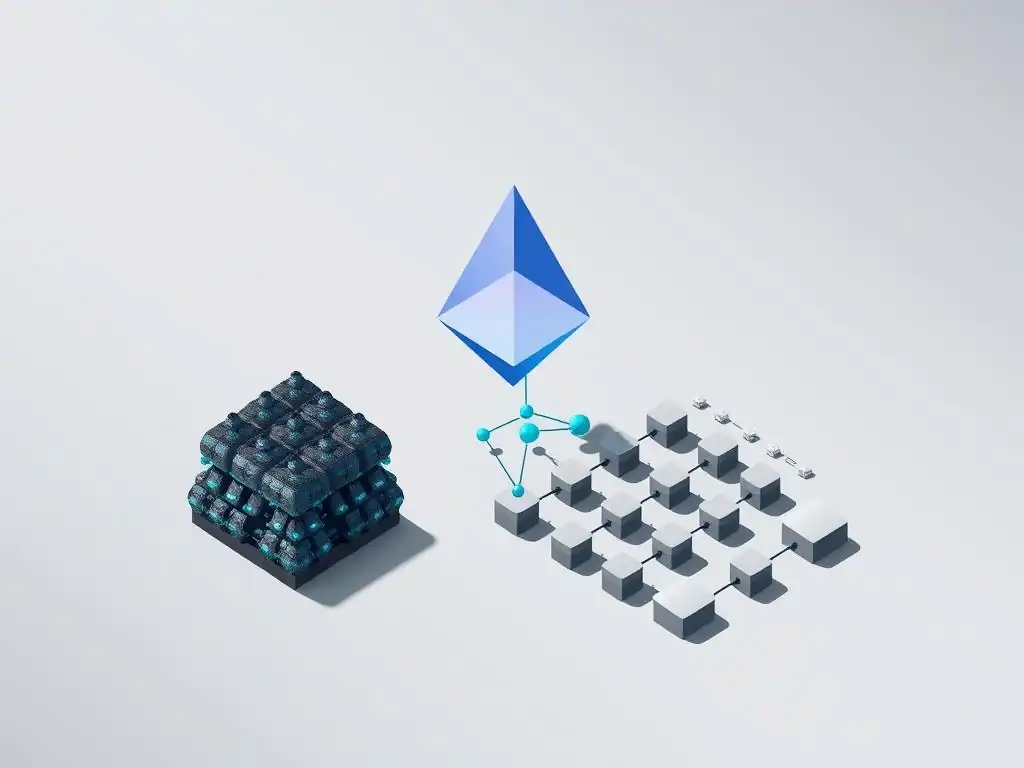
Scalability: Sharding, Parachains, and Horizontal Scaling
When comparing blockchain trilemma solutions comparison in terms of scalability, Ethereum, Polkadot, and Cosmos offer distinct approaches. Ethereum, through Ethereum 2.0 and sharding, aims for horizontal scaling by dividing the network into multiple shards that process transactions in parallel. This significantly increases throughput but is a complex and ongoing development.
Polkadot achieves scalability through its parachain architecture, where multiple blockchains (parachains) operate concurrently and connect to the Relay Chain. This also represents horizontal scaling, allowing for parallel processing and specialization of chains. Cosmos, with its focus on sovereign zones, promotes horizontal scaling by enabling the creation of numerous independent blockchains that can scale independently and interoperate via IBC.
While Ethereum's sharding is still under development, its potential for scalability is substantial. Polkadot's parachain model is currently operational, with a limited number of parachain slots available, but plans for expansion. Cosmos's scalability is inherently tied to the number of independent blockchains (Zones) built, offering theoretically limitless horizontal scaling potential as more Zones are added. In terms of transaction throughput, projections for fully implemented Ethereum 2.0 sharding are in the tens of thousands of TPS, while Polkadot's architecture is also designed for high throughput, and Cosmos's scalability depends on the individual Zones and the overall network activity.
Security: Consensus Mechanisms and Economic Models
Comparing blockchain trilemma solutions comparison regarding security reveals different consensus mechanisms and economic models. Ethereum is transitioning to Proof-of-Stake (PoS), which enhances energy efficiency and security by requiring validators to stake ETH. Ethereum also benefits from a large and established network, making it economically expensive to attack.
Polkadot utilizes Nominated Proof-of-Stake (NPoS) and shared security, where parachains lease security from the Relay Chain, creating a pooled security model that benefits new blockchains. Cosmos commonly uses Tendermint BFT consensus, known for its fast finality and Byzantine Fault Tolerance, and Zones are responsible for their own security, offering flexibility but potentially requiring more effort for individual chains to establish robust security.
Ethereum's security is bolstered by its mature network and the economic incentives of PoS, although smart contract vulnerabilities remain a concern. Polkadot's shared security model provides a strong security foundation for parachains, making it easier for them to launch securely. Cosmos's security varies depending on the individual Zone's implementation, with Tendermint providing robust consensus-level security, but individual Zones must manage their own validator sets and economic incentives. The choice of security model impacts the trade-offs between ease of launching secure blockchains and the overall robustness of the ecosystem.
Decentralization: Governance Structures and Validator Participation
In terms of blockchain trilemma solutions comparison concerning decentralization, Ethereum, Polkadot, and Cosmos exhibit varying governance structures and validator participation models. Ethereum aims for high decentralization with a large and diverse node network, and its governance is largely off-chain, community-driven through EIPs. Polkadot has on-chain governance involving DOT holders, the Council, and the Technical Committee, allowing for decentralized protocol upgrades. Cosmos prioritizes decentralization through sovereign Zones, each with its own independent validator set and governance, fostering a diverse ecosystem of autonomous blockchains.
Ethereum's decentralization is challenged by potential centralization pressures in staking pools and infrastructure providers in PoS, requiring ongoing monitoring and efforts to maintain validator diversity. Polkadot's on-chain governance offers a structured and transparent approach to decentralized decision-making. Cosmos's decentralization model emphasizes chain sovereignty, which can lead to a more fragmented governance landscape, but also allows for greater customization and autonomy for individual blockchains. The level of decentralization and the nature of governance impact the resilience, censorship resistance, and adaptability of each platform.
Use Cases: Strengths of Each Platform
Ethereum: DeFi, NFTs, and Smart Contracts
Ethereum's primary strengths lie in its established ecosystem for Decentralized Finance (DeFi), Non-Fungible Tokens (NFTs), and general-purpose smart contracts. Ethereum's first-mover advantage and vibrant developer community have made it the dominant platform for DeFi applications, hosting a vast array of lending, borrowing, trading, and yield farming protocols. The ERC-721 standard on Ethereum propelled the NFT boom, with countless projects and marketplaces built on the platform. Ethereum's robust smart contract capabilities enable the creation of a wide range of decentralized applications (dApps) beyond DeFi and NFTs, making it a versatile platform for blockchain innovation.
Examples of successful Ethereum use cases include Uniswap and SushiSwap (DEXs), Aave and Compound (lending protocols), OpenSea and Rarible (NFT marketplaces), and numerous DAOs (Decentralized Autonomous Organizations) built on Ethereum. The extensive tooling, libraries, and developer resources available for Ethereum further solidify its position as a leading platform for building and deploying decentralized applications. Ethereum's strengths make it a compelling choice for projects focused on DeFi, NFTs, and complex smart contract applications, despite its historical scalability challenges which are being addressed through Ethereum 2.0 and Layer-2 solutions.
Polkadot: Cross-Chain Applications and Data Sharing
Polkadot's strengths are centered around interoperability and cross-chain functionality, making it particularly well-suited for applications requiring seamless communication and data sharing across different blockchains. Polkadot's parachain architecture enables the creation of cross-chain applications that can leverage the unique features of multiple parachains. This is particularly valuable for use cases involving data aggregation, cross-chain asset transfers, and complex workflows that span multiple blockchain environments. Polkadot is also strong in facilitating the development of specialized blockchains tailored to specific industry needs, benefiting from shared security and interoperability.
Examples of potential Polkadot use cases include supply chain management systems that track goods across different blockchains, decentralized identity solutions that integrate identity data from various sources, and cross-chain DeFi protocols that aggregate liquidity and assets from multiple parachains. Polkadot's ability to connect diverse blockchains and facilitate secure data exchange makes it an attractive platform for projects focused on interoperability and cross-chain application development. Its architecture is designed to address complex, multi-chain use cases that benefit from the synergy of interconnected blockchains.
Cosmos: Application-Specific Blockchains and Sovereign Zones
Cosmos's strengths lie in its focus on application-specific blockchains and sovereign Zones, making it ideal for projects that require a high degree of customization, autonomy, and scalability for their own blockchain. Cosmos SDK provides a framework for easily building custom blockchains tailored to specific application needs, allowing developers to optimize performance, governance, and features. The sovereignty of Cosmos Zones gives projects full control over their blockchain, while IBC enables interoperability with other blockchains within the Cosmos ecosystem. This approach is well-suited for projects that prioritize independence and customization while still benefiting from inter-blockchain communication.
Examples of successful Cosmos use cases include Binance Chain (optimized for exchange functionality), Terra (algorithmic stablecoins), and Osmosis (interchain DEX). Cosmos is particularly attractive for projects that require dedicated blockchain infrastructure and are willing to manage their own validator sets and governance. Its emphasis on sovereignty and customization makes it a powerful platform for building application-specific blockchains within an interconnected ecosystem, offering a different approach compared to Ethereum's general-purpose platform and Polkadot's shared security model.
Future Developments
Ethereum: Further Scalability Improvements and Layer-2 Adoption
Ethereum's future development is heavily focused on further enhancing scalability and increasing the adoption of Layer-2 solutions. Continued progress on sharding implementation, including full data sharding, is expected to significantly increase Ethereum's transaction throughput capacity. Alongside sharding, advancements in Layer-2 technologies, such as rollups, are crucial for scaling Ethereum in the near to medium term. Increased adoption of Optimistic and ZK-Rollups is expected to offload significant transaction volume from the main chain, reducing fees and improving user experience.
Future Ethereum developments also include exploring and integrating other scaling solutions, such as Danksharding, which aims to further optimize data availability for rollups. The Ethereum community is also actively researching and developing privacy-enhancing technologies and improving the usability and developer experience on Layer-2 networks. The continued evolution of Ethereum's scaling roadmap and the growing maturity of Layer-2 solutions are key to addressing its historical scalability limitations and positioning it for mass adoption.
Polkadot: Parachain Expansion and Governance Evolution
Polkadot's future development roadmap includes expanding the number of parachains and further evolving its governance model. Increasing the number of parachain slots available is crucial for growing the Polkadot ecosystem and accommodating more diverse applications. Ongoing research and development are focused on optimizing parachain slot auctions and exploring mechanisms for dynamically allocating parachain resources. Polkadot's governance is also expected to evolve, potentially incorporating more sophisticated mechanisms for community participation and decision-making.
Future developments may include refinements to the Council and Technical Committee roles, as well as explorations of more liquid democracy models for DOT holders' participation in governance. Polkadot's focus on interoperability will likely lead to further enhancements of the Relay Chain and parachain communication protocols, enabling even more seamless and complex cross-chain interactions. The continued expansion of the parachain ecosystem and the evolution of its governance are key to realizing Polkadot's vision of a fully interoperable and scalable Web3 infrastructure.
Cosmos: Inter-Blockchain Communication Protocol (IBC) Enhancements
Cosmos's future development is centered around enhancing the Inter-Blockchain Communication Protocol (IBC) and expanding the reach and functionality of the Cosmos ecosystem. IBC is the core technology enabling interoperability in Cosmos, and ongoing development efforts are focused on improving its efficiency, security, and feature set. Future IBC enhancements may include support for more complex data types, improved cross-chain security mechanisms, and simplified integration for new blockchains joining the Cosmos ecosystem.
Cosmos is also actively working on expanding its ecosystem beyond the Cosmos Hub, fostering greater connectivity and collaboration between independent Zones. Initiatives like interchain security, where Zones can share security providers, are being explored to enhance the security and efficiency of the Cosmos network. The continued development and adoption of IBC, along with the growth of the Cosmos ecosystem, are key to realizing its vision of an "Internet of Blockchains" and establishing Cosmos as a leading platform for interoperable and sovereign blockchain networks.
Conclusion: Selecting the Appropriate Platform
Choosing between Ethereum, Polkadot, and Cosmos depends heavily on the specific requirements and priorities of a project. For projects prioritizing a large and established ecosystem, extensive DeFi and NFT infrastructure, and general-purpose smart contract capabilities, Ethereum remains a strong choice, especially as Ethereum 2.0 and Layer-2 solutions mature and address scalability concerns. Ethereum's vast community and tooling are significant advantages for many developers and projects.
For projects prioritizing interoperability, cross-chain functionality, and shared security, Polkadot offers a compelling architecture. Its parachain model and pooled security make it well-suited for applications that require seamless communication and data sharing across multiple blockchains, and for projects seeking to launch secure blockchains quickly. Polkadot's on-chain governance and focus on runtime upgrades also provide flexibility and adaptability.
For projects prioritizing sovereignty, customization, and application-specific blockchain design, Cosmos provides a powerful framework. Its Cosmos SDK and IBC protocol enable the creation of independent and interoperable blockchains tailored to specific needs. Cosmos is ideal for projects willing to manage their own blockchain infrastructure and validator sets, while still benefiting from inter-blockchain communication within the Cosmos ecosystem. Ultimately, the "best" platform is subjective and depends on a careful blockchain trilemma solutions comparison based on project-specific needs and priorities regarding scalability, security, decentralization, interoperability, and ecosystem fit.
Frequently Asked Questions
What is the Blockchain Trilemma and why is it important?
The Blockchain Trilemma refers to the challenge of simultaneously achieving decentralization, security, and scalability in a blockchain. Addressing this is crucial for wider blockchain adoption and functionality.
How do Ethereum, Polkadot, and Cosmos attempt to solve the Blockchain Trilemma?
Ethereum is transitioning to Proof-of-Stake and sharding; Polkadot uses parachains for parallel processing; and Cosmos employs inter-blockchain communication (IBC) to connect independent chains, each aiming for a better balance.
What are the key differences in the consensus mechanisms used by these platforms?
Ethereum utilizes Proof-of-Stake (PoS), Polkadot uses Nominated Proof-of-Stake (NPoS), and Cosmos uses Tendermint BFT, each impacting their security and scalability trade-offs.
Which platform offers the most promising solution to the Blockchain Trilemma from a developer's perspective?
It depends on specific needs. Polkadot and Cosmos offer more customizability and interoperability, while Ethereum has a larger developer community and established infrastructure.
How does regulation impact the viability of these Blockchain Trilemma solutions?
Regulatory clarity is vital for all three platforms. Uncertainty can hinder adoption and innovation, particularly around DeFi applications and security token offerings.
The quest to solve the Blockchain Trilemma – security, scalability, and decentralization – remains a central challenge in the evolution of Web3. As we've explored the diverse approaches of Ethereum, Polkadot, and Cosmos, it's clear that no single solution has definitively conquered this complex puzzle. The ongoing development and innovation within these ecosystems highlight the relentless pursuit of a more efficient, secure, and accessible decentralized future.
The impact of these blockchain platforms extends far beyond technical specifications. The choices we make regarding which platforms to support and build upon will fundamentally shape the future of digital ownership, governance, and trust. The potential for decentralized applications to revolutionize industries from finance to healthcare is immense, but realizing that potential hinges on our ability to overcome the limitations of the trilemma. The future of finance is decentralized, but the future of decentralization is dependent on solving the trilemma.
- Vitalik Buterin (Adapted).
As you consider the trade-offs inherent in each approach, I invite you to reflect on your own role in shaping the future of blockchain technology. What values are most important to you – security, scalability, or decentralization? How can you contribute to the ongoing conversation and development of solutions that address the Blockchain Trilemma? The future of Web3 is not predetermined; it is being built, brick by brick, by the choices we make today.
Okay, here's a CTA draft for the end of a web article titled "Ethereum vs. Polkadot vs. Cosmos: Unveiling the Blockchain Trilemma Showdown" on Blockchain Trends (blockchaintrends.org):
Embrace the Future: Choose Your Blockchain Adventure!
Thank you for exploring the fascinating world of blockchain interoperability with us! We hope this deep dive into Ethereum, Polkadot, and Cosmos has illuminated the path towards a more scalable and interconnected blockchain future. Now, it's time to put that knowledge into action!
Here are some steps you can take:
- Dive Deeper: Begin building or contributing to a project within the blockchain ecosystem that resonated most with you. Whether it's exploring Solidity on Ethereum, contributing to a Polkadot parachain, or developing a Cosmos SDK module, now is the perfect time to get involved!:
- Share your newfound knowledge: Discuss your insights on social media using #BlockchainTrends and spark conversations with fellow enthusiasts.
- Explore the projects and teams behind each blockchain. Follow their social channels, read their blogs, and attend online events to stay updated on the latest developments.
Which blockchain ecosystem do you believe is best positioned to overcome the blockchain trilemma, and what innovative solutions are you most excited to see them implement? Share your thoughts in the comments below!
Leave a Reply