
Exploring Smart Contract Use Cases Beyond Finance: A Comprehensive Guide

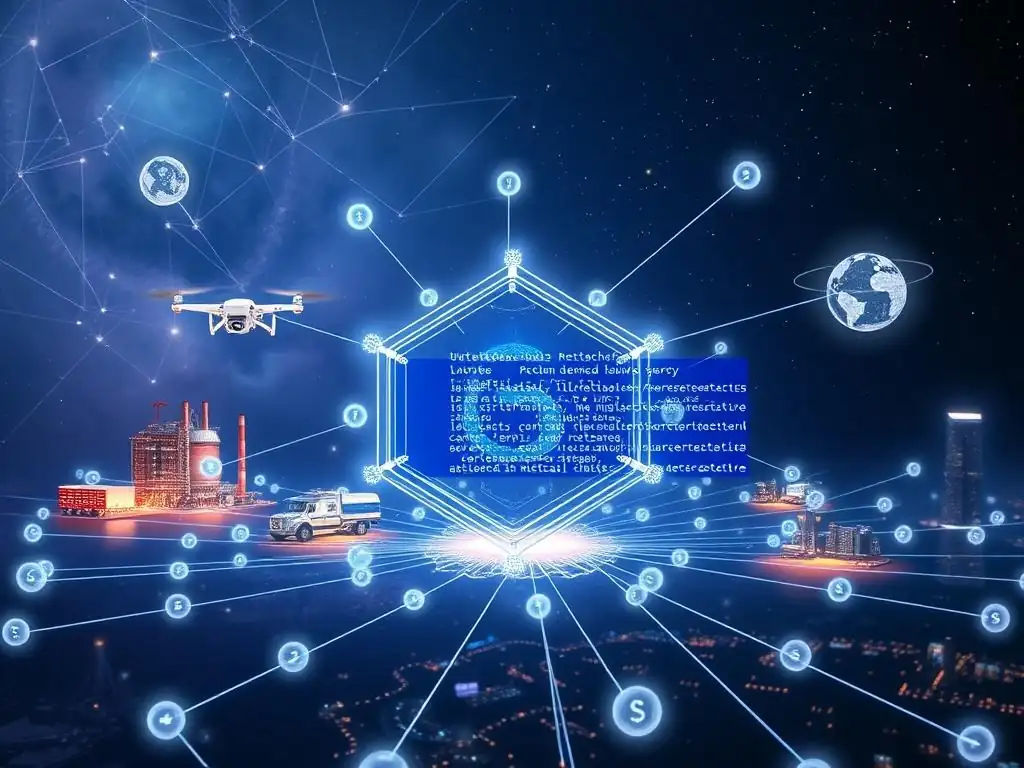
Welcome to Blockchain Trends, your go-to resource for demystifying the transformative power of blockchain! Ever wondered how blockchain extends far beyond cryptocurrencies? Dive in and discover how this groundbreaking technology is revolutionizing industries.
This week, we're unlocking the potential of smart contracts, venturing beyond the familiar realm of finance. Prepare to be amazed as we delve into intriguing smart contract use cases beyond finance, exploring their real-world applications and the exciting possibilities they unlock. Curious to see how smart contracts are reshaping supply chains, healthcare, and more? Let's explore!
- Supply Chain Management: Enhancing Transparency and Efficiency
-
Frequently Asked Questions
- What are some examples of non-financial smart contract applications?
- How can smart contracts improve supply chain transparency?
- What role do smart contracts play in securing healthcare data?
- How can smart contracts make voting systems more secure and transparent?
- What are some of the challenges in implementing smart contracts outside of the financial sector?
- Final Reflection: Unlocking Potential Beyond the Ledger
- Unleash the Power of Smart Contracts Now!
Supply Chain Management: Enhancing Transparency and Efficiency

Supply chain management is a complex web of interactions involving manufacturers, suppliers, distributors, logistics providers, and customers. Traditional supply chains often suffer from inefficiencies, lack of transparency, and vulnerability to fraud due to disparate systems and manual processes. This complexity makes them ripe for disruption by technologies like blockchain and smart contracts, offering a powerful set of smart contract use cases beyond finance to improve operations from end to end. The inherent immutability and automation capabilities of smart contracts provide a robust foundation for building more resilient and transparent supply chain networks.
The application of smart contracts within supply chains addresses critical pain points such as delayed payments, inaccurate record-keeping, and lack of trust among participants. By automating key processes and providing a single, shared source of truth, smart contracts can significantly reduce administrative overhead, minimize disputes, and accelerate the flow of goods and information. Exploring smart contract use cases beyond finance in this sector reveals substantial potential for cost savings and improved operational performance.
Smart Contracts for Tracking and Tracing Goods
One of the most significant smart contract use cases beyond finance in supply chain management is enhancing the tracking and tracing of goods. Smart contracts can be programmed to automatically record and verify each step a product takes along the supply chain, from raw material sourcing to final delivery. This creates an immutable audit trail on the blockchain, providing unprecedented visibility into the product's journey. For instance, a smart contract could trigger an update on the blockchain whenever a shipment passes a specific checkpoint or changes hands.
This level of detailed, automated tracking helps identify bottlenecks, verify product authenticity, and provide consumers with information about a product's origin and handling. In industries dealing with sensitive goods, like pharmaceuticals or food, tamper-proof tracking via smart contracts is crucial for safety and compliance. Reports indicate that blockchain-based tracking can reduce administrative costs associated with documentation by up to 20%, while also speeding up customs processes. The data recorded by these smart contracts ensures that all parties have access to the same, verified information, drastically reducing the potential for errors or fraudulent claims regarding shipment status or location.
Automating Payments and Agreements in Supply Chains
Smart contracts revolutionize payment and agreement processes in supply chains by automating them based on predefined conditions. Instead of relying on manual invoice processing and traditional payment methods, which can take weeks and involve significant administrative effort, smart contracts can execute payments automatically once specific milestones are met. For example, a smart contract can be set up to release payment to a supplier as soon as a shipment is verified as received at a distribution center, based on data inputs from IoT sensors or confirmed by participants on the network.
This automation dramatically speeds up transaction times and reduces the risk of payment disputes or delays. It also eliminates the need for intermediaries, potentially reducing transaction fees. Beyond payments, smart contracts can automate other contractual agreements within the supply chain, such as automatically triggering insurance payouts upon verifiable proof of damage during transit or adjusting inventory levels based on real-time sales data shared via the network. Such smart contract use cases beyond finance streamline operations and improve cash flow for all parties involved, fostering stronger relationships and greater efficiency.
Reducing Counterfeiting with Blockchain and Smart Contracts
Counterfeiting is a multi-billion dollar problem across various industries, from luxury goods and electronics to pharmaceuticals and automotive parts. Smart contracts, combined with blockchain technology, offer a powerful tool to combat this issue by providing verifiable proof of a product's authenticity and provenance. Each genuine product can be assigned a unique digital identity recorded on the blockchain, linked to its manufacturing details and journey through the supply chain.
Smart contracts can be used to manage the lifecycle of these digital identities, ensuring that only authorized entities can update information about the product and preventing the creation of duplicate or fraudulent records. Consumers or retailers can then verify the authenticity of a product by scanning a QR code or using an app that queries the blockchain and checks the associated smart contract.
This creates a transparent and tamper-proof history, making it incredibly difficult for counterfeit goods to infiltrate the legitimate supply chain. Estimates suggest that blockchain technology can help reduce the economic impact of counterfeiting by a significant margin, potentially saving industries billions annually by restoring consumer trust and protecting brand value.
Case Study: Maersk and IBM's TradeLens Platform
A prominent real-world example of smart contract use cases beyond finance in supply chain is the TradeLens platform, a collaboration between Maersk, the world's largest container shipping company, and IBM. TradeLens uses blockchain technology, incorporating smart contracts, to create a digital platform for supply chain partners to share information and collaborate. The platform aims to improve transparency and efficiency in the global shipping industry, which involves coordinating vast networks of ports, customs authorities, shipping lines, and logistics providers.
TradeLens leverages smart contracts to automate key processes and share data among participants in a secure and verifiable manner. For instance, smart contracts can automate the exchange of shipping manifests, track the movement of containers across different legs of their journey, and trigger events based on real-time data, such as automatically updating arrival times or initiating necessary documentation processes.
The platform has demonstrated the potential to reduce transit times and costs, with reports indicating a potential reduction in the time it takes for goods to move through the supply chain by up to 40% and a significant decrease in the manual effort required for documentation, potentially saving thousands of dollars per shipment in administrative overhead. This case study highlights the transformative power of smart contract use cases beyond finance in revolutionizing complex global logistics.
Frequently Asked Questions
What are some examples of non-financial smart contract applications?
Beyond finance, smart contracts are being used in supply chain management to track goods and ensure authenticity, in healthcare for secure data sharing, and in voting systems for transparent and verifiable elections.
How can smart contracts improve supply chain transparency?
Smart contracts can automate the tracking of products from origin to consumer, creating an immutable record of each step. This enhances supply chain visibility and helps to prevent counterfeiting.
What role do smart contracts play in securing healthcare data?
Smart contracts can control access to patient data, ensuring that only authorized individuals can view or modify sensitive information. This improves data privacy and data security, while also facilitating interoperability between healthcare providers.
How can smart contracts make voting systems more secure and transparent?
Smart contracts can be used to create a tamper-proof voting system where votes are recorded on a blockchain and are publicly auditable. This increases election integrity and reduces the risk of fraud.
What are some of the challenges in implementing smart contracts outside of the financial sector?
Challenges include scalability limitations, the need for clear legal frameworks, and the complexity of development and deployment. Overcoming these challenges is crucial for wider adoption of smart contracts.
Final Reflection: Unlocking Potential Beyond the Ledger
The exploration of smart contract use cases beyond finance reveals a landscape brimming with untapped potential. The true power of smart contracts lies not just in revolutionizing financial transactions, but in their capacity to redefine trust and efficiency across diverse sectors. From supply chain management to healthcare, the applications are vast and transformative, promising a future where automation and transparency are the cornerstones of our interactions.
This journey into the non-financial applications of smart contracts has profoundly underscored the importance of innovation and adaptability. Witnessing the ingenuity with which these contracts are being applied to solve real-world problems is inspiring, highlighting the potential for technology to truly improve lives. The future is already here – it's just not evenly distributed.
- William Gibson. This quote resonates deeply, reminding us that the widespread adoption of these technologies hinges on our collective effort to understand and implement them responsibly.
As we conclude this exploration, I invite you to consider the possibilities within your own field. How can smart contracts, with their inherent security and automation, streamline processes, build trust, and unlock new opportunities? The future is not predetermined; it is shaped by the choices we make today. Embrace the potential, explore the possibilities, and become a part of the movement that is redefining the boundaries of what is possible with smart contract technology.
Unleash the Power of Smart Contracts Now!
Thank you for exploring the world of smart contracts and their exciting potential beyond finance! We hope this guide has inspired your imagination and provided a solid foundation for discovering new applications. Now, it's time to put that knowledge into action.
Here's how you can get started:
- Begin creating your own non-financial smart contract. Select a simple use case relevant to your industry or personal interests and experiment with different blockchain platforms.
- Share this article with your network to encourage others to explore the broad range of smart contract applications. Let’s grow the conversation!
- Identify at least three challenges in your daily life or workplace that could potentially be addressed using smart contracts.
What innovative use case for smart contracts are you most eager to explore? Share your ideas in the comments below!
Leave a Reply