
Oracles Unleashed: Advanced Data Integration for Smart Contracts

Welcome to Blockchain Trends, your gateway to understanding the revolutionary impact of blockchain technology beyond the hype.
Ever wondered how smart contracts access reliable, real-world information? Dive into our latest article, "Oracles Unleashed: Advanced Data Integration for Smart Contracts," where we demystify blockchain oracles data integration. Discover how these crucial bridges are shaping the future of decentralized finance and enterprise applications, and unlock the potential of truly intelligent smart contracts. Ready to explore the power of connected blockchains?
Oracles Unleashed: Advanced Data Integration for Smart Contracts
- Introduction to Blockchain Oracles and Smart Contract Data
- The Need for Advanced Data Integration in Smart Contracts
- Exploring Different Types of Blockchain Oracles
- Advanced Techniques for Data Integration with Oracles
- Building Secure and Reliable Oracle Connections
- Real-World Applications of Advanced Oracle Data Integration
- The Future of Blockchain Oracles and Data Integration
- Conclusion: Unleashing the Potential of Smart Contracts with Robust Data Integration
-
Frequently Asked Questions
- What are blockchain oracles and why are they important?
- How do blockchain oracles facilitate "Blockchain oracles data integration" for smart contracts?
- What are some common types of data that blockchain oracles can provide?
- What are the potential challenges or risks associated with using blockchain oracles?
- What is the future of "Blockchain oracles data integration" and its impact on decentralized systems?
- Final Reflection: Bridging the On-Chain and Off-Chain Worlds
- Unlock the Power of Oracles: Build Your Future Now!
Introduction to Blockchain Oracles and Smart Contract Data
The Crucial Role of Oracles in Smart Contract Functionality
Smart contracts are self-executing agreements with the terms directly written into code. They reside on a blockchain and automatically execute actions when predetermined conditions are met. However, a fundamental limitation arises because smart contracts, by design, exist within the isolated, deterministic environment of the blockchain.
They cannot directly access data from the outside world – information like real-world asset prices, weather conditions, election results, or the status of a shipment. This inherent inability to connect with external data sources severely restricts the potential use cases for smart contracts, confining them primarily to operations based solely on on-chain data, such as cryptocurrency transfers or token swaps.
This is where blockchain oracles become indispensable. An oracle acts as a bridge, securely fetching information from off-chain sources and delivering it onto the blockchain for smart contracts to consume.
Without reliable oracle services facilitating blockchain oracles data integration, a smart contract designed to pay out an insurance claim based on hurricane data, execute a financial derivative based on a stock price, or manage a supply chain based on delivery status would be impossible. Oracles are the critical middleware that unlocks the real-world utility of smart contracts, enabling them to interact with and react to events happening outside the decentralized ledger.
Understanding External Data Integration for Blockchain Applications
Integrating external data into blockchain applications, particularly for smart contracts, is a complex process fraught with challenges. Unlike traditional centralized systems where applications can directly query databases or APIs, blockchain's security model relies on deterministic execution and consensus among distributed nodes. Introducing external data needs to be done in a way that doesn't compromise this security or introduce single points of failure or manipulation. The process involves identifying reliable data sources, retrieving the data, validating its accuracy and integrity, and finally, securely transmitting it onto the blockchain in a format that the smart contract can understand and act upon.
Effective blockchain oracles data integration requires more than just fetching a single data point. It often involves sophisticated mechanisms to ensure the data is timely, accurate, and resistant to tampering or manipulation. For instance, a smart contract might need the price of a cryptocurrency pair.
Relying on a single exchange's feed could be risky due to potential outages or price manipulation. A robust integration strategy would involve aggregating data from multiple exchanges, validating the data points against each other, and using statistical methods to arrive at a reliable median or average price before feeding it to the smart contract. This multi-faceted approach to external data integration is vital for building secure and trustworthy decentralized applications (dApps).
The Need for Advanced Data Integration in Smart Contracts
Limitations of On-Chain Data and the Oracle Problem
Smart contracts operate within a closed system. Their execution is deterministic, meaning that every node in the network executing the same transaction with the same initial state will arrive at the exact same result. This determinism is crucial for achieving consensus on the blockchain. However, it also means that smart contracts cannot spontaneously initiate outbound connections to external websites, APIs, or databases to retrieve real-world data. Such external calls would introduce non-determinism, as the external data might change, or the connection might fail, leading different nodes to potentially arrive at different results, thus breaking consensus.
This fundamental limitation gives rise to the "oracle problem": how can a smart contract reliably and securely obtain information about the real world without sacrificing the security and trust guarantees of the blockchain? While simple smart contracts can function purely on on-chain data (like token balances or transaction histories), any contract requiring information about events or conditions outside the blockchain (e.g., the outcome of a sports game, interest rates, weather conditions) must rely on an external entity to provide that data.
This external entity, the oracle, becomes a potential point of vulnerability, as its failure or malicious behavior could lead the smart contract to execute incorrectly, potentially causing significant financial losses. Addressing this problem requires advanced blockchain oracles data integration techniques.
Why Trustworthy Data Feeds are Essential for Smart Contract Security
The security and functionality of many smart contracts are directly dependent on the quality and trustworthiness of the data they receive from oracles. Consider a lending protocol in decentralized finance (DeFi) that uses a smart contract to manage collateralized loans. If a user deposits Ether (ETH) as collateral to borrow a stablecoin, the contract needs an accurate, up-to-date price feed for ETH/USD to calculate the loan-to-value (LTV) ratio and determine if the collateral needs to be liquidated.
An oracle providing a manipulated or stale price feed – for instance, reporting an artificially high ETH price – could prevent timely liquidation during a market crash, leading to bad debt for the protocol. Conversely, an artificially low price could trigger unnecessary liquidations, harming users.
The impact of unreliable data feeds extends beyond finance. A parametric insurance contract designed to pay farmers based on rainfall data requires highly accurate weather information. Incorrect data could lead to unfair payouts or non-payouts. Similarly, a supply chain contract automating payment upon delivery needs reliable data confirming the goods have arrived.
The integrity of the entire smart contract execution hinges on the integrity of the data input. Therefore, ensuring that oracle data feeds are not only accurate but also resistant to single points of failure, manipulation, and delays is paramount for the security and reliability of any smart contract utilizing external information. Robust blockchain oracles data integration is the cornerstone of secure dApp operation.
Exploring Different Types of Blockchain Oracles
Centralized Oracles: Advantages and Disadvantages
Centralized oracles represent the simplest form of oracle service, where a single entity or source is responsible for fetching off-chain data and transmitting it to the blockchain. This entity acts as the sole data provider. The primary advantage of centralized oracles is their simplicity and speed of implementation. They are typically easier and cheaper to set up and operate compared to decentralized alternatives. For smart contracts that require data from a specific, trusted source (like data directly from a company's own system for an internal supply chain application), a centralized oracle might seem sufficient.
However, the significant drawback of centralized oracles is the inherent risk associated with a single point of failure and trust. If the central entity providing the data is compromised, goes offline, or acts maliciously (either intentionally providing incorrect data or censoring data), the smart contract relying on it will fail or execute based on faulty information. This directly contradicts the core principles of decentralization and trustlessness that blockchains aim to provide.
While suitable for applications where a high degree of trust in the data provider already exists, centralized oracles are generally not appropriate for public, permissionless smart contracts where trust minimization is a priority, especially for applications handling significant value. The lack of redundancy and potential for censorship make them vulnerable compared to more advanced blockchain oracles data integration methods.
Decentralized Oracles: Enhancing Trust and Security
Decentralized oracles address the shortcomings of centralized models by distributing the data fetching and reporting process across a network of independent nodes or participants. Instead of relying on a single source, a decentralized oracle network typically sources data from multiple independent data providers or APIs. Multiple oracle nodes within the network retrieve this data and independently report it on-chain. The smart contract (or an on-chain aggregation contract) then processes these multiple reports, often by taking a median, average, or weighted average, and ignoring outliers, to arrive at a single, reliable data point.
This distributed approach significantly enhances trust and security. There is no single point of failure; if one oracle node goes offline or attempts to submit malicious data, the network can still function correctly based on the reports from honest nodes. It becomes significantly more difficult and expensive for an attacker to compromise the data feed, as they would need to corrupt a substantial portion of the independent nodes in the network.
Decentralized oracle networks also often incorporate staking mechanisms, where oracle nodes stake collateral that can be slashed if they provide inaccurate data, incentivizing honest behavior. This model is crucial for robust blockchain oracles data integration in high-value, public decentralized applications.
Hybrid Oracle Solutions: Combining Strengths for Optimal Performance
Hybrid oracle solutions seek to combine aspects of both centralized and decentralized approaches or leverage multiple types of oracles and data sources to achieve optimal performance, security, and cost-effectiveness for specific use cases. One form of a hybrid approach might involve a smart contract receiving data from a primary decentralized oracle network but having a fallback mechanism or a secondary check using a more centralized, perhaps enterprise-specific, data feed for certain conditions.
Another interpretation involves oracle networks that use a decentralized set of nodes but source data from a combination of public APIs and authenticated, potentially centralized, enterprise data feeds.
Furthermore, hybrid solutions can refer to the use of different types of oracles within a single application. For example, a DeFi protocol might use a decentralized network for volatile price feeds but rely on a more traditional, centralized oracle for static or infrequently updated data like exchange rates for less common currency pairs.
The goal is to tailor the oracle solution to the specific data requirements, risk tolerance, and performance needs of the smart contract. By intelligently combining different oracle types and data sourcing strategies, developers can build more resilient and efficient applications, showcasing advanced blockchain oracles data integration techniques adapted to diverse needs.
Popular Oracle Networks: Chainlink, Band Protocol, API3
Several prominent projects have emerged as leaders in the blockchain oracle space, each offering different architectures and approaches to solving the oracle problem and facilitating blockchain oracles data integration. Chainlink is arguably the largest and most widely adopted decentralized oracle network, providing a broad range of data feeds (prices, events, etc.) and verifiable randomness to smart contracts across numerous blockchains. Its network consists of a large number of independent oracle nodes that retrieve data from various sources and aggregate it on-chain or via off-chain reporting mechanisms.
Band Protocol is another significant decentralized oracle framework that connects smart contracts with external data. It focuses on providing customizable oracle scripts that allow developers to define the data sources and aggregation logic for specific applications. API3 takes a different approach with its "first-party oracles," where APIs themselves run their own oracle nodes ("Airnodes") to deliver data directly on-chain, aiming to reduce the number of intermediaries. These networks, among others, are continuously innovating to improve data reliability, security, and cost-efficiency, driving the evolution of blockchain oracles data integration.
Advanced Techniques for Data Integration with Oracles
Data Aggregation and Validation Strategies
Advanced blockchain oracles data integration relies heavily on sophisticated data aggregation and validation strategies to ensure the accuracy and reliability of the information delivered to smart contracts. Instead of relying on a single data point from one source, decentralized oracle networks typically gather data from multiple independent data providers (e.g., various cryptocurrency exchanges for a price feed). These raw data points are then processed using aggregation algorithms.
Common strategies include calculating the median value (which is resistant to extreme outliers), the average, or a volume-weighted average for price data. Outlier detection and filtering are crucial steps to discard potentially malicious or erroneous data points.
Validation extends beyond simple aggregation. Oracle networks may employ reputation systems for nodes, requiring nodes to have a history of providing accurate data. Cryptographic proofs, such as TLS Notarization or other forms of data source authentication, can be used to cryptographically verify that the data originated from the claimed source and was not tampered with in transit. These layered approaches to aggregation and validation significantly increase the confidence that the final data point delivered on-chain is a true reflection of the real-world information, minimizing the risk of smart contract failure due to faulty data.
Using Multiple Oracles for Redundancy and Accuracy
A key technique for enhancing the reliability and security of blockchain oracles data integration is the use of multiple independent oracle nodes or even multiple distinct oracle networks for a single data feed. While a decentralized oracle network already uses multiple nodes, a critical smart contract might be configured to request data from, for example, ten different nodes within the network rather than just three.
The contract or an associated aggregation contract then waits for a sufficient number of responses (e.g., seven out of ten) and aggregates them. This provides redundancy; if a few nodes are slow, offline, or malicious, the contract can still receive valid data from the others.
Taking this further, some high-assurance applications might integrate data feeds from entirely different oracle networks. For instance, a critical DeFi protocol might source ETH/USD price data from both Chainlink and Band Protocol feeds, perhaps using one as the primary source and the other as a backup or cross-validation mechanism. While more complex and potentially more expensive, querying multiple independent oracles significantly reduces the risk associated with reliance on any single set of infrastructure or consensus mechanism, providing a robust layer of security for blockchain oracles data integration supporting valuable assets.
Timestamping and Data Provenance for Auditability
For critical applications, it's not enough to simply receive data; it's also essential to know when the data was fetched and where it came from. Timestamping the data point when it is retrieved by the oracle node and recording this timestamp on-chain alongside the data allows smart contracts to verify the freshness of the information. Smart contracts can be designed to reject data that is too old (stale), preventing execution based on outdated market prices or event statuses. This is particularly important for volatile data like asset prices.
Furthermore, recording data provenance – details about the specific oracle node(s) that provided the data and the original off-chain source(s) they queried (e.g., the specific API endpoint or data provider) – provides a trail for auditability. In the event of a dispute or if a smart contract acts unexpectedly, developers and users can trace back exactly which oracle provided which data at what time and from which source.
This transparency is vital for debugging, verifying correct oracle behavior, and building trust in the overall system. Secure blockchain oracles data integration includes not just delivering data but also providing verifiable context about its origin and freshness.
Building Secure and Reliable Oracle Connections
Smart Contract Design Considerations for Oracle Integration
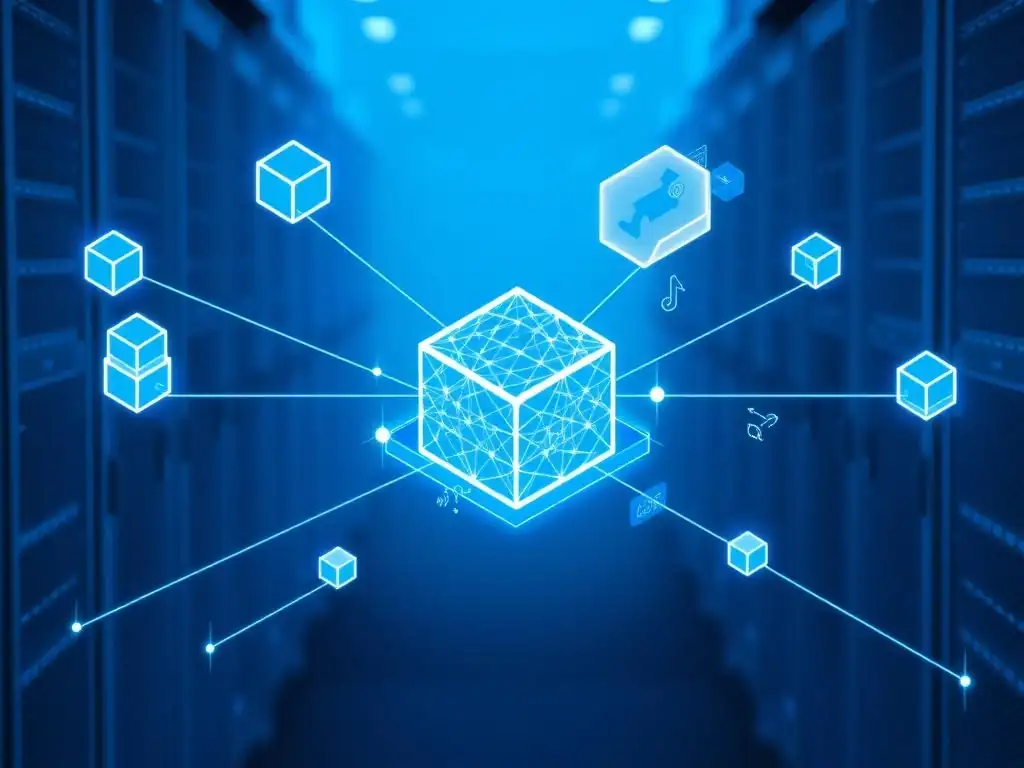
Integrating oracle data securely requires careful design of the smart contract itself. Smart contracts should never blindly trust data received from an oracle. Instead, they should incorporate checks and safeguards. A fundamental consideration is to use a pull mechanism rather than a push mechanism where possible. In a pull model, the smart contract initiates the request for data when it needs it, and the oracle responds. This gives the contract more control. When using a push model (where the oracle submits data unsolicited), the contract must implement strict access control ( onlyOracle modifier in Solidity, for example) to ensure that only the designated oracle address can update the data feed state variable.
Smart contracts should also validate the received data before acting upon it. This might involve checking if the data falls within a reasonable range (e.g., a price feed is not zero or an absurdly high number), verifying the timestamp to ensure freshness, or checking that the data was reported by a sufficient number of nodes if using a decentralized oracle.
Implementing circuit breaker patterns is also crucial; if data feeds are consistently stale, erroneous, or unavailable, the contract should pause or enter a safe mode rather than executing potentially harmful operations. Robust smart contract design is as critical as the oracle infrastructure itself for secure blockchain oracles data integration.
Security Best Practices for Oracle Interactions
Interacting with oracles introduces specific security considerations that developers must address. One major risk is the oracle's address being compromised or spoofed. As mentioned, using access control modifiers ensures that only the legitimate oracle contract or address can write data. Another best practice is to design contracts to handle potential oracle downtime or delays gracefully. Smart contracts shouldn't halt indefinitely waiting for an oracle response; implementing timeouts and fallback mechanisms is essential. If data isn't received within a certain block time or time period, the contract should handle this error state without breaking.
Furthermore, developers should be wary of "data poisoning" attempts where malicious actors try to manipulate the data sources that oracles query. While decentralized oracles mitigate this by aggregating from multiple sources, developers integrating with any oracle should understand the oracle network's data sourcing methodology and its resilience to source-level attacks. For example, if an oracle primarily sources from a single DEX, that DEX could be subject to flash loan attacks that temporarily manipulate prices. Choosing oracles that aggregate from numerous, diverse, and high-quality sources is a key security practice in advanced blockchain oracles data integration.
Handling Oracle Data Errors and Malicious Attacks
Despite best efforts, oracle data can occasionally be erroneous (due to source issues, network problems) or deliberately malicious. Smart contracts and oracle integration layers need robust error handling mechanisms. If an oracle reports data that fails validation checks within the smart contract (e.g., stale timestamp, out of range value), the contract should revert the transaction or log the error without executing based on the bad data. Some oracle networks provide error codes or status indicators alongside the data, which smart contracts can interpret.
For handling potentially malicious data or oracle node misbehavior in decentralized networks, dispute resolution systems are often employed. If a user or another oracle node suspects that a node has submitted incorrect data, they can initiate a challenge. This often involves staking a bond and providing evidence.
The oracle network's consensus mechanism or a dedicated dispute resolution layer then determines the validity of the data. If the original data is found to be incorrect, the offending node's stake may be slashed, and the challenger rewarded. These mechanisms, while adding complexity, are vital for maintaining the integrity of blockchain oracles data integration in trust-minimized environments.
Real-World Applications of Advanced Oracle Data Integration
DeFi (Decentralized Finance) and Price Feed Oracles
Decentralized Finance (DeFi) is the most prominent sector relying heavily on advanced blockchain oracles data integration, particularly price feed oracles. Protocols offering lending, borrowing, stablecoins, derivatives, and decentralized exchanges require accurate, real-time price data for various assets (cryptocurrencies, fiat currencies, commodities) to function correctly. For example, Aave, a leading decentralized lending protocol, uses oracle price feeds to determine the value of collateral deposited by users and to calculate liquidation thresholds. If the value of deposited collateral falls below a certain level relative to the borrowed amount, the oracle price feed triggers a liquidation event via the smart contract.
The scale of data required is immense. A major oracle network might provide hundreds of different price feeds, updated every few minutes or even seconds for highly volatile pairs, serving thousands of smart contracts and securing billions of dollars in Total Value Locked (TVL). The accuracy and timeliness of these feeds are paramount.
Stale or manipulated price data can lead to significant losses for users and protocols, as demonstrated by various incidents in DeFi history where faulty oracles were exploited. Consequently, DeFi protocols prioritize integrating with highly reliable, decentralized oracle networks employing robust aggregation and security measures for their blockchain oracles data integration needs.
Supply Chain Management and Data Transparency
Blockchain technology offers significant potential for improving transparency and efficiency in supply chain management. However, tracking physical goods and verifying events in the real world requires bringing off-chain data onto the blockchain. Oracles enable this by feeding data related to shipment status, location tracking (via GPS data), environmental conditions (temperature, humidity from sensors), and customs clearance onto the blockchain ledger. A smart contract could then automate payments to suppliers upon verifiable proof of delivery at a specific milestone or trigger alerts if environmental conditions deviate from required parameters during transit.
Consider a shipment of perishable goods. IoT sensors on the shipment can collect temperature data. An oracle can retrieve this data periodically or when thresholds are breached and submit it to a blockchain. A smart contract linked to this shipment could automatically trigger an insurance claim if the temperature data confirms the goods were stored outside the acceptable range for a specified duration. This level of automated, verifiable data integration, facilitated by blockchain oracles data integration, enhances trust among supply chain participants and provides an immutable record of events.
Insurance and Parametric Insurance Contracts
Oracles are transforming the insurance industry, particularly through parametric insurance. Unlike traditional insurance, which requires a lengthy claims adjustment process based on assessing actual damages, parametric insurance contracts pay out automatically if a specific, predefined external event occurs and verifiable data confirms it. Examples include crop insurance triggered by insufficient rainfall data, flight delay insurance triggered by official flight status data, or catastrophe bonds triggered by seismic data exceeding a certain magnitude.
Oracles are essential for these contracts as they provide the definitive, tamper-proof data feed that determines whether the triggering event has occurred. For instance, a smart contract for crop insurance in a specific region might rely on an oracle providing aggregated rainfall data from multiple weather stations in that area. If the oracle reports that total rainfall during the growing season fell below the specified threshold (e.g., 10 inches), the smart contract automatically executes and distributes payouts to the insured farmers. This eliminates subjective assessment and speeds up the claims process significantly, enabled by precise blockchain oracles data integration.
Decentralized Identity (DID) Verification and Management
Decentralized Identity (DID) systems aim to give individuals more control over their digital identities and verifiable credentials. Oracles play a role in bridging the gap between off-chain identity verification processes and on-chain identity management or access control. While the core DID document might reside on a blockchain or decentralized ledger, verifying claims made within the DID (e.g., educational degrees, professional certifications, real-world KYC/AML checks) often requires interacting with traditional, centralized institutions or databases.
An oracle can act as a trusted gateway to verify such off-chain credentials. For example, a smart contract requiring proof of a user's age or professional license could request verification via an oracle. The oracle would interact with the relevant off-chain authority (like a university registry or government database) to confirm the credential associated with the user's DID.
The oracle would then cryptographically attest to the verification result on-chain, allowing the smart contract to proceed. This enables on-chain applications to leverage real-world identity attributes without requiring the user to reveal sensitive personal data directly on the blockchain, showcasing a privacy-preserving form of blockchain oracles data integration.
The Future of Blockchain Oracles and Data Integration
Emerging Oracle Technologies and Innovations
The field of blockchain oracles data integration is continuously evolving, driven by the increasing demands of complex decentralized applications and the need for greater security and efficiency. Emerging technologies are pushing the boundaries of what oracles can do. One area of innovation is verifiable computation, which allows oracle networks to perform complex computations on off-chain data and provide cryptographic proofs that the computation was performed correctly. This enables oracles to deliver not just raw data, but also derived data or the results of complex calculations (like financial modeling or machine learning inferences) to smart contracts in a trust-minimized way.
Another significant development is the integration of zero-knowledge proofs (ZKPs) into oracle designs. ZKPs can allow oracles to prove that a piece of data is valid or that a computation was performed correctly without revealing the underlying sensitive data itself. This has major implications for privacy-preserving smart contracts, such as those involving confidential financial data or personal identity information. Furthermore, research is ongoing into decentralized oracle governance models and incentive structures to ensure long-term sustainability, reliability, and resistance to collusion among oracle nodes. These innovations are paving the way for more sophisticated and secure blockchain oracles data integration.
The Impact of Oracles on Smart Contract Adoption
The development and maturation of robust oracle networks have been a critical factor in the growth and adoption of smart contracts beyond simple token transfers. Reliable access to real-world data is necessary for smart contracts to address a vast array of use cases across finance, insurance, supply chain, gaming, and more. Without trustworthy oracle data feeds, the utility of smart contracts would be severely limited, confined to purely on-chain logic.
As oracle technology becomes more sophisticated, accessible, and cost-effective, it lowers the barrier for developers to build complex, real-world-connected dApps. The availability of high-quality, decentralized data feeds encourages innovation and expands the types of problems that can be solved using blockchain technology. The increasing reliability of blockchain oracles data integration directly correlates with the increasing confidence developers and users have in deploying and interacting with smart contracts that manage significant value based on external information. Oracles are not just a component; they are an enabler of widespread smart contract adoption.
Cross-Chain Oracle Communication and Interoperability
With the proliferation of multiple blockchain networks, each potentially hosting smart contracts, the need for oracles to serve applications across different chains is becoming increasingly important. A smart contract on one blockchain might need data that originates from an application or event on another blockchain, or it might need data from a single off-chain source to be delivered to smart contracts on multiple chains simultaneously. This presents challenges related to cross-chain communication, data format compatibility, and maintaining security guarantees across disparate ecosystems.
Emerging solutions in cross-chain oracle communication aim to address these issues. This involves developing protocols and infrastructure that allow oracle networks to fetch data and deliver it reliably to smart contracts on various blockchains without compromising the security of either the oracle network or the target chain. Achieving seamless cross-chain blockchain oracles data integration is crucial for a more interconnected and interoperable decentralized ecosystem, enabling more complex dApps that span multiple ledgers and leverage data from diverse sources.
Conclusion: Unleashing the Potential of Smart Contracts with Robust Data Integration
Key Takeaways on Blockchain Oracles Data Integration
Blockchain oracles serve as the essential middleware connecting the deterministic world of smart contracts with the dynamic reality of off-chain data. They are critical for enabling smart contracts to react to real-world events, asset prices, and data, thereby expanding their utility far beyond simple token transfers. The "oracle problem" highlights the fundamental challenge of importing external data securely without compromising the blockchain's trust model. Reliable blockchain oracles data integration is not merely a feature but a necessity for building secure and functional decentralized applications that interact with the outside world.
Key aspects of robust oracle integration include: understanding the trade-offs between centralized and decentralized oracle models, employing advanced techniques like data aggregation from multiple sources, using multiple oracles for redundancy, and ensuring data freshness and provenance through timestamping and audit trails. Furthermore, secure smart contract design, careful handling of errors, and mitigation of malicious data attacks are paramount. Real-world applications in DeFi, supply chain, and insurance vividly demonstrate the transformative power of effective blockchain oracles data integration.
The Continued Evolution of Oracles in the Blockchain Ecosystem
As the blockchain ecosystem matures and smart contracts become increasingly complex and integral to various industries, the role and capabilities of oracles will continue to evolve. Innovations in verifiable computation, zero-knowledge proofs, and cross-chain interoperability are pushing the boundaries of what oracles can deliver, enabling more private, efficient, and interconnected decentralized applications. The ongoing development of robust, secure, and scalable oracle infrastructure is fundamental to unlocking the full potential of smart contracts and driving mainstream adoption of blockchain technology. The future of decentralized applications is inextricably linked to the advancement of reliable blockchain oracles data integration.
Frequently Asked Questions
What are blockchain oracles and why are they important?
Blockchain oracles are third-party services that provide smart contracts with external data. They are crucial because blockchains, by design, cannot directly access off-chain information, limiting their functionality without reliable data feeds.
How do blockchain oracles facilitate "Blockchain oracles data integration" for smart contracts?
Oracles act as a bridge, securely transmitting real-world data like price feeds, weather conditions, or election results to smart contracts. This integration allows smart contracts to react to external events and automate complex processes.
What are some common types of data that blockchain oracles can provide?
Oracles can provide a wide range of data, including financial market data, weather information, supply chain tracking data, and even voting results. The possibilities are virtually limitless, depending on the specific needs of the smart contract.
What are the potential challenges or risks associated with using blockchain oracles?
A primary concern is the oracle's reliability and security. If an oracle is compromised or provides inaccurate data, it can lead to smart contract vulnerabilities and financial losses. Oracle manipulation is a key risk factor.
What is the future of "Blockchain oracles data integration" and its impact on decentralized systems?
The future involves more sophisticated oracle networks, increased data verification methods, and a greater focus on decentralized oracle solutions. This will lead to more robust and trustworthy smart contracts, driving wider adoption of decentralized applications.
Final Reflection: Bridging the On-Chain and Off-Chain Worlds
The exploration of Blockchain oracles data integration reveals more than just a technical solution; it underscores a fundamental shift in how we perceive trust and data accessibility in the digital age. The ability to seamlessly connect smart contracts with real-world information is no longer a futuristic concept, but a present-day necessity for unlocking the full potential of decentralized applications. This integration is the key to moving beyond simple on-chain transactions and into a world of complex, data-driven agreements.
The impact of reliable oracles extends far beyond the technical realm, influencing the very fabric of trust and transparency in our increasingly digital society. Witnessing the evolution of oracles from theoretical concepts to practical implementations has been a testament to human ingenuity and the relentless pursuit of innovation. Data is the new oil, and oracles are the pipelines that deliver it to the engines of decentralized finance and beyond.
This quote encapsulates the transformative power of oracles in shaping the future of blockchain technology and its impact on various industries.
As we stand at the cusp of a new era of decentralized applications, let us not underestimate the power of reliable data integration. Consider how you can leverage the principles of transparency and accessibility, championed by blockchain oracles, in your own endeavors. Embrace the challenge of building bridges between the on-chain and off-chain worlds, and contribute to a future where trust is not just assumed, but verified through the power of data.
Unlock the Power of Oracles: Build Your Future Now!
Thank you for exploring the potential of advanced data integration with oracles! We hope this article has helped you understand how to create more robust and intelligent smart contracts. Now, it's time to put that knowledge into action.
Here are some key steps to start leveraging oracles today:
- Implement your first simple oracle integration by selecting a straightforward smart contract and connecting it to a basic data feed through a trusted oracle service. Experiment and learn as you go.
- Explore the variety of oracle providers available. Research different services and evaluate their strengths and limitations for your specific use cases.
- Share this article with fellow developers interested in decentralized technology. Help spread awareness and contribute to the collective knowledge within the blockchain community.
Are you ready to enhance your smart contracts with real-world data? What innovative oracle application will you pursue first? Share your ideas in the comments below!
Leave a Reply