
The Future of NFT Standards: Interoperability and CrossPlatform Creator Opportunities

Welcome to Blockchain Trends, your guide to navigating the evolving landscape of decentralized technology.
Dive into the world beyond crypto as we explore the transformative power of blockchain across industries. Are you ready to unlock the potential of interconnected digital assets? Today, we're delving into the groundbreaking topic of NFT standard interoperability benefits and how it's reshaping the creator economy. Discover how seamless communication between different NFT platforms is paving the way for a more fluid and lucrative future for artists and collectors alike. What opportunities await when NFTs can truly travel anywhere? Let's find out...
The Future of NFT Standards: Interoperability and Cross-Platform Creator Opportunities
- Introduction: The Evolving Landscape of NFT Standards
- Defining NFT Interoperability and Its Importance
- Current NFT Standards and Their Limitations
- The Benefits of NFT Standard Interoperability for Creators
- Cross-Platform Creator Opportunities Enabled by Interoperability
- Technological Solutions for Achieving NFT Interoperability
- The Role of Industry Collaboration in Shaping NFT Standards
- NFT Standard Interoperability Benefits: Overcoming Current Challenges
- The Future of NFT Standards: A Vision for a Connected Ecosystem
- Conclusion: Embracing Interoperability for a Thriving NFT Ecosystem
-
Frequently Asked Questions
- What are the primary benefits of NFT standard interoperability?
- How does NFT standard interoperability impact creators?
- What are some of the challenges in achieving true NFT standard interoperability?
- Beyond increased market access, what other benefits does interoperability offer to NFT holders?
- How might regulations impact the development and adoption of NFT standard interoperability?
- Final Reflection: Embracing the Interconnected NFT Future
- Unleash Your Creative Potential: Dive Deeper into the NFT Revolution!
Introduction: The Evolving Landscape of NFT Standards
Understanding the Current Fragmentation in NFT Ecosystems
The non-fungible token (NFT) market has experienced explosive growth, evolving from niche digital collectibles to a diverse asset class encompassing art, music, gaming assets, virtual real estate, and more. However, this rapid expansion has occurred across numerous distinct blockchain networks and platforms, each often operating within its own isolated ecosystem.
For instance, while Ethereum remains a dominant player with its ERC standards, major marketplaces like OpenSea primarily focused on Ethereum, Polygon, and Klaytn, others like Magic Eden built their initial success on Solana, and platforms like Objkt thrive on Tezos using the FA2 standard. This creates significant fragmentation, where an NFT minted on one blockchain or platform often cannot be easily transferred, traded, or utilized on another.
This lack of seamless interaction between different networks limits the potential reach and utility of NFTs. A collector holding an NFT on the Solana blockchain might find it challenging to display or use that asset within an Ethereum-based metaverse, or trade it on a marketplace primarily supporting Flow NFTs. This siloing restricts liquidity, hinders broad adoption, and complicates the user experience for both creators and consumers. Addressing this fragmentation through enhanced NFT standard interoperability benefits the entire ecosystem by unlocking new possibilities for asset fluidity and cross-platform engagement.
Why NFT Standard Interoperability Benefits are Crucial for Growth
Achieving true NFT standard interoperability is not merely a technical convenience; it is a fundamental requirement for the sustained growth and maturation of the digital asset space. Without the ability for NFTs to move freely and function across different platforms and blockchains, the market remains constrained by artificial boundaries. Creators are limited to the audience and features available within a single ecosystem, reducing their potential market size and revenue streams. For example, a game developer building on Polygon might miss out on players primarily active on Binance Smart Chain (BSC) because their in-game NFT assets aren't easily transferable.
The significant NFT standard interoperability benefits include expanding the addressable market for digital assets, increasing liquidity by allowing assets to be traded on multiple venues, fostering greater innovation through composability across ecosystems, and reducing the risk of vendor lock-in for creators and users. As the digital world becomes increasingly interconnected, the ability for digital assets to travel across different platforms – from games and metaverses to social networks and decentralized finance (DeFi) protocols – becomes paramount.
This enhanced fluidity ensures that the value and utility of an NFT are not confined to its point of origin but can be realized wherever the user chooses to engage.
Defining NFT Interoperability and Its Importance
What Does NFT Interoperability Really Mean?
NFT interoperability refers to the ability of a non-fungible token to be used, transferred, or recognized across multiple different platforms, applications, or blockchain networks, regardless of where it was originally minted. This goes beyond simple cross-chain transfers; it implies that the identity, metadata, and functionality of the NFT are preserved and understood in the new environment. For example, if an NFT represents a specific virtual sword in a game, true interoperability would mean that same sword could potentially be used in another compatible game or displayed in a virtual gallery on a different platform, with its unique attributes intact.
At its core, achieving NFT standard interoperability means establishing common protocols or mechanisms that allow disparate systems to communicate and interact regarding NFTs. This involves standardizing how NFTs are represented, how their ownership is verified, and how their associated data (like metadata describing the asset) is accessed and interpreted.
The goal is to move towards a future where digital assets are not trapped within proprietary silos but can flow freely, much like how physical goods can be bought in one country and used in another, or how a standard JPEG image file can be opened and viewed on virtually any computer or device. The potential NFT standard interoperability benefits for creators and users are immense, unlocking a more open and connected digital economy.
The Technical Challenges of Achieving Seamless NFT Transfers
Achieving seamless NFT interoperability faces significant technical hurdles, primarily stemming from the inherent differences between blockchain architectures. Different blockchains use distinct consensus mechanisms, smart contract languages (like Ethereum's Solidity vs. Solana's Rust), token standards (ERC-721, ERC-1155, FA2, etc. ), and transaction models. Directly transferring an NFT from one chain to another is often impossible without complex mechanisms. For instance, moving an ERC-721 NFT from Ethereum to Polygon typically involves 'locking' the NFT on Ethereum and 'minting' a wrapped or representative version on Polygon via a bridge, which introduces points of failure and complexity.
Furthermore, maintaining consistent metadata and functionality across platforms is challenging. An NFT's metadata, which describes its properties and links to the underlying asset (like an image file), might be stored differently or interpreted uniquely by various platforms. Ensuring that the provenance, rarity, and specific attributes of an NFT are accurately represented and verified across different ecosystems requires robust standardization and technical solutions.
Security is also a major concern; cross-chain bridges, while enabling transfers, have been targets for significant exploits, resulting in hundreds of millions of dollars in lost assets. Overcoming these challenges is critical to fully realizing the NFT standard interoperability benefits for users and developers.
Current NFT Standards and Their Limitations
Examining ERC-721: The Foundation of NFTs
ERC-721, proposed in 2018 and finalized as an Ethereum standard, is widely considered the foundational standard for non-fungible tokens. It defines a minimum interface that a smart contract must implement to allow unique tokens to be managed, owned, and traded. Each ERC-721 token is distinct and has a unique identifier, making it ideal for representing individual assets like a specific piece of digital art or a unique in-game item. Major early NFT projects like CryptoKitties and many prominent art NFTs utilize this standard.
While revolutionary for establishing the concept of unique digital ownership on a blockchain, ERC-721 has limitations, particularly regarding efficiency for large collections or managing fungible and non-fungible assets together. Transferring multiple ERC-721 tokens requires individual transactions for each token, which can be slow and costly on networks like Ethereum, especially during periods of high network congestion. This standard primarily focuses on the uniqueness and ownership transfer of a single asset type per contract, making it less flexible for complex scenarios involving bundles of items or mixed asset types, highlighting areas where enhanced NFT standard interoperability benefits could improve efficiency.
Exploring ERC-1155: Efficiency and Flexibility for Multiple Assets
ERC-1155, developed by Enjin and later adopted as an Ethereum standard, introduced a significant improvement over ERC-721 by allowing a single smart contract to manage both fungible (like currency or identical items) and non-fungible tokens. This "multi-token standard" enables the creation and management of collections containing various types of assets within one contract. A key feature is the ability to batch transfer multiple tokens (either fungible or non-fungible) in a single transaction, drastically reducing gas costs and improving transaction speed compared to individual ERC-721 transfers.
This standard is particularly useful for gaming and applications involving numerous distinct asset types or large quantities of identical items. For example, a game could use one ERC-1155 contract to manage unique character skins (non-fungible) and stacks of in-game currency or common consumables (fungible).
However, while more efficient for batch operations and versatile in handling mixed asset types, ERC-1155 doesn't inherently solve the problem of interoperability between different blockchains or between different ERC-1155 contracts on the same chain if they don't share common metadata or functionality conventions. Achieving true NFT standard interoperability benefits still requires layers on top of these base standards.
Analyzing ERC-998: Composable NFTs and Their Potential
ERC-998, also known as the Composable standard, allows NFTs to own other NFTs or even fungible tokens (like ERC-20s). This creates "composable" or "nested" NFTs, where a single token can represent a bundle of other digital assets. For instance, an ERC-998 token representing a virtual spaceship could own other NFTs representing its components (like engines, weapons) and fungible tokens representing fuel or ammunition. This standard introduces a hierarchical structure to digital ownership on the blockchain.
The potential of ERC-998 lies in enabling more complex and realistic digital assets and experiences, particularly in gaming and virtual worlds where bundling assets makes sense. It allows for the creation of digital items that can be upgraded or customized by adding or removing other tokens they own.
However, ERC-998 is less widely adopted than ERC-721 or ERC-1155, and its complexity can pose challenges for integration with existing platforms and marketplaces. Achieving widespread NFT standard interoperability benefits with composable assets requires platforms to understand and correctly interpret these nested ownership structures, which adds another layer of complexity to cross-platform compatibility.
Analyzing FA2: A Feature-Rich Standard on Tezos
On the Tezos blockchain, the primary standard for tokens, including NFTs, is FA2 (TZIP-012). FA2 is designed to be a flexible and feature-rich standard that can accommodate various token types, including non-fungible and fungible tokens, within a single framework. It provides a unified interface for token management, allowing developers to implement different token behaviors and permissions. This flexibility means that developers can create custom token logic while still adhering to a standard interface that wallets and applications can interact with.
FA2 supports functionalities similar to both ERC-721 and ERC-1155, allowing for unique NFTs, collections of identical items, and even more complex token behaviors. Platforms like Objkt and Teia extensively use the FA2 standard for their NFT marketplaces. While powerful within the Tezos ecosystem, NFTs based on the FA2 standard face inherent challenges when interacting with ecosystems primarily based on Ethereum's ERC standards or other blockchains like Solana. Bridging these different standard implementations is necessary to unlock cross-chain NFT standard interoperability benefits, requiring specific technical solutions to translate or wrap assets between chains.
The Benefits of NFT Standard Interoperability for Creators
Expanding Market Reach: Reaching New Audiences Across Platforms
One of the most significant NFT standard interoperability benefits for creators is the ability to dramatically expand their potential market reach. Currently, a creator minting an NFT on a platform built on Ethereum might primarily access the audience using Ethereum-compatible wallets and marketplaces. If that NFT could seamlessly exist and be traded or used on platforms on Solana, Tezos, or Polygon, the creator's potential audience would multiply. This is crucial for artists, musicians, and game developers whose work could appeal to users across different blockchain communities.
Imagine a digital artist whose primary audience is on a Tezos-based platform but wants to tap into the larger collector base on Ethereum. With true interoperability, they wouldn't need to choose one chain or re-mint their work; their NFTs could potentially be discovered and purchased by collectors on any major platform. This breakdown of walled gardens allows creators to maximize exposure, connect with a broader fanbase, and potentially achieve higher sales volumes by making their digital assets available to a global, multi-chain audience. The enhanced accessibility provided by NFT standard interoperability benefits creators by removing geographical and platform-specific limitations.
Increased Liquidity: Facilitating Trade on Multiple Marketplaces
NFT standard interoperability benefits liquidity by allowing the same digital asset to be listed and traded on multiple marketplaces simultaneously, regardless of the blockchain they primarily support. When an NFT is confined to a single platform or blockchain, its potential buyers are limited, which can suppress its price and make it harder for holders to sell when they choose. Enabling an NFT to be traded on OpenSea, Magic Eden, Rarible, and other platforms concurrently means it's exposed to a much larger pool of potential buyers.
This increased competition among buyers across different venues naturally leads to more efficient price discovery and potentially higher valuations for the NFT. For collectors, it means they have more options for buying and selling, reducing friction and transaction costs associated with moving assets between different ecosystems. A more liquid market is healthier for everyone involved, facilitating easier entry and exit for participants and providing creators with confidence that their work can be readily traded. The positive impact of NFT standard interoperability benefits the entire trading ecosystem by enhancing market efficiency.
Enhanced Composability: Building Complex and Innovative NFT Projects
Interoperability significantly enhances the potential for composability, allowing creators to build more complex and innovative projects that span different applications and even different blockchains. Composability refers to the ability to combine different digital assets or protocols like building blocks. With interoperable NFTs, a creator could design a project where an NFT minted on one chain represents a character, and an NFT minted on another chain represents an item that character can use.
This could manifest in various ways: a virtual land plot NFT on one metaverse platform could host structures represented by NFTs from another; in-game assets from one game could grant special abilities in another; or digital art NFTs could be integrated into decentralized social media profiles or virtual reality galleries across different networks. The ability to mix and match assets and functionalities from various sources fuels creativity and enables the development of entirely new types of decentralized applications and experiences that were previously impossible due to siloed ecosystems.
This level of integration is a direct result of achieving NFT standard interoperability benefits.
Reduced Vendor Lock-in: Empowering Creators with Greater Control
Currently, creators often face the risk of vendor lock-in when they commit to minting and managing their NFTs on a specific platform or blockchain. They become dependent on the rules, fees, and features of that particular ecosystem. If the platform changes its policies, increases fees, or even shuts down, the creator's assets and their ability to interact with their audience can be negatively impacted. True NFT standard interoperability benefits creators by reducing this dependency.
If an NFT can exist and be managed across multiple platforms and blockchains, creators are no longer tied to a single provider. They gain the flexibility to move their assets, their community interactions, and their future projects to whichever platform best serves their needs at any given time. This empowers creators with greater control over their digital assets and their relationship with their audience, fostering a more resilient and creator-centric ecosystem. It shifts the power dynamic from platforms to the creators themselves, ensuring their digital legacy is not beholden to a single entity.
Cross-Platform Creator Opportunities Enabled by Interoperability
Creating NFT-Based Games with Cross-Game Asset Compatibility
One of the most exciting cross-platform opportunities enabled by NFT standard interoperability is the development of games where assets can be used across different titles. Imagine purchasing a unique weapon or character skin as an NFT in one game and being able to use that same asset, with its properties intact, in another entirely different game developed by a different studio on a different blockchain. This goes beyond simple cosmetic transfers; it could involve assets having consistent utility or value across a network of games.
This requires not only technical interoperability at the token standard level but also collaboration between game developers to agree on how shared assets function within their respective game logic. Early examples exist, like projects aiming to create shared asset universes, but widespread adoption requires greater standardization and technical solutions for asset recognition and functionality translation across diverse game engines and blockchain backends. The potential NFT standard interoperability benefits for the gaming industry are transformative, creating persistent digital identities and inventories for players.
Developing Metaverse Experiences with Unified Digital Identities
Metaverses are envisioned as persistent, interconnected virtual worlds. A key component of a truly open metaverse is the ability for users to own and carry their digital assets and identity across different virtual environments, regardless of who built them or what technology they run on. NFT standard interoperability is crucial for this vision, allowing users to own digital clothing, avatars, virtual land, or collectibles as NFTs on one platform (e.g., Decentraland, The Sandbox, or a custom environment) and seamlessly use or display them in another.
This requires not only the technical ability to transfer the NFT but also for different metaverse platforms to recognize and render these assets correctly. Achieving unified digital identities means a user's avatar, represented by an NFT, could potentially traverse different virtual worlds, retaining its unique characteristics and associated digital possessions. This level of fluidity enhances user experience, fosters a sense of persistent identity, and unlocks new economic opportunities for creators building assets for a multi-metaverse future. The NFT standard interoperability benefits extend directly to building a truly open and user-owned virtual space.
Decentralized social media platforms aim to give users greater control over their data and content, often leveraging blockchain technology. NFT standard interoperability can play a significant role here by allowing users to own their digital content – such as posts, photos, videos, or even their profile itself – as NFTs that are not tied to a single platform. This means a creator could mint their digital art or a significant post as an NFT and potentially display or share it across multiple decentralized social networks or other platforms.
This portability of content empowers creators and users, reducing dependence on any single social media giant. It allows users to curate their digital identity and portfolio across different online spaces, fostering a more resilient and user-centric digital presence. While still in early stages, the development of standards for tokenizing digital content and ensuring its interoperability across different decentralized social platforms could fundamentally change how we interact online, providing tangible NFT standard interoperability benefits for content ownership and distribution.
Fostering New Forms of Digital Ownership and Monetization
Interoperability opens doors to entirely new models of digital ownership and monetization for creators. Beyond simply selling unique digital items, creators can explore possibilities like fractional ownership of high-value NFTs across different platforms, renting out NFT assets for use in games or metaverses, or creating complex digital rights management systems where NFT ownership grants specific permissions or access across multiple services.
Consider a musician who releases an album as a collection of NFTs. With interoperability, these NFTs could grant access to exclusive content on a fan platform, provide early access to virtual concerts in a metaverse, and serve as proof of ownership for physical merchandise discounts – all facilitated by the same NFT across different digital touchpoints. This expanded utility, made possible by NFT standard interoperability benefits, allows creators to build deeper, more multifaceted relationships with their audience and unlock diverse revenue streams beyond initial sales.
Technological Solutions for Achieving NFT Interoperability
Cross-Chain Bridges: Enabling NFT Transfers Between Blockchains
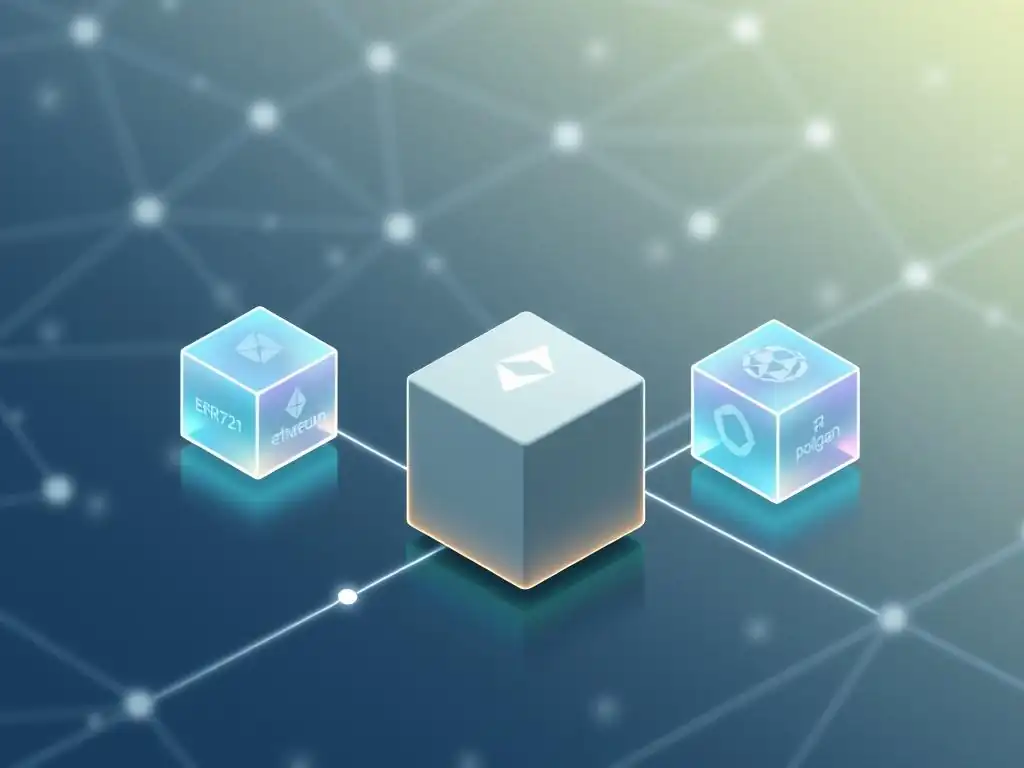
Cross-chain bridges are one of the primary technological solutions currently employed to enable the transfer of assets, including NFTs, between different blockchain networks. These bridges typically work by locking the NFT on its original chain and minting a corresponding "wrapped" or representative version of the NFT on the destination chain. When the wrapped NFT is transferred back to the original chain, the wrapped version is burned, and the original NFT is unlocked. Examples include the Polygon Bridge for transferring assets between Ethereum and Polygon, or various bridges connecting Ethereum with BSC, Solana, and other networks.
While essential for facilitating initial cross-chain movement, bridges introduce complexity and potential security risks. They often rely on sets of validators or multi-signature schemes, which can become centralized points of failure. Exploits targeting bridge vulnerabilities have resulted in substantial financial losses, such as the Ronin Network bridge hack in March 2022, which lost over $600 million. Developing more secure and decentralized bridging solutions is crucial for realizing the full NFT standard interoperability benefits without compromising asset safety.
Layer-2 Scaling Solutions: Improving Transaction Speed and Reducing Costs
Layer-2 scaling solutions, built on top of Layer-1 blockchains like Ethereum, play a role in improving the efficiency and cost-effectiveness of NFT transactions, which indirectly supports interoperability. Solutions like rollups (Optimistic and ZK-Rollups) and sidechains (like Polygon) process transactions off the main chain, significantly increasing throughput and reducing gas fees. Once transactions are finalized on the Layer-2, they are batched and anchored back to the Layer-1 chain for security and finality.
For NFTs, this means minting, trading, and transferring assets within a Layer-2 environment becomes much faster and cheaper. While Layer-2s primarily address scaling within an ecosystem (e.g., on Ethereum), they also facilitate cross-chain interoperability by providing more efficient "on-ramps" and "off-ramps" between the Layer-1 and other networks via bridges connected to the Layer-2. For instance, transferring an NFT from Ethereum to Polygon (a sidechain) is a common example of using a Layer-2-like solution for cross-chain movement, offering cost and speed benefits essential for widespread NFT standard interoperability benefits.
Standardized Metadata Formats: Ensuring Consistent NFT Representation
Beyond the token standard itself (like ERC-721 or FA2), the metadata associated with an NFT is crucial for defining its properties, linking to the digital asset it represents, and ensuring it is correctly displayed and understood across different platforms. Currently, metadata formats can vary, leading to inconsistencies in how NFTs appear or function on different marketplaces or applications. For example, while some platforms follow standards like EIP-2309 for ERC-721 metadata, variations and extensions exist.
Developing and widely adopting standardized metadata formats (e.g., using schema like JSON or XML with agreed-upon fields for name, description, image URL, attributes, etc.) is essential for achieving seamless NFT standard interoperability benefits. This ensures that when an NFT moves from one platform to another, its identity and characteristics are preserved and accurately rendered. Efforts towards cross-chain metadata standards and decentralized storage solutions for metadata (like IPFS or Arweave) are critical steps in this direction, preventing data loss or misinterpretation as NFTs traverse the digital landscape.
Atomic Swaps: Facilitating Direct NFT Exchanges Without Intermediaries
Atomic swaps are a technology that allows users to directly exchange cryptocurrencies or tokens from different blockchains without needing a centralized third party or exchange. While more commonly discussed for fungible crypto assets (like swapping Bitcoin for Litecoin), the principle can be applied to NFTs, enabling direct peer-to-peer exchanges of non-fungible tokens potentially residing on different chains. This process relies on smart contracts and cryptographic hash functions to ensure that either both sides of the trade are completed successfully, or neither is.
Implementing atomic swaps for NFTs is technically complex due to the unique nature of each token and the need to verify authenticity and ownership across chains simultaneously. However, successful implementation could offer a highly decentralized method for cross-chain NFT trading, bypassing the need for traditional marketplaces or potentially vulnerable bridges for direct exchanges. While not a solution for general asset transfer or use across platforms, atomic swaps are a promising technology for enabling direct, trustless trading that supports certain aspects of NFT standard interoperability benefits, particularly for secondary market activity.
The Role of Industry Collaboration in Shaping NFT Standards
The Importance of Open-Source Development and Standardization
The future of NFT standard interoperability heavily relies on open-source development and industry-wide standardization efforts. Proprietary standards or closed ecosystems will only perpetuate fragmentation. Open standards, accessible to anyone, allow developers across different companies and communities to build compatible applications, wallets, and platforms. Just as the internet thrived on open protocols like TCP/IP and HTTP, the decentralized web and the NFT space need similar foundational standards.
Initiatives like the Ethereum Improvement Proposals (EIPs) process, which led to ERC-721 and ERC-1155, demonstrate the power of community-driven, open standardization. Extending this collaborative approach to define standards for cross-chain communication, metadata representation, and potentially universal asset identifiers is crucial. Open-source implementations of these standards allow for transparency, security audits, and rapid iteration, accelerating the path towards widespread NFT standard interoperability benefits. Collaboration among blockchain foundations, development teams, and platform providers is key to defining the common language for digital assets.
Key Organizations and Initiatives Driving NFT Interoperability
Several organizations and initiatives are actively working to improve NFT standard interoperability. The Ethereum Foundation and the wider Ethereum community continue to refine existing standards and explore new ones. Projects like LayerZero and Wormhole are developing generalized cross-chain messaging protocols that can facilitate NFT transfers and communication between different networks. The Interchain Foundation supports the Cosmos ecosystem, which is built around the vision of an "internet of blockchains" with the Inter-Blockchain Communication (IBC) protocol, potentially adaptable for NFT transfers between IBC-enabled chains.
Furthermore, industry consortiums and working groups are forming to discuss and define standards for specific use cases, such as gaming (e.g., the Blockchain Game Alliance) or metaverses (e.g., the Open Metaverse Alliance for Web3 - OMA3). These groups aim to establish shared principles and technical specifications for asset compatibility and identity across different virtual worlds. The collective efforts of these diverse groups are essential in pushing the boundaries of what's possible and realizing the full scope of NFT standard interoperability benefits across various applications.
Overcoming Resistance and Fostering a Collaborative Ecosystem
Despite the clear advantages, fostering a truly collaborative ecosystem for NFT standard interoperability faces resistance. Some platforms or blockchains may view interoperability as a threat to their competitive advantage, preferring to keep users and assets within their own walled gardens. There can also be technical disagreements on the best approaches to standardization and security concerns associated with opening up ecosystems. Overcoming these hurdles requires education, demonstrating the mutual benefits of collaboration, and building trust among diverse stakeholders.
Incentivizing developers to build on open standards and rewarding platforms that embrace interoperability through increased user engagement and liquidity can help shift perspectives. Showcasing successful real-world examples of NFT standard interoperability benefits in action – like assets moving freely between games or platforms – can prove the value proposition. Ultimately, a shared vision for a more open, connected, and user-centric digital asset space is needed to unite the industry and prioritize collaboration over isolation, paving the way for a future where digital assets are truly free.
NFT Standard Interoperability Benefits: Overcoming Current Challenges
Addressing Security Concerns and Preventing Fraud
While NFT standard interoperability offers numerous advantages, it also introduces complex security challenges. Cross-chain bridges, as mentioned, have been prime targets for hackers, leading to significant losses. Ensuring the integrity and authenticity of an NFT as it moves across different networks is paramount. How can a user be certain that the wrapped NFT they receive on a destination chain truly represents the original asset locked on the source chain, and that the bridge mechanism is secure?
Preventing fraud, such as double-spending or creating counterfeit wrapped NFTs, requires robust cryptographic protocols, rigorous smart contract audits, and potentially decentralized security models for bridges and cross-chain communication layers. Implementing identity verification mechanisms and ensuring that metadata remains tamper-proof and verifiable across chains are also critical. The ongoing development of more secure and decentralized bridging technologies, coupled with industry-wide security best practices, is essential to mitigate risks and ensure that the NFT standard interoperability benefits do not come at the cost of user safety and asset security.
Ensuring Regulatory Compliance and Legal Clarity
The increasing interconnectedness facilitated by NFT standard interoperability also brings regulatory and legal complexities. Different jurisdictions have varying approaches to regulating digital assets, including NFTs. When an NFT can be created in one country, traded on a platform hosted in another, and used in a metaverse operated by a company in a third, determining which regulations apply becomes challenging. For example, regulations around securities, money laundering (AML), and know-your-customer (KYC) requirements differ significantly globally.
Achieving widespread NFT standard interoperability benefits requires clearer legal frameworks and potentially international cooperation on digital asset regulation. Standards may need to incorporate features that facilitate compliance, such as mechanisms for identity verification or transaction monitoring where required. Legal clarity is also needed regarding ownership rights, intellectual property enforcement, and liability when assets move across different platforms and jurisdictions. Navigating this evolving landscape is crucial for the mainstream adoption of interoperable NFTs.
Managing Complexity and Maintaining User Experience
While the technical intricacies of achieving NFT standard interoperability are significant, managing the resulting complexity from a user perspective is equally important. For the average user, interacting with NFTs across different chains and platforms should feel seamless and intuitive, not like navigating a labyrinth of bridges, wrapped assets, and different wallet interfaces. The current user experience for cross-chain interactions can be cumbersome, confusing, and prone to errors.
Simplifying the user journey is vital for unlocking the full NFT standard interoperability benefits. This involves developing user-friendly interfaces for cross-chain operations, creating universal or compatible wallet solutions that can manage assets across multiple networks, and providing clear information about asset status and location. Abstraction layers that hide the underlying blockchain complexities from the user are necessary to make interoperable NFTs accessible to a broader audience. Focusing on intuitive design and reducing points of friction will be key to driving adoption.
The Future of NFT Standards: A Vision for a Connected Ecosystem
Predicting the Evolution of NFT Standards and Their Impact
Looking ahead, the evolution of NFT standards will likely involve a convergence towards more flexible, feature-rich, and inherently interoperable designs. We may see the development of new, chain-agnostic standards or wrapper protocols that sit above existing ones, providing a universal interface for interacting with NFTs regardless of their native chain. Standards might also evolve to include more sophisticated functionalities like built-in royalty enforcement across secondary markets on different platforms or enhanced metadata standards that support richer, more dynamic asset properties.
The impact of these evolving standards will be profound. A truly connected NFT ecosystem, underpinned by robust NFT standard interoperability benefits, will unlock massive potential in gaming, metaverses, digital identity, and the creator economy. Assets will flow freely, value will be less siloed, and innovation will accelerate as developers can build on a foundation of universally accessible digital property. This shift will move NFTs beyond collectibles to become fundamental building blocks of the decentralized web.
The Potential for Universal NFT Wallets and Identity Solutions
A key component of a future with widespread NFT standard interoperability is the development of universal or highly compatible wallet solutions. Imagine a single wallet that can securely hold, manage, and display NFTs from any blockchain network, interacting seamlessly with applications and marketplaces across different ecosystems. Such wallets would significantly improve user experience, eliminating the need for multiple chain-specific wallets and simplifying cross-platform engagement.
Furthermore, interoperable NFTs could form the basis of decentralized, portable digital identity solutions. NFTs representing credentials, achievements, reputation, or unique personal attributes could travel with the user across different online platforms and virtual worlds. This would empower individuals with greater control over their digital identity and data, moving away from centralized identity providers. The combination of universal wallets and portable identity NFTs represents a powerful future enabled by NFT standard interoperability benefits.
The Role of NFTs in Shaping the Future of the Creator Economy
NFTs have already fundamentally altered the creator economy by providing new ways for creators to monetize their work and connect directly with their audience. With enhanced NFT standard interoperability, this impact will only deepen. Creators will have unprecedented control over their digital assets and distribution channels, reaching global audiences without intermediaries. They can build complex, multi-layered projects that span different platforms and types of media, offering unique experiences and ongoing value to their collectors and fans.
The ability for NFTs to carry value, utility, and identity across diverse digital spaces will empower creators to build persistent digital businesses and communities. Royalties can potentially be enforced more reliably across secondary markets, regardless of where a sale occurs. New forms of collaborative creation and fractional ownership will become more accessible. The full realization of NFT standard interoperability benefits will solidify NFTs as a cornerstone of the future creator economy, enabling a more equitable and dynamic landscape for digital expression and ownership.
Conclusion: Embracing Interoperability for a Thriving NFT Ecosystem
Key Takeaways on NFT Standard Interoperability Benefits
The journey towards a truly interconnected NFT ecosystem is underway, driven by the compelling advantages that NFT standard interoperability offers. Key benefits include expanding market reach for creators by breaking down platform and blockchain silos, significantly increasing liquidity by enabling trading on multiple marketplaces, fostering greater innovation through enhanced composability across different applications, and empowering creators with reduced vendor lock-in by giving them control over their assets across various platforms.
Achieving these NFT standard interoperability benefits requires overcoming significant technical challenges related to blockchain differences, metadata consistency, and security risks associated with cross-chain mechanisms like bridges. It also necessitates industry-wide collaboration, open standardization, and a focus on improving user experience. While the path forward involves navigating complex technological and regulatory landscapes, the potential rewards for creators, users, and the entire digital asset space are immense.
Call to Action: Supporting the Development of Interoperable NFT Solutions
The future success of the NFT space hinges on our collective ability to embrace and build towards greater interoperability. Developers are encouraged to build on open standards and contribute to cross-chain solutions. Platforms should prioritize integrating with bridges and adopting standardized metadata formats to support asset movement and recognition. Users and creators should advocate for interoperable solutions and support projects that are committed to breaking down digital barriers.
Supporting the development of robust, secure, and user-friendly interoperable NFT solutions is an investment in a more open, resilient, and innovative digital future. By prioritizing NFT standard interoperability benefits, we can unlock the full potential of non-fungible tokens, transforming them from isolated digital collectibles into foundational elements of a truly connected and decentralized web. Let's work together to build an ecosystem where digital assets can thrive everywhere.
Frequently Asked Questions
What are the primary benefits of NFT standard interoperability?
NFT standard interoperability allows NFTs created on one blockchain to be easily transferred and utilized on other blockchains, expanding their reach and utility. This increases market liquidity and creator opportunities.
How does NFT standard interoperability impact creators?
Interoperability allows creators to reach a wider audience across different platforms and marketplaces. This reduces platform lock-in and opens up new avenues for revenue generation and community engagement.
What are some of the challenges in achieving true NFT standard interoperability?
Significant challenges include technical complexities in bridging different blockchain architectures, security concerns related to cross-chain transfers, and lack of unified governance and standards across the ecosystem.
Beyond increased market access, what other benefits does interoperability offer to NFT holders?
Interoperability allows NFT holders to utilize their assets in a wider range of applications and games across different platforms. This increases the utility and perceived value of their NFTs.
How might regulations impact the development and adoption of NFT standard interoperability?
Clear and consistent regulations can foster trust and encourage innovation in the space. However, overly restrictive or conflicting regulations could hinder progress and fragment the NFT ecosystem.
Final Reflection: Embracing the Interconnected NFT Future
The journey through the landscape of NFT standards and interoperability reveals a crucial truth: the future of NFTs hinges on seamless connection and collaborative creation. What was once a fragmented ecosystem, siloed by differing standards, is now poised for a revolution where assets can flow freely, empowering creators and enriching user experiences across platforms. This shift isn't just a technological advancement; it's a fundamental change in how we perceive digital ownership and value.
The promise of NFT standard interoperability has already begun to reshape the cultural and social landscape, fostering a sense of shared ownership and creative collaboration. Witnessing this evolution firsthand underscores the profound impact that technology can have on democratizing access and empowering artists. The beauty of interoperability lies in its ability to unlock the true potential of digital assets, fostering a more inclusive and vibrant creative economy.
This interconnectedness allows creators to reach wider audiences, build stronger communities, and ultimately, realize the full value of their work.
As we stand on the cusp of this new era, I invite you to reflect on the possibilities that NFT standard interoperability unlocks. Consider how you can contribute to this interconnected future, whether as a creator, collector, or simply an engaged participant. Embrace the potential for collaboration, explore the boundless opportunities for innovation, and help shape a digital world where creativity knows no bounds. The future of NFTs is not just about technology; it's about building a more connected, equitable, and vibrant digital world for all.
Unleash Your Creative Potential: Dive Deeper into the NFT Revolution!
Thank you for exploring the exciting future of NFT standards with us! We hope you've gained valuable insights into how interoperability is opening new doors for creators to thrive across various platforms. Now, it's time to take action and become an active participant in this rapidly evolving space.
Here are some ways you can get involved:
- Start by experimenting with creating and listing your own NFTs on different platforms, especially those that prioritize interoperability. Experience firsthand the benefits and challenges discussed in the article. This is your primary step!
- Join online forums and communities focused on NFT standards and cross-platform development. Share your insights, ask questions, and connect with other creators and developers.
- Explore emerging tools and platforms designed to facilitate cross-platform NFT management and deployment. Find solutions that can streamline your creative workflow.
What unique cross-platform NFT experience are you most excited to develop, and what challenges do you foresee along the way? Share your thoughts in the comments below!
Leave a Reply