
PeertoPeer Energy Trading with Blockchain: Empowering Green Energy Consumers


Welcome to Blockchain Trends, your guide to understanding the revolutionary power of blockchain technology beyond the hype.
Imagine a future where you directly buy and sell renewable energy with your neighbors, cutting out the middleman and contributing to a greener planet. This article dives deep into blockchain peertopeer energy trading, exploring how this innovative approach is empowering consumers and reshaping the energy landscape. Curious to learn how blockchain is driving a sustainable future? Let's explore the possibilities...
Peer-to-Peer Energy Trading with Blockchain: Empowering Green Energy Consumers
- Introduction: Revolutionizing Energy Consumption with Blockchain P2P Trading
- What is Blockchain Peer-to-Peer Energy Trading?
-
The Benefits of Blockchain-Based P2P Energy Trading
- Empowering Consumers: Increased Control and Choice in Energy Sources
- Promoting Renewable Energy Adoption and Sustainable Practices
- Enhancing Grid Stability and Efficiency Through Decentralized Networks
- Reducing Energy Costs and Maximizing Savings for Participants
- Transparency and Trust in Energy Transactions via Blockchain Technology
- How Blockchain Facilitates Peer-to-Peer Energy Exchange
- Real-World Applications and Case Studies of Blockchain P2P Energy Trading
- Challenges and Opportunities in the Adoption of Blockchain for Energy Trading
- The Future of Energy: Blockchain and the Decentralized Grid
- Conclusion: Blockchain P2P Energy Trading - A Catalyst for Change
-
Frequently Asked Questions
- What is peer-to-peer (P2P) energy trading using blockchain?
- How does blockchain enhance P2P energy trading?
- What are the potential benefits of blockchain-based P2P energy trading for consumers?
- What regulatory hurdles exist for widespread adoption of blockchain P2P energy trading?
- Beyond residential use, where else can blockchain-enabled P2P energy trading be applied?
- Final Reflection: Embracing Decentralized Green Futures
- Power Up Your Energy Future: Join the Green Revolution!
Introduction: Revolutionizing Energy Consumption with Blockchain P2P Trading
The Rise of Decentralized Energy Markets and the Need for Innovation
The traditional energy grid operates as a centralized system, with large power plants generating electricity and transmitting it through a complex network to consumers. However, the increasing adoption of distributed energy resources (DERs), such as rooftop solar panels and wind turbines, is challenging this model. Consumers are transforming into prosumers – both producers and consumers of energy.
This shift necessitates a more flexible, dynamic, and decentralized energy market structure that can efficiently manage bidirectional energy flow and facilitate local energy transactions. Innovation is crucial to unlock the full potential of these distributed assets and enable greater grid resilience and sustainability.
The global distributed energy generation capacity has seen significant growth, driven by falling costs of renewables. For example, solar photovoltaic (PV) capacity worldwide reached approximately 1,185 GW by the end of 2022, a substantial increase that continues to accelerate. This proliferation of smaller, dispersed generation sources creates an opportunity for localized energy trading, reducing reliance on long-distance transmission and distribution infrastructure. A decentralized approach allows for better utilization of locally generated clean energy, decreases grid congestion, and potentially lowers energy costs for participants. This evolution demands new market mechanisms that can handle the complexity and volume of peer-to-peer transactions.
Understanding Peer-to-Peer (P2P) Energy Trading: A New Paradigm
Peer-to-peer (P2P) energy trading refers to the direct exchange of locally generated energy between individual prosumers and consumers within a defined community or network. Instead of selling excess energy back to the grid at potentially low feed-in tariffs and buying energy from the grid at retail prices, participants can trade directly with their neighbors. This creates a local energy marketplace where prices can be negotiated based on supply and demand, potentially offering better returns for sellers and lower costs for buyers compared to traditional utility rates.
This paradigm shift moves away from the one-way flow of energy and information inherent in the centralized model. In a P2P system, participants can choose who they buy from and sell to, fostering a sense of community and empowering individuals in their energy choices. It enables neighbors with surplus solar power to sell directly to neighbors who need energy, optimizing the use of renewable generation within the local area. This localized exchange minimizes transmission losses and can reduce the overall carbon footprint associated with energy consumption.
What is Blockchain Peer-to-Peer Energy Trading?
Defining Blockchain-Enabled P2P Energy Trading Platforms
Blockchain-enabled peer-to-peer energy trading platforms are digital marketplaces built upon blockchain technology that facilitate the direct buying and selling of energy between individuals. These platforms provide the necessary infrastructure and rules for participants (prosumers and consumers) to connect, negotiate prices, and execute energy transactions without the need for a central intermediary like a utility company for the transaction itself. The blockchain acts as the secure, transparent, and immutable ledger recording every trade.
These platforms leverage the core features of blockchain, such as decentralization, transparency, and cryptographic security, to create a trustworthy environment for energy exchange. Participants typically register their energy assets (like solar panels or battery storage) and consumption profiles on the platform. Smart contracts automate the trading process based on pre-defined rules, such as price limits or preferred energy sources. The result is a dynamic, local energy market where value is exchanged directly between peers, powered by the underlying blockchain technology.
Key Features of P2P Energy Trading Systems Utilizing Blockchain Technology
Blockchain peer-to-peer energy trading systems are characterized by several key features enabled by the distributed ledger technology. Firstly, they offer decentralization, removing the single point of control and reliance on a traditional utility for transaction settlement. This distributes power and control among the network participants. Secondly, transparency is a fundamental feature; all transactions are recorded on the public or permissioned blockchain ledger, making them visible and auditable by network participants, fostering trust.
Other critical features include immutability, ensuring that once a transaction is recorded, it cannot be altered or deleted, providing a reliable record of energy exchanges. Security is paramount, with cryptographic principles protecting transactions and participant identities. Automation is achieved through smart contracts, which automatically execute trades and settlements based on real-time energy data and pre-agreed terms. Finally, tokenization often plays a role, where energy or credits are represented as digital tokens on the blockchain, simplifying trading and settlement processes. These features collectively create a robust and efficient framework for blockchain peer-to-peer energy trading.
The Benefits of Blockchain-Based P2P Energy Trading
Empowering Consumers: Increased Control and Choice in Energy Sources
Blockchain peer-to-peer energy trading fundamentally shifts power from large utilities to individual consumers and prosumers. Participants gain unprecedented control over their energy consumption and generation. They can choose to sell their surplus renewable energy directly to neighbors at a mutually agreed price, potentially higher than traditional feed-in tariffs. Conversely, consumers can prioritize buying energy from local renewable sources within the network, supporting community-based clean energy initiatives. This contrasts sharply with the traditional model where consumers passively receive energy from a centralized grid with limited insight into its origin.
This increased control extends to pricing and transaction partners. Participants can set their own buy/sell prices within market parameters, fostering a more dynamic and responsive energy market. For instance, a prosumer with excess solar power might offer it at a slight discount compared to grid prices during peak generation hours, benefiting both themselves and the buyer. This level of granular choice and control was previously unavailable, making blockchain peer-to-peer energy trading a significant step towards energy democracy.
Promoting Renewable Energy Adoption and Sustainable Practices
Blockchain peer-to-peer energy trading provides a direct financial incentive for individuals and communities to invest in and utilize renewable energy sources. By enabling prosumers to earn revenue by selling their excess solar or wind power directly to peers, it improves the economic viability of installing rooftop solar panels, home battery storage, and other distributed renewable assets. This direct economic benefit accelerates the payback period for renewable energy investments, encouraging wider adoption.
Furthermore, these platforms often prioritize trading local renewable energy within the network. This reduces the need to import energy from potentially non-renewable sources outside the community and minimizes transmission losses associated with long-distance energy transport. By facilitating the consumption of locally generated clean energy, blockchain peer-to-peer energy trading contributes significantly to reducing carbon emissions and promoting sustainable energy practices at the community level, aligning with global efforts to combat climate change.
Enhancing Grid Stability and Efficiency Through Decentralized Networks
While seemingly counterintuitive, decentralized blockchain peer-to-peer energy trading can actually contribute to grid stability and efficiency, particularly within local microgrids or distribution networks. By facilitating the direct exchange of energy between nearby prosumers and consumers, it can reduce the load on the main grid infrastructure during peak demand times. For example, if neighbors trade solar power locally during the day, less energy needs to be pulled from the central grid, alleviating potential stress on transmission lines and substations.
Moreover, P2P platforms, especially when integrated with smart grid technologies and energy storage, can help balance local supply and demand in near real-time. Smart contracts can be programmed to prioritize local trading to manage voltage fluctuations or reduce congestion on specific network segments. This distributed approach to energy management can make the local grid more resilient to outages and more efficient in utilizing locally available resources, complementing the broader centralized grid infrastructure.
Reducing Energy Costs and Maximizing Savings for Participants
One of the most tangible benefits of blockchain peer-to-peer energy trading for participants is the potential for reduced energy costs and increased savings. Prosumers can earn more for their excess energy compared to selling it back to the utility at wholesale or feed-in tariff rates, which can be significantly lower than retail prices. A prosumer might receive, for example, $0.08/kWh from the utility but could potentially sell it to a neighbor through a P2P platform for $0.15/kWh, which is still less than the $0.20/kWh retail price the neighbor would pay the utility.
For consumers, buying energy directly from local prosumers can often be cheaper than purchasing it from the grid at standard retail rates. The P2P market allows for more competitive pricing based on local supply and demand dynamics, potentially offering savings of 10-30% or more on electricity bills compared to traditional utility charges, depending on the platform and market conditions. This direct financial benefit is a major driver for consumer interest in blockchain peer-to-peer energy trading initiatives.
Transparency and Trust in Energy Transactions via Blockchain Technology
Blockchain technology inherently provides a high degree of transparency and trust, which is crucial for facilitating peer-to-peer energy trading between individuals who are not traditional market participants. Every energy transaction, including the amount of energy traded, the price, and the participants involved, is recorded on an immutable distributed ledger. This public or permissioned record is accessible to all network participants, providing a clear and verifiable history of all trading activities.
This transparency eliminates the need for a trusted third party to validate transactions and prevents disputes over billing or energy flow. Participants can independently verify that trades occurred as agreed and that settlement was processed correctly. The cryptographic security of the blockchain ensures that transaction data cannot be tampered with, building confidence among users. This trust layer, enabled by blockchain, is fundamental to scaling peer-to-peer energy trading beyond small, informal arrangements.
How Blockchain Facilitates Peer-to-Peer Energy Exchange
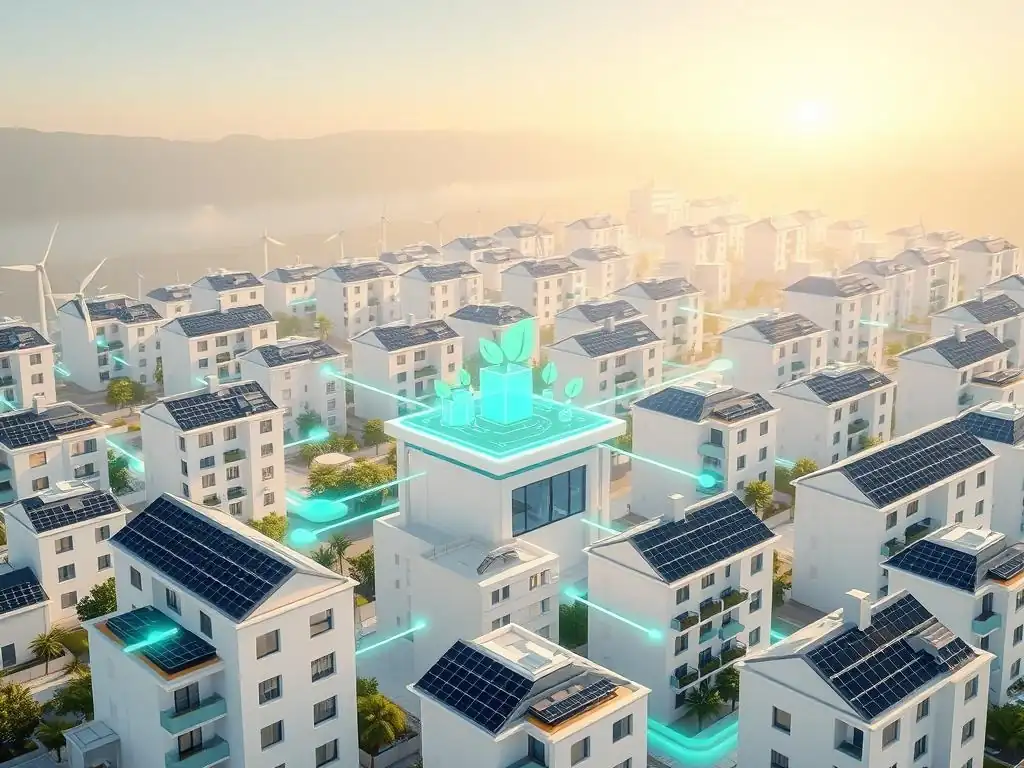
Blockchain's Role in Secure and Transparent Energy Transactions
Blockchain serves as the foundational technology enabling secure and transparent peer-to-peer energy transactions. At its core, a blockchain is a distributed, immutable ledger that records transactions across a network of computers. When a prosumer agrees to sell energy to a consumer on a blockchain-based platform, this transaction is bundled into a block with other transactions, validated by network participants (nodes), and added to the chain. Each block is cryptographically linked to the previous one, making it nearly impossible to alter past records without consensus from the majority of the network.
This process ensures that every energy trade is recorded accurately and permanently. The transparency means participants can view the transaction history (while potentially maintaining some level of privacy depending on the implementation), fostering trust. The security features, including cryptographic hashing and consensus mechanisms, protect against fraud and unauthorized access. This robust, tamper-proof system is essential for managing the value exchange in a decentralized blockchain peer-to-peer energy trading environment.
Smart Contracts: Automating and Enforcing Trading Agreements
Smart contracts are self-executing contracts with the terms of the agreement directly written into lines of code. They reside on the blockchain and automatically execute actions when predefined conditions are met. In the context of blockchain peer-to-peer energy trading, smart contracts automate the entire transaction lifecycle, from price negotiation to energy delivery and payment settlement. For example, a smart contract could be programmed to execute a trade of 5 kWh from Prosumer A to Consumer B at $0.15/kWh when Prosumer A's smart meter reports surplus generation and Consumer B's meter indicates consumption need.
The use of smart contracts eliminates the need for manual intervention and reduces the potential for errors or disputes. Once the conditions are met (verified by data feeds, often from smart meters or IoT devices), the contract automatically triggers the transfer of energy credits/tokens and payment between the participants' digital wallets. This automation makes the trading process highly efficient, scalable, and reliable, forming the operational backbone of blockchain peer-to-peer energy trading platforms.
Distributed Ledger Technology (DLT) for Energy Data Management
Distributed Ledger Technology (DLT), of which blockchain is a type, is crucial for managing the vast amounts of data generated in a peer-to-peer energy network. Unlike centralized databases, DLT distributes copies of the ledger across multiple nodes in the network. This distribution enhances resilience, as there is no single point of failure; if one node goes down, others can continue to operate. It also aligns with the decentralized nature of P2P energy trading itself.
In a blockchain peer-to-peer energy trading system, DLT is used to record various types of data beyond just transactions. This includes:
- Registration of participants and their energy assets (e.g., solar panel capacity).
- Real-time energy generation and consumption data from smart meters.
- Pricing information and trading offers.
- Settlement records and payment transfers.
- Certificates of origin for renewable energy.
Managing this data on a distributed, immutable ledger ensures data integrity and provides a single source of truth for all network participants, facilitating transparent and efficient operations.
Ensuring Data Integrity and Security in P2P Energy Networks
Ensuring data integrity and security is paramount in blockchain peer-to-peer energy trading networks, given the sensitive nature of energy consumption data and financial transactions. Blockchain technology addresses these concerns through several mechanisms.
Data integrity is maintained because each block contains a cryptographic hash of the previous block; any attempt to alter data in an old block would change its hash, breaking the chain and immediately alerting the network to tampering. Consensus mechanisms (like Proof-of-Stake or Proof-of-Authority, often used in private/permissioned blockchains for energy) ensure that all participating nodes agree on the validity of new transactions before they are added to the ledger, preventing fraudulent entries.
Security is further enhanced through cryptography. Each participant has a unique public and private key pair. Transactions are digitally signed using private keys, verifying the identity of the sender and ensuring that transactions cannot be forged. While transaction data is transparent on the ledger, participant identities can be pseudonymized depending on the platform's design, balancing transparency with privacy concerns. This multi-layered approach to security and data integrity makes blockchain a robust foundation for trustworthy peer-to-peer energy exchange.
Real-World Applications and Case Studies of Blockchain P2P Energy Trading
Brooklyn Microgrid: A Community-Based Energy Marketplace
One of the pioneering examples of blockchain peer-to-peer energy trading is the Brooklyn Microgrid project, initiated by LO3 Energy. Launched in 2016 in the residential areas of affluent Park Slope and Gowanus, Brooklyn, this project aimed to allow residents with solar panels to sell their excess energy directly to their neighbors using a blockchain platform. The project utilized a private, permissioned blockchain to record energy transactions between participating homes and businesses.
The Brooklyn Microgrid demonstrated the technical feasibility of using blockchain and smart meters to enable local energy markets. Participants could see local energy offers via a mobile app and choose to buy clean energy directly from their neighbors. While still operating as a pilot in specific areas, it successfully showcased how blockchain peer-to-peer energy trading could create a localized, community-driven energy market, empowering residents to trade renewable energy among themselves rather than solely relying on the traditional utility grid. It highlighted the potential for enhanced community resilience and local economic benefits.
Power Ledger: Enabling Energy Trading Across Multiple Locations
Power Ledger is an Australian-based technology company that has developed a blockchain platform designed to enable peer-to-peer energy trading across various settings, including residential, commercial, and even utility-scale applications. Founded in 2016, Power Ledger has deployed its technology in numerous projects globally, including in Australia, India, Thailand, and the United States. Their platform allows participants to buy and sell energy using blockchain-based tokens (like the Sparkz token, pegged to local currency).
Power Ledger's approach extends beyond simple residential trading, facilitating transactions in larger settings like apartment buildings, microgrids, and even between utilities and prosumers. For example, a project in Thailand with BCPG Public Company Limited enabled peer-to-peer energy trading across multiple campuses, allowing participants to trade excess solar power generated from rooftop installations. Power Ledger's work illustrates the scalability and versatility of blockchain peer-to-peer energy trading technology for diverse market needs.
SonnenCommunity: Virtual Power Plant using Home Battery Storage
Sonnen, a German energy storage company now part of Shell, has developed the SonnenCommunity, which leverages a network of homes equipped with solar panels and sonnen battery storage systems. While not solely focused on direct peer-to-peer energy trading in the same way as Brooklyn Microgrid or Power Ledger, the SonnenCommunity operates as a virtual power plant (VPP) where members can share excess renewable energy stored in their batteries with other community members. Blockchain technology is used to manage and record the flow of energy and value within this network.
The SonnenCommunity uses blockchain to track the generation, storage, and sharing of renewable energy among its members. Members who contribute excess energy to the community pool receive credits, while those who draw from the pool use these credits. This system effectively enables a form of collective peer-to-peer energy sharing and optimization, enhancing grid stability by providing grid services and reducing reliance on non-renewable energy sources. It demonstrates how blockchain can facilitate distributed energy management within a community context, particularly leveraging battery storage.
Challenges and Opportunities in the Adoption of Blockchain for Energy Trading
Regulatory Hurdles and Policy Considerations for P2P Energy Markets
The adoption of blockchain peer-to-peer energy trading faces significant regulatory hurdles in many jurisdictions. Existing energy markets and regulations are typically designed for the centralized utility model and are not well-equipped to handle decentralized P2P transactions. Issues include:
- Defining P2P participants (Are they energy retailers? Do they need licenses? ).
- Metering and billing complexities (How are grid fees and taxes applied to P2P trades? ).
- Grid connection rules and safety standards for distributed trading systems.
- Consumer protection laws in a decentralized market.
Navigating these complex regulatory landscapes requires close collaboration between technology providers, energy companies, regulators, and policymakers. Creating supportive regulatory frameworks that enable innovation while ensuring grid reliability, consumer protection, and fair taxation is a major challenge but also an opportunity for forward-thinking regions to lead in energy market evolution.
Technological Scalability and Interoperability Challenges
While blockchain technology offers many advantages, scalability and interoperability remain technological challenges for widespread blockchain peer-to-peer energy trading. Public blockchains like Bitcoin or Ethereum (pre-ETH 2.0) can face limitations in transaction throughput and speed, which might be insufficient for the high volume of real-time energy micro-transactions required in a large P2P network. While newer blockchain platforms and Layer 2 solutions offer better performance, selecting the right technology stack is critical.
Interoperability is another key challenge. Different P2P platforms might use different blockchain protocols, data standards, and metering systems. Ensuring seamless communication and potential interconnection between these disparate systems is essential for creating a truly integrated and efficient decentralized energy market. Developing industry standards for data exchange and platform interaction will be crucial for overcoming these technological hurdles and enabling the growth of blockchain peer-to-peer energy trading ecosystems.
Addressing Data Privacy and Security Concerns in Decentralized Energy Systems
Although blockchain offers inherent security features, data privacy and broader cybersecurity concerns must be carefully addressed in blockchain peer-to-peer energy trading systems. Energy consumption data is sensitive, revealing patterns of behavior within a household or business. While blockchain transactions can be pseudonymous, linking real-world identities to on-chain addresses needs careful management to protect privacy. Ensuring compliance with data protection regulations like GDPR is essential.
Furthermore, while the blockchain ledger itself is highly secure, the peripheral systems interacting with it – smart meters, IoT devices, user interfaces, and connections to the grid – represent potential vulnerabilities. Implementing robust cybersecurity measures for all components of the P2P energy trading system is critical to prevent hacking, data breaches, or manipulation of energy data that could disrupt trading or compromise grid stability. Building secure oracles to feed reliable real-world data (like meter readings) onto the blockchain is also vital.
Opportunities for Innovation and Growth in the Blockchain Energy Sector
Despite the challenges, the blockchain energy sector, particularly blockchain peer-to-peer energy trading, presents immense opportunities for innovation and growth. The potential to create more efficient, transparent, and consumer-centric energy markets is driving significant investment and development. Opportunities exist in:
- Developing more scalable and energy-efficient blockchain protocols tailored for energy transactions.
- Creating user-friendly platforms and mobile applications for trading.
- Integrating P2P platforms with smart home technologies and electric vehicle charging.
- Developing new business models around energy tokenization and fractional ownership of renewable assets.
- Providing grid services (like demand response or frequency regulation) through aggregated P2P networks managed via blockchain.
The market for blockchain in energy is projected for substantial growth, with some forecasts estimating it could reach billions of dollars in value within the next few years. This signals a strong opportunity for technology companies, energy providers, and startups to innovate and capitalize on the transformative potential of blockchain peer-to-peer energy trading.
The Future of Energy: Blockchain and the Decentralized Grid
The Role of Blockchain in Shaping the Future of Renewable Energy
Blockchain is poised to play a pivotal role in shaping the future of renewable energy. By enabling efficient and transparent blockchain peer-to-peer energy trading, it directly supports the transition from large-scale centralized power generation to a more distributed model dominated by renewables. It provides the infrastructure to manage the complex, bidirectional energy flows characteristic of a grid powered significantly by solar, wind, and other intermittent sources.
Beyond trading, blockchain can facilitate the tracking and verification of renewable energy certificates (RECs) or guarantees of origin, making it easier for consumers and corporations to prove they are using clean energy. It can also enable new financing models for renewable projects, such as tokenized green bonds or fractional ownership facilitated by smart contracts. As the share of renewables on the grid increases, blockchain's capabilities in managing distributed assets, facilitating local markets, and ensuring data integrity will become increasingly valuable.
Exploring the Potential of Energy Tokens and Digital Assets
Energy tokens and other digital assets represent a significant area of potential within blockchain peer-to-peer energy trading. These tokens can represent a unit of energy (e.g., 1 kWh), a credit for energy contributed to the network, or even ownership stakes in renewable energy projects. Using tokens simplifies the process of accounting, trading, and settling energy transactions on the blockchain. Participants can buy and sell energy tokens directly, often pegged to the local fiat currency price of electricity, streamlining the value exchange.
Furthermore, blockchain allows for the creation of more complex digital assets, such as tokenized carbon credits or flexibility services from distributed energy resources. This opens up new revenue streams for prosumers and creates new markets for grid services. The ability to represent energy and related attributes as programmable digital assets on a blockchain creates a flexible and innovative framework for future energy markets.
Integrating Blockchain with Smart Grids and IoT Devices
The true power of blockchain peer-to-peer energy trading is realized when it is tightly integrated with smart grid infrastructure and Internet of Things (IoT) devices. Smart meters and IoT sensors installed in homes and on energy assets provide the real-time data (generation, consumption, battery status) that feeds into the blockchain platform. This data triggers smart contracts and enables dynamic pricing and trading based on actual conditions.
Blockchain provides a secure and trustworthy layer for managing identity, data authenticity, and transactions originating from potentially millions of distributed IoT devices within a smart grid. It can help manage device registration, authenticate data streams from meters, and ensure that commands for demand response or grid services executed by smart devices are accurately recorded and compensated. This integration is crucial for building a truly intelligent, automated, and decentralized energy network.
Towards a More Sustainable and Resilient Energy Ecosystem
Ultimately, blockchain peer-to-peer energy trading is a key enabler in the transition towards a more sustainable and resilient energy ecosystem. By empowering consumers, incentivizing local renewable energy generation, and facilitating efficient management of distributed resources, it supports the broader goals of decarbonization and grid modernization. Decentralized P2P networks can enhance local energy independence and improve resilience during grid outages, as demonstrated by microgrid applications.
The transparency and efficiency offered by blockchain technology can also drive down transaction costs in energy markets, potentially leading to lower prices for consumers. As regulatory frameworks evolve and technology matures, blockchain peer-to-peer energy trading platforms are expected to become more widespread, contributing significantly to a future energy system that is cleaner, more democratic, and more robust.
Conclusion: Blockchain P2P Energy Trading - A Catalyst for Change
Key Takeaways: The Transformative Power of Blockchain in Energy
The emergence of blockchain peer-to-peer energy trading represents a significant step towards revolutionizing how we generate, consume, and trade energy. Key takeaways highlight its transformative power: it empowers individual consumers and prosumers, turning them into active participants in the energy market; it provides strong incentives for the adoption and utilization of local renewable energy; it enhances transparency and builds trust through immutable and verifiable transaction records; and it lays the groundwork for more resilient and efficient decentralized energy networks.
Blockchain technology, through smart contracts and distributed ledgers, automates complex transactions and provides the secure infrastructure necessary for a decentralized energy market. While challenges related to regulation, scalability, and interoperability exist, ongoing innovation and pilot projects worldwide demonstrate the tangible benefits and viability of blockchain peer-to-peer energy trading. It is not just a theoretical concept but a functional approach already being implemented in communities like Brooklyn and via platforms like Power Ledger.
Call to Action: Embracing the Potential of Decentralized Energy Solutions
The potential benefits of blockchain peer-to-peer energy trading are substantial, offering a pathway to lower energy costs, increased reliance on clean energy, and greater consumer autonomy. Embracing this decentralized energy solution requires proactive engagement from various stakeholders. Policymakers need to develop supportive regulations that facilitate, rather than hinder, the growth of local energy markets. Energy companies should explore integrating blockchain solutions into their services to adapt to the evolving energy landscape. Technology developers must continue to innovate to improve the scalability and usability of P2P platforms.
For individuals and communities, exploring and participating in pilot projects or established blockchain peer-to-peer energy trading initiatives can provide firsthand experience of its benefits. Investing in distributed energy resources like rooftop solar and battery storage becomes even more attractive when coupled with the ability to trade energy directly with peers. By collectively embracing the potential of decentralized energy solutions powered by blockchain, we can accelerate the transition towards a more sustainable, equitable, and resilient energy future.
Frequently Asked Questions
What is peer-to-peer (P2P) energy trading using blockchain?
P2P energy trading allows consumers to directly buy and sell renewable energy among themselves. Blockchain provides a secure and transparent platform to facilitate these transactions, bypassing traditional energy providers.
How does blockchain enhance P2P energy trading?
Blockchain ensures transparency and immutability in energy transactions. It automates metering, billing, and payments, leading to lower transaction costs and increased trust among participants.
What are the potential benefits of blockchain-based P2P energy trading for consumers?
Consumers gain more control over their energy sources and can choose to support renewable energy producers directly. They may also benefit from lower energy prices and the ability to sell excess energy back to the grid.
What regulatory hurdles exist for widespread adoption of blockchain P2P energy trading?
Current energy regulations often favor centralized energy providers, making it difficult to integrate decentralized P2P systems. Clear legal frameworks are needed to address issues like grid access and consumer protection.
Beyond residential use, where else can blockchain-enabled P2P energy trading be applied?
It can be applied in microgrids, industrial parks, and communities to optimize energy distribution and promote local renewable energy production. This can lead to greater energy independence and reduced reliance on fossil fuels.
Final Reflection: Embracing Decentralized Green Futures
The promise of blockchain peertopeer energy trading is no longer a distant dream, but a tangible opportunity to reshape our energy landscape. The ability to directly connect green energy producers and consumers, bypassing traditional intermediaries, represents a fundamental shift in power dynamics, empowering individuals and fostering a more sustainable future. This isn't just about technology; it's about democratizing access to clean energy and building a more resilient and equitable energy system.
The impact of blockchain peertopeer energy trading extends far beyond simple transactions. It's about fostering a sense of community, promoting local energy production, and incentivizing the adoption of renewable energy sources. The potential for individuals to become active participants in the energy market, rather than passive consumers, is transformative. The future of energy is decentralized, democratized, and decarbonized.
This quote encapsulates the core vision driving the adoption of blockchain in the energy sector, highlighting the interconnectedness of technological innovation and societal progress.
As we stand on the cusp of this energy revolution, I invite you to consider your own role in shaping a greener future. How can you leverage the power of blockchain peertopeer energy trading to support local renewable energy producers, reduce your carbon footprint, and contribute to a more sustainable world? The time to act is now, to embrace the potential of decentralized energy systems, and to become active participants in building a brighter, cleaner future for all.
Power Up Your Energy Future: Join the Green Revolution!
Thank you for exploring how blockchain technology is transforming the way we produce and share sustainable energy. Now, it’s time to turn that knowledge into action and help build a more environmentally friendly future.
Are you ready to make a difference?
- Discover local peer-to-peer energy programs and consider getting involved or promoting them within your community. Supporting renewable energy producers directly can help reduce your carbon footprint.
- Learn more about blockchain initiatives in the renewable energy sector and explore how they are improving transparency and efficiency in energy trading.
- Share this article with friends and family interested in sustainable energy solutions, and start a conversation about the potential of decentralized energy networks.
What steps will you take to become an active participant in green energy and advocate for peer-to-peer energy trading? Share your ideas in the comments below!
Leave a Reply