
The Future of DeFi: Smart Contract Architect's Predictions for Decentralized Finance


Welcome to Blockchain Trends, your compass in the rapidly evolving world of decentralized technology. We delve beyond the hype to uncover the real transformative power of blockchain.
Ever wondered what the next leap in Decentralized Finance (DeFi) will be? In this exclusive interview, leading smart contract architects share their DeFi smart contract predictions, offering a glimpse into the future of finance. Prepare to explore the innovative architectures and regulatory shifts that will shape the landscape. What groundbreaking innovations will define DeFi's next chapter?
The Future of DeFi: Smart Contract Architect's Predictions for Decentralized Finance
- Introduction: A Smart Contract Architect's Vision for Decentralized Finance (DeFi)
- Understanding the Current State of DeFi and its Challenges
-
DeFi Smart Contract Predictions: The Architect's Forecast
- Prediction 1: The Rise of Institutional DeFi
- Prediction 2: Evolution of Cross-Chain DeFi Solutions
- Prediction 3: Enhanced Security and Auditing Practices for DeFi Smart Contracts
- Prediction 4: The Growth of Programmable Privacy in DeFi
- Prediction 5: The Development of More Sophisticated DeFi Derivatives
- The Role of Smart Contract Architects in Shaping the Future of DeFi
- Navigating the Regulatory Landscape of Decentralized Finance
- Conclusion: Embracing the Future of Decentralized Finance
-
Frequently Asked Questions
- What is the most significant prediction about DeFi smart contracts over the next 5 years?
- How will regulations impact the development and deployment of DeFi smart contracts?
- What are the main security concerns surrounding DeFi smart contracts that need addressing?
- Beyond finance, what other industries might benefit from using DeFi-inspired smart contracts?
- What skills will be most in-demand for smart contract developers in the evolving DeFi landscape?
- Final Reflection: Embracing the Decentralized Horizon
- Ignite Your DeFi Journey!
Introduction: A Smart Contract Architect's Vision for Decentralized Finance (DeFi)
Unveiling Expert Insights on the Evolution of DeFi
Decentralized Finance, or DeFi, represents a paradigm shift in financial services, moving control and execution away from centralized institutions and onto transparent, immutable blockchain networks. This rapidly evolving ecosystem, built fundamentally on smart contracts, has grown from a niche concept into a multi-billion dollar industry within just a few years. Understanding its trajectory requires insights from those who build its core infrastructure – smart contract architects. Their unique perspective, grounded in the technical realities and possibilities of blockchain technology, offers invaluable predictions on the future direction of DeFi.
The insights from these builders are crucial because they are at the forefront of developing the complex logic that governs DeFi protocols. They see firsthand the limitations of current implementations, the potential unlocked by new cryptographic techniques, and the pathways toward greater scalability, security, and usability. Discussions with leading smart contract architects reveal a consensus: while DeFi has achieved remarkable growth, its architecture is still nascent, and significant evolution is expected, driven by both technical innovation and market demands. These DeFi smart contract predictions highlight areas ripe for transformation.
The Growing Importance of Smart Contracts in the DeFi Landscape
Smart contracts are the bedrock of Decentralized Finance. They are self-executing contracts with the terms of the agreement directly written into code, running on a blockchain. This code dictates how assets are managed, how trades are executed, how loans are issued and repaid, and how governance decisions are made, all without intermediaries. The trust in DeFi protocols fundamentally relies on the correctness and security of these smart contracts.
The growth of DeFi is directly mirrored by the increasing complexity and functionality embedded within its smart contracts. As of late 2023, the Total Value Locked (TVL) across various DeFi protocols frequently exceeded $50 billion, fluctuating with market conditions, but demonstrating substantial capital entrusted to smart contract systems. This massive amount of capital underscores the critical importance of robust, audited, and well-designed smart contracts.
Any vulnerability can lead to significant financial loss, as demonstrated by numerous past exploits. Therefore, the role of smart contract architects, who design, build, and audit these systems, is becoming increasingly vital in ensuring the integrity and sustainability of the DeFi ecosystem.
Understanding the Current State of DeFi and its Challenges
Key Trends Shaping DeFi Today: Decentralized Exchanges (DEXs), Lending/Borrowing Platforms, Yield Farming
The current DeFi landscape is dominated by several key application types, each relying heavily on sophisticated smart contract logic. Decentralized Exchanges (DEXs), such as Uniswap and Curve, enable peer-to-peer trading of digital assets directly from users' wallets, governed by automated market maker (AMM) smart contracts that manage liquidity pools. These platforms have processed trillions of dollars in volume since their inception, showcasing the efficiency of algorithmic market making.
Lending and borrowing platforms, like Aave and Compound, allow users to deposit crypto assets as collateral to borrow other assets, or earn interest by providing liquidity. These operations are entirely managed by smart contracts that handle collateral ratios, interest rate calculations (often dynamically adjusted based on supply and demand), liquidations, and asset distribution.
Yield farming and liquidity mining, another major trend, involve users locking up funds in smart contracts to earn rewards, often in the form of protocol tokens. This practice, while boosting protocol liquidity, introduces complex incentive structures coded into smart contracts, requiring careful design to prevent manipulation and ensure fairness.
Addressing Scalability Issues in Decentralized Finance
One of the most significant hurdles for current DeFi applications, particularly those built on busy blockchains like Ethereum Layer 1, has been scalability. High network congestion can lead to slow transaction times and prohibitively expensive gas fees. During peak network usage periods in recent years, the cost of a single DeFi transaction, such as swapping tokens on a DEX or interacting with a lending protocol, could sometimes exceed $50 or even $100, making these applications impractical for users with smaller capital.
Smart contract architects and developers are actively working on solutions to this challenge. Layer 2 scaling solutions, such as Optimistic Rollups (e.g., Optimism, Arbitrum) and Zero-Knowledge Rollups (e.g., zkSync, StarkNet), process transactions off the main chain but settle them securely on Layer 1.
These solutions rely on complex smart contracts on both layers to manage state transitions and proofs. The adoption of L2s is increasing; for example, Arbitrum and Optimism combined have seen billions of dollars in TVL and millions of transactions, significantly reducing per-transaction costs compared to L1, demonstrating the critical role of advanced smart contract design in enabling wider DeFi adoption.
Overcoming Security Vulnerabilities in DeFi Smart Contracts
Despite the promise of trustlessness, DeFi protocols have been frequent targets for exploits, primarily due to vulnerabilities in their underlying smart contracts. The immutable nature of blockchain means that once a flawed smart contract is deployed, fixing it can be difficult or impossible without complex upgrade mechanisms (which themselves introduce centralization risks). Common vulnerabilities include reentrancy attacks, logic errors, oracle manipulation, and flash loan exploits. High-profile incidents, such as the multi-million dollar hacks on protocols like Poly Network (over $600 million lost) or various flash loan attacks targeting specific protocol logic, highlight the severe consequences of security flaws.
Ensuring the security of DeFi smart contracts is paramount. This involves rigorous auditing processes by multiple independent firms, formal verification techniques (mathematically proving the correctness of code against specifications), extensive testing (unit tests, integration tests, fuzz testing), and the implementation of bug bounty programs. Smart contract architects must not only write efficient code but also adopt a security-first mindset, anticipating potential attack vectors. The industry is continuously refining best practices and developing new tools, but the arms race against malicious actors remains a critical challenge influencing DeFi smart contract predictions.
DeFi Smart Contract Predictions: The Architect's Forecast
Prediction 1: The Rise of Institutional DeFi
Smart contract architects predict a significant inflow of institutional capital into the Decentralized Finance space. While DeFi initially grew from retail participation, traditional financial institutions, asset managers, and corporations are increasingly exploring its potential for greater efficiency, transparency, and new revenue streams. This institutional adoption will likely manifest in several ways, including participation in regulated DeFi platforms, tokenization of real-world assets (RWAs), and utilization of DeFi protocols for treasury management or trading.
Institutions require features often not present in purely permissionless protocols, such as Know Your Customer (KYC) and Anti-Money Laundering (AML) compliance layers, robust identity management, and often, permissioned access or specialized pools. Smart contracts will evolve to incorporate these requirements. For instance, specialized lending pools that only allow verified institutional participants could be implemented using access control smart contracts. Similarly, smart contracts governing tokenized securities will need to adhere to specific regulatory requirements regarding ownership transfer, voting rights, and dividend distribution, necessitating complex legal and technical architecture encoded into the contract logic.
How Institutions Will Interact with DeFi Protocols
Institutional interaction with DeFi will likely occur through specialized, regulated gateways or directly through permissioned versions of existing protocols. Instead of interacting directly with public pools, institutions might use platforms designed for institutional use, which interface with underlying DeFi liquidity but add compliance layers. This could involve smart contracts that check the identity and accreditation status of participating addresses before allowing deposits or trades.
Furthermore, institutions may leverage smart contracts for automating complex financial processes. For example, a corporation could use smart contracts to manage a corporate bond issuance as a tokenized asset on a blockchain, automating interest payments and principal redemption based on pre-defined conditions. Another example is using smart contracts for automated margin calls or collateral management in derivatives trading, offering greater transparency and potentially lower counterparty risk compared to traditional systems. These interactions will demand high reliability and auditability from the underlying DeFi smart contract infrastructure.
The Role of Smart Contracts in Enabling Institutional Participation
Smart contracts are absolutely central to facilitating institutional entry into DeFi. They provide the programmable layer necessary to build in the compliance, reporting, and permissioning features that institutions require to operate within regulatory frameworks. This involves developing sophisticated access control lists encoded in smart contracts, integrating with decentralized identity solutions, and potentially utilizing Zero-Knowledge Proofs to prove eligibility without revealing sensitive information on-chain.
Building RWAs on-chain also relies heavily on smart contracts. A smart contract representing a piece of real estate or a share in a fund must accurately reflect the legal ownership and rights associated with the physical or traditional asset. This requires careful mapping of legal terms into code and managing complex state changes, such as ownership transfers or fractionalization. The smart contract architecture must also be designed to handle potential legal interventions, such as freezing assets if required by a court order, highlighting the need for carefully considered upgradeability mechanisms or governance structures.
Prediction 2: Evolution of Cross-Chain DeFi Solutions
The current DeFi ecosystem is largely fragmented across multiple independent blockchains. While Ethereum remains dominant, significant value and activity reside on chains like Binance Smart Chain, Polygon, Solana, Avalanche, and others. This fragmentation limits liquidity and hinders seamless user experience, as transferring assets and interacting with protocols across different chains is often cumbersome, slow, and risky, relying on bridges that have historically been vulnerable to exploits (e.g., the Ronin Bridge hack losing over $600 million).
Smart contract architects foresee a future where cross-chain interactions are significantly more fluid and secure. This involves developing more robust and decentralized cross-chain communication protocols. Instead of simple asset bridges, which often involve wrapping assets or relying on centralized validators, future solutions will aim for native cross-chain smart contract calls, allowing a smart contract on one chain to securely trigger actions on another. These DeFi smart contract predictions point towards a more interconnected blockchain landscape.
Seamless Asset Transfers and Cross-Chain Smart Contract Calls
The next generation of cross-chain DeFi will focus on enabling users to interact with protocols on different chains without needing to manually bridge assets back and forth. This could involve protocols that allow users to deposit collateral on one chain and borrow assets on another, or execute trades on a DEX residing on a different network, all within a single user interface. This requires sophisticated cross-chain messaging protocols and smart contracts that can verify states and execute logic securely across disparate blockchain environments.
Technologies like generalized message passing protocols are being developed to allow arbitrary data and instructions to be sent between chains and interpreted by receiving smart contracts. This moves beyond simple token transfers to enabling complex interactions, such as a user staking tokens on Chain A to earn yield from a yield farming strategy managed by a smart contract on Chain B. The smart contract architecture for these solutions is highly complex, requiring careful consideration of security, latency, and consensus mechanisms across chains.
The Impact on Liquidity and User Experience
The evolution of cross-chain DeFi will have a transformative impact on liquidity and user experience. By enabling assets and protocol interactions to flow more freely between chains, liquidity pools can become deeper and more efficient. A user holding assets on one chain might be able to access lending or trading opportunities on another chain without incurring significant bridging costs or risks. This increased liquidity can lead to better price execution on DEXs and more favorable interest rates on lending platforms across the entire ecosystem.
For users, the experience will become significantly smoother. Instead of navigating multiple bridges and wallets for different networks, a cross-chain enabled wallet or interface could allow interaction with various DeFi protocols seamlessly. This abstraction of the underlying blockchain complexity, powered by sophisticated cross-chain smart contracts, is expected to lower the barrier to entry for new users and make the DeFi ecosystem feel more unified, driving further adoption and growth.
Prediction 3: Enhanced Security and Auditing Practices for DeFi Smart Contracts
Given the history of exploits, security remains a paramount concern for DeFi. Smart contract architects predict a significant advancement in security and auditing practices, moving beyond current standards. While manual audits are essential, they are time-consuming, expensive (often costing tens of thousands of dollars for a single protocol audit), and fallible, as demonstrated by exploits occurring even after audits. The future will see a greater reliance on automated tools and more rigorous verification methods.
This evolution is driven by the necessity to handle increasingly complex smart contract interactions and the significant value locked within protocols. The industry is investing heavily in research and development for automated security analysis tools and formal verification techniques. These advancements are critical for building trust and ensuring the long-term viability of decentralized financial systems, directly influencing DeFi smart contract predictions regarding reliability.
The Emergence of Formal Verification and AI-Powered Audits
Formal verification is a technique that uses mathematical methods to prove that smart contract code behaves exactly as intended under all possible conditions, guaranteeing the absence of certain types of bugs. While complex and resource-intensive, smart contract architects foresee its increased adoption for critical components of DeFi protocols. Tools are being developed to make formal verification more accessible and scalable.
Alongside formal verification, Artificial Intelligence and machine learning are expected to play a larger role in automated auditing. AI-powered tools can analyze vast amounts of code, identify common vulnerability patterns, and even predict potential attack vectors more efficiently than manual processes alone. While AI won't replace human auditors entirely in the near term, these tools will augment human capabilities, allowing auditors to focus on higher-level logic and economic security, significantly improving the efficiency and depth of security reviews.
Building Trust and Transparency in DeFi Platforms
Enhanced security practices are fundamental to building trust in DeFi platforms. When users know that smart contracts have undergone rigorous formal verification or extensive AI-assisted auditing, their confidence in depositing funds and interacting with the protocol increases. Transparency is also key; making audit reports publicly available, open-sourcing code, and clearly documenting smart contract logic are essential practices that will become even more standardized.
Furthermore, the design of smart contracts themselves will incorporate more security-focused features. This includes incorporating circuit breakers that can pause protocol functions in case of suspicious activity, implementing timelocks for critical administrative actions (allowing time for review), and designing upgradeability mechanisms that require multi-signature approvals or decentralized governance votes. These architectural choices, guided by smart contract architects, aim to create more resilient and trustworthy DeFi systems.
Prediction 4: The Growth of Programmable Privacy in DeFi
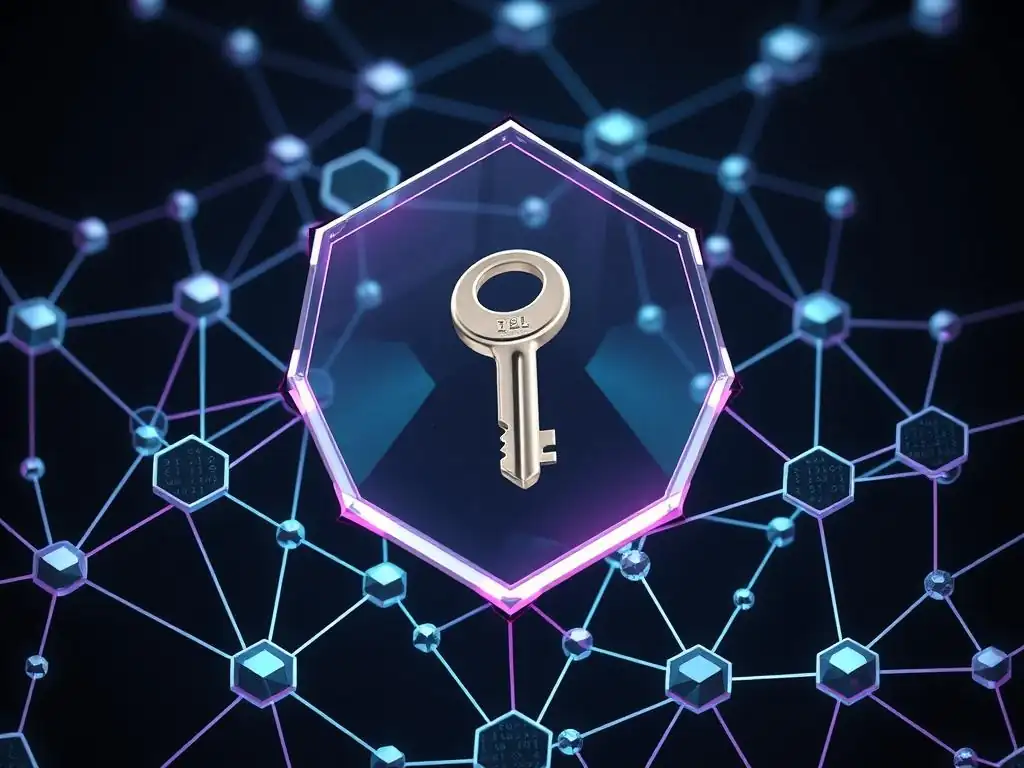
While the public nature of blockchain transactions offers transparency, it also means that all financial activity is visible to everyone, which can be a significant barrier to adoption for many users and institutions. Smart contract architects predict a growing demand for and implementation of programmable privacy features within DeFi protocols. This doesn't necessarily mean complete anonymity, but rather the ability to selectively reveal information while keeping transaction details private by default.
The drive for privacy comes from various angles: individuals wanting to keep their financial activities private, businesses needing to protect sensitive transaction data, and institutions requiring privacy for competitive reasons or regulatory compliance (e.g., not revealing trading strategies). Balancing this need for privacy with the requirements for regulatory compliance (like AML) is a complex challenge that future DeFi smart contract designs must address.
Leveraging Zero-Knowledge Proofs and Other Privacy-Enhancing Technologies
Zero-Knowledge Proofs (ZKPs), such as Zk-SNARKs and Zk-STARKs, are cryptographic techniques that allow one party to prove to another that a statement is true, without revealing any information beyond the validity of the statement itself. Smart contract architects are increasingly exploring how to integrate ZKPs into DeFi protocols. This could enable private transactions where the amount and participants are hidden, while still allowing verification that the transaction was valid (e.g., the sender had sufficient funds).
Protocols like Aztec and zkSync are pioneering the use of ZKPs for private transactions and smart contract interactions on Ethereum Layer 2. These technologies can not only enhance privacy but also significantly increase transaction throughput and reduce costs. Other privacy-enhancing techniques like confidential transactions (hiding amounts) or mixers (combining transactions to obscure links, though often facing regulatory scrutiny) may also see further development or integration, albeit with careful consideration of compliance implications.
Balancing Privacy and Regulatory Compliance in DeFi
The integration of privacy features in DeFi presents a direct challenge regarding regulatory compliance. Regulators are concerned about the potential for decentralized platforms to be used for illicit activities like money laundering or terrorist financing. Therefore, future DeFi smart contract designs must find a balance, allowing for privacy where appropriate while also providing mechanisms for compliance when required.
This might involve building smart contracts with optional "viewing keys" that can be shared with auditors or regulators under specific legal circumstances, allowing them to decrypt relevant transaction details. Another approach could be incorporating decentralized identity solutions that enable users to prove their identity or accreditation status off-chain, linking it pseudonomously to their on-chain activity, without revealing the full details of every transaction publicly. Smart contract architects will be crucial in designing these complex systems that navigate the tension between user privacy and regulatory demands.
Prediction 5: The Development of More Sophisticated DeFi Derivatives
The traditional financial world relies heavily on derivatives – financial contracts whose value is derived from an underlying asset, group of assets, or benchmark. These include futures, options, swaps, and synthetic assets, used for hedging, speculation, and price discovery. While DeFi has seen the emergence of some derivative protocols, smart contract architects predict a significant increase in the sophistication and variety of decentralized derivatives built on smart contracts.
This growth will be driven by the need for more advanced risk management tools within the volatile crypto market and the demand for exposure to a wider range of assets, both crypto-native and real-world. Building complex derivatives on-chain requires highly precise smart contract logic to handle pricing, collateralization, margin calls, and settlement, often relying on reliable external data feeds (oracles).
Exploring New Financial Instruments Built on Smart Contracts
Future DeFi smart contracts will enable the creation of novel, programmable financial instruments that are not easily replicated in traditional finance. This could include highly customized options contracts, dynamic yield-bearing synthetic assets, or complex structured products that automatically adjust based on market conditions. For instance, a smart contract could issue a synthetic asset that tracks the price of a basket of real-world commodities, automatically rebalancing based on pre-defined rules.
Protocols like Synthetix, which issues synthetic assets (Synths) pegged to the value of various cryptocurrencies, fiat currencies, and commodities, demonstrate the potential. Options protocols like Opyn and Hegic have explored decentralized options trading. Smart contract architects will push the boundaries further, designing contracts that can handle more complex payoff structures, multiple underlying assets, and sophisticated risk parameters, all executed autonomously on the blockchain.
Managing Risk and Complexity in Decentralized Derivatives Markets
The increased sophistication of DeFi derivatives brings significant challenges, particularly in managing risk and complexity. Smart contracts for derivatives must be incredibly precise to avoid errors that could lead to massive liquidations or protocol insolvency. Reliance on oracles for price data is a major risk point; if an oracle feed is manipulated or provides inaccurate data, it can trigger incorrect liquidations or settlements, as seen in past incidents affecting various protocols.
Smart contract architects must design robust oracle integration strategies, potentially using decentralized oracle networks (like Chainlink) with multiple data sources and aggregation mechanisms. They also need to implement sophisticated risk management parameters within the smart contracts, such as dynamic margin requirements, circuit breakers, and mechanisms for handling extreme market volatility. The complexity of these contracts also increases the attack surface, demanding even higher standards of security and auditing as outlined in the previous predictions.
The Role of Smart Contract Architects in Shaping the Future of DeFi
Smart contract architects are not just coders; they are system designers who bridge the gap between complex financial concepts, cryptographic principles, and decentralized network constraints. Their role is pivotal in translating the vision of decentralized finance into functional, secure, and scalable applications. They are responsible for designing the overall architecture of a DeFi protocol, choosing the appropriate blockchain or Layer 2 solution, defining the interactions between different smart contracts, and implementing the core logic that governs the protocol's behavior.
This role requires a deep understanding of blockchain technology, cryptography, and distributed systems, combined with knowledge of financial engineering and market dynamics. Architects must anticipate how users will interact with the protocol, how malicious actors might try to exploit it, and how the protocol will scale as adoption grows. Their design decisions directly impact the security, efficiency, and decentralization level of a DeFi application, making them key figures in realizing the DeFi smart contract predictions discussed earlier.
The Skills and Expertise Required for Building Secure and Scalable DeFi Applications
Building robust DeFi smart contracts demands a diverse skill set. Core technical skills include proficiency in smart contract programming languages like Solidity (for Ethereum and EVM-compatible chains) or Rust (for Solana, Polkadot, etc.). However, this is merely the starting point. Architects must also possess a strong understanding of:
- Cryptography: Essential for understanding how blockchain security works and how to implement features like privacy or secure communication.
- Security Auditing: The ability to identify vulnerabilities in their own code and understand common attack vectors (e.g., reentrancy, front-running, oracle manipulation).
- Tokenomics and Mechanism Design: Understanding how incentives are aligned within the protocol and how smart contract logic influences user behavior and economic stability.
- System Design: Architecting complex interactions between multiple smart contracts and external systems (oracles, front-ends).
- Testing and Formal Verification: Proficiency in writing comprehensive tests and understanding how to apply formal methods to critical contract components.
[x] Master Solidity/Rust
[x] Understand Cryptography Basics
[x] Learn Common Smart Contract Vulnerabilities
[ ] Study Tokenomics and Protocol Design
[ ] Practice System Architecture for Decentralized Apps
[x] Gain Experience with Testing Frameworks
[ ] Explore Formal Verification Tools
Beyond technical prowess, smart contract architects need strong analytical and problem-solving skills, attention to detail (a single bug can be catastrophic), and the ability to stay updated with the rapidly evolving blockchain landscape and new security threats.
The Importance of Community Collaboration and Open-Source Development
A defining characteristic of the DeFi ecosystem is its strong emphasis on open-source development and community collaboration. Most major DeFi protocols have their smart contract code publicly available on platforms like GitHub. This transparency allows anyone to review the code, identify potential bugs, and propose improvements. Smart contract architects in this space typically work within or contribute to open-source projects.
Collaboration with the wider developer community, security researchers, and even competitors is crucial. Peer review of smart contract code helps catch errors that might be missed by internal teams or even professional auditors. Engaging with the community through forums, bug bounty programs, and public code reviews fosters a collective security effort. This open approach, while challenging at times, is seen as a necessary component for building truly decentralized and resilient financial infrastructure, embodying the spirit of DeFi smart contract predictions focused on shared security responsibility.
The decentralized nature of DeFi presents significant challenges for existing regulatory frameworks, which are typically designed for centralized entities. As DeFi grows and potentially integrates with traditional finance (as per the institutional DeFi prediction), regulators worldwide are increasing their scrutiny. Smart contract architects must operate with an awareness of this evolving landscape, as future regulations could impact protocol design, user interaction, and the legality of certain DeFi activities.
Understanding and attempting to anticipate regulatory trends is becoming an essential part of designing DeFi protocols. While decentralization aims to make protocols censorship-resistant, the interfaces users interact with, the developers who build them, and potentially the governance token holders could all fall under regulatory purview. This complex legal environment adds another layer of consideration for smart contract architects beyond purely technical challenges.
Understanding the Evolving Regulatory Frameworks for DeFi
Regulatory approaches to DeFi vary significantly across jurisdictions. Some regions are adopting a cautious "wait and see" approach, while others are actively developing specific rules or attempting to apply existing financial regulations to decentralized protocols. Key areas of focus for regulators include:
- Consumer Protection: Ensuring users understand the risks involved.
- Financial Stability: Assessing the systemic risk posed by interconnected DeFi protocols.
- Anti-Money Laundering (AML) and Counter-Terrorist Financing (CTF): Preventing illicit use of decentralized platforms.
- Securities Regulation: Determining if certain DeFi tokens or activities constitute unregistered securities offerings.
- Taxation: Clarifying how DeFi activities like yield farming, staking, and trading are taxed.
Regulatory bodies like the US Securities and Exchange Commission (SEC), the European Union (with MiCA regulation), and others are actively publishing guidance, proposing rules, and taking enforcement actions related to crypto and DeFi. Smart contract architects need to monitor these developments, as they could influence design choices, such as how identity might be handled, or which types of financial instruments can be safely represented on-chain.
Ensuring Compliance and Mitigating Legal Risks
While smart contracts themselves execute autonomously, the design choices embedded within them can either facilitate or hinder potential future compliance efforts. Smart contract architects can incorporate features that, while maintaining decentralization, allow for potential regulatory interaction if needed. This might involve designing protocols with modular components where compliance layers could be added at the user interface or gateway level, rather than directly within the core, immutable smart contracts.
Another aspect is the careful design of governance mechanisms. If a protocol is governed by token holders, the smart contract architect must consider how governance decisions might be influenced by regulatory pressure or how the governance structure itself might be viewed by regulators. Using decentralized autonomous organizations (DAOs) introduces new legal ambiguities that developers must be mindful of. Ultimately, while DeFi aims for permissionlessness, navigating the real-world legal system requires careful consideration in the design and deployment of smart contracts, balancing the ideals of decentralization with the practicalities of operating in a regulated world.
Conclusion: Embracing the Future of Decentralized Finance
Decentralized Finance, powered by sophisticated smart contracts, stands at a pivotal moment in its evolution. The predictions from smart contract architects highlight a future where DeFi becomes more integrated with traditional finance through institutional adoption, overcomes fragmentation via cross-chain solutions, enhances security through advanced auditing techniques, incorporates programmable privacy, and expands its offerings with more complex financial derivatives. These DeFi smart contract predictions paint a picture of a maturing ecosystem.
The journey towards this future is not without challenges, particularly regarding scalability, security, and regulatory clarity. However, the continuous innovation driven by smart contract architects and the broader community is systematically addressing these hurdles. The development of Layer 2 solutions, the adoption of formal verification, the exploration of ZKPs, and the refinement of risk management frameworks within smart contracts are all testaments to the industry's commitment to building a robust and sustainable decentralized financial system.
Key Takeaways from the Smart Contract Architect's Predictions
The core insights from smart contract architects point to several undeniable trends shaping the future of DeFi:
- Institutional Integration: DeFi smart contract predictions strongly suggest that smart contracts will be adapted to meet institutional needs, incorporating compliance features while maintaining core decentralized principles.
- Interoperability: The future is multi-chain, and smart contracts will enable seamless cross-chain interactions, unifying liquidity and improving user experience.
- Advanced Security: Expect a move towards more automated and mathematically rigorous security methods like formal verification and AI-assisted audits for DeFi smart contracts.
- Selective Privacy: Programmable privacy features, likely powered by ZKPs, will become increasingly common to address user and institutional needs, while balancing regulatory requirements.
- Complex Financial Instruments: Smart contracts will support a wider range of sophisticated derivatives and financial products, enhancing DeFi's capabilities.
The Transformative Potential of DeFi and Smart Contracts
The transformative potential of DeFi, underpinned by the evolving capabilities of smart contracts, remains immense. By automating financial agreements and processes on a transparent and immutable ledger, DeFi has the potential to create a more open, efficient, and accessible global financial system. Smart contracts reduce reliance on intermediaries, lower transaction costs, and enable innovative financial applications that were previously impossible.
As smart contract architects continue to refine their craft, developing more secure, scalable, and feature-rich protocols, DeFi is poised to move from a niche crypto application to a significant force in the global economy. The ability of smart contracts to encode complex logic and execute it reliably is the engine driving this transformation, promising a future where finance is more programmable, inclusive, and resilient. Embracing these DeFi smart contract predictions means preparing for a fundamental shift in how financial services are delivered and consumed worldwide.
Frequently Asked Questions
What is the most significant prediction about DeFi smart contracts over the next 5 years?
The most significant prediction is the increased sophistication and interoperability of smart contracts. This will lead to greater adoption across various financial applications.
How will regulations impact the development and deployment of DeFi smart contracts?
Regulations will likely introduce clearer guidelines for smart contract functionality and security. This may lead to increased compliance costs but also greater investor confidence.
What are the main security concerns surrounding DeFi smart contracts that need addressing?
The primary security concerns revolve around vulnerability exploits and smart contract audits. Addressing these requires enhanced testing methodologies and formal verification processes.
Beyond finance, what other industries might benefit from using DeFi-inspired smart contracts?
Beyond finance, industries like supply chain management and healthcare could benefit. Smart contracts can provide transparency and automation in these sectors, leading to improved efficiency.
What skills will be most in-demand for smart contract developers in the evolving DeFi landscape?
The most in-demand skills will include Solidity proficiency, security auditing expertise, and a deep understanding of DeFi protocols. Cross-chain development knowledge will also be highly valued.
Final Reflection: Embracing the Decentralized Horizon
The insights shared throughout this article regarding DeFi smart contract predictions underscore a pivotal moment in financial history. We are not merely observing the evolution of finance; we are witnessing its potential democratization, driven by the ingenuity of smart contract architects and the unwavering belief in a more transparent and accessible financial future. The predictions outlined here, from enhanced security protocols to the proliferation of cross-chain interoperability, paint a compelling picture of a decentralized landscape poised to reshape global economies.
The transformative power of DeFi, and particularly the role of smart contracts, continues to resonate deeply within the cultural and social fabric. It's not just about technology; it's about empowering individuals and fostering a more equitable financial system. The potential for financial inclusion, particularly for those underserved by traditional institutions, is immense. The future of finance is decentralized, and smart contracts are the building blocks of that future.
This sentiment, echoed by many in the DeFi space, highlights the profound impact this technology will have on generations to come.
As we stand on the cusp of this decentralized revolution, let us not be passive observers. Let us embrace the opportunities presented by DeFi, educate ourselves on the intricacies of smart contracts, and actively participate in shaping a financial future that is truly inclusive and transparent. Consider how you can leverage these insights to make informed decisions, contribute to the development of this burgeoning ecosystem, and ultimately, build a more equitable and prosperous world for all.
Ignite Your DeFi Journey!
Thanks for exploring the future of Decentralized Finance with us! You've gained valuable insights into smart contract architecture and its potential to revolutionize finance. Now, let's put that knowledge into action and shape the DeFi landscape together.
Here are a few ways to get started:
- Begin building: Dive into your own small smart contract project. Experiment with different coding languages and frameworks to bring your DeFi ideas to life. Don't be afraid to start small; every innovation begins somewhere!
- Join the Conversation: Share your thoughts on this article with the community by commenting below. What specific smart contract applications excite you the most?
- Follow Blockchain Trends on social media to stay updated on the latest DeFi innovations, breaking news, and expert insights.
What's the first smart contract idea you're going to explore after reading this? Share your vision below!
Leave a Reply