
Hyperledger for Digital Assets: Managing and Trading Enterprise Tokens Securely


Welcome to Blockchain Trends, your guide to navigating the ever-evolving world of blockchain technology. Beyond the buzzwords and hype, we delve into the real-world applications and transformative potential of this groundbreaking technology.
Are you ready to unlock the secrets to secure enterprise token management? Discover how Hyperledger is revolutionizing digital asset control in the enterprise landscape, with a deep dive into Hyperledger enterprise token security and its critical role in safeguarding your digital future. Intrigued? Let's explore the landscape of secure and compliant enterprise token trading.
Blockchain for Supply Chain Finance: Enhancing Transparency and Security
- Introduction to Supply Chain Finance and Blockchain
-
Frequently Asked Questions
- What is Hyperledger's role in securing enterprise tokens?
- How does Hyperledger ensure the security of digital asset trading?
- Beyond cryptocurrencies, what are some practical applications of Hyperledger for enterprise tokens?
- What are the regulatory considerations when using Hyperledger for enterprise tokens?
- How does Hyperledger contribute to the future of decentralized systems beyond just finance?
- Final Reflection: Embracing Secure Tokenization with Hyperledger
- Unveil Your Token Potential!
Introduction to Supply Chain Finance and Blockchain
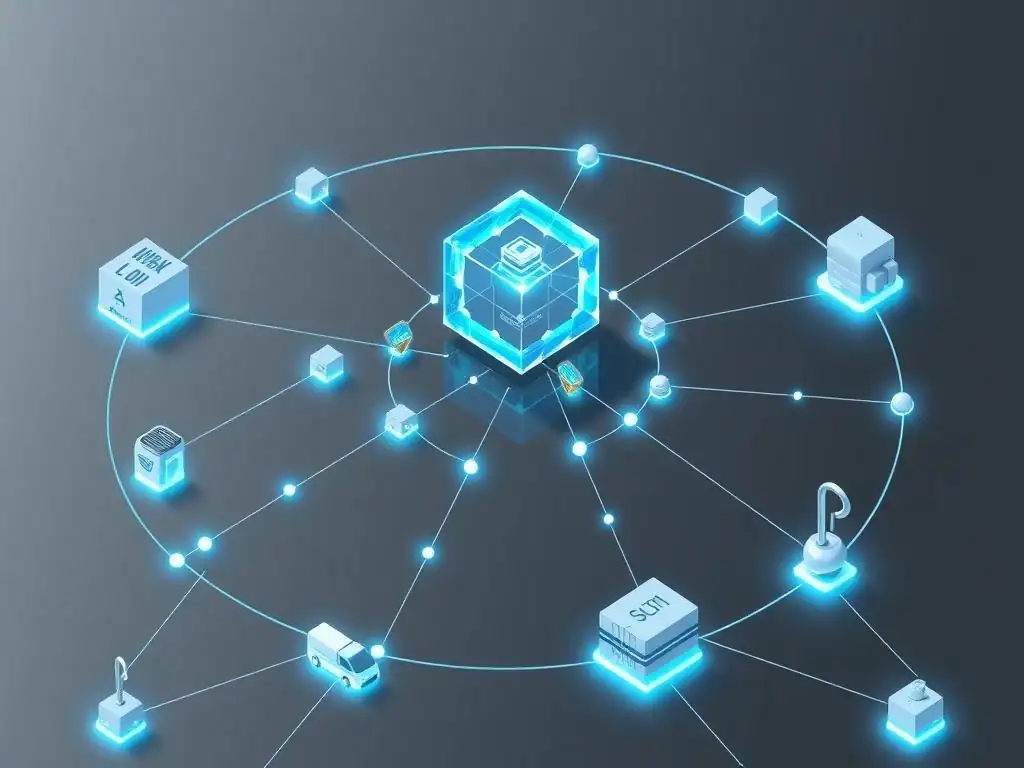
The Growing Need for Transparency in Supply Chains
In today's intricate global economy, supply chains have evolved into complex, multi-tiered networks involving numerous stakeholders, from raw material suppliers to end consumers. This complexity often leads to opacity, making it challenging to track goods, verify origins, and ensure ethical and sustainable practices. The lack of transparency can breed inefficiencies, delays, and disputes, hindering smooth operations and eroding trust among partners.
For instance, consider the journey of a garment: it may involve cotton farmers in one country, textile mills in another, manufacturing plants in a third, and finally, retailers across the globe. Without transparent systems, tracing the origin of materials, labor conditions, or environmental impact becomes incredibly difficult, creating vulnerabilities and risks throughout the chain.
The demand for greater transparency in supply chains is being driven by various factors, including increased consumer awareness, stricter regulatory requirements, and the growing need for businesses to demonstrate corporate social responsibility. Consumers are increasingly demanding to know where their products come from, how they are made, and if they meet ethical and sustainability standards. Regulatory bodies are also pushing for more accountability and traceability, particularly in sectors like food and pharmaceuticals, to ensure product safety and prevent fraud.
Companies that can offer greater transparency gain a competitive advantage by building trust with customers, attracting investors who prioritize ESG (Environmental, Social, and Governance) factors, and mitigating risks associated with supply chain disruptions or unethical practices. Therefore, solutions that enhance visibility and traceability across the supply chain are not just desirable, but essential for modern businesses to thrive.
Understanding Blockchain: A Distributed Ledger for Business
Blockchain technology, at its core, is a distributed, immutable ledger that records transactions across many computers. Instead of relying on a central authority, blockchain operates on a decentralized network where data is shared and verified by multiple participants. This distributed nature makes it incredibly secure and resistant to tampering, as any alteration to the ledger would require consensus from a majority of the network participants.
Imagine a shared digital record book that everyone in a supply chain can access and view, but no single entity controls. Every transaction or piece of information added to this ledger is grouped into "blocks" and cryptographically linked to the previous block, creating a chronological chain of records – hence the name "blockchain".
The key characteristics of blockchain – decentralization, immutability, and transparency – make it exceptionally well-suited for business applications, particularly in complex and fragmented ecosystems like supply chains. Decentralization eliminates single points of failure and control, fostering trust among participants who may not fully trust each other. Immutability ensures that once data is recorded on the blockchain, it cannot be altered or deleted, providing an auditable and reliable history of transactions and events.
Transparency, while permissioned in many enterprise blockchains, allows authorized stakeholders to access and verify information, enhancing visibility and accountability across the supply chain. For businesses, this translates to increased efficiency, reduced costs, improved security, and enhanced trust, making blockchain a transformative technology for various industries.
What is Supply Chain Finance and Why Use Blockchain?
Supply Chain Finance (SCF) encompasses a range of financial instruments and practices aimed at optimizing cash flow and working capital across the supply chain. It focuses on improving the financial relationships between buyers and suppliers, offering solutions like early payment programs, invoice discounting, and inventory financing. The goal of SCF is to ensure that suppliers receive timely payments, buyers can extend payment terms, and the overall financial health of the supply chain is strengthened.
Traditional SCF processes often involve manual paperwork, intermediaries, and lack real-time visibility, leading to inefficiencies, delays, and increased risks. For example, invoice reconciliation can be time-consuming and prone to errors, and tracking the status of payments across multiple parties can be challenging.
Blockchain technology offers a powerful solution to address the inefficiencies and challenges inherent in traditional SCF. By providing a shared, transparent, and secure platform, blockchain can streamline SCF processes, reduce costs, and enhance trust among participants. Smart contracts, self-executing agreements written in code and stored on the blockchain, can automate payment processes, trigger events based on pre-defined conditions, and ensure transparency in financial transactions.
The immutability of blockchain records creates an auditable trail of all financial activities, reducing the risk of fraud and disputes. Furthermore, blockchain can facilitate real-time visibility into the flow of goods and funds across the supply chain, enabling better decision-making and risk management for all stakeholders.
For instance, a smart contract could automatically release payment to a supplier upon confirmation of goods delivery and quality inspection, eliminating manual processes and accelerating the payment cycle. This enhanced efficiency, security, and transparency makes blockchain a compelling technology for revolutionizing supply chain finance.
Frequently Asked Questions
What is Hyperledger's role in securing enterprise tokens?
Hyperledger provides a permissioned blockchain framework for building secure and transparent systems. This means access control and data privacy are built-in, making it ideal for managing sensitive digital assets. It also offers features for managing token lifecycles.
How does Hyperledger ensure the security of digital asset trading?
Hyperledger utilizes features like smart contracts and consensus mechanisms to automate and secure trading processes. This allows for transparent and auditable transactions, reducing the risk of fraud or manipulation in digital asset exchanges. Identity management is also crucial.
Beyond cryptocurrencies, what are some practical applications of Hyperledger for enterprise tokens?
Hyperledger can be used for supply chain management, tracking ownership and provenance of assets. It's also applicable in loyalty programs, creating secure and verifiable digital rewards. Additionally, asset tokenization of real-world assets is possible.
What are the regulatory considerations when using Hyperledger for enterprise tokens?
Regulations surrounding digital assets are evolving, so compliance is crucial. Enterprises must consider KYC/AML requirements and data privacy regulations like GDPR. Hyperledger's permissioned nature can aid in meeting these compliance standards.
How does Hyperledger contribute to the future of decentralized systems beyond just finance?
Hyperledger's focus on permissioned blockchains makes it suitable for various industries beyond finance. It enables secure data sharing and collaboration between organizations, fostering trust and efficiency in decentralized ecosystems. This leads to greater transparency.
Final Reflection: Embracing Secure Tokenization with Hyperledger
The exploration of Hyperledger's capabilities in securing digital assets underscores a critical reality: the future of enterprise tokenization hinges on robust and transparent security frameworks. As businesses increasingly adopt blockchain technology to represent and manage their assets, the need for platforms like Hyperledger, which prioritize security and compliance, becomes paramount. The potential for enhanced efficiency and new revenue streams is undeniable, but only if built upon a foundation of trust and verifiable integrity.
This journey into Hyperledger's potential has deeply resonated with the ongoing evolution of digital asset management. Witnessing the shift from theoretical concepts to practical implementations highlights the transformative power of blockchain in revolutionizing traditional financial systems. Security is not a product, but a process.
This quote perfectly encapsulates the continuous effort required to maintain the integrity of digital assets, a process that Hyperledger is well-equipped to support.
Now, consider the implications of this knowledge. How can you, as a stakeholder in the digital economy, contribute to a more secure and transparent future? Embrace the principles of security by design, advocate for open-source solutions like Hyperledger, and actively participate in shaping the standards that will govern the next generation of digital assets. The power to build a more trustworthy and efficient financial landscape lies within our collective actions.
Unveil Your Token Potential!
Thank you for exploring the world of Hyperledger and digital asset management with us. We hope you've gained valuable insights into securing and trading enterprise tokens. Now, let’s turn that knowledge into action.
Ready to take the next step?
- Experiment with Hyperledger Fabric: Set up a test network and deploy a sample token contract to gain hands-on experience with its capabilities.
- Join the conversation! Share this article with your colleagues and discuss how Hyperledger could transform your company's asset management.
- Explore additional resources on blockchain technology. Discover more articles, tutorials, and case studies related to Hyperledger and enterprise blockchain adoption.
What is the first token project you would like to develop using Hyperledger, and what challenges do you expect to encounter? Share your thoughts in the comments below!
Leave a Reply