
The Cultural Impact of PlaytoEarn Crypto Games Worldwide

Welcome to Blockchain Trends, your go-to source for understanding the revolutionary impact of blockchain technology.
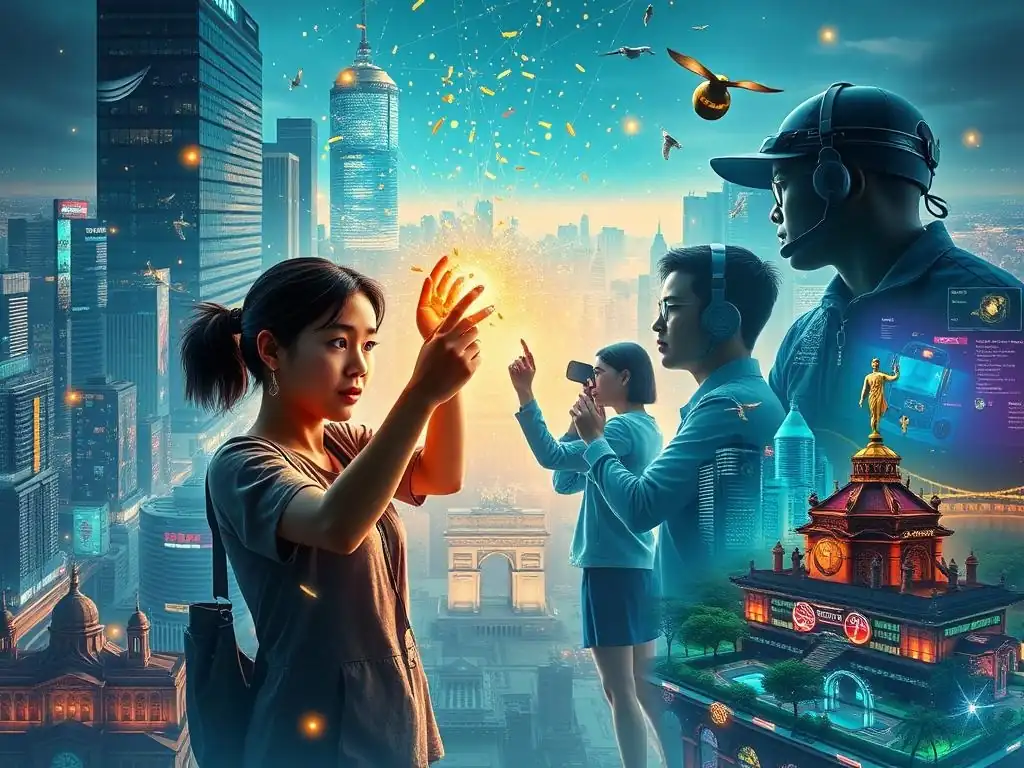
Delve into the fascinating world where gaming meets blockchain with our latest exploration of PlaytoEarn crypto game culture. But how are these games truly reshaping global culture, and what does the future hold for this intersection of finance and entertainment? Discover the answers and more as we uncover the cultural impact of this booming sector, and how it's changing the way we play and earn.
The Cultural Impact of Play-to-Earn Crypto Games Worldwide
- Introduction: Understanding the Rise of Play-to-Earn Crypto Game Culture
- How Play-to-Earn Crypto Games are Shaping Global Culture
- Regional Variations in Play-to-Earn Crypto Game Culture
- The Influence of Play-to-Earn on Traditional Gaming Culture
- Challenges and Criticisms of the Play-to-Earn Crypto Game Culture
- The Future of Play-to-Earn Crypto Game Culture: Trends and Predictions
- Play-to-Earn Crypto Games: Beyond Entertainment - Social and Economic Transformation
- Conclusion: The Enduring Legacy of Play-to-Earn Crypto Games on Global Culture
-
Frequently Asked Questions
- What are the key features driving the cultural impact of PlaytoEarn crypto games?
- How is PlaytoEarn crypto game culture affecting traditional gaming models?
- What are some of the potential negative consequences of the rise of PlayToEarn crypto game culture?
- How is PlayToEarn crypto game culture being regulated (or not regulated) globally?
- Beyond financial incentives, what other cultural shifts are being observed within PlayToEarn crypto game communities?
- Final Reflection: Embracing the Evolving PlaytoEarn Crypto Game Culture
- Dive Deeper: Shape the Future of Play-to-Earn!
Introduction: Understanding the Rise of Play-to-Earn Crypto Game Culture
Defining Play-to-Earn (P2E) and its Core Mechanics
Play-to-Earn (P2E) represents a paradigm shift in the gaming industry, moving away from traditional models where players primarily consume entertainment to one where they can actively earn cryptocurrency and other digital assets through gameplay. At its core, P2E integrates blockchain technology, specifically cryptocurrencies and Non-Fungible Tokens (NFTs), into game economies. Players participate in various in-game activities, such as battles, quests, resource gathering, and trading, and are rewarded with crypto tokens or NFTs that hold real-world value.
These rewards can then be traded on cryptocurrency exchanges or NFT marketplaces, effectively converting in-game achievements into tangible financial gains. This fundamental shift transforms gaming from a purely leisure activity into a potential source of income, blurring the lines between entertainment and economic opportunity.
The mechanics of P2E games often revolve around the use of NFTs as in-game assets. These NFTs can represent characters, land, items, or other virtual objects, granting players true ownership and control over their digital possessions. Unlike traditional games where in-game items are controlled by the game developers, P2E NFTs are recorded on a blockchain, making them unique, verifiable, and transferable outside the game's ecosystem.
Players earn these NFTs through gameplay and can then trade them, rent them out to other players, or even participate in decentralized finance (DeFi) activities using their in-game assets. This creates a player-driven economy where the value of in-game assets is determined by supply and demand, and players are incentivized to actively participate and contribute to the game's ecosystem.
The Global Explosion of Play-to-Earn Crypto Gaming: A Cultural Phenomenon
The emergence and rapid growth of Play-to-Earn crypto gaming can be described as a global cultural phenomenon, particularly in regions where traditional economic opportunities are limited. Starting in 2020 and 2021, games like Axie Infinity gained immense popularity, especially in Southeast Asia and Latin America. In the Philippines, for instance, during periods of economic hardship caused by the pandemic, many individuals turned to Axie Infinity as a primary source of income.
Reports indicated that some players were earning more from playing Axie Infinity than the average minimum wage in their country, showcasing the transformative economic potential of P2E. This early success story fueled further interest and investment in the P2E space, leading to an explosion of new games and platforms.
The cultural impact of this explosion extends beyond mere economic benefits. Play-to-Earn games have fostered new online communities and social interactions. Players from diverse backgrounds and locations are connecting within these virtual worlds, collaborating, competing, and forming social bonds around shared gaming experiences and economic goals.
Online platforms and guilds dedicated to P2E games have proliferated, providing resources, strategies, and support for players. This has created a vibrant subculture centered around crypto gaming, characterized by its own slang, social norms, and online communities. The phenomenon is not limited to specific demographics either; while initially popular in developing nations, interest in P2E is expanding globally, attracting players from developed countries intrigued by the intersection of gaming, finance, and emerging technologies.
Exploring the Cultural Shift Driven by P2E
Play-to-Earn gaming is driving a significant cultural shift by challenging traditional notions of work, leisure, and digital ownership. Historically, gaming has been primarily perceived as a form of entertainment, a leisure activity separate from the world of work and finance. P2E blurs these boundaries, presenting gaming as a potentially viable source of income and economic empowerment.
This shift is particularly impactful in regions where traditional employment opportunities are scarce or wages are low. For many, P2E offers a chance to participate in the digital economy and generate income through skills and time invested in gameplay, rather than through conventional employment structures. This can lead to a re-evaluation of what constitutes "work" and "value" in a digital age.
Furthermore, P2E is contributing to a broader cultural understanding and acceptance of blockchain technology and cryptocurrencies. By interacting with these technologies in a familiar and engaging context – gaming – individuals are becoming more comfortable with concepts like NFTs, crypto wallets, and decentralized economies. This "gamified" introduction to blockchain can lower the barrier to entry for wider adoption of crypto technologies beyond gaming.
The cultural shift also involves a changing perception of digital assets and ownership. P2E demonstrates the potential for true digital ownership through NFTs, contrasting with the traditional model where users essentially lease digital goods within centralized platforms. This concept of digital property rights, empowered by blockchain, is resonating with a growing number of users and shaping the future of digital interactions and online economies.
How Play-to-Earn Crypto Games are Shaping Global Culture
Economic Empowerment through Gaming: A New Source of Income for Players
One of the most profound cultural impacts of Play-to-Earn crypto games is the economic empowerment they offer to players worldwide. In regions with developing economies, where traditional job markets may be limited or wages are low, P2E games have emerged as a viable alternative or supplementary income source. The case of Axie Infinity in the Philippines during the COVID-19 pandemic is a prime example.
As many lost their jobs or faced reduced income due to lockdowns, playing Axie Infinity provided a lifeline. Reports from 2021 indicated that Filipino Axie players were earning anywhere from \$200 to \$1000 per month, significantly exceeding the average minimum wage in the country, which was around \$300 per month in some regions. This income was crucial for basic necessities like food, housing, and healthcare for many families.
Beyond the Philippines, similar trends are observed in other Southeast Asian nations, Latin America, and parts of Africa. In Venezuela, facing hyperinflation and economic crisis, P2E games have become a relevant source of stable income in USD-pegged cryptocurrencies. The ability to earn while playing games is particularly appealing to younger generations and those with limited formal education or access to traditional employment.
This economic empowerment extends beyond individual earnings. P2E has also fostered the growth of gaming guilds and communities that provide scholarships, training, and support to new players, further democratizing access to these earning opportunities. By offering a pathway to financial participation in the digital economy, P2E games are challenging traditional economic structures and creating new avenues for wealth creation, particularly in underserved communities.
Play-to-Earn and the Evolution of Digital Ownership: NFTs and In-Game Assets
Play-to-Earn crypto games are revolutionizing the concept of digital ownership through the integration of Non-Fungible Tokens (NFTs). In traditional gaming models, players invest time and sometimes money to acquire in-game items, characters, or virtual land. However, these assets are typically owned and controlled by the game developers, and players do not have true ownership or the ability to freely trade or transfer them outside the game's ecosystem.
P2E flips this paradigm by utilizing NFTs to represent in-game assets. When a player earns or purchases an NFT within a P2E game, they gain verifiable ownership of that digital asset, recorded permanently on a blockchain. This ownership is not controlled by the game developer but by the player themselves.
This shift to NFT-based in-game assets has profound implications for digital ownership. Players can now truly own their in-game achievements and investments. They can trade their NFTs on open marketplaces, sell them to other players, or even lend them out to earn passive income.
The value of these NFTs is determined by market demand, scarcity, and their utility within the game. For example, in Axie Infinity, Axie NFTs, which are required to play the game, have seen significant price fluctuations based on their rarity and battle effectiveness. The most expensive Axie ever sold fetched over 300 ETH, equivalent to hundreds of thousands of US dollars at the time.
This demonstrates the potential for significant value accumulation and trading within P2E ecosystems, driven by the principle of verifiable digital ownership. This concept is influencing not only gaming but also broader digital culture, as users increasingly seek true ownership and control over their digital creations and assets in the metaverse and beyond.
Play-to-Earn crypto games are not just about individual earnings; they are also powerful engines for building vibrant online communities and shaping new social dynamics. The collaborative and competitive nature of many P2E games fosters strong social bonds among players. To succeed in many P2E games, players often need to cooperate, strategize, and form teams or guilds. This shared goal of earning cryptocurrency and progressing within the game creates a sense of collective purpose and camaraderie. Online platforms like Discord, Telegram, and dedicated game forums become hubs for these communities, where players share tips, strategies, and support each other.
The economic aspect of P2E further strengthens these social connections. Gaming guilds, for instance, have emerged as significant social and economic structures within the P2E space. These guilds often operate as decentralized autonomous organizations (DAOs), managing shared resources, providing scholarships for new players to access the game, and organizing collective gameplay strategies.
For example, Yield Guild Games (YGG) is a prominent example of a P2E gaming guild that has invested in various P2E games and provides scholarships to thousands of players globally. These guilds not only facilitate economic opportunities but also foster strong social networks and support systems for their members.
This community-driven aspect of P2E is a key factor in its cultural impact, transforming gaming from a solitary or casual pastime into a socially engaging and economically interconnected activity. The shared experience of navigating the complexities of crypto gaming, coupled with the potential for collective financial success, creates a unique and powerful form of online community building.
Regional Variations in Play-to-Earn Crypto Game Culture
Southeast Asia: A Hotbed for P2E Adoption and Cultural Integration
Southeast Asia has emerged as a global epicenter for Play-to-Earn crypto game adoption and cultural integration. Countries like the Philippines, Vietnam, Indonesia, and Thailand have witnessed widespread enthusiasm for P2E, driven by a combination of factors including high mobile penetration, strong gaming culture, and economic conditions that make P2E an attractive income opportunity. In the Philippines, as previously mentioned, Axie Infinity achieved mainstream recognition, becoming deeply ingrained in the local culture.
During peak periods, it was estimated that over 40% of Axie Infinity players were from the Philippines. This level of adoption led to the emergence of "Axie Infinity academies" and local businesses centered around supporting P2E players.
The cultural integration in Southeast Asia goes beyond mere adoption rates. P2E games have become a topic of everyday conversation, influencing social interactions and even family dynamics. In some communities, families pool resources to invest in P2E games, and gaming guilds have become important social organizations.
Furthermore, Southeast Asia is not just a consumer market for P2E; it is also becoming a hub for P2E game development and innovation. Local game studios are increasingly incorporating blockchain technology into their games, and the region is attracting investment from global crypto gaming companies. The strong cultural affinity for gaming, combined with the economic incentives of P2E, positions Southeast Asia as a key driver of the global Play-to-Earn crypto game culture.
Latin America: Play-to-Earn as a Pathway to Financial Inclusion
Latin America represents another region where Play-to-Earn crypto games are having a significant cultural and economic impact, particularly as a pathway to financial inclusion. Countries like Venezuela, Brazil, Argentina, and Colombia, often facing economic instability, high inflation, and limited access to traditional financial services, have seen rapid adoption of P2E.
In Venezuela, where hyperinflation has eroded the value of the national currency, P2E games that pay out in USD-pegged stablecoins have become a vital source of stable income. Reports from 2022 indicated that a significant portion of Venezuelans were relying on P2E earnings to supplement or replace their traditional income.
The appeal of P2E in Latin America is rooted in its potential to provide financial opportunities to underserved populations. Many individuals in the region lack access to bank accounts or formal employment, but have access to smartphones and internet connectivity. P2E games offer a low-barrier entry point to the digital economy, allowing them to earn cryptocurrency and participate in global financial markets.
Moreover, the gaming culture in Latin America is already strong, with a large and engaged gaming community. This existing gaming infrastructure and player base facilitated the rapid uptake of P2E games. While challenges like internet access and digital literacy remain, P2E is demonstrably expanding financial inclusion and providing economic empowerment to a significant segment of the Latin American population, shaping a unique regional P2E culture focused on economic survival and opportunity.
North America and Europe: Mainstream Acceptance and Evolving Perceptions of Crypto Gaming
In North America and Europe, the cultural impact of Play-to-Earn crypto games is evolving, characterized by growing mainstream acceptance and changing perceptions of crypto gaming. While initial adoption may have been slower compared to Southeast Asia and Latin America, interest in P2E is steadily increasing, driven by factors such as increasing awareness of blockchain technology, the rise of NFTs in mainstream culture, and the potential for both entertainment and financial return. In these regions, the perception of crypto gaming is shifting from a niche activity for crypto enthusiasts to a potentially legitimate and engaging form of entertainment and investment.
Mainstream media coverage of P2E games and success stories from regions like the Philippines has contributed to increased awareness and curiosity. Furthermore, traditional gaming companies in North America and Europe are starting to explore the integration of blockchain and P2E mechanics into their games, signaling a growing acceptance within the established gaming industry.
While regulatory concerns and skepticism about the sustainability of some P2E models persist, there is a clear trend towards greater mainstream acceptance. The cultural impact in these regions is also reflected in the evolving discourse around gaming.
Discussions are moving beyond purely entertainment value to include economic aspects, digital ownership, and the potential for gaming to contribute to financial literacy and digital skills development. As P2E games become more sophisticated and integrate with broader metaverse initiatives, their cultural influence in North America and Europe is expected to continue to grow, shaping the future of gaming and digital entertainment.
The Influence of Play-to-Earn on Traditional Gaming Culture
Blurring the Lines: The Convergence of Traditional Gaming and Blockchain Gaming
Play-to-Earn crypto games are significantly blurring the lines between traditional gaming and blockchain-based gaming, leading to a convergence that is reshaping the industry. Traditional gaming, historically focused on entertainment and player engagement through compelling narratives and gameplay mechanics, is now increasingly influenced by the economic and ownership models pioneered by P2E. Conversely, P2E games are evolving to incorporate more sophisticated gameplay and design principles borrowed from traditional gaming to enhance player experience and retention beyond purely financial incentives. This convergence is creating a hybrid gaming landscape where the best aspects of both worlds are being integrated.
Established gaming companies are recognizing the potential of blockchain and P2E. Some are experimenting with integrating NFTs into existing game franchises, offering players true ownership of in-game assets. Others are developing entirely new blockchain-based games that incorporate P2E mechanics alongside high-quality graphics and gameplay.
For example, companies like Ubisoft have started exploring NFTs within their traditional game ecosystems, while others are investing heavily in developing dedicated blockchain gaming platforms. This move by traditional gaming giants validates the P2E model and signals a broader industry shift towards incorporating blockchain technologies. Simultaneously, P2E game developers are focusing on improving the core gameplay and user experience of their games.
Early P2E titles were often criticized for prioritizing earning mechanics over engaging gameplay. Newer P2E games are aiming to deliver both compelling gameplay and robust P2E economies, drawing inspiration from the design principles of successful traditional games. This convergence is leading to a more mature and sustainable crypto gaming ecosystem that appeals to a wider audience beyond just crypto enthusiasts.
The Impact on Game Design: Integrating Economic Incentives and Player Ownership
Play-to-Earn is having a profound impact on game design, prompting developers to rethink how they integrate economic incentives and player ownership into game mechanics. Traditional game design primarily focuses on creating engaging gameplay loops, compelling narratives, and rewarding progression systems to keep players entertained and invested. P2E adds a new layer of complexity by introducing economic incentives directly into the gameplay loop.
Game designers now need to balance entertainment with economic opportunities, ensuring that players are both engaged by the game's mechanics and incentivized by the potential to earn. This requires a careful calibration of in-game economies, reward systems, and asset distribution to create a sustainable and attractive P2E ecosystem.
Integrating player ownership through NFTs also necessitates a shift in game design philosophy. Traditional games typically retain full control over in-game assets and economies. P2E games, by empowering players with ownership, require a more decentralized and player-centric design approach.
Game designers need to create economies that are driven by player activity and demand, rather than solely controlled by the developers. This includes designing systems for asset creation, scarcity, and utility that are transparent and fair to players. Furthermore, P2E game design must consider the long-term sustainability of the game's economy.
Over-inflation of in-game currencies or unsustainable reward mechanisms can lead to economic collapse and player attrition. Therefore, game designers are exploring innovative economic models, such as dual-token systems, dynamic reward adjustments, and deflationary mechanisms, to ensure the long-term health and viability of P2E game economies. This focus on economic design is becoming as critical as traditional gameplay design in the development of successful P2E games.
Play-to-Earn and the Future of Gaming: A Sustainable Model?
The question of whether Play-to-Earn represents a sustainable model for the future of gaming is a subject of ongoing debate and experimentation. While P2E has demonstrated significant potential for economic empowerment and player engagement, its long-term sustainability depends on several factors, including economic stability, gameplay quality, and evolving player expectations.
Early P2E models, particularly those that relied heavily on new player influx to sustain rewards for existing players (similar to Ponzi schemes), have faced challenges in maintaining long-term economic viability. As the P2E market matures, there is a growing recognition of the need for more sustainable and balanced economic models.
Future sustainable P2E models are likely to focus on several key principles. Firstly, they will prioritize engaging and enjoyable gameplay that attracts and retains players beyond just earning potential. Games need to be fun and rewarding in their own right, with P2E mechanics serving as an additional layer of value and engagement.
Secondly, sustainable P2E economies will need to be carefully designed to balance supply and demand, avoid hyperinflation, and ensure that rewards are tied to meaningful player contributions and in-game value creation. This may involve more complex economic models, including decentralized governance mechanisms that allow player communities to participate in shaping the game's economy. Thirdly, the long-term success of P2E hinges on the broader adoption of blockchain technology and cryptocurrencies.
As crypto adoption grows and regulatory frameworks become clearer, P2E gaming is likely to become more mainstream and sustainable. The future of gaming may well involve a hybrid model, where P2E elements are integrated into traditional gaming experiences, offering players new forms of engagement, ownership, and economic participation in the games they love.
Challenges and Criticisms of the Play-to-Earn Crypto Game Culture
Environmental Concerns: Addressing the Energy Consumption of Blockchain Gaming
One of the most significant challenges and criticisms leveled against Play-to-Earn crypto game culture is related to environmental concerns, specifically the energy consumption associated with blockchain technology. Many early blockchain platforms, including the one initially used by Axie Infinity (Ethereum), relied on a "Proof-of-Work" (PoW) consensus mechanism. PoW requires extensive computational power to validate transactions and secure the network, resulting in substantial energy consumption. Critics argue that this energy-intensive process contributes to carbon emissions and exacerbates environmental problems, making P2E gaming, when built on PoW blockchains, environmentally unsustainable.
However, the blockchain landscape is evolving, and solutions are being developed to address these environmental concerns. Many newer blockchain platforms and existing ones transitioning to "Proof-of-Stake" (PoS) consensus mechanisms. PoS is significantly more energy-efficient than PoW, as it relies on validators staking cryptocurrency rather than performing complex computations to secure the network.
Ethereum, the most popular blockchain for NFTs and many P2E games, has transitioned to PoS in 2022, drastically reducing its energy consumption by over 99%. Furthermore, layer-2 scaling solutions built on top of blockchains like Ethereum are also improving energy efficiency by processing transactions off-chain and reducing the load on the main blockchain.
P2E game developers are increasingly choosing to build on or migrate to more environmentally friendly blockchains and scaling solutions to mitigate the environmental impact of their games. The ongoing shift towards more sustainable blockchain technologies is crucial for addressing environmental criticisms and ensuring the long-term viability and ethical acceptability of P2E crypto gaming.
Economic Sustainability: Balancing Player Rewards and Game Longevity
Economic sustainability is a critical challenge for Play-to-Earn crypto games, requiring careful balancing of player rewards and game longevity. Many early P2E models faced issues with unsustainable tokenomics, often relying on a continuous influx of new players to maintain reward payouts for existing players. This can lead to inflationary pressures on in-game currencies and asset prices, ultimately devaluing rewards and causing player attrition when new player growth slows down or stops. The "play-to-earn" aspect can sometimes overshadow the "play" aspect, leading to games that feel more like jobs than enjoyable entertainment, further impacting player retention over time.
To address these economic sustainability challenges, P2E game developers are exploring more sophisticated and robust tokenomic models. This includes implementing dual-token systems, where one token is used for governance and long-term value accrual, while another is used for in-game transactions and rewards. Deflationary mechanisms, such as token burning or sinks, are being incorporated to manage token supply and prevent hyperinflation. Dynamic reward systems that adjust based on player activity, market conditions, and game economy health are also being implemented to maintain balance. Furthermore, focusing on creating engaging and enjoyable gameplay is paramount. Games that prioritize fun and player experience, alongside P2E mechanics, are more likely to attract and retain players long-term, creating a more sustainable and robust game economy. The long-term success of P2E relies on striking a delicate balance between rewarding players for their time and contributions while ensuring the overall economic health and longevity of the game ecosystem.
Play-to-Earn crypto games face significant regulatory hurdles as they navigate the complex and evolving legal landscape of cryptocurrencies and digital assets globally. The regulatory frameworks for cryptocurrencies and NFTs are still in their early stages of development in many jurisdictions, creating uncertainty and challenges for P2E game developers and players. Different countries have vastly different approaches to regulating crypto assets, ranging from outright bans to relatively permissive environments. This jurisdictional fragmentation creates complexities for P2E games that aim to operate globally.
One of the key regulatory challenges is the classification of in-game tokens and NFTs. Depending on their design and functionality, these assets could be classified as securities, commodities, or currencies by different regulatory bodies. If classified as securities, P2E game developers may face stringent compliance requirements, including registration, licensing, and reporting obligations.
Anti-Money Laundering (AML) and Know Your Customer (KYC) regulations also pose challenges for P2E platforms, requiring them to implement measures to prevent illicit activities and verify player identities. Furthermore, tax implications for P2E earnings and NFT trading are still being clarified in many jurisdictions, creating uncertainty for players and developers alike.
Navigating this complex regulatory landscape requires P2E game developers to stay informed about evolving regulations, seek legal counsel, and potentially adapt their game designs and business models to comply with diverse legal requirements in different regions. Clearer and more consistent regulatory frameworks are needed to foster innovation and growth in the P2E space while protecting players and ensuring responsible development.
The Future of Play-to-Earn Crypto Game Culture: Trends and Predictions
Metaverse Integration: Expanding the Play-to-Earn Ecosystem
The future of Play-to-Earn crypto game culture is inextricably linked to the development and expansion of the metaverse. Metaverse integration represents a significant trend that is poised to reshape the P2E ecosystem, moving beyond individual games towards interconnected virtual worlds and experiences. As metaverses evolve into more immersive and interoperable platforms, P2E games are increasingly being integrated into these broader virtual environments. This integration allows players to utilize their in-game assets, identities, and earnings across multiple games and metaverse experiences, creating a more seamless and interconnected P2E ecosystem.
Metaverse integration expands the scope of P2E beyond traditional game boundaries. Players may be able to earn cryptocurrency or NFTs in one game and then use those assets in another game within the same metaverse, or even utilize them for other metaverse activities such as virtual commerce, social interactions, or virtual events.
This interoperability enhances the utility and value of in-game assets and creates new opportunities for players to earn, trade, and interact within the metaverse. Furthermore, metaverses can provide a platform for diverse P2E experiences, ranging from traditional games to virtual workplaces, social spaces, and educational environments.
This broader integration could attract a wider audience to P2E, beyond just gamers, as the metaverse becomes a more integral part of daily digital life. The convergence of P2E and the metaverse is expected to create a richer, more interconnected, and more economically vibrant digital landscape, where earning opportunities are seamlessly woven into various virtual experiences.
Innovation in Game Design: Exploring New Play-to-Earn Mechanics
Innovation in game design is crucial for the continued evolution and appeal of Play-to-Earn crypto game culture. While early P2E models often focused on simple gameplay loops centered around earning, the future of P2E lies in developing more engaging, diverse, and innovative game mechanics that go beyond basic "click-to-earn" or repetitive tasks. Game developers are actively exploring new P2E mechanics that integrate earning opportunities more seamlessly into core gameplay, making earning a natural and enjoyable part of the gaming experience.
This innovation includes exploring new game genres within the P2E space. Beyond the initial focus on RPGs and strategy games, we are seeing the emergence of P2E games in genres like racing, sports, simulation, and even creative platforms.
New P2E mechanics are also being developed, such as "play-and-earn" models that reward players based on skill, creativity, and social contributions, rather than just time spent playing. Decentralized autonomous organizations (DAOs) are being integrated into game governance, allowing player communities to participate in shaping game development and economic decisions, fostering a more player-centric and community-driven P2E ecosystem.
Furthermore, the integration of DeFi (Decentralized Finance) elements into P2E games is opening up new possibilities for player earnings and asset utilization, such as staking in-game assets for passive income or participating in decentralized lending and borrowing markets within the game ecosystem. This continuous innovation in game design and mechanics is essential for attracting a wider audience, enhancing player engagement, and ensuring the long-term sustainability and cultural relevance of Play-to-Earn crypto gaming.
The Long-Term Impact: Will Play-to-Earn Become a Mainstream Cultural Force?
The question of whether Play-to-Earn crypto games will become a mainstream cultural force is a central consideration for the future of gaming and digital entertainment. While P2E has already demonstrated a significant cultural impact in certain regions and among specific demographics, its long-term mainstream adoption hinges on several factors. Continued improvements in gameplay quality, economic sustainability, and user experience are crucial for attracting a wider audience beyond crypto enthusiasts. As P2E games evolve to offer more engaging and enjoyable gameplay, they are more likely to appeal to mainstream gamers who prioritize entertainment value alongside earning potential.
Increased mainstream awareness and acceptance of blockchain technology and cryptocurrencies will also play a vital role. As crypto becomes more integrated into everyday life and digital literacy increases, the barriers to entry for P2E gaming will decrease, potentially leading to broader adoption. Furthermore, the regulatory landscape will significantly influence the mainstream trajectory of P2E.
Clearer and more favorable regulations in key jurisdictions could foster innovation and investment in the P2E space, facilitating its growth and mainstream integration. If P2E can successfully address its current challenges, including environmental concerns, economic sustainability, and regulatory hurdles, and continue to innovate in game design and metaverse integration, it has the potential to become a significant mainstream cultural force, transforming the future of gaming and digital entertainment and shaping how people interact with and earn value in virtual worlds.
Democratizing Access to Economic Opportunities through Play-to-Earn
Play-to-Earn crypto games extend far beyond mere entertainment, holding the potential for significant social and economic transformation by democratizing access to economic opportunities. Traditional economic systems often present barriers to entry, particularly for individuals in developing countries or those lacking formal education or capital. P2E games offer a lower barrier entry point to the digital economy, allowing anyone with a smartphone and internet access to participate and earn cryptocurrency. This democratization of economic access is particularly impactful in regions with limited traditional employment opportunities or where wages are low.
P2E games provide a platform for individuals to leverage their gaming skills, time, and effort to generate income, regardless of their background or geographical location. This can empower individuals to become financially independent, improve their livelihoods, and participate in the global digital economy.
The rise of gaming guilds and scholarship programs further democratizes access by providing resources, training, and initial capital (in the form of loaned NFTs) to new players, enabling them to start earning without upfront investment. By breaking down traditional barriers to economic participation and offering a pathway to earn in the digital space, P2E games are contributing to a more inclusive and equitable global economy, empowering individuals and communities who may have been previously excluded from traditional economic systems.
Fostering Digital Literacy and Financial Awareness through Gaming
Beyond economic empowerment, Play-to-Earn crypto games are also playing a crucial role in fostering digital literacy and financial awareness, particularly among younger generations and those new to blockchain technology. Engaging with P2E games requires players to learn about cryptocurrencies, NFTs, crypto wallets, blockchain transactions, and decentralized finance concepts. This "learning by doing" approach, embedded within an engaging and entertaining gaming context, makes complex technological and financial concepts more accessible and understandable.
Players who participate in P2E games are gaining practical experience with digital assets and decentralized economies, developing valuable digital skills that are increasingly relevant in the modern world. They learn how to manage crypto wallets, trade NFTs, understand tokenomics, and navigate decentralized platforms. This hands-on experience can build confidence and competence in using digital technologies and managing digital assets.
Furthermore, P2E games often require players to make strategic financial decisions, such as managing in-game resources, investing in NFTs, and understanding market dynamics. This can improve financial literacy and decision-making skills, preparing players for greater participation in the broader digital economy and financial systems. By gamifying the learning process and providing real-world financial incentives, P2E games are effectively educating a new generation about digital technologies and finance, contributing to a more digitally literate and financially savvy global population.
Axie Infinity in the Philippines: A Case Study
The impact of Axie Infinity in the Philippines serves as a compelling case study illustrating the social and economic transformation potential of Play-to-Earn crypto games. During the COVID-19 pandemic and associated lockdowns, many Filipinos faced job losses and economic hardship. Axie Infinity emerged as a significant source of income for many, particularly in rural areas where traditional employment opportunities were limited.
Numerous reports and anecdotal evidence documented how Filipinos were earning a living by playing Axie Infinity, sometimes earning more than their previous jobs. For example, in some regions, the average daily earnings from Axie Infinity could range from \$5 to \$15, which was significantly higher than the local minimum wage in certain sectors.
This economic impact extended beyond individual players. Gaming guilds and scholarship programs flourished in the Philippines, creating communities of players supporting each other and sharing resources. Local businesses emerged to cater to the needs of Axie players, such as internet cafes specializing in P2E gaming and financial services for converting in-game earnings to local currency.
Axie Infinity became deeply integrated into the social fabric of some Filipino communities, shaping daily routines, social interactions, and economic activities. While Axie Infinity's initial explosive growth has since moderated, its impact in the Philippines serves as a powerful example of how P2E games can provide economic opportunities, foster digital literacy, and create new forms of community and economic activity, particularly in developing economies. It highlights the transformative potential of P2E to go beyond entertainment and create real-world social and economic impact.
Conclusion: The Enduring Legacy of Play-to-Earn Crypto Games on Global Culture
Summarizing the Key Cultural Impacts of Play-to-Earn
Play-to-Earn crypto games have left an indelible mark on global culture, driven by their unique blend of entertainment, economics, and blockchain technology. One of the most significant cultural impacts is the democratization of economic opportunities, particularly in developing regions, offering new income streams and pathways to financial inclusion for underserved populations. P2E has also revolutionized the concept of digital ownership through NFTs, empowering players with true ownership and control over their in-game assets, shifting perceptions of digital property rights.
Furthermore, P2E games have fostered vibrant online communities and new social dynamics, creating interconnected networks of players collaborating and competing in virtual worlds. The convergence of traditional gaming and blockchain gaming, driven by P2E, is reshaping the gaming industry, prompting innovation in game design and economic models.
The cultural impact extends to education, as P2E games are effectively fostering digital literacy and financial awareness, equipping a new generation with valuable skills for the digital age. Regionally, P2E has seen diverse adoption patterns, with Southeast Asia and Latin America emerging as key hubs, each shaping a unique regional P2E culture. While challenges remain, including environmental concerns, economic sustainability, and regulatory hurdles, the cultural footprint of P2E is undeniable. It has challenged traditional notions of work and leisure, redefined digital ownership, and created new forms of social and economic interaction in the digital realm.
The Future Potential of Play-to-Earn to Shape Society and the Digital Landscape
Looking ahead, Play-to-Earn crypto games hold immense future potential to continue shaping society and the digital landscape. As metaverse integration deepens, P2E is poised to become an integral part of interconnected virtual worlds, expanding earning opportunities and creating more immersive and interoperable digital experiences.
Continued innovation in game design and economic models will be crucial for attracting mainstream audiences and ensuring the long-term sustainability of P2E. If P2E can successfully navigate its challenges and build upon its early successes, it has the potential to become a mainstream cultural force, transforming the future of gaming, digital entertainment, and even the broader digital economy.
The long-term legacy of P2E may extend beyond entertainment, potentially influencing how societies approach work, education, and economic participation in the digital age. By democratizing access to economic opportunities and fostering digital literacy, P2E can contribute to a more inclusive and equitable digital future. The ongoing evolution of P2E, coupled with the broader development of blockchain technology and the metaverse, suggests that its cultural impact is only just beginning, with the potential to fundamentally reshape how humans interact with and derive value from the digital world in the years to come.
Frequently Asked Questions
What are the key features driving the cultural impact of PlaytoEarn crypto games?
The cultural impact is primarily driven by the financial incentives offered to players, the community ownership they foster, and the new forms of social interaction that emerge within these games.
How is PlaytoEarn crypto game culture affecting traditional gaming models?
PlayToEarn games are challenging traditional models by offering players real-world economic value for their time and effort, potentially leading to a shift in how games are designed and monetized, focusing on player empowerment and ownership.
What are some of the potential negative consequences of the rise of PlayToEarn crypto game culture?
Potential downsides include economic inequality within the games, the risk of speculative bubbles that could harm players, and the potential for scams and exploitation within the unregulated crypto space.
How is PlayToEarn crypto game culture being regulated (or not regulated) globally?
Regulation varies significantly, with some countries embracing the technology while others remain cautious due to concerns about consumer protection and financial stability. Many jurisdictions are still grappling with how to classify and regulate crypto assets and PlayToEarn game economies.
Beyond financial incentives, what other cultural shifts are being observed within PlayToEarn crypto game communities?
Beyond the economy, we see the development of strong community bonds, new forms of digital identity and expression, and the emergence of player-led governance models within these virtual worlds.
Final Reflection: Embracing the Evolving PlaytoEarn Crypto Game Culture
The rise of PlaytoEarn crypto games, as explored throughout this article, isn't just a fleeting trend; it represents a fundamental shift in how we perceive work, leisure, and ownership in the digital age. From empowering marginalized communities to reshaping traditional gaming economies, the impact of this burgeoning culture is already being felt across the globe, demonstrating its enduring relevance and potential for further disruption.
This phenomenon has profoundly influenced the cultural landscape, blurring the lines between entertainment and livelihood. The democratization of earning opportunities within these virtual worlds is particularly compelling, offering individuals unprecedented agency and control over their digital assets. Play is the highest form of research.
- Albert Einstein. This quote resonates deeply with the PlaytoEarn movement, suggesting that the exploration and experimentation within these games are not merely frivolous pursuits, but rather a vital form of innovation and societal evolution.
As we stand on the cusp of a new era of digital ownership and decentralized economies, let us consider the implications of this PlaytoEarn crypto game culture. How can we ensure that its benefits are accessible to all, fostering inclusivity and preventing the creation of new forms of digital inequality? Embrace the potential, but remain mindful of the challenges. Reflect on how you can contribute to shaping a future where play truly empowers, enriches, and connects us all.
Dive Deeper: Shape the Future of Play-to-Earn!
Thank you for exploring the cultural ripple effects of play-to-earn crypto games with us! You've seen how these games are more than just entertainment; they're transforming economies and communities worldwide. Are you ready to be part of this revolution?
Here's how you can get involved:
- Start Playing! Discover a play-to-earn game that interests you and experience its cultural impact firsthand. Engage with the community, learn the mechanics, and explore the economic opportunities.
- Join the Conversation: Share this article with friends and fellow gamers to spark discussions about the future of gaming and its influence on global culture. Let’s expand the dialogue!
- Research: Explore specific regions highlighted in this article to uncover more fascinating cultural insights within the play-to-earn landscape. What are local artists, developers, and players creating?
What unique cultural elements have you noticed in play-to-earn games, and how do you think they will evolve? Share your thoughts below!
Leave a Reply