
Getting Started with Blockchain: A Practical Guide for Absolute Beginners

Welcome to Blockchain Trends, your guide to navigating the exciting world of decentralized technologies. Are you ready to unlock the potential of blockchain beyond the hype? In this article, we'll demystify blockchain basics for beginners, providing a practical foundation for understanding this revolutionary technology. Curious about where it all begins? Dive in and discover the building blocks of the future!
Blockchain Technology: A Practical Guide
Understanding Blockchain Fundamentals
What is Blockchain? A Technical Overview
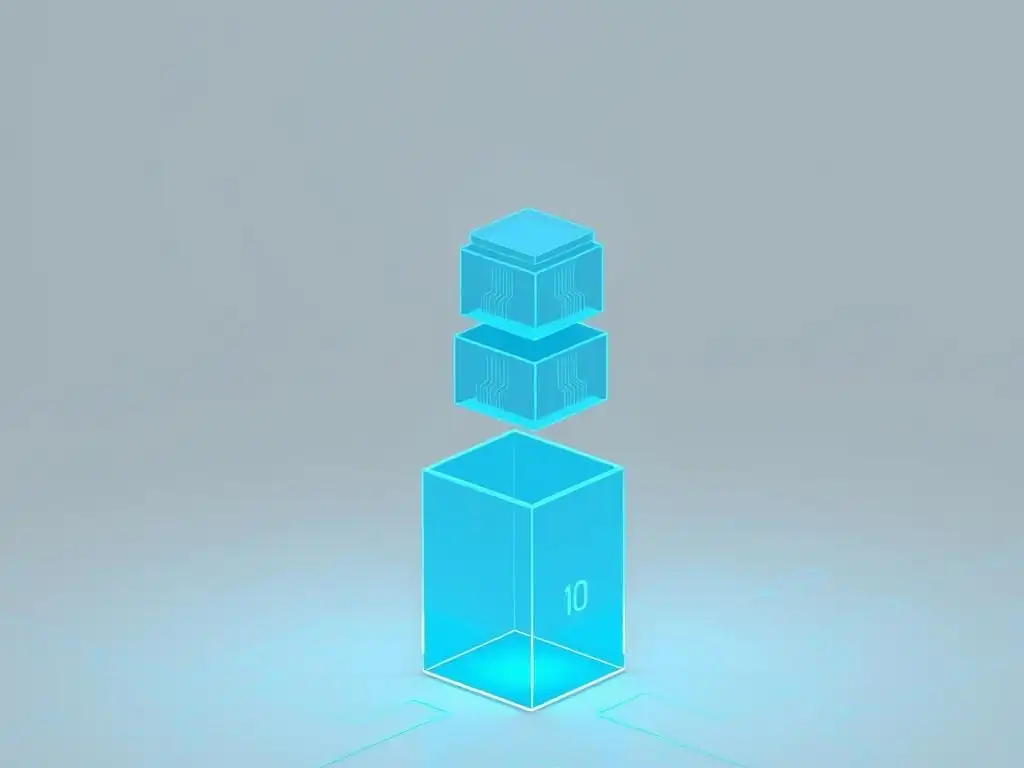
At its core, blockchain is a revolutionary technology that serves as a decentralized, distributed, and immutable public ledger. Imagine a digital record book that is duplicated and shared across a network of computers. Each entry, or transaction, is grouped together into "blocks," which are then linked chronologically and cryptographically to form a "chain." This structure ensures that once information is recorded on the blockchain, it becomes extremely difficult to alter or tamper with, providing a high level of security and transparency. This foundational concept is crucial for understanding blockchain basics for beginners.
Think of blockchain as a shared, continuously updated database. Unlike traditional databases managed by a central authority, a blockchain is maintained by a network of participants. This decentralization is a key characteristic, meaning no single entity controls the data. Every participant, often referred to as a node, holds a copy of the blockchain, ensuring redundancy and resilience. This distributed nature makes the system incredibly robust and resistant to single points of failure or manipulation, a significant departure from conventional centralized systems.
Benefits of Blockchain Technology
Blockchain technology offers a plethora of advantages that are transforming various industries. One of the most significant benefits is enhanced security. The cryptographic techniques used to link blocks and secure transactions make it exceptionally difficult for malicious actors to tamper with the data.
This inherent security stems from the distributed nature of the network and the consensus mechanisms required to validate new blocks. Furthermore, the immutability of blockchain records ensures data integrity, as any attempt to alter a block would require changing all subsequent blocks and gaining control of a majority of the network – a computationally prohibitive task in most established blockchains.
Another key benefit is increased transparency. Because blockchain is often a public ledger, all participants can view the transaction history. While the identities of participants may be pseudonymous, the transactions themselves are auditable and traceable. This transparency fosters trust and accountability, particularly valuable in supply chains, financial transactions, and governance systems. Beyond security and transparency, blockchain can also improve efficiency and reduce costs by streamlining processes, automating tasks through smart contracts, and eliminating intermediaries in various transactions. These benefits underscore why understanding blockchain basics for beginners is increasingly relevant in today's digital landscape.
Blockchain vs. Distributed Ledger Technology (DLT)
It's crucial to understand that blockchain is a type of Distributed Ledger Technology (DLT), but not all DLTs are blockchains. DLT is the broader umbrella term encompassing any decentralized database distributed across multiple nodes. Think of DLT as the general category of shared, replicated, and synchronized digital data geographically spread across multiple sites, countries, or institutions. Blockchain, with its specific structure of blocks chained together chronologically and cryptographically, is one prominent implementation of DLT.
Other forms of DLT exist that do not necessarily structure data into blocks or chains. For example, Hashgraph is a DLT that uses a different consensus mechanism called "gossip about gossip" and virtual voting, offering potentially faster transaction speeds than some blockchains. Directed Acyclic Graphs (DAGs) are another type of DLT where transactions are linked in a graph-like structure rather than a chain, often optimized for microtransactions and scalability. Understanding the nuances between blockchain and other DLTs is important for grasping the full spectrum of decentralized technologies and their diverse applications beyond just blockchain basics for beginners.
Core Blockchain Terminology (Blocks, Nodes, Hashing, Smart Contracts)
To navigate the world of blockchain, understanding key terminology is essential. Let's start with Blocks. Blocks are containers that hold a batch of validated transactions. Think of them as pages in a ledger. Each block contains a limited number of transactions, along with a timestamp and a link to the previous block in the chain. This linking is achieved through a cryptographic hash.
Nodes are the computers participating in the blockchain network. Each node maintains a copy of the blockchain and contributes to validating transactions and securing the network. Nodes can have different roles, such as full nodes that store the entire blockchain history and validating nodes that participate in the consensus process.
Hashing is a cryptographic function that takes an input of any size and produces a fixed-size alphanumeric string, the "hash." Hashes are crucial for blockchain security, as they are used to create unique identifiers for blocks and ensure data integrity. Any change to the data within a block will result in a completely different hash, instantly revealing tampering.
Finally, Smart Contracts are self-executing contracts with the terms of the agreement directly written into code. They automatically execute when predefined conditions are met, eliminating the need for intermediaries and automating complex processes. These core terms form the bedrock of blockchain basics for beginners, providing a foundation for deeper exploration.
Frequently Asked Questions
What is blockchain technology in simple terms?
Blockchain is essentially a shared, immutable ledger that records transactions across many computers. It's like a digital record book where each block of data is linked to the previous one, creating a chain of information that's difficult to alter. This creates transparency and security.
How does blockchain differ from traditional databases?
Unlike a traditional database controlled by a single entity, blockchain is decentralized and distributed across multiple participants. This lack of central control enhances security and reduces the risk of single points of failure. Also, blockchain is immutable, meaning recorded data cannot be easily changed.
What are some uses of blockchain beyond cryptocurrencies?
Blockchain's applications extend far beyond cryptocurrencies. It can be used for supply chain management, verifying identities, securing voting systems, and even in decentralized finance (DeFi) applications. The possibilities are vast and constantly evolving.
What are the key benefits of using blockchain technology?
The primary benefits include increased transparency, enhanced security through cryptography, and greater efficiency due to automation and reduced intermediaries. It can also foster trust among participants in a network.
What are some challenges associated with blockchain adoption?
Despite its potential, blockchain faces challenges such as scalability issues, regulatory uncertainty, and a steep learning curve for developers and users. The energy consumption of some blockchain types is also a concern.
Final Reflection: Embracing the Decentralized Future
The journey into blockchain, as we've explored, begins with understanding its fundamental principles. This understanding is more crucial now than ever, as blockchain technology continues to permeate various industries, from finance and supply chain management to healthcare and digital identity. The potential for disruption and innovation is immense, making a grasp of blockchain basics a vital skill for navigating the evolving technological landscape.
The impact of blockchain extends far beyond mere technological advancement; it represents a shift in power dynamics, fostering transparency and trust in systems previously reliant on centralized authorities. Personally, I find the potential for blockchain to empower individuals and communities incredibly compelling. Blockchain is the tech. Bitcoin is merely the first mainstream manifestation of its potential.
This quote encapsulates the broader vision of blockchain, highlighting its transformative power that goes beyond cryptocurrency.
Now, armed with a foundational understanding of blockchain, I urge you to consider how this technology can be applied to solve real-world problems within your own sphere of influence. Explore its potential, experiment with its applications, and contribute to shaping a future where trust and transparency are not just ideals, but the very foundation of our digital interactions. The future is decentralized; are you ready to build it?
Unlock Your Blockchain Potential Now!
Thanks for exploring the world of blockchain with us! We hope this guide has clarified the technology and shown you that it's more accessible than you imagined. Now, it’s time to turn that knowledge into action and take the next step on your blockchain journey.
Here’s how you can continue your exploration:
- Build Your First Simple Blockchain. Don’t just read about it—try creating one yourself! There are plenty of free online tutorials that walk you through building a basic blockchain using popular programming languages.
- Explore Blockchain-Based Apps: Download some well-known decentralized applications and see blockchain technology in action. Experiment with different platforms to get a firsthand experience.
- Share this guide with a friend or colleague who’s also interested in blockchain, and start learning together. Discussing the concepts can deepen your understanding.
Which decentralized application are you planning to explore first, and why? Share your thoughts in the comments below!
Leave a Reply