
Decoding DApp Architecture: Unveiling the Blueprint of Decentralized Applications


Welcome to Blockchain Trends, your compass in the rapidly evolving world of decentralized technology.
Ever wondered how Decentralized Applications (DApps) are actually built? Dive in as we unravel the complexities of Decentralized App Architecture Design, exploring the blueprint behind these revolutionary systems. This isn't just about theory; it's about understanding the practical foundations upon which the future of decentralized applications is being built. Are you ready to decode the DApp revolution?
Decoding DApp Architecture: Unveiling the Blueprint of Decentralized Applications
- Understanding Decentralized Application (DApp) Architecture
- The Layered Structure of DApp Design
- Exploring Different DApp Architectural Patterns
- Essential Considerations for Decentralized App Architecture Design
- Real-World Examples of DApp Architecture in Action
- The Future of Decentralized App Architecture: Trends and Innovations
- Conclusion: Building Robust and Scalable DApps
-
Frequently Asked Questions
- What is the primary benefit of Decentralized App Architecture Design as opposed to traditional application architecture?
- How does blockchain technology specifically contribute to the architecture of a Decentralized App?
- Beyond cryptocurrencies, what are some key enterprise applications that benefit from Decentralized App Architecture Design?
- What are the main regulatory challenges currently facing the adoption and implementation of Decentralized App Architecture Design?
- What skills are essential for developers looking to build Decentralized Applications using a robust Decentralized App Architecture Design?
- Final Reflection: Embracing the Decentralized Future
- Unleash Your DApp Potential: Build, Connect, Thrive!
Understanding Decentralized Application (DApp) Architecture
What is DApp Architecture and Why is it Important?
Decentralized Application (DApp) architecture refers to the fundamental design and structure of applications built on a decentralized network, typically a blockchain. Unlike traditional centralized applications where frontend, backend logic, and data are hosted on central servers, DApps distribute these components across a peer-to-peer network. This distribution provides key benefits such as censorship resistance, increased security through immutability, and transparency.
A well-thought-out decentralized app architecture design is crucial for ensuring a DApp is not only functional but also scalable, secure, and user-friendly. It dictates how different parts of the application interact, how data is managed, and how users engage with the underlying blockchain technology.
The importance of effective decentralized app architecture design cannot be overstated. A poorly designed DApp can suffer from significant performance issues, high transaction costs (gas fees), security vulnerabilities that could lead to loss of funds (e.g., the DAO hack in 2016 resulted in losses of approximately $150 million), and a poor user experience that hinders adoption.
Conversely, a robust architecture enables a DApp to handle increasing user loads, integrate with other decentralized protocols, and evolve over time. For instance, designing for scalability from the outset, perhaps by considering Layer-2 solutions, is vital as the user base grows from hundreds to potentially millions, impacting transaction throughput and cost significantly.
Key Components of a DApp Architecture: A High-Level Overview
At a high level, a DApp architecture typically comprises three main layers, though their specific implementation can vary. The first is the presentation layer, which is the user interface (UI) or frontend. This is what the user interacts with, often a web page or mobile application, written in standard web technologies like HTML, CSS, and JavaScript frameworks such as React or Vue.js. However, unlike traditional applications, this frontend interacts directly or indirectly with the decentralized backend.
The second key component is the application layer, which contains the core logic of the DApp, primarily implemented through smart contracts. These self-executing contracts reside on the blockchain and automate processes based on predefined rules. Languages like Solidity (for Ethereum) or Rust (for Solana, Polkadot) are commonly used to write these contracts.
The third component is the data layer. While some critical data is stored directly on the blockchain (like transaction history or token balances) due to its immutability and transparency, larger or more frequently changing data often resides off-chain, utilizing decentralized storage solutions like IPFS or traditional databases integrated securely with the on-chain logic. This separation is a critical aspect of decentralized app architecture design to manage costs and performance.
The Layered Structure of DApp Design
The Presentation Layer: User Interface (UI) and User Experience (UX) in DApps
The presentation layer is the user's gateway to the decentralized world of a DApp. It is responsible for rendering the interface, gathering user input, and displaying information retrieved from the blockchain or off-chain sources. While the underlying technology is decentralized, the frontend itself is often hosted on traditional servers or decentralized hosting platforms.
Key considerations for decentralized app architecture design at this layer include ensuring compatibility with various web3 wallets (like MetaMask, WalletConnect), providing clear feedback on transaction status (pending, confirmed, failed), and maintaining a responsive design across different devices. A smooth and intuitive UI/UX is paramount for user adoption, as navigating blockchain interactions can be complex for newcomers.
Developing an effective presentation layer for a DApp involves more than just aesthetic design; it requires a deep understanding of how to interact with the blockchain. This includes handling asynchronous operations, managing user wallet connections, signing transactions, and interpreting data received from smart contracts or decentralized storage.
For example, a decentralized exchange (DEX) like Uniswap requires a frontend that can display real-time price feeds (potentially from oracles), allow users to select tokens, input swap amounts, estimate gas fees, and initiate transactions via their connected wallet. The complexity of these interactions necessitates careful design to abstract away the technical details and provide a familiar web-like or app-like experience.
Designing Intuitive DApp Interfaces
Designing intuitive DApp interfaces is a significant challenge due to the inherent complexities of blockchain technology. Users need to understand concepts like gas fees, transaction confirmations, network congestion, and the finality of on-chain actions. A well-designed interface provides clear explanations, visual cues, and error handling that guides users through these processes. For instance, displaying the estimated gas cost before a transaction and allowing users to potentially adjust it (if the wallet supports it) adds transparency and control. Visual feedback, such as confirmation messages and progress bars for pending transactions, reduces user anxiety.
Furthermore, decentralized app architecture design for the UI/UX must consider the "trustless" nature of DApps. Users need to be confident that the interface is accurately reflecting the state of the smart contracts and not being manipulated. This often involves verifying contract addresses and providing links to block explorers where users can independently verify transactions and contract code. Streamlining the wallet connection process, minimizing the number of required user confirmations, and designing clear, concise calls to action are all critical for reducing friction and improving the overall user experience.
Connecting the UI to the Backend
Connecting the DApp's UI to its decentralized backend (smart contracts and data layers) is typically achieved using a web3 library like Web3.js or Ethers.js in JavaScript. These libraries allow the frontend to interact with an Ethereum node (or equivalent for other blockchains), enabling it to read data from the blockchain, call functions on smart contracts, and send transactions signed by the user's wallet. The frontend sends transaction requests (e.g., transferring tokens, depositing into a DeFi protocol) to the user's wallet, which then signs and broadcasts the transaction to the network.
This connection architecture is a core part of decentralized app architecture design. The frontend doesn't store sensitive keys or execute critical business logic; it merely serves as an interface to the logic residing in immutable smart contracts on the blockchain. For reading data, the frontend can directly query the blockchain node for information stored in contract states or historical events. For example, to display a user's token balance in a DApp, the frontend uses a web3 library to call the balanceOf function of the token's smart contract on the blockchain, passing the user's wallet address as an argument. This clear separation of concerns enhances security and decentralization.
The Application Layer: Smart Contract Logic
The application layer, powered by smart contracts, is the heart of a DApp. These self-executing programs define the rules and logic that govern the DApp's behavior, asset management, and user interactions on the blockchain. Smart contracts handle everything from token transfers and swaps in a DEX to lending and borrowing in a DeFi protocol or managing digital collectibles (NFTs).
The security, efficiency, and correctness of these contracts are paramount, as once deployed, they are typically immutable and difficult or impossible to change without complex upgrade mechanisms. Flaws in smart contract code are a major source of vulnerabilities in decentralized app architecture design, leading to significant financial losses across the ecosystem.
Developing robust smart contracts requires specialized skills and careful attention to detail. The logic must account for all possible user interactions, edge cases, and potential attack vectors. For instance, reentrancy attacks (famously exploited in the DAO hack) occur when a contract function is interrupted mid-execution, allowing an attacker to repeatedly call back into it before the initial execution is complete. Preventing such attacks requires specific coding patterns and security checks. Furthermore, the cost of executing smart contract functions (gas fees) necessitates writing efficient code that minimizes computational steps and storage reads/writes on the blockchain.
Smart Contract Development Languages: Solidity and Rust
Solidity is the most widely used programming language for writing smart contracts on the Ethereum blockchain and other Ethereum Virtual Machine (EVM)-compatible networks (like Polygon, Binance Smart Chain, Avalanche). It is a high-level, object-oriented language influenced by C++, Python, and JavaScript, designed specifically for developing smart contracts. Solidity's popularity stems from Ethereum's large ecosystem and developer community. While powerful, Solidity has its own set of challenges, including security pitfalls and the need for careful gas management. Developers using Solidity must be acutely aware of common vulnerabilities like integer overflows/underflows, reentrancy, and access control issues.
Rust is another prominent language for smart contract development, particularly favored on newer blockchains like Solana, Polkadot, and Near Protocol. Rust is known for its strong memory safety guarantees without requiring a garbage collector, which helps prevent certain classes of bugs. Its performance characteristics also make it suitable for high-throughput blockchain environments. While Rust has a steeper learning curve than Solidity, its focus on safety and performance is a significant advantage in the context of decentralized app architecture design for certain platforms. The choice of language often depends on the target blockchain and the specific requirements of the DApp.
Smart Contract Security Best Practices
Ensuring the security of smart contracts is arguably the most critical aspect of decentralized app architecture design. Given their immutable nature and direct control over potentially vast amounts of digital assets, smart contracts are prime targets for attackers. Best practices include rigorous testing, formal verification, and professional security audits. Testing should cover all possible execution paths, edge cases, and potential attack vectors. Formal verification uses mathematical methods to prove the correctness of code against a specification, offering a higher level of assurance than testing alone.
Professional security audits, conducted by specialized firms, are considered essential for any DApp handling significant value. These audits involve manual code review, automated analysis tools, and penetration testing to identify vulnerabilities before deployment. Furthermore, implementing defensive coding patterns, such as checks-effects-interactions (to prevent reentrancy), using safe math libraries (to prevent overflows/underflows), and carefully managing access control and permissions, are fundamental. Even with these measures, the decentralized nature means developers must also consider potential economic exploits related to protocol design.
Gas Optimization in Smart Contracts
Gas is the unit of computational effort required to execute operations on the Ethereum blockchain. Every transaction and smart contract function call consumes gas, which is paid for in the network's native cryptocurrency (Ether on Ethereum). High gas costs can make a DApp prohibitively expensive to use, impacting user adoption and overall viability. Therefore, optimizing smart contract code to minimize gas consumption is a crucial part of decentralized app architecture design. This involves writing efficient code that uses fewer computational steps, minimizes data storage on the blockchain (which is particularly expensive), and avoids unnecessary operations within transaction execution paths.
Techniques for gas optimization include using appropriate data types (e.g., uint256 is generally cheaper than smaller types due to EVM word size), packing storage variables efficiently to reduce storage slots used, avoiding redundant computations, and using events to log data instead of storing it directly in contract state where possible. For loops and complex calculations should be minimized within on-chain functions if they consume significant gas. Strategies like batching operations or offloading computation to Layer-2 solutions are also considered in advanced decentralized app architecture design to tackle gas costs and scalability.
The Data Layer: Decentralized Storage and Databases
The data layer in a decentralized app architecture handles how information is stored, accessed, and managed. While transaction history and critical state variables (like token balances, ownership records) are stored directly on the blockchain for immutability and transparency, the blockchain is not efficient or cost-effective for storing large amounts of data, such as images, videos, or extensive application-specific datasets. This necessitates the use of complementary decentralized and sometimes centralized storage solutions integrated with the on-chain logic.
The design of the data layer significantly impacts a DApp's performance, cost, and level of decentralization. Storing all data on-chain would lead to exorbitant gas fees and technical limitations on data size. Relying solely on centralized databases compromises the decentralized nature of the application, introducing single points of failure and potential censorship risks. Therefore, a hybrid approach, carefully deciding which data resides on-chain, which is stored decentrally off-chain, and how they are linked, is a key challenge in decentralized app architecture design.
Blockchain as a Data Layer: Immutability and Transparency
The blockchain serves as the foundational data layer for critical, verifiable information in a DApp. Its append-only nature ensures that once data (like a transaction or a state change recorded by a smart contract) is added to a block and confirmed, it is virtually impossible to alter or delete. This immutability provides a high degree of data integrity and trust. Furthermore, the public nature of most blockchains means that the transaction history and the state of smart contracts are transparent and auditable by anyone, fostering trust and accountability.
Storing data on the blockchain is essential for core DApp functions that require trustless verification and shared state. For instance, the ownership of an NFT is recorded as a state variable in the NFT smart contract on the blockchain. When the NFT is transferred, this state variable is updated via a transaction, and this change is permanently recorded.
Similarly, token balances in a decentralized finance (DeFi) protocol are maintained within the protocol's smart contracts on the blockchain. While storing data on-chain is expensive in terms of gas, it is indispensable for data that requires censorship resistance, transparency, and immutability as defined by the decentralized app architecture design.
Decentralized Storage Solutions: IPFS and Arweave
For storing larger, non-critical data, decentralized storage systems offer an alternative to centralized cloud providers. The InterPlanetary File System (IPFS) is a peer-to-peer network protocol designed to store and share hypermedia in a distributed file system. Files on IPFS are addressed by their content hash, meaning the address of a file is derived from the content itself.
This ensures that if the content changes, the address changes, providing a form of content verifiability. IPFS is often used in DApps to store metadata for NFTs, website files for decentralized frontends, or larger documents referenced by on-chain data. While IPFS provides decentralized storage, it doesn't guarantee persistence unless nodes actively pin the content.
Arweave is another decentralized storage network that aims to provide permanent, decentralized data storage. Users pay a one-time fee to store data indefinitely, funded by endowments and block rewards. Arweave is built on a blockweave structure, a variation of blockchain technology, which incentivizes nodes to store older data.
This makes Arweave suitable for archiving important DApp data or hosting decentralized websites where long-term availability is crucial. Integrating IPFS or Arweave into decentralized app architecture design involves storing the data off-chain and then storing the content hash or Arweave transaction ID on the blockchain or in a smart contract, creating a verifiable link between the on-chain logic and the off-chain data.
Off-Chain Data Storage Solutions and their Integration with DApps
While decentralized storage is ideal for maintaining the ethos of decentralization, practical decentralized app architecture design often involves the use of traditional, centralized databases or off-chain data processing for certain types of data or operations. This can include indexing blockchain data for faster querying, storing user preferences, caching frequently accessed information, or handling data that is not critical to the core decentralized logic and does not require immutability or public verifiability.
Examples include databases used by block explorers (like Etherscan) to index and display blockchain data in a user-friendly way, or backend services used by some DApps to manage user accounts or facilitate interactions with centralized services.
Integrating off-chain data solutions requires careful consideration to avoid reintroducing centralization risks. Techniques like using cryptographic proofs (e.g., zero-knowledge proofs) to verify off-chain computations or data integrity, or using decentralized oracle networks (like Chainlink) to bring validated off-chain data onto the blockchain, can help mitigate these risks. The goal is often to leverage the performance and cost advantages of off-chain solutions while maintaining the core trust and security guarantees provided by the blockchain for critical operations. This hybrid approach is a common pattern in complex decentralized app architecture design.
Exploring Different DApp Architectural Patterns
Monolithic DApp Architecture: Advantages and Disadvantages
A monolithic DApp architecture is one where all the core smart contract logic resides within a single, large smart contract or a tightly coupled set of contracts deployed together. In this pattern, functions and data are contained within this single deployment unit. An advantage of this approach is simplicity; it can be easier to develop and deploy initially, especially for smaller or less complex DApps. The interactions between different parts of the logic are internal function calls, which can be gas-efficient compared to external calls between separate contracts.
However, the disadvantages of a monolithic decentralized app architecture design are significant, particularly as the DApp grows in complexity and user base. Modifying or upgrading a monolithic smart contract is extremely difficult, if not impossible, due to the immutable nature of blockchain code. Any change requires deploying an entirely new contract and migrating state, a complex and risky process.
Furthermore, a single vulnerability in a monolithic contract can compromise the entire DApp. The sheer size of the code can also make audits more challenging and increase deployment costs. For example, early versions of some simple token or game contracts might have followed this pattern, but it's less common for complex DeFi or governance protocols today.
Microservices-Based DApp Architecture: Scalability and Flexibility
Inspired by traditional software development, a microservices-based decentralized app architecture breaks down the DApp's functionality into smaller, independent smart contracts, each responsible for a specific piece of logic or data. These contracts interact with each other through external calls. For instance, in a DeFi protocol, there might be separate contracts for token handling, lending pools, collateral management, and governance, each deployed independently. This modularity is a key feature of this decentralized app architecture design pattern.
The primary advantages of a microservices-based architecture are improved scalability, flexibility, and maintainability. Individual contracts can be upgraded or modified more easily (if designed with upgradeability in mind) without affecting the entire system. Development teams can work on different components in parallel.
Furthermore, isolating functionality into smaller contracts can limit the blast radius of a security vulnerability; a bug in the lending pool contract might not directly affect the collateral management contract, although complex interdependencies still pose risks. However, this pattern introduces complexity in managing inter-contract communication and requires careful design to handle potential issues like reentrancy across contract boundaries.
Hybrid DApp Architecture: Combining On-Chain and Off-Chain Components
As discussed earlier, a hybrid decentralized app architecture is perhaps the most common pattern for complex DApps today. It strategically combines on-chain components (smart contracts on the blockchain) with off-chain components (decentralized storage, traditional databases, backend servers, oracles, etc.). The core, trust-sensitive logic and asset management reside on the blockchain, while data storage, complex computations, or user interface hosting are handled off-chain.
This hybrid approach offers significant advantages in terms of performance, cost-efficiency, and user experience. Off-chain components can provide faster data retrieval and processing than querying the blockchain directly, and they don't incur gas fees. They also allow for storing larger amounts of data that would be impractical on-chain.
The challenge in this decentralized app architecture design is maintaining a high degree of decentralization and security. This often involves using cryptographic proofs, decentralized oracles, or other mechanisms to ensure the integrity and truthfulness of off-chain data and computations used by the on-chain smart contracts. Most large-scale DApps, including major DeFi protocols and NFT marketplaces, utilize some form of hybrid architecture.
Essential Considerations for Decentralized App Architecture Design
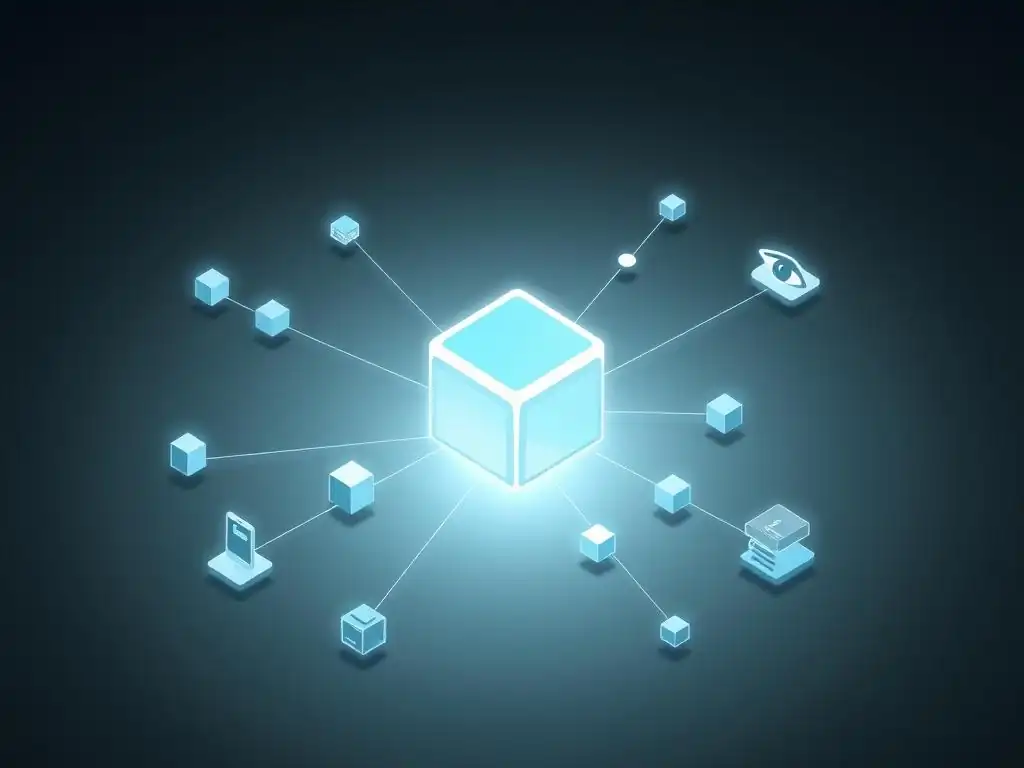
Security Audits and Vulnerability Testing for DApps
Security is paramount in decentralized app architecture design, as smart contracts often manage significant financial value and are immutable once deployed. Security audits and vulnerability testing are non-negotiable steps in the development lifecycle. A comprehensive audit involves a thorough review of the smart contract code by security experts, looking for common vulnerabilities (reentrancy, integer issues, access control flaws, etc. ), logical errors, and potential attack vectors specific to the protocol's design. Audits often combine manual code inspection with automated analysis tools.
Beyond smart contracts, the entire decentralized app architecture must be considered during security testing. This includes the frontend (preventing phishing attacks, ensuring secure wallet interaction), the off-chain components (securing APIs, databases), and the communication between them. Penetration testing can simulate real-world attacks to identify weaknesses in the integrated system. Given the high stakes – millions or even billions of dollars can be locked in DApp contracts – multiple independent security audits from reputable firms are often conducted and publicly shared to build user trust, although even audited contracts have experienced exploits.
Scalability Solutions for DApps: Layer-2 Scaling and Sharding
Scalability is a major challenge for many blockchains, particularly Ethereum, impacting the performance and cost of DApps. As user activity increases, transaction throughput can become limited, leading to network congestion and soaring gas fees. Decentralized app architecture design must incorporate strategies to handle potential growth. Layer-1 scaling solutions, like sharding (dividing the blockchain into smaller, interconnected chains), are being developed for some networks but are complex and take time to implement.
More commonly, DApps leverage Layer-2 scaling solutions built on top of the base blockchain. These include optimistic rollups (e.g., Optimism, Arbitrum), zero-knowledge rollups (ZK-rollups like zkSync, StarkNet), state channels, and sidechains. Rollups execute transactions off-chain and then batch and submit compressed transaction data or validity proofs back to the Layer-1 chain, significantly increasing throughput and reducing costs. Integrating with Layer-2 solutions is a critical aspect of modern decentralized app architecture design for DApps aiming for mass adoption, enabling faster and cheaper transactions for users.
Interoperability Between Different Blockchains
The blockchain ecosystem is increasingly fragmented, with DApps and assets spread across multiple independent networks (Ethereum, Solana, Polygon, Binance Smart Chain, etc.). Users often want to move assets or data between these chains or interact with DApps on different networks. This highlights the need for interoperability solutions in decentralized app architecture design. Bridges are common mechanisms that allow assets or information to be transferred between blockchains, typically by locking assets on one chain and minting equivalent wrapped assets on another.
However, cross-chain bridges have been a major target for attackers, resulting in hundreds of millions or billions of dollars in losses (e.g., the Ronin bridge hack resulted in over $600 million in losses). Securely implementing and using bridges is complex. Other interoperability approaches include cross-chain communication protocols (like IBC for Cosmos) or designing DApps that are natively multichain or chain-agnostic where possible. Considering how a DApp will interact with or be accessible from other chains is an increasingly important part of decentralized app architecture design.
Data Privacy and Compliance in DApp Development
While blockchain provides transparency, privacy is a significant concern for many DApp use cases and is a complex aspect of decentralized app architecture design. Public blockchains reveal transaction details and addresses, which can compromise user privacy. For DApps handling sensitive data or operating in regulated industries, incorporating privacy-preserving techniques is necessary. These can include using zero-knowledge proofs (ZKPs) to verify information without revealing the underlying data, integrating with privacy-focused Layer-2 solutions, or utilizing privacy-enhancing blockchains (like Zcash or Monero, although integrating with these is complex).
Furthermore, DApps operating in certain jurisdictions or handling specific types of data (e.g., personal identifiable information) may need to consider compliance with regulations like GDPR. The immutable and decentralized nature of blockchain makes compliance challenging, especially the "right to erasure." Decentralized app architecture design must carefully consider which data is stored on-chain vs. off-chain and explore privacy-preserving techniques or legal wrappers to address compliance requirements where applicable.
Real-World Examples of DApp Architecture in Action
Case Study 1: Uniswap V3 Architecture
Uniswap is a leading decentralized exchange (DEX) protocol on Ethereum, known for its automated market maker (AMM) model. Its architecture is a prime example of a sophisticated decentralized app architecture design. Uniswap V3, deployed in May 2021, features a modular smart contract architecture. The core logic is split across multiple contracts, including a Factory contract (for creating new trading pools), Pool contracts (representing individual liquidity pools for token pairs), and a Router contract (for facilitating trades across multiple pools).
This microservices-inspired approach allows for greater flexibility and manageability. The Factory contract is immutable, ensuring the core protocol's integrity, while the Router and Pool contracts can be upgraded via a proxy pattern (a common upgradeability technique where a proxy contract forwards calls to an implementation contract, which can be swapped out). Uniswap's frontend interacts with these contracts using web3 libraries, allowing users to swap tokens or provide liquidity.
Data like pool reserves and prices are read directly from the on-chain contract state. The architecture also incorporates off-chain components, such as indexers that process blockchain data to provide historical trading data and analytics to the frontend.
Case Study 2: Aave V3 Architecture
Aave is a major decentralized lending and borrowing protocol. Aave V3, launched in March 2022, showcases a highly modular and feature-rich decentralized app architecture design. Its architecture is also based on a system of interconnected smart contracts, including core Protocol contracts (handling deposits, borrows, liquidations), governance contracts (allowing token holders to propose and vote on changes), and specific module contracts for features like Portals (cross-chain liquidity transfers) and Efficiency Mode (eMode, for capital efficiency).
Aave V3 significantly enhanced its architecture by introducing these modular components, allowing for easier upgrades and the addition of new features without disrupting the core protocol. The architecture utilizes upgradeable proxy patterns for key contracts. It heavily relies on external price oracle networks (like Chainlink) to bring accurate, tamper-proof price data onto the blockchain, which is critical for determining borrowing power and liquidations.
The frontend interacts with Aave's smart contracts to display user positions, available liquidity, interest rates, and facilitate lending/borrowing actions. Like Uniswap, Aave's decentralized app architecture design also involves off-chain infrastructure for indexing data and providing a responsive user interface.
The Future of Decentralized App Architecture: Trends and Innovations
Emerging Technologies Shaping DApp Design
Several emerging technologies are set to profoundly impact decentralized app architecture design. Zero-knowledge proofs (ZKPs), for instance, are moving beyond Layer-2 scaling solutions and being integrated directly into DApp logic to enhance privacy (e.g., enabling private transactions or verifiable credentials) and enable more complex off-chain computations that can be verified on-chain. Homomorphic encryption, while still largely theoretical for practical blockchain use, could eventually allow computations on encrypted data without decrypting it, opening up new possibilities for privacy-preserving DApps.
Decentralized Autonomous Organizations (DAOs) are also evolving the governance layer of DApps, moving towards more sophisticated and on-chain decision-making processes. Further developments in decentralized storage solutions, decentralized identity standards, and verifiable computation platforms will likely lead to DApps with even less reliance on centralized infrastructure. The move towards multi-chain and cross-chain architectures will continue, driven by the need for greater liquidity and user reach across different networks, pushing the boundaries of decentralized app architecture design.
The Role of AI and Machine Learning in DApp Architecture
Integrating Artificial Intelligence (AI) and Machine Learning (ML) into decentralized app architecture presents both exciting opportunities and significant challenges. AI/ML can be used off-chain to analyze blockchain data for insights (e.g., detecting fraudulent activity in DeFi), optimize trading strategies, or personalize user experiences in DApps. The challenge lies in bringing the results of AI/ML computations on-chain in a trustless and verifiable manner.
Efforts are underway to develop decentralized ML platforms and verifiable computation techniques that could allow smart contracts to securely utilize AI/ML outputs. For example, an AI model could analyze credit risk off-chain, and a verifiable proof could be generated and submitted on-chain to allow a smart contract to grant a loan based on the AI's assessment without revealing the user's sensitive data. While still in early stages, the potential to combine the decentralized, trustless nature of DApps with the analytical power of AI/ML is a significant area of research and future decentralized app architecture design.
Best practices for Decentralized App Architecture Design
Based on current experience and lessons learned from past exploits and challenges, several best practices are emerging for decentralized app architecture design. Prioritizing security from the outset is paramount, including threat modeling, rigorous testing, and multiple independent audits. Designing for upgradeability, where appropriate and safe, is important for long-term maintenance and bug fixes, although care must be taken not to introduce centralization risks through upgrade mechanisms.
Choosing the right blockchain and Layer-2 solution based on the DApp's specific requirements for throughput, cost, and features is crucial. Modularizing smart contract logic improves maintainability and security. Carefully designing the interaction between on-chain and off-chain components, leveraging decentralized storage and oracles where possible while understanding the trade-offs with centralized solutions, is key for performance and cost. Finally, focusing on user experience, abstracting away blockchain complexities where possible, and providing clear communication about transaction status and costs are vital for user adoption of any decentralized app architecture design.
Conclusion: Building Robust and Scalable DApps
Frequently Asked Questions
What is the primary benefit of Decentralized App Architecture Design as opposed to traditional application architecture?
DApp architecture offers enhanced security and transparency due to its reliance on the blockchain. This eliminates a single point of failure and fosters trust among users.
How does blockchain technology specifically contribute to the architecture of a Decentralized App?
Blockchain provides the immutable ledger for storing data and executing smart contracts. It enables decentralized storage and ensures the integrity of the application's logic.
Beyond cryptocurrencies, what are some key enterprise applications that benefit from Decentralized App Architecture Design?
Supply chain management, healthcare record keeping, and voting systems can leverage DApp architecture for increased efficiency, auditability, and data security.
What are the main regulatory challenges currently facing the adoption and implementation of Decentralized App Architecture Design?
Regulatory ambiguity surrounding smart contract liability and data privacy is a major hurdle. Jurisdictional issues related to cross-border data flows also need to be addressed.
What skills are essential for developers looking to build Decentralized Applications using a robust Decentralized App Architecture Design?
Proficiency in smart contract languages like Solidity, understanding of blockchain protocols, and knowledge of front-end web development are crucial. Developers also need to grasp security best practices for DApps.
Final Reflection: Embracing the Decentralized Future
The intricate layers of Decentralized App Architecture Design we've explored are not merely theoretical blueprints; they represent the very foundation upon which a more transparent, secure, and equitable digital future is being built. As centralized systems face increasing scrutiny, the principles of decentralization offer a compelling alternative, empowering individuals and fostering innovation in ways previously unimaginable.
The journey into DApp architecture has profoundly shaped my understanding of the potential for technology to reshape our world. Witnessing the evolution of these systems, from nascent concepts to increasingly sophisticated implementations, has instilled a deep appreciation for the power of collaborative development and the enduring human desire for autonomy. The future is already here – it's just not evenly distributed.
- William Gibson. This quote encapsulates the current state of DApps; while still evolving, their potential to disrupt and democratize access to resources is undeniable.
Now, as you stand at the threshold of this decentralized frontier, I urge you to consider how you can contribute to its growth. Reflect on the principles of transparency, security, and user empowerment that underpin DApp architecture. How can you apply these lessons to your own projects, your own communities, and your own vision for a better future? The blueprint is laid out; the time to build is now.
Unleash Your DApp Potential: Build, Connect, Thrive!
Thank you for exploring the world of DApp architecture with us! We hope you now have a clearer understanding of the core components and design principles that drive decentralized applications. Are you ready to take the next step?
Here are some ways you can apply your newfound knowledge:
- Start Building: Begin creating a simple DApp using a popular development framework. Experiment with different architectures and learn through hands-on experience.
- Explore Existing DApps: Discover and interact with active DApps across various categories such as finance, gaming, and social media to see these architectures in action. Share your experiences on your social platforms.
- Share Your Ideas: Initiate discussions about your favorite DApp architecture patterns on social media or blockchain communities. Help others learn and grow!
What’s the first DApp concept you're excited to develop? Share your ideas in the comments below!
Leave a Reply