
NFT Gaming and the Future of Work: Earning a Living in Virtual Worlds


Welcome to Blockchain Trends, your guide to understanding the revolution beyond Bitcoin. Intrigued by the idea of earning a living while playing games? Dive into our latest article, "NFT Gaming and the Future of Work: Earning a Living in Virtual Worlds," and discover the surprising NFT gaming earning potential that's reshaping how we think about work and leisure. Could virtual worlds hold the key to your next career? Explore the possibilities and prepare to be amazed.
NFT Gaming and the Future of Work: Earning a Living in Virtual Worlds
- Introduction: The Rise of NFT Gaming and Play-to-Earn Opportunities
- What is NFT Gaming and How Does it Work?
- The NFT Gaming Earning Potential: Exploring Different Revenue Streams
- Case Studies: Real-World Examples of NFT Gaming Success and Income Generation
- The Future of Work in Virtual Worlds: NFT Gaming as a Viable Career Path
- Challenges and Risks Associated with NFT Gaming as a Source of Income
- Overcoming the Barriers: Strategies for Sustainable NFT Gaming Income
- The Long-Term Vision: NFT Gaming's Role in the Metaverse and the Future of Work
- Conclusion: Embracing the Potential of NFT Gaming Earning Potential While Mitigating the Risks
-
Frequently Asked Questions
- What is NFT gaming, and how does it relate to earning potential?
- How can individuals earn a living through NFT gaming?
- What are some of the risks associated with relying on NFT gaming for income?
- What skills are beneficial for maximizing earnings in NFT gaming?
- How is the regulation of NFT gaming impacting its long-term earning potential?
- Final Reflection: Unlocking Potential in Virtual Economies
- Unleash Your Play-to-Earn Potential!
Introduction: The Rise of NFT Gaming and Play-to-Earn Opportunities
Blockchain Trends and the Intersection of NFTs, Gaming, and the Future of Work
Blockchain Trends is dedicated to exploring the revolutionary impact of blockchain technology beyond the realm of cryptocurrencies. We delve into diverse applications, from decentralized finance (DeFi) to enterprise solutions, regulatory landscapes, and the evolution of decentralized systems. Within this broad scope, the intersection of Non-Fungible Tokens (NFTs) and gaming presents a particularly compelling narrative, one that is rapidly reshaping our understanding of digital ownership and the future of work. NFT gaming is not merely a novel entertainment form; it represents a paradigm shift, where virtual worlds become fertile grounds for economic activity, blurring the lines between leisure and labor.
The convergence of NFTs, gaming, and the future of work is a topic ripe with potential and challenges. For Blockchain Trends' audience, who are keen on understanding transformative technologies, NFT gaming offers a tangible example of blockchain's disruptive power. It moves beyond theoretical discussions of decentralization and smart contracts, presenting a practical application that is already impacting lives and economies globally. This intersection invites us to consider how blockchain technology can fundamentally alter traditional employment models and create new avenues for income generation in the digital age, a core theme we aim to explore and analyze.
Understanding the Growing Interest in NFT Gaming Earning Potential
The burgeoning interest in NFT gaming earning potential stems from a fundamental shift in how value is perceived and exchanged in digital spaces. Traditional gaming models often operate on a pay-to-play or pay-to-win basis, where players invest time and money with limited or no financial return beyond entertainment. NFT gaming, however, introduces a revolutionary "play-to-earn" (P2E) dynamic. This model empowers players to earn cryptocurrency and valuable NFTs through their participation, effectively transforming gameplay into a potential source of income.
This paradigm shift is particularly appealing in a world increasingly attuned to digital assets and remote work opportunities. The promise of earning real-world value by engaging in enjoyable virtual activities resonates deeply, especially with younger generations who are digitally native and comfortable with virtual economies.
The allure of NFT gaming earning potential is further amplified by success stories emerging from regions where traditional employment opportunities are limited, showcasing the transformative impact of P2E models on individual livelihoods and local economies. This growing interest is not just a fleeting trend; it reflects a deeper societal evolution towards recognizing and valuing digital labor and assets in the burgeoning metaverse.
What is NFT Gaming and How Does it Work?
Defining Non-Fungible Tokens (NFTs) in the Gaming Context
Non-Fungible Tokens, or NFTs, are cryptographic assets on a blockchain with unique identification codes and metadata that distinguish them from each other. Unlike cryptocurrencies like Bitcoin or Ethereum, which are fungible and interchangeable, each NFT is unique and represents a distinct digital item. In the gaming context, NFTs transform in-game assets – such as characters, weapons, virtual land, and cosmetic items – into verifiable, ownable digital properties. This means that players can truly own their in-game items, independent of the game developers, and these assets can be traded or sold on open marketplaces.
The application of NFTs in gaming fundamentally alters the player-game relationship. Traditionally, players purchase in-game items that remain under the control of the game developers. NFTs, however, grant players verifiable ownership, recorded on a public and transparent blockchain. This ownership extends beyond mere usage within the game; players can control, trade, and potentially profit from these digital assets. For instance, a rare sword acquired in an NFT game isn't just a digital image; it's a unique, blockchain-verified asset that the player can sell to another player for cryptocurrency, effectively converting in-game achievements into tangible economic value.
Exploring Play-to-Earn (P2E) Mechanics in NFT Games
Play-to-Earn (P2E) mechanics are the core innovation driving the NFT gaming revolution. These mechanics fundamentally restructure the traditional gaming model by rewarding players with cryptocurrency and NFTs for their time, effort, and skill within the game environment. Instead of simply consuming entertainment, players become active participants in a virtual economy, where their in-game activities translate into real-world earning opportunities. This shift empowers players, transforming them from mere consumers to potential stakeholders in the game's ecosystem.
P2E mechanics manifest in various forms across different NFT games. Common examples include earning in-game cryptocurrency tokens by completing quests, winning battles, participating in events, or simply progressing through the game. Players can also earn NFTs as rewards, which may represent unique characters, valuable items, or virtual land.
These earned tokens and NFTs can then be traded on cryptocurrency exchanges or NFT marketplaces, allowing players to convert their in-game earnings into other cryptocurrencies or fiat currencies. This creates a cyclical economy within the game, where player activity fuels economic growth and provides tangible financial incentives for participation, driving the NFT gaming earning potential.
Key Components of NFT-Based Game Economies
NFT-based game economies are complex systems built upon several key components that work in synergy to enable play-to-earn models and facilitate digital asset ownership. A primary component is the in-game cryptocurrency token, which serves as the lifeblood of the economy. This token is typically earned through gameplay and used for various in-game transactions, such as purchasing NFTs, participating in events, or upgrading characters. The token's value is often tied to the game's popularity and the overall health of its economy, creating a dynamic and potentially volatile market.
Another crucial component is the NFT marketplace, a platform where players can buy, sell, and trade their NFT game assets. These marketplaces often operate independently of the game developers, fostering a decentralized and player-driven economy. The prices of NFTs on these marketplaces are determined by supply and demand, rarity, utility within the game, and speculative market forces.
Finally, smart contracts are essential for automating and securing transactions within the NFT game economy. Smart contracts ensure transparent and trustless interactions, governing the distribution of tokens, the ownership of NFTs, and the rules of in-game marketplaces, underpinning the functionality and security of the entire NFT gaming ecosystem.
The NFT Gaming Earning Potential: Exploring Different Revenue Streams
Earning Cryptocurrency Through Gameplay and In-Game Activities
One of the primary avenues for NFT gaming earning potential is through direct cryptocurrency rewards for gameplay and in-game activities. Many NFT games incorporate their own native cryptocurrency tokens that players can earn by participating in various aspects of the game. This can include completing daily quests, winning player-versus-player (PvP) battles, conquering dungeons, participating in special events, or even through resource gathering and crafting within the game world. Games like Axie Infinity and Splinterlands exemplify this model, where players earn tokens like AXS and SPS, respectively, simply by engaging in core gameplay loops.
The earning potential through gameplay is influenced by several factors. Skill and strategy are paramount, as more skilled players are often more efficient at completing tasks and winning competitions, thus maximizing their token earnings. Time investment is also a significant factor; the more time a player dedicates to the game, the more opportunities they have to accumulate tokens.
Furthermore, the in-game economy and tokenomics play a critical role. The demand and utility of the in-game token, as well as the game's token distribution mechanisms, directly impact the value and earning potential of these cryptocurrency rewards. For instance, Axie Infinity saw significant fluctuations in SLP (Smooth Love Potion) token value, impacting player earnings, demonstrating the dynamic nature of this revenue stream.
Selling and Trading NFT Game Assets: Characters, Items, and Land
Beyond earning cryptocurrency directly through gameplay, NFT gaming earning potential is significantly amplified by the ability to sell and trade NFT game assets. These assets, which can include characters, weapons, virtual land plots, cosmetic items, and more, are unique digital collectibles secured on the blockchain. Players can acquire these NFTs through gameplay rewards, in-game purchases, or by crafting and breeding. Once acquired, these NFTs can be listed and sold on dedicated NFT marketplaces, such as OpenSea, Rarible, or game-specific marketplaces, allowing players to monetize their in-game achievements and digital possessions.
The value of NFT game assets is determined by a combination of factors, including rarity, utility within the game, aesthetic appeal, and market demand. Rare or highly functional items, such as powerful characters or strategically located virtual land, often command higher prices in the marketplace. The trading volume and overall activity within the game's NFT ecosystem also influence asset values.
For example, virtual land in games like Decentraland and The Sandbox has seen significant appreciation in value as these metaverses have grown in popularity, demonstrating the potential for substantial returns from strategically acquiring and trading NFT game assets. This secondary market for NFTs provides a powerful revenue stream for players, transforming in-game effort and luck into tradable and potentially profitable assets.
Staking and Yield Farming with NFT Game Tokens
Staking and yield farming present another layer of NFT gaming earning potential, offering passive income opportunities for players who hold in-game cryptocurrency tokens. Staking typically involves locking up a certain amount of game tokens to support the network's operations, often in Proof-of-Stake (PoS) blockchains, and in return, earning rewards in the form of additional tokens. This is akin to earning interest in traditional finance, but within the decentralized context of blockchain and NFT gaming.
Yield farming, a more complex strategy, involves lending or depositing game tokens into decentralized finance (DeFi) platforms or liquidity pools to earn interest or rewards. These platforms utilize deposited tokens for various DeFi activities, such as lending and borrowing, and distribute a portion of the generated yields back to the token providers. In the context of NFT gaming, players can stake or yield farm the in-game tokens they earn through gameplay or acquire from marketplaces.
For instance, players holding AXS tokens from Axie Infinity can stake them to earn more AXS as rewards. While staking and yield farming can offer attractive passive income streams, it's crucial to understand the associated risks, including smart contract vulnerabilities, impermanent loss in yield farming, and the volatility of cryptocurrency markets.
Participating in NFT Game Tournaments and Competitions
For competitive players, NFT game tournaments and competitions offer a direct and often lucrative path to NFT gaming earning potential. Many NFT games host regular tournaments and competitive events with prize pools consisting of cryptocurrency tokens, rare NFTs, or even fiat currency. These tournaments can range from daily or weekly events with smaller prizes to larger, high-stakes competitions with significant rewards, attracting skilled players and spectators alike. Games like Splinterlands and Gods Unchained actively feature tournaments, allowing players to showcase their skills and compete for valuable prizes.
The earning potential from tournaments is directly tied to skill and competitive performance. Players who consistently rank high in leaderboards and win tournaments can accumulate substantial earnings. The prize pools for major NFT game tournaments can be quite significant, sometimes reaching tens or even hundreds of thousands of dollars in value, distributed among the top-performing players.
Beyond the direct financial rewards, participation in tournaments also enhances a player's reputation within the gaming community, potentially opening up further opportunities such as sponsorships, streaming income, and community engagement rewards. Tournament participation represents a high-skill, high-reward revenue stream within the NFT gaming ecosystem, appealing to players who are driven by competition and mastery.
Case Studies: Real-World Examples of NFT Gaming Success and Income Generation
Axie Infinity: Empowering Players in Developing Countries
Axie Infinity, a Pokémon-inspired NFT game, stands as a prominent case study in demonstrating the real-world impact of NFT gaming earning potential, particularly in developing countries. The game, built on the Ethereum blockchain, allows players to collect, breed, battle, and trade digital creatures called Axies, which are represented as NFTs. During periods of economic hardship, particularly during the COVID-19 pandemic, Axie Infinity became a significant source of income for many individuals in countries like the Philippines, Venezuela, and Vietnam, where traditional job markets were severely impacted.
In the Philippines, for example, it was widely reported that many players were earning more from playing Axie Infinity than the average minimum wage. Some players reportedly earned between \$200 to \$1000 per month, a substantial income in a country where the average monthly wage can be significantly lower.
This income was often used to cover essential living expenses like food, housing, and education. The "Scholarship" system within Axie Infinity, where Axie owners lend their NFTs to other players (scholars) in exchange for a share of their earnings, further amplified the earning potential and facilitated broader participation, creating a micro-economy around the game and showcasing the tangible economic empowerment NFT gaming can provide.
Decentraland: Virtual Land Ownership and Monetization
Decentraland, a decentralized virtual world built on the Ethereum blockchain, provides a compelling case study in virtual land ownership and monetization within the NFT gaming and metaverse space. In Decentraland, users can purchase, develop, and monetize parcels of virtual land represented as NFTs, known as LAND. This virtual real estate allows owners to create and host a wide range of experiences, from virtual shops and art galleries to games, casinos, and social hubs, offering diverse avenues for monetization and economic activity within the metaverse.
Owners of LAND in Decentraland have explored various monetization strategies. Renting out virtual land to developers or event organizers is a common approach, generating passive income. Developing and operating virtual businesses, such as casinos or virtual stores selling digital goods, allows for direct revenue generation from user engagement within their virtual spaces.
Additionally, LAND can be used for advertising, hosting virtual events, or creating unique experiences that attract users and generate value. High-profile LAND parcels in prime locations within Decentraland have sold for significant sums, some exceeding hundreds of thousands of dollars, highlighting the real economic value and investment potential associated with virtual land ownership in NFT-based metaverses.
Splinterlands: A Collectible Card Game with Trading and Tournaments
Splinterlands, a collectible card game operating on the Hive blockchain, exemplifies NFT gaming earning potential through a combination of card trading, tournament participation, and decentralized gameplay. In Splinterlands, players collect, battle, and trade digital trading cards represented as NFTs. The game incorporates a robust play-to-earn model where players can earn cryptocurrency tokens (SPS and DEC) and valuable NFT cards through gameplay, daily quests, and competitive ranked battles. The game's active marketplace and tournament scene further enhance the earning opportunities for players.
Splinterlands players can earn by selling or renting out their NFT cards on the game's marketplace or third-party NFT platforms. Rare and powerful cards, particularly those from limited edition sets, can fetch significant prices in the secondary market. Participating in daily and seasonal tournaments offers another avenue for earning, with prize pools distributed in tokens and NFTs to top-performing players. Furthermore, Splinterlands' decentralized nature and transparent tokenomics contribute to a player-driven economy where earnings are directly linked to skill, strategic gameplay, and market dynamics, showcasing a sustainable and engaging play-to-earn model within the collectible card game genre.
The Future of Work in Virtual Worlds: NFT Gaming as a Viable Career Path
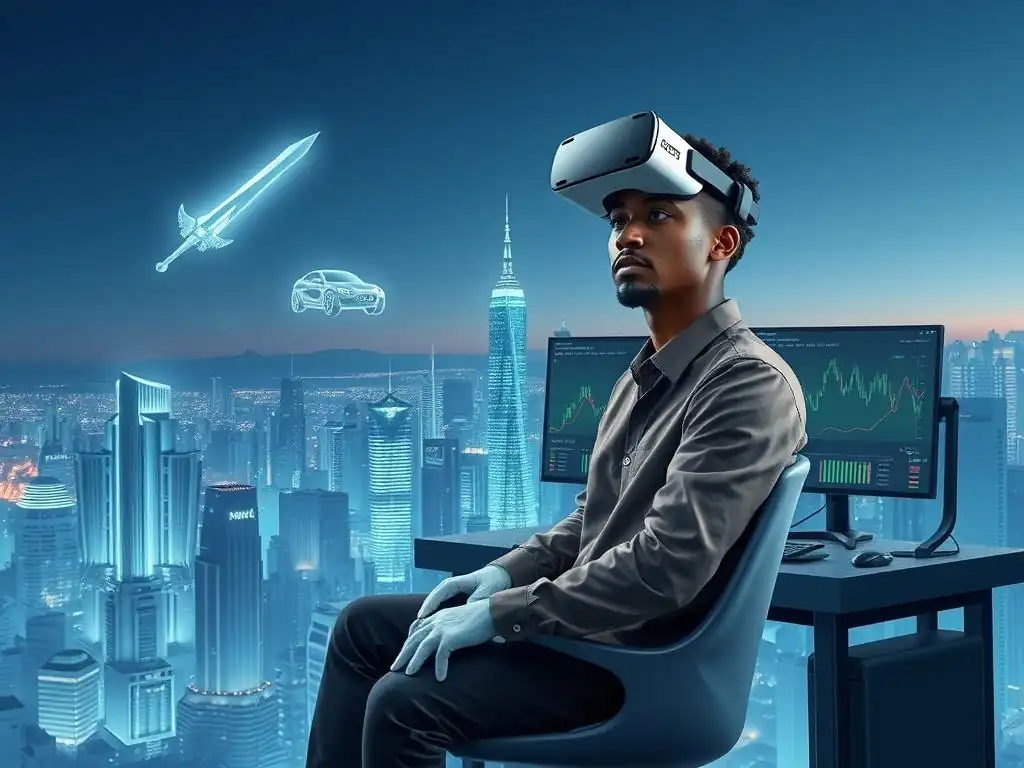
Full-Time NFT Gamers: Is it a Sustainable Model?
The emergence of NFT gaming raises the intriguing question of whether becoming a full-time NFT gamer is a sustainable career model. While the allure of earning a living by playing games is undeniable, the long-term sustainability of this career path is subject to several factors. The volatility of cryptocurrency and NFT markets is a primary concern. The value of in-game tokens and NFTs can fluctuate dramatically, impacting the stability of a gamer's income. Reliance solely on NFT gaming income can be risky, especially considering the nascent and evolving nature of the industry.
Furthermore, the longevity and popularity of individual NFT games are not guaranteed. Games can lose popularity, in-game economies can become unbalanced, or development teams may discontinue support, potentially diminishing the value of in-game assets and earning opportunities. Therefore, relying on a single NFT game for full-time income is inherently risky.
However, the potential for full-time NFT gaming exists, particularly for highly skilled players who diversify across multiple games, actively manage their NFT assets, and continuously adapt to market changes. For some, especially in regions with limited economic opportunities, full-time NFT gaming can offer a viable, albeit volatile, income stream, but it requires careful planning, risk management, and a realistic understanding of the inherent uncertainties.
The Gig Economy and NFT Gaming: Opportunities for Freelance Gamers
NFT gaming aligns naturally with the principles of the gig economy, offering numerous opportunities for freelance gamers to earn income on a project-basis or through specific tasks within the virtual world. The decentralized and player-driven nature of NFT games creates a demand for various services that freelance gamers can provide. This extends beyond simply playing games to earn tokens; it encompasses a broader spectrum of skills and activities that contribute to the NFT gaming ecosystem.
Opportunities for freelance NFT gamers include in-game coaching and mentoring, where experienced players can guide and train newer players, earning fees for their expertise. NFT asset trading and management can also be a freelance niche, with gamers specializing in identifying undervalued NFTs, managing portfolios, and providing trading advice to other players.
Content creation related to NFT games, such as streaming, video guides, and written content, offers another avenue for freelance income through advertising, sponsorships, and community contributions. The gig economy framework in NFT gaming allows individuals to leverage their gaming skills and knowledge flexibly, earning income through diverse short-term or project-based engagements, complementing or supplementing income from direct play-to-earn activities.
Building a Career Around NFT Gaming: Content Creation, Streaming, and Community Management
Beyond direct gameplay, building a career around NFT gaming opens up diverse and potentially sustainable pathways in content creation, streaming, and community management. These roles leverage the growing audience and communities surrounding NFT games, offering alternative income streams that are less directly tied to in-game asset volatility and more reliant on skill, engagement, and community building.
Content creators focused on NFT gaming produce videos, articles, guides, and tutorials that educate and entertain audiences interested in specific games or the broader NFT gaming space. Platforms like YouTube and Twitch are central to this, allowing creators to monetize their content through advertising, sponsorships, and fan donations. Streaming NFT gameplay on platforms like Twitch and YouTube Gaming provides another career path, with successful streamers earning income through subscriptions, donations, and sponsorships.
Community managers play a vital role in fostering and moderating game communities on platforms like Discord and Telegram, often employed by game developers or DAOs to engage with players, organize events, and provide support, earning salaries or community-based rewards for their contributions. Building a career around NFT gaming in these areas can offer a more stable and diversified income stream, leveraging skills in communication, content creation, and community engagement, rather than solely relying on in-game earning mechanisms.
Challenges and Risks Associated with NFT Gaming as a Source of Income
Volatility of NFT Prices and Cryptocurrency Markets
A significant challenge and risk associated with NFT gaming earning potential is the inherent volatility of NFT prices and cryptocurrency markets. The value of in-game tokens and NFTs is subject to rapid and unpredictable fluctuations driven by market sentiment, broader cryptocurrency trends, game popularity, and speculative trading. This volatility can directly impact the stability and predictability of income earned through NFT gaming. A sudden downturn in the cryptocurrency market or a decrease in a game's popularity can lead to a sharp decline in the value of in-game assets, eroding player earnings and investments.
For individuals relying on NFT gaming as a primary source of income, this volatility poses a considerable financial risk. Earnings that appear substantial at one point can diminish quickly due to market fluctuations, creating income insecurity.
Furthermore, the speculative nature of many NFT and cryptocurrency markets can lead to boom-and-bust cycles, where periods of high earning potential are followed by market corrections and decreased profitability. Players need to be acutely aware of this volatility and implement risk management strategies, such as diversifying across multiple games and income streams, to mitigate the impact of market fluctuations on their NFT gaming earnings.
Regulatory Uncertainty and Legal Considerations for NFT Gaming
Regulatory uncertainty and evolving legal considerations represent another significant challenge for NFT gaming as a source of income. The legal and regulatory landscape surrounding NFTs, cryptocurrencies, and blockchain-based gaming is still developing globally. Governments and regulatory bodies are grappling with how to classify and regulate these novel digital assets and activities, leading to varying and sometimes unclear legal frameworks across different jurisdictions.
This regulatory uncertainty can create risks for NFT gamers and game developers. Changes in regulations could impact the legality of play-to-earn mechanics, the tax implications of NFT gaming earnings, and the operation of NFT marketplaces. Some jurisdictions may impose stricter regulations on cryptocurrency and NFT activities, potentially hindering the growth and accessibility of NFT gaming.
Players need to stay informed about the evolving regulatory landscape in their respective jurisdictions and understand the potential legal implications of their NFT gaming activities, particularly concerning taxation and compliance with financial regulations. The lack of clear and consistent global regulations adds a layer of complexity and risk to the long-term sustainability of NFT gaming as a reliable income source.
Security Risks: Scams, Hacks, and Phishing Attacks in the NFT Gaming Space
The NFT gaming space, like the broader cryptocurrency and NFT ecosystem, is susceptible to various security risks, including scams, hacks, and phishing attacks, posing a significant threat to players' earning potential and digital assets. The relatively nascent nature of the industry, coupled with the high financial stakes involved, makes it a target for malicious actors seeking to exploit vulnerabilities and defraud users.
Scams in NFT gaming can range from fake NFT projects and rug pulls (where developers abandon a project after raising funds) to fraudulent play-to-earn schemes promising unrealistic returns. Hacks targeting NFT gaming platforms or player wallets can result in the theft of valuable cryptocurrency tokens and NFTs.
Phishing attacks, often disguised as legitimate communications from game developers or marketplaces, aim to trick players into revealing their private keys or login credentials, leading to asset theft. Players need to exercise extreme caution, practice robust security measures such as using hardware wallets and strong passwords, and remain vigilant against phishing attempts and suspicious projects to protect their NFT gaming earnings and digital assets from these pervasive security risks.
The Environmental Impact of Blockchain Technology and NFT Gaming
The environmental impact of blockchain technology, particularly Proof-of-Work (PoW) blockchains like Ethereum (prior to its transition to Proof-of-Stake), raises ethical concerns and potential long-term sustainability issues for NFT gaming. PoW blockchains require significant energy consumption for transaction validation and network security, contributing to carbon emissions and environmental degradation. NFT gaming, often built on these blockchains, inherits these environmental concerns.
While many newer NFT gaming projects are migrating to more energy-efficient blockchain solutions like Proof-of-Stake (PoS) chains or Layer-2 scaling solutions, the environmental footprint of the broader NFT gaming industry remains a relevant consideration. Concerns about sustainability and environmental responsibility may impact the long-term adoption and public perception of NFT gaming. Players and developers are increasingly seeking out and supporting eco-friendlier blockchain alternatives and exploring energy-efficient gaming practices to mitigate the environmental impact of NFT gaming and promote a more sustainable future for the industry.
Overcoming the Barriers: Strategies for Sustainable NFT Gaming Income
Diversifying Income Streams within the NFT Gaming Ecosystem
To mitigate the risks associated with volatility and game-specific dependencies, diversifying income streams within the NFT gaming ecosystem is a crucial strategy for achieving sustainable NFT gaming income. Relying solely on earning tokens from a single game can be precarious, given the inherent uncertainties of the market. Diversification involves exploring multiple avenues for income generation across different NFT games and related activities.
This can include participating in several NFT games simultaneously, focusing on games with diverse genres and economies. Beyond direct gameplay earnings, players can diversify by engaging in NFT trading across different marketplaces and games, creating and selling NFT gaming content, participating in community management roles, or providing coaching and mentoring services.
Diversifying income streams reduces reliance on any single game or earning method, creating a more resilient and sustainable approach to NFT gaming income. By spreading their efforts and income sources, players can buffer against the potential downturn of any single game or market fluctuation, enhancing the stability of their overall NFT gaming earnings.
Investing Wisely in NFT Game Assets and Tokens
Wise investment in NFT game assets and tokens is paramount for maximizing NFT gaming earning potential and ensuring long-term financial sustainability. Treating in-game assets and tokens as investments requires careful research, strategic planning, and a thorough understanding of market dynamics. Avoid impulsive or emotionally driven purchases, and instead, focus on informed decision-making based on data and analysis.
Conduct thorough research on NFT game projects before investing, evaluating the game's mechanics, tokenomics, development team, community support, and long-term roadmap. Understand the utility and scarcity of NFT assets within the game and assess their potential for appreciation in value. Diversify NFT asset holdings across different games and asset types to mitigate risk. Implement risk management strategies, such as setting investment budgets, taking profits when appropriate, and avoiding over-leveraging. Staying informed about market trends, game updates, and industry developments is crucial for making informed investment decisions and maximizing returns in the dynamic NFT gaming space.
Staying Informed about Market Trends and Technological Advancements
Staying informed about market trends and technological advancements is essential for navigating the rapidly evolving landscape of NFT gaming and maintaining a sustainable income. The NFT gaming industry is characterized by constant innovation, new game releases, technological upgrades, and shifting market dynamics. Players who remain informed and adaptable are better positioned to capitalize on emerging opportunities and mitigate potential risks.
Actively follow industry news sources, blogs, and social media channels dedicated to NFT gaming and blockchain technology. Engage with NFT gaming communities and forums to stay abreast of emerging trends and player sentiment. Continuously learn about new blockchain technologies, DeFi protocols, and NFT marketplace innovations that can impact NFT gaming. Monitor the performance of different NFT games and in-game economies to identify profitable opportunities and potential risks. Adaptability and continuous learning are key to thriving in the dynamic NFT gaming space and maintaining a competitive edge in the pursuit of sustainable income.
Prioritizing Security and Protecting Digital Assets
Prioritizing security and implementing robust measures to protect digital assets is non-negotiable for anyone seeking sustainable NFT gaming income. The NFT gaming space, while offering significant earning potential, also presents considerable security risks, as previously discussed. Protecting cryptocurrency tokens and NFTs from scams, hacks, and phishing attacks is paramount to safeguarding earnings and investments.
Utilize hardware wallets for storing valuable cryptocurrency and NFTs offline, providing a significantly higher level of security compared to software wallets. Employ strong, unique passwords for all gaming and crypto-related accounts, and enable two-factor authentication (2FA) wherever possible. Be extremely cautious of phishing attempts and never click on suspicious links or share private keys or seed phrases.
Research NFT projects and marketplaces thoroughly before engaging, and be wary of projects promising unrealistic returns. Regularly review security practices and stay informed about emerging security threats in the NFT gaming space to maintain a proactive and secure approach to protecting digital assets and ensuring the sustainability of NFT gaming income.
The Long-Term Vision: NFT Gaming's Role in the Metaverse and the Future of Work
The Convergence of NFT Gaming, Virtual Reality, and Augmented Reality
The long-term vision for NFT gaming is intrinsically linked to the broader evolution of the metaverse and the convergence of virtual reality (VR) and augmented reality (AR) technologies. As VR and AR technologies become more accessible and sophisticated, they are poised to transform the NFT gaming experience, creating more immersive, engaging, and economically integrated virtual worlds. Imagine playing NFT games in fully immersive VR environments, interacting with digital assets and other players in a more realistic and visceral manner.
VR and AR can enhance the play-to-earn experience by creating more compelling and engaging gameplay loops, attracting a wider audience, and driving further economic activity within NFT game ecosystems. AR could bridge the gap between the physical and digital worlds, overlaying NFT game elements onto our real-world surroundings, creating new forms of location-based NFT gaming and real-world integration. This convergence promises to blur the lines even further between gaming, work, and social interaction, solidifying NFT gaming's role as a key component of the metaverse and the future of digital experiences and economies.
The Potential for Decentralized Autonomous Organizations (DAOs) in NFT Gaming Governance
Decentralized Autonomous Organizations (DAOs) hold significant potential to revolutionize governance and community participation within NFT gaming ecosystems. DAOs are community-led entities governed by rules encoded on a blockchain, enabling decentralized decision-making and transparent operations. In the context of NFT gaming, DAOs can empower players and communities with greater control over game development, economic policies, and the overall direction of the game.
NFT game DAOs can be used to govern in-game economies, manage community treasuries, vote on game updates and features, and even influence the development roadmap. This decentralized governance model can foster a more equitable and player-centric gaming experience, aligning the interests of developers and players and creating a more sustainable and community-driven ecosystem. DAOs can also facilitate new forms of player ownership and participation in game governance, potentially distributing revenue and decision-making power more broadly within the NFT gaming community, fostering a more democratic and collaborative approach to game development and operation.
NFT Gaming as a Catalyst for Economic Empowerment and Financial Inclusion
In the long term, NFT gaming has the potential to act as a powerful catalyst for economic empowerment and financial inclusion, particularly in underserved communities and developing economies. The play-to-earn model offers a low-barrier-to-entry pathway for individuals to earn income through digital labor and participation in virtual economies, regardless of their geographic location or traditional employment opportunities.
NFT gaming can provide alternative income streams for individuals in regions with limited job markets or economic instability, as demonstrated by the Axie Infinity case study in the Philippines and other developing countries. It can empower individuals to leverage their gaming skills and digital literacy to participate in the global digital economy, fostering financial independence and economic mobility.
Furthermore, the decentralized and transparent nature of blockchain technology can promote financial inclusion by providing access to financial services and economic opportunities for individuals who may be excluded from traditional financial systems. NFT gaming, therefore, has the potential to contribute to a more equitable and inclusive global economy, bridging digital divides and empowering individuals through the transformative power of play-to-earn models.
Conclusion: Embracing the Potential of NFT Gaming Earning Potential While Mitigating the Risks
The Future of Work is Here: A Call to Action for Gamers, Developers, and Investors
NFT gaming earning potential represents a significant paradigm shift, marking a tangible step towards the future of work in virtual worlds. The play-to-earn model is not just a fleeting trend; it signals a fundamental change in how we perceive and value digital labor and assets. For gamers, NFT gaming offers unprecedented opportunities to monetize their passion, transforming leisure into a potential source of income and empowerment.
For developers, it presents a new model for game design and monetization, fostering player engagement and creating sustainable, player-driven economies. For investors, NFT gaming represents a burgeoning market with significant growth potential and opportunities for innovation and disruption.
However, embracing this potential requires a mindful approach, acknowledging and mitigating the inherent risks associated with volatility, regulation, security, and environmental concerns. Gamers must approach NFT gaming with realistic expectations, diversify income streams, and prioritize security. Developers need to build sustainable game economies, prioritize player empowerment, and address environmental concerns.
Investors should conduct thorough due diligence, understand the risks involved, and support projects with long-term vision and sustainable practices. The future of work in virtual worlds is unfolding, and NFT gaming is at the forefront, offering a compelling glimpse into a future where digital labor is valued, and virtual economies offer real-world opportunities.
Frequently Asked Questions
What is NFT gaming, and how does it relate to earning potential?
NFT gaming involves games that utilize non-fungible tokens (NFTs). These NFTs represent unique in-game assets, allowing players to earn real money by trading, selling, or utilizing them within the game. This introduces a new dimension to the future of work.
How can individuals earn a living through NFT gaming?
Players can earn by completing quests, winning tournaments, or breeding and trading in-game assets represented as NFTs. The value of these NFTs fluctuates based on rarity, utility, and player demand, creating earning opportunities.
What are some of the risks associated with relying on NFT gaming for income?
The NFT market is volatile, and the value of in-game assets can fluctuate dramatically. There's also the risk of game developers shutting down projects or altering the game's economy, impacting earning potential.
What skills are beneficial for maximizing earnings in NFT gaming?
Skills like strategic gameplay, market analysis, and understanding NFT valuation are crucial. Additionally, community engagement and networking within the game ecosystem can significantly impact a player's earning potential.
How is the regulation of NFT gaming impacting its long-term earning potential?
Regulatory uncertainty surrounding NFTs and blockchain gaming can impact the long-term viability and accessibility of earning opportunities. Clearer regulations could foster greater adoption and stability, but overly restrictive rules could stifle innovation and limit earning potential.
Final Reflection: Unlocking Potential in Virtual Economies
The exploration of NFT gaming and its earning potential reveals a landscape brimming with both opportunity and uncertainty. The convergence of gaming, blockchain technology, and the evolving concept of work is no longer a futuristic fantasy, but a present-day reality shaping how individuals perceive and engage with digital economies. This article has sought to illuminate the pathways through which individuals can potentially earn a living in these virtual worlds, highlighting the skills, strategies, and considerations necessary to navigate this nascent industry.
The rise of NFT gaming has profoundly influenced the cultural and social landscape, blurring the lines between leisure and labor. This shift necessitates a re-evaluation of traditional employment models and a deeper understanding of the value generated within digital ecosystems. The potential for individuals to monetize their skills and creativity within these spaces is undeniable, offering a glimpse into a future where work is more fluid, decentralized, and intrinsically linked to personal passions. The future of work is here, it's just not evenly distributed yet.
- William Gibson. This quote encapsulates the current state of NFT gaming earning potential, highlighting the need for broader access and understanding to fully realize its transformative power.
As we stand at the cusp of this digital revolution, I invite you to reflect on the implications of NFT gaming earning potential in your own life. Consider how you might leverage your existing skills or cultivate new ones to participate in these emerging virtual economies. Embrace the opportunity to explore, experiment, and contribute to the shaping of a future where work is not just a means to an end, but a fulfilling and empowering expression of your unique talents. The future of work is being written now, and your participation can help define its narrative.
Unleash Your Play-to-Earn Potential!
Thank you for exploring the exciting possibilities of NFT gaming and its impact on the future of work! We hope you've gained valuable insights into how virtual worlds are creating real-world opportunities. Ready to take the next step?
Here are a few actions you can take right now:
- Try out an NFT game that matches your skills and interests. Start with a simple game, learn how it works, and see if you can earn your first in-game asset.
- Join the community forums to connect with other players, share your experiences, and learn new strategies.
- Explore a niche NFT gaming project to see if early involvement could lead to unexpected opportunities.
What skill do you believe will be most valuable for success in the play-to-earn economy? Share your thoughts in the comments below!
Leave a Reply