
Supply Chain Transparency Revolution: Blockchain's Impact on Traceability and Trust


Welcome to Blockchain Trends, your compass in the rapidly evolving landscape of decentralized technologies!
Dive into a world where blockchain transcends cryptocurrency, unlocking groundbreaking solutions for enterprises and reshaping industries. Today, we're unraveling the core of supply chain transparency, exploring the blockchain supply chain traceability benefits that are revolutionizing how we track and trust goods from origin to consumer. Curious to discover how this technology is forging a new era of accountability and efficiency? Read on and explore the future of decentralized supply chains.
Supply Chain Transparency Revolution: Blockchain's Impact on Traceability and Trust
- Introduction: The Urgent Need for Supply Chain Transparency
- Understanding Blockchain and Its Application to Supply Chains
- Blockchain Supply Chain Traceability Benefits: A Deep Dive
-
Use Cases: Blockchain Transforming Industries Through Supply Chain Tracking
- Coffee Industry: Ensuring Fair Trade and Traceability from Farm to Cup
- Pharmaceuticals: Combating Counterfeit Drugs and Protecting Patients
- Diamond Industry: Tracking Conflict-Free Diamonds and Ensuring Ethical Sourcing
- Automotive Industry: Tracing Component Origins and Preventing Counterfeiting
- Art Market: Verifying Authenticity and Combating Fraud
- Implementing Blockchain for Supply Chain Traceability: Key Considerations
- The Future of Blockchain in Supply Chain Management
- Conclusion: Embracing Blockchain for a More Transparent and Trustworthy Supply Chain Ecosystem
-
Frequently Asked Questions
- How does blockchain enhance supply chain traceability?
- What are the key benefits of using blockchain for supply chain traceability?
- Can blockchain improve compliance with regulations in the supply chain?
- How does blockchain help build trust among stakeholders in the supply chain?
- What are some real-world examples of blockchain being used in supply chain traceability?
- Final Reflection: Embracing Trust Through Traceability
- Dive Deeper: Unlock Trust and Transformation in Your Supply Chain
Introduction: The Urgent Need for Supply Chain Transparency
Addressing Modern Supply Chain Challenges: Lack of Visibility and Trust
Modern supply chains are incredibly complex and globalized networks, often involving numerous intermediaries, suppliers, and logistics providers spanning different countries and continents. This intricate web makes it exceptionally challenging to track products from their origin to the end consumer. A lack of visibility into these processes creates significant problems, including difficulties in verifying product authenticity, identifying the source of contamination in food supply chains, or confirming ethical sourcing of materials. This opacity breeds distrust among consumers who are increasingly demanding to know where their products come from and how they are made, especially concerning sustainability and ethical labor practices.
Furthermore, traditional supply chain management systems often rely on siloed databases and paper-based processes, leading to inefficiencies, delays, and increased risks of errors and fraud. Information asymmetry across the supply chain makes it difficult for stakeholders to collaborate effectively and respond quickly to disruptions. For instance, in the event of a product recall, tracing the affected batches and pinpointing the exact location of contaminated goods becomes a time-consuming and costly endeavor. The lack of a unified, transparent system hinders accountability and erodes trust across the entire supply chain ecosystem.
How Blockchain Technology Offers a Solution for Enhanced Traceability
Blockchain technology, with its inherent characteristics of decentralization, immutability, and transparency, presents a compelling solution to address the pressing challenges of supply chain visibility and trust. By recording every transaction and movement of goods on a shared, distributed ledger, blockchain creates an auditable and transparent record of a product's journey from origin to consumer. This immutable record ensures that once information is added to the blockchain, it cannot be altered or tampered with, providing a high degree of data integrity and security.
Blockchain’s decentralized nature eliminates the need for a central authority, distributing control and visibility across multiple stakeholders in the supply chain. This fosters collaboration and trust among participants, as all authorized parties have access to the same verified information in real-time. This enhanced traceability empowers businesses to gain granular insights into their supply chains, enabling them to identify bottlenecks, optimize processes, and respond more effectively to disruptions. Ultimately, blockchain's capabilities can transform opaque and fragmented supply chains into transparent and trustworthy ecosystems, benefiting businesses, consumers, and the planet.
Understanding Blockchain and Its Application to Supply Chains
Blockchain Basics: Decentralization, Immutability, and Security
At its core, a blockchain is a distributed, immutable ledger that records transactions across many computers. Instead of relying on a central server, blockchain data is stored in blocks that are cryptographically linked together, forming a chain. This decentralization means that no single entity controls the data, making it resistant to censorship and single points of failure. The cryptographic hashing and consensus mechanisms employed in blockchain ensure data integrity. Once a block is added to the chain, it is virtually impossible to alter or remove it, providing immutability.
Security in blockchain is achieved through cryptography and consensus algorithms. Cryptographic hashing creates a unique fingerprint for each block of data, and any alteration to the data would change the hash, immediately detectable by the network. Consensus mechanisms, such as Proof-of-Work or Proof-of-Stake, require network participants to agree on the validity of new blocks before they are added to the chain.
This collective validation process enhances security and prevents malicious actors from tampering with the ledger. These fundamental characteristics of decentralization, immutability, and security make blockchain a robust and reliable technology for applications requiring transparency and trust, such as supply chain management.
Smart Contracts: Automating Supply Chain Processes and Data Validation
Smart contracts are self-executing contracts with the terms of the agreement directly written into code. These contracts are stored on the blockchain and automatically execute when predefined conditions are met. In the context of supply chains, smart contracts can automate various processes, such as payment settlements, shipment tracking, and quality control checks. For instance, a smart contract could automatically release payment to a supplier once a shipment reaches a specific milestone, verified by data recorded on the blockchain.
Beyond automation, smart contracts also play a crucial role in data validation within supply chains. They can be programmed to verify data inputs against pre-established rules and conditions. For example, a smart contract could automatically validate the temperature readings of temperature-sensitive goods during transit against predefined thresholds. If the temperature deviates outside the acceptable range, the smart contract could trigger alerts or initiate corrective actions. By automating processes and ensuring data validation, smart contracts enhance efficiency, reduce manual errors, and increase the reliability of supply chain operations, contributing to greater transparency and trust.
The Core Principles of Blockchain Supply Chain Traceability
Blockchain supply chain traceability operates on several core principles that collectively contribute to its effectiveness. Firstly, data transparency is paramount. Every transaction and event within the supply chain is recorded on the blockchain, creating a shared and auditable history accessible to authorized participants. This transparency extends to product origins, manufacturing processes, ownership transfers, and logistical movements. Secondly, immutability ensures the integrity of the data. Once information is recorded on the blockchain, it cannot be altered or deleted, providing a tamper-proof record of the product's journey.
Thirdly, decentralization distributes control and visibility across the supply chain network. Instead of relying on a central intermediary, blockchain empowers multiple stakeholders to participate in data recording and validation, fostering trust and collaboration. Fourthly, security is inherent in blockchain through cryptography and consensus mechanisms, protecting data from unauthorized access and manipulation. Finally, efficiency is enhanced through automation using smart contracts and streamlined data sharing, reducing manual processes and improving operational speeds. These core principles work in concert to establish a robust and trustworthy foundation for blockchain-based supply chain traceability solutions.
Blockchain Supply Chain Traceability Benefits: A Deep Dive
Enhanced Product Provenance and Authenticity Verification
One of the most significant benefits of blockchain in supply chains is the enhanced ability to track product provenance. By recording each step of a product's journey on the blockchain, from raw material sourcing to manufacturing and distribution, businesses can create a complete and verifiable history of its origin. This detailed provenance information is invaluable for verifying product authenticity and combating counterfeiting. Consumers can scan a QR code on a product to access its blockchain record and confirm its origin, ingredients, and manufacturing details, building confidence in the product's genuineness.
For example, in the food industry, blockchain can track seafood from the fishing vessel to the supermarket shelf, providing consumers with assurance about the origin and sustainability of their seafood. Companies like Provenance are using blockchain to trace tuna, allowing consumers to see where their fish was caught and how it was processed.
This level of transparency not only helps to combat seafood fraud, estimated to be a multi-billion dollar industry annually, but also empowers consumers to make informed purchasing decisions based on ethical and sustainable considerations. Enhanced product provenance through blockchain directly addresses the growing consumer demand for transparency and authenticity.
Improved Efficiency and Reduced Operational Costs
Blockchain's application in supply chains leads to significant improvements in efficiency and reductions in operational costs. By digitizing and automating processes, blockchain eliminates paper-based systems and reduces manual data entry, minimizing errors and delays. Smart contracts automate tasks such as payment processing and shipment verification, streamlining workflows and accelerating transaction speeds. Real-time visibility into supply chain operations, provided by blockchain, enables businesses to identify bottlenecks and optimize logistics, leading to faster delivery times and reduced inventory holding costs.
Furthermore, blockchain can simplify complex supply chain processes by reducing the need for intermediaries. By enabling direct and secure communication and data sharing between stakeholders, blockchain can streamline interactions and eliminate redundant steps. For instance, in cross-border trade, blockchain can simplify customs clearance processes by providing таможенные authorities with instant access to verified shipment data, reducing delays and paperwork.
Maersk and IBM's TradeLens platform, built on blockchain, aims to streamline global trade by digitizing shipping documentation and improving supply chain visibility, potentially saving billions of dollars in trade processing costs annually. These efficiencies translate directly into reduced operational expenses and improved profitability for businesses.
Minimizing Counterfeiting and Fraud in Supply Chains
Counterfeiting and fraud are major challenges plaguing global supply chains, costing businesses billions of dollars annually and posing significant risks to consumer safety. Blockchain's inherent security and transparency offer powerful tools to combat these issues. The immutable nature of blockchain records makes it extremely difficult to introduce counterfeit products into the legitimate supply chain. Each product can be assigned a unique digital identity on the blockchain, allowing for easy verification of authenticity at any point in the supply chain.
By tracking products from origin to consumer on a blockchain, businesses can create a transparent and auditable trail, making it easier to identify and remove counterfeit goods. For example, in the luxury goods industry, where counterfeiting is rampant, blockchain can be used to authenticate high-value items, providing consumers with confidence in their purchases.
Companies like Arianee are using blockchain to provide digital passports for luxury goods, allowing consumers to verify the authenticity and ownership history of items like watches and handbags. This enhanced anti-counterfeiting capability, enabled by blockchain, protects brand reputation, safeguards consumers, and reduces financial losses associated with fraudulent products.
Enhanced Compliance and Regulatory Adherence
Increasingly stringent regulations and compliance requirements are shaping global supply chains. Blockchain technology can significantly simplify compliance processes and enhance regulatory adherence. The transparent and auditable nature of blockchain records provides regulators with easy access to verified supply chain data, facilitating audits and ensuring compliance with standards related to product safety, ethical sourcing, and environmental regulations. For example, in the pharmaceutical industry, blockchain can be used to track drugs through the supply chain, ensuring compliance with track-and-trace regulations designed to prevent counterfeit medications from entering the market.
Furthermore, blockchain can facilitate compliance with ethical sourcing requirements, such as those related to conflict minerals or fair labor practices. By recording the origin and processing of raw materials on the blockchain, businesses can demonstrate compliance with ethical sourcing standards and provide consumers with assurance about the ethical integrity of their products.
The Responsible Sourcing Blockchain Network (RSBN), for instance, is using blockchain to track minerals like cobalt, ensuring they are sourced ethically and responsibly. Blockchain’s ability to provide verifiable and auditable records simplifies compliance, reduces the risk of regulatory penalties, and enhances brand reputation by demonstrating a commitment to ethical and responsible supply chain practices.
Building Consumer Trust Through Transparent Supply Chains
In today's market, consumers are increasingly demanding transparency from the brands they support. They want to know where their products come from, how they are made, and whether they are produced ethically and sustainably. Blockchain-enabled supply chain traceability directly addresses this demand by providing consumers with access to verifiable information about product journeys. This transparency builds trust and strengthens brand loyalty. When consumers can easily verify the authenticity, origin, and ethical attributes of a product, they are more likely to trust the brand and make repeat purchases.
For example, consider the growing consumer demand for sustainable and ethically produced coffee. Blockchain can track coffee beans from the farm to the cup, providing consumers with information about the farmers, farming practices, and environmental impact of their coffee. Companies like Farmer Connect are using blockchain to connect coffee drinkers directly with coffee farmers, creating a more transparent and equitable coffee supply chain. By providing consumers with this level of transparency, businesses can differentiate themselves in the marketplace, build stronger relationships with their customers, and foster a culture of trust and accountability.
Use Cases: Blockchain Transforming Industries Through Supply Chain Tracking
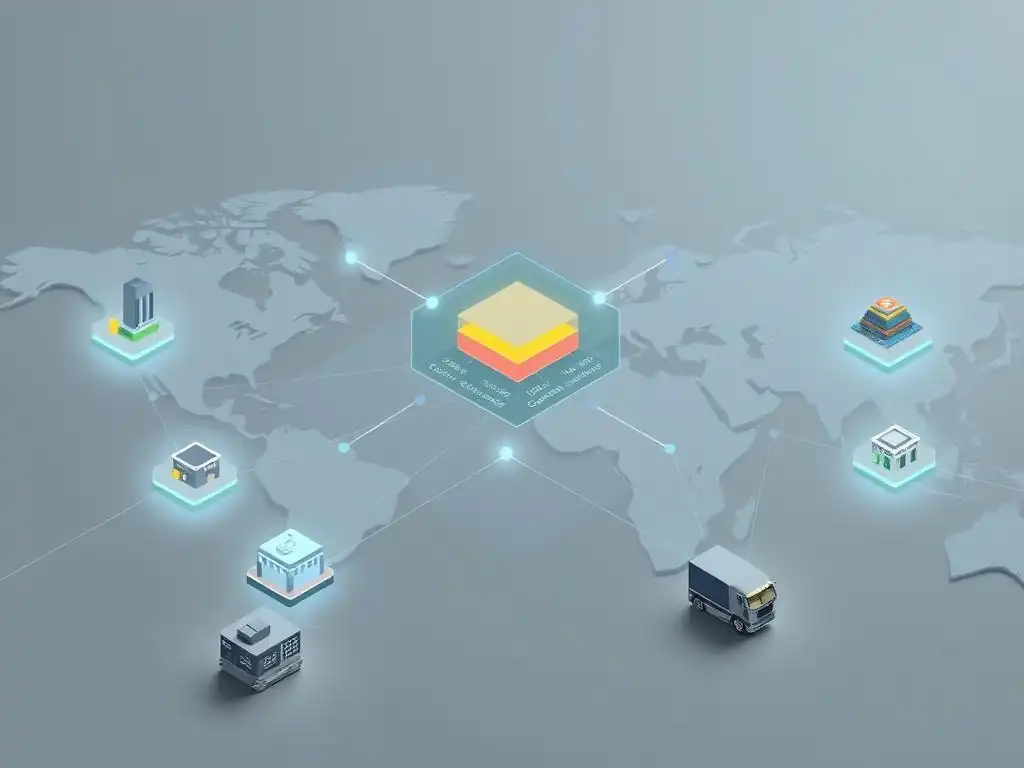
Coffee Industry: Ensuring Fair Trade and Traceability from Farm to Cup
The coffee industry, with its complex global supply chain and concerns around fair trade practices, is ripe for blockchain transformation. Blockchain can provide end-to-end traceability for coffee beans, from the farm where they are grown to the cup consumed by the end customer. This traceability allows consumers to verify the origin of their coffee, learn about the farmers who grew it, and ensure that fair trade practices were followed. For coffee farmers, especially smallholders in developing countries, blockchain can provide greater visibility and control over their products, enabling them to receive fair prices and access new markets.
Several initiatives are already leveraging blockchain in the coffee industry. Farmer Connect, as mentioned previously, uses blockchain to create a direct connection between coffee farmers and consumers, providing transparency and traceability throughout the supply chain. Their platform allows consumers to scan a QR code on their coffee packaging to access information about the coffee's origin, journey, and the farmers involved. This increased transparency not only benefits consumers and farmers but also helps to build a more sustainable and ethical coffee industry by promoting fair trade and responsible sourcing.
Pharmaceuticals: Combating Counterfeit Drugs and Protecting Patients
The pharmaceutical industry faces a critical challenge in combating counterfeit drugs, which pose a serious threat to public health. Blockchain offers a powerful solution for tracking and tracing pharmaceuticals throughout the supply chain, ensuring the authenticity and safety of medications. By recording each step of the drug's journey, from manufacturing to distribution and dispensing, blockchain creates an immutable and auditable record that can be used to verify the legitimacy of drugs and prevent counterfeit products from reaching patients.
The Drug Supply Chain Security Act (DSCSA) in the United States mandates the implementation of a system to track and trace prescription drugs throughout the supply chain. Blockchain is being explored as a key technology to meet DSCSA requirements and enhance pharmaceutical supply chain security.
Companies like Chronicled are using blockchain to create a secure and interoperable network for pharmaceutical supply chain participants to share data and track drugs, helping to combat counterfeiting and improve patient safety. The adoption of blockchain in pharmaceuticals is crucial for protecting patients from the dangers of counterfeit drugs and ensuring the integrity of the medication supply chain.
Diamond Industry: Tracking Conflict-Free Diamonds and Ensuring Ethical Sourcing
The diamond industry has long been associated with ethical concerns, particularly regarding conflict diamonds, also known as blood diamonds, which are mined in war zones and used to finance armed conflicts. Blockchain technology is being utilized to address these ethical challenges by providing traceability for diamonds from mine to market, ensuring that they are conflict-free and ethically sourced. By recording the origin and journey of each diamond on a blockchain, consumers can verify its provenance and be confident that they are not purchasing conflict diamonds.
De Beers, a leading diamond company, has launched Tracr, a blockchain platform to track diamonds throughout the supply chain. Tracr assigns a unique digital identity to each diamond and records its journey from mine to retailer, creating a permanent and auditable record. This initiative aims to enhance transparency and trust in the diamond industry, ensuring that consumers can purchase diamonds with confidence, knowing they are ethically sourced and conflict-free. Blockchain's application in the diamond industry is crucial for promoting ethical sourcing and combating the trade in conflict diamonds.
Automotive Industry: Tracing Component Origins and Preventing Counterfeiting
The automotive industry relies on complex global supply chains involving thousands of components sourced from numerous suppliers worldwide. Blockchain can provide enhanced traceability for automotive components, enabling manufacturers to track the origin and journey of each part, ensuring quality, authenticity, and compliance with regulations. This traceability is particularly important for preventing the use of counterfeit components, which can compromise vehicle safety and performance.
BMW, for example, is using blockchain to track components in its supply chain, starting with cobalt used in batteries. The PartChain project, developed by BMW and other partners, uses blockchain to create a transparent and traceable supply chain for automotive parts, ensuring that components are ethically sourced and authentic. This initiative aims to improve supply chain visibility, prevent counterfeiting, and enhance quality control in the automotive industry. Blockchain's ability to track component origins is critical for ensuring the safety, reliability, and ethical integrity of vehicles.
Art Market: Verifying Authenticity and Combating Fraud
The art market, characterized by high-value transactions and subjective valuations, is vulnerable to fraud and counterfeiting. Blockchain technology offers a solution for verifying the authenticity and provenance of artworks, combating fraud and enhancing trust in the art market. By creating a digital record of an artwork's history on a blockchain, including its creation, ownership, and provenance, blockchain provides an immutable and verifiable certificate of authenticity.
Platforms like Verisart are using blockchain to create digital certificates of authenticity for artworks. These certificates are stored on the blockchain and can be easily verified, providing buyers and sellers with confidence in the authenticity of artworks. Blockchain can also track the provenance of artworks, recording each ownership transfer and exhibition history, further enhancing transparency and trust in the art market. The application of blockchain in the art market is helping to combat fraud, protect investors, and promote transparency in a traditionally opaque industry.
Implementing Blockchain for Supply Chain Traceability: Key Considerations
Choosing the Right Blockchain Platform: Permissioned vs. Permissionless
When implementing blockchain for supply chain traceability, choosing the right blockchain platform is a crucial decision. The primary choice lies between permissioned and permissionless blockchains. Permissionless blockchains, like Bitcoin or Ethereum, are open to anyone to join and participate, offering maximum transparency and decentralization. However, they can be slower and less scalable for enterprise applications due to their public nature and consensus mechanisms.
Permissioned blockchains, on the other hand, require participants to be authorized to join the network. This allows for greater control over network access and faster transaction speeds, making them more suitable for enterprise supply chain applications. Examples of permissioned blockchain platforms include Hyperledger Fabric and R3 Corda.
The choice between permissioned and permissionless blockchains depends on the specific needs and priorities of the supply chain network. Factors to consider include the desired level of transparency, scalability requirements, data privacy concerns, and the level of trust among participants. For most enterprise supply chain applications, a permissioned blockchain approach is often preferred due to its balance of security, scalability, and control.
Data Integration and Interoperability with Existing Systems
Successfully implementing blockchain for supply chain traceability requires seamless data integration and interoperability with existing systems. Most organizations already have established enterprise resource planning (ERP), warehouse management systems (WMS), and other legacy systems that generate and manage supply chain data. Integrating blockchain with these systems is essential to avoid data silos and ensure a cohesive and efficient data flow. This integration often involves developing APIs (Application Programming Interfaces) to connect blockchain platforms with existing systems, allowing for data to be exchanged automatically and securely.
Furthermore, interoperability between different blockchain platforms is becoming increasingly important. As more companies adopt blockchain for supply chain applications, the need for different blockchain networks to communicate and share data becomes crucial for achieving end-to-end supply chain visibility across different organizations and industries. Developing industry standards and protocols for blockchain interoperability is essential to unlock the full potential of blockchain for transforming global supply chains. Addressing data integration and interoperability challenges is critical for the successful and widespread adoption of blockchain in supply chain management.
Addressing Data Privacy and Security Concerns
While blockchain enhances transparency, it also raises data privacy and security concerns that need careful consideration. Supply chain data often includes sensitive information, such as supplier details, pricing information, and customer data. Protecting this data while maintaining transparency is a key challenge. Permissioned blockchains offer greater control over data access and visibility, allowing organizations to define who can access specific data and ensuring that sensitive information is not publicly available.
Data encryption and access control mechanisms are crucial for addressing data privacy concerns in blockchain-based supply chains. Techniques like zero-knowledge proofs and homomorphic encryption can enable data sharing and validation without revealing the underlying sensitive data. Furthermore, robust security measures are necessary to protect blockchain networks from cyberattacks and unauthorized access. Implementing strong authentication protocols, encryption methods, and regular security audits are essential to ensure the security and privacy of data within blockchain-based supply chain systems. Addressing these data privacy and security concerns is paramount for building trust and ensuring responsible adoption of blockchain in supply chain management.
Overcoming Challenges in Supply Chain Blockchain Adoption
Despite the numerous benefits, the adoption of blockchain for supply chain traceability faces several challenges. One major challenge is the lack of standardization across the industry. The absence of common standards for data formats, protocols, and interoperability hinders widespread adoption and creates compatibility issues between different blockchain solutions. Industry-wide collaboration and the development of standardized frameworks are crucial to overcome this challenge.
Another challenge is the complexity of implementation. Integrating blockchain with existing legacy systems, ensuring data quality, and managing the technical complexities of blockchain technology can be demanding for organizations. This often requires specialized expertise and investment in training and infrastructure. Furthermore, change management is essential.
Implementing blockchain requires significant changes to existing workflows and business processes, which can face resistance from stakeholders. Effective communication, training, and stakeholder engagement are crucial for successful blockchain adoption. Addressing these challenges requires a collaborative and strategic approach, involving industry stakeholders, technology providers, and regulatory bodies, to unlock the full potential of blockchain for transforming supply chain management.
The Future of Blockchain in Supply Chain Management
Emerging Trends: IoT Integration and AI-Powered Analytics
The future of blockchain in supply chain management is being shaped by emerging trends, particularly the integration of the Internet of Things (IoT) and AI-powered analytics. IoT devices, such as sensors and trackers, can provide real-time data on product location, condition, and environmental factors throughout the supply chain. Integrating IoT data with blockchain creates a powerful combination for enhanced traceability and visibility. IoT devices can automatically record data on the blockchain, providing verifiable and tamper-proof information about product journeys and conditions.
AI-powered analytics can leverage the vast amounts of data generated by blockchain and IoT to provide deeper insights into supply chain operations. AI algorithms can analyze blockchain data to identify patterns, predict demand, optimize logistics, and detect anomalies or potential risks in the supply chain. For example, AI can analyze historical blockchain data to predict potential supply chain disruptions and recommend proactive mitigation strategies. The combination of blockchain, IoT, and AI is poised to drive the next wave of innovation in supply chain management, creating more intelligent, resilient, and efficient supply chain networks.
The Role of Blockchain in Circular Economy Initiatives
Blockchain is playing an increasingly important role in supporting circular economy initiatives. A circular economy aims to minimize waste and maximize resource utilization by keeping products and materials in use for as long as possible. Blockchain can facilitate circular economy models by providing transparency and traceability for product lifecycles, enabling better tracking of materials, components, and products for reuse, recycling, and remanufacturing. For example, blockchain can track the materials used in a product, its lifespan, and its recyclability, providing valuable information for end-of-life management and promoting closed-loop supply chains.
Furthermore, blockchain can facilitate the development of digital product passports, which provide detailed information about a product's composition, origin, and environmental impact. These digital passports, stored on a blockchain, can empower consumers to make more informed purchasing decisions and facilitate product take-back and recycling programs. Blockchain's transparency and traceability capabilities are essential for enabling circular economy models and promoting sustainable consumption and production patterns.
Blockchain's Potential to Revolutionize Global Trade and Logistics
Blockchain has the potential to revolutionize global trade and logistics by streamlining processes, reducing costs, and enhancing security and transparency. In cross-border trade, blockchain can simplify customs clearance, reduce paperwork, and accelerate cargo processing by providing таможенные authorities with real-time access to verified shipment data. Smart contracts can automate trade finance processes, such as letters of credit and trade settlements, reducing delays and costs associated with traditional banking systems.
Furthermore, blockchain can enhance the security and resilience of global logistics networks. By providing end-to-end traceability for shipments, blockchain can help to prevent cargo theft, counterfeiting, and other forms of fraud. The decentralized and distributed nature of blockchain also makes logistics networks more resilient to disruptions, as there is no single point of failure. The adoption of blockchain in global trade and logistics has the potential to unlock significant efficiencies, reduce trade barriers, and foster greater collaboration and trust among international trading partners, ultimately revolutionizing the way goods are moved across borders.
Conclusion: Embracing Blockchain for a More Transparent and Trustworthy Supply Chain Ecosystem
The Transformative Power of Blockchain in Supply Chain Visibility
Blockchain technology is not just an incremental improvement but a transformative force in supply chain management. Its ability to enhance traceability, improve transparency, and build trust across complex networks is unparalleled. By providing an immutable and auditable record of product journeys, blockchain empowers businesses to gain unprecedented visibility into their supply chains, enabling them to optimize operations, reduce risks, and respond effectively to disruptions. For consumers, blockchain-enabled transparency translates to greater confidence in product authenticity, ethical sourcing, and sustainability claims.
Embracing blockchain for supply chain traceability is not merely about adopting a new technology; it is about fundamentally rethinking how supply chains operate and interact. It is about moving from opaque, fragmented systems to transparent, collaborative ecosystems where trust is built on verifiable data and shared accountability. As blockchain technology matures and adoption expands, its transformative power will reshape global supply chains, creating more efficient, resilient, and trustworthy systems that benefit businesses, consumers, and the planet. The revolution in supply chain transparency, driven by blockchain, is underway, and its impact will be profound and lasting.
Frequently Asked Questions
How does blockchain enhance supply chain traceability?
Blockchain provides an immutable and transparent ledger that records every transaction in the supply chain. This allows for real-time tracking of goods and ensures data integrity from origin to consumer.
What are the key benefits of using blockchain for supply chain traceability?
Using blockchain enables enhanced transparency, improved efficiency through automation, and reduced fraud by verifying product authenticity. These benefits ultimately lead to increased trust.
Can blockchain improve compliance with regulations in the supply chain?
Yes, blockchain's auditable and transparent nature makes it easier to demonstrate compliance with regulatory requirements. This is because all data is securely recorded and readily accessible.
How does blockchain help build trust among stakeholders in the supply chain?
By providing a shared and verifiable record, blockchain reduces information asymmetry and increases confidence among suppliers, manufacturers, distributors, and consumers. This builds stronger relationships.
What are some real-world examples of blockchain being used in supply chain traceability?
Examples include tracking coffee beans from farm to cup, tracing the origin of pharmaceuticals, and verifying the authenticity of luxury goods to combat counterfeiting and ensure quality.
Final Reflection: Embracing Trust Through Traceability
The journey through the intricacies of blockchain's impact on supply chain transparency reveals a powerful truth: trust is the ultimate currency in a globalized world. As we've explored the myriad benefits of blockchain supply chain traceability, it becomes undeniably clear that this technology is not merely a trend, but a fundamental shift towards accountability and ethical sourcing. The ability to verify the origin and journey of goods, from raw materials to the consumer's hands, is reshaping consumer expectations and demanding a new level of responsibility from businesses.
The ripple effect of this revolution is profound, fostering a culture where authenticity and ethical practices are not just buzzwords, but verifiable realities. We are witnessing a transformation where consumers are empowered to make informed choices, supporting businesses that prioritize transparency and sustainability. This shift is not just about tracking products; it's about building a more equitable and responsible global economy. Transparency is not about exposing everything; it's about creating a space where trust can flourish.
- Simon Sinek
As you reflect on the potential of blockchain to revolutionize supply chains, consider the role you can play in fostering this change. Are you demanding more transparency from the brands you support? Are you exploring ways to integrate blockchain solutions into your own business practices? The future of supply chains hinges on our collective commitment to traceability and trust. Let us embrace this opportunity to build a world where every product tells a story of ethical sourcing, responsible production, and unwavering integrity.
Dive Deeper: Unlock Trust and Transformation in Your Supply Chain
Thank you for exploring the revolutionary potential of blockchain in supply chain transparency. You now understand how this technology can build trust and improve traceability. Are you ready to take the next step and see the transformation in action?
Here's how you can lead this change:
- Advocate for blockchain adoption within your organization. Start by identifying a specific area where increased transparency can deliver meaningful benefits.
- Research emerging blockchain platforms designed for supply chain management. Evaluate their features, costs, and integration options to find the best solution for your needs.
- Share this article with colleagues and industry peers to encourage discussion and foster collaborative innovation. Together, we can create a more transparent future.
What immediate step will you take to enhance supply chain transparency in your organization or community?
Leave a Reply