
Beginner's Guide to DeFi Portfolio Rebalancing for Optimal Returns


Welcome to Blockchain Trends, your compass in the rapidly evolving world of decentralized technologies. Ready to unlock the full potential of DeFi? This guide dives deep into a crucial, yet often overlooked, aspect of successful DeFi investing: crafting the perfect DeFi portfolio rebalancing strategy. Discover how to optimize your returns and navigate the complexities of decentralized finance, starting now!
- Beginner's Guide to DeFi Portfolio Rebalancing for Optimal Returns
- What is DeFi Portfolio Rebalancing?
-
Frequently Asked Questions
- What is DeFi Portfolio Rebalancing and why is it important?
- How often should I rebalance my DeFi portfolio?
- What are the key factors to consider when choosing a DeFi portfolio rebalancing strategy?
- What are some common methods for rebalancing a DeFi portfolio?
- What are the risks associated with DeFi portfolio rebalancing?
- Final Reflection: Navigating the Evolving Landscape of DeFi
- Reclaim Your DeFi Returns: Start Rebalancing Today!
Beginner's Guide to DeFi Portfolio Rebalancing for Optimal Returns
Why Your DeFi Portfolio Needs a Rebalancing Strategy
Investing in Decentralized Finance (DeFi) offers exciting opportunities but comes with significant volatility and unique risks. Unlike traditional finance where asset classes might move relatively slowly, the value of DeFi tokens and positions can change dramatically in short periods.
A well-defined DeFi portfolio rebalancing strategy is not just a good idea; it's a crucial component for managing risk and attempting to optimize returns in this dynamic environment. Without a strategy to periodically adjust your holdings, your portfolio's risk profile can quickly diverge from your initial intentions, potentially leaving you overexposed to underperforming assets or missing opportunities to lock in gains from winners.
Consider the rapid price swings common in the crypto market. A token you allocated 10% of your portfolio to might surge by 500% in a few months, suddenly representing a much larger portion of your total holdings – perhaps 30% or more. While this growth is welcome, it concentrates risk.
Conversely, another asset might plummet, becoming almost negligible in value but still consuming mental overhead. Implementing a DeFi portfolio rebalancing strategy allows you to systematically trim positions that have grown disproportionately large and add to those that have shrunk, bringing your portfolio back in line with your target allocation and maintaining your desired risk level. This disciplined approach helps remove emotion from investment decisions and ensures you are consistently adhering to your long-term financial goals within the DeFi space.
Understanding Risk and Volatility in Decentralized Finance
Decentralized Finance is inherently exposed to the volatility of the underlying crypto assets, such as Bitcoin and Ethereum, which can experience price swings of 10-20% or more in a single day. Beyond market volatility, DeFi introduces specific risks like smart contract vulnerabilities, where bugs or exploits can lead to total loss of deposited funds, as seen in various protocol hacks that have resulted in millions, or even billions, of dollars in losses across the ecosystem over the years.
There's also the risk of 'rug pulls' or scams, particularly with newer or less audited projects, and oracle risks, where faulty price feeds can trigger incorrect liquidations or protocol behaviors.
Moreover, engaging in specific DeFi activities like providing liquidity to automated market maker (AMM) pools introduces impermanent loss risk, where the value of your pooled assets can decline relative to simply holding them due to price divergence. Regulatory uncertainty also looms, with potential government actions capable of significantly impacting the usability or value of certain protocols or assets.
Navigating this complex landscape requires a proactive approach to managing exposure, and a robust DeFi portfolio rebalancing strategy serves as a fundamental tool to mitigate the impact of these multifaceted risks by ensuring no single risk vector becomes an overwhelming threat to your overall portfolio health.
The Problem of Portfolio Drift in DeFi Investing
Portfolio drift occurs naturally over time as different assets within your investment mix experience varying rates of return. In the highly volatile DeFi market, this drift can be extreme and rapid. Imagine you started with a portfolio targeting 40% in a blue-chip asset like Ether ( ETH), 30% in a stablecoin yield farm ( DAI on Aave), and 30% in a basket of promising smaller DeFi tokens ( UNI, AAVE, COMP). If ETH has a strong bull run, doubling in value while the stablecoin portion remains constant and the smaller tokens only appreciate modestly, your initial allocation could quickly shift, perhaps to 55% ETH, 20% DAI, and 25% smaller tokens.
This drift means your portfolio's current composition no longer reflects the risk level or diversification you initially intended. The portion allocated to the asset that performed best (and is potentially due for a correction) has grown, increasing your overall risk exposure if that asset declines. Conversely, assets that underperformed might now represent a smaller, potentially undervalued, portion.
Without a systematic DeFi portfolio rebalancing strategy, you passively accept this changing risk profile, which may not align with your investment objectives or risk tolerance. Regularly rebalancing is the mechanism to counteract this drift and restore your portfolio to its desired target allocation.
What is DeFi Portfolio Rebalancing?
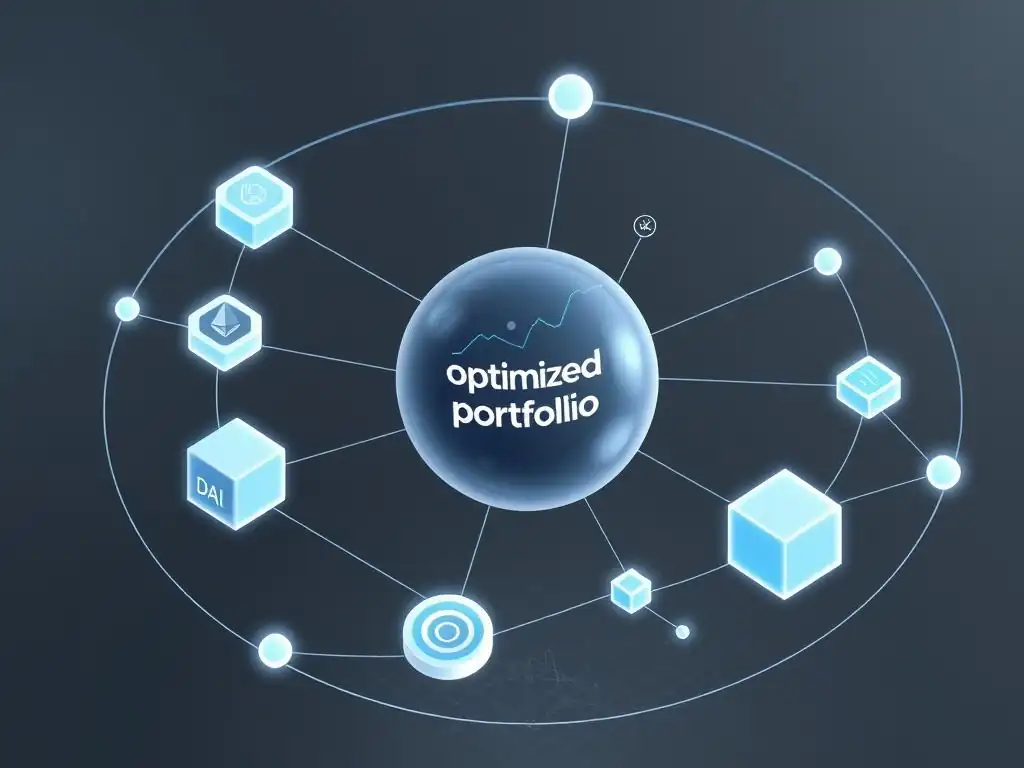
Defining Portfolio Rebalancing for Crypto and DeFi Assets
Portfolio rebalancing, in the context of cryptocurrencies and DeFi assets, is the process of realigning the weightings of a portfolio's assets back to its original target allocation. It involves selling portions of assets that have grown to become an overweight percentage of the portfolio and using those proceeds to buy assets that have become an underweight percentage.
The core idea is to maintain a specific mix of assets that aligns with an investor's risk tolerance, investment goals, and time horizon, ensuring that the portfolio doesn't become overly concentrated in assets that have performed exceptionally well or disproportionately small in those that have underperformed.
This systematic adjustment is crucial because, left unchecked, the performance differences among various crypto and DeFi assets will cause the portfolio's actual asset allocation to drift away from the desired target. For example, if a portfolio was initially set at 50% Bitcoin and 50% Ether, and Bitcoin's value doubled while Ether's remained the same, the portfolio might drift to roughly 66% Bitcoin and 34% Ether.
A DeFi portfolio rebalancing strategy would then involve selling some Bitcoin and buying Ether to restore the 50/50 split, effectively locking in some gains from Bitcoin's rise and buying Ether at a relatively lower price. This disciplined approach is key to long-term portfolio health in the volatile digital asset space.
How Rebalancing Helps Manage Risk and Capture Gains
One primary benefit of implementing a DeFi portfolio rebalancing strategy is its role in risk management. By periodically selling assets that have grown significantly (trimming winners), you reduce your exposure to a single asset that might be experiencing a bubble or is due for a correction.
This inherently lowers the overall portfolio risk compared to letting the portfolio become heavily concentrated in a few volatile assets. Simultaneously, by buying assets that have underperformed and become underweight (adding to losers), you increase your exposure to potentially undervalued assets that could rebound, while also maintaining diversification across different crypto sectors or DeFi protocols.
Beyond risk control, rebalancing employs a "sell high, buy low" mechanism. When you sell assets that have outperformed, you are essentially taking profits on those positions. When you buy assets that have underperformed, you are acquiring them at a relatively lower price point.
Over time, this cyclical process can potentially enhance returns compared to a buy-and-hold strategy where the portfolio's allocation is never adjusted. While it might feel counter-intuitive to sell assets that are doing well or buy those that are struggling, this disciplined execution of a DeFi portfolio rebalancing strategy prevents emotional decision-making and enforces a structured approach to navigating market cycles, helping to capture gains and maintain a desired risk profile.
Setting Target Asset Allocation for Your DeFi Investments
Establishing a clear target asset allocation is the foundational step before implementing any DeFi portfolio rebalancing strategy. This target allocation is the desired percentage breakdown of your portfolio across different asset classes or specific assets (e.g., 40% large-cap crypto, 30% stablecoin yield, 20% DeFi blue chips, 10% emerging protocols).
Your target allocation should be determined based on your individual investment goals, risk tolerance, time horizon, and understanding of the different risks associated with various DeFi sectors (e.g., single-sided staking vs. liquidity provision, lending vs. borrowing, exposure to different Layer 1 or Layer 2 ecosystems). A younger investor with a high-risk tolerance might allocate a larger percentage to smaller, high-growth DeFi tokens, while an older investor focused on capital preservation might prioritize stablecoin yield farming and blue-chip assets.
Once your target allocation is defined, all subsequent rebalancing actions are aimed at bringing your portfolio back to this specific mix. It serves as the benchmark against which portfolio drift is measured. For example, if your target is 50% ETH and 50% DAI in a lending protocol, and ETH's value increases, causing its share to rise to 60%, your target allocation tells you to reduce ETH and increase DAI until you are back at 50/50. Regularly reviewing and potentially adjusting your target allocation itself is also important, perhaps annually or when there are significant changes in your financial situation or the DeFi landscape, but the target provides the necessary structure for the ongoing DeFi portfolio rebalancing strategy.
Frequently Asked Questions
What is DeFi Portfolio Rebalancing and why is it important?
DeFi portfolio rebalancing involves periodically adjusting the assets in your decentralized finance portfolio to maintain a desired asset allocation and maximize returns. It's important because market fluctuations can skew your portfolio's initial balance.
How often should I rebalance my DeFi portfolio?
The optimal rebalancing frequency depends on your risk tolerance and market volatility. A common strategy is to rebalance quarterly or bi-annually, but more frequent rebalancing may be necessary during periods of high volatility.
What are the key factors to consider when choosing a DeFi portfolio rebalancing strategy?
Consider your investment goals, risk tolerance, and the associated transaction fees when selecting a rebalancing strategy. Also, factor in the tax implications of selling or swapping assets.
What are some common methods for rebalancing a DeFi portfolio?
Common methods include threshold-based rebalancing, where you rebalance when an asset deviates by a certain percentage from its target allocation, and time-based rebalancing, where you rebalance at fixed intervals, regardless of market conditions.
What are the risks associated with DeFi portfolio rebalancing?
The main risks are transaction fees (gas fees), slippage during swaps, and the potential for tax implications due to capital gains. Smart contract risks associated with the DeFi platforms used for rebalancing also need to be considered.
The principles outlined in this guide, while focused on practical DeFi portfolio rebalancing strategies, resonate far beyond the immediate goal of optimizing returns. In a world increasingly shaped by decentralized finance, understanding and adapting to its inherent volatility is not just about profit; it's about participating in the future of finance with informed confidence. This guide serves as a stepping stone, empowering individuals to navigate the complexities of DeFi and harness its potential.
The impact of DeFi and the need for effective rebalancing strategies extend beyond the purely financial. It's about democratizing access to financial tools and fostering a more equitable financial system. The ability to actively manage one's DeFi portfolio, as discussed in this article, is a crucial step towards financial autonomy. The future of finance is decentralized, and the power is shifting back to the individual.
This quote encapsulates the transformative potential of DeFi, and the importance of equipping ourselves with the knowledge to navigate this new frontier.
As you embark on your DeFi journey, remember that the strategies outlined here are a starting point. The DeFi landscape is constantly evolving, demanding continuous learning and adaptation. Embrace the challenge, experiment with different approaches, and never stop seeking knowledge. How will you leverage the power of DeFi to shape your financial future and contribute to a more decentralized world? The answer lies within your hands.
Reclaim Your DeFi Returns: Start Rebalancing Today!
Thank you for exploring how to optimize your DeFi portfolio through rebalancing. With this knowledge, you can enhance your potential returns and better manage risk. Are you ready to take action?
Here are a few steps to get started:
- Calculate your ideal portfolio allocation using our free rebalancing tool available on the website. Determine your target asset distribution based on your risk appetite and investment objectives.
- Experiment with various DeFi protocols and strategies. Begin with smaller investments to familiarize yourself with the process before scaling up.
- Share this guide with fellow DeFi enthusiasts! Empower them to unlock the benefits of rebalancing and improve their portfolio performance.
What small change will you make to your DeFi portfolio this week to enhance its balance and potentially boost your returns? Share your plans in the comments below!
Leave a Reply