
NFTs and Smart Contracts: Advanced Use Cases Beyond Digital Art

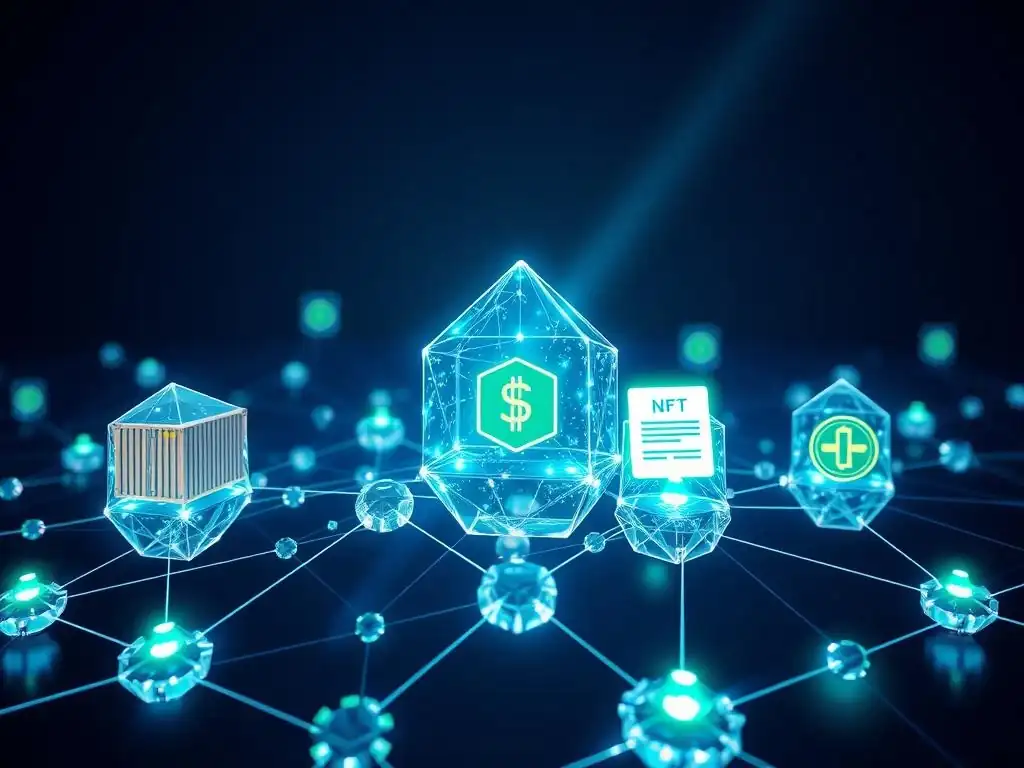
Welcome to Blockchain Trends, your guide to understanding the revolutionary impact of blockchain technology!
Dive deep into the world beyond cryptocurrencies and discover the transformative potential of blockchain. Are you ready to unlock the power of NFTs, smart contracts, and enterprise applications? This article explores advanced use cases, moving beyond the hype of digital art to reveal how these technologies are reshaping industries. Learn how smart contracts are revolutionizing business operations and how NFTs are redefining ownership. Curious to see how these innovations are impacting the future of decentralized systems? Let's explore the possibilities...
NFTs and Smart Contracts: Advanced Use Cases Beyond Digital Art
- Introduction: Exploring NFTs and Smart Contracts in Enterprise Applications
- Supply Chain Management with NFTs and Smart Contracts
- NFTs for Intellectual Property Rights Management
- Decentralized Identity and Access Control using NFTs
- NFTs as Loyalty Programs and Rewards Systems
- NFTs for Real Estate and Asset Tokenization
- The Future of NFTs and Smart Contracts in Enterprise
- Conclusion: Unlocking the Potential of NFTs and Smart Contracts Beyond the Hype
-
Frequently Asked Questions
- What are some advanced use cases of NFTs beyond digital art, as highlighted in the context of smart contracts?
- How do smart contracts enhance the functionality and utility of NFTs?
- How are enterprise applications leveraging the combination of NFTs and smart contracts?
- What are the key regulatory considerations surrounding the use of NFTs and smart contracts in enterprise applications?
- What is the future outlook for the adoption of NFTs and smart contracts in various industries beyond the realm of digital art?
- Final Reflection: Unlocking Enterprise Potential with NFTs and Smart Contracts
- Reimagine Your World with NFTs: Take the Next Leap!
Introduction: Exploring NFTs and Smart Contracts in Enterprise Applications
The Evolution of NFTs: From Digital Art to Practical Solutions
Non-Fungible Tokens (NFTs) first gained mainstream attention primarily through the sale of digital art and collectibles, with headline-grabbing transactions like Beeple's "Everydays: The First 5000 Days" selling for over $69 million in 2021. This initial phase showcased the potential of blockchain to certify unique digital ownership. However, the underlying technology and concept of representing unique assets digitally extend far beyond the realm of art. The true power of NFTs lies in their ability to serve as verifiable, unique digital identifiers for any asset, whether physical or digital, opening doors for practical applications across numerous industries.
As the technology matured, developers and enterprises began exploring how NFTs could solve real-world problems related to ownership, authenticity, tracking, and access. The shift from purely speculative digital art to utility-driven tokens has accelerated rapidly. Today, NFTs are being piloted or implemented in sectors ranging from supply chain management and intellectual property to real estate and identity verification. These advanced NFTs smart contracts enterprise applications leverage the unique properties of non-fungibility to represent everything from a single vintage wine bottle to a fractional share of a building, proving their versatility as a fundamental building block for future digital economies.
Smart Contracts: The Backbone of NFT Functionality and Business Logic
Smart contracts are self-executing contracts with the terms of the agreement directly written into code. They run on a blockchain, ensuring transparency, immutability, and automated execution without the need for intermediaries. In the context of NFTs, smart contracts define the rules governing the token, such as its creation (minting), ownership transfer, associated metadata, and specific functionalities. For example, an ERC-721 or ERC-1155 standard smart contract dictates how an NFT is uniquely identified and how its ownership can be securely transferred from one address to another on the blockchain.
Beyond basic ownership and transfer, smart contracts imbue NFTs with complex business logic, making them incredibly powerful tools for enterprise use cases. A smart contract can automate royalty payments to creators every time an NFT is resold on a secondary market, manage granular access permissions based on NFT ownership, or trigger events in a supply chain based on the token's location data. This programmability is what elevates NFTs from simple digital collectibles to dynamic assets capable of participating in automated workflows and complex agreements, forming the core of advanced NFTs smart contracts enterprise applications.
Bridging the Gap: How NFTs and Smart Contracts Work Together in the Enterprise
The synergy between NFTs and smart contracts is fundamental to their utility in enterprise environments. NFTs represent unique assets or rights, while smart contracts provide the operational framework and automated logic that governs these assets throughout their lifecycle. An NFT acts as a digital certificate of authenticity or ownership for a specific item or data point, and the associated smart contract dictates what can be done with that certificate, who can do it, and when. This combination creates a powerful, transparent, and tamper-proof system for managing unique assets and executing related transactions or processes automatically.
In an enterprise context, this partnership enables novel solutions. For instance, an NFT representing a high-value product can be tracked along a supply chain, with smart contracts automatically releasing payments to different parties upon verified delivery milestones recorded on the blockchain. Similarly, an NFT representing a software license can grant access to specific features, with a smart contract automatically revoking access upon license expiration or transfer. This integration of unique asset representation (NFTs) with automated, trustless execution (smart contracts) is the key to unlocking transformative NFTs smart contracts enterprise applications across diverse sectors.
Supply Chain Management with NFTs and Smart Contracts
Tracking and Authentication: Enhancing Supply Chain Transparency with NFT-Based Solutions
Counterfeiting and lack of transparency are significant challenges in global supply chains, costing industries billions annually. For example, estimates suggest the global trade in counterfeit and pirated goods could reach \$2.8 trillion by 2022, impacting sectors from luxury goods to pharmaceuticals. NFTs offer a powerful solution by creating a unique, immutable digital twin for each physical product or batch of products. By linking a physical item to a specific NFT on a blockchain, companies can establish a verifiable chain of custody from origin to consumer.
Each time the product changes hands or reaches a significant checkpoint, this event can be recorded on the blockchain, updating the NFT's metadata or associated smart contract state. Consumers or stakeholders can scan a QR code on the product to view the NFT and its transaction history, verifying authenticity and journey. This level of granular tracking, enabled by unique NFTs smart contracts enterprise applications, drastically reduces the opportunity for counterfeiting and provides unprecedented transparency, building trust among all parties in the supply chain.
Smart Contract Automation: Optimizing Logistics and Reducing Counterfeiting
Smart contracts automate critical processes within the supply chain based on the status and movement of the NFT-linked goods. For example, a smart contract can be programmed to automatically release payment to a supplier once the corresponding batch of goods, represented by an NFT, is verified as received at a distribution center via blockchain-recorded data. This eliminates manual invoicing and payment delays, streamlining financial operations.
Furthermore, smart contracts can enforce conditions that minimize fraud. If a product's NFT indicates it has been diverted from its intended route or if its authenticity check fails based on programmed rules, the smart contract can trigger alerts, flag the product as potentially counterfeit, or even initiate return procedures automatically. These automated workflows, powered by NFTs smart contracts enterprise applications, not only improve efficiency but also actively combat illicit activities within the supply chain, leading to estimated cost savings of 10-20% in administrative overhead and loss prevention in pilot programs.
Real-World Example: VeChain's Food Safety Tracking
VeChain, a blockchain platform focused on enterprise applications, has implemented NFT-based solutions for supply chain transparency, particularly in the food and beverage industry. They have partnered with companies, such as China's Bright Food, to track products like imported milk powder. Each batch or individual high-value item is assigned a unique VET token (a form of NFT or traceable asset), linked to physical markers like QR codes or NFC tags.
This system allows consumers to scan the product and view its entire journey on the VeChain blockchain, including origin, processing dates, inspection records, and distribution routes. The associated smart contracts ensure that data recorded is tamper-proof and that predefined conditions (like temperature ranges during transport) are met, triggering alerts if deviations occur. This use of NFTs smart contracts enterprise applications enhances food safety, builds consumer trust, and provides irrefutable proof of provenance, moving beyond simple logistics tracking to comprehensive product lifecycle management.
NFTs for Intellectual Property Rights Management
Digital Rights Management (DRM) Revolution: Protecting Copyright with NFTs
Managing and protecting intellectual property (IP) in the digital age is a complex challenge. Traditional Digital Rights Management (DRM) systems often rely on centralized databases and restrictive technologies that can be cumbersome for users. NFTs offer a decentralized and verifiable method for representing ownership and licensing rights for digital and even physical creative works and IP assets. An NFT can serve as a unique, immutable certificate of ownership for a specific piece of digital art, music track, video, or even a patent or trademark.
By minting an IP asset as an NFT, the creator establishes a public, verifiable record of their ownership on a blockchain. This record includes metadata about the asset and links back to the creator's wallet address. While the NFT itself isn't the IP, it represents the ownership rights associated with it. This provides a more transparent and robust method of proving provenance compared to traditional methods and is a key element in developing advanced NFTs smart contracts enterprise applications for IP management.
Smart Contract Enforcement: Automating Royalty Payments and Licensing Agreements
One of the most significant benefits of using NFTs for IP is the ability to automate royalty payments and licensing agreements through smart contracts. When an NFT representing an IP asset is sold on a secondary market, the underlying smart contract can be programmed to automatically send a predefined percentage of the sale price directly to the original creator's wallet.
This process is executed automatically and transparently by the smart contract, eliminating the need for manual tracking or intermediaries, and ensuring creators receive ongoing compensation for their work. Royalty percentages typically range from 5% to 15% and are enforced by the smart contract code.
Beyond royalties, smart contracts can manage complex licensing terms. For instance, an NFT could represent a limited-use license for a software component or a specific duration license for a music track in a commercial project. The smart contract associated with this NFT could automatically grant or revoke access based on license terms, track usage within defined parameters, or trigger renewal notifications. These automated, verifiable processes are transforming how IP is licensed and monetized within NFTs smart contracts enterprise applications.
Secure Ownership and Provenance: Establishing Authenticity and Preventing Piracy
NFTs inherently provide a secure and transparent way to establish the provenance and ownership history of an intellectual property asset. Every transaction involving the NFT—from its initial minting by the creator to subsequent sales—is recorded on the blockchain, creating an immutable and publicly verifiable ledger of ownership. This makes it significantly harder for unauthorized parties to claim ownership or distribute counterfeit versions, as the original, legitimate NFT and its history are easily identifiable.
While NFTs for IP don't physically prevent unauthorized copying of digital files (you can still copy a JPEG image), they provide a definitive and marketable proof of original ownership and authenticity. For high-value IP, this verifiable provenance, secured by the blockchain and managed via NFTs smart contracts enterprise applications, is crucial for establishing market value, licensing effectively, and pursuing legal action against infringement. It shifts the focus from trying to physically restrict access to providing undeniable proof of the legitimate digital original.
Decentralized Identity and Access Control using NFTs
NFT-Based Identity: Secure and Portable Digital Credentials
Traditional digital identity systems are often fragmented, centralized, and require users to repeatedly provide personal information to various service providers. This creates privacy risks and poor user experience. NFTs offer a novel approach to decentralized identity (DID), allowing individuals or entities to own and control their digital credentials in a portable and secure manner. An NFT can represent a unique digital identity, encompassing verifiable attributes like a driver's license, professional certification, academic degree, or even a credit score.
These "Identity NFTs" are stored in the user's digital wallet, giving them direct control over their data. When proof of an attribute is required, the user can present the corresponding NFT, and a smart contract or decentralized application can verify the underlying data on the blockchain or via a linked verifiable credential service. This model empowers users with self-sovereign identity, reducing reliance on centralized databases and enhancing privacy, forming the basis for innovative NFTs smart contracts enterprise applications in identity management.
Smart Contract-Driven Access Control: Managing Permissions and Data Sharing
Smart contracts are essential for implementing granular access control based on NFT-based identities. Instead of relying on traditional username/password systems or centralized authorization servers, access to specific data, services, or physical locations can be granted programmatically by a smart contract that verifies ownership of a particular NFT or a set of NFTs. For example, access to a confidential document repository could require ownership of an "Employee Access NFT," while access to a premium service tier might require a "Gold Membership NFT."
The smart contract checks the user's wallet for the required NFT and, if found, grants permission according to predefined rules. This system is highly flexible and secure. Permissions can be instantly updated by transferring or revoking the NFT, and access can be tied to specific conditions embedded in the smart contract, such as a validity period or a maximum number of uses. This use of NFTs smart contracts enterprise applications for access control provides a more robust, transparent, and user-centric alternative to conventional permissioning systems.
Use Case: Secure Patient Data Management in Healthcare
The healthcare industry faces significant challenges in securely managing patient data while ensuring accessibility for authorized personnel and allowing patients control over their information. An NFT-based identity system combined with smart contracts could revolutionize this. Each patient could have a unique "Patient Identity NFT" in their digital wallet. This NFT doesn't store sensitive medical records directly but acts as a pointer to encrypted data stored securely (potentially on a decentralized storage network).
Smart contracts linked to this Patient Identity NFT could manage access permissions. A patient could use a smart contract interface to grant temporary access to a specific doctor or specialist for a defined period (e.g., 24 hours) to view specific records (e.g., lab results, but not psychiatric history). The smart contract would record this access grant on the blockchain, providing an immutable audit trail.
When the doctor attempts to access the data, the system verifies their identity and checks the patient's smart contract via their NFT to confirm permission. This application of NFTs smart contracts enterprise applications offers enhanced security, patient control, and transparency compared to current healthcare data systems.
NFTs as Loyalty Programs and Rewards Systems
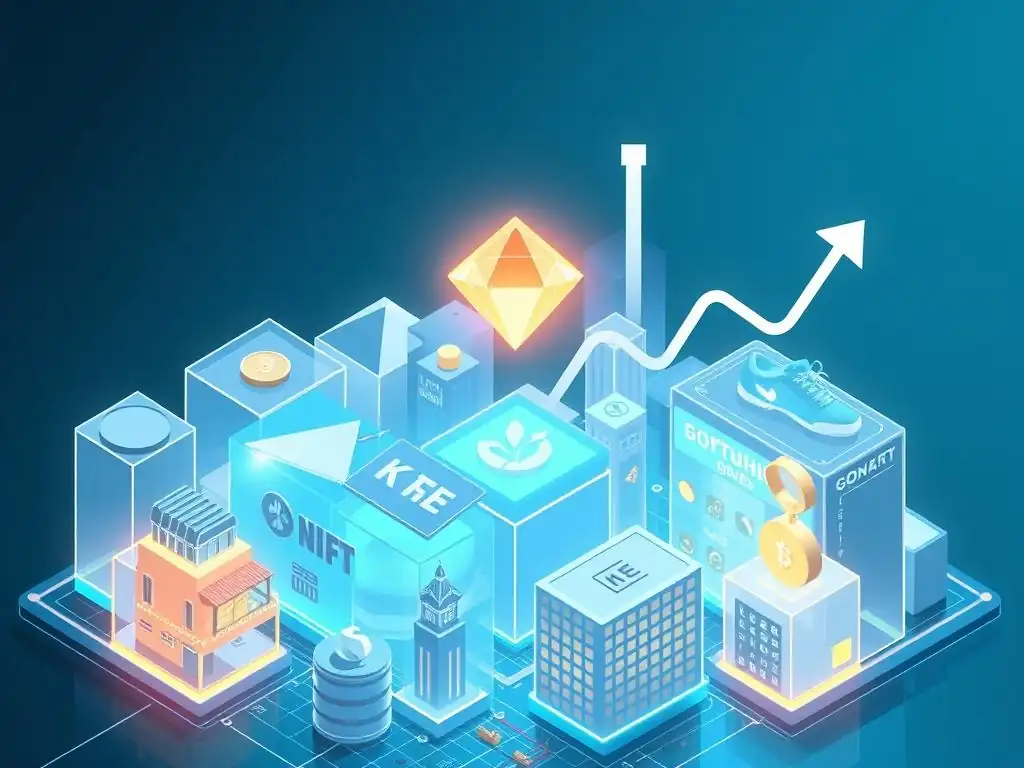
Tokenized Loyalty: Creating Engaging and Rewarding Customer Experiences with NFTs
Traditional loyalty programs often involve plastic cards, points systems with opaque value, and centralized management. NFTs offer a fresh, engaging, and transparent way to build loyalty programs. Instead of earning points, customers can earn unique NFTs for purchases, milestones, or engagement. These Loyalty NFTs can represent membership tiers (e.g., Bronze, Silver, Gold), collectible digital badges, or unique digital assets tied to the brand. This gamified approach can significantly increase customer engagement and brand affinity.
Unlike traditional points, Loyalty NFTs can have unique characteristics and values, and in some cases, can be traded or sold on secondary markets, adding an extra layer of value and interaction for the customer. This tokenization transforms abstract points into tangible, albeit digital, assets that customers genuinely own. Implementing NFTs smart contracts enterprise applications for loyalty programs creates a more dynamic and potentially valuable experience for the consumer while fostering a stronger connection with the brand.
Smart Contract Integration: Automating Reward Distribution and Redemption
Smart contracts are crucial for the seamless operation of NFT-based loyalty programs. They automate the entire process of reward distribution and redemption. When a customer meets the criteria for earning a Loyalty NFT (e.g., making a fifth purchase, spending over \$500), a smart contract automatically mints the appropriate NFT and sends it to the customer's digital wallet. This eliminates manual tracking and distribution efforts by the company.
Furthermore, smart contracts handle the redemption of benefits associated with owning specific Loyalty NFTs. For example, a smart contract could automatically apply a discount at checkout for a customer holding a "VIP Tier NFT" or grant access to exclusive content or events based on NFT ownership. The smart contract verifies the presence and validity of the required NFT in the customer's wallet and executes the corresponding action instantly and transparently. This automation via NFTs smart contracts enterprise applications reduces operational costs and improves the customer experience by making rewards instant and easily accessible.
Case Study: Starbucks Odyssey NFT Loyalty Program
Starbucks launched its "Odyssey" program, an extension of its existing Starbucks Rewards loyalty program, utilizing web3 technology including NFTs. The program allows members to earn "Journey Stamps" (NFTs) by completing interactive activities and playing games related to Starbucks' history and coffee knowledge. These stamps are unique digital collectibles hosted on the Polygon blockchain (an Ethereum scaling solution).
These Journey Stamp NFTs grant members access to new benefits and immersive coffee experiences. While specific monetary values aren't attached to the NFTs in the traditional sense, owning certain stamps unlocks access to exclusive events, merchandise, or unique experiences curated by Starbucks. This initiative demonstrates how a major global brand is leveraging NFTs and potentially associated smart contracts (for managing access and rewards) to create a more engaging, collectible, and experience-driven loyalty program, showcasing a real-world application of NFTs smart contracts enterprise applications in retail.
NFTs for Real Estate and Asset Tokenization
Fractional Ownership: Democratizing Access to Real Estate Investments via NFTs
Investing in real estate traditionally requires significant capital, making it inaccessible to many. Asset tokenization, particularly using NFTs, offers a solution by enabling fractional ownership of high-value assets like real estate. A single property, such as a commercial building or a luxury apartment, can be divided into thousands or millions of unique fractional tokens, each represented by an NFT. Owning one of these NFTs grants the holder proportional ownership rights to the underlying asset.
This allows individuals to invest in real estate with much smaller amounts than previously possible, effectively democratizing access to potentially lucrative markets. Each fractional NFT represents a specific, unique stake in the property, with its ownership recorded immutably on the blockchain. This application of NFTs smart contracts enterprise applications opens up global liquidity pools for real estate assets and lowers the barrier to entry for investors worldwide.
Smart Contract Automation: Streamlining Property Management and Transactions
Smart contracts play a vital role in managing tokenized real estate. They automate many of the complex and often manual processes associated with property ownership and transactions. For example, a smart contract can be programmed to automatically distribute rental income generated by the property proportionally to all NFT holders based on their fractional ownership percentage. This eliminates the need for a management company to manually collect and disburse funds to numerous investors.
Furthermore, smart contracts can streamline the buying and selling of these fractional NFTs. Instead of lengthy and costly traditional real estate transactions involving multiple intermediaries, legal fees, and escrow services, the transfer of an NFT representing a property fraction can be executed near-instantly and securely on the blockchain via a smart contract. The smart contract ensures that funds are exchanged simultaneously with the NFT transfer, reducing counterparty risk and significantly lowering transaction costs, showcasing the efficiency gains possible with NFTs smart contracts enterprise applications in asset management.
Regulatory Considerations for Real Estate Tokenization
While the technology for tokenizing real estate using NFTs and smart contracts is promising, regulatory hurdles remain a significant challenge. Fractional ownership of real estate tokens often falls under securities law in many jurisdictions, requiring compliance with regulations designed for investment products. This involves complex legal structuring, investor accreditation requirements, and registration processes similar to issuing traditional securities.
Ensuring compliance with anti-money laundering (AML) and know-your-customer (KYC) regulations is also critical for platforms facilitating real estate tokenization. While smart contracts automate the transaction, the onboarding and verification of participants must adhere to existing financial regulations. The evolving legal landscape means that platforms and investors engaging in NFTs smart contracts enterprise applications for real estate must navigate complex regulatory frameworks that vary significantly from country to country. Addressing these regulatory challenges is crucial for the widespread adoption of real estate tokenization.
The Future of NFTs and Smart Contracts in Enterprise
Scalability Challenges and Solutions for Enterprise-Grade NFT Applications
Current blockchain networks, particularly permissionless ones like Ethereum (despite upgrades), still face scalability challenges that can hinder enterprise adoption of NFTs smart contracts enterprise applications. High transaction volumes can lead to network congestion, slow transaction speeds, and prohibitively high gas fees. An enterprise deploying millions of NFTs for supply chain tracking or identity management requires a network capable of handling massive throughput efficiently and affordably.
Layer 2 scaling solutions (like Optimistic Rollups or Zero-Knowledge Rollups), sidechains (like Polygon), and alternative high-throughput blockchains (like Solana, Flow, or purpose-built enterprise chains) offer potential solutions. These technologies aim to process transactions off the main chain or on parallel chains, drastically increasing transaction speed and reducing costs before settling back on the main chain for finality. Enterprises exploring large-scale NFTs smart contracts enterprise applications are increasingly considering these scalable infrastructure options.
Interoperability and Cross-Chain NFT Standards
For NFTs and smart contracts to reach their full potential in the enterprise, interoperability between different blockchain networks is essential. Assets tokenized on one blockchain should ideally be usable or transferable on another, allowing for greater liquidity and flexibility. For instance, an NFT representing an identity credential issued on one chain might need to be verified by a service running on a different chain.
Developing and adopting cross-chain standards and protocols (like bridges or atomic swaps) for NFTs is crucial. Initiatives working on these standards aim to enable the seamless transfer and verification of NFTs and their associated data across disparate blockchain ecosystems. Achieving true interoperability will unlock more complex and interconnected NFTs smart contracts enterprise applications, allowing assets and data to flow freely across different enterprise and public blockchain networks.
The Evolving Regulatory Landscape for NFTs and Smart Contracts
The regulatory environment surrounding NFTs and smart contracts is still developing globally, presenting both uncertainty and opportunity for enterprises. Regulators are grappling with how to classify NFTs—are they collectibles, securities, or something else entirely? The answer significantly impacts compliance requirements. Similarly, smart contracts raise questions about legal enforceability, liability, and compliance with existing contract law.
Enterprises deploying NFTs smart contracts enterprise applications must closely monitor and adapt to these evolving regulations. Clearer guidelines from regulatory bodies regarding the legal status of NFTs, the enforceability of smart contracts, and requirements for AML/KYC will be critical for fostering trust and enabling widespread enterprise adoption. Proactive engagement with regulators and legal experts is necessary to navigate this complex and dynamic landscape.
Conclusion: Unlocking the Potential of NFTs and Smart Contracts Beyond the Hype
The Transformative Impact of NFTs and Smart Contracts on Various Industries
The journey of NFTs from niche digital art collectibles to foundational elements of enterprise solutions highlights their transformative potential. Combined with the automation and trust provided by smart contracts, NFTs are poised to revolutionize how industries manage unique assets, verify authenticity, automate processes, and interact with stakeholders. From enhancing transparency in supply chains and securing intellectual property rights to enabling decentralized identity and reinventing loyalty programs, the advanced applications of NFTs smart contracts enterprise applications are vast and impactful.
These technologies offer tangible benefits, including increased efficiency through automation, enhanced security and transparency via immutable records, reduced costs by eliminating intermediaries, and the creation of novel business models like fractional ownership. While challenges related to scalability, interoperability, and regulation persist, ongoing technological advancements and increasing regulatory clarity are paving the way for wider adoption across diverse sectors, fundamentally changing enterprise operations.
Key Takeaways: Implementing NFT and Smart Contract Solutions in the Enterprise
Enterprises considering leveraging NFTs and smart contracts should focus on specific use cases where the unique properties of these technologies provide a clear advantage over traditional systems. Identifying problems related to asset uniqueness, authenticity verification, process automation, or the need for transparent, trustless agreements is a good starting point. Pilot programs in controlled environments can help demonstrate value and refine implementation strategies.
- Identify Specific Pain Points: Focus on areas like supply chain visibility, IP protection, or credential management.
- Choose the Right Infrastructure: Select a blockchain or scaling solution that meets enterprise requirements for scalability, cost, and privacy (e.g., public vs. permissioned chains).
- Prioritize Security: Ensure smart contracts are rigorously audited and security best practices are followed.
- Address Regulatory Compliance: Engage legal experts to navigate the evolving regulatory landscape for NFTs and smart contracts.
- Educate Stakeholders: Provide clear information to employees, partners, and customers about how the technology works and its benefits.
By strategically implementing NFTs smart contracts enterprise applications, businesses can unlock significant efficiencies, build greater trust with their customers and partners, and create innovative new products and services in the evolving digital economy.
Frequently Asked Questions
What are some advanced use cases of NFTs beyond digital art, as highlighted in the context of smart contracts?
NFTs, coupled with smart contracts, are finding applications in areas like supply chain management for tracking assets and verifying authenticity, as well as in identity management for secure digital IDs. They also facilitate fractional ownership of real-world assets.
How do smart contracts enhance the functionality and utility of NFTs?
Smart contracts provide the programmability for NFTs. This allows for features such as royalties for creators, automated distribution of funds, and conditional access based on NFT ownership, expanding their applications significantly.
How are enterprise applications leveraging the combination of NFTs and smart contracts?
Businesses are using NFTs and smart contracts to streamline processes like licensing agreements, intellectual property management, and secure data sharing. This creates more transparent and efficient workflows within and between organizations.
What are the key regulatory considerations surrounding the use of NFTs and smart contracts in enterprise applications?
Regulation is still evolving, but key concerns include data privacy, securities laws, and intellectual property rights. Businesses need to ensure compliance with existing regulations and prepare for future legal frameworks.
What is the future outlook for the adoption of NFTs and smart contracts in various industries beyond the realm of digital art?
The future looks promising, with wider adoption expected across sectors like finance, healthcare, and logistics. Increased interoperability, standardization, and regulatory clarity will drive mainstream adoption and unlock new possibilities.
Final Reflection: Unlocking Enterprise Potential with NFTs and Smart Contracts
The exploration of NFTs and smart contracts beyond digital art reveals a landscape ripe with transformative potential, and the convergence of these technologies with enterprise applications is no longer a distant possibility, but a burgeoning reality. The use cases discussed, from supply chain management to identity verification, highlight a fundamental shift in how businesses can operate, fostering transparency, efficiency, and trust in ways previously unimaginable.
This journey into the practical applications of NFTs and smart contracts has underscored their profound influence on the future of business. The ability to create verifiable, immutable records and automate complex processes is not just a technological advancement, but a paradigm shift that empowers organizations to build stronger relationships with their stakeholders and unlock new revenue streams. The future of business is not about doing more of the same, but about doing things differently. NFTs and smart contracts offer the tools to reimagine entire industries.
This quote encapsulates the spirit of innovation that drives the adoption of these technologies.
As we stand at the cusp of this technological revolution, I invite you to reflect on the possibilities presented by NFTs and smart contracts. Consider how these tools can be applied within your own sphere of influence, whether it's streamlining operations, enhancing security, or creating new avenues for engagement. The potential for innovation is limitless, and the future of enterprise lies in our collective ability to harness the power of these technologies to build a more efficient, transparent, and equitable world.
Reimagine Your World with NFTs: Take the Next Leap!
Thank you for exploring the fascinating potential of NFTs and smart contracts with us. We hope you've gained a fresh perspective on how these technologies are transforming industries beyond digital art. Now, it's time to turn that knowledge into action.
Here's how you can dive deeper:
- Boldly explore innovative applications: Consider how NFTs and smart contracts could address real-world challenges in your field. Think beyond the hype—whether it's supply chain management, intellectual property rights, or social impact initiatives. This is the most important step!
- Uncover hidden opportunities: Look into specific companies and projects that are pushing the boundaries of NFT technology in unexpected sectors.
- Share your discoveries: Discuss your insights with fellow innovators. Join online forums and professional groups dedicated to blockchain and NFT innovation, and help spread the word.
What innovative application of NFTs and smart contracts are you most excited to explore further? Share your thoughts in the comments below!
Leave a Reply