
Smart Contracts for Intellectual Property Licensing: Automated and Secure Royalties


Welcome to Blockchain Trends, your compass in the ever-evolving world of decentralized technologies.
Imagine a future where intellectual property licensing is seamless, transparent, and automated. This article delves into the groundbreaking potential of using smart contracts to revolutionize blockchain IP licensing royalties. Discover how this innovative approach can reshape ownership, streamline payments, and foster a more equitable digital landscape. Ready to explore the future of IP management? Let's begin!
Smart Contracts for Intellectual Property Licensing: Automated and Secure Royalties
- Introduction: Revolutionizing IP Licensing with Blockchain
- Understanding Smart Contracts and Their Role in IP Management
- Automating Royalty Payments with Blockchain-Based Smart Contracts
- Secure Intellectual Property Rights Management on the Blockchain
- Implementing Smart Contracts for Different Types of Intellectual Property
- Real-World Examples of Blockchain IP Licensing Platforms
- Overcoming Challenges in Blockchain IP Licensing
- The Future of Blockchain IP Licensing and Royalty Management
- Conclusion: Embracing Blockchain for Efficient and Secure IP Licensing Royalties
- Frequently Asked Questions
- Final Reflection: Embracing the Future of Intellectual Property
- Unleash Your IP Potential: Automate Your Royalties!
Introduction: Revolutionizing IP Licensing with Blockchain
The Challenge of Traditional Intellectual Property Management
Managing intellectual property (IP) in traditional systems is fraught with complexities and inefficiencies. Rights holders, whether creators, companies, or inventors, often face significant challenges in tracking usage, ensuring compliance with licensing agreements, and, crucially, collecting accurate and timely royalty payments. Manual processes involving intermediaries like collection societies, publishers, or distributors can be slow, opaque, and costly.
Disputes over reporting and payment calculations are common, leading to protracted legal battles and strained relationships. For instance, in the music industry, artists often wait months or even years to receive royalties, with administrative fees sometimes consuming a substantial portion of earnings, potentially exceeding 20-30% in some cases for certain types of licenses.
Furthermore, the lack of a centralized, immutable record makes it difficult to verify ownership, track the chain of rights transfers, and monitor actual usage across various platforms and geographies. This opacity increases the risk of underreporting or non-payment of royalties, making it hard for IP owners to gain a clear picture of their assets' performance and ensure fair compensation.
The global nature of digital content distribution only exacerbates these issues, as navigating different legal jurisdictions and payment systems adds layers of complexity and cost. The administrative burden associated with traditional IP licensing and royalty management creates a significant barrier for creators and innovators, hindering their ability to monetize their work effectively.
How Blockchain Technology Addresses IP Licensing Issues
Blockchain technology offers a transformative solution to many of the inherent problems in traditional IP licensing. By providing a decentralized, transparent, and immutable ledger, blockchain can create a definitive record of IP ownership, licensing terms, and transaction history. This inherent transparency significantly reduces disputes over rights and usage. For example, a digital asset registered on a blockchain can have its ownership history publicly verifiable, eliminating ambiguity. Studies and pilot programs in media distribution have shown that blockchain can cut administrative overhead related to rights management by potentially 10-15% by removing intermediaries and automating processes.
Crucially, blockchain enables the use of smart contracts – self-executing agreements where the terms are directly written into code. These smart contracts can automate the execution of licensing terms, including the calculation and distribution of royalty payments based on predefined triggers, such as usage data or sales figures.
This automation ensures that royalties from Blockchain IP licenses are paid instantly and accurately whenever the conditions are met, directly from the licensee to the rights holder, bypassing slow and costly intermediaries. This shift towards automated, transparent royalty flows represents a significant leap forward in ensuring creators and innovators receive fair and timely compensation for the use of their intellectual property.
Understanding Smart Contracts and Their Role in IP Management
What are Smart Contracts? A Technical Overview
Smart contracts are essentially programs stored on a blockchain that automatically execute when predetermined conditions are met. Written in code, they are self-executing and enforce the terms of an agreement without the need for intermediaries. Think of them as automated digital escrows or agents.
For example, a simple smart contract for IP licensing royalties might be programmed to transfer a specific percentage of cryptocurrency (or tokenized value) from a licensee's wallet to a rights holder's wallet every time a piece of content is streamed or a licensed product is sold, provided that usage data is fed into the contract via trusted oracles. Once deployed on a blockchain, a smart contract's code and execution history are transparent and immutable, meaning they cannot be altered or tampered with by any single party.
These contracts typically consist of data inputs, logic (the terms of the agreement), and outputs (actions like transferring funds or updating records). They operate within the secure and distributed environment of the blockchain network, benefiting from its inherent security features.
For use in IP licensing, smart contracts can encode complex terms such as usage limitations (e.g., geographical restrictions, duration), payment schedules, royalty rates that vary based on usage tiers, and even clauses for dispute resolution or termination under specific conditions. The reliability of smart contracts for managing Blockchain IP licensing royalties stems from their deterministic nature – given the same inputs, they will always produce the same output, executing the agreed-upon rules without bias or error.
Key Benefits of Using Smart Contracts for IP Licensing
The application of smart contracts to IP licensing offers numerous advantages over traditional methods. One of the primary benefits is the significant reduction in administrative costs and complexity. By automating tasks such as royalty calculation, payment distribution, and usage tracking, smart contracts eliminate the need for manual processing, invoicing, and reconciliation, which can be particularly burdensome in cross-border transactions.
Estimates vary, but some studies suggest that automating royalty flows via smart contracts could reduce administrative overhead by as much as 30-50% compared to traditional systems, depending on the industry and scale. This allows rights holders to retain more of their earnings and licensees to streamline their payment processes.
Another crucial benefit is enhanced transparency and trust. All transactions and the logic of the smart contract itself are recorded on the blockchain, accessible to relevant parties. This transparency builds trust between licensors and licensees by providing a clear, immutable audit trail of usage and payments.
It drastically reduces the potential for disputes arising from opaque reporting or delayed payments, ensuring that royalties from Blockchain IP licenses are managed fairly and accurately. Furthermore, the speed of smart contract execution means that royalty payments can be near-instantaneous, providing creators with faster access to their earnings compared to the often lengthy payment cycles in traditional systems, which can take months.
Automating Royalty Payments with Blockchain-Based Smart Contracts
Streamlining Royalty Collection and Distribution
Blockchain-based smart contracts fundamentally transform the process of collecting and distributing IP royalties by automating the entire workflow. Instead of relying on intermediaries who collect revenue, deduct fees, and then distribute funds in batches, a smart contract linked to a licensed asset can automatically trigger a payment directly to the rights holder whenever a predefined event occurs. For example, in digital content streaming, an oracle (a data feed provider connecting real-world data to the blockchain) could provide verified streaming numbers to the smart contract.
The contract, holding the licensing terms including the royalty rate (e.g., $0.005 per stream or 10% of ad revenue), would then automatically calculate the owed amount and initiate a token transfer from the licensee's digital wallet to the licensor's wallet. This removes manual steps, reduces processing time from months to minutes or seconds, and minimizes the risk of human error or deliberate manipulation.
This automated system also simplifies the management of multiple rights holders for a single asset, such as co-authors on a book or multiple musicians on a track. A single smart contract can be programmed to split royalties automatically according to pre-agreed percentages (e.g., 50% to artist A, 30% to artist B, 20% to producer C) and distribute the funds simultaneously in one transaction.
This multi-party distribution is notoriously complex and slow in traditional systems, often requiring separate calculations and transfers for each party. With smart contracts managing Blockchain IP licensing royalties, the process becomes atomic – either everyone gets paid correctly according to the rules, or the transaction fails, providing greater certainty and efficiency for all parties involved.
Reducing Costs and Inefficiencies in IP Licensing
The automation and disintermediation enabled by smart contracts lead to significant cost reductions in IP licensing and royalty management. Traditional systems involve numerous parties – collection agencies, publishers, distributors, banks – each adding their own fees and overheads.
By replacing these intermediaries with self-executing code on a decentralized network, smart contracts cut down on administrative costs, transaction fees, and the expenses associated with auditing and reconciliation. While blockchain transaction fees (gas fees) exist, they are often predictable and significantly lower than the percentage-based fees charged by many traditional royalty collection agencies, which can range from 5% to over 30% depending on the asset type and service level.
Beyond direct monetary costs, smart contracts address numerous inefficiencies. The time delay inherent in traditional royalty reporting and payment cycles creates working capital issues for creators and businesses. Automating payments via smart contracts ensures faster access to funds.
Furthermore, the risk of errors in manual calculations or reporting is eliminated, reducing the costs associated with correcting mistakes or resolving disputes. The transparency of the blockchain ledger also reduces the need for extensive, costly audits, as the transaction history is inherently verifiable. Overall, implementing smart contracts for Blockchain IP licensing royalties offers a compelling economic argument through reduced costs, increased speed, and improved accuracy.
Secure Intellectual Property Rights Management on the Blockchain
Enhancing Transparency and Auditability in IP Transactions
One of the most compelling aspects of using blockchain for IP management is the inherent transparency and auditability it provides. Every transaction, from the initial registration of an IP asset on the blockchain to subsequent licenses, transfers, and royalty payments, is recorded on a public or permissioned distributed ledger. This ledger is immutable, meaning once a record is added, it cannot be altered or deleted.
This creates a single, verifiable source of truth regarding the IP's lifecycle. For example, a music rights platform built on blockchain allows stakeholders (artists, labels, publishers) to view real-time streaming data reported by platforms and see exactly how royalties are calculated and distributed according to the smart contract terms. This level of granular, verifiable data is unprecedented in traditional systems.
This transparency drastically simplifies audits. Instead of relying on reports provided by intermediaries, which may or may not be accurate or complete, auditors can directly query the blockchain ledger to verify transaction volumes, payment amounts, and the execution of smart contract logic. This reduces the time and cost associated with audits and increases confidence in the integrity of the royalty reporting process.
The audit trail for Blockchain IP licensing royalties is cryptographically secure and available to all authorized parties, making it virtually impossible for one party to secretly alter records or misrepresent usage data without detection. This fosters an environment of trust and accountability among all participants in the IP ecosystem.
Preventing Copyright Infringement and Counterfeiting through Blockchain
While blockchain itself doesn't physically prevent infringement, it provides powerful tools to combat it by establishing clear, verifiable proof of ownership and licensing status. By registering unique digital representations of IP assets (often as non-fungible tokens or NFTs) on the blockchain, creators can establish an indisputable record of creation and ownership timestamped on the distributed ledger. This makes it significantly harder for infringers to claim original ownership.
Furthermore, smart contracts can encode the terms of authorized usage. When combined with monitoring systems, any usage outside the parameters defined in the smart contract can be flagged as potential infringement because it doesn't correspond to a valid license recorded on the blockchain.
For physical goods, blockchain can be used in conjunction with physical markers (like QR codes or NFC tags) to create a digital twin on the ledger. Tracking the supply chain on the blockchain helps verify the authenticity of products and licensed merchandise. For example, a luxury brand could issue licensed products linked to NFTs on a blockchain.
Consumers or authorities could scan a tag on the product, check its corresponding NFT on the blockchain, and verify its authenticity and whether it originated from an authorized licensee. This makes it much more difficult for counterfeiters to operate undetected. While not a silver bullet, using blockchain to manage the provenance and licensing status of IP assets provides a robust framework for detecting and proving instances of infringement, strengthening the enforcement of IP rights and ensuring that royalties from Blockchain IP licenses are only generated by legitimate usage.
Implementing Smart Contracts for Different Types of Intellectual Property
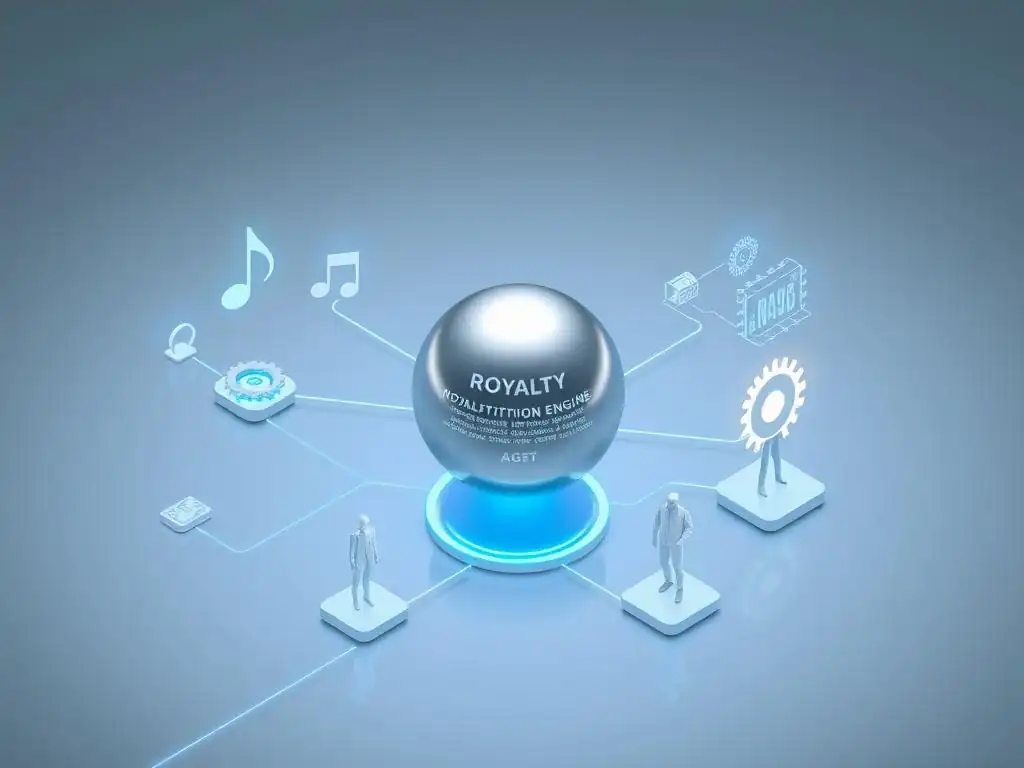
Smart Contracts for Copyright Licensing
Copyright covers original works of authorship, such as music, literature, art, software, and films. Smart contracts are particularly well-suited for managing the licensing and royalties associated with digital copyrighted works. A digital piece of art or music can be tokenized on a blockchain, often as an NFT, representing its unique ownership.
Licensing terms – including per-stream royalty rates, limited edition usage rights, or synchronization licenses for film/TV – can be embedded within or linked to a smart contract associated with the token. For instance, a musician could sell a limited license for a song to be used in a short film. The smart contract would specify the duration, usage context, and the agreed-upon fee or royalty percentage, automatically transferring payment upon execution and perhaps automatically expiring the license after the term ends.
Furthermore, smart contracts can facilitate micro-licensing and fractional ownership, opening up new monetization avenues. An author could allow readers to purchase temporary access to a chapter via a smart contract, with a small fee paid instantly. Or, a group of investors could collectively own a percentage of the royalties from a popular song through fractionalized NFTs and a smart contract that distributes earnings proportionally.
The transparency of the blockchain ledger provides a clear record of who holds licenses and under what terms, simplifying the complex web of rights management often associated with copyrighted works. Managing royalties from Blockchain IP licenses in this way ensures that creators are compensated directly and efficiently for every instance of authorized use.
Smart Contracts for Patent Licensing
Patent licensing, while often involving more complex and bespoke agreements than copyright, can also benefit significantly from smart contracts, particularly concerning royalty payments based on sales or production volumes. A smart contract can be designed to receive verified data inputs regarding the number of units sold or produced utilizing a patented technology.
Using oracles to connect to enterprise resource planning (ERP) systems or sales databases, the contract can automatically calculate the owed royalty amount based on the agreed-upon percentage or per-unit fee and initiate payment. This automates a process that traditionally involves manual reporting, invoicing, and auditing, which can be prone to delays and errors, especially in large-scale manufacturing or distribution agreements.
Consider a patent holder licensing technology to multiple manufacturers globally. A smart contract could be deployed for each licensee, tailored to their specific agreement terms (e.g., 2% of net sales, or $1 per unit, with different rates for different product lines). The contract would automatically process royalty payments based on reported sales data, potentially in real-time or at predefined intervals (e.g., monthly).
This provides the patent holder with a continuous, verifiable stream of royalty income and reduces the administrative burden of tracking compliance across numerous licensees. While the initial setup of such contracts requires careful legal and technical design to capture the nuances of patent agreements, the potential for automated, secure, and transparent management of royalties from Blockchain IP licenses is substantial, reducing disputes and ensuring fair compensation based on actual usage.
Smart Contracts for Trademark Licensing
Trademark licensing involves granting permission to use a brand name, logo, or other distinctive mark, typically in connection with specific goods or services. Smart contracts can enhance the management of trademark licensing by automating royalty payments based on sales of licensed products or services. Similar to patent licensing, a smart contract can be configured to receive sales data (verified via oracles) and automatically calculate and distribute royalty fees to the trademark owner.
This is particularly useful for large brands with numerous licensees producing a wide range of products, from apparel to consumer goods. Automating this process ensures timely and accurate payment based on verifiable sales figures.
Beyond royalty payments, smart contracts can also help manage compliance and track the lifecycle of licensed products. For instance, smart contracts can be linked to supply chain tracking systems built on blockchain, allowing the trademark owner to verify that licensed products are being manufactured and distributed by authorized parties according to the terms of the agreement. This helps combat the sale of unauthorized or counterfeit goods bearing the trademark.
While legal enforcement remains crucial, blockchain provides a transparent and auditable record of legitimate licensing activities, strengthening the trademark owner's position against infringers. Managing royalties from Blockchain IP licenses through smart contracts provides greater control, transparency, and efficiency in a complex licensing landscape.
Real-World Examples of Blockchain IP Licensing Platforms
Case Study 1: Vezt and their Music Royalty Platform
Vezt is a platform that utilizes blockchain technology to allow music rights holders (artists, songwriters, producers) to sell fractional ownership of their music rights and future royalties to fans and investors as "IPOs" (Initial Song Offerings). Using smart contracts on the blockchain, Vezt tokenizes specific royalty streams (e.g., streaming royalties from a particular song in a specific territory for a limited time). Investors purchase these tokens, representing a percentage of the future royalties generated by that song. The platform then collects royalty data from digital service providers (DSPs) like Spotify and Apple Music.
The core innovation lies in how Vezt handles royalty distribution. Instead of traditional methods where royalties flow through multiple intermediaries over months, Vezt's smart contracts are designed to automatically distribute the collected royalties directly to the token holders (the investors and the original rights holder who retained a portion) based on their proportional ownership as recorded on the blockchain.
This process significantly speeds up payment times, often reducing the cycle from months to weeks or even days, and provides unprecedented transparency into the flow of royalties. By using blockchain IP licensing royalties through fractional ownership and smart contracts, Vezt creates a new marketplace for music rights and ensures transparent, automated payouts to rights holders and investors alike.
Case Study 2: KodakCoin and their Image Rights Management System
KodakOne, associated with the historic photography brand Kodak, launched a platform and cryptocurrency called KodakCoin aimed at creating a secure blockchain-based ecosystem for photographers to manage and license their images. The platform allows photographers to register their work on the blockchain, creating an immutable record of ownership and metadata. The goal was to provide a secure marketplace where photographers could license their work directly to buyers, bypassing traditional stock photo agencies and their associated fees and delays.
Within the KodakOne ecosystem, smart contracts were intended to automate the licensing process and the payment of royalties. When a buyer licensed an image through the platform, a smart contract would execute the terms of the license, including the automated transfer of KodakCoin (or other agreed-upon cryptocurrency) from the buyer to the photographer. The blockchain record would provide a transparent history of the license, verifying its terms and duration.
This system aimed to give photographers more control over their work, ensure they were fairly compensated based on verifiable usage, and streamline the process of managing royalties from Blockchain IP licenses in the digital imaging space. While the project faced significant challenges and pivots since its initial launch, its foundational concept highlighted the potential of blockchain and smart contracts for secure, automated image rights management and royalty distribution.
Overcoming Challenges in Blockchain IP Licensing
Addressing Legal and Regulatory Hurdles
Implementing blockchain-based IP licensing and royalty systems faces significant legal and regulatory challenges. Existing IP laws were developed long before blockchain and smart contracts, leading to uncertainties about how these technologies fit within current legal frameworks. Issues include determining the legal status of a smart contract (is it a legally binding contract?
), jurisdiction in cross-border transactions on a decentralized network, and the enforceability of smart contract terms in court. For example, if a smart contract contains a bug or executes in a way that violates the parties' intent but follows the code, resolving the dispute within traditional legal systems designed for human-readable agreements is complex.
Furthermore, regulatory compliance, particularly concerning financial transactions and data privacy (like GDPR), presents hurdles. Royalty payments often involve monetary value transfers, triggering financial regulations like Know Your Customer (KYC) and Anti-Money Laundering (AML) rules. Integrating these requirements into decentralized, pseudonymous blockchain systems is challenging.
Clarity is also needed on taxation of royalties paid via cryptocurrency and the legal standing of tokenized IP assets. Addressing these challenges requires collaboration between legal experts, regulators, and blockchain developers to establish clear guidelines, potentially through new legislation or legal interpretations that accommodate the unique characteristics of blockchain and smart contracts for managing royalties from Blockchain IP licenses.
Ensuring Scalability and Interoperability of Blockchain IP Platforms
Scalability is a major technical challenge for many blockchain networks, potentially impacting the performance of IP licensing platforms, especially those dealing with high volumes of micro-transactions like per-stream music royalties or per-click image licenses. Public blockchains like Ethereum, while robust, have faced issues with transaction speed and high gas fees during peak usage, which can make frequent, small royalty payments economically unfeasible. Newer blockchain platforms and Layer 2 scaling solutions are emerging to address these limitations, offering higher transaction throughput and lower costs, but widespread adoption and proven reliability are still developing.
Interoperability between different blockchain networks and with legacy systems is another crucial challenge. The IP ecosystem is vast and fragmented, involving various industries, platforms, and existing databases of rights information.
For a blockchain IP licensing system to be truly effective, it needs to be able to interact seamlessly with different blockchains (e.g., transferring tokenized rights or data between networks) and with off-chain systems like usage tracking databases, payment gateways, and legal registries. Developing standards and protocols for cross-chain communication and oracle reliability is essential to build a connected and efficient global system for managing Blockchain IP licensing royalties across diverse assets and platforms.
The Future of Blockchain IP Licensing and Royalty Management
Emerging Trends and Innovations in Blockchain IP
The field of blockchain for IP licensing is rapidly evolving, driven by several key trends and innovations. One significant trend is the increasing use of Non-Fungible Tokens (NFTs) to represent unique IP assets on the blockchain. NFTs provide a standardized way to prove ownership and manage rights for digital art, collectibles, music tracks, and even patents or trademarks.
Future innovations are likely to focus on making NFTs more dynamic, allowing for the embedding of complex licensing terms and automatic updates based on usage or other external data inputs via smart contracts. This will enable more sophisticated management of royalties from Blockchain IP licenses tied to unique digital assets.
Another emerging area is the development of decentralized autonomous organizations (DAOs) for collective IP management. DAOs could allow groups of creators or IP owners to pool their rights, license them collectively through smart contracts, and share royalties based on pre-agreed rules enforced by the DAO's code.
Furthermore, advancements in zero-knowledge proofs and other privacy-enhancing technologies could allow for confidential commercial terms within smart contracts while still maintaining the verifiability of transactions on the public ledger, addressing privacy concerns for sensitive business data. The integration of AI for usage monitoring and oracle reliability will also play a key role in making smart contract-based royalty payments more robust and trustworthy.
The Potential Impact on the Creative Industries
The widespread adoption of blockchain IP licensing and automated royalty management has the potential to profoundly impact creative industries, from music and art to publishing and gaming. By providing creators with more direct control over their work and ensuring transparent, timely payment of royalties, blockchain can empower artists, musicians, writers, and developers. This could lead to more equitable distribution of revenue, potentially shifting power away from traditional intermediaries and towards the creators themselves. Faster access to earnings can also provide creators with greater financial stability, allowing them to invest more time and resources into producing new work.
Moreover, the ability to easily micro-license and fractionalize ownership can unlock new business models and revenue streams. Fans or investors could directly support creators by purchasing small stakes in future royalties, creating a more direct connection between creators and their audience while providing creators with upfront capital.
The transparency of royalties from Blockchain IP licenses could also foster greater trust and collaboration within creative ecosystems. While challenges remain, the potential for blockchain to create a more fair, efficient, and transparent system for managing IP and compensating creators is immense, promising a significant transformation in how creative works are licensed and monetized globally.
Conclusion: Embracing Blockchain for Efficient and Secure IP Licensing Royalties
The Transformative Power of Smart Contracts in IP Management
Smart contracts, powered by blockchain technology, offer a revolutionary approach to managing intellectual property licensing and royalty payments. By automating the execution of licensing agreements and the distribution of funds based on predefined, verifiable conditions, they eliminate many of the inefficiencies, costs, and opacities inherent in traditional systems. The ability of smart contracts to handle complex royalty calculations, manage multiple rights holders, and ensure timely, accurate payments based on real-time data represents a significant leap forward. This automation streamlines operations for both licensors and licensees, reducing administrative burdens and freeing up resources.
The core value proposition lies in increased efficiency, reduced costs, and enhanced transparency. Studies and pilot projects across various IP-heavy industries consistently demonstrate the potential for significant savings in administrative overhead and faster payment cycles when leveraging blockchain for IP licensing royalties. While implementation requires careful consideration of legal frameworks and technical scalability, the foundational technology provides a robust, secure, and verifiable method for managing the complex flows of value associated with intellectual property in the digital age.
Moving Towards a Decentralized and Transparent IP Ecosystem
The adoption of blockchain and smart contracts is paving the way for a more decentralized and transparent intellectual property ecosystem. By creating immutable records of ownership and licenses on a distributed ledger, blockchain reduces reliance on centralized authorities and provides all stakeholders with access to a single source of truth. This transparency builds trust, minimizes disputes, and empowers rights holders with greater visibility and control over how their IP is used and monetized. The shift towards automated, smart contract-driven royalty payments fundamentally changes the relationship between creators, licensees, and consumers, fostering a more direct and equitable exchange of value.
As the technology matures and legal frameworks adapt, blockchain-based solutions are poised to become the standard for managing intellectual property rights and distributing royalties globally. The future promises an IP landscape where creators are fairly and instantly compensated for their work, where licensing is simplified and transparent, and where the value generated by innovation and creativity flows more efficiently and securely through automated systems powered by smart contracts and the blockchain. Embracing this technology is key to unlocking the full potential of intellectual property in the digital economy and ensuring fair royalties from Blockchain IP licenses for all participants.
Frequently Asked Questions
How can smart contracts automate IP licensing royalties?
Smart contracts can be programmed to automatically distribute royalty payments to IP owners based on predefined terms and conditions. This eliminates manual tracking and payment processes, ensuring fair and transparent compensation.
What are the benefits of using blockchain for IP licensing?
Blockchain offers enhanced security and transparency in IP licensing. The immutable ledger provides an auditable trail of transactions, reducing the risk of disputes and streamlining royalty distribution.
How does blockchain help with IP protection?
While blockchain doesn't directly prevent infringement, it creates a secure and verifiable record of IP ownership and licensing agreements. This strengthens IP rights enforcement and simplifies license management.
What role does DeFi play in blockchain-based IP licensing?
Decentralized Finance (DeFi) can provide new financial instruments and opportunities for IP owners. This can include tokenizing IP rights or creating decentralized lending platforms for IP-backed financing.
What are the regulatory considerations for using blockchain for IP licensing?
The legal landscape surrounding blockchain and IP is still evolving. It's crucial to consider existing IP laws, contract enforcement regulations, and data privacy requirements when implementing blockchain-based IP licensing solutions.
Final Reflection: Embracing the Future of Intellectual Property
The exploration of smart contracts for intellectual property licensing reveals a powerful intersection of innovation and security, highlighting a paradigm shift in how creators are compensated and protected. Today, as the digital landscape continues to expand, the need for transparent, automated, and secure royalty management is more critical than ever, making blockchain-based IP licensing solutions not just a possibility, but a necessity.
The potential of blockchain to revolutionize IP licensing is undeniable, offering a pathway towards fairer and more efficient ecosystems for artists, inventors, and businesses alike. Witnessing the evolution of this technology, and its potential to empower creators, is profoundly inspiring. Innovation distinguishes between a leader and a follower.
- Steve Jobs. This quote encapsulates the spirit of embracing new technologies like blockchain to lead the way in protecting and monetizing intellectual property.
As we stand at the cusp of this technological revolution, I invite you to consider the implications of blockchain IP licensing in your own creative endeavors. How can you leverage these tools to secure your work, streamline your royalty collection, and ultimately, foster a more equitable and rewarding environment for innovation? The future of intellectual property is being written now, and your participation is key to shaping a landscape where creativity thrives.
Okay, I understand. Here's a CTA designed for the end of a web article on "Smart Contracts for Intellectual Property Licensing: Automated and Secure Royalties," tailored for Blockchain Trends:
Unleash Your IP Potential: Automate Your Royalties!
Thank you for diving into the world of smart contracts and IP licensing! You now have a better understanding of how blockchain technology can revolutionize royalty payments and secure your intellectual property. Let's put that knowledge into action and explore the possibilities together:
- Implement a Proof-of-Concept: Take the leap and build a mini smart contract to manage royalties for a specific piece of your IP or a fictional one. This is the best way to truly understand the process.
- Explore existing decentralized IP marketplaces: Research platforms leveraging blockchain for IP licensing and potentially list your work to experience the benefits firsthand.
- Share this article with fellow creators: Spread the word about the power of smart contracts for protecting and monetizing intellectual property!
What specific aspect of smart contract IP licensing are you most excited to experiment with first? Share your ideas in the comments below!
Leave a Reply