
Learning from the Pioneers: Insights from Early Adopters of Blockchain in Humanitarian Aid

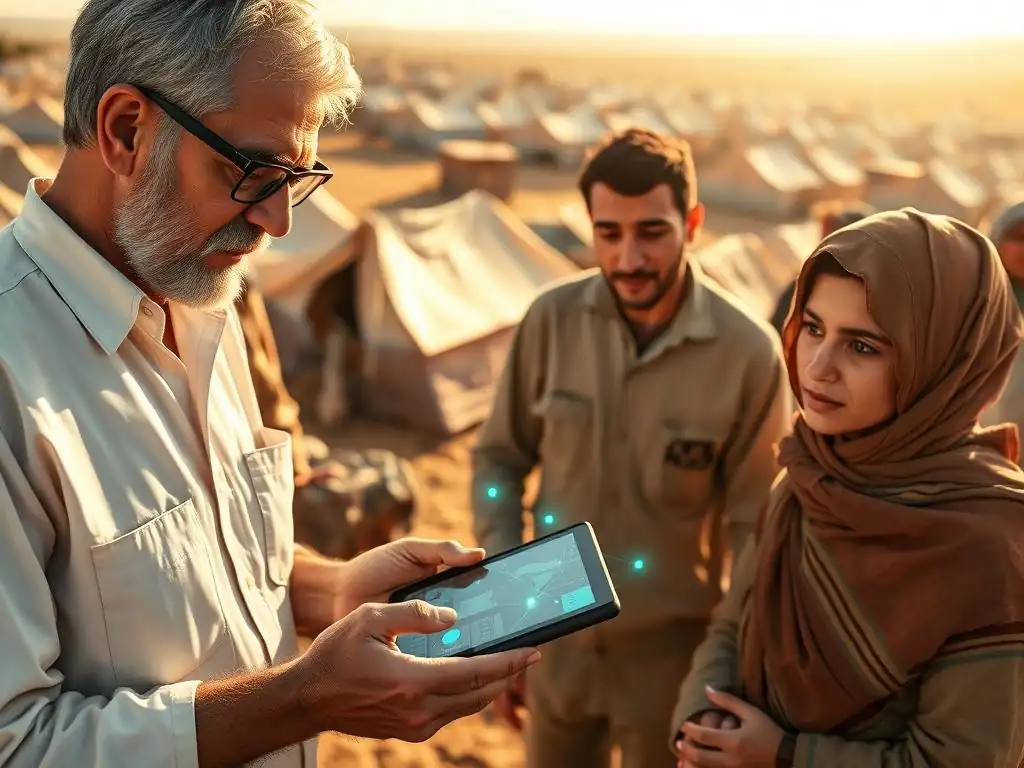
Welcome to Blockchain Trends, your guide to understanding the real-world impact of blockchain technology. Beyond the hype of cryptocurrencies, discover how this groundbreaking innovation is reshaping industries and addressing global challenges.
Are you ready to learn how blockchain is empowering humanitarian pioneers? This article delves into the fascinating journey of early adopters, revealing invaluable insights and lessons learned as they leverage decentralized solutions to deliver aid more effectively. Explore the transformative potential within.
- Learning from the Pioneers: Insights from Early Adopters of Blockchain in Humanitarian Aid
- Case Studies: Blockchain Aid Humanitarian Pioneers in Action
- Key Insights from Blockchain Aid Humanitarian Pioneers
- The Future of Blockchain in Humanitarian Aid: Building on Pioneer Experiences
- Conclusion: Empowering Humanitarian Action with Blockchain Technology
-
Frequently Asked Questions
- What are some of the early applications of blockchain technology in humanitarian aid?
- How does blockchain enhance transparency in aid delivery?
- What are the key benefits of using blockchain for supply chain management in humanitarian crises?
- What regulatory challenges do humanitarian organizations face when implementing blockchain solutions?
- What is the future potential of blockchain in humanitarian aid beyond current applications?
- Final Reflection: Embracing the Legacy of Blockchain Aid Pioneers
Learning from the Pioneers: Insights from Early Adopters of Blockchain in Humanitarian Aid
Exploring Blockchain's Potential in Aid Delivery
Blockchain technology offers a compelling vision for transforming humanitarian aid delivery. Its inherent features of transparency, immutability, and security hold the potential to address long-standing challenges such as inefficiency, lack of accountability, and vulnerability to fraud. By creating a shared, tamper-proof ledger of transactions and identities, blockchain can track aid flows from donors to beneficiaries, ensuring resources reach those most in need.
This level of traceability is particularly crucial in complex and often chaotic environments where traditional systems struggle to provide oversight. The promise lies in building more resilient, efficient, and accountable aid ecosystems, fundamentally altering how assistance is planned, delivered, and monitored.
Moreover, blockchain's distributed nature can empower beneficiaries by giving them more control over their identities and aid receipts. Instead of relying solely on centralized databases managed by various organizations, individuals can potentially hold verifiable digital identities and access aid directly via secure digital wallets. This reduces reliance on intermediaries, potentially lowering administrative costs and increasing the speed of delivery. The vision is to create a system where trust is built into the technology itself, rather than solely residing with institutions, thereby increasing confidence among donors and recipients alike and paving the way for more effective humanitarian action.
The Role of Early Adopters in Shaping Blockchain's Humanitarian Future
Early adopters, the blockchain aid humanitarian pioneers, have been instrumental in moving blockchain from theoretical potential to practical application within the aid sector. These organizations have taken the significant risks associated with implementing nascent technology in challenging operational environments. Their pilot projects and scaled initiatives have provided invaluable real-world data and lessons learned, demonstrating both the capabilities and limitations of blockchain in humanitarian contexts. Without these pioneering efforts, the understanding of how blockchain can truly serve vulnerable populations would remain largely speculative.
These blockchain aid humanitarian pioneers have not only tested technical solutions but also navigated complex organizational and societal hurdles. They have engaged with diverse stakeholders, including governments, local communities, financial institutions, and other aid agencies, to build consensus and facilitate adoption. Their experiences are critical for informing future deployments, highlighting best practices, identifying pitfalls, and shaping the ethical considerations surrounding the use of blockchain for sensitive humanitarian data and transactions. Learning from these early endeavors is essential for scaling blockchain's impact and ensuring its responsible use in aiding those affected by crises.
Case Studies: Blockchain Aid Humanitarian Pioneers in Action
Case Study 1: World Food Programme (WFP) - Building Blocks: Using Blockchain for Cash Transfers in Jordan
The World Food Programme (WFP) stands out as a prominent blockchain aid humanitarian pioneer with its "Building Blocks" project. Launched initially in 2017 in Jordan, the project aimed to improve the efficiency and security of cash transfers to Syrian refugees. Instead of using traditional banking or voucher systems, WFP leveraged a private, permissioned blockchain network to record and process assistance transfers. Beneficiaries could redeem their aid entitlements at participating retailers simply by scanning their eye (iris recognition), with the transaction instantly recorded on the blockchain, bypassing intermediary financial service providers and their associated fees.
This initiative significantly streamlined the distribution process for approximately 100,000 refugees in camps like Azraq and Za'atari. By 2018, Building Blocks was handling nearly $1 million worth of transactions daily, and by early 2020, it had processed over $200 million in aid for over one million people across multiple countries, including Jordan, Bangladesh, and Kenya. The system aimed to reduce transaction costs, enhance security, and provide WFP with better oversight of aid distribution, demonstrating blockchain's potential for large-scale humanitarian cash and voucher programs.
Challenges Faced and Lessons Learned
Implementing Building Blocks presented significant challenges. Initially, integrating the blockchain system with existing WFP infrastructure and retailer point-of-sale systems required substantial technical effort and coordination. Ensuring the reliability and speed of the network, especially in areas with limited connectivity, was also a hurdle. Furthermore, training both WFP staff and beneficiaries on the new system, particularly the iris scanning technology, demanded considerable resources and time. The legal and regulatory landscape surrounding cryptocurrency and blockchain in various operational countries also required careful navigation, as the system processed fiat currency values recorded on a blockchain, not actual cryptocurrencies.
A key lesson learned was the importance of user-centric design and robust field support. While the technology offered benefits, ensuring accessibility and ease of use for beneficiaries, some of whom had limited digital literacy, was paramount. WFP also learned the value of phased rollouts and continuous iteration based on field feedback.
Another critical insight was the necessity of strong partnerships with local retailers and financial institutions, even when aiming to bypass traditional intermediaries, as their cooperation was vital for the last-mile delivery of goods and services. The project highlighted that technology is only one piece of the puzzle; successful implementation requires addressing the socio-technical ecosystem.
Key Outcomes and Impact on Beneficiaries
The Building Blocks project yielded several positive outcomes. For WFP, it led to significant cost savings by reducing reliance on third-party financial service providers; estimates suggested savings of up to 98% on bank fees compared to previous methods. The system also provided unprecedented transparency and auditability of aid flows. Every transaction was recorded on the blockchain, creating a clear, immutable record of who received what aid, when, and where, enhancing accountability and reducing the potential for diversion or fraud. This increased transparency also helped build trust with donors.
For beneficiaries, the impact was primarily felt through enhanced security and privacy. Their biometric data (iris scan) was used as authentication, linked to their identity on the blockchain, rather than relying on physical tokens or cards that could be lost or stolen. The system also offered greater convenience and speed at the point of sale. While the technology itself was complex, the user interface at retailers was designed to be simple. The system empowered beneficiaries by giving them a secure and reliable way to access their entitled aid, contributing to their dignity and financial inclusion within the humanitarian context.
Case Study 2: Oxfam - Unblocked Cash: Enhancing Financial Inclusion Through Blockchain in Vanuatu
Oxfam is another notable blockchain aid humanitarian pioneer that explored the use of blockchain for cash transfers, specifically in the Pacific island nation of Vanuatu following Tropical Cyclone Harold in 2020. The "Unblocked Cash" project aimed to deliver humanitarian cash assistance to vulnerable households in remote areas, focusing on enhancing financial inclusion and resilience. Working with the Australian start-up Sempo and local financial institutions, Oxfam piloted a system using stablecoins (specifically, the Australian dollar-backed stablecoin AUDN) on a permissioned blockchain network accessible via mobile phones or simple QR codes.
The project targeted approximately 200 households (around 1,200 individuals) across several islands. Beneficiaries received digital tokens representing cash value in their digital wallets, which could be redeemed at participating local merchants using their mobile phones. This approach aimed to overcome challenges related to limited banking infrastructure in remote areas, high transaction costs, and the logistical difficulties of distributing physical cash after a disaster. The use of a stablecoin pegged to a familiar currency helped mitigate volatility risks often associated with other cryptocurrencies, making it a more practical tool for humanitarian cash transfers.
Improving Efficiency and Reducing Fraud in Cash Transfers
The Unblocked Cash project in Vanuatu aimed to improve the efficiency of cash transfers by reducing the steps and intermediaries involved compared to traditional methods. By using a digital token on a blockchain, transactions could be processed more quickly and directly between Oxfam, beneficiaries, and merchants. This streamlined process reduced administrative overhead and the time it took for aid to reach those in need, which is crucial in post-disaster scenarios. The digital nature of the transfers also eliminated the security risks associated with transporting and distributing large amounts of physical cash in remote or insecure locations.
Furthermore, the blockchain ledger provided an immutable and transparent record of every cash transfer transaction. This inherent feature significantly reduced the risk of fraud or diversion of funds. Each transaction was recorded and verifiable, allowing Oxfam and potentially donors to track exactly when and where the aid was redeemed. This enhanced accountability built confidence in the program's integrity. By leveraging blockchain, Oxfam sought to create a more secure, efficient, and auditable system for delivering vital financial assistance directly into the hands of affected populations, showcasing the potential of blockchain aid humanitarian pioneers to innovate in challenging environments.
Case Study 3: UNHCR - Blockchain-Based Identity Management for Refugees
The United Nations High Commissioner for Refugees (UNHCR) has also emerged as a blockchain aid humanitarian pioneer, exploring the use of blockchain technology for identity management and service delivery for refugees and displaced persons. Recognizing the critical need for secure, verifiable, and portable identities for vulnerable populations who often lack official documentation, UNHCR piloted a blockchain-based identity system called "Building Blocks" (sharing a name but distinct from WFP's cash transfer program) and explored integrations with other systems.
The goal was to provide individuals with a self-sovereign digital identity that they control, enabling them to access services like education, healthcare, and financial aid more easily and securely.
Traditional identity systems can be fragmented, paper-based, and difficult for displaced individuals to maintain or prove across different jurisdictions. A blockchain-based approach offers the potential for a persistent, digital identity record that is linked to the individual and verifiable by authorized parties without relying on a single, centralized authority that might be compromised or inaccessible. While specific large-scale rollouts solely focused on identity are still in development, UNHCR's exploration highlights the potential for blockchain to empower refugees by giving them a foundational digital asset – their identity – that can unlock access to essential services and opportunities.
Secure and Portable Digital Identities for Vulnerable Populations
A key objective of UNHCR's exploration into blockchain was to provide refugees with secure and portable digital identities. For displaced individuals, proving who they are can be a constant struggle, hindering their ability to access fundamental rights and services. A blockchain-based identity system can create a decentralized identifier (DID) linked to verifiable credentials (like proof of registration, skills, or education) stored securely on a ledger. This identity is owned and controlled by the individual, not an institution, increasing their autonomy and reducing reliance on potentially fragile or inaccessible government systems.
The portability aspect is critical for refugees who often move across borders. A digital identity on a blockchain can potentially be recognized and verified by different organizations and authorities in various locations, simplifying processes like border crossings, accessing social services, or opening bank accounts. While significant technical, legal, and political hurdles remain in achieving truly interoperable and universally recognized digital identities, UNHCR's pioneering work demonstrates the potential of blockchain to offer a more resilient, secure, and user-centric alternative to traditional paper-based or siloed digital identity systems for vulnerable populations.
Addressing Privacy Concerns and Data Security
The use of blockchain for identity management, especially for sensitive data related to refugees, raises significant privacy and data security concerns. While blockchain offers immutability and transparency, placing sensitive personal information directly onto a public or even a permissioned ledger requires careful consideration. UNHCR's approach emphasizes privacy-preserving techniques, such as storing only hashes or pointers to data on the blockchain, with the actual sensitive information held off-chain in secure, encrypted storage controlled by the individual or a trusted third party. The individual can then selectively share verifiable credentials linked to their DID without revealing all their underlying personal data.
Ensuring robust data security is paramount. The system must be protected against cyber threats, and access controls must be strictly managed. UNHCR's work involves exploring zero-knowledge proofs and other cryptographic techniques that allow verification of credentials without revealing the underlying data itself. Furthermore, addressing the "right to be forgotten" and data protection regulations (like GDPR, which applies if dealing with data subjects from certain regions) within an immutable ledger framework requires innovative solutions and careful legal consideration. The efforts by blockchain aid humanitarian pioneers like UNHCR in this area are crucial for developing ethical and secure blockchain identity solutions.
Key Insights from Blockchain Aid Humanitarian Pioneers

Overcoming Technical Hurdles in Implementing Blockchain Solutions
Implementing blockchain technology in humanitarian settings is far from straightforward and has required blockchain aid humanitarian pioneers to overcome numerous technical hurdles. One significant challenge is connectivity; many areas where humanitarian aid is needed lack reliable internet access or electricity, which are often necessary to interact with blockchain networks. Solutions have involved developing offline or intermittent connectivity features, using lighter blockchain protocols, or relying on field staff with satellite connections to process transactions in batches.
Another technical challenge is scalability. While blockchain offers potential for large-scale operations, early platforms often struggled to handle the volume of transactions required for major aid programs involving hundreds of thousands or millions of beneficiaries. Pioneers have had to work with developers to optimize network performance, choose appropriate consensus mechanisms, and design systems that can grow with the program's needs. Furthermore, integrating blockchain systems with legacy aid management databases and financial systems requires complex API development and data synchronization efforts, demanding significant technical expertise and resources that are often scarce in humanitarian organizations.
Building Trust and Collaboration Among Stakeholders
A critical insight from blockchain aid humanitarian pioneers is that successful blockchain deployment requires more than just technical proficiency; it necessitates building trust and fostering collaboration among a diverse range of stakeholders. This includes beneficiaries, who need to understand and trust the new technology; local communities and authorities, whose acceptance is vital for operational success; partner organizations, who may need to integrate their systems; and even local merchants or financial institutions, who are part of the aid delivery chain.
Pioneers have learned that extensive consultation, training, and transparent communication are essential to gain buy-in. For instance, explaining how a system like WFP's Building Blocks works to refugees and retailers required significant effort and clear messaging about its benefits and security. Similarly, gaining the trust of national governments regarding data privacy and regulatory compliance is crucial. Collaboration with other humanitarian agencies, technology providers, and academic institutions is also key to sharing knowledge, developing standards, and avoiding fragmented approaches, highlighting the collaborative spirit necessary for blockchain aid humanitarian pioneers to succeed.
Ensuring Scalability and Sustainability of Blockchain Initiatives
The blockchain aid humanitarian pioneers have demonstrated that while pilot projects can prove concept, scaling these initiatives for widespread impact and ensuring their long-term sustainability are distinct and complex challenges. Scaling requires robust infrastructure, standardized protocols, and the capacity to manage significantly larger transaction volumes and user bases. It also demands substantial financial investment beyond initial pilot funding.
Sustainability hinges on developing business models that are cost-effective and do not rely solely on grant funding. This involves exploring potential revenue streams (e.g., through shared infrastructure or services) or demonstrating such significant efficiency gains that the cost savings justify the ongoing operational expenses.
Furthermore, building local capacity – training local staff and partners to manage and maintain the blockchain systems – is crucial for long-term viability. The pioneers recognize that for blockchain to truly transform aid, solutions must be designed not just to function in a controlled environment but to thrive and be maintained in challenging, resource-constrained contexts over many years.
The Future of Blockchain in Humanitarian Aid: Building on Pioneer Experiences
Addressing the Limitations of Current Blockchain Applications
While blockchain aid humanitarian pioneers have shown significant potential, current blockchain applications in the sector still face limitations that must be addressed for wider adoption. One key limitation is the environmental impact of certain blockchain architectures, particularly those using energy-intensive proof-of-work consensus mechanisms (though many humanitarian projects use more energy-efficient permissioned or proof-of-stake networks). Future efforts must prioritize sustainable and environmentally friendly blockchain solutions.
Another limitation is the complexity of the technology itself, which can be a barrier to adoption for both aid workers and beneficiaries. Future development needs to focus on creating user-friendly interfaces and abstracting away the underlying technical complexity. Furthermore, the lack of widespread regulatory clarity and standardized frameworks for blockchain use in different countries poses a challenge. Addressing these limitations requires continued research, development, and policy advocacy, building directly on the practical insights gained by the early blockchain aid humanitarian pioneers.
Fostering Innovation and Collaboration in the Blockchain Aid Sector
The future of blockchain in humanitarian aid depends heavily on fostering continued innovation and deep collaboration. As the technology evolves, new applications beyond cash transfers and identity management will emerge, such as supply chain tracking for aid goods, transparent donor reporting platforms, or even decentralized autonomous organizations (DAOs) for community-led aid initiatives. Encouraging research and development into these areas is vital.
Collaboration among humanitarian organizations, technology firms, governments, and academia is essential to share knowledge, pool resources, and develop interoperable standards. Initiatives like the "Building Blocks" project by WFP and the exploration by Oxfam and UNHCR demonstrate the power of partnerships. Creating open-source tools, sharing lessons learned openly, and establishing common protocols will help the sector move beyond isolated pilots towards a more integrated and impactful use of blockchain technology, leveraging the collective experience of blockchain aid humanitarian pioneers.
Policy Recommendations for Supporting Blockchain Adoption in Humanitarian Assistance
Based on the experiences of blockchain aid humanitarian pioneers, several policy recommendations can support the wider and more effective adoption of blockchain in the sector. Firstly, governments and international bodies should provide regulatory clarity and potentially create sandboxes or frameworks that facilitate the legal and safe use of blockchain for humanitarian purposes, addressing concerns around data privacy, digital signatures, and the legal status of blockchain transactions.
Secondly, donors and funding bodies should allocate dedicated resources for exploring and implementing blockchain solutions, recognizing the long-term efficiency and accountability benefits. Funding should support not just technology development but also capacity building within aid organizations and local communities.
Thirdly, policies should encourage the development of open standards and interoperable systems to avoid vendor lock-in and ensure different blockchain initiatives can potentially interact. Finally, policies should prioritize user protection, ensuring that blockchain solutions are designed with the privacy, security, and digital rights of vulnerable populations at the forefront, guided by the ethical considerations highlighted by the early blockchain aid humanitarian pioneers.
Conclusion: Empowering Humanitarian Action with Blockchain Technology
Blockchain's Transformative Potential for Aid Transparency and Accountability
Blockchain technology holds significant transformative potential for enhancing transparency and accountability within the humanitarian aid sector. By creating immutable and verifiable records of transactions, aid flows, and potentially even the impact of assistance, blockchain can provide an unprecedented level of visibility into how aid is distributed and utilized. This increased transparency can help build greater trust among donors, beneficiaries, and the public, demonstrating that resources are reaching their intended recipients and being used effectively.
The accountability benefits are equally significant. With a clear audit trail on a distributed ledger, it becomes much harder for funds or resources to be diverted or misused. This can help combat corruption and inefficiency, ensuring that every dollar or resource contributes maximally to alleviating human suffering. While challenges remain, the foundational capabilities of blockchain offer a powerful tool for humanitarian organizations striving for greater integrity and effectiveness in their operations, building on the groundwork laid by the blockchain aid humanitarian pioneers.
The Importance of Learning from Early Blockchain Aid Humanitarian Pioneers
The journey towards widespread and effective use of blockchain in humanitarian aid is still ongoing, and the experiences of the early blockchain aid humanitarian pioneers are absolutely critical for its future success. Organizations like WFP, Oxfam, and UNHCR have faced real-world challenges, learned valuable lessons, and demonstrated practical pathways for leveraging this technology in complex environments. Their insights into technical implementation, stakeholder engagement, scaling, sustainability, and ethical considerations provide an essential roadmap for others looking to explore or adopt blockchain solutions.
Ignoring these early experiences would risk repeating mistakes and slowing down progress. Instead, by studying the case studies, understanding the challenges overcome, and building upon the successes of these pioneers, the humanitarian sector can accelerate the responsible and impactful adoption of blockchain technology. Learning from the blockchain aid humanitarian pioneers is not just beneficial; it is necessary to harness the full potential of blockchain to empower humanitarian action and improve the lives of those in crisis.
Frequently Asked Questions
What are some of the early applications of blockchain technology in humanitarian aid?
Early applications focused on transparent fund distribution and supply chain tracking to ensure aid reaches intended recipients. Pilot programs often involved digital identity verification for refugees.
How does blockchain enhance transparency in aid delivery?
Blockchain's immutable ledger provides a verifiable audit trail of transactions. This reduces corruption and increases donor confidence by showing exactly where funds are allocated.
What are the key benefits of using blockchain for supply chain management in humanitarian crises?
Blockchain enables real-time tracking of goods, improving efficiency and reducing the risk of theft or diversion. This ensures essential supplies reach those in need faster.
What regulatory challenges do humanitarian organizations face when implementing blockchain solutions?
Organizations grapple with data privacy regulations and compliance with international laws. The nascent nature of blockchain regulation creates uncertainty in some jurisdictions.
What is the future potential of blockchain in humanitarian aid beyond current applications?
The future holds potential for decentralized identity management, peer-to-peer aid distribution, and smart contracts automating aid delivery based on pre-defined conditions.
Final Reflection: Embracing the Legacy of Blockchain Aid Pioneers
The exploration of early blockchain adopters in humanitarian aid reveals a crucial truth: innovation requires courage and vision. While the technology is still maturing, the lessons learned from these pioneers are invaluable, offering a roadmap for navigating the complexities and maximizing the potential of blockchain for good in a world desperately in need of more efficient and transparent aid delivery.
This journey into the past highlights the profound and ongoing influence of these early experiments. Their successes and failures have shaped the current landscape of blockchain-based humanitarian initiatives, paving the way for more sophisticated and impactful solutions. The best way to predict the future is to create it.
This quote resonates deeply with the spirit of these pioneers, who dared to imagine a world where technology could empower the vulnerable and transform the way aid is delivered.
Now, it's your turn. Consider the challenges and opportunities presented by blockchain technology in the humanitarian sector. How can you contribute to building upon the foundation laid by these pioneers? Reflect on the ethical considerations, the potential for collaboration, and the power of technology to alleviate suffering. Let their legacy inspire you to become a champion for innovation and a catalyst for positive change in the world.
I'm ready to help craft a compelling CTA for "Learning from the Pioneers: Insights from Early Adopters of Blockchain in Humanitarian Aid" for Blockchain Trends. Please provide the article content so I can understand its main themes and tailor the message effectively.
Leave a Reply