
DeFi Lending vs. Traditional Loans: What Are the Key Differences and Advantages?

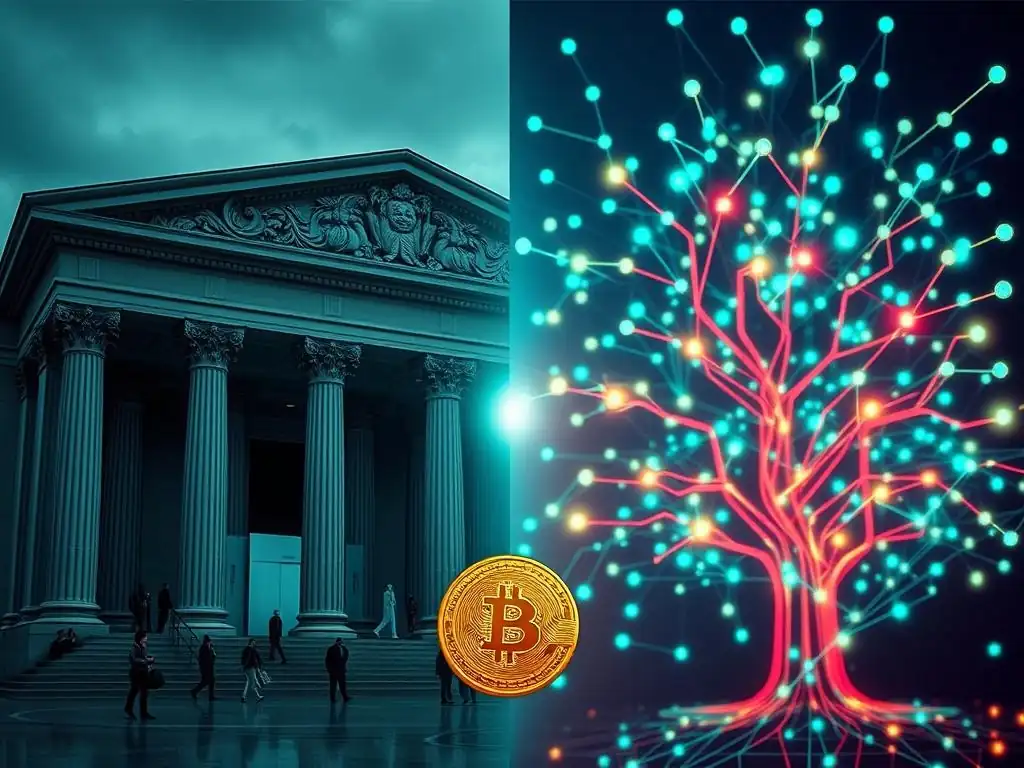
Welcome to Blockchain Trends, your guide to navigating the revolutionary world beyond just cryptocurrencies. Are you ready to unlock the hidden potential of DeFi? Discover the DeFi lending advantages benefits that are reshaping the financial landscape, offering a compelling alternative to traditional loans. Intrigued? Let's dive in and explore how decentralized finance is disrupting the status quo.
- DeFi Lending vs. Traditional Loans: Key Differences & Advantages for Blockchain Users
- Understanding Traditional Loans: A Primer
- What is DeFi Lending? Exploring Decentralized Finance Lending Platforms
-
Key Differences Between DeFi Lending and Traditional Loans
- Accessibility: DeFi Lending vs. Traditional Bank Loans
- Interest Rates: Comparing DeFi Lending Rates to Traditional Loan APRs
- Loan Approval Process: Speed and Efficiency in DeFi vs. Traditional Lending
- Collateral Requirements: Crypto Assets vs. Traditional Assets
- Transparency and Auditability: Blockchain's Impact on Lending
-
DeFi Lending Advantages Benefits: Why Choose Decentralized Finance?
- Unlocking Financial Inclusion: DeFi Lending for the Unbanked
- Earning Passive Income: DeFi Lending as a Yield Generation Strategy
- Greater Control Over Assets: Decentralized Custody in DeFi Lending
- Faster Loan Processing: Streamlined Access to Capital
- Leveraging Crypto Holdings: Using Digital Assets for Borrowing
- Risks Associated with DeFi Lending: Considerations for Users
- DeFi Lending Use Cases: Real-World Applications
- The Future of Lending: DeFi's Potential Impact
- Conclusion: Is DeFi Lending Right for You? Weighing the DeFi Lending Advantages Benefits and Risks
-
Frequently Asked Questions
- What are the primary advantages of DeFi lending compared to traditional bank loans?
- How does DeFi lending reduce the need for intermediaries in financial transactions?
- What are some of the key risks associated with DeFi lending that borrowers and lenders should be aware of?
- How do DeFi lending platforms handle collateralization differently than traditional banks?
- What are the potential benefits of DeFi lending for financial inclusion, particularly in underserved communities?
- Final Reflection: Embracing the Decentralized Future of Finance
- Unleash Your Financial Future: Embrace the DeFi Revolution!
DeFi Lending vs. Traditional Loans: Key Differences & Advantages for Blockchain Users
Decentralized Finance (DeFi) has emerged as a transformative force within the blockchain ecosystem, fundamentally reshaping how financial services are accessed and delivered. Among its most compelling applications is DeFi lending, which offers an alternative to traditional banking and loan systems. This article explores the core differences between DeFi lending and traditional loans, highlighting the significant DeFi lending advantages benefits that attract users, while also considering the associated risks. Understanding these distinctions is crucial for anyone looking to navigate the evolving landscape of finance.
Understanding Traditional Loans: A Primer
Traditional loans are the cornerstone of modern finance, provided by established institutions like banks, credit unions, and online lenders. These systems have been in place for centuries, facilitating everything from mortgages and car loans to personal loans and business lines of credit. They operate within regulated frameworks and rely on intermediaries to manage the lending process, assess risk, and disburse funds.
How Traditional Loans Work: An Overview
The process for obtaining a traditional loan typically begins with a formal application to a financial institution. This involves submitting personal and financial information, including income, employment history, existing debts, and assets. The lender then evaluates the applicant's creditworthiness, primarily through a credit score and detailed financial review.
If approved, a loan agreement is signed, outlining the principal amount, interest rate, repayment schedule, and terms and conditions. Funds are then disbursed, and the borrower makes periodic payments until the loan is fully repaid, including interest. This system is highly structured and relies heavily on trust in the intermediary institution and the legal system.
For instance, applying for a mortgage in the United States often requires extensive documentation, including tax returns from the past two years, recent pay stubs, and bank statements. The approval process can take anywhere from a few weeks to several months, involving appraisals, title searches, and underwriting. The interest rate offered is directly tied to the borrower's credit score and the prevailing market conditions, with rates varying significantly based on these factors.
Limitations of Traditional Lending Systems
Despite their ubiquity, traditional lending systems face several limitations. One major constraint is their reliance on intermediaries, which can lead to slower processing times, higher fees, and reduced efficiency. The centralized nature of these systems also means that access to credit can be restricted based on geographic location, income level, or lack of established credit history. Millions of people globally remain unbanked or underbanked, effectively excluded from traditional financial services.
Furthermore, the transparency of traditional loan portfolios and processes is often limited. Borrowers typically have little insight into how their interest rates are determined beyond their credit profile, or how their loan is serviced or potentially sold to other entities. This opacity can create information asymmetry between the lender and the borrower. For example, while a bank might bundle and sell mortgages on the secondary market, the original borrower's relationship remains primarily with the loan servicer, which may change over time.
Credit Scores and Traditional Loan Approval
A cornerstone of traditional loan approval is the credit score, such as the FICO score in the U.S. or similar metrics internationally. This three-digit number is calculated based on a person's credit history, including payment history, amounts owed, length of credit history, new credit, and credit mix. A high credit score (typically 700 and above) is generally required to qualify for the best interest rates and loan terms. Individuals with low or no credit scores often face significant hurdles in accessing traditional credit, or are offered loans with prohibitively high interest rates.
This system inherently disadvantages those who are new to a country, young adults, or individuals who prefer not to use traditional credit products. For instance, someone who has always paid for everything in cash will have no credit history and thus a low credit score, despite potentially being very financially responsible. This reliance on credit scores creates a barrier to entry for a significant portion of the global population, estimated to be over 1.7 billion unbanked adults as of 2017, according to the World Bank.
What is DeFi Lending? Exploring Decentralized Finance Lending Platforms
DeFi lending represents a paradigm shift in borrowing and lending, leveraging blockchain technology to remove intermediaries and create a more open, accessible, and transparent financial system. Instead of relying on banks, users interact directly with protocols built on smart contracts, typically on blockchains like Ethereum. These protocols facilitate peer-to-peer or pool-based lending and borrowing without the need for traditional credit checks or lengthy approval processes.
The Mechanics of DeFi Lending: Smart Contracts and Pools
At the heart of DeFi lending are smart contracts – self-executing contracts with the terms of the agreement directly written into code. When a user wants to lend assets, they deposit them into a lending pool managed by a smart contract. Borrowers can then draw from this pool by providing collateral, also managed by the smart contract. The smart contract automatically handles interest rate calculations, collateral management, and loan liquidation based on predefined rules. This eliminates the need for manual processing and human oversight, significantly speeding up transactions.
Popular platforms like Aave and Compound operate using this pool-based model. Lenders deposit crypto assets (like ETH, USDC, DAI) into a pool, earning interest based on the utilization rate of that pool. Borrowers deposit collateral (usually more valuable than the loan amount, as discussed below) and can borrow assets from the same pool. The smart contract ensures that if the value of the collateral falls below a certain threshold relative to the loan, the collateral is automatically liquidated to repay the loan, protecting lenders.
Over-Collateralization in DeFi Loans: A Security Mechanism
A key characteristic and security mechanism of most DeFi lending protocols is over-collateralization. Unlike traditional unsecured loans or even many secured loans where the collateral value might be close to or equal to the loan amount, DeFi loans typically require borrowers to deposit crypto assets worth significantly more than the value of the assets they wish to borrow. This buffer protects lenders against the inherent volatility of crypto assets.
For example, a borrower might need to deposit 1.5 ETH (worth, say, $3000) to borrow 1000 DAI (a stablecoin pegged to the USD). This 150% collateralization ratio ensures that even if the price of ETH drops by a significant amount, the protocol has enough collateral to sell off (liquidate) to cover the outstanding loan plus interest, preventing losses for lenders. While this requirement means borrowers cannot access capital based solely on their creditworthiness or future income, it provides a robust security layer in a trustless environment.
Stablecoins and Crypto Assets as Collateral Options
DeFi lending protocols primarily accept crypto assets as both the assets to be lent/borrowed and as collateral. This includes major cryptocurrencies like Ether (ETH) and Bitcoin (BTC - often in wrapped form like wBTC), as well as a wide range of altcoins. Crucially, stablecoins like DAI, USDC, and USDT play a vital role. Stablecoins are cryptocurrencies designed to maintain a stable value, often pegged 1:1 with a fiat currency like the U.S. dollar.
Using stablecoins in DeFi lending mitigates volatility risk for both lenders and borrowers. A lender providing USDC knows the value of their principal isn't fluctuating wildly, and a borrower taking out a loan in DAI knows the amount they need to repay remains stable in dollar terms, regardless of the price movements of their collateral asset (like ETH). This flexibility in using various crypto assets as collateral is a significant departure from traditional finance, which typically requires fiat-denominated assets or real-world property.
Key Differences Between DeFi Lending and Traditional Loans
The fundamental differences between DeFi lending and traditional loans stem from their underlying architecture and operational models. One relies on centralized institutions and established legal frameworks, while the other operates on decentralized networks governed by code. These distinctions manifest in various aspects, from accessibility and interest rates to the approval process and transparency.
Accessibility: DeFi Lending vs. Traditional Bank Loans
One of the most stark differences lies in accessibility. Traditional bank loans often require applicants to have a bank account, a verifiable income, and a solid credit history. This excludes a large portion of the global population, including those in developing countries, migrants, and individuals with unconventional income streams. DeFi lending, conversely, is permissionless. Anyone with an internet connection and a crypto wallet can participate as either a lender or a borrower, regardless of their location, income, or credit score.
This unparalleled accessibility is one of the core DeFi lending advantages benefits. It opens up financial services to the estimated 1.7 billion unbanked adults worldwide, offering them opportunities to earn interest on their assets or access capital for various purposes. For example, someone in a region with limited banking infrastructure can participate in global lending markets simply by acquiring and depositing supported crypto assets into a DeFi protocol.
Interest Rates: Comparing DeFi Lending Rates to Traditional Loan APRs
Interest rates in DeFi lending are typically dynamic and determined algorithmically based on the supply and demand for assets within a specific lending pool. When demand to borrow a particular asset is high relative to the supply available in the pool, the interest rate for borrowing that asset increases. Conversely, when supply is high and demand is low, borrowing rates decrease, and lending rates (earned by depositors) also tend to be lower. These rates can fluctuate significantly, sometimes changing within minutes or hours, unlike the generally fixed or periodically adjusted rates in traditional loans.
Comparing DeFi lending rates to traditional loan APRs can be complex. While DeFi lending rates for borrowing stablecoins might range from, say, 2% to 10% APR depending on market conditions and the protocol, traditional personal loan rates can vary widely based on creditworthiness, from below 5% for borrowers with excellent credit to over 20% for those with poor credit.
For lenders, DeFi protocols often offer yields on stablecoins that are significantly higher than traditional savings accounts, which in many developed countries yield less than 1% per annum. This potential for higher yield is a significant DeFi lending advantages benefit for liquidity providers.
Loan Approval Process: Speed and Efficiency in DeFi vs. Traditional Lending
The loan approval process is dramatically different. Obtaining a traditional loan can be a time-consuming process, involving extensive paperwork, credit checks, underwriting, and waiting periods that can span days, weeks, or even months for complex loans like mortgages. The human element and bureaucratic steps inherent in centralized systems contribute to this delay.
In contrast, DeFi lending is near-instantaneous. Once a borrower deposits the required collateral into the smart contract, they can immediately borrow assets from the lending pool, provided there is sufficient liquidity. There are no application forms, no credit checks, and no waiting for approval from a human loan officer.
This speed and efficiency in accessing capital is a major DeFi lending advantages benefit, particularly for users who need quick access to liquidity without selling their underlying crypto assets. A borrower can collateralize ETH and borrow DAI within minutes, assuming they have the assets and the necessary transaction fees (gas) to interact with the blockchain.
Collateral Requirements: Crypto Assets vs. Traditional Assets
As discussed, DeFi lending primarily relies on crypto assets as collateral, often requiring over-collateralization. This means users must already possess significant digital wealth to borrow. Traditional loans, on the other hand, accept a wider range of collateral, including real estate, vehicles, and other tangible assets, or are issued based on the borrower's creditworthiness and future income (unsecured loans).
This difference means that DeFi lending is currently most accessible to individuals who already hold crypto. While efforts are being made to bridge the gap between real-world assets and DeFi, the primary collateral accepted remains digital. Traditional finance, conversely, is built around valuing and securing against physical or fiat-denominated assets and projected income streams. The requirement for over-collateralization in DeFi means it's less suitable for individuals seeking financing who do not already own substantial crypto holdings, unlike traditional loans which can enable individuals to acquire assets like homes or cars with minimal upfront capital relative to the loan amount.
Transparency and Auditability: Blockchain's Impact on Lending
Blockchain technology introduces a level of transparency and auditability that is largely absent in traditional lending. Every transaction on a public blockchain, including deposits, withdrawals, borrows, repayments, and liquidations within a DeFi protocol, is recorded on an immutable, publicly accessible ledger. While user identities are typically pseudonymous (represented by wallet addresses), the transaction data itself is verifiable by anyone.
This transparency allows users to audit the protocol's activity, verify interest rate calculations, and understand the overall health of the lending pools. Smart contract code is often open-source, allowing technical users to review the underlying logic. Traditional lending institutions, conversely, operate behind closed doors.
While regulated, their internal processes, risk assessments, and loan books are not publicly auditable by the average user. The ability to verify on-chain activity provides a level of trust not based on the reputation of an institution, but on the verifiable execution of code – a significant DeFi lending advantages benefit for those who value transparency.
DeFi Lending Advantages Benefits: Why Choose Decentralized Finance?

The unique characteristics of DeFi lending translate into several compelling advantages and benefits for users compared to traditional financial services. These benefits are driving the growth of the DeFi sector and attracting individuals seeking alternatives to conventional banking. From financial inclusion to earning passive income and gaining greater control over assets, the DeFi lending advantages benefits are significant.
Unlocking Financial Inclusion: DeFi Lending for the Unbanked
Perhaps the most impactful DeFi lending advantages benefit is its potential to foster financial inclusion. By removing the barriers of credit scores, geographical location, and the need for traditional identification documents or bank accounts, DeFi opens up lending and borrowing opportunities to billions of people worldwide who are currently excluded from traditional finance. Anyone with a smartphone and internet access can potentially participate.
This means individuals in remote villages without local bank branches, migrants who struggle to establish credit history in a new country, or freelancers with non-traditional income streams can access capital or earn interest on their savings. While challenges remain, such as the need for digital literacy and access to crypto assets, DeFi lending provides a pathway towards a more equitable global financial system by making services permissionless and universally accessible.
Earning Passive Income: DeFi Lending as a Yield Generation Strategy
For individuals holding crypto assets, DeFi lending offers an attractive way to earn passive income. By depositing assets like stablecoins, ETH, or other supported cryptocurrencies into lending protocols, users can earn interest paid by borrowers. The interest rates offered in DeFi often significantly exceed those available in traditional savings accounts or money market funds, especially during periods of high demand for borrowing.
This yield generation capability is a major DeFi lending advantages benefit for crypto holders looking to put their idle assets to work. Instead of simply holding assets in a wallet, users can contribute to a lending pool and earn yield, compounding their holdings over time. For instance, stablecoin yields on platforms like Aave or Compound have historically ranged from a few percent to over 10% APR, depending on market conditions, offering a compelling alternative to traditional low-yield savings options.
Greater Control Over Assets: Decentralized Custody in DeFi Lending
In traditional finance, depositing funds into a bank account means relinquishing direct control over those assets; the bank holds custody. While this is widely accepted, it means users rely entirely on the bank's security and solvency. In DeFi lending, users typically retain control of their private keys and interact directly with smart contracts from their own non-custodial wallets (like MetaMask or Ledger).
This decentralized custody model is a key DeFi lending advantages benefit as it means users are not entrusting their funds to a single, centralized entity that could potentially be subject to hacks, mismanagement, or regulatory seizure. While depositing into a smart contract involves different risks (like smart contract bugs), users maintain direct ownership and control of their assets until they are lent out or used as collateral. This self-sovereignty over financial assets is a core tenet of the decentralized finance movement.
Faster Loan Processing: Streamlined Access to Capital
As highlighted earlier, the speed of loan processing in DeFi lending is a significant advantage. The automated nature of smart contracts eliminates the delays associated with manual underwriting, credit checks, and bureaucratic procedures. Borrowers can access funds almost instantly after depositing the required collateral.
This streamlined access to capital is particularly beneficial for use cases requiring rapid execution, such as margin trading or quickly capitalizing on investment opportunities. The ability to borrow funds within minutes, rather than days or weeks, provides a level of financial agility not possible with traditional lending products. This efficiency is a tangible DeFi lending advantages benefit for active market participants.
Leveraging Crypto Holdings: Using Digital Assets for Borrowing
DeFi lending allows crypto holders to leverage their digital assets without selling them. If a user holds ETH and needs liquid funds (e.g., stablecoins) for expenses or other investments, they can deposit their ETH as collateral and borrow stablecoins against it. This allows them to access needed capital while retaining their long-term position in ETH, potentially benefiting from future price appreciation.
This ability to unlock liquidity from illiquid or long-term crypto holdings is a powerful DeFi lending advantages benefit. It provides flexibility and capital efficiency for crypto investors and traders. Instead of selling assets and incurring potential tax events or losing exposure, they can borrow against them, managing their portfolio more effectively.
Risks Associated with DeFi Lending: Considerations for Users
While the DeFi lending advantages benefits are numerous, it is crucial for users to be aware of and understand the inherent risks involved. DeFi is a nascent and rapidly evolving space, and participating in lending protocols comes with its own set of potential pitfalls that differ from those in traditional finance.
Smart Contract Vulnerabilities: Security Audits and Mitigation Strategies
DeFi protocols are built on smart contracts, and like any software, these contracts can contain bugs or vulnerabilities. A flaw in the code could potentially be exploited by malicious actors, leading to the loss of deposited funds. High-profile hacks and exploits have occurred in the past, resulting in significant losses for users and protocols.
While many protocols undergo rigorous security audits by reputable firms, audits do not guarantee complete immunity from vulnerabilities. Users should research the security history and audit reports of any protocol before depositing funds. Diversifying across different protocols and only using well-established platforms with a proven track record are common mitigation strategies. Understanding that smart contract risk is non-zero is essential for anyone engaging in DeFi lending.
Impermanent Loss: Understanding the Risks of Liquidity Pools
While more directly associated with providing liquidity to decentralized exchanges (DEXs), some DeFi lending protocols might interact with or be structured in ways that expose users to impermanent loss, particularly if they are providing liquidity in pairs rather than single assets or stablecoins. Impermanent loss occurs when the price ratio of assets in a liquidity pool changes after you deposit them. The larger the change, the greater the impermanent loss.
In the context of lending, if a protocol uses liquidity pool mechanics for interest rate calculation or collateral management in complex ways, users providing liquidity might be exposed. However, most standard over-collateralized lending protocols like Aave or Compound where users deposit a single asset to earn interest or borrow against collateral in a single asset do not expose users to traditional impermanent loss risk in the same way as DEX liquidity provision. Nonetheless, understanding the specific mechanics of a protocol is crucial to identify any potential related risks.
Volatility of Crypto Assets: Managing Collateral Risk in DeFi Lending
The high volatility of cryptocurrencies poses a significant risk for borrowers in over-collateralized DeFi lending. If the price of the collateral asset (e.g., ETH) drops significantly, its value relative to the borrowed amount (e.g., DAI) decreases. If the collateralization ratio falls below a specific liquidation threshold defined by the protocol (e.g., 120%), the smart contract will automatically sell off the collateral on the open market to repay the loan, often incurring a liquidation penalty for the borrower.
This can lead to borrowers losing a substantial portion or all of their deposited collateral if they fail to add more collateral or repay the loan before liquidation occurs. Managing this risk requires active monitoring of collateralization ratios and potential price movements of the collateral asset. Borrowers must maintain a healthy collateral buffer to avoid liquidation during market downturns.
Regulatory Uncertainty: The Evolving Landscape of DeFi Regulation
The regulatory landscape for DeFi is still developing globally. Governments and financial regulators are grappling with how to classify and supervise decentralized protocols. This uncertainty creates risks regarding potential future regulations that could impact the operation, accessibility, or legality of certain DeFi lending activities.
Changes in regulation could potentially force protocols to alter their operations, restrict access for users in certain jurisdictions, or even lead to legal challenges. While many in the DeFi space advocate for clear and enabling regulation, the current lack of clarity and potential for restrictive measures represents a notable risk factor for users and developers alike.
DeFi Lending Use Cases: Real-World Applications
Beyond simply borrowing and lending, DeFi lending protocols enable a variety of sophisticated financial strategies and real-world applications. These use cases demonstrate the versatility and potential of decentralized finance to go beyond basic transactions and support more complex financial activities.
Margin Trading: Amplifying Trading Strategies with DeFi Loans
One common use case for DeFi lending is facilitating margin trading on decentralized exchanges. Traders can borrow stablecoins or other assets from a lending protocol using their existing crypto holdings as collateral. They can then use these borrowed funds to take larger positions in other cryptocurrencies than they could with just their own capital.
For example, a trader bullish on a particular altcoin could borrow stablecoins against their ETH collateral and use the stablecoins to buy more of the altcoin. This amplifies potential gains if the altcoin's price rises, but also amplifies potential losses if the price falls, increasing the risk of liquidation on their borrowed position and their ETH collateral. This leverage capability is a powerful, though risky, application enabled by DeFi lending.
Yield Farming: Optimizing Returns Through DeFi Protocols
DeFi lending protocols are integral to yield farming strategies. Yield farmers move assets between various DeFi protocols (including lending platforms, DEXs, and aggregators) to maximize returns from lending interest, trading fees, and liquidity mining rewards (tokens distributed by protocols to incentivize participation).
A yield farmer might deposit stablecoins into a lending protocol to earn interest, then use the borrowed stablecoins (collateralized by other assets) to provide liquidity on a DEX pool, earning trading fees and potentially receiving governance tokens as rewards. These tokens can then be staked or sold, creating a complex web of interconnected strategies aimed at optimizing yield across the DeFi ecosystem. Lending protocols provide the necessary liquidity and leverage component for many of these strategies.
Real Estate Tokenization: Financing Property Investments with DeFi
While still in nascent stages, DeFi lending is being explored as a mechanism to finance fractionalized or tokenized real estate. In this model, ownership of a property is represented by digital tokens on a blockchain. These tokens can then potentially be used as collateral within DeFi lending protocols to borrow funds.
This could potentially open up real estate investment to a broader range of investors and provide property owners with new ways to access liquidity against their assets without needing to sell the entire property. For example, if a property is tokenized into 1,000 tokens, an owner holding 500 tokens might be able to deposit those tokens as collateral in a DeFi protocol to borrow stablecoins, rather than having to take out a traditional mortgage or home equity loan on the entire physical property.
While complex challenges related to legal frameworks, valuation, and liquidation remain, it represents a promising future use case.
Business Loans: Accessing Capital for Blockchain Startups
Blockchain startups and businesses operating within the crypto ecosystem can potentially use DeFi lending to access capital. Instead of seeking traditional venture capital or bank loans, which can be challenging for early-stage or crypto-native businesses, they can collateralize their treasury's crypto holdings to borrow stablecoins for operational expenses, development, or expansion.
This offers a faster and potentially less dilutive way to raise funds compared to selling equity or tokens. While requiring significant existing crypto assets as collateral, it provides flexibility and speed that traditional business financing often lacks. As the DeFi ecosystem matures, more tailored lending products for businesses are likely to emerge, further highlighting the DeFi lending advantages benefits for this sector.
The Future of Lending: DeFi's Potential Impact
DeFi lending is still in its early stages, but its rapid evolution and growing adoption suggest it has the potential to significantly impact the future of lending, both within the digital asset space and potentially by influencing traditional finance.
The Convergence of DeFi and Traditional Finance
One potential future trend is the convergence of DeFi and traditional finance (TradFi). As institutions become more comfortable with blockchain technology and digital assets, they may seek to integrate aspects of DeFi lending into their operations or offer hybrid products. This could involve traditional banks using blockchain for faster settlements or offering regulated access to DeFi yield opportunities.
Conversely, DeFi protocols may incorporate elements of TradFi, such as exploring under-collateralized lending models for verified institutions or integrating real-world assets more seamlessly. This convergence could create a more efficient and interconnected global financial system, blending the accessibility and transparency of DeFi with the stability and regulatory compliance of TradFi.
Scalability Solutions for DeFi Lending: Layer-2 and Beyond
Current DeFi lending protocols primarily operate on blockchains like Ethereum, which can face scalability issues, leading to high transaction fees (gas costs) and network congestion, especially during peak demand. The future of DeFi lending relies heavily on the successful implementation and adoption of scalability solutions, such as Layer-2 networks (e.g., Optimism, Arbitrum, Polygon) and sharding.
These solutions aim to process transactions off the main blockchain (Layer-1) at lower costs and higher speeds, settling them periodically on Layer-1. Improved scalability will make DeFi lending more affordable and accessible for smaller users and more efficient for larger volumes, further enhancing the DeFi lending advantages benefits by reducing friction and cost.
Institutional Adoption of DeFi Lending Platforms
Institutional participation is expected to be a major driver of DeFi lending's future growth. Hedge funds, asset managers, and corporations are increasingly exploring ways to utilize DeFi protocols for yield generation, borrowing, and other financial activities. Specialized platforms and services catering to institutional requirements, including compliance and large-scale liquidity needs, are emerging.
Institutional adoption could bring significant capital into DeFi lending pools, increasing liquidity and potentially stabilizing interest rates. Their participation could also accelerate the development of more robust infrastructure and clearer regulatory guidelines for the sector. The entry of large players would validate DeFi lending as a serious financial market.
The Role of Regulation in Shaping the Future of DeFi
The development of clear and sensible regulation will play a critical role in shaping the future of DeFi lending. While the decentralized nature of these protocols presents unique challenges for regulators, well-defined rules could provide legal certainty, protect consumers, and encourage broader adoption by both retail and institutional users.
Future regulations might address areas such as consumer protection, anti-money laundering (AML) and know-your-customer (KYC) requirements (potentially for interfaces or specific types of users), and the classification of various DeFi assets and activities. How regulators approach DeFi will significantly influence its trajectory, either enabling its growth or potentially hindering it in certain regions.
Conclusion: Is DeFi Lending Right for You? Weighing the DeFi Lending Advantages Benefits and Risks
DeFi lending offers a compelling alternative to traditional loans, characterized by its permissionless accessibility, speed, transparency, and the potential for attractive yields or flexible borrowing options. The core DeFi lending advantages benefits, such as financial inclusion, passive income generation, and greater control over assets, are driving innovation and attracting a growing number of users.
However, it is crucial to weigh these benefits against the inherent risks, including smart contract vulnerabilities, the volatility of crypto assets leading to liquidation risk, and regulatory uncertainty. DeFi lending requires users to take on more responsibility for managing their assets and understanding the technical and market risks involved.
Ultimately, whether DeFi lending is right for you depends on your individual financial situation, risk tolerance, and understanding of the technology. For those comfortable navigating the complexities of the crypto market and seeking alternatives to traditional finance, the DeFi lending advantages benefits can be substantial. For others, the risks may outweigh the rewards. As the space matures, ongoing education and careful risk management will remain paramount for anyone participating in decentralized finance lending.
Frequently Asked Questions
What are the primary advantages of DeFi lending compared to traditional bank loans?
DeFi lending offers greater accessibility as it's permissionless and doesn't require credit checks. It also provides potentially higher interest rates for lenders and faster loan processing. Finally, it can offer more transparency through smart contracts.
How does DeFi lending reduce the need for intermediaries in financial transactions?
DeFi platforms use smart contracts to automate lending and borrowing processes. This eliminates the need for traditional intermediaries like banks, reducing fees and increasing efficiency. It fosters a peer-to-peer lending environment.
What are some of the key risks associated with DeFi lending that borrowers and lenders should be aware of?
DeFi lending carries risks like smart contract vulnerabilities, potential for impermanent loss in liquidity pools, and regulatory uncertainty. Price volatility of cryptocurrencies also poses a significant risk.
How do DeFi lending platforms handle collateralization differently than traditional banks?
DeFi lending typically requires over-collateralization in cryptocurrencies. Banks often use real-world assets as collateral. DeFi's digital collateral is managed by smart contracts automatically.
What are the potential benefits of DeFi lending for financial inclusion, particularly in underserved communities?
DeFi lending can provide access to capital for individuals and businesses lacking traditional banking services. It offers permissionless lending, overcoming geographical and bureaucratic barriers. This allows for greater financial empowerment.
Final Reflection: Embracing the Decentralized Future of Finance
The exploration of DeFi lending's advantages and benefits reveals a crucial shift in how we perceive and access financial services. The promise of democratized finance, accessible to all regardless of traditional credit scores, is no longer a distant dream, but a rapidly evolving reality. This article has highlighted the key differences between DeFi lending and traditional loans, showcasing the potential for greater efficiency, transparency, and financial inclusion.
The impact of DeFi lending extends far beyond mere technological innovation; it's reshaping the very fabric of our financial interactions. Witnessing the growth of this sector, and its potential to empower individuals traditionally excluded from the financial system, is profoundly inspiring. The future of finance is decentralized, and the power is shifting back to the people.
This quote encapsulates the core ethos of DeFi, a movement that challenges the established order and seeks to create a more equitable and accessible financial landscape.
As we stand at the cusp of this financial revolution, I invite you to consider the implications of DeFi lending in your own life. How can you leverage these innovative platforms to achieve your financial goals? How can you contribute to the development of a more inclusive and transparent financial future? The answers lie within each of us, and the time to explore them is now.
Unleash Your Financial Future: Embrace the DeFi Revolution!
Thank you for exploring the exciting world of DeFi lending with Blockchain Trends! We hope this article has provided valuable insights into the key differences and advantages over traditional loans. Now it's time to take control and shape your financial future.
Ready to dive deeper? Here are a few actionable steps you can take right now:
- Experience the power of DeFi firsthand! Consider opening a small DeFi lending or borrowing position on a reputable platform. Remember to start small and understand the risks involved. This is your primary action.
- Explore different DeFi lending protocols and their unique features. Compare interest rates, collateralization ratios, and security audits to broaden your knowledge.
- Share this article with friends and family who might benefit from learning about DeFi and its potential to disrupt traditional finance. Let's spread the word!
What innovative DeFi lending strategies will you explore first, and how do you see them impacting the future of finance? Share your thoughts in the comments below!
Leave a Reply