
Blockchain and the Fight Against Financial Exclusion: A Technology for Social Good?

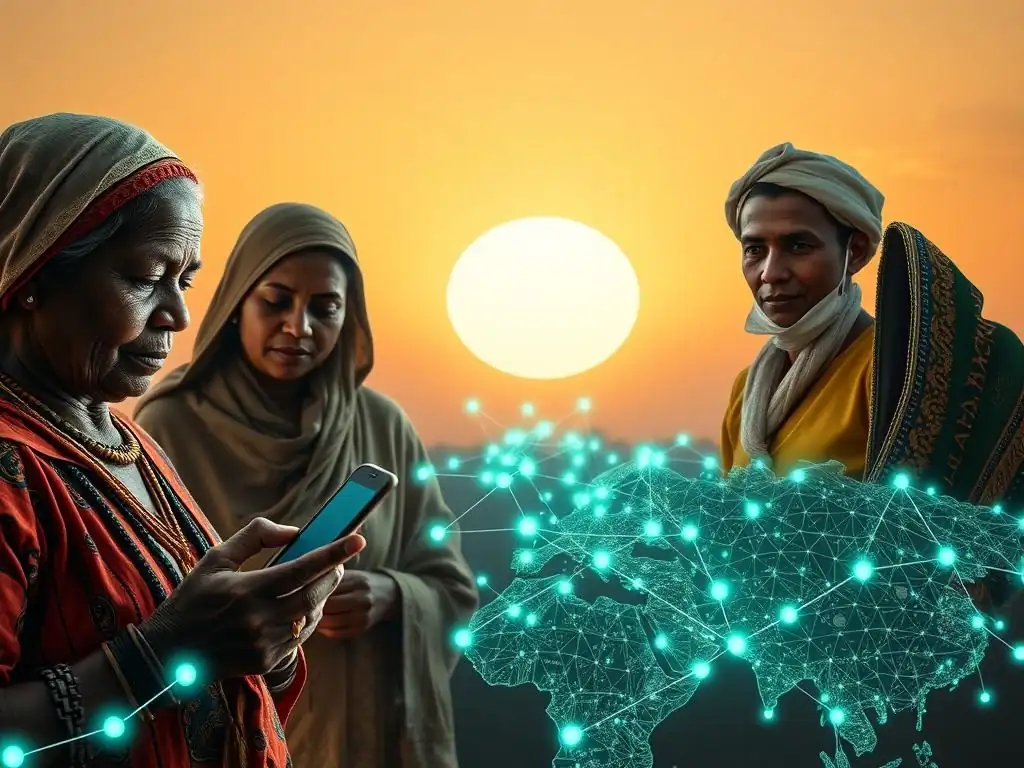
Welcome to Blockchain Trends, your go-to source for understanding the evolving landscape of blockchain technology. Beyond the hype surrounding cryptocurrencies, we delve into the truly transformative potential of this groundbreaking innovation. Are you curious about how this technology can extend opportunity to underserved communities? This article explores blockchain financial inclusion opportunities, revealing how decentralized systems are being leveraged to build a more equitable and accessible financial future. Discover the possibilities and challenges that lie ahead... read on to unlock the potential of blockchain for social good!
Blockchain and the Fight Against Financial Exclusion: A Technology for Social Good?
- Introduction: Unveiling Blockchain's Potential for Financial Inclusion
- Blockchain Financial Inclusion Opportunities: Addressing the Unbanked and Underbanked
- Use Cases: Blockchain Applications Promoting Financial Inclusion
- DeFi (Decentralized Finance) and Financial Inclusion: A New Paradigm
- Overcoming Challenges to Blockchain Adoption for Financial Inclusion
- The Future of Blockchain for Financial Inclusion: Trends and Predictions
- Conclusion: Blockchain as a Force for Positive Change in the Financial Landscape
-
Frequently Asked Questions
- How can blockchain technology contribute to financial inclusion?
- What are some real-world examples of blockchain-based financial inclusion initiatives?
- What are the key challenges hindering the widespread adoption of blockchain for financial inclusion?
- How does Decentralized Finance (DeFi) play a role in expanding financial inclusion through blockchain?
- What regulatory considerations are crucial for fostering blockchain-based financial inclusion opportunities?
- Final Reflection: Empowering Futures with Blockchain
- Unveil Your Power to Drive Financial Inclusion!
Introduction: Unveiling Blockchain's Potential for Financial Inclusion
Understanding Financial Exclusion: A Global Challenge
Financial exclusion is a pervasive global issue affecting billions of people worldwide. It refers to the lack of access to affordable, suitable, and fair financial services, such as bank accounts, credit, insurance, and payment systems. The World Bank estimates that approximately 1.7 billion adults globally remain unbanked, meaning they do not have an account at a financial institution or through a mobile money provider.
This exclusion disproportionately affects vulnerable populations, including women, low-income individuals, rural communities, and small business owners in developing nations. For example, in Sub-Saharan Africa, it's estimated that only 43% of adults have a bank account, highlighting the significant gap in financial access across regions. This lack of access creates significant barriers to economic participation, hindering poverty reduction and sustainable development.
The consequences of financial exclusion are far-reaching and deeply impactful on individuals and communities. Without access to basic financial tools, individuals are often forced to rely on informal and often exploitative financial systems, such as loan sharks and unregulated money lenders. This can lead to cycles of debt and poverty, limiting opportunities for economic advancement and social mobility.
Furthermore, financial exclusion restricts access to essential services like education, healthcare, and housing, as these often require formal financial transactions. For small businesses, lack of access to credit can stifle growth and innovation, hindering job creation and economic development within communities. Addressing financial exclusion is therefore not just a matter of economic justice, but a crucial step towards fostering inclusive and sustainable societies globally.
Blockchain Technology: A Catalyst for Change in Financial Services
Blockchain technology, initially known for powering cryptocurrencies like Bitcoin, presents a compelling and innovative approach to tackle financial exclusion. At its core, blockchain is a decentralized, distributed ledger system that records transactions across multiple computers in a secure and transparent manner. This inherent transparency and security, combined with its potential to reduce intermediaries and transaction costs, makes blockchain a promising catalyst for transforming traditional financial services and expanding financial inclusion opportunities. Unlike traditional centralized systems, blockchain operates on a peer-to-peer network, eliminating the need for central authorities and reducing reliance on legacy infrastructure.
The transformative potential of blockchain lies in its ability to create more accessible, efficient, and affordable financial solutions. For populations excluded from traditional banking systems due to geographical remoteness, lack of documentation, or low income, blockchain-based platforms can offer alternative avenues to access essential financial services. By leveraging mobile technology and internet connectivity, blockchain can bypass the need for physical bank branches and extensive paperwork, significantly lowering barriers to entry.
Furthermore, the inherent transparency and immutability of blockchain transactions can build trust and accountability, particularly in regions where financial institutions have historically been perceived as opaque or unreliable. This combination of features positions blockchain as a powerful tool to democratize finance and extend financial inclusion to underserved populations globally, opening up new avenues for economic empowerment and social progress.
Blockchain Financial Inclusion Opportunities: Addressing the Unbanked and Underbanked
Lowering Barriers to Entry: Blockchain's Impact on Accessibility
Blockchain technology significantly lowers barriers to entry in the financial system, especially for the unbanked and underbanked populations who are often excluded due to stringent requirements and geographical limitations of traditional financial institutions. Traditional banking often necessitates physical presence at a branch, extensive documentation, and minimum balance requirements, all of which pose significant hurdles for marginalized communities.
In contrast, blockchain-based financial services can be accessed via smartphones and internet connections, technologies that are increasingly prevalent even in remote areas. According to GSMA, mobile broadband coverage reached 95% of the world's population by the end of 2022, indicating a vast potential reach for mobile-based blockchain financial solutions.
The permissionless nature of many blockchain networks further enhances accessibility. Unlike traditional systems that require lengthy application processes and credit checks, blockchain platforms can offer services to anyone with an internet connection and a digital identity. This is particularly crucial for individuals who lack formal identification documents, a common barrier to accessing traditional banking in many developing countries.
Moreover, the decentralized nature of blockchain eliminates geographical constraints, allowing individuals in remote or underserved areas to access financial services without needing to travel to urban centers or rely on limited local banking infrastructure. This enhanced accessibility, driven by mobile technology and permissionless systems, unlocks significant financial inclusion opportunities for previously excluded populations, bringing them into the formal financial system and fostering greater economic participation.
Reducing Costs and Improving Efficiency in Financial Transactions
One of the most compelling advantages of blockchain for financial inclusion is its potential to drastically reduce costs and improve the efficiency of financial transactions, making services more affordable and accessible to low-income populations. Traditional financial systems involve multiple intermediaries, each adding fees and processing delays to transactions. For example, international remittances through traditional channels can incur fees as high as 7% of the transaction value, according to the World Bank, significantly eroding the value of money sent home by migrant workers. Blockchain, by disintermediating these processes and enabling peer-to-peer transactions, can substantially lower these costs.
Blockchain-based payment systems can process transactions much faster and at a fraction of the cost compared to traditional banking networks. Cryptocurrencies, for instance, can facilitate near-instantaneous cross-border payments with minimal transaction fees. Furthermore, smart contracts, self-executing contracts coded on the blockchain, can automate complex financial processes, reducing administrative overhead and operational costs for financial service providers.
This efficiency translates directly into lower costs for users, making financial services more affordable and accessible to low-income individuals and small businesses. By streamlining processes and eliminating intermediaries, blockchain empowers financial inclusion opportunities by making financial services economically viable for both providers and users in underserved markets, fostering wider adoption and impact.
Use Cases: Blockchain Applications Promoting Financial Inclusion
Blockchain-Based Microfinance: Empowering Small Businesses
Blockchain technology is revolutionizing microfinance, offering innovative solutions to empower small businesses and entrepreneurs in developing economies who often lack access to traditional lending. Microfinance institutions (MFIs) traditionally face high operational costs associated with reaching remote communities and managing small loans. Blockchain can streamline MFI operations by automating loan disbursement and repayment processes through smart contracts, reducing administrative overhead and improving efficiency. For example, platforms like Celo are exploring blockchain-based microfinance solutions, aiming to provide low-cost and accessible financial services to underserved communities.
Furthermore, blockchain can enhance transparency and trust in microfinance lending. By recording loan agreements and repayment history on an immutable ledger, blockchain creates a transparent and auditable record, reducing the risk of fraud and improving accountability. This increased transparency can also attract more investors to the microfinance sector, as they gain greater visibility into the use of funds and the impact of their investments.
Moreover, blockchain-based digital identity solutions can help MFIs overcome the challenge of verifying the identity and creditworthiness of borrowers who lack formal documentation. By leveraging blockchain for secure and verifiable digital IDs, MFIs can expand their reach to previously unbanked populations, fostering financial inclusion and empowering small businesses to grow and contribute to local economies.
Remittances via Blockchain: Secure and Affordable International Transfers
International remittances, the money migrant workers send back home, are a crucial lifeline for families in developing countries, totaling hundreds of billions of dollars annually. However, traditional remittance channels are often expensive and slow, with high fees charged by intermediaries and lengthy processing times. Blockchain technology offers a compelling alternative, enabling secure, faster, and significantly more affordable international money transfers.
Cryptocurrencies, built on blockchain, can facilitate near-instantaneous cross-border payments with dramatically lower transaction fees compared to traditional remittance services like Western Union or MoneyGram. For instance, studies have shown that using cryptocurrencies for remittances can reduce transaction costs by up to 50-90% in some corridors.
Several blockchain-based remittance platforms are emerging, aiming to disrupt the traditional remittance industry and improve financial inclusion. Companies like BitPesa (now rebranded as AZA Finance) have pioneered the use of blockchain to facilitate cross-border payments in Africa, enabling businesses and individuals to send and receive money more efficiently and affordably.
Stablecoins, cryptocurrencies pegged to fiat currencies, further enhance the stability and usability of blockchain for remittances, mitigating the volatility associated with other cryptocurrencies. By leveraging blockchain, remittance services can become significantly more accessible and affordable, ensuring that more of the money sent by migrant workers reaches their families, boosting household incomes and contributing to economic development in remittance-dependent countries.
Digital Identity Solutions on Blockchain: Enabling Access to Financial Services
Lack of formal identification is a major barrier to accessing financial services for billions of people worldwide, particularly in developing nations where traditional ID systems are often inadequate or inaccessible. Blockchain-based digital identity solutions offer a secure, verifiable, and user-centric approach to address this challenge, enabling individuals to prove their identity and access financial services.
Self-sovereign identity (SSI) solutions built on blockchain empower individuals to control their own digital identities and share only necessary information with service providers, enhancing privacy and security. These digital identities can be stored securely on a blockchain and verified cryptographically, reducing the risk of fraud and identity theft.
Blockchain-based digital identity systems can streamline the Know Your Customer (KYC) and Anti-Money Laundering (AML) processes for financial institutions, reducing compliance costs and making it easier to onboard new customers, particularly those from underserved populations. For example, initiatives like the Sovrin Foundation are developing open-source, decentralized identity networks based on blockchain, aiming to create a global, interoperable, and privacy-preserving digital identity ecosystem.
By providing individuals with secure and verifiable digital identities, blockchain unlocks access to a wide range of financial services, including banking, insurance, and credit, fostering financial inclusion and empowering individuals to participate more fully in the digital economy. This is particularly crucial for marginalized populations who are currently excluded due to the limitations of traditional identity systems.
DeFi (Decentralized Finance) and Financial Inclusion: A New Paradigm

DeFi Lending Platforms: Providing Access to Credit for the Underserved
Decentralized Finance (DeFi) represents a paradigm shift in financial services, offering permissionless and transparent alternatives to traditional financial systems. DeFi lending platforms, built on blockchain, are emerging as powerful tools for financial inclusion, particularly in providing access to credit for the underserved and unbanked. Traditional lending often relies on credit scores and collateral, excluding individuals with limited financial history or assets. DeFi lending platforms, on the other hand, can utilize alternative mechanisms for assessing risk, such as collateralization with cryptocurrency assets or reputation-based systems built on blockchain.
DeFi lending platforms operate on smart contracts, automating loan origination, disbursement, and repayment processes, reducing administrative costs and improving efficiency. These platforms often offer peer-to-peer lending, connecting borrowers and lenders directly without intermediaries, potentially offering more favorable interest rates for both parties. Platforms like Aave and Compound are examples of prominent DeFi lending protocols that are exploring ways to extend credit access to a wider range of users.
While still in its early stages, DeFi lending holds significant promise for democratizing access to credit and empowering financial inclusion by providing alternative lending options for individuals and small businesses excluded from traditional banking systems. This new paradigm can potentially unlock significant economic opportunities for underserved communities.
Stablecoins and Cross-Border Payments: Facilitating Global Financial Access
Stablecoins, cryptocurrencies designed to maintain a stable value pegged to a fiat currency or other stable asset, are playing a crucial role in facilitating global financial access and promoting financial inclusion, particularly for cross-border payments. The volatility of many cryptocurrencies can be a barrier to mainstream adoption, especially for everyday transactions and remittances. Stablecoins mitigate this volatility, offering a more reliable and predictable digital currency for financial activities. By pegging their value to stable assets like the US dollar, stablecoins provide a bridge between the traditional financial system and the cryptocurrency ecosystem.
Stablecoins enable faster, cheaper, and more efficient cross-border payments compared to traditional banking channels. They can be transferred globally almost instantly and with minimal transaction fees, making them ideal for remittances and international trade. Furthermore, stablecoins can provide access to digital dollars or other stable currencies for individuals in countries with volatile local currencies or limited access to foreign exchange.
For example, in regions experiencing hyperinflation or currency devaluation, stablecoins can offer a more stable store of value and a reliable medium of exchange. The increasing adoption of stablecoins is expanding financial access globally, particularly in underserved regions, by providing a stable and efficient means for cross-border transactions and access to stable digital currencies.
Challenges and Opportunities of DeFi for Financial Inclusion
While DeFi offers significant opportunities for financial inclusion, it also presents challenges that need to be addressed to realize its full potential for social good. One key challenge is the complexity and technical nature of DeFi platforms, which can be daunting for users with limited financial literacy or technological expertise. User interfaces need to be simplified and educational resources provided to bridge the knowledge gap and ensure accessibility for a wider audience, especially in developing countries.
Another challenge is the regulatory uncertainty surrounding DeFi, with evolving regulations in different jurisdictions potentially hindering adoption and innovation. Clear and balanced regulatory frameworks are needed to foster responsible innovation and protect users while enabling the growth of DeFi for financial inclusion.
Despite these challenges, the opportunities presented by DeFi for financial inclusion are immense. DeFi's permissionless and transparent nature aligns perfectly with the goals of financial inclusion, offering the potential to create a more equitable and accessible financial system. Ongoing development and innovation within the DeFi space are focused on improving user experience, enhancing security, and addressing regulatory concerns.
As DeFi matures and these challenges are overcome, it has the potential to become a transformative force in expanding financial inclusion globally, empowering individuals and communities previously excluded from the traditional financial system and fostering greater economic opportunity and social progress. This includes exploring solutions for identity verification within DeFi that respect privacy and are accessible to the unbanked.
Overcoming Challenges to Blockchain Adoption for Financial Inclusion
Regulatory Hurdles and Compliance Requirements
The path to widespread blockchain adoption for financial inclusion is not without obstacles, with regulatory hurdles and compliance requirements posing significant challenges. Governments and regulatory bodies worldwide are still grappling with how to regulate blockchain technologies and cryptocurrencies, leading to uncertainty and fragmented regulatory landscapes. Financial institutions and blockchain companies operating in the financial inclusion space must navigate complex and evolving regulations related to KYC, AML, and data privacy, which can be costly and time-consuming, potentially hindering innovation and adoption.
The lack of clear and consistent regulatory frameworks can create barriers for blockchain-based financial inclusion initiatives, particularly in developing countries where regulatory capacity may be limited. Collaboration between regulators, industry stakeholders, and non-governmental organizations is crucial to develop appropriate regulatory frameworks that foster innovation while mitigating risks and protecting consumers.
Regulatory sandboxes and pilot programs can provide a safe space to test and refine blockchain solutions for financial inclusion under regulatory oversight, allowing for evidence-based policymaking and fostering responsible innovation. Addressing these regulatory hurdles through proactive dialogue and collaborative frameworks is essential to unlock the full potential of blockchain for financial inclusion and ensure its sustainable and responsible implementation.
Scalability and Transaction Speed Limitations
Scalability and transaction speed limitations are technical challenges that need to be addressed to ensure blockchain can effectively support large-scale financial inclusion initiatives. Some blockchain networks, particularly older generation blockchains like Bitcoin, have limitations in terms of the number of transactions they can process per second and the speed at which transactions are confirmed. These limitations can lead to network congestion and higher transaction fees, potentially hindering the usability of blockchain for high-volume, low-value transactions common in financial inclusion scenarios, such as micro-payments and remittances.
However, significant advancements are being made in blockchain technology to address scalability and speed limitations. Layer-2 scaling solutions, such as Lightning Network and sidechains, are being developed to offload transactions from the main blockchain, increasing transaction throughput and reducing fees. Newer blockchain platforms, like Solana and Avalanche, are designed with higher scalability and faster transaction speeds from the outset.
Ongoing research and development in blockchain technology are continuously pushing the boundaries of scalability and efficiency, paving the way for blockchain to handle the demands of large-scale financial inclusion applications. As these technical challenges are overcome, blockchain's capacity to serve billions of unbanked and underbanked individuals will significantly increase.
User Education and Awareness: Bridging the Knowledge Gap
A critical challenge for the successful adoption of blockchain for financial inclusion is bridging the knowledge gap and promoting user education and awareness, particularly among underserved populations who may have limited digital literacy and financial understanding. Blockchain technology and cryptocurrencies can be complex and unfamiliar to many, creating a barrier to adoption even when accessible solutions are available. Effective user education programs are essential to build trust, increase understanding, and empower individuals to utilize blockchain-based financial services safely and effectively.
These education initiatives should be tailored to the specific needs and contexts of target communities, utilizing culturally appropriate communication channels and languages. Focus should be placed on explaining the benefits of blockchain for financial inclusion in simple and relatable terms, addressing concerns about security and privacy, and providing hands-on training on how to use blockchain-based platforms and wallets.
Collaboration between blockchain companies, NGOs, community organizations, and governments is crucial to develop and deliver effective user education programs that reach underserved populations and empower them to participate in the digital financial ecosystem. Bridging this knowledge gap is paramount to ensuring that blockchain technology truly serves as a tool for inclusive finance and empowers individuals to take control of their financial lives.
The Future of Blockchain for Financial Inclusion: Trends and Predictions
The future of blockchain for financial inclusion is brimming with emerging technologies and innovations that promise to further enhance its social impact. Advancements in areas like zero-knowledge proofs are enhancing privacy and security on blockchain networks, crucial for building trust and facilitating adoption in sensitive financial applications.
Decentralized identity solutions are becoming more sophisticated, offering users greater control over their personal data and enabling seamless access to financial services across different platforms. Interoperability solutions are also gaining traction, aiming to connect different blockchain networks and facilitate seamless asset transfers and data exchange, creating a more interconnected and efficient financial ecosystem.
Furthermore, the integration of blockchain with other emerging technologies like AI and IoT is opening up new possibilities for financial inclusion. AI can be used to enhance risk assessment and credit scoring in DeFi lending platforms, while IoT devices can provide real-time data for micro-insurance and agricultural finance applications.
These technological advancements, combined with ongoing innovation within the blockchain space, are continuously expanding the potential of blockchain to address financial exclusion and create more inclusive and equitable financial systems globally. The convergence of these technologies will likely lead to even more impactful and user-friendly blockchain solutions for social good in the years to come.
Collaboration Between NGOs, Governments, and Blockchain Companies
Realizing the full potential of blockchain for financial inclusion requires strong collaboration between NGOs, governments, and blockchain companies. NGOs bring valuable on-the-ground experience and understanding of the needs of underserved communities, ensuring that blockchain solutions are designed and implemented in a user-centric and culturally sensitive manner. Governments play a crucial role in creating enabling regulatory environments, providing policy support, and fostering public-private partnerships to drive blockchain adoption for social impact. Blockchain companies bring technological expertise and innovation, developing and deploying blockchain-based solutions tailored to address specific financial inclusion challenges.
Effective collaboration between these stakeholders is essential to scale up successful pilot projects, overcome regulatory hurdles, and ensure the sustainable and responsible implementation of blockchain for financial inclusion. Joint initiatives can leverage the strengths of each sector, combining technological innovation with social impact expertise and policy support to create truly transformative solutions.
For example, partnerships between NGOs and blockchain companies can deliver user education programs and provide on-the-ground support for blockchain adoption in underserved communities, while government support can help create a conducive regulatory environment and facilitate wider adoption. This collaborative approach is key to maximizing the positive impact of blockchain on financial inclusion and achieving meaningful progress towards a more equitable financial landscape.
The Evolution of Regulatory Frameworks for Blockchain-Based Financial Services
The evolution of regulatory frameworks for blockchain-based financial services will be a critical factor shaping the future of blockchain for financial inclusion. As blockchain technology matures and its applications in finance expand, regulators worldwide are increasingly focused on developing appropriate frameworks to govern this emerging space. The challenge lies in creating regulations that foster innovation and protect consumers without stifling the potential of blockchain to promote financial inclusion and economic development. A balanced approach is needed, one that encourages responsible innovation while mitigating risks related to money laundering, illicit finance, and consumer protection.
We can expect to see more tailored and sector-specific regulations emerge, recognizing the unique characteristics of blockchain technology and its diverse applications in finance. Regulatory sandboxes and innovation hubs are likely to become more prevalent, providing a controlled environment for testing and refining blockchain solutions under regulatory oversight.
International cooperation and harmonization of regulatory standards will also be crucial to facilitate cross-border blockchain-based financial services and prevent regulatory arbitrage. The evolution of these regulatory frameworks will significantly influence the pace and direction of blockchain adoption for financial inclusion, shaping its long-term impact on the global financial landscape and its ability to democratize finance for all.
Conclusion: Blockchain as a Force for Positive Change in the Financial Landscape
Blockchain's Role in Achieving Financial Equality
Blockchain technology is emerging as a powerful force for positive change in the financial landscape, with the potential to play a significant role in achieving greater financial equality globally. By lowering barriers to entry, reducing costs, and improving efficiency, blockchain is democratizing access to financial services for billions of unbanked and underbanked individuals and small businesses. From microfinance and remittances to digital identity and DeFi, blockchain is providing innovative solutions to address the root causes of financial exclusion and empower marginalized communities to participate more fully in the global economy.
While challenges remain in terms of regulation, scalability, and user education, the ongoing advancements in blockchain technology and the growing collaboration between stakeholders are paving the way for wider adoption and greater impact. As blockchain matures and these challenges are overcome, its role in fostering financial equality is expected to become even more pronounced, contributing to a more inclusive and equitable financial system that benefits all members of society, regardless of their background or location. Blockchain's inherent transparency and decentralization can build a more trustworthy and accountable financial system, especially crucial for those historically underserved by traditional institutions.
The Potential for Blockchain to Democratize Finance
Ultimately, blockchain technology holds the transformative potential to democratize finance, shifting power away from centralized institutions and placing it more directly in the hands of individuals and communities. By enabling peer-to-peer transactions, disintermediating traditional financial actors, and creating permissionless and transparent systems, blockchain is challenging the established financial order and opening up new possibilities for financial empowerment and self-determination. This democratization of finance extends beyond just access to basic services; it encompasses greater control over personal finances, increased transparency in financial systems, and the ability to participate in new forms of economic activity and value creation.
The journey towards a truly democratized financial system powered by blockchain is still in its early stages, but the potential is undeniable. As blockchain technology continues to evolve and mature, and as adoption expands across various sectors and geographies, its impact on democratizing finance will likely become increasingly profound.
This transformation has the potential to reshape the global financial landscape, creating a more inclusive, equitable, and resilient system that serves the needs of all, fostering greater economic opportunity and social progress worldwide. Blockchain's promise is not just about technological innovation, but about creating a fairer and more just financial future for everyone.
Frequently Asked Questions
How can blockchain technology contribute to financial inclusion?
Blockchain can lower the barriers to entry for financial services by reducing transaction costs and enabling access to digital identities for the unbanked, offering alternative credit scoring mechanisms.
What are some real-world examples of blockchain-based financial inclusion initiatives?
Several projects leverage blockchain for cross-border remittances, microfinance platforms, and supply chain finance to provide transparent and efficient financial services to underserved populations.
What are the key challenges hindering the widespread adoption of blockchain for financial inclusion?
Challenges include scalability issues, regulatory uncertainty, and the digital literacy gap among potential users, requiring targeted education and infrastructure development.
How does Decentralized Finance (DeFi) play a role in expanding financial inclusion through blockchain?
DeFi platforms offer permissionless access to lending, borrowing, and investment opportunities, potentially bypassing traditional financial intermediaries and creating more inclusive financial systems.
What regulatory considerations are crucial for fostering blockchain-based financial inclusion opportunities?
Balanced regulations that promote innovation while protecting consumers and preventing illicit activities are essential for the sustainable growth of blockchain-driven financial inclusion initiatives.
Final Reflection: Empowering Futures with Blockchain
The exploration of blockchain's potential to combat financial exclusion reveals a powerful truth: technology, when ethically applied, can be a potent force for social good. The opportunities presented by blockchain financial inclusion are not merely theoretical; they represent tangible pathways towards a more equitable and just world, where access to financial services is no longer a privilege but a fundamental right.
The journey towards realizing this vision is ongoing, and its impact is already rippling through communities previously marginalized by traditional financial systems. Witnessing the empowerment of individuals through decentralized finance and secure digital identities underscores the profound significance of this technological revolution. Financial inclusion is not just about access to financial services; it's about empowering people to participate fully in the economy and improve their lives.
This quote encapsulates the core principle driving the blockchain financial inclusion movement, a principle that resonates deeply with the human desire for opportunity and self-determination.
As we stand at the cusp of this transformative era, let us each consider our role in shaping its trajectory. What steps can we take, individually and collectively, to ensure that blockchain technology is harnessed for the benefit of all, especially those who have been historically excluded? Let us embrace the challenge of building a future where financial inclusion is not just a buzzword, but a lived reality for every individual, regardless of their background or location.
Unveil Your Power to Drive Financial Inclusion!
Thanks for diving into the world of blockchain and its potential to combat financial exclusion. We hope you found valuable insights into how this technology can be a force for social good. Now, let's translate that knowledge into action!
Here's how you can contribute to a more inclusive financial future:
- Become a blockchain advocate: Start by researching local initiatives that leverage blockchain to serve underserved communities. Share your findings with your network on social media to raise awareness.
- Explore microfinance platforms: Investigate blockchain-based microfinance platforms that provide loans and financial services to individuals and small businesses in developing countries. Even a small investment can make a big difference.
- Support blockchain education: Volunteer your skills to teach blockchain basics to individuals in underserved communities. Empowering them with this knowledge can unlock new opportunities.
What small step will you take today to help blockchain bridge the financial divide?
Leave a Reply