
Advanced Cryptographic Techniques for DeFi Yield Farming and Staking


Welcome to Blockchain Trends, your go-to source for understanding the revolutionary impact of blockchain technology.
Ever wondered how advanced cryptography unlocks incredible opportunities in Decentralized Finance (DeFi)? Dive into this month's deep dive on Blockchain DeFi yield farming to uncover the complex algorithms and innovative strategies shaping the future of finance. Discover how these techniques are not just generating returns, but also redefining trust and security in the digital age. Are you ready to explore the intricacies of securing your assets and maximizing your profits in the world of DeFi?
Advanced Cryptographic Techniques for DeFi Yield Farming and Staking
- Introduction to Cryptography in DeFi Yield Farming and Staking
- Traditional Cryptographic Methods in Blockchain DeFi Yield Farming
- Advanced Cryptographic Techniques for Enhanced DeFi Security
- Implementing Secure DeFi Yield Farming Strategies with Cryptography
- Case Studies: Implementation of Advanced Cryptography in DeFi
- Future Trends in Cryptographic Solutions for Blockchain DeFi
- Conclusion: The Future of Secure DeFi with Advanced Cryptography
- Frequently Asked Questions
- Final Reflection: Securing the Future of Blockchain DeFi Yield Farming
- Unlock Your DeFi Potential Now!
Introduction to Cryptography in DeFi Yield Farming and Staking
The Role of Cryptography in Securing Decentralized Finance (DeFi)
Cryptography is the bedrock of blockchain technology, providing the fundamental security and trust mechanisms that underpin decentralized systems. In the realm of Decentralized Finance (DeFi), where billions of dollars are locked in smart contracts, cryptographic techniques are not merely an additive layer but an essential prerequisite for operation. They ensure data integrity, transaction authenticity, user privacy, and the overall security of funds and protocols. Without robust cryptography, the promises of decentralization – transparency, censorship resistance, and immutability – would be impossible to fulfill, leaving users vulnerable to fraud, theft, and manipulation.
The rapid growth of the Blockchain DeFi yield farming sector, with Total Value Locked (TVL) often fluctuating between $50 billion and $100+ billion across various protocols, highlights the critical need for advanced security measures. As DeFi applications become more complex, incorporating intricate financial instruments and interactions, the cryptographic requirements also escalate. Basic hashing and digital signatures, while foundational, are often insufficient to address sophisticated threats like front-running, flash loan attacks, and privacy concerns inherent in a fully transparent ledger. Therefore, exploring and implementing more advanced cryptographic methods is paramount to building a secure and sustainable DeFi ecosystem.
Understanding Yield Farming and Staking Mechanisms
Yield farming, often referred to as liquidity mining, is a process in DeFi where users earn rewards by providing liquidity to decentralized protocols. This typically involves depositing crypto assets into liquidity pools or lending platforms. In return for providing this liquidity, users earn fees generated by the protocol or governance tokens, effectively 'farming' yield from their holdings. Staking, while often conflated with yield farming, typically involves locking up assets to support the operations of a proof-of-stake (PoS) blockchain network. Stakers validate transactions and secure the network, earning rewards (often in the network's native token) for their participation.
Both yield farming and staking mechanisms heavily rely on smart contracts executed on blockchain networks. These contracts manage deposited funds, calculate rewards, and facilitate withdrawals. The security of these smart contracts is directly tied to the underlying cryptographic primitives used by the blockchain and the specific implementation details within the contract code. Risks such as impermanent loss in liquidity pools, smart contract vulnerabilities, and the need for secure key management for accessing deposited funds make the cryptographic underpinnings of Blockchain DeFi yield farming and staking a critical area of focus.
The Importance of Advanced Cryptographic Solutions for DeFi Security
While traditional cryptographic methods like hashing and digital signatures provide foundational security layers for blockchains, the unique challenges of DeFi, particularly in yield farming and staking, necessitate more sophisticated techniques. The inherent transparency of public blockchains, for instance, can expose sensitive trading strategies or user financial positions, creating opportunities for malicious actors to exploit this information. Furthermore, the reliance on smart contracts requires mechanisms to ensure their integrity and secure execution, even when dealing with private or complex data.
Advanced cryptographic solutions, such as Zero-Knowledge Proofs (ZKPs), Multi-Party Computation (MPC), and Homomorphic Encryption (HE), offer capabilities that go beyond basic transaction verification. They can enable privacy-preserving transactions, secure key management across multiple parties, and even allow computations on encrypted data. Implementing these techniques in Blockchain DeFi yield farming and staking protocols can significantly enhance user privacy, reduce the attack surface on smart contracts, and facilitate more complex and secure financial operations, ultimately contributing to a more robust and trustworthy decentralized financial system.
Traditional Cryptographic Methods in Blockchain DeFi Yield Farming
Hashing Algorithms and Their Application in DeFi
Hashing algorithms, such as SHA-256 used in Bitcoin or Keccak-256 used in Ethereum, are fundamental to blockchain technology and play a crucial role in securing DeFi transactions. A hash function takes input data of any size and produces a fixed-size string of bytes, known as a hash digest.
Key properties include determinism (the same input always produces the same output), computational efficiency, and collision resistance (it's computationally infeasible to find two different inputs that produce the same hash output). In the context of Blockchain DeFi yield farming, hashing is used extensively to create block headers, verify transaction integrity, and build the Merkel tree structure that efficiently summarizes all transactions within a block.
Every transaction in a DeFi protocol, whether it's depositing funds into a yield farm, claiming rewards, or withdrawing assets, is hashed. This hash is then included in a block, and the block's hash is linked to the previous block's hash, forming the immutable chain. This ensures that even a tiny alteration to a transaction or block data would result in a completely different hash, immediately signaling tampering.
For example, if a user's deposit amount in a yield farming contract transaction were altered, the transaction hash would change, invalidating the block it's contained in and making the manipulation detectable by the network participants. Hashing provides the data integrity layer essential for the transparency and auditability of DeFi activities.
Digital Signatures and Authentication in DeFi Platforms
Digital signatures are another cornerstone of blockchain security, providing authentication and non-repudiation for transactions within DeFi. Using public-key cryptography, a user generates a pair of keys: a private key (kept secret) and a public key (shared openly). When a user initiates a transaction in a DeFi yield farming protocol, they use their private key to create a digital signature for that transaction. This signature is mathematically linked to both the transaction data and the user's public key.
Anyone on the network can use the user's public key to verify that the signature is valid and that the transaction data has not been altered since it was signed. This proves that the transaction originated from the holder of the private key (authentication) and prevents the user from later denying that they initiated the transaction (non-repudiation).
For instance, when a user approves a DeFi protocol's smart contract to spend a certain amount of their tokens for yield farming, their digital signature confirms their explicit consent, ensuring that only the legitimate owner can authorize such operations. Elliptic Curve Digital Signature Algorithm (ECDSA) is a widely used standard for digital signatures in blockchain networks like Bitcoin and Ethereum.
Limitations of Traditional Cryptography in Advanced DeFi Strategies
While hashing and digital signatures are indispensable for the basic functioning and security of blockchain transactions, they present significant limitations when it comes to the specific challenges and advanced strategies found in modern Blockchain DeFi yield farming. The primary limitation is the inherent transparency of most public blockchains. While transaction integrity and authenticity are verified, the data itself (sender, receiver, amount, contract interaction) is often fully visible to anyone.
This transparency can lead to issues like front-running, where malicious actors observe pending transactions (e.g., a large swap in a liquidity pool) and execute their own transactions with higher gas fees to get them processed first, profiting from the price movement caused by the original transaction. Furthermore, while digital signatures authenticate who initiated a transaction, they don't provide privacy regarding what the transaction entails or the parties involved beyond their public addresses.
For complex DeFi strategies involving multiple steps, sensitive investment amounts, or identity verification for regulatory compliance (like KYC/AML) without revealing personal data, traditional cryptography falls short, necessitating the exploration of more advanced techniques.
Advanced Cryptographic Techniques for Enhanced DeFi Security
Zero-Knowledge Proofs (ZKPs) for Privacy in Yield Farming
Zero-Knowledge Proofs (ZKPs) are a powerful cryptographic tool that allows one party (the prover) to prove to another party (the verifier) that a statement is true, without revealing any information beyond the validity of the statement itself. In the context of Blockchain DeFi yield farming, ZKPs can dramatically enhance privacy by enabling users to prove they meet certain criteria (e.g., holding a minimum amount of a specific token, being a verified individual) without revealing the sensitive details of their holdings or identity. This is particularly relevant on public blockchains where all transaction data is typically exposed.
ZKPs can be used to create privacy-preserving transactions within DeFi protocols. For example, a user could prove they are depositing a certain amount of tokens into a yield farm without revealing the exact amount or their address to the public ledger, only to the necessary verifying parties or smart contract logic. This ability to decouple verification from data disclosure is revolutionary for DeFi, offering a path towards compliant yet private financial interactions. Protocols exploring ZKP integration aim to offer the transparency benefits of a public ledger for auditing purposes while protecting individual user data privacy.
How ZK-SNARKs and ZK-STARKs Enhance Privacy
Two prominent types of Zero-Knowledge Proofs are ZK-SNARKs (Zero-Knowledge Succinct Non-Interactive Argument of Knowledge) and ZK-STARKs (Zero-Knowledge Scalable Transparent ARgument of Knowledge). ZK-SNARKs are 'succinct' (proofs are small and quick to verify) and 'non-interactive' (prover and verifier don't need back-and-forth communication after an initial setup phase). They are widely used in privacy-focused cryptocurrencies and are being explored for scaling solutions (ZK-rollups) which have implications for reducing transaction costs in DeFi. However, SNARKs require a 'trusted setup' phase, which can be a point of concern.
ZK-STARKs, on the other hand, are 'scalable' (verification time grows logarithmically with computation size) and 'transparent' (they do not require a trusted setup). This transparency makes them potentially more trustless than SNARKs. While typically producing larger proofs than SNARKs, STARKs are resistant to quantum computing threats.
Both SNARKs and STARKs allow complex computations (like verifying compliance with yield farming rules or eligibility criteria) to be performed off-chain, generating a small proof that can be verified on-chain. This significantly reduces the amount of data stored on the blockchain and the associated gas costs, while simultaneously preserving privacy. For instance, a ZK-rollup processing thousands of DeFi swaps or yield farm deposits off-chain can represent them with a single, verifiable ZK-SNARK or ZK-STARK proof posted on-chain, reducing gas costs by upwards of 90% compared to executing each transaction individually.
Use Cases: Private Transactions and Identity Verification in DeFi
A primary use case for ZKPs in Blockchain DeFi yield farming is enabling private transactions. Users could deposit, withdraw, or claim rewards from yield farms without publicly broadcasting the specific amounts or addresses involved. This protects users from revealing their financial activities to competitors or potential attackers. For example, a large investor participating in a yield farm might prefer their position size and entry/exit points remain confidential to avoid market manipulation or targeted exploits. ZKPs can facilitate this by allowing the protocol to verify the transaction's validity (e.g., sufficient funds, correct contract interaction) without revealing the sensitive details.
Another crucial application is privacy-preserving identity verification (often referred to as Verifiable Credentials or Decentralized Identity). For DeFi protocols that need to comply with regulatory requirements or offer services based on user eligibility (e.g., accredited investor status for certain yield farms), ZKPs allow users to prove aspects of their identity or status without disclosing the underlying documents or personal information.
A user could prove they are over 18, live in a permitted jurisdiction, or are an accredited investor by presenting a ZKP generated from their verified credentials, without revealing their date of birth, address, or detailed financial statements on-chain or to the protocol operator.
Multi-Party Computation (MPC) for Secure Key Management
Multi-Party Computation (MPC) is a cryptographic technique that allows multiple parties to jointly compute a function over their inputs while keeping those inputs private. A key application of MPC in DeFi is secure key management.
Instead of a single private key controlling access to funds or smart contracts, MPC can distribute the key share among several independent parties. To perform an action, such as signing a transaction to deposit into a yield farm or transfer assets, a threshold number of these parties must participate in a computation to generate a valid signature, without any single party ever possessing the full private key.
This distributed approach significantly enhances security by eliminating the single point of failure associated with a single private key. If one party's share is compromised, the attacker cannot gain control of the assets unless they compromise enough other shares to meet the required threshold. This is particularly valuable for institutions, decentralized autonomous organizations (DAOs), or even sophisticated individual users managing significant assets in Blockchain DeFi yield farming and staking protocols.
Threshold Signatures and Distributed Key Generation
Threshold signature schemes are a practical implementation of MPC for digital signatures. In an (n, m) threshold scheme, 'n' is the total number of participants, and 'm' is the minimum number required to cooperate to produce a valid signature (where m ≤ n). Key generation is performed in a distributed manner, where each participant generates a share of the private key, and the corresponding public key is derived from all shares. No single participant ever sees or holds the complete private key.
When a signature is needed for a DeFi transaction, 'm' participants contribute their key shares to a joint computation. The output is a single, standard digital signature that is verifiable using the public key.
For example, a DAO managing a treasury of assets in various yield farming strategies might use a (5, 3) threshold signature scheme, requiring any 3 out of 5 appointed signers to approve a transaction. This prevents any single signer from unilaterally moving funds and requires collusion among a significant portion of the signers to compromise the system, offering a higher level of security and governance control.
Applications: Secure Wallet Management and Joint Custody in DeFi
MPC finds significant application in secure wallet management and joint custody solutions tailored for DeFi. Institutions, asset managers, and even groups of users pooling funds for yield farming can use MPC wallets to manage their digital assets securely. Unlike traditional multi-signature wallets, which require multiple on-chain transactions and can be complex and costly to deploy and manage for large numbers of signers, MPC typically requires only a single on-chain transaction for execution after the off-chain signing computation.
MPC enables the creation of sophisticated custody solutions where risk is distributed across multiple independent entities or hardware modules. This is crucial for enterprises and financial institutions looking to participate in Blockchain DeFi yield farming while meeting stringent internal security and compliance requirements. For instance, a crypto fund might use an MPC setup requiring key shares held by the fund manager, a compliance officer, and a third-party custodian to jointly authorize any movement of pooled assets into or out of a yield farming strategy, adding layers of control and security against internal or external threats.
Homomorphic Encryption (HE) for Computations on Encrypted Data
Homomorphic Encryption (HE) is a form of encryption that allows computations to be performed directly on encrypted data without decrypting it first. The result of the computation, when decrypted, is the same as the result of performing the computation on the original, unencrypted data. This is a highly advanced technique with the potential to revolutionize privacy in sensitive DeFi operations. While computationally intensive and currently less practical for widespread use compared to ZKPs or MPC, ongoing research is making HE more efficient.
In the context of Blockchain DeFi yield farming, HE could enable smart contracts to perform calculations on encrypted user data. For example, calculating the total yield earned by a user based on their deposit amount and time staked, without revealing the specific deposit amount or the calculated yield to the public ledger or even the smart contract itself in an unencrypted form. This capability opens up possibilities for entirely new types of privacy-preserving DeFi applications.
Enabling Secure Data Analysis and Auditing in DeFi
Homomorphic Encryption could enable secure data analysis and auditing within DeFi without compromising user privacy. Imagine a scenario where a regulatory body or an auditor needs to verify the total value locked in a yield farm or check for compliance with certain rules (e.g., ensuring no single entity controls more than a certain percentage of staked assets) but cannot access individual user data due to privacy regulations. With HE, the protocol could potentially perform these aggregate calculations on encrypted user balances, providing verifiable results without decrypting the sensitive individual data.
This could bridge the gap between the transparency required for auditing and compliance and the privacy desired by users. For example, a smart contract could use HE to calculate weighted average yields across a pool based on encrypted deposit sizes, allowing for transparent reporting of pool performance without exposing individual participant data. While still largely theoretical in practical DeFi deployments due to computational overhead, the potential for HE to enable verifiable, privacy-preserving computations on sensitive financial data is immense.
Potential for Private Smart Contract Execution
Perhaps the most transformative potential of Homomorphic Encryption in DeFi is the possibility of private smart contract execution. Currently, smart contracts on public blockchains operate on public data, and their execution steps are visible to everyone. With HE, it might be possible to encrypt the inputs to a smart contract, perform the necessary calculations (e.g., calculating interest, determining reward distribution based on complex criteria), and produce an encrypted output, all without ever exposing the sensitive data or the intermediate computation steps on the public ledger.
This could allow for highly confidential DeFi operations, such as private lending pools where loan terms and borrower identities are kept secret, or complex derivatives contracts where the underlying parameters and calculations remain confidential among participants. While fully homomorphic encryption (allowing arbitrary computations) remains very computationally expensive, partially or somewhat homomorphic encryption (allowing specific types of computations) is more feasible and could find niche applications in Blockchain DeFi yield farming where specific sensitive calculations are required.
Implementing Secure DeFi Yield Farming Strategies with Cryptography
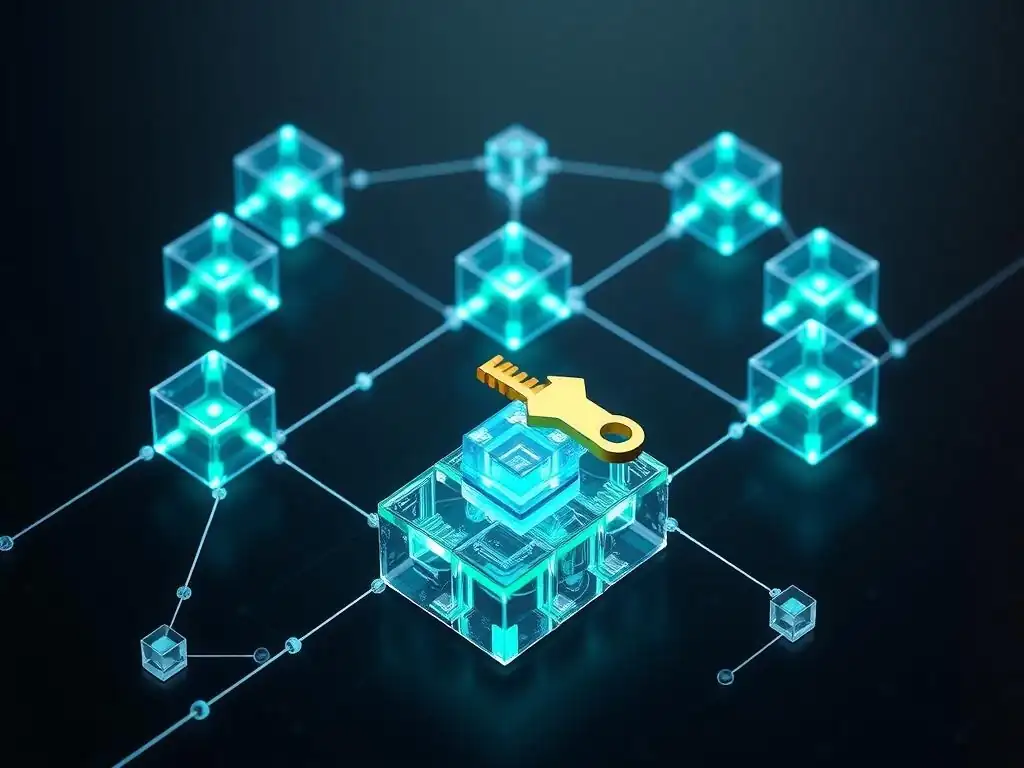
Best Practices for Key Management in DeFi
Secure key management is paramount for anyone interacting with Blockchain DeFi yield farming and staking protocols. Loss of a private key means permanent loss of access to funds, and compromise of a key means immediate theft. Implementing robust key management practices is not just a technical detail but a critical security measure.
- [ ] Use hardware wallets (e.g., Ledger, Trezor) for storing private keys. These devices keep the private key isolated from internet-connected devices, significantly reducing the risk of software-based theft.
- [ ] Never share your private key or seed phrase with anyone. Be wary of phishing attempts and fake websites.
- [ ] Use a dedicated, clean device for signing high-value transactions or interacting with new protocols.
- [ ] Consider using multi-signature wallets or MPC solutions for managing significant amounts of assets, especially for pooled funds or institutional participation in Blockchain DeFi yield farming.
- [ ] Regularly review and revoke token allowances granted to smart contracts, particularly after using new or experimental DeFi protocols.
- [ ] Store backup seed phrases offline in multiple secure locations.
Securing Smart Contracts with Cryptographic Audits
The security of DeFi yield farming and staking protocols hinges on the security of their underlying smart contracts. Cryptographic audits are a crucial step in identifying and mitigating vulnerabilities in these contracts. While not solely focused on cryptography, these audits examine how the contract uses and interacts with cryptographic primitives, how it handles sensitive data, and whether it's susceptible to attacks that exploit cryptographic weaknesses or implementation errors.
A thorough audit involves static analysis of the code, manual code review by security experts, and extensive testing (including fuzz testing and formal verification where possible). Auditors look for common vulnerabilities like reentrancy attacks, integer overflows/underflows, unhandled exceptions, and incorrect access control, all of which can be related to how the contract handles user funds and permissions, often secured by cryptographic means like digital signatures or hash checks. Protocols seeking to attract users for Blockchain DeFi yield farming should invest heavily in multiple independent security audits and make the results public to build trust.
Mitigating Risks Associated with Impermanent Loss and Flash Loan Attacks using Advanced Cryptography
While impermanent loss is an economic risk in liquidity provision (not directly solvable by cryptography), advanced cryptographic techniques can indirectly help mitigate related risks or enable new strategies. For example, ZKPs could potentially allow for more sophisticated, privacy-preserving hedging strategies within DeFi that are less susceptible to front-running.
Flash loan attacks, however, are a direct security risk that advanced cryptography might help address in certain contexts. Flash loans allow users to borrow vast amounts of assets without collateral, provided the liquidity is returned within the same transaction block.
Attackers use flash loans to manipulate prices across decentralized exchanges or exploit logic errors in DeFi protocols within this single transaction, often targeting yield farming or lending protocols. While not a silver bullet, techniques like MPC could potentially be used in oracle designs to secure price feeds against manipulation (as oracle manipulation is often part of a flash loan attack).
Furthermore, future applications of HE might enable more complex, integrity-protected state checks within smart contracts that are harder to bypass with rapid, manipulative transactions, though this remains highly theoretical. The primary defense against flash loans remains robust smart contract design and rigorous testing, but advanced cryptography offers potential future avenues for enhancing resilience.
Case Studies: Implementation of Advanced Cryptography in DeFi
Automated Market Maker (AMM) Privacy Enhancement with ZKPs
While not yet widely implemented for core trading privacy in major AMMs like Uniswap or Curve due to performance considerations, research and development are active in applying ZKPs to enhance privacy in decentralized exchanges and liquidity pools used for Blockchain DeFi yield farming. A conceptual case study involves using ZKPs to allow liquidity providers (LPs) to add or remove liquidity from a pool without publicly revealing the exact amount of assets they are contributing or withdrawing.
In this scenario, an LP could generate a ZKP proving they possess the required tokens and are interacting with the correct pool contract, without broadcasting the specific token amounts or their address. The smart contract verifies the ZKP on-chain, confirming the validity of the action and updating the pool state, while the sensitive details remain hidden.
This prevents competitors from tracking large LP movements and potentially front-running or exploiting this information. While current implementations are limited, projects are exploring ZK-rollup architectures for DEXs that bundle transactions and verify them with ZKPs, inherently offering some level of privacy by obfuscating individual transactions within the batched proof, alongside significant gas savings (potentially reducing costs per swap by 99% compared to L1).
MPC-Based Institutional Custody Solutions for DeFi Assets
Several companies specialize in providing institutional-grade custody solutions for digital assets, leveraging Multi-Party Computation (MPC). These solutions are directly applicable to institutions and large investors participating in Blockchain DeFi yield farming. Unlike traditional cold storage or multi-signature wallets, MPC allows for flexible signing policies and enhanced security without the complexities of managing multiple on-chain signatures for every transaction.
For example, a company like Fireblocks or Coinbase Prime offers MPC-based wallets where the private key shares are distributed across secure hardware modules and potentially different physical locations or organizational departments. A large hedge fund using such a service to allocate capital into various DeFi yield farming strategies could configure policies requiring, say, 3 out of 4 key shares (held by trading desk, operations, compliance, and a hardware security module) to authorize a deposit into or withdrawal from a yield farm.
This distributed control mechanism provides a high level of security against internal threats, external hacks targeting a single point of failure, and operational errors, making participation in Blockchain DeFi yield farming more palatable for regulated entities.
Homomorphic Encryption for Confidential Loan Origination in DeFi
While still largely experimental and computationally expensive, the potential for Homomorphic Encryption (HE) in DeFi lending protocols (which are often intertwined with yield farming) presents an interesting case study. Consider a decentralized lending platform where borrowers need to provide sensitive financial information (like credit scores or income verification) to qualify for a loan or better terms, but are reluctant to expose this data on a public blockchain.
Using HE, a borrower could encrypt their sensitive financial data off-chain. They then send this encrypted data to the smart contract or a network of nodes running the HE computation. The contract/nodes could perform calculations on the encrypted data (e.g., calculating a creditworthiness score based on encrypted inputs) without ever decrypting it.
The result of this computation, also encrypted, could then be used by the smart contract to determine loan eligibility or interest rates. Only the borrower (or authorized parties) would be able to decrypt the final result or the underlying data. This could enable confidential loan origination processes within DeFi, potentially unlocking new markets that require privacy for sensitive financial assessments, even if the computational overhead currently limits widespread adoption in high-frequency Blockchain DeFi yield farming activities.
Future Trends in Cryptographic Solutions for Blockchain DeFi
Post-Quantum Cryptography and Its Relevance to DeFi
The advent of quantum computing poses a potential long-term threat to current public-key cryptography, including the digital signature algorithms (like ECDSA) used in most blockchains and DeFi protocols. While large-scale, fault-tolerant quantum computers capable of breaking current encryption are likely years away, the development of quantum-resistant or post-quantum cryptography (PQC) is an active area of research. PQC algorithms are designed to be secure against attacks by both classical and quantum computers.
For Blockchain DeFi yield farming, the migration to post-quantum cryptography is a critical future consideration. If current signature schemes were broken by a quantum computer, an attacker could potentially compute a user's private key from their public key (derived from past transactions) and steal their funds. While the immediate threat is low, integrating PQC into blockchain protocols and subsequently into DeFi applications will be essential to ensure the long-term security and viability of the ecosystem against this emerging threat. Research into quantum-resistant digital signatures and key exchange mechanisms is ongoing, with standards being developed by bodies like NIST.
Exploring New Cryptographic Primitives for Enhanced Security and Scalability
Beyond existing advanced techniques like ZKPs, MPC, and HE, the field of cryptography is constantly evolving, with researchers exploring entirely new cryptographic primitives that could further enhance the security, privacy, and scalability of Blockchain DeFi yield farming. This includes areas like functional encryption, attribute-based encryption, and verifiable delay functions (VDFs).
Functional encryption, for instance, could allow a party to learn only a specific function of the encrypted data, without learning anything else about the data itself. Attribute-based encryption could allow access control based on user attributes (e.g., only users with a certain staking amount can decrypt a message).
VDFs could be used in consensus mechanisms or random number generation for DeFi lotteries or distribution mechanisms, ensuring fairness and unpredictability. As these primitives mature and become more computationally efficient, they could be integrated into future generations of DeFi protocols, offering novel ways to solve current challenges related to privacy, compliance, and efficiency in areas like Blockchain DeFi yield farming.
The Evolution of Cryptography in Addressing Emerging Threats in the DeFi Landscape
The DeFi landscape is dynamic, with new protocols, financial instruments, and attack vectors constantly emerging. Cryptography must evolve in tandem to address these new threats effectively. As DeFi protocols become more interconnected (e.g., complex yield farming strategies involving multiple protocols), the attack surface increases, and the need for robust security layers becomes even more critical.
Future cryptographic solutions will likely focus on providing granular control over data visibility, enabling secure computation in increasingly complex scenarios, and building resilience against novel forms of attack that exploit the unique characteristics of decentralized systems. This includes developing cryptographic techniques specifically tailored to smart contract security, cross-chain interactions (which introduce new cryptographic challenges), and decentralized identity management needed for compliant DeFi participation. The continuous research and application of cutting-edge cryptography are fundamental to building a secure, scalable, and widely adopted future for Blockchain DeFi yield farming and the broader decentralized economy.
Conclusion: The Future of Secure DeFi with Advanced Cryptography
Recap of Key Cryptographic Techniques for DeFi Yield Farming and Staking
This article has explored the foundational role of cryptography in securing Decentralized Finance, particularly within the context of Blockchain DeFi yield farming and staking. We've seen how traditional methods like hashing and digital signatures provide the essential integrity and authentication layers for blockchain transactions. However, the unique challenges of DeFi, such as transparency-related risks and complex interactions, highlight the limitations of these basic techniques.
We then delved into advanced cryptographic solutions offering enhanced capabilities: Zero-Knowledge Proofs (ZKPs) for privacy preservation in transactions and identity verification; Multi-Party Computation (MPC) for robust, distributed key management and secure custody; and Homomorphic Encryption (HE) for enabling computations on encrypted data, opening possibilities for private smart contract execution and data analysis. These techniques represent significant advancements in addressing the security, privacy, and compliance needs of sophisticated DeFi applications.
The Ongoing Importance of Innovation in Cryptography for a Robust DeFi Ecosystem
The security and future potential of the Blockchain DeFi yield farming ecosystem are inextricably linked to the ongoing innovation in cryptography. As DeFi protocols become more complex, handle larger volumes of assets, and attract wider participation (including institutions), the demands placed on the underlying security infrastructure increase exponentially. Advanced cryptographic techniques are not static tools but a constantly evolving field.
Continued research and development are crucial to making techniques like HE more practical, improving the efficiency and scalability of ZKPs, developing robust MPC protocols for diverse use cases, and preparing for future threats like quantum computing. The proactive integration of these innovations into DeFi protocol design, alongside rigorous security audits and best practices in key management, is essential for building a truly robust, trustworthy, and resilient decentralized financial system that can withstand emerging threats and scale to meet global demand.
Blockchain Trends: The Continued Evolution of Cryptography within Decentralized Finance
As highlighted by the themes on Blockchain Trends, the transformative potential of decentralized systems extends far beyond simple cryptocurrency transactions. DeFi yield farming and staking are prime examples of how blockchain technology is enabling complex financial activities. The evolution of cryptography is a key driver behind the ability of DeFi to grow, offer sophisticated services, and attract both retail and institutional users securely.
The journey from basic hashing and signatures to integrating ZKPs, MPC, HE, and preparing for post-quantum cryptography reflects the increasing maturity and ambition of the decentralized finance space. The future of secure and scalable Blockchain DeFi yield farming will undoubtedly rely on the successful development and implementation of cutting-edge cryptographic solutions that can provide privacy, enhance security, and enable new, complex financial applications while upholding the core principles of decentralization and transparency where appropriate.
Frequently Asked Questions
What are DeFi and yield farming in the context of blockchain?
DeFi, or Decentralized Finance, refers to financial services built on blockchain technology. Yield farming is a strategy where users lend or stake their cryptocurrency assets to earn rewards or interest.
How do advanced cryptographic techniques enhance yield farming?
Advanced cryptographic techniques improve security and efficiency in yield farming by ensuring transactions are safe and data privacy is maintained, while also enabling complex financial interactions.
What are some risks associated with yield farming?
The main risks include smart contract vulnerabilities, market volatility, and the potential for impermanent loss. Users must understand these risks before engaging in yield farming.
How does regulation impact DeFi and yield farming?
Regulation can significantly influence DeFi platforms and yield farming by establishing legal frameworks for operations, which can promote trust but may also limit innovation and accessibility.
What is the future of DeFi yield farming?
The future of DeFi yield farming looks promising, with ongoing advancements in blockchain technology, increasing adoption, and potential integration with traditional finance, driving growth and innovation.
Final Reflection: Securing the Future of Blockchain DeFi Yield Farming
The intricate dance between innovation and security is perpetually unfolding in the realm of decentralized finance. Advanced cryptographic techniques are no longer a luxury, but a necessity for the sustainable growth of Blockchain DeFi yield farming. The vulnerabilities inherent in early DeFi protocols have highlighted the critical need for robust security measures, and the advancements discussed in this article represent a significant step towards mitigating those risks and fostering user trust.
The rise of DeFi has undeniably reshaped the financial landscape, offering unprecedented opportunities for individuals to participate in global markets. However, the continued success of yield farming and staking hinges on our ability to safeguard these platforms from malicious actors. The potential for exploitation is ever-present, underscoring the importance of continuous research and development in cryptographic solutions. Security is always excessive until it's not enough.
This quote perfectly encapsulates the proactive mindset required to navigate the complex security challenges within the DeFi space.
As we look to the future, let us not be complacent. The knowledge and insights shared in this article are not merely academic exercises, but tools to be wielded in the ongoing battle for a secure and equitable financial future. Consider how you can contribute to this effort, whether through further research, responsible development, or simply by advocating for security best practices within the DeFi community. The future of Blockchain DeFi yield farming depends on our collective commitment to building a more secure and trustworthy ecosystem.
Okay, here's a CTA draft for the end of a "Advanced Cryptographic Techniques for DeFi Yield Farming and Staking" article on Blockchain Trends (blockchaintrends.org):
Unlock Your DeFi Potential Now!
Thank you for diving deep into the world of advanced cryptographic techniques and their impact on DeFi yield farming and staking! We hope you’ve gained valuable insights into securing your investments and maximizing your returns. Now, it's time to put that knowledge into action!
Ready to take the next step?
- Implement a multi-signature wallet for an added layer of security and control over your DeFi assets.
- Explore different platforms and protocols to understand how they're using zero-knowledge proofs or homomorphic encryption. Consider participating in a small test run with each to see how these techniques impact efficiency and privacy!
- Share this article with fellow DeFi enthusiasts to spark important conversations about security best practices in the community.
What cryptographic technique are you most excited to explore in your DeFi strategy, and how do you plan to implement it?
Leave a Reply