
Beyond Biometrics: Blockchain's MultiFactor Identity Solutions

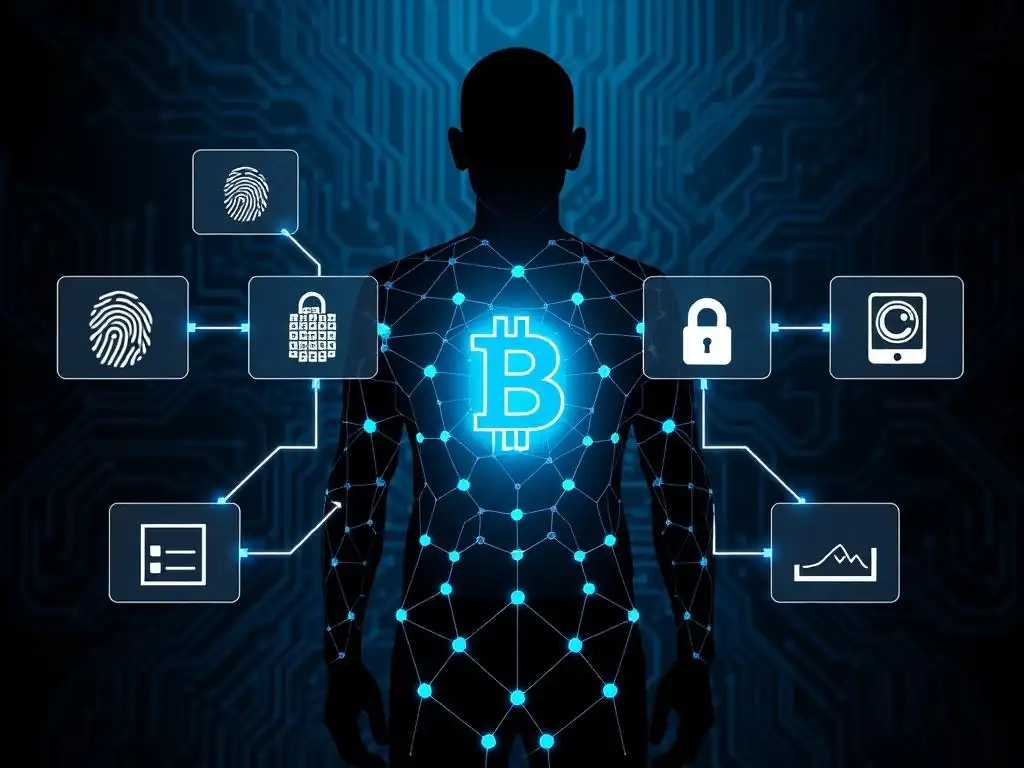
Welcome to Blockchain Trends, your compass in the rapidly evolving world of decentralized innovation. Dive deep with us as we explore how blockchain is reshaping industries beyond just cryptocurrencies. Intrigued by how secure your digital identity truly is? Today, we're unraveling the potential of blockchain multifactor identity solutions and how they're poised to revolutionize authentication. What if your identity could be more secure and truly owned by you? Let's begin this journey together...
Beyond Biometrics: Blockchain's MultiFactor Identity Solutions
- Introduction: The Evolution of Digital Identity and the Rise of Blockchain
- Understanding Blockchain-Based Multifactor Authentication (MFA)
- Benefits of Implementing Blockchain Multifactor Identity Solutions
- Use Cases: Blockchain MFA in Action
- Comparing Blockchain MFA to Traditional MFA Methods
- Challenges and Considerations for Blockchain MFA Adoption
- The Future of Blockchain Multifactor Identity Solutions
- Conclusion: Embracing Blockchain for a Secure and Privacy-Focused Future of Identity
-
Frequently Asked Questions
- How does blockchain enhance multifactor authentication (MFA)?
- What are the key benefits of using blockchain for multifactor identity solutions?
- Can blockchain-based MFA be used in enterprise settings?
- What are some potential regulatory challenges associated with blockchain multifactor identity solutions?
- How does blockchain MFA compare to traditional biometric authentication methods?
- Final Reflection: Securing Our Digital Future
- Ready to Secure Your Digital Identity?
Introduction: The Evolution of Digital Identity and the Rise of Blockchain
The digital age has transformed how we interact, transact, and manage our personal information. Our digital identity has become as crucial as our physical one, if not more so, serving as the gateway to online services, financial accounts, and sensitive data. As our reliance on digital platforms grows, so does the complexity and vulnerability of managing these identities. Traditional identity management systems, often centralized and siloed, struggle to keep pace with the sophisticated threats of the modern internet, prompting a critical need for more robust, secure, and user-centric solutions.
This evolution demands a fundamental shift in how we approach identity verification. The limitations of relying solely on single points of failure or easily compromised credentials are starkly apparent in the rising tide of data breaches and identity theft. Exploring innovative technologies becomes paramount to build a digital identity framework that is not only secure but also respects user privacy and control. This is where the transformative potential of blockchain technology emerges, offering a decentralized paradigm shift for enhancing digital identity verification and authentication processes.
The Limitations of Traditional Identity Management Systems
Traditional identity management systems are typically centralized, meaning a single entity or database holds vast amounts of sensitive user data. This centralization creates attractive targets for cybercriminals, leading to significant data breaches. For instance, major breaches have exposed hundreds of millions of records, including personal identifiers, passwords, and financial information, highlighting the inherent risks of storing data in honey pots. The reliance on static credentials like usernames and passwords, even when combined with simple second factors, remains vulnerable to phishing, credential stuffing, and man-in-the-middle attacks.
Furthermore, these systems often require users to create and manage numerous distinct identities across different services, leading to password fatigue and the common practice of reusing credentials, further weakening security. The process of verifying identity within these traditional frameworks can also be cumbersome, expensive, and inefficient, often involving manual checks and lengthy approval processes. This fragmentation and lack of interoperability between systems result in a poor user experience and increased operational costs for businesses, underscoring the urgent need for a more unified, secure, and efficient approach to digital identity.
Why Multifactor Authentication (MFA) is Essential in Today's Digital Landscape
Multifactor Authentication (MFA) has become a standard and necessary security measure to combat the vulnerabilities of single-factor authentication. By requiring users to provide two or more verification factors from different categories—something they know (like a password), something they have (like a phone or hardware token), and something they are (like a fingerprint or facial scan)—MFA significantly increases the difficulty for unauthorized parties to gain access, even if one factor is compromised. This layered security approach dramatically reduces the risk of account takeover and protects sensitive data.
Industry reports consistently show that implementing MFA can prevent the vast majority of account breaches. For example, Microsoft data suggests that MFA can block over 99.9% of automated attacks. Despite its proven effectiveness, traditional MFA methods still face challenges, including susceptibility to SIM-swapping attacks, phishing of one-time passcodes (OTPs), and the potential for centralized authentication servers to be compromised. These persistent vulnerabilities highlight the need for even more resilient and decentralized forms of authentication, paving the way for exploring innovative solutions like blockchain multifactor identity solutions.
Blockchain's Potential to Revolutionize Digital Identity Verification
Blockchain technology, with its inherent characteristics of decentralization, immutability, transparency (where applicable), and cryptographic security, offers a compelling foundation for building a new generation of digital identity systems. Unlike centralized databases, blockchain distributes identity data or pointers to verifiable claims across a network of nodes, making it significantly harder for a single point of attack to compromise the entire system. This distributed ledger technology can record identity-related transactions and credential issuances in a tamper-evident manner.
The concept of self-sovereign identity (SSI), empowered by blockchain, allows individuals to control their digital identity and share specific, verifiable claims about themselves without relying on a central authority. By leveraging cryptographic principles, blockchain can enable the creation of decentralized identifiers (DIDs) and verifiable credentials (VCs) that are cryptographically signed and verified, forming the basis for robust blockchain multifactor identity solutions. This paradigm shift moves away from siloed, third-party-controlled identities towards a model where users are the primary custodians of their identity data, selectively disclosing information as needed.
Understanding Blockchain-Based Multifactor Authentication (MFA)
Moving beyond traditional MFA, blockchain technology introduces a decentralized and cryptographically secure layer to the authentication process. Instead of relying on centralized servers to validate identity factors, blockchain multifactor identity solutions leverage the distributed ledger to manage and verify the underlying credentials or proofs used in authentication. This fundamentally alters the security architecture, distributing trust across a network rather than concentrating it in a single entity.
At its core, blockchain MFA involves using cryptographic keys associated with a decentralized identifier (DID) as one or more factors in the authentication process. Combined with other factors, such as a biometric scan linked to a verifiable credential or a hardware security module, this creates a multi-layered defense where the proof of identity or attribute ownership is verified against an immutable, distributed ledger. This approach significantly mitigates risks associated with centralized database breaches and enhances the integrity of the authentication factors themselves.
What are Blockchain Multifactor Identity Solutions? A Deep Dive
Blockchain multifactor identity solutions are systems that utilize blockchain technology to enhance or enable multifactor authentication processes. They typically involve using decentralized identifiers (DIDs) controlled by the user, verifiable credentials (VCs) issued by trusted entities and stored securely (often off-chain but with verifiable proofs on-chain), and smart contracts to manage the issuance, verification, and revocation of these credentials or access policies.
Instead of a central server checking a password against a database and then sending an OTP, a blockchain MFA system might involve the user presenting a cryptographically signed proof derived from their private key (associated with their DID), combined with a biometric scan that unlocks a verifiable credential attesting to a specific attribute (e.g., "over 21"), and potentially a hardware token that interacts with a smart contract to grant access.
These solutions shift the control of identity away from service providers and back to the individual. The user holds their private keys and controls access to their verifiable credentials. When authenticating, they don't send sensitive data like passwords; instead, they present cryptographic proofs that a verifier can validate against the public blockchain or a decentralized network. This architecture provides a higher degree of privacy and security compared to traditional methods, making blockchain multifactor identity solutions a significant advancement in digital security.
How Blockchain Enhances Security in Multifactor Authentication
Blockchain technology enhances security in multifactor authentication through several key mechanisms. Firstly, decentralization eliminates the single point of failure inherent in traditional centralized authentication servers. If one node on a blockchain network is compromised, the integrity of the entire system remains intact because the ledger is replicated and validated across many nodes. Secondly, the immutability of the blockchain ensures that once identity-related transactions or credential issuances are recorded, they cannot be altered or deleted without the consensus of the network, providing a tamper-evident audit trail.
Thirdly, cryptography is fundamental to blockchain. Private and public key pairs are used to control DIDs and sign verifiable credentials. This ensures that only the legitimate owner of a DID can generate valid proofs for authentication and that the credentials presented are authentic and have not been tampered with since issuance.
By integrating these cryptographic proofs as authentication factors, blockchain multifactor identity solutions offer a level of security and integrity that is difficult to achieve with traditional, less cryptographically-native methods. For example, a proof-of-ownership of a DID associated with a government-issued VC can serve as a strong "something you have" factor, cryptographically verified on the blockchain.
Key Components of a Blockchain MFA System: Decentralized Identifiers (DIDs), Verifiable Credentials, Smart Contracts
Blockchain multifactor identity solutions are built upon a foundation of interoperable decentralized technologies. The core components include Decentralized Identifiers (DIDs), Verifiable Credentials (VCs), and Smart Contracts. DIDs are a new type of globally unique identifier designed to enable verifiable, decentralized digital identity. They are controlled by the individual or organization that owns them, not by a centralized registry or service provider, and are resolvable using decentralized networks or blockchains. A DID document, linked to the DID, contains cryptographic material, service endpoints, and other information necessary to interact with the DID subject.
Verifiable Credentials are tamper-evident digital equivalents of physical credentials like passports, driver's licenses, or university degrees. They consist of claims made by an issuer about a subject, cryptographically signed by the issuer.
The subject (holder) can then present these VCs to a verifier, who can cryptographically verify the issuer's signature and potentially check the status of the credential against a blockchain or decentralized network. Smart contracts, self-executing contracts with the terms of the agreement directly written into code, can automate processes like the issuance of VCs, the enforcement of access control policies based on presented VCs, or the management of revocation lists on the blockchain, forming the operational logic layer for blockchain multifactor identity solutions.
Benefits of Implementing Blockchain Multifactor Identity Solutions
The adoption of blockchain multifactor identity solutions offers a compelling array of advantages over traditional identity and authentication methods. These benefits span enhanced security, improved user privacy, increased efficiency, and greater transparency, addressing many of the critical shortcomings of current systems. By leveraging the decentralized and cryptographic nature of blockchain, organizations and individuals can achieve a higher standard of digital trust and control.
Implementing blockchain multifactor identity solutions can lead to a significant reduction in the attack surface for identity-related fraud and breaches. The shift from storing sensitive data in centralized honeypots to a model where verifiable proofs are validated against a distributed ledger fundamentally changes the risk profile. Furthermore, empowering users with control over their identity data fosters greater trust and compliance with evolving privacy regulations, such as GDPR, by minimizing unnecessary data sharing.
Enhanced Security and Reduced Identity Theft
One of the primary benefits of blockchain multifactor identity solutions is the significant enhancement of security. By removing the central point of failure, the risk of a catastrophic data breach that compromises millions of identities is drastically reduced. Authentication factors, such as cryptographic proofs derived from private keys linked to DIDs, are inherently more secure than static passwords or easily phished OTPs. The immutability of the blockchain ensures that the integrity of the identity credentials and transaction history cannot be tampered with.
Consider a scenario where a user logs into a financial service. With blockchain MFA, instead of entering a password and an SMS code, they might use their private key to sign a transaction proving ownership of their DID, combined with presenting a verifiable credential attesting to their identity, perhaps unlocked by a biometric scan.
The verification of the DID and VC occurs against the decentralized network, not a single vulnerable database. This layered cryptographic security, validated across a distributed network, makes it exponentially harder for attackers to compromise the authentication process or steal identity information, leading to a tangible reduction in identity theft attempts and successes compared to traditional MFA methods.
Increased User Privacy and Data Control
Blockchain multifactor identity solutions are fundamentally designed with user privacy and data control at their core. In traditional systems, users are forced to share excessive personal data with numerous service providers, who then store this data in potentially vulnerable databases. With a self-sovereign identity approach enabled by blockchain, users control their DIDs and verifiable credentials. They can choose precisely which verifiable claims (e.g., "is over 21" instead of sharing their birth date) to share with a verifier, minimizing the exposure of sensitive personal information.
This principle of selective disclosure is a cornerstone of privacy-preserving identity systems built on blockchain. For example, proving eligibility for a service might only require presenting a verifiable credential signed by a trusted issuer (like a government or university) attesting to a specific attribute, without revealing the underlying document or other personal details. This granular control over data sharing, combined with the cryptographic security of the credentials themselves, empowers users and significantly enhances privacy compared to the current model where identity data is scattered across numerous third-party databases, often without the user's full awareness or control.
Improved Efficiency and Reduced Costs in Identity Verification
Traditional identity verification processes can be notoriously slow and expensive, involving manual checks, document scanning, and interactions with multiple databases or third parties. Blockchain multifactor identity solutions streamline this process by enabling instant, cryptographic verification of verifiable credentials against a decentralized ledger. Once a user has been issued a verifiable credential by a trusted issuer (e.g., a government confirming their identity), they can reuse that credential across multiple service providers, provided the verifier trusts the issuer.
This reusability and instant verifiability dramatically reduce the time and cost associated with repeated identity checks. Onboarding new customers, for example, could shift from a days-long manual process to near-instantaneous verification of cryptographically signed VCs. Early pilot programs exploring blockchain for identity verification have indicated potential cost reductions in the range of 20% to 40% per verification compared to legacy systems, driven by automation, reduced manual effort, and lower reliance on costly third-party identity verification services. This efficiency gain is a significant driver for enterprise adoption of blockchain multifactor identity solutions.
Greater Transparency and Auditability in Identity Management
Blockchain's inherent transparency (for public or permissioned ledgers) and immutability provide a robust framework for auditing identity management processes. Every issuance, presentation (or at least the fact of presentation/verification depending on design), and potential revocation of a verifiable credential can be recorded on the blockchain in a tamper-evident manner. This creates an immutable audit trail that can be easily accessed and verified by authorized parties, providing unprecedented visibility into the lifecycle of identity credentials.
This level of auditability is invaluable for compliance, dispute resolution, and security monitoring. Regulators or auditors can verify the integrity of identity verification processes by examining the on-chain records. In cases of dispute, the immutable log provides a clear record of transactions and credential states. While the content of VCs themselves might be stored off-chain for privacy, the cryptographic proofs and metadata recorded on the blockchain provide a verifiable history of interactions. This transparency and auditability feature of blockchain multifactor identity solutions enhances trust among participants and simplifies compliance reporting.
Use Cases: Blockchain MFA in Action
The versatility and robust security offered by blockchain multifactor identity solutions make them applicable across a wide range of sectors and applications. From securing access to sensitive systems to streamlining customer onboarding and enhancing the integrity of supply chains, blockchain-based MFA is poised to revolutionize how we verify identity and grant access in the digital realm. Early implementations and pilot programs are already demonstrating the practical benefits across various industries.
These use cases highlight the potential to move beyond simple password-plus-OTP models to more sophisticated, privacy-preserving, and secure authentication flows. The ability to cryptographically link verifiable credentials to a user's decentralized identifier provides a powerful mechanism for proving attributes without oversharing personal data, forming the basis for effective blockchain multifactor identity solutions in diverse scenarios.
Blockchain MFA for Secure Login and Access Control
One of the most direct applications of blockchain multifactor identity solutions is enhancing secure login and access control for websites, applications, and corporate networks. Instead of relying on traditional username/password combinations, users can authenticate using a combination of factors tied to their decentralized identity. For example, a user might initiate login by presenting a cryptographic proof of ownership of their DID via a mobile wallet app (something they have), combined with a biometric scan (something they are) to unlock the ability to sign the proof.
The service provider can then verify the validity of the DID and the signature against the blockchain or decentralized network. Additionally, access policies could require the presentation of specific verifiable credentials – for instance, proving employee status or clearance level – which are also verified cryptographically. This approach significantly raises the bar for attackers, as compromising one factor (like a biometric) would not be sufficient without also gaining control of the user's private key and DID, which are managed off a central server, making blockchain multifactor identity solutions ideal for high-security access control.
Blockchain-Based Identity Verification for Financial Institutions
Financial institutions face stringent regulatory requirements for Know Your Customer (KYC) and Anti-Money Laundering (AML), often involving cumbersome and repetitive identity verification processes. Blockchain multifactor identity solutions offer a way to streamline this. A customer could undergo a thorough identity verification process once with a trusted identity provider (potentially the bank itself or a certified third party) and receive a verifiable credential attesting to their verified identity status and relevant attributes.
This VC, linked to the customer's DID, can then be used for subsequent interactions or even shared with other financial institutions if the customer chooses. Authentication for online banking or transactions could then involve presenting a combination of factors: a cryptographic proof from their DID (something they have/control), potentially linked to a hardware security key, and a biometric scan (something they are) to authorize the transaction, all validated against the underlying verifiable credentials and the blockchain.
This not only enhances security but also drastically improves the customer onboarding experience and reduces operational costs associated with repeated identity checks, showcasing the power of blockchain multifactor identity solutions in finance.
Securing Supply Chains with Blockchain MFA
Supply chains involve complex interactions between numerous parties, requiring secure authentication and authorization at various points. Blockchain multifactor identity solutions can be used to create verifiable digital identities for entities (companies, vehicles, IoT devices) and individuals within the supply chain. For example, a driver picking up goods might need to authenticate their identity and their authorization to transport specific items.
Using blockchain MFA, the driver could present a cryptographic proof of their DID, combined with a verifiable credential issued by their employer confirming their employment and role, and potentially a separate VC linked to the specific shipment authorization, unlocked via a physical token or biometric. All these factors and credentials are verified against the decentralized network. This ensures that only authorized personnel and devices interact with sensitive points in the supply chain, providing an immutable audit trail of who accessed what and when, thereby increasing transparency and reducing the risk of theft or tampering.
Government Applications: Enhancing Citizen Identity and Services
Governments are exploring blockchain technology to improve the security and efficiency of citizen identity management and access to public services. Blockchain multifactor identity solutions could enable citizens to have a secure, privacy-preserving digital identity (a DID) linked to official verifiable credentials (e.g., digital ID card, proof of address, professional licenses) issued by government agencies.
Citizens could then use a combination of factors – their private key (via a secure app on their phone), a PIN, and/or a biometric scan – to authenticate and access various government services online, such as submitting tax returns, applying for permits, or accessing health records. The service provider verifies the presented credentials against the government issuer's signature and the status recorded on a permissioned blockchain.
This reduces reliance on vulnerable centralized databases of citizen data, enhances the security of online interactions, and provides citizens with greater control over their personal information, illustrating a key public sector application for blockchain multifactor identity solutions.
Comparing Blockchain MFA to Traditional MFA Methods
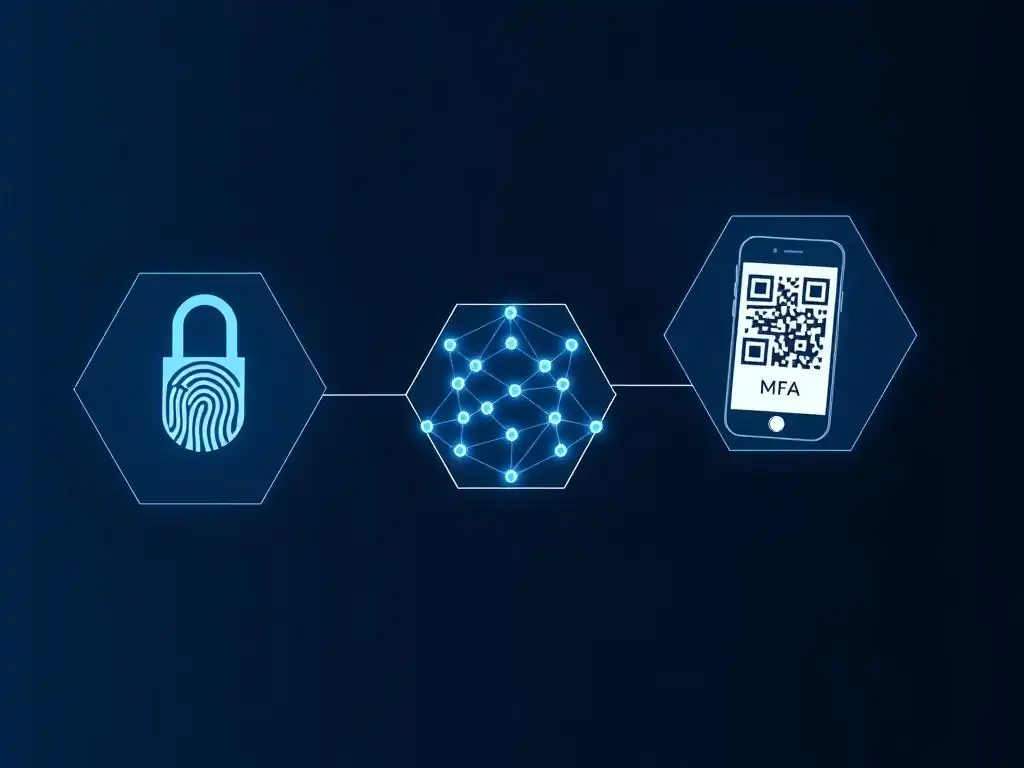
While both blockchain multifactor identity solutions and traditional MFA aim to enhance security beyond single-factor authentication, they differ fundamentally in their underlying architecture, security model, and approach to privacy and control. Traditional MFA relies on centralized systems and often uses shared secrets or centralized token generation/validation. Blockchain MFA leverages decentralized networks, cryptographic proofs, and self-sovereign identity principles.
Understanding these differences is crucial for appreciating the distinct advantages that blockchain brings to the table. The comparison reveals that while traditional MFA offers an improvement over passwords alone, blockchain-based approaches provide a more robust, privacy-centric, and future-proof foundation for digital identity and authentication, particularly concerning resilience against large-scale attacks and user data control.
Security Comparison: Blockchain vs. Traditional MFA
In a direct security comparison, blockchain multifactor identity solutions offer significant advantages over traditional MFA methods, primarily due to decentralization and cryptographic verification. Traditional MFA, while effective against simple password attacks, remains susceptible to attacks targeting the centralized authentication server or the channels used for delivering secondary factors (like SMS interception for OTPs or phishing attacks targeting app-based tokens). The security of traditional MFA is largely dependent on the security posture of the service provider's infrastructure.
Blockchain MFA, conversely, distributes the trust and verification process. The validation of cryptographic proofs and verifiable credentials occurs against a decentralized network, making it extremely difficult to compromise the authentication system through attacks on a single entity.
The use of private keys controlled by the user as a core factor, combined with the immutability of the blockchain record of credential issuance, provides a higher level of assurance that the identity being authenticated is legitimate and the credentials haven't been tampered with. While implementation complexity exists, the fundamental security architecture of blockchain multifactor identity solutions is inherently more resilient against many modern cyber threats targeting centralized systems.
Privacy Considerations: Blockchain MFA's Edge
Privacy is a major differentiator between the two approaches. Traditional identity management and MFA often require users to share more personal data than necessary with service providers, and this data is stored in centralized databases, creating privacy risks if those databases are breached or misused. Even with MFA, the underlying identity verification often relies on sharing and storing sensitive documents and information.
Blockchain multifactor identity solutions, particularly those built on Self-Sovereign Identity (SSI) principles, prioritize user privacy through selective disclosure and decentralized data storage (or pointers). Users control their verifiable credentials and only share specific, minimal claims required for authentication or authorization, rather than revealing their full identity profile.
For example, proving age might only require presenting a VC that cryptographically attests "over 21," without disclosing the exact birth date. This minimal data sharing model, combined with the user's control over their identity data, gives blockchain MFA a significant edge in protecting user privacy compared to the data-extravagant practices often associated with traditional identity systems.
Cost-Effectiveness Analysis: Blockchain MFA vs. Traditional MFA
Analyzing the cost-effectiveness of blockchain multifactor identity solutions versus traditional MFA involves looking at both implementation costs and ongoing operational expenses, as well as the cost of potential security failures. Initial implementation costs for blockchain MFA systems can be higher, requiring investment in new infrastructure components (like decentralized identity wallets), integration with blockchain networks, and potential development of smart contracts. Traditional MFA solutions, especially off-the-shelf options, might have lower upfront costs.
However, the long-term operational costs and potential savings paint a different picture. Traditional MFA often involves ongoing costs for SMS gateways, proprietary authentication tokens, or third-party identity verification services. Blockchain MFA can reduce these costs through automation, reusable verifiable credentials, and streamlined verification processes.
More significantly, the cost of identity theft and data breaches associated with traditional systems can be enormous, including regulatory fines, legal fees, reputational damage, and remediation efforts. By significantly reducing the risk of such events, blockchain multifactor identity solutions offer substantial cost savings in the long run, despite potentially higher initial investment. Estimates from pilot projects suggest potential reductions in operational identity management costs by 15-30% over several years.
Scalability and Integration: Challenges and Opportunities
Scalability and integration with existing systems represent key challenges for blockchain multifactor identity solutions. Many public blockchains currently face limitations in transaction throughput (transactions per second) compared to centralized databases, which could impact the performance of systems requiring high-volume, real-time identity verifications. While Layer 2 scaling solutions and purpose-built identity blockchains are addressing this, it remains a consideration for large-scale enterprise deployments.
Integration with legacy IT infrastructure is another hurdle. Most organizations rely on existing identity and access management (IAM) systems, databases, and applications. Implementing blockchain MFA requires developing connectors and APIs to bridge the gap between decentralized identity components (DIDs, VCs) and these traditional systems. However, as standards like W3C DIDs and Verifiable Credentials gain traction, interoperability is improving. The opportunity lies in building hybrid systems that leverage the security and privacy benefits of blockchain for identity core functions while integrating seamlessly with existing enterprise workflows, paving the way for gradual adoption of blockchain multifactor identity solutions.
Challenges and Considerations for Blockchain MFA Adoption
Despite the significant potential, the widespread adoption of blockchain multifactor identity solutions faces several challenges that need to be addressed. These challenges range from navigating complex regulatory environments and ensuring the technical feasibility of scaling the technology to achieving interoperability with existing systems and overcoming user resistance to new identity management paradigms.
Addressing these hurdles requires collaborative efforts from technology providers, standards bodies, regulators, and end-users. Successfully navigating these considerations is key to unlocking the full potential of blockchain multifactor identity solutions and realizing a more secure, private, and efficient future for digital identity.
Regulatory Compliance and Legal Frameworks
One of the most significant challenges for blockchain multifactor identity solutions is aligning with existing and evolving regulatory landscapes. Identity verification and data privacy are heavily regulated areas (e.g., GDPR, CCPA, KYC/AML laws). The decentralized nature of blockchain and self-sovereign identity can sometimes conflict with regulations that require data to be stored in specific jurisdictions, subject to oversight by particular authorities, or easily erasable (like the "right to be forgotten" under GDPR).
Establishing legal frameworks that recognize decentralized identifiers and verifiable credentials as valid forms of identity verification is crucial. Clarity is needed on liability, dispute resolution, and data governance within decentralized identity systems. While progress is being made through international standards bodies and regulatory sandboxes exploring blockchain applications, navigating the patchwork of global regulations remains a complex task for organizations looking to implement blockchain multifactor identity solutions, often requiring careful legal review and system design to ensure compliance.
Scalability and Performance Issues
The ability of blockchain networks to handle the volume and speed of transactions required for widespread multifactor authentication is a key technical challenge. Public blockchains like Bitcoin or Ethereum (before recent upgrades) were not designed for the high transaction throughput needed for real-time identity verification at scale. While newer blockchains and Layer 2 solutions offer significant improvements in transactions per second (TPS), they may still need to meet the peak demands of large-scale identity systems serving millions or billions of users.
Ensuring low latency for authentication requests is also critical for a positive user experience. A user attempting to log in expects near-instantaneous verification, which can be challenging if the process involves waiting for transactions to be confirmed on a congested blockchain. Ongoing research and development in blockchain architecture, sharding, and specialized identity networks are focused on improving scalability and performance to make blockchain multifactor identity solutions viable for mass adoption, but it remains an area requiring continued technical advancement.
Interoperability with Existing Systems
Integrating blockchain multifactor identity solutions with the vast array of existing legacy identity and access management (IAM) systems, applications, and databases presents a significant technical and organizational challenge. Most enterprises and government agencies have deeply embedded identity infrastructure that is not blockchain-native. Replacing these systems entirely is often impractical and cost-prohibitive.
Therefore, achieving seamless interoperability is essential. This requires developing standardized APIs, protocols, and middleware that allow traditional systems to interact with decentralized identity components like DIDs and VCs. While initiatives like the Decentralized Identity Foundation (DIF) are working on such standards, the diverse nature of legacy systems means that custom integration work is often required. Overcoming this integration hurdle is critical for enabling organizations to gradually adopt and leverage the benefits of blockchain multifactor identity solutions without disrupting existing operations.
User Education and Adoption Barriers
Introducing blockchain multifactor identity solutions requires not only technical implementation but also significant user education and overcoming adoption barriers. Users are accustomed to traditional login methods, and understanding concepts like decentralized identifiers, private keys, and verifiable credentials can be complex. Poor user experience or confusion can lead to resistance and hinder adoption.
Ensuring that blockchain-based identity wallets and authentication flows are intuitive, secure, and easy for the average user is paramount. This involves thoughtful UI/UX design and comprehensive user support and training. Furthermore, building trust in a new, decentralized identity paradigm takes time. Users need to feel confident that their decentralized identity is secure and that they truly have control over their data. Addressing these user-centric challenges is as important as the technical implementation for the successful rollout of blockchain multifactor identity solutions.
The Future of Blockchain Multifactor Identity Solutions
The trajectory for blockchain multifactor identity solutions is one of increasing sophistication, integration, and adoption. As the underlying blockchain technology matures and industry standards solidify, we can expect to see more robust, scalable, and user-friendly decentralized identity systems emerge. The convergence with other cutting-edge technologies like biometrics and Artificial Intelligence will further enhance the capabilities and security of these solutions.
The future holds the promise of a digital identity ecosystem where individuals have greater control over their data, organizations can verify identities more securely and efficiently, and online interactions are inherently more trustworthy. This vision is being actively shaped by ongoing developments in decentralized identity frameworks and the increasing recognition of the need for a fundamental shift in how we manage digital identity.
Emerging Trends in Decentralized Identity (DID) and Blockchain MFA
Several key trends are shaping the future of Decentralized Identity (DID) and consequently, blockchain multifactor identity solutions. One major trend is the move towards greater interoperability between different DID methods and blockchain networks, ensuring that DIDs and VCs issued on one network can be verified on others. Standards bodies like W3C and organizations like DIF are driving this through the development of universal resolvers and common data models.
Another trend is the development of privacy-preserving technologies, such as Zero-Knowledge Proofs (ZKPs), which allow users to prove that a verifiable credential is valid or that they meet certain criteria without revealing the underlying data in the credential. This enhances privacy significantly, allowing for sophisticated authentication flows without compromising sensitive information. Furthermore, specialized identity-focused blockchain networks are emerging, designed for high transaction throughput and specific identity functions, providing a more optimized infrastructure for scalable blockchain multifactor identity solutions.
The Role of Biometrics in Blockchain-Enhanced MFA
Biometrics, such as fingerprints, facial recognition, or iris scans, will continue to play a vital role in the future of blockchain multifactor identity solutions, primarily as a secure and convenient factor for unlocking or authorizing access to decentralized identity wallets and verifiable credentials. Instead of biometric data being stored centrally (a major privacy risk), in a blockchain MFA context, biometrics can be used locally on a user's device to decrypt a private key or authorize the use of a verifiable credential for authentication.
The biometric scan itself doesn't go onto the blockchain. Instead, a successful local verification triggers the use of a cryptographic key or credential linked to the user's DID. This combines the convenience of biometrics ("something you are") with the security and privacy benefits of decentralized identity ("something you have/control"). This integration creates a powerful multi-factor authentication flow where the biometric acts as a secure unlock mechanism for the user's decentralized identity assets, forming a crucial layer in advanced blockchain multifactor identity solutions.
The Convergence of AI and Blockchain for Advanced Identity Verification
The convergence of Artificial Intelligence (AI) and blockchain technology holds significant potential for creating even more advanced and secure identity verification systems. AI can be used to enhance the verification process of verifiable credentials, for example, by analyzing patterns to detect fraudulent credential issuance or presentation attempts that might not be obvious through simple cryptographic checks alone.
AI could also play a role in risk assessment during authentication, analyzing contextual factors alongside blockchain-verified credentials to determine the likelihood of a legitimate user. For instance, AI could analyze behavioral biometrics (typing patterns, mouse movements) in conjunction with the presentation of blockchain-verified credentials as factors in a continuous authentication process. This fusion of AI-driven intelligence with the immutable, verifiable foundation provided by blockchain can lead to highly dynamic, secure, and intelligent blockchain multifactor identity solutions capable of adapting to evolving threats.
Predictions for the Growth of Blockchain Multifactor Identity Solutions in the Next 5 Years
Over the next five years, significant growth is predicted in the adoption and maturity of blockchain multifactor identity solutions. While mass consumer adoption might take longer, enterprise and government use cases are expected to expand considerably. The market for decentralized identity solutions, which forms the basis for blockchain MFA, is projected to grow substantially, with some estimates suggesting a compound annual growth rate (CAGR) exceeding 50% over the next few years, reaching multi-billion dollar valuations by the mid-2020s.
Key drivers for this growth include increasing concerns over data privacy and security breaches, regulatory pressures demanding stronger identity verification, and the ongoing development and standardization of DID and VC technologies. We are likely to see more pilot programs transitioning into production deployments within sectors like finance, healthcare, supply chain, and government services. While challenges remain, the foundational benefits of security, privacy, and efficiency position blockchain multifactor identity solutions as a key component of the future digital identity landscape.
Conclusion: Embracing Blockchain for a Secure and Privacy-Focused Future of Identity
The journey of digital identity has brought us to a critical juncture. Traditional, centralized systems are increasingly vulnerable and fail to empower users with control over their personal information. Multifactor authentication is a necessary step but is limited by the underlying weaknesses of centralized architectures and traditional factors. Blockchain technology offers a revolutionary path forward, enabling the creation of decentralized, secure, and privacy-preserving identity solutions.
Blockchain multifactor identity solutions, built upon the pillars of Decentralized Identifiers (DIDs), Verifiable Credentials (VCs), and smart contracts, provide a robust alternative. They shift the paradigm from third-party custodianship of identity data to a self-sovereign model where individuals control their digital identity and selectively share cryptographically verifiable proofs. This not only enhances security against breaches and identity theft but also fundamentally improves user privacy and control.
Key Takeaways: The Power of Blockchain in Multifactor Authentication
The power of blockchain in multifactor authentication lies in its ability to provide a decentralized, immutable, and cryptographically secure layer for managing and verifying identity factors. Key takeaways include:
- Enhanced Security: Eliminates single points of failure and leverages cryptography for robust verification.
- Improved Privacy & Control: Enables users to control their data and share only necessary, verifiable claims.
- Increased Efficiency: Streamlines verification processes through reusable, instantly verifiable credentials.
- Greater Transparency: Provides a tamper-evident audit trail of identity-related events.
- Foundation for SSI: Supports the development of self-sovereign identity systems.
By moving beyond traditional methods, blockchain multifactor identity solutions offer a compelling vision for a digital future where identity is both more secure and more respectful of individual privacy.
Call to Action: Explore Blockchain-Based Identity Solutions for Your Organization
The limitations of traditional identity management are clear. The increasing threat landscape and the growing demand for user privacy necessitate a shift towards more advanced solutions. Blockchain multifactor identity solutions present a viable and powerful alternative that can significantly enhance security, improve user experience, reduce costs, and ensure compliance in the digital age.
Organizations across all sectors should begin exploring how decentralized identity and blockchain technology can be integrated into their existing identity and access management strategies. Understanding the core components – DIDs, VCs, and smart contracts – and their application in creating robust blockchain multifactor identity solutions is the first step. Consulting with experts and piloting decentralized identity frameworks can provide valuable insights into transitioning towards a more secure, efficient, and privacy-focused future for digital identity.
Frequently Asked Questions
How does blockchain enhance multifactor authentication (MFA)?
Blockchain provides a decentralized and immutable ledger for verifying identity factors. This enhances security by reducing reliance on centralized databases and preventing single points of failure.
What are the key benefits of using blockchain for multifactor identity solutions?
The main benefits include improved security and privacy, enhanced data integrity, and reduced risk of identity theft due to the distributed nature of the blockchain.
Can blockchain-based MFA be used in enterprise settings?
Yes, blockchain can be integrated into enterprise systems to strengthen access control and data security. It offers a transparent and auditable way to manage employee identities and permissions.
What are some potential regulatory challenges associated with blockchain multifactor identity solutions?
Navigating existing data privacy regulations like GDPR and CCPA can be complex. Ensuring compliance with KYC/AML requirements is also crucial for blockchain-based identity systems.
How does blockchain MFA compare to traditional biometric authentication methods?
Blockchain offers a more secure and decentralized approach compared to traditional biometrics. While biometrics can be compromised, blockchain provides an immutable record of verification events.
Okay, here's a final reflection that aims to resonate with readers of an article titled "Beyond Biometrics: Blockchain's MultiFactor Identity Solutions," while also incorporating the keyword "Blockchain multifactor identity solutions" and following the requested Markdown structure:
Final Reflection: Securing Our Digital Future
The exploration of Blockchain multifactor identity solutions reveals more than just technological advancements; it underscores a fundamental shift in how we perceive and protect our digital selves. In an era defined by escalating cyber threats and data breaches, the promise of enhanced security and user control offered by these solutions is not merely desirable, but absolutely essential for maintaining trust and stability in our increasingly interconnected world.
The journey towards widespread adoption of Blockchain multifactor identity solutions is ongoing, yet its potential to reshape the digital landscape is undeniable. This technology offers a pathway to reclaiming ownership of our identities and fostering a more secure and equitable online environment. Identity is the new perimeter, and blockchain is the key to securing it.
This sentiment encapsulates the urgency and importance of embracing innovative solutions that prioritize user privacy and data integrity.
As we stand at the cusp of a new era in digital identity management, let us embrace the possibilities that Blockchain multifactor identity solutions offer. Consider how you can advocate for and adopt these technologies in your own life and work, contributing to a future where digital identity is not a vulnerability, but a source of empowerment and security for all.
Okay, I will craft a Call to Action (CTA) based on the title "Beyond Biometrics: Blockchain's MultiFactor Identity Solutions" for the website "Blockchain Trends" with the domain blockchaintrends.org, following all specified instructions.
Ready to Secure Your Digital Identity?
Thanks for diving deep into the world of blockchain-based identity solutions with us. We hope you now have a clearer understanding of how blockchain is revolutionizing multifactor authentication. Now it's time to take control and explore the future of secure identities!
Here are a few ways you can get started:
- Embrace the shift: Research and test a decentralized identity (DID) wallet. Take your first step to controlling your data.:
- Join the conversation: Share this article with your network to spark discussion on the potential of blockchain for identity management.
- Uncover hidden gems: Delve into a blockchain identity platform's whitepaper to understand their approach to multifactor authentication.
How will you leverage blockchain to take control of your digital footprint today?
Leave a Reply