
Polkadot's Relay Chain: The Heart of Interoperability


Welcome to Blockchain Trends, your guide to understanding the profound impact of blockchain technology beyond the hype. Ever wondered how blockchains can truly connect and collaborate?
Dive into our latest article where we unravel the Polkadot relay chain benefits, exploring how this groundbreaking architecture is forging a new era of interoperability and decentralized innovation. Discover the secrets behind its unique design and its potential to revolutionize everything from DeFi to enterprise solutions. Read on to uncover the future of interconnected blockchains!
Polkadot's Relay Chain: The Heart of Interoperability
- Understanding Polkadot's Architecture: A Focus on the Relay Chain
- Key Polkadot Relay Chain Benefits: Enhanced Security and Scalability
- How the Polkadot Relay Chain Works: A Technical Deep Dive
- Comparing Polkadot's Relay Chain to Other Blockchain Architectures
- The Future of Polkadot's Relay Chain: Innovations and Developments
- Polkadot Relay Chain Benefits: A Summary of Advantages
-
Frequently Asked Questions
- What is the primary role of the Polkadot relay chain?
- How does the Polkadot relay chain facilitate interoperability between different blockchains?
- What are some key benefits of the Polkadot relay chain for developers?
- How does the Polkadot relay chain contribute to the overall scalability of the Polkadot network?
- What is the significance of validators in the Polkadot relay chain's operation?
- Final Reflection: Embracing the Interconnected Future
- Dive Deeper: Unlock Polkadot's Interoperability Potential!
Understanding Polkadot's Architecture: A Focus on the Relay Chain
What is the Polkadot Relay Chain? Introduction to its Core Functionality
The Polkadot Relay Chain stands as the central chain within the Polkadot network, often referred to as its layer-0 blockchain. It is the foundational layer upon which all other Polkadot network components are built and interconnected. At its core, the Relay Chain is responsible for the network's security, consensus, and interoperability.
Think of it as the conductor of an orchestra, coordinating the various instruments (parachains) to produce a harmonious symphony. This central role is underpinned by the native token of Polkadot, DOT, which is staked on the Relay Chain by validators and nominators to secure the network and participate in its governance.
Functionally, the Relay Chain's primary purpose is to facilitate interoperability between different blockchains, known as parachains, within the Polkadot ecosystem. Unlike traditional, monolithic blockchains that attempt to handle all aspects of functionality on a single chain, Polkadot adopts a heterogeneous multi-chain architecture. The Relay Chain is the linchpin of this architecture, enabling diverse and specialized blockchains to connect and communicate with each other seamlessly. This design allows for greater flexibility and specialization, as parachains can be optimized for specific use cases while still benefiting from the security and interoperability provided by the Relay Chain.
The Role of the Relay Chain in Polkadot's Interoperable Ecosystem
The Relay Chain acts as the backbone of Polkadot's interoperable ecosystem, providing shared security and a message-passing infrastructure for connected parachains. Parachains, which are sovereign blockchains tailored for specific applications or use cases, plug into the Relay Chain to leverage its robust security and consensus mechanisms. This connection is crucial because it allows parachains to focus on their unique functionalities without needing to bootstrap their own security from scratch, a resource-intensive and time-consuming process.
In essence, the Relay Chain creates a unified ecosystem where diverse blockchains can coexist and interact. Parachains can be designed for a wide range of purposes, from decentralized finance (DeFi) and supply chain management to identity solutions and gaming platforms. The Relay Chain facilitates communication between these disparate parachains, enabling the transfer of assets and data across different blockchain environments. For example, a DeFi parachain built for lending and borrowing can interact with a supply chain parachain to facilitate financing for goods in transit, creating novel and powerful cross-chain applications.
Key Polkadot Relay Chain Benefits: Enhanced Security and Scalability
One of the most significant Polkadot relay chain benefits is its shared security model. Instead of each parachain having to establish and maintain its own independent security, they benefit from the collective security provided by the Relay Chain. Validators on the Relay Chain, who stake substantial amounts of DOT tokens, are responsible for securing not only the Relay Chain itself but also all connected parachains. This shared security model drastically reduces the barrier to entry for new blockchain projects seeking robust security.
This efficient security model offers a considerable advantage, particularly for newer or smaller projects. Launching a standalone blockchain and attracting a sufficient number of validators to ensure its security is a significant undertaking, requiring substantial resources and community building efforts. By connecting to the Polkadot Relay Chain, parachains inherit a high level of security from day one, allowing them to focus their resources on development and innovation rather than security infrastructure. This cost-effectiveness in security provisioning is a key driver for projects choosing to build within the Polkadot ecosystem and leverage the benefits of the Polkadot relay chain.
Scalability Advantages: Enabling Parallel Processing
Scalability is another crucial area where the Polkadot relay chain benefits are prominent. The Relay Chain architecture enables parallel processing of transactions across parachains, significantly enhancing the overall throughput of the Polkadot network. In contrast to monolithic blockchains, where transactions are processed sequentially, Polkadot allows parachains to process transactions concurrently. This parallel execution drastically reduces bottlenecks and increases the network's capacity to handle a large volume of transactions.
This scalability advantage stems from the inherent design of the Relay Chain and parachains. Each parachain operates independently and can process its own transactions. The Relay Chain then acts as the coordinator, finalizing transactions and ensuring the overall consistency of the network. This parallel processing capability allows Polkadot to achieve significantly higher transaction throughput compared to traditional blockchains, addressing a critical challenge for widespread blockchain adoption. The ability to handle a large number of transactions efficiently is a major Polkadot relay chain benefit, making it suitable for applications requiring high performance and scalability.
Polkadot's Relay Chain and Cross-Chain Communication: Enabling Interoperability
The Polkadot relay chain benefits extend significantly to cross-chain communication and interoperability. The Relay Chain is designed to facilitate seamless communication and data exchange between connected parachains. This interoperability is achieved through the Cross-Consensus Message Format (XCM), a standardized language that allows parachains to send messages and transfer assets to each other, regardless of their underlying architectures or functionalities.
This cross-chain communication capability unlocks a new realm of possibilities for blockchain applications. Different parachains, each optimized for specific tasks, can collaborate and interact to create complex and innovative solutions. For example, a parachain specializing in decentralized identity can interact with a DeFi parachain to enable secure and compliant lending and borrowing services. This level of interoperability is a core Polkadot relay chain benefit, paving the way for a more interconnected and collaborative blockchain ecosystem, where value and information can flow freely across different chains, fostering innovation and efficiency.
How the Polkadot Relay Chain Works: A Technical Deep Dive
Consensus Mechanism: GRANDPA and BABE Explained
The Polkadot Relay Chain employs a sophisticated hybrid consensus mechanism that combines two key components: GRANDPA (GHOST-based Recursive Ancestor Deriving Prefix Agreement) and BABE (Blind Assignment for Blockchain Extension). GRANDPA serves as the finality gadget, responsible for ensuring the finality of blocks on the Relay Chain. It provides fast and efficient finality by finalizing blocks in bulk, rather than individually, which significantly speeds up the consensus process. GRANDPA is particularly robust against network latency and ensures that once a block is finalized, it is immutable.
BABE, on the other hand, is the block production mechanism of the Relay Chain. It is a slot-based system where validators are assigned slots to produce blocks based on their stake and randomness. BABE selects validators in a seemingly random but verifiable way, ensuring that block production is decentralized and resistant to manipulation. BABE and GRANDPA work in tandem to provide a robust and efficient consensus mechanism for the Relay Chain. BABE produces blocks and proposes them to the network, while GRANDPA ensures the finality of these blocks, creating a highly secure and performant system.
The Role of Validators and Nominators in Relay Chain Security
Validators and nominators are crucial participants in maintaining the security and operation of the Polkadot Relay Chain. Validators are responsible for the core functions of the Relay Chain: producing new blocks, validating parachain blocks, and participating in the consensus process. To become a validator, individuals or entities must stake a significant amount of DOT tokens, demonstrating their commitment to the network's security. Validators earn rewards in DOT tokens for their participation in securing the network.
Nominators also play a vital role in Relay Chain security by supporting validators. DOT holders can become nominators by staking their DOT tokens and nominating up to 16 validators they trust. By nominating validators, nominators contribute to the overall security of the network and share in the rewards earned by their chosen validators.
However, nominators also share in the risks; if a validator they nominate misbehaves or performs poorly, both the validator and the nominators who supported them can have their staked DOT tokens slashed, incentivizing nominators to carefully select trustworthy and reliable validators. This system of validators and nominators ensures a decentralized and robust security model for the Relay Chain and the entire Polkadot ecosystem.
Governance and Upgradability of the Polkadot Relay Chain
The Polkadot Relay Chain is designed with on-chain governance and upgradability at its core, allowing the network to evolve and adapt to future needs without requiring disruptive hard forks. Polkadot's governance system is decentralized and inclusive, empowering DOT token holders to participate in the decision-making process. DOT holders can submit proposals for changes to the network, vote on proposals submitted by others, and participate in referendums to determine the direction of the Polkadot network.
Furthermore, the Relay Chain is built to be upgradable without requiring network forks, a significant advantage over many traditional blockchains. This forkless upgradability is achieved through the use of WebAssembly (Wasm) as the runtime environment for the Relay Chain. Changes and upgrades to the network's logic can be implemented by updating the Wasm runtime, allowing for seamless and non-disruptive upgrades. This capability ensures that the Polkadot Relay Chain can remain at the forefront of blockchain innovation, adapting to new technologies and requirements without causing network disruptions or fragmentation, a key Polkadot relay chain benefit for long-term sustainability and evolution.
Comparing Polkadot's Relay Chain to Other Blockchain Architectures
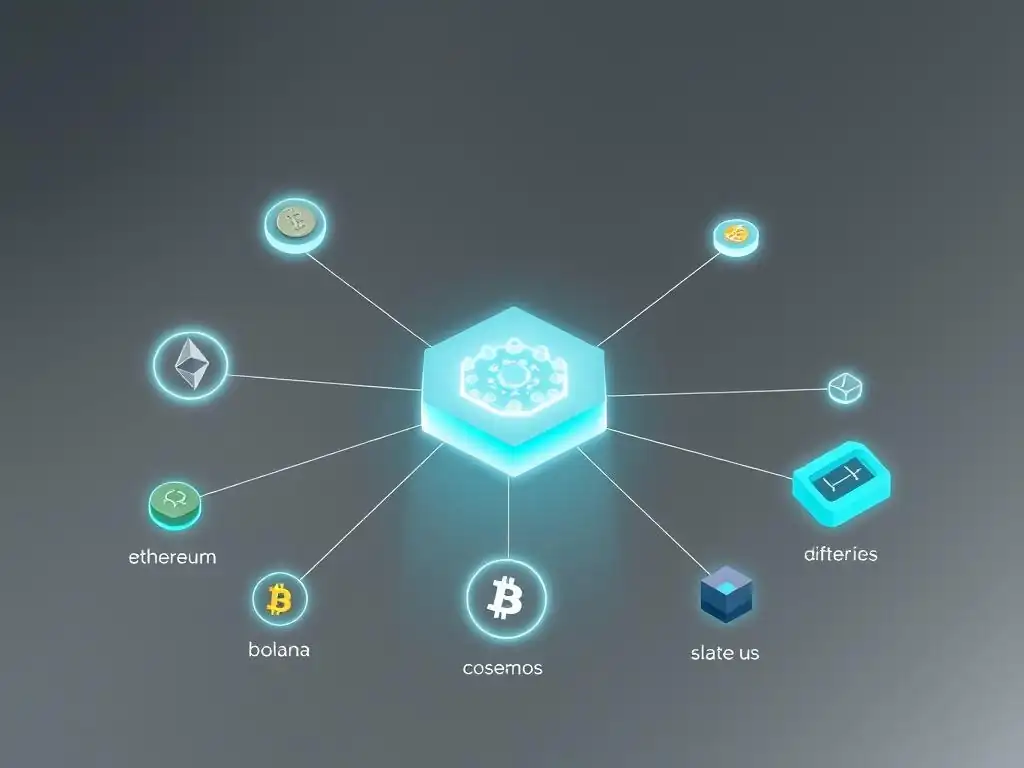
Polkadot vs. Ethereum: A Comparative Analysis of Interoperability Solutions
When comparing Polkadot's Relay Chain to Ethereum in terms of interoperability, significant architectural differences emerge. Polkadot's Relay Chain is purpose-built for interoperability from the ground up, employing a heterogeneous multi-chain architecture where parachains inherently communicate through the Relay Chain. This design provides a native and secure interoperability layer within the Polkadot ecosystem. Ethereum, initially designed as a monolithic blockchain, is evolving its interoperability capabilities through Layer-2 solutions and sharding.
Ethereum's current interoperability solutions often rely on bridges to connect to other blockchains. While bridges enable cross-chain communication, they can introduce complexities and potential security vulnerabilities. Polkadot's Relay Chain, by contrast, offers a more integrated and potentially more secure approach to interoperability within its ecosystem. Furthermore, Polkadot's parachain model allows for specialized blockchains tailored to specific use cases, whereas Ethereum, even with sharding, aims to maintain a more general-purpose blockchain, although Layer-2 solutions are adding specialization. The Polkadot relay chain benefits in interoperability are rooted in its foundational architecture, contrasting with Ethereum's more evolutionary approach.
Cosmos vs. Polkadot: Understanding Differences in Hub-and-Spoke Models
Both Cosmos and Polkadot utilize a hub-and-spoke model for interoperability, but their implementations and philosophies differ significantly. Polkadot's Relay Chain acts as a central hub providing shared security to connected parachains. Parachains inherit the security of the Relay Chain, creating a tightly coupled ecosystem with strong security guarantees. Cosmos, on the other hand, employs a network of hubs and zones. Zones are sovereign blockchains responsible for their own security, and hubs facilitate Inter-Blockchain Communication (IBC) between zones.
The key difference lies in the security model. Polkadot's Relay Chain offers shared security, while Cosmos zones are independently secured. This means Polkadot parachains benefit from the robust security of the Relay Chain validators, while Cosmos zones are responsible for bootstrapping and maintaining their own validator sets.
Cosmos offers greater sovereignty and independence to zones, while Polkadot provides stronger integrated security and potentially simpler development for parachains seeking robust security. Understanding these differences in their hub-and-spoke models highlights the distinct approaches to interoperability and security taken by Cosmos and Polkadot, showcasing varying Polkadot relay chain benefits compared to the Cosmos model.
Comparison of Interoperability Solutions: Polkadot, Ethereum, and Cosmos
Comparing the interoperability solutions of Polkadot, Ethereum, and Cosmos reveals distinct approaches to blockchain connectivity. Polkadot, with its Relay Chain, offers a natively interoperable ecosystem with shared security and specialized parachains. This model emphasizes strong integration and security within the Polkadot network. Ethereum is evolving towards interoperability through Layer-2 solutions and sharding, initially relying more on bridges, which presents a more fragmented approach with potentially varying security levels. Cosmos utilizes IBC and a network of hubs and zones, prioritizing sovereignty and independence for connected blockchains, with zones responsible for their own security.
Polkadot prioritizes integrated interoperability and shared security through its Relay Chain, offering significant Polkadot relay chain benefits in terms of security and ease of cross-chain communication within its ecosystem. Ethereum is taking a more layered and evolutionary approach, with interoperability emerging as a secondary consideration to its core functionality. Cosmos champions sovereign interoperability, allowing independent blockchains to connect and communicate while maintaining their own security and governance. Each approach offers different trade-offs in terms of security, sovereignty, and complexity, catering to diverse needs and priorities within the blockchain space.
The Future of Polkadot's Relay Chain: Innovations and Developments
Upcoming Upgrades and Enhancements to the Relay Chain
The Polkadot Relay Chain is continuously being developed and enhanced, with several upcoming upgrades aimed at improving its performance, flexibility, and efficiency. One notable development is Asynchronous Backing, which promises to significantly reduce parachain block inclusion times, leading to faster transaction finality and improved overall network speed. This upgrade is expected to enhance the responsiveness and user experience of parachains within the Polkadot ecosystem.
Another significant area of development is Parathreads. Parathreads are envisioned as a pay-as-you-go model for parachain functionality, allowing blockchains to temporarily connect to the Relay Chain without needing to secure a dedicated parachain slot. This innovation will lower the barrier to entry for new projects and enable more flexible and cost-effective access to Polkadot's interoperability and security features. These and other ongoing developments underscore Polkadot's commitment to continuous innovation and improvement of the Relay Chain, further enhancing the Polkadot relay chain benefits and solidifying its position as a leading interoperability platform.
The Impact of the Relay Chain on Polkadot's Ecosystem Growth
The Relay Chain serves as the bedrock for the growth and expansion of the Polkadot ecosystem. Its robust security, scalability, and interoperability features are fundamental in attracting new projects and fostering innovation within the network. The ease of launching parachains and the shared security model significantly lower the barriers to entry for developers and businesses looking to build blockchain applications. This encourages a vibrant and diverse ecosystem of parachains, each contributing unique functionalities and use cases to the Polkadot network.
As the Relay Chain evolves and incorporates new upgrades, its capacity to support a larger number of parachains and handle increased transaction volumes will further accelerate ecosystem growth. The Polkadot relay chain benefits are not just theoretical advantages; they are tangible drivers of ecosystem expansion, attracting developers, users, and businesses to build and participate in the Polkadot network. This growth creates a positive feedback loop, where a larger and more diverse ecosystem attracts even more participants, solidifying Polkadot's position as a leading platform for blockchain innovation and interoperability.
Polkadot's Relay Chain and the Evolution of Blockchain Interoperability
Polkadot's Relay Chain represents a significant step forward in the evolution of blockchain interoperability. Its innovative architecture and focus on cross-chain communication have established a new paradigm for how blockchains can interact and collaborate. By providing a secure and efficient platform for interoperability, the Relay Chain is contributing to a more connected and collaborative blockchain landscape, moving away from isolated and siloed blockchain networks.
The Polkadot relay chain benefits extend beyond the Polkadot ecosystem itself. Its success and adoption are influencing the broader blockchain space, encouraging other platforms to explore and implement interoperability solutions. Polkadot's approach is demonstrating the potential of interconnected blockchain networks to unlock new use cases and drive wider adoption of blockchain technology. As the blockchain industry matures, the principles and technologies pioneered by the Polkadot Relay Chain are likely to play an increasingly important role in shaping the future of blockchain interoperability and the overall evolution of the decentralized web.
Polkadot Relay Chain Benefits: A Summary of Advantages
The shared security model of the Polkadot Relay Chain provides a significant advantage to parachains. By leveraging the collective security of Relay Chain validators, parachains avoid the complex and resource-intensive process of bootstrapping their own security. This cost-effective and robust security framework is a key Polkadot relay chain benefit, making it easier and more secure for projects to launch and operate within the Polkadot ecosystem.
Scalability and Parallel Processing Capabilities
The Relay Chain's architecture enables parallel processing of transactions across parachains, leading to enhanced scalability. This capability allows the Polkadot network to handle a significantly higher volume of transactions compared to monolithic blockchains. The scalability advantages offered by the Polkadot relay chain benefits are crucial for supporting the growth and adoption of blockchain applications requiring high throughput and performance.
Interoperability and Cross-Chain Functionality
The Relay Chain facilitates seamless communication and data exchange between parachains through XCM. This interoperability enables the creation of cross-chain applications and services, unlocking new possibilities for innovation and collaboration within the blockchain space. The Polkadot relay chain benefits in terms of interoperability are central to its design and a key driver of its value proposition.
Future Developments and Potential Impact
Ongoing developments and upgrades to the Relay Chain, such as Asynchronous Backing and Parathreads, promise to further enhance its performance, flexibility, and accessibility. These innovations will solidify the Polkadot relay chain benefits and contribute to the continued growth and evolution of the Polkadot ecosystem, further shaping the future of blockchain interoperability and its impact on the wider technology landscape.
Frequently Asked Questions
What is the primary role of the Polkadot relay chain?
The Polkadot relay chain serves as the central hub for the entire Polkadot network. It provides security and interoperability to connected parachains, enabling them to communicate and transact with each other. It is the core infrastructure of Polkadot.
How does the Polkadot relay chain facilitate interoperability between different blockchains?
The relay chain allows parachains, which are independent blockchains, to connect and communicate. It provides a shared security and consensus mechanism, ensuring trust and seamless data transfer between them. This cross-chain communication is its key benefit.
What are some key benefits of the Polkadot relay chain for developers?
Developers benefit from the shared security and interoperability offered by the relay chain. This allows them to focus on building their specific application logic without worrying about bootstrapping a new consensus mechanism.
How does the Polkadot relay chain contribute to the overall scalability of the Polkadot network?
By distributing the workload across numerous parachains, the relay chain enables horizontal scalability. Each parachain can process transactions independently, and the relay chain orchestrates the overall network function. This prevents bottlenecks.
What is the significance of validators in the Polkadot relay chain's operation?
Validators are responsible for securing the relay chain and validating transactions from parachains. They participate in consensus and governance, ensuring the integrity and security of the entire Polkadot network through staking DOT tokens.
Final Reflection: Embracing the Interconnected Future
The exploration of Polkadot's Relay Chain and its myriad benefits underscores a fundamental shift in how we perceive blockchain technology, highlighting the move from isolated silos to a seamlessly interconnected ecosystem. The potential for enhanced scalability, security, and innovation offered by this architecture is not just a theoretical possibility; it represents a tangible pathway towards a more collaborative and efficient digital future, one where diverse blockchains can communicate and transact with unprecedented ease.
The promise of true interoperability, facilitated by the Polkadot Relay Chain, has profoundly influenced the blockchain landscape, fostering a spirit of collaboration and pushing the boundaries of what's possible. Witnessing this evolution firsthand has solidified my belief in the power of decentralized networks to reshape industries and empower individuals. The future is already here – it's just not evenly distributed.
- William Gibson. This quote resonates deeply, reminding us that the transformative potential of Polkadot, while already evident, is still unfolding and poised to impact countless aspects of our lives.
As we stand on the cusp of this interconnected future, I invite you to consider the implications of Polkadot's Relay Chain and its vision for a decentralized web. Reflect on how these advancements might impact your own endeavors, and explore the opportunities to contribute to this evolving ecosystem. Embrace the spirit of collaboration and innovation that Polkadot embodies, and become a part of building a more connected and empowered world.
Dive Deeper: Unlock Polkadot's Interoperability Potential!
Thank you for exploring the intricacies of Polkadot's Relay Chain with us. You've gained valuable insight into how this innovative technology is transforming blockchain interoperability. Are you ready to take the next step?
Here are some ways to deepen your understanding and engage more actively with Polkadot:
- Explore Polkadot's official documentation and start experimenting with creating your own parachain. Hands-on experience is essential to truly understand its capabilities.
- Join the Polkadot community forums to share your thoughts and ask questions with other developers and enthusiasts. Collaborate to shape the future of Web3!
- Consider staking your DOT tokens by delegating them to a validator. This allows you to participate in securing the network and earn rewards while supporting its stability.
What are your initial thoughts on the long-term potential of Polkadot for cross-chain communication? Which parachain use case excites you the most? Share your ideas in the comments below!
Leave a Reply