
CrossChain Governance: Participating in DAOs Across Multiple Blockchains


Welcome to Blockchain Trends, your compass in the ever-evolving world of decentralized technology. Are you ready to venture beyond the familiar and unlock the true potential of blockchain? This week, we're diving deep into the intricate world of Crosschain Decentralized Autonomous Organization Governance. Discover how DAOs are evolving to transcend single blockchain limitations, and what it means for the future of collaborative decision-making in DeFi and beyond. Intrigued? Let's explore the possibilities together...
Cross-Chain Governance: Participating in DAOs Across Multiple Blockchains
- Introduction to Cross-Chain DAO Governance
- Challenges and Opportunities in Cross-Chain DAO Participation
- Mechanisms for Cross-Chain DAO Governance
-
Implementing Cross-Chain DAO Governance: A Step-by-Step Guide
- Step 1: Identifying Governance Needs Across Different Chains
- Step 2: Selecting the Appropriate Cross-Chain Governance Mechanism
- Step 3: Integrating Cross-Chain Voting and Communication Protocols
- Step 4: Testing and Auditing the Cross-Chain Governance System
- Step 5: Community Education and Onboarding for Cross-Chain Participation
- Real-World Examples of Cross-Chain DAO Governance in Action
- The Future of Cross-Chain Governance and Decentralized Organizations
- Conclusion: Embracing Cross-Chain Governance for a More Decentralized Future
-
Frequently Asked Questions
- What is Crosschain Decentralized Autonomous Organization (DAO) Governance?
- Why is Crosschain DAO Governance important?
- What are the key challenges in implementing Crosschain DAO Governance?
- What technologies enable Crosschain DAO Governance?
- What are some potential use cases for Crosschain DAO Governance?
- Final Reflection: Embracing the Decentralized Future
- Unlock Cross-Chain Influence: Your DAO Journey Starts Now!
Introduction to Cross-Chain DAO Governance
Understanding the Need for Cross-Chain Governance in DAOs
Decentralized Autonomous Organizations (DAOs) have emerged as a revolutionary model for community-led governance and decision-making, primarily within blockchain ecosystems. Initially, DAOs operated predominantly within single blockchain environments. However, the rapid proliferation of diverse blockchains, each with unique strengths and communities, has created a fragmented landscape. This fragmentation presents a significant challenge for DAOs seeking to expand their reach, access wider talent pools, and leverage the diverse functionalities offered by different blockchain networks. The need for cross-chain governance arises directly from this multi-chain reality, as DAOs recognize the limitations of operating in isolation and the potential benefits of interoperability.
The demand for cross-chain decentralized autonomous organization governance is driven by several factors. Firstly, asset diversification is a key consideration. Many DAOs manage treasuries that hold assets across various blockchains. Governing these diverse holdings effectively necessitates mechanisms that can operate across these chains. Secondly, community engagement is enhanced. A DAO might have members distributed across different blockchain ecosystems.
Cross-chain governance allows for unified decision-making, regardless of the blockchain preference of individual members. Finally, functional specialization of blockchains plays a role. Different blockchains are optimized for different applications. A DAO might utilize one blockchain for fast transactions, another for secure data storage, and yet another for specific DeFi protocols. Cross-chain governance enables the orchestration of DAO operations across these specialized chains, maximizing efficiency and utility.
Defining Cross-Chain Decentralized Autonomous Organizations (DAOs)
A Cross-Chain Decentralized Autonomous Organization (DAO) is an evolution of the traditional DAO model, designed to operate and govern resources and activities across multiple distinct blockchain networks. Unlike single-chain DAOs, which are confined to the ecosystem of a single blockchain, cross-chain DAOs leverage interoperability solutions to extend their governance mechanisms and decision-making processes to encompass multiple chains. This expansion is not merely about deploying the same DAO on different chains; it's about creating a unified governance structure that can interact with and manage assets, protocols, or operations distributed across various blockchain environments.
The core concept of a cross-chain DAO revolves around the ability to coordinate actions and make collective decisions that affect resources and operations on more than one blockchain. This involves establishing mechanisms for communication, consensus, and execution that transcend the boundaries of individual chains. Imagine a DAO that manages a decentralized exchange (DEX) with liquidity pools deployed on Ethereum, Polygon, and Avalanche.
A cross-chain DAO would enable token holders to vote on proposals that affect the DEX's parameters, liquidity distribution, or future development across all three chains, rather than requiring separate governance processes for each chain. This unified approach enhances efficiency, reduces fragmentation, and unlocks the full potential of decentralized governance in a multi-chain world.
The Evolution of DAO Governance: From Single-Chain to Multi-Chain
The initial wave of DAOs emerged primarily on Ethereum, leveraging its smart contract capabilities and vibrant developer community. These early DAOs were inherently single-chain entities, their governance, tokenomics, and operations confined within the Ethereum ecosystem. Governance decisions, such as protocol upgrades or treasury management, were executed and recorded solely on the Ethereum blockchain. Examples like MakerDAO and Uniswap, while groundbreaking, initially operated within this single-chain paradigm. Voting, proposal submission, and execution all took place within the confines of Ethereum's network.
As the blockchain landscape matured, the limitations of single-chain DAOs became apparent. The rise of layer-2 solutions and alternative layer-1 blockchains, like Polygon, Avalanche, and Fantom, offered faster transactions, lower fees, and specialized functionalities. This diversification led to a need for DAOs to expand their reach and tap into the benefits of these new ecosystems.
The evolution towards multi-chain DAOs began with simple deployments of DAO contracts on multiple chains, but quickly progressed to the more complex concept of cross-chain governance. This evolution reflects a broader trend in the blockchain space towards interoperability and the recognition that a fragmented, siloed approach hinders the growth and adoption of decentralized technologies. Cross-chain governance represents the next logical step in DAO evolution, enabling them to operate effectively and efficiently in a truly interconnected, multi-chain future.
Challenges and Opportunities in Cross-Chain DAO Participation
Fragmentation of Governance Power Across Chains
One of the primary challenges in cross-chain decentralized autonomous organization governance is the potential fragmentation of governance power. When a DAO expands its operations across multiple blockchains without a unified governance framework, it risks diluting the influence of token holders and creating disparate governance silos. Imagine a DAO that deploys its token and governance contracts on both Ethereum and Binance Smart Chain (BSC) without cross-chain governance.
Token holders on Ethereum might have no say in decisions affecting the DAO's operations on BSC, and vice versa. This separation can lead to inconsistent governance, reduced participation, and a weakened sense of collective ownership.
This fragmentation can manifest in several ways. Firstly, separate governance processes on each chain can lead to conflicting decisions. For instance, token holders on one chain might vote for a protocol upgrade that is incompatible with the version deployed on another chain. Secondly, it can dilute voting power.
If the total token supply is split across multiple chains, and voting occurs separately on each, the influence of individual token holders might be reduced. Finally, it can complicate community coordination. Maintaining separate communication channels and governance forums for each chain can fragment the community and make it harder to reach consensus and unified action. Addressing this fragmentation is crucial for ensuring effective and cohesive cross-chain DAO governance.
Scalability Issues in Cross-Chain Voting Mechanisms
Scalability presents a significant hurdle for cross-chain voting mechanisms. Traditional on-chain voting, even within a single blockchain, can face scalability limitations, especially during periods of high network congestion. Extending voting processes across multiple chains introduces additional layers of complexity and potential bottlenecks. Simply replicating on-chain voting mechanisms on each chain and aggregating results can be inefficient and costly, particularly if the DAO operates on chains with varying transaction fees and block times.
Consider a scenario where a DAO needs to conduct a cross-chain vote involving thousands of token holders across Ethereum, Polygon, and Arbitrum. If each vote requires on-chain transactions on each chain, the gas costs on Ethereum could become prohibitive. Moreover, the different block confirmation times across these chains can lead to delays in aggregating voting results and executing decisions.
Furthermore, some cross-chain voting mechanisms rely on message passing between chains, which can introduce latency and potential points of failure. Developing scalable and cost-effective cross-chain voting solutions is essential for ensuring broad participation and efficient governance in multi-chain DAOs. Solutions like off-chain voting with on-chain execution, or aggregated voting through Layer-0 protocols, are being explored to address these scalability challenges.
Security Considerations for Cross-Chain Governance Protocols
Security is paramount in any blockchain application, and cross-chain governance protocols are no exception. The complexity inherent in bridging multiple blockchains and coordinating governance across them introduces new attack vectors and security risks. Cross-chain communication protocols, token bridges, and multi-signature schemes, which are often integral to cross-chain governance, are all potential points of vulnerability that malicious actors can exploit.
One major security concern is bridge security. Token bridges, which facilitate the transfer of assets and data between chains, have been targets of high-profile exploits. If a bridge used for cross-chain governance is compromised, it could lead to the theft of DAO treasury assets or the manipulation of governance processes. Another concern is the security of cross-chain communication protocols.
If the protocols used to relay voting signals or governance commands between chains are vulnerable, attackers could intercept or tamper with these messages, potentially disrupting governance or enacting unauthorized changes. Furthermore, multi-signature schemes used for cross-chain execution require robust key management and security practices to prevent unauthorized access and malicious actions. Rigorous security audits, robust cryptographic protocols, and decentralized bridge designs are crucial for mitigating these security risks and ensuring the integrity of cross-chain DAO governance.
Opportunities for Enhanced Decentralization and Collaboration
Despite the challenges, cross-chain decentralized autonomous organization governance presents significant opportunities for enhanced decentralization and collaboration within the blockchain space. By breaking down the silos of single-chain ecosystems, cross-chain DAOs can foster greater inclusivity, expand their reach, and leverage the diverse strengths of different blockchain communities and technologies. This interconnectedness can lead to more robust, resilient, and innovative decentralized organizations.
One key opportunity is enhanced decentralization. Cross-chain governance allows DAOs to distribute their governance and operations across multiple blockchains, reducing reliance on any single chain and mitigating the risks associated with single points of failure. This distribution of power can make DAOs more resistant to censorship, attacks, and regulatory capture. Furthermore, cross-chain governance can foster greater collaboration between different blockchain communities.
By enabling seamless interaction and governance across chains, DAOs can tap into a wider pool of talent, resources, and expertise, leading to more innovative solutions and faster development. For example, a cross-chain DAO could leverage the strong developer community on Ethereum, the fast transaction speeds of Solana, and the privacy features of Zcash to build a truly powerful and versatile decentralized application. This collaborative approach can accelerate the growth and adoption of decentralized technologies and create a more interconnected and interoperable blockchain ecosystem.
Mechanisms for Cross-Chain DAO Governance
Token Bridging and Cross-Chain Voting
How Token Bridging Facilitates Cross-Chain Governance
Token bridging is a fundamental mechanism that underpins cross-chain decentralized autonomous organization governance by enabling the transfer of governance tokens across different blockchain networks. For a DAO to operate across multiple chains, its governance token, which represents voting rights and DAO membership, needs to be accessible and usable on these various chains. Token bridges facilitate this by allowing users to "bridge" or move their tokens from one blockchain to another, effectively creating wrapped or representative versions of the original token on the destination chain.
Consider a DAO whose native token is primarily on Ethereum. To enable governance participation on Polygon, a token bridge would allow token holders to lock their ETH-based tokens and receive an equivalent amount of wrapped tokens on Polygon. These wrapped tokens on Polygon represent the original tokens and carry the same governance rights within the DAO's Polygon ecosystem.
This bridging process is crucial because it allows token holders to participate in governance decisions, propose changes, and vote on proposals related to the DAO's operations on Polygon, even if their original tokens reside on Ethereum. Without token bridging, governance would be fragmented, and token holders on different chains would be unable to participate in unified decision-making. Token bridging effectively extends the reach of the governance token and enables a unified governance structure across multiple blockchain environments.
Different Approaches to Cross-Chain Voting (e.g., Snapshot, Tally)
Several approaches are emerging to facilitate cross-chain voting in DAOs, building upon token bridging infrastructure. These methods aim to aggregate voting power distributed across different chains and enable unified decision-making. Two prominent examples of platforms that support cross-chain voting are Snapshot and Tally, although their cross-chain functionalities are evolving and may require specific configurations or integrations.
Snapshot, primarily known for its off-chain voting capabilities, can be adapted for cross-chain scenarios. While Snapshot itself doesn't directly execute on-chain transactions across multiple chains, it can be used to collect votes from users holding bridged tokens on different networks. For example, a DAO could use Snapshot to conduct a vote where token holders on Ethereum, Polygon, and Avalanche can participate.
Users would connect their wallets on each chain to Snapshot, and their voting power would be calculated based on their token holdings across these chains. The vote results, aggregated off-chain by Snapshot, could then be used to inform on-chain execution, potentially through multi-signature wallets or specialized smart contracts on the respective chains.
Tally, another governance platform, is also exploring cross-chain governance solutions. Tally focuses on on-chain governance and provides tools for proposal creation, voting, and execution. While natively designed for single-chain governance, Tally's architecture can be extended to support cross-chain voting by integrating with bridging solutions and cross-chain communication protocols.
For instance, Tally could be configured to track bridged tokens across different chains and aggregate voting power for on-chain execution on a designated "main" chain or through coordinated actions across multiple chains. The specific implementation details for both Snapshot and Tally in cross-chain governance are still developing, and DAOs need to carefully evaluate their requirements and technical capabilities when choosing a cross-chain voting approach. Other emerging platforms and custom-built solutions are also contributing to the evolving landscape of cross-chain voting mechanisms.
Layer-0 Interoperability Solutions for DAO Management
Utilizing Layer-0 Protocols for Unified DAO Control
Layer-0 interoperability solutions, like Polkadot and Cosmos, offer a more integrated approach to cross-chain decentralized autonomous organization governance by providing a foundational layer for interoperability and communication between blockchains. Unlike token bridges that primarily focus on asset transfer, Layer-0 protocols aim to create an "internet of blockchains," enabling seamless data and message passing across heterogeneous networks. This infrastructure can be leveraged to establish unified DAO control across multiple chains, moving beyond simple token bridging to more sophisticated cross-chain governance mechanisms.
Layer-0 protocols facilitate cross-chain governance by providing a common communication layer. For example, a DAO built on a Layer-0 protocol could deploy its core governance logic on the Layer-0 itself or on a designated "hub" chain. This hub chain can then communicate with "parachains" (in Polkadot) or "zones" (in Cosmos) representing different blockchains where the DAO has deployed applications or assets.
Governance proposals initiated on the hub chain can be relayed to and voted upon by token holders across all connected parachains or zones. Similarly, execution of governance decisions can be coordinated across these chains through the Layer-0's communication infrastructure.
This approach offers a more streamlined and potentially more secure way to manage cross-chain governance compared to relying solely on token bridges and separate voting platforms. Layer-0 solutions aim to abstract away much of the complexity of cross-chain communication, making it easier for DAOs to build and manage truly interoperable governance structures.
Examples of Layer-0 Solutions: Polkadot, Cosmos
Polkadot and Cosmos are two prominent examples of Layer-0 protocols that are actively being explored for cross-chain DAO governance. Both platforms offer distinct architectures and approaches to interoperability, but share the common goal of enabling seamless communication and interaction between diverse blockchains.
Polkadot utilizes a "relay chain" architecture. The Relay Chain acts as the central hub, providing security and interoperability for connected "parachains." DAOs can leverage Polkadot by deploying their governance logic and core contracts on the Relay Chain or a designated parachain. Parachains, which can be custom-built blockchains tailored to specific applications, can then interact with the governance mechanisms on the Relay Chain.
For cross-chain governance, Polkadot's Cross-Consensus Messaging (XCM) format allows for secure and efficient message passing between parachains and the Relay Chain. This enables a DAO to coordinate governance decisions and actions across its ecosystem of parachains in a unified and secure manner. For example, a DAO operating a DEX across multiple parachains could use XCM to relay governance proposals, voting results, and execution commands between these parachains, all coordinated through the Relay Chain.
Cosmos takes a different approach with its "Internet of Blockchains" vision. Cosmos uses the Inter-Blockchain Communication Protocol (IBC) to facilitate interoperability between independent blockchains called "zones." Each zone in Cosmos is a sovereign blockchain, and IBC allows for secure and reliable transfer of assets and data between these zones. DAOs can leverage Cosmos by deploying their applications and assets across multiple zones and using IBC for cross-chain governance.
For instance, a DAO could operate a lending protocol with markets on different Cosmos zones. Using IBC, governance proposals initiated on one zone could be relayed to other zones for voting and execution. Cosmos's Interchain Accounts feature further enhances cross-chain governance by allowing one blockchain to directly control accounts on another blockchain, enabling more complex cross-chain actions and automation. Both Polkadot and Cosmos offer powerful infrastructure for building sophisticated cross-chain DAOs, although the specific implementation and best practices are still evolving.
Cross-Chain Communication Protocols and Their Role in Governance
Importance of Secure and Reliable Cross-Chain Communication
Secure and reliable cross-chain communication protocols are the backbone of effective cross-chain decentralized autonomous organization governance. These protocols enable the transmission of crucial governance-related information, such as proposals, votes, and execution commands, between different blockchain networks. The integrity and security of these communication channels are paramount because any vulnerabilities or failures can directly undermine the DAO's governance processes, potentially leading to manipulation, disruption, or loss of funds.
The importance of secure cross-chain communication stems from the inherent trust assumptions in blockchain systems. Each blockchain operates with its own consensus mechanism and security model. When communicating across chains, DAOs must rely on protocols that can bridge these trust boundaries without introducing new vulnerabilities. Unreliable communication can lead to governance failures. Imagine a scenario where voting signals are lost or delayed during transmission between chains.
This could result in inaccurate vote counts, missed deadlines, or even the failure to execute valid governance decisions. Similarly, insecure communication channels are susceptible to attacks. Malicious actors could intercept, tamper with, or forge governance messages, potentially manipulating voting outcomes or enacting unauthorized actions. Therefore, robust and secure cross-chain communication protocols are indispensable for ensuring the integrity, reliability, and security of cross-chain DAO governance.
Exploring Cross-Chain Communication Protocols: Chainlink CCIP, Wormhole
Several cross-chain communication protocols are emerging to address the need for secure and reliable interoperability, and some are specifically designed for or adaptable to cross-chain governance applications. Two notable examples are Chainlink CCIP (Cross-Chain Interoperability Protocol) and Wormhole.
Chainlink CCIP is a protocol designed to provide secure and reliable cross-chain communication for various use cases, including cross-chain governance. CCIP leverages Chainlink's decentralized oracle network to relay messages and data between different blockchains with a high degree of security and fault tolerance. CCIP aims to achieve this through features like anti-fraud networks and rate limiting, designed to mitigate risks associated with cross-chain communication.
For cross-chain governance, CCIP can be used to securely transmit governance proposals, voting signals, and execution commands between different blockchains where a DAO operates. For example, a DAO could use CCIP to relay a governance proposal initiated on Ethereum to its deployments on Polygon and Avalanche, ensuring that the proposal is reliably delivered to all relevant chains for voting and execution.
Wormhole is another prominent cross-chain messaging protocol that supports a wide range of blockchains. Wormhole utilizes a network of "guardians" to attest to events on one chain and relay messages to another chain. While Wormhole has faced security challenges in the past, it has undergone significant upgrades and continues to be a widely used protocol for cross-chain communication.
For cross-chain governance, Wormhole can facilitate the transfer of governance messages and data between different blockchains. For instance, a DAO could use Wormhole to relay voting results from different chains to a central chain for aggregation and execution of governance actions. When selecting a cross-chain communication protocol for governance, DAOs must carefully evaluate factors such as security audits, protocol architecture, reliability, and community support to ensure they choose a protocol that meets their specific governance needs and security requirements.
Implementing Cross-Chain DAO Governance: A Step-by-Step Guide
Step 1: Identifying Governance Needs Across Different Chains
The first crucial step in implementing cross-chain decentralized autonomous organization governance is to thoroughly identify the specific governance needs across each blockchain where the DAO operates or plans to expand. This involves analyzing the DAO's activities, assets, and community presence on each chain to determine the scope and nature of governance decisions that need to be coordinated across chains. A generic, one-size-fits-all approach to cross-chain governance is unlikely to be effective; instead, a tailored strategy based on specific needs is essential.
This step requires a detailed assessment of several factors. Firstly, asset distribution across chains is critical. Where are the DAO's treasury assets located? Are they evenly distributed, or concentrated on specific chains? Governance needs will vary depending on the distribution and types of assets held on each chain.
Secondly, protocol deployments are important. Is the DAO deploying different functionalities or protocols on different chains? Governance might need to address chain-specific parameters, upgrades, or risk management for these deployments. Thirdly, community engagement on each chain should be considered. Is the DAO actively engaging with communities on multiple chains?
Cross-chain governance should aim to include and empower these diverse communities in decision-making. Finally, operational dependencies between chains need to be understood. Are there cross-chain dependencies in the DAO's operations, such as liquidity pools spanning multiple chains or cross-chain yield strategies? Governance mechanisms need to address these interdependencies effectively. By carefully analyzing these factors, DAOs can define their specific cross-chain governance needs and tailor their implementation strategy accordingly.
Step 2: Selecting the Appropriate Cross-Chain Governance Mechanism
Once the governance needs across different chains are clearly identified, the next step is to select the most appropriate cross-chain governance mechanism. This selection process should be guided by the identified needs, as well as factors such as security considerations, scalability requirements, community preferences, and technical feasibility. There is no single "best" mechanism; the optimal choice depends on the specific context and priorities of the DAO.
Several mechanisms are available, as discussed previously. Token bridging and cross-chain voting can be a relatively straightforward approach for DAOs that primarily need to coordinate token-weighted voting across chains. Platforms like Snapshot or Tally, potentially with custom integrations, can be utilized for this purpose. Layer-0 interoperability solutions, such as Polkadot or Cosmos, offer a more comprehensive and integrated approach for DAOs seeking deeper cross-chain coordination and control.
These solutions are particularly suitable for DAOs building complex cross-chain applications or ecosystems. Cross-chain communication protocols, like Chainlink CCIP or Wormhole, are essential building blocks for any cross-chain governance mechanism. The choice of protocol will depend on security requirements, reliability needs, and blockchain compatibility.
Furthermore, DAOs need to consider the trade-offs between on-chain and off-chain governance in a cross-chain context. While on-chain voting provides greater transparency and verifiability, off-chain solutions like Snapshot can offer better scalability and lower costs, especially for large-scale cross-chain votes. The selection process should involve careful evaluation of these different mechanisms, considering their strengths, weaknesses, and suitability for the DAO's specific cross-chain governance objectives.
Step 3: Integrating Cross-Chain Voting and Communication Protocols
After selecting the appropriate cross-chain governance mechanism, the next step is the technical integration of chosen voting and communication protocols. This stage involves the actual development and deployment of smart contracts, infrastructure, and interfaces necessary to enable cross-chain governance functionality. The complexity of this integration will vary significantly depending on the chosen mechanisms and the existing technical infrastructure of the DAO.
For DAOs opting for token bridging and cross-chain voting, integration might involve deploying wrapped token contracts on different chains, integrating with a voting platform like Snapshot or Tally, and potentially developing custom scripts or smart contracts to execute governance decisions based on aggregated voting results. This might also require integrating with cross-chain communication protocols to relay voting signals or execution commands between chains. For DAOs leveraging Layer-0 solutions, integration will involve building on top of the chosen Layer-0 protocol, deploying governance logic on the hub chain or parachain, and configuring cross-chain communication channels within the Layer-0 ecosystem.
This might require deeper technical expertise in Layer-0 development and architecture. Regardless of the chosen mechanism, thorough testing and security audits are crucial during the integration phase. Smart contracts must be rigorously tested to ensure they function correctly and securely across chains.
Communication protocols need to be verified for reliability and resistance to attacks. The integration process should be approached systematically, with clear development milestones, thorough testing, and ongoing security considerations.
Step 4: Testing and Auditing the Cross-Chain Governance System
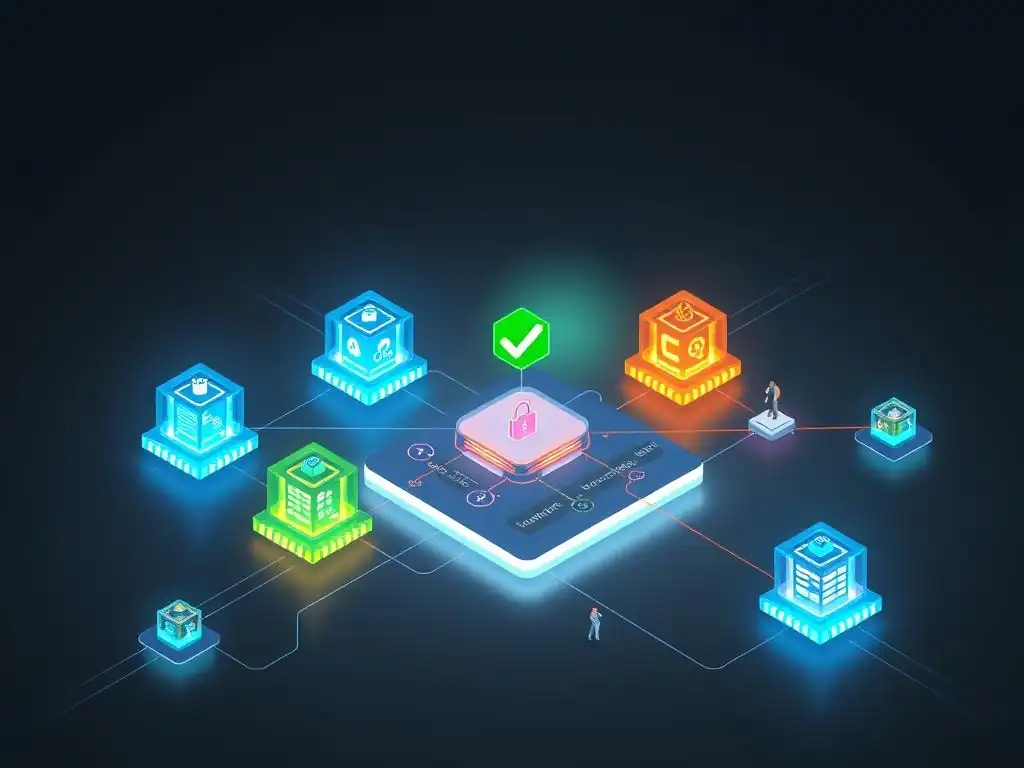
Before deploying a cross-chain decentralized autonomous organization governance system to mainnet, rigorous testing and auditing are absolutely essential. Given the complexities and potential security risks associated with cross-chain interactions, thorough validation is crucial to ensure the system functions as intended, is secure against vulnerabilities, and can withstand real-world usage scenarios. This step is not merely a formality but a critical safeguard against potential exploits, governance failures, and loss of funds.
Testing should encompass various aspects of the cross-chain governance system. Functional testing should verify that all governance processes, such as proposal creation, voting, and execution, work correctly across chains. This includes testing token bridging mechanisms, cross-chain voting aggregation, and the relay of governance commands. Performance testing should assess the scalability and efficiency of the system under different load conditions.
This includes testing voting processes with a large number of participants and evaluating the latency and throughput of cross-chain communication protocols. Security testing is paramount. This includes penetration testing to identify potential vulnerabilities in smart contracts, communication protocols, and infrastructure. Smart contract audits by reputable security firms are highly recommended to identify and mitigate potential security risks.
Audits should focus on cross-chain specific vulnerabilities, such as bridge security, cross-chain message integrity, and multi-signature scheme security. User acceptance testing (UAT) should involve real users from the DAO community to test the user experience and identify any usability issues. Thorough testing and auditing are not one-time events but should be ongoing processes, especially as the cross-chain governance system evolves and new functionalities are added.
Step 5: Community Education and Onboarding for Cross-Chain Participation
The final, and equally important, step in implementing cross-chain decentralized autonomous organization governance is community education and onboarding. Even the most technically robust cross-chain governance system will be ineffective if the DAO community is not informed, engaged, and empowered to participate. Cross-chain governance introduces new complexities and concepts that may be unfamiliar to many DAO members. Therefore, proactive education and clear onboarding processes are crucial for ensuring broad participation and effective governance in a multi-chain environment.
Community education should focus on several key areas. Firstly, explaining the rationale and benefits of cross-chain governance is essential. Communicating why the DAO is adopting a cross-chain approach and how it benefits the community can foster buy-in and encourage participation. Secondly, clearly explaining the chosen cross-chain governance mechanisms is crucial.
This includes explaining how token bridging works, how voting will be conducted across chains, and how governance decisions will be executed. Visual aids, tutorials, and FAQs can be helpful in simplifying complex concepts. Thirdly, providing clear instructions and guides for participating in cross-chain governance is necessary. This includes step-by-step guides on bridging tokens, connecting wallets to different chains, and participating in voting processes.
User-friendly interfaces and tools can significantly improve the onboarding experience. Finally, ongoing communication and support are important. Regular updates on cross-chain governance initiatives, Q&A sessions, and community support channels can help address questions and concerns and ensure continued community engagement. Effective community education and onboarding are not just about disseminating information; they are about building a shared understanding and fostering a culture of active participation in cross-chain DAO governance.
Real-World Examples of Cross-Chain DAO Governance in Action
Case Study 1: Aave Implementing Cross-Chain Governance
Challenges Faced and Solutions Implemented
Aave, a leading decentralized lending protocol, has been actively exploring and implementing cross-chain governance to manage its expanding presence across multiple blockchains. As Aave deployed its protocol across chains like Polygon, Avalanche, and Fantom, the need for a unified governance mechanism to manage these deployments became increasingly apparent. Aave faced the challenge of coordinating governance decisions across these disparate ecosystems while ensuring efficient and inclusive participation from its community.
One key challenge was fragmented governance power. Without cross-chain governance, Aave communities on different chains would operate in silos, potentially leading to inconsistent protocol parameters or conflicting decisions. Another challenge was scalability and cost of on-chain voting across multiple chains, especially considering Ethereum's high gas fees.
To address these challenges, Aave has adopted a phased approach towards cross-chain governance. Initially, Aave relied on Snapshot for off-chain signaling votes, which allowed for broader community participation across chains without incurring high on-chain gas costs for every vote. These Snapshot votes served as indicators of community sentiment and guided subsequent on-chain governance actions.
For more formal on-chain governance, Aave utilized its native AAVE token on Ethereum for voting, with proposals and execution primarily focused on the Ethereum deployment. However, recognizing the need for more direct cross-chain governance, Aave has been exploring Layer-0 solutions and cross-chain communication protocols.
While specific details of Aave's fully implemented cross-chain governance architecture are continuously evolving and being rolled out, their approach highlights a pragmatic and iterative path towards achieving unified governance in a multi-chain environment. Aave's focus on community signaling through Snapshot, combined with ongoing exploration of advanced cross-chain technologies, demonstrates a commitment to building a robust and scalable cross-chain governance framework.
Results and Impact on DAO Participation
While Aave's cross-chain governance implementation is still evolving, the initial steps and strategies have shown promising results in enhancing DAO participation and streamlining decision-making across chains. The use of Snapshot for signaling votes has significantly broadened participation by lowering the barrier to entry for token holders on different chains.
By removing the need for costly on-chain voting for initial sentiment checks, Aave has enabled a more inclusive and representative governance process. Anecdotal evidence suggests that Snapshot votes on cross-chain related proposals have seen higher participation rates compared to purely Ethereum-centric proposals, indicating increased engagement from the broader Aave community across multiple chains.
The phased approach allows Aave to gradually implement more sophisticated cross-chain governance mechanisms without disrupting existing governance processes. By starting with off-chain signaling and then progressively integrating on-chain and potentially Layer-0 solutions, Aave is mitigating risks and allowing the community to adapt to the evolving cross-chain governance framework. Furthermore, Aave's active exploration of Layer-0 and cross-chain communication protocols demonstrates a forward-thinking approach to governance infrastructure.
By investing in these technologies, Aave is positioning itself to build a more robust and scalable cross-chain governance system in the long term. Although concrete quantitative data on the long-term impact of Aave's cross-chain governance is still emerging, the initial results and strategic direction indicate a positive trajectory towards enhanced decentralization, broader community participation, and more efficient decision-making in Aave's multi-chain ecosystem.
Case Study 2: Sushi Utilizing Layer-0 for DAO Management
Benefits of Layer-0 Integration
Sushi, a prominent decentralized exchange (DEX), has explored utilizing Layer-0 solutions, particularly Polkadot, for aspects of its DAO management and cross-chain interoperability. While Sushi's full migration to or integration with Layer-0 is an ongoing and complex process, the exploration highlights the potential benefits of Layer-0 solutions for cross-chain decentralized autonomous organization governance. One key benefit of Layer-0 integration for Sushi is enhanced interoperability.
Polkadot's architecture allows for seamless communication and data transfer between parachains. By leveraging Polkadot, Sushi could potentially unify its deployments across various blockchains, creating a more cohesive and interconnected ecosystem. This interoperability can extend to governance, enabling more streamlined cross-chain voting and decision-making.
Another significant benefit is improved scalability and efficiency. Layer-0 solutions like Polkadot are designed to address scalability limitations of individual blockchains. By offloading some governance or operational functions to a Layer-0, Sushi could potentially reduce congestion and gas costs on main chains like Ethereum. Furthermore, Layer-0 integration can offer enhanced security and customization.
Polkadot's Relay Chain provides shared security for parachains, potentially offering a more robust security model for Sushi's cross-chain operations. Parachains also offer greater customization, allowing Sushi to tailor blockchain environments to specific governance or application needs. While the full extent of Sushi's Layer-0 integration and its impact on governance are still developing, the exploration demonstrates the potential of Layer-0 solutions to address key challenges in cross-chain DAO management and unlock new possibilities for interoperable decentralized organizations.
Lessons Learned and Best Practices
Sushi's exploration of Layer-0 solutions for DAO management, even in its early stages, offers valuable lessons and insights for other DAOs considering cross-chain governance strategies. One key lesson is the complexity and long-term commitment involved in Layer-0 integration. Migrating or deeply integrating with a Layer-0 protocol is a significant undertaking that requires substantial technical resources, development effort, and community alignment. It's not a quick fix but a strategic decision that requires careful planning and execution.
Another lesson is the importance of community consensus and communication. Significant architectural changes like Layer-0 integration require strong community support and clear communication about the rationale, benefits, and potential challenges. Sushi's experience highlights the need for ongoing dialogue and transparency with the community throughout the exploration and implementation process.
Best practices emerging from Sushi's and similar DAO's experiences include starting with a phased approach. Instead of attempting a complete overhaul, DAOs can consider incremental integration of cross-chain governance mechanisms. Starting with off-chain signaling, then moving to token bridging, and eventually exploring Layer-0 solutions can be a more manageable and less disruptive approach. Another best practice is to prioritize security and audits.
Cross-chain systems introduce new security complexities, so rigorous security audits and testing are paramount throughout the development and deployment process. Finally, focusing on user experience and onboarding is crucial for successful cross-chain governance. Making it easy for community members to participate in cross-chain governance, regardless of their technical expertise, is essential for achieving broad participation and effective decentralized decision-making. Sushi's journey, while still unfolding, serves as a valuable case study for DAOs navigating the complexities of cross-chain governance and exploring the potential of Layer-0 solutions.
The Future of Cross-Chain Governance and Decentralized Organizations
Predictions for the Evolution of Cross-Chain DAO Technologies
The future of cross-chain decentralized autonomous organization technologies is poised for significant evolution, driven by the increasing maturity of interoperability solutions and the growing recognition of the multi-chain reality. Several key trends and predictions can be anticipated in the coming years. Firstly, Layer-0 solutions will become increasingly prominent for sophisticated cross-chain DAOs. As Polkadot, Cosmos, and other Layer-0 protocols mature and become more user-friendly, they are likely to become the preferred infrastructure for DAOs seeking deep cross-chain integration and control. This will lead to more complex and powerful cross-chain governance mechanisms built on these Layer-0 foundations.
Secondly, cross-chain communication protocols will become more secure and reliable. Innovations in cryptography, consensus mechanisms, and decentralized oracle networks will drive the development of more robust and attack-resistant cross-chain communication protocols. Protocols like Chainlink CCIP and Wormhole are likely to evolve and become more widely adopted, providing a secure foundation for cross-chain governance messaging. Thirdly, standardization of cross-chain governance practices will emerge.
As cross-chain DAOs become more prevalent, best practices and standards for cross-chain voting, execution, and communication will likely develop. This standardization will make it easier for DAOs to adopt and implement cross-chain governance solutions and improve interoperability between different DAOs. Finally, user experience for cross-chain governance will improve significantly.
Current cross-chain tools and interfaces can be complex and fragmented. Future developments will focus on simplifying user experiences, making it easier for DAO members to participate in cross-chain governance processes, regardless of their technical expertise. This will be crucial for driving broader adoption and participation in cross-chain DAOs.
The Role of Cross-Chain Governance in the Broader DeFi Ecosystem
Cross-chain governance is set to play a pivotal role in shaping the future of the broader Decentralized Finance (DeFi) ecosystem. As DeFi protocols increasingly deploy across multiple blockchains to access wider user bases and optimize for different functionalities, cross-chain governance will become essential for managing these distributed DeFi ecosystems effectively. It will be instrumental in ensuring the cohesion and coordination of DeFi protocols operating across multiple chains. Without cross-chain governance, DeFi protocols risk becoming fragmented and inefficient in a multi-chain environment. Cross-chain governance will enable unified decision-making on key protocol parameters, upgrades, and risk management across all deployed chains.
Furthermore, cross-chain governance will enhance the composability and interoperability of DeFi. By enabling seamless governance across chains, it will facilitate the creation of more complex and interconnected DeFi applications that span multiple blockchain networks. This will unlock new possibilities for cross-chain yield strategies, liquidity provision, and decentralized financial services. Cross-chain governance will also promote greater decentralization and resilience in DeFi.
By distributing governance power and operations across multiple chains, DeFi protocols can reduce their reliance on any single blockchain and mitigate risks associated with single points of failure. This will make the DeFi ecosystem more robust, secure, and censorship-resistant. In essence, cross-chain governance is not just a niche concept but a fundamental building block for the future evolution and maturation of the DeFi ecosystem, enabling it to scale, interoperate, and thrive in a multi-chain world.
Addressing Potential Regulatory Challenges for Cross-Chain DAOs
While cross-chain decentralized autonomous organizations offer significant potential, they also introduce new regulatory complexities and challenges that need to be addressed proactively. The multi-jurisdictional nature of blockchain and the decentralized, borderless characteristics of DAOs already pose regulatory hurdles. Cross-chain DAOs, operating across multiple blockchain ecosystems and potentially involving assets and communities in various jurisdictions, further amplify these complexities. One key challenge is regulatory clarity and jurisdiction.
Determining which jurisdictions have regulatory oversight over a cross-chain DAO and its activities can be complex. Different blockchains may be subject to different regulatory frameworks, and the cross-chain nature of DAOs can blur jurisdictional boundaries. Regulators are likely to grapple with how to apply existing regulations or develop new frameworks to address cross-chain DAOs.
Another challenge is compliance and enforcement. Ensuring that cross-chain DAOs comply with relevant regulations across multiple jurisdictions can be difficult. Implementing KYC/AML (Know Your Customer/Anti-Money Laundering) procedures, tax reporting, and other compliance requirements in a cross-chain and decentralized environment poses technical and operational challenges. Enforcement of regulations against cross-chain DAOs can also be complex due to their decentralized nature and global reach.
Addressing these regulatory challenges will require proactive engagement between DAOs, regulators, and policymakers. Industry self-regulation, development of best practices, and clear regulatory guidelines are crucial for fostering a compliant and sustainable environment for cross-chain DAOs. Open dialogue and collaboration are needed to navigate the regulatory landscape and ensure that innovation in cross-chain governance can flourish while addressing legitimate regulatory concerns.
The Impact of Cross-Chain Governance on Blockchain Interoperability
Cross-chain governance is not just a beneficiary of blockchain interoperability; it is also a significant driver and catalyst for its further development and adoption. The demand for effective cross-chain governance is pushing the boundaries of interoperability technologies and accelerating innovation in this crucial area of the blockchain space. As DAOs increasingly seek to operate across multiple chains, they are creating a strong incentive for the development of more robust, secure, and user-friendly interoperability solutions.
This demand is fueling innovation in areas like token bridges, cross-chain communication protocols, and Layer-0 platforms. The need for seamless cross-chain governance is driving the development of more efficient and secure ways to transfer assets, messages, and governance signals between different blockchains.
Furthermore, cross-chain governance is validating the importance of interoperability for the long-term growth and scalability of the blockchain ecosystem. By demonstrating the practical benefits of cross-chain interaction for decentralized governance, DAOs are highlighting the value proposition of interoperability to a wider audience, including developers, users, and enterprises. This increased awareness and demand for interoperability will further incentivize investment and innovation in this field.
In essence, cross-chain governance and blockchain interoperability are in a synergistic relationship. Cross-chain governance relies on interoperability for its functionality, and in turn, it drives the development and adoption of interoperability technologies, creating a positive feedback loop that strengthens the entire blockchain ecosystem. The success of cross-chain governance will be inextricably linked to the advancement and widespread adoption of robust and seamless blockchain interoperability.
Conclusion: Embracing Cross-Chain Governance for a More Decentralized Future
Key Takeaways on Cross-Chain Decentralized Autonomous Organization Governance
Cross-chain decentralized autonomous organization governance represents a significant evolution in the DAO landscape, addressing the challenges and opportunities presented by the increasingly multi-chain nature of the blockchain ecosystem. Key takeaways emphasize the necessity, complexity, and transformative potential of this emerging paradigm. Firstly, the need for cross-chain governance is driven by the fragmentation of the blockchain space, the distribution of assets and communities across multiple chains, and the desire to leverage the unique functionalities of different networks. Single-chain DAOs are increasingly limited in their ability to operate effectively in this multi-chain reality.
Secondly, implementing cross-chain governance is complex and requires careful consideration of various mechanisms, including token bridging, cross-chain voting platforms, Layer-0 solutions, and communication protocols. Each mechanism has its own trade-offs in terms of security, scalability, and technical complexity. DAOs must carefully evaluate their specific needs and resources when selecting and implementing a cross-chain governance approach. Thirdly, security and reliability are paramount in cross-chain governance.
Vulnerabilities in bridges, communication protocols, or smart contracts can have severe consequences. Rigorous security audits, robust cryptographic protocols, and decentralized infrastructure are crucial for mitigating these risks. Finally, community education and onboarding are essential for successful cross-chain governance. Engaging and empowering the DAO community to participate in cross-chain decision-making is critical for achieving true decentralization and effective governance in a multi-chain environment.
The Potential of Cross-Chain DAOs to Reshape Decentralized Decision-Making
Cross-chain DAOs hold immense potential to reshape decentralized decision-making and unlock a new era of collaborative and interconnected decentralized organizations. By transcending the limitations of single-chain ecosystems, cross-chain DAOs can foster greater decentralization, inclusivity, and resilience. They can distribute governance power and operations across multiple blockchains, reducing reliance on any single chain and mitigating risks associated with centralization. They can also integrate diverse communities and talent pools from different blockchain ecosystems, fostering greater collaboration and innovation.
Furthermore, cross-chain DAOs can enable more complex and sophisticated decentralized applications that leverage the unique strengths of different blockchains. They can facilitate the creation of truly interoperable and composable DeFi protocols, cross-chain marketplaces, and decentralized services that span multiple blockchain networks.
The evolution of cross-chain DAOs is still in its early stages, but their potential to reshape decentralized decision-making and create a more interconnected and collaborative decentralized future is undeniable. Embracing cross-chain governance is not just about adapting to the multi-chain present; it's about building the foundation for a more decentralized, interoperable, and resilient future for the entire blockchain ecosystem.
Frequently Asked Questions
What is Crosschain Decentralized Autonomous Organization (DAO) Governance?
It refers to the ability for members to participate in DAO voting and decision-making processes across multiple different blockchains. This allows for greater interoperability and collaboration between various decentralized ecosystems.
Why is Crosschain DAO Governance important?
It breaks down the silos between different blockchains, enabling DAOs to tap into a larger pool of resources, talent, and expertise. This leads to more robust and inclusive governance models and can lead to greater innovation.
What are the key challenges in implementing Crosschain DAO Governance?
Technical complexity is a major hurdle, requiring secure and reliable communication bridges between blockchains. Security vulnerabilities in these bridges can also lead to potential attacks and manipulation. Coordinating diverse governance structures is also very complex.
What technologies enable Crosschain DAO Governance?
Technologies like blockchain bridges and relay chains are critical for facilitating the transfer of information and tokens between chains. Multi-signature wallets and threshold signature schemes can also enhance security.
What are some potential use cases for Crosschain DAO Governance?
Funding proposals across multiple chains, managing crosschain decentralized finance (DeFi) protocols, and coordinating initiatives between DAOs on different platforms are all possibilities. This can revolutionize collaborative project management.
Final Reflection: Embracing the Decentralized Future
The exploration of cross-chain governance reveals a landscape ripe with potential, yet fraught with complexity. The ability to participate in DAOs across multiple blockchains represents a fundamental shift in how we organize and collaborate, promising a more inclusive and resilient future for decentralized governance. This isn't just about technology; it's about empowering individuals and communities to shape the future of the digital world, regardless of their preferred blockchain ecosystem.
The rise of cross-chain DAOs is not merely a technological advancement; it’s a cultural evolution. It signifies a move towards a more interconnected and collaborative world, where the limitations of individual blockchains are transcended by the collective intelligence of a global community. The future of governance is not about centralized control, but about distributed participation and shared ownership.
This sentiment underscores the profound impact cross-chain governance can have on fostering a more equitable and democratic digital society.
As we stand at the cusp of this decentralized revolution, let us embrace the challenge of building bridges between blockchains and communities. Consider how you can contribute to the development of cross-chain governance mechanisms, fostering greater participation and ensuring that the future of DAOs is truly decentralized and inclusive. The power to shape this future lies within each of us.
Unlock Cross-Chain Influence: Your DAO Journey Starts Now!
Thank you for exploring the world of cross-chain governance. We hope this article illuminated the exciting opportunities and challenges of participating in DAOs across multiple blockchains. Are you ready to apply what you've learned?
Here are some steps you can take to become a leader in cross-chain DAO participation:
- Gain practical experience: Find a DAO that operates on multiple blockchains and actively engage in its governance processes. Try out different voting methods and learn about the obstacles and benefits firsthand. This is your first step toward becoming a true cross-chain contributor!
- Share this article with your network. Help raise awareness about cross-chain governance and encourage discussions within the blockchain community. The more informed participants there are, the stronger the ecosystem becomes!
- Explore new opportunities: Suggest a cross-chain collaboration initiative to a DAO you're involved with. Could two DAOs from different ecosystems collaborate on a project or governance strategy?
What innovative cross-chain governance solutions are you most eager to see implemented, and what challenges do you expect to encounter? Share your thoughts in the comments below!
Leave a Reply