
DAOs and NFTs in Virtual Worlds: Decentralized Autonomous Organizations


Welcome to Blockchain Trends, your compass in the rapidly evolving world of decentralized technologies.
Imagine a future where virtual worlds are governed not by corporations, but by the players themselves. Intrigued? Dive into our latest exploration of decentralized virtual world governance, examining the crucial role of DAOs and NFTs in shaping the metaverse's future. Discover how these innovative tools are empowering communities and redefining ownership in the digital realm. The possibilities are vast, and the implications are profound. Ready to unlock the secrets of decentralized autonomy?
DAOs and NFTs in Virtual Worlds: Decentralized Autonomous Organizations
- Understanding the Intersection of DAOs and NFTs in the Metaverse
- Decentralized Autonomous Organizations (DAOs): A Primer for Virtual Worlds
- NFTs as Building Blocks for DAO-Governed Virtual Worlds
- Case Studies: Real-World Examples of DAOs and NFTs in Action
- The Future of Decentralized Virtual World Governance: DAOs and NFTs
- Optimizing DAO Structures for Effective Virtual World Management
- Legal and Ethical Considerations for DAOs in Virtual Worlds
-
Frequently Asked Questions
- What role do DAOs play in decentralized virtual world governance?
- How are NFTs utilized within DAOs governing virtual worlds?
- What are the potential benefits of using DAOs for governance in virtual worlds compared to traditional methods?
- What are some of the challenges facing DAOs in governing decentralized virtual worlds?
- How might regulations impact the use of DAOs for governing decentralized virtual worlds in the future?
- Final Reflection: Shaping the Metaverse Through Decentralization
- Shape Your Virtual Future: Dive into DAOs and NFTs!
Understanding the Intersection of DAOs and NFTs in the Metaverse
Exploring Decentralized Governance Models in Virtual Worlds
Virtual worlds, once envisioned as purely centralized realms controlled by game developers or corporations, are undergoing a paradigm shift towards decentralized governance. Traditional virtual worlds often operate under autocratic models, where decisions about in-world economies, rules, and developments are made by a central authority. This can lead to a lack of transparency, limited user influence, and potential for arbitrary changes that negatively impact the community.
Decentralized virtual world governance, in contrast, seeks to empower users by distributing decision-making power across the community. This approach aims to create more equitable, transparent, and resilient virtual environments, fostering a sense of ownership and participation among users.
The move toward decentralized governance models is fueled by the desire for virtual worlds to more closely resemble real-world societies, where citizens have a voice in shaping their environment. Imagine a virtual world where land ownership, economic policies, and even the narrative direction are decided not by a single entity, but by the collective will of its inhabitants.
This is the promise of decentralized governance, offering a departure from top-down control and paving the way for truly user-centric virtual experiences. This shift leverages blockchain technology to ensure that governance mechanisms are transparent, auditable, and resistant to censorship, fundamentally altering the power dynamics within virtual worlds.
The Role of NFTs in DAO Membership and Access Control
Non-Fungible Tokens (NFTs) play a crucial role in enabling decentralized governance within virtual worlds, particularly in the context of Decentralized Autonomous Organizations (DAOs). NFTs can act as membership passes, granting individuals access to the DAO and its governance processes. Unlike traditional membership systems that might be centralized and easily manipulated, NFT-based membership is verifiable on the blockchain, ensuring transparency and preventing unauthorized access. Owning a specific NFT can signify membership in a virtual world's DAO, entitling the holder to voting rights, proposal submission privileges, and access to exclusive DAO-controlled resources or areas within the virtual world.
Beyond simple access control, NFTs can also represent different tiers of membership or levels of influence within a DAO. For example, different types of NFTs could grant varying voting weights or access to specific governance committees.
This allows for nuanced governance structures where participation and influence can be dynamically adjusted based on factors like contribution, experience, or investment within the virtual world ecosystem, all represented by the NFTs held by a user. This NFT-based system ensures that membership is not only verifiable but can also be programmed to reflect complex governance rules and hierarchies in a transparent and auditable manner.
Decentralized Autonomous Organizations (DAOs): A Primer for Virtual Worlds
What are DAOs? Definition and Core Principles
Decentralized Autonomous Organizations (DAOs) are community-led entities governed by rules encoded on a blockchain. These rules are transparent, verifiable, and executed automatically through smart contracts, eliminating the need for traditional intermediaries or central authorities. At their core, DAOs operate on principles of decentralization, autonomy, and transparency.
Decentralization refers to the distribution of control and decision-making power among members, rather than being concentrated in a single entity. Autonomy signifies the self-executing nature of DAOs, where smart contracts automatically enforce the agreed-upon rules. Transparency is ensured by the blockchain, which publicly records all transactions and governance actions, making the DAO's operations auditable by anyone.
DAOs are designed to be democratic and community-driven, allowing members to participate in decision-making processes through voting on proposals. These proposals can range from simple resource allocation to significant changes in the DAO's rules or direction. The power within a DAO is typically distributed based on token ownership or NFT holdings, ensuring that those with a vested interest in the organization's success have a proportional say in its governance. This fundamental shift towards decentralized governance models offers a compelling alternative to traditional hierarchical structures, particularly within the context of virtual worlds seeking community ownership and control.
Benefits of DAOs for Virtual World Governance
Implementing DAOs for virtual world governance offers a multitude of benefits compared to traditional centralized models. One primary advantage is increased community ownership and engagement. By distributing governance power to users through a DAO, virtual worlds can foster a stronger sense of belonging and investment among their communities. Users are no longer passive participants but become active stakeholders with the ability to shape the virtual world's future, leading to greater engagement and loyalty. This participatory approach can result in more vibrant and dynamic virtual environments that truly reflect the desires and needs of their inhabitants.
Another significant benefit is enhanced transparency and trust. All DAO operations, including voting, fund management, and rule changes, are recorded on the blockchain, making them publicly auditable and verifiable. This level of transparency builds trust within the community, as users can be confident that decisions are made fairly and according to pre-established rules, reducing the potential for manipulation or opaque decision-making processes that can plague centralized systems. Furthermore, the automated nature of smart contract execution within DAOs minimizes the risk of human error or bias in governance processes, ensuring consistent and predictable outcomes.
Challenges of Implementing DAOs in Virtual Environments
Despite the numerous advantages, implementing DAOs in virtual environments also presents significant challenges. One major hurdle is scalability. As virtual worlds grow and DAOs encompass larger communities, ensuring efficient and cost-effective on-chain governance can become complex. Transaction fees on blockchains, particularly during periods of network congestion, can become prohibitive for frequent voting or governance actions, potentially hindering participation and making the system less accessible for all users. Solutions like Layer-2 scaling solutions or alternative blockchain platforms are being explored to address these scalability concerns and ensure DAO operations remain viable as virtual worlds expand.
Another challenge lies in user adoption and education. Many virtual world users may be unfamiliar with the concept of DAOs and blockchain technology, creating a barrier to entry and hindering widespread participation in decentralized governance. Simplifying the user interface for DAO interactions, providing clear educational resources, and designing intuitive voting mechanisms are crucial steps to overcome this challenge and encourage broader adoption. Furthermore, governance processes within DAOs need to be carefully designed to be user-friendly and accessible, ensuring that all community members, regardless of their technical expertise, can effectively participate in shaping the virtual world's direction.
NFTs as Building Blocks for DAO-Governed Virtual Worlds
NFT-Based Voting Systems for Decentralized Decision-Making
NFTs are instrumental in building robust and decentralized voting systems within DAOs governing virtual worlds. Each NFT can represent a voting share or right within the DAO, allowing for a transparent and verifiable mechanism for community decision-making. When a proposal is put forward for a virtual world DAO, NFT holders can cast their votes by interacting with smart contracts, and the weight of their vote can be proportional to the number or type of NFTs they hold. This system ensures that voting power is distributed according to pre-defined rules, preventing any single entity from disproportionately influencing governance outcomes.
The use of NFTs in voting systems enhances security and prevents manipulation. Since NFTs are unique and verifiable on the blockchain, it is difficult to forge or duplicate voting rights. Smart contracts can be programmed to automatically tally votes and execute the outcome of proposals, eliminating the need for manual vote counting or centralized intermediaries that could be susceptible to corruption or bias. This NFT-based voting mechanism provides a transparent, secure, and efficient way for virtual world communities to collectively make decisions and govern their digital environments.
Utilizing NFTs for Identity and Reputation within DAOs
Beyond membership and voting, NFTs can also serve as representations of identity and reputation within DAOs operating in virtual worlds. NFTs can be designed to evolve based on a user's contributions and activities within the virtual world and the DAO. For example, users who actively participate in governance, contribute to community projects, or achieve certain milestones within the virtual world could be awarded NFTs that reflect their reputation and standing within the DAO. These reputation-based NFTs can unlock additional privileges, such as increased voting weight, access to exclusive DAO channels, or recognition within the community.
This integration of NFTs with identity and reputation systems can foster a more engaged and meritocratic environment within virtual world DAOs. Users are incentivized to actively contribute and participate in governance, knowing that their efforts will be recognized and rewarded through on-chain reputation represented by NFTs.
This dynamic system can create a positive feedback loop, where active participation strengthens the DAO and the virtual world it governs, leading to a more vibrant and thriving community. Furthermore, these reputation NFTs can be portable across different virtual worlds and DAOs, establishing a user's on-chain identity and track record within the broader metaverse ecosystem.
Fractionalized NFT Ownership and Collective Governance
Fractionalized NFT ownership introduces a novel dimension to collective governance within virtual world DAOs. High-value NFTs representing virtual land, in-game assets, or even DAO governance tokens can be fractionalized into smaller, more accessible units. This allows a broader range of users to participate in the ownership and governance of valuable virtual world resources, even if they cannot afford to purchase an entire NFT. Fractional ownership can be facilitated through smart contracts that divide an NFT into fungible tokens, each representing a fraction of the original NFT.
Fractionalized NFTs can democratize access to governance and economic opportunities within virtual worlds. By lowering the barrier to entry for ownership and participation, fractionalization can empower a larger segment of the community to have a stake in the virtual world's success and governance. This model can be particularly beneficial for governing shared virtual land parcels, community-owned assets, or even the DAO itself. Fractionalized NFT ownership can also facilitate more liquid markets for virtual assets, as smaller fractions can be traded more easily, further enhancing accessibility and participation in the virtual world economy and its decentralized governance.
Case Studies: Real-World Examples of DAOs and NFTs in Action
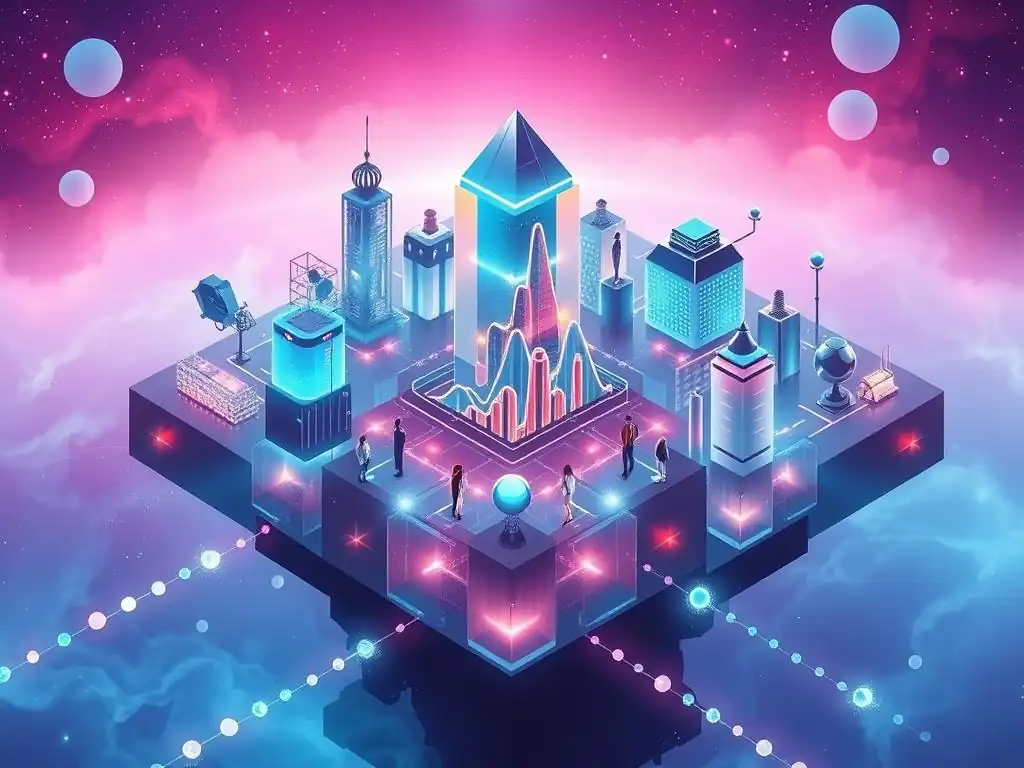
Decentraland DAO: Governing a Virtual Land Platform
Decentraland stands as a prominent example of a virtual world leveraging a DAO for governance. The Decentraland DAO governs the LAND smart contracts, the marketplace, and the World Explorer, essentially controlling the core infrastructure of this metaverse platform. LAND owners within Decentraland are members of the DAO and possess voting power proportional to their LAND holdings. This decentralized governance model allows the community to collectively decide on important aspects of the virtual world, including policy updates, LAND auctions, and the allocation of MANA, Decentraland's native cryptocurrency, for community initiatives.
The Decentraland DAO has been instrumental in shaping the platform's development and direction. Community proposals and voting have led to decisions on issues ranging from content moderation policies to infrastructure improvements within Decentraland. This real-world example demonstrates the power of DAOs in enabling community-driven governance and fostering a sense of ownership among users in a virtual world context. The success of the Decentraland DAO provides a valuable blueprint for other virtual world projects seeking to implement decentralized governance models and empower their communities.
Bored Ape Yacht Club DAO: NFT-Based Community and Governance
The Bored Ape Yacht Club (BAYC) DAO exemplifies how NFT communities can leverage DAOs for governance and community building. While not governing a virtual world in the traditional sense, the BAYC DAO governs the BAYC ecosystem and brand, empowering NFT holders to collectively influence the direction of this influential NFT project.
BAYC NFT holders are members of the DAO and can participate in voting on proposals related to brand licensing, community events, and the allocation of DAO funds. This DAO structure reinforces the sense of community and shared ownership among BAYC NFT holders, fostering a strong and engaged community around the project.
The BAYC DAO’s governance decisions have influenced various aspects of the BAYC ecosystem, from merchandise collaborations to real-world events for NFT holders. This case study highlights the versatility of DAOs in governing not only virtual worlds but also NFT-based communities and brands. The BAYC DAO's success in empowering its community and fostering collective decision-making provides valuable insights into how DAOs can be utilized to enhance the value and engagement within NFT ecosystems.
Axie Infinity DAO: Managing In-Game Assets through NFTs
Axie Infinity, a popular play-to-earn game, is transitioning towards decentralized governance through its Axie Infinity DAO. The DAO is designed to gradually take over the governance of the Axie Infinity ecosystem, including the community treasury, game mechanics, and development priorities. AXS token holders, who often also hold Axie NFTs, will be able to participate in governance proposals and voting, influencing the future of the Axie Infinity game and its economy. This move towards decentralized virtual world governance aims to empower players and create a more sustainable and community-driven gaming ecosystem.
The Axie Infinity DAO is expected to manage a significant treasury and oversee crucial decisions related to the game's balancing, new feature development, and the overall direction of the Axie universe. This case study showcases the potential of DAOs to govern complex in-game economies and assets within play-to-earn virtual worlds. The Axie Infinity DAO's transition towards decentralized governance is a significant step in the evolution of blockchain gaming and the broader metaverse, demonstrating the increasing adoption of DAOs for managing virtual assets and empowering player communities.
The Future of Decentralized Virtual World Governance: DAOs and NFTs
Trends and Predictions for DAO Adoption in Virtual Worlds
The adoption of DAOs for decentralized virtual world governance is poised for significant growth in the coming years. One prominent trend is the increasing sophistication of DAO governance models. Early DAOs often employed simple voting mechanisms, but future DAOs are likely to incorporate more complex governance structures, such as delegated voting, quadratic voting, and reputation-based systems, to enhance efficiency and inclusivity. These advancements will lead to more nuanced and effective decentralized virtual world governance frameworks.
Another key trend is the integration of DAOs with increasingly immersive and interactive virtual world experiences. As virtual worlds evolve to offer richer social interactions, economic opportunities, and creative tools, DAOs will play a crucial role in governing these complex ecosystems. We can expect to see DAOs managing not only virtual land and assets but also in-world events, user-generated content, and even the fundamental rules and physics of virtual environments. This deeper integration of DAOs will solidify decentralized virtual world governance as a core component of the metaverse.
How DAOs and NFTs are Shaping the Metaverse Economy
DAOs and NFTs are fundamentally reshaping the metaverse economy by enabling new models of ownership, governance, and value creation. NFTs establish digital scarcity and provable ownership of virtual assets, empowering creators and users to own and control their digital creations and in-world possessions. DAOs, in turn, provide the governance framework for managing these NFT-based assets and economies in a decentralized and community-driven manner. This combination is fostering a more equitable and user-centric metaverse economy, shifting away from centralized control and towards decentralized ownership and governance.
The rise of DAOs and NFTs is also driving the growth of the creator economy within virtual worlds. Creators can leverage NFTs to monetize their virtual creations and participate in DAO governance to influence the platforms they contribute to. This empowers creators to directly benefit from their work and have a say in the direction of the virtual worlds they help build. Furthermore, decentralized virtual world governance models can foster more transparent and fairer economic systems within the metaverse, ensuring that value is distributed more equitably among participants and contributors.
Overcoming Legal and Regulatory Hurdles for DAO Operations
Despite their transformative potential, DAOs operating in virtual worlds face legal and regulatory hurdles. The legal status of DAOs is still evolving in many jurisdictions, creating uncertainty around liability, taxation, and regulatory compliance. Addressing these legal ambiguities is crucial for the widespread adoption of DAOs and the mainstream acceptance of decentralized virtual world governance. Industry stakeholders, legal experts, and regulators need to collaborate to develop clear legal frameworks that accommodate the unique characteristics of DAOs while ensuring consumer protection and legal clarity.
One approach to navigating regulatory uncertainty is to adopt progressive decentralization strategies. This involves gradually decentralizing governance over time, starting with more centralized structures and progressively transitioning towards fully decentralized DAOs as legal frameworks become clearer and more DAO-friendly. Furthermore, DAOs can explore legal wrappers or hybrid governance models that combine on-chain governance with off-chain legal entities to mitigate risks and ensure compliance with existing regulations. Overcoming these legal and regulatory hurdles is essential for unlocking the full potential of DAOs and realizing the vision of truly decentralized virtual world governance.
Optimizing DAO Structures for Effective Virtual World Management
Balancing Decentralization and Efficiency in DAO Governance
Achieving effective decentralized virtual world governance requires a careful balance between decentralization and efficiency. While complete decentralization is the ideal, overly complex or cumbersome governance processes can hinder decision-making speed and efficiency, potentially slowing down the development and evolution of virtual worlds. Therefore, optimizing DAO structures involves finding the right level of decentralization that empowers the community while maintaining agile and effective governance. This balance may vary depending on the specific virtual world and its community needs.
One strategy for optimizing this balance is to implement tiered governance models. This involves delegating certain decision-making powers to specialized committees or working groups within the DAO, while reserving major strategic decisions for broader community votes. This approach can streamline governance processes and allow for more efficient handling of routine tasks, while still ensuring community oversight on critical matters. Furthermore, utilizing off-chain voting mechanisms for certain types of proposals can improve efficiency and reduce transaction costs, while maintaining the transparency and security of on-chain governance for key decisions.
Tools and Platforms for Building and Managing DAOs in Virtual Worlds
The ecosystem of tools and platforms for building and managing DAOs in virtual worlds is rapidly expanding. Platforms like Aragon, DAOstack, and Snapshot provide frameworks and infrastructure for creating and deploying DAOs, offering customizable governance modules, voting mechanisms, and treasury management tools. These platforms simplify the technical complexities of DAO development and enable virtual world projects to easily integrate decentralized governance into their ecosystems. As the DAO landscape matures, we can expect to see even more user-friendly and feature-rich tools emerge, further democratizing access to DAO technology.
Beyond general DAO platforms, there is also a growing need for virtual world-specific DAO tools and integrations. This includes tools that facilitate in-world voting, NFT-based membership management within virtual environments, and interfaces that seamlessly connect virtual world interactions with on-chain DAO governance processes. The development of these specialized tools will be crucial for making DAO governance more intuitive and accessible for virtual world users, fostering broader participation and engagement in decentralized virtual world governance.
Ensuring Transparency and Security in DAO Operations using Blockchain
Blockchain technology is fundamental to ensuring transparency and security in DAO operations within virtual worlds. By recording all DAO transactions, voting records, and rule changes on an immutable and publicly auditable ledger, blockchain provides a foundation of trust and transparency. This transparency is crucial for building confidence within the community and preventing manipulation or opaque decision-making processes. Users can independently verify the DAO's operations and ensure that governance is conducted according to the agreed-upon rules.
Security is also paramount for DAOs managing valuable virtual world assets and economies. Blockchain's cryptographic security features, combined with carefully designed smart contracts, can mitigate risks of hacking, fraud, and unauthorized access to DAO funds and governance mechanisms. Regular security audits of DAO smart contracts and infrastructure are essential to identify and address potential vulnerabilities. Furthermore, implementing robust key management practices and multi-signature wallets can enhance the security of DAO treasuries and prevent single points of failure. By leveraging blockchain's inherent transparency and security features, DAOs can provide a trustworthy and robust foundation for decentralized virtual world governance.
Legal and Ethical Considerations for DAOs in Virtual Worlds
Addressing Regulatory Uncertainty Surrounding DAOs
Regulatory uncertainty remains a significant challenge for DAOs operating in virtual worlds. Current legal frameworks often do not neatly accommodate the decentralized and autonomous nature of DAOs, leading to ambiguities regarding legal status, liability, and compliance requirements. Addressing this regulatory uncertainty requires proactive engagement with regulators, legal innovation, and the development of industry best practices. DAOs and virtual world projects need to work collaboratively to educate regulators about the benefits and unique characteristics of DAOs and advocate for sensible and adaptable regulatory frameworks.
One approach to navigating regulatory uncertainty is to prioritize compliance and transparency in DAO operations. This includes implementing robust KYC/AML procedures where necessary, adhering to data privacy regulations, and proactively engaging with legal counsel to ensure compliance with applicable laws. Furthermore, DAOs can adopt self-regulatory measures and industry standards to build trust and demonstrate their commitment to responsible and ethical operations. Clear and consistent regulatory frameworks are crucial for fostering the long-term growth and sustainability of DAOs and decentralized virtual world governance.
Mitigating Risks of DAO Manipulation and Exploitation
While DAOs offer numerous benefits, they are not immune to risks of manipulation and exploitation. Governance attacks, voting manipulation, and exploits of smart contract vulnerabilities are potential threats that need to be carefully addressed. Mitigating these risks requires robust security measures, well-designed governance mechanisms, and ongoing community vigilance. Implementing mechanisms like time-lock contracts, rate limiting, and decentralized oracle networks can enhance the security and resilience of DAO operations.
Furthermore, designing fair and robust voting systems is crucial to prevent manipulation and ensure that governance decisions reflect the will of the community. Exploring advanced voting mechanisms like quadratic voting, conviction voting, and delegation can help mitigate the influence of whales and ensure broader participation in governance. Regularly auditing DAO smart contracts and governance processes is also essential to identify and address potential vulnerabilities and ensure the long-term security and integrity of decentralized virtual world governance.
Promoting Fair and Inclusive Governance in Decentralized Virtual Worlds
Promoting fair and inclusive governance is paramount for creating thriving and equitable decentralized virtual worlds. DAOs should be designed to be accessible and participatory for all members of the community, regardless of their technical expertise or financial resources. Addressing issues of digital literacy and ensuring that governance processes are user-friendly and intuitive is crucial for broader participation. Furthermore, implementing mechanisms to mitigate the influence of whales and ensure that smaller stakeholders have a meaningful voice in governance is essential for creating a truly democratic and inclusive decentralized virtual world governance system.
DAOs should also prioritize diversity and representation within their governance structures. Actively seeking to include diverse perspectives and voices in decision-making processes can lead to more robust, equitable, and innovative governance outcomes. Implementing community outreach programs, educational initiatives, and inclusive governance practices can help foster a more representative and participatory decentralized virtual world governance ecosystem, ensuring that these virtual environments are truly for everyone.
Frequently Asked Questions
What role do DAOs play in decentralized virtual world governance?
DAOs offer a transparent and democratic way to manage virtual world resources and policies. They empower users to participate in decision-making through voting on proposals, fostering a more equitable and community-driven environment. This contrasts with centralized control.
How are NFTs utilized within DAOs governing virtual worlds?
NFTs can represent ownership of virtual assets and provide members with voting rights within the DAO. This allows for a direct link between ownership and governance, ensuring that those invested in the virtual world have a say in its future.
What are the potential benefits of using DAOs for governance in virtual worlds compared to traditional methods?
DAOs offer increased transparency and accountability, reducing the risk of corruption or manipulation. They also promote greater community engagement and participation, leading to more sustainable and representative governance models.
What are some of the challenges facing DAOs in governing decentralized virtual worlds?
Challenges include scalability issues with voting mechanisms, the potential for governance attacks if voting power is concentrated, and the need for clear and enforceable rules within the DAO's smart contracts.
How might regulations impact the use of DAOs for governing decentralized virtual worlds in the future?
Future regulations could focus on defining the legal status of DAOs, clarifying liability for DAO members, and establishing guidelines for consumer protection within decentralized virtual economies. This could both legitimize and constrain DAO operations.
Final Reflection: Shaping the Metaverse Through Decentralization
The exploration of DAOs and NFTs within virtual worlds reveals a potent combination, offering a glimpse into decentralized virtual world governance that is no longer a futuristic fantasy, but a rapidly approaching reality. The potential for these technologies to reshape how we interact, create, and govern within digital spaces is immense, promising a more equitable and user-centric metaverse.
The impact of this shift is already being felt, influencing the very fabric of online communities and digital ownership. Witnessing the rise of DAOs empowering virtual landowners and NFT communities fostering collaborative creation underscores the profound potential for self-governance. The future is already here – it's just not evenly distributed.
- William Gibson. This quote resonates deeply as we observe the uneven adoption and understanding of these technologies, highlighting the need for education and accessibility to ensure a truly decentralized and inclusive metaverse.
As we stand at the cusp of this digital revolution, let us consider the role we each play in shaping its trajectory. Embrace the principles of decentralization, explore the possibilities of DAOs and NFTs, and contribute to building virtual worlds that are not only immersive and engaging, but also governed by the very communities that inhabit them. The future of the metaverse is not predetermined; it is a canvas upon which we collectively paint our vision of a decentralized and empowered digital society.
Shape Your Virtual Future: Dive into DAOs and NFTs!
Thank you for exploring the exciting intersection of DAOs and NFTs in virtual worlds with us. You've now glimpsed the power of decentralized governance and unique digital ownership in shaping these immersive environments. Ready to take control and build the future?
Here are a few ways you can get involved:
- Launch your own DAO to govern a virtual land plot! Explore existing DAO creation platforms and define the rules for your community.
- Showcase your NFT collection in a virtual gallery: Create a metaverse space to display and share your digital art with others.
- Join a DAO actively building within a virtual world – contribute your skills and shape its evolution.
What innovative DAO-NFT project are you most excited to build or join in the metaverse? Share your ideas in the comments below!
Leave a Reply