
NFT Staking and Yield Farming: Earning Passive Income with Your Digital Assets

Welcome to Blockchain Trends, your guide to navigating the evolving landscape of blockchain technology.
Are you ready to unlock the hidden potential of your digital art? Dive into our latest article where we explore NFT staking yield farming, revealing how you can earn passive income by leveraging your unique digital assets. Discover the strategies, platforms, and risks involved in this exciting intersection of NFTs and DeFi, and learn how to make your digital collectibles work for you. Intrigued? Keep reading to uncover the secrets to maximizing your NFT investments!
- Introduction to NFT Staking and Yield Farming
- How NFT Staking Works: A Detailed Overview
- Yield Farming with NFTs: Strategies for Maximizing Returns
- Comparing NFT Staking vs. Traditional Yield Farming
- Top.
-
Frequently Asked Questions
- What is NFT staking and how does it work?
- How does NFT staking relate to yield farming?
- What are the potential risks associated with NFT staking and yield farming?
- What kinds of NFTs are typically eligible for staking and yield farming?
- What are the potential benefits of participating in NFT staking and yield farming?
- Final Reflection: The Enduring Potential of Digital Ownership
- Unlock Your NFT's Potential: Start Earning Today!
Introduction to NFT Staking and Yield Farming
Understanding NFT Staking and Its Benefits
NFT staking represents a revolutionary way for holders of non-fungible tokens to generate passive income. Unlike simply holding an NFT in a wallet, staking involves locking the digital asset within a smart contract for a set period. In return for committing their NFT, users receive rewards, often distributed in the form of cryptocurrency tokens, which are frequently the native tokens of the project associated with the NFT collection. This mechanism provides utility to NFTs beyond their speculative or collectible value, transforming them into yield-bearing assets.
The benefits of NFT staking are manifold. Firstly, it provides a tangible way to earn passive income from digital assets that might otherwise remain idle. This can significantly enhance the overall return on investment for NFT holders.
Secondly, staking strengthens the ecosystem of the associated project by locking up assets, potentially reducing selling pressure on the native token and demonstrating holder commitment. For instance, certain gaming NFTs might offer staking yields around 20-50% APR, while utility-focused NFTs could provide higher or lower returns based on the project's tokenomics and the rarity of the staked asset. This utility encourages long-term holding and participation in the project's economy, fostering a more robust and engaged community.
What is Yield Farming in the Context of NFTs?
Yield farming, in its traditional DeFi sense, involves depositing crypto assets into liquidity pools or lending protocols to earn yield, typically distributed as transaction fees or governance tokens. When applied to the NFT ecosystem, yield farming takes on several forms.
It can involve using NFTs as collateral to borrow other assets for farming, providing liquidity to decentralized exchanges (DEXs) with tokens associated with NFT projects, or participating in protocols where owning or staking an NFT grants boosted yield on other farming activities. This is a broader strategy compared to simple NFT staking, often involving multiple steps and interactions with various DeFi protocols.
Consider a scenario where an NFT holder uses their high-value NFT as collateral on an NFT-backed lending platform to borrow ETH or stablecoins. They can then deposit these borrowed assets into liquidity pools on a DEX like Uniswap or Sushiswap to earn trading fees and governance tokens.
This complex process of leveraging an NFT's value across different DeFi protocols to maximize returns is a form of yield farming. While potentially offering higher returns (sometimes exceeding 100% APY in volatile periods), it also introduces layers of risk, including liquidation risk if the collateralized NFT's value drops significantly relative to the borrowed amount.
The Importance of Passive Income in the Digital Asset Space
In the dynamic and often volatile world of digital assets, generating passive income streams is a critical strategy for investors seeking to enhance portfolio performance and mitigate risk. Simply buying and holding assets exposes investors solely to price appreciation or depreciation. By engaging in activities like NFT staking yield farming, investors can earn additional returns independent of the asset's market price movements, providing a buffer during downturns or accelerating gains during bullish cycles.
Passive income from NFT staking yield farming allows investors to put their assets to work, earning rewards that can be reinvested, used to cover expenses, or held as a separate income stream. This transforms NFTs from purely speculative or collectible items into productive assets within a digital economy.
For example, an investor might stake a land NFT in a metaverse project and earn the project's native token, which they can then use to purchase in-game items, trade for other cryptocurrencies, or stake elsewhere for further yield. This ability to generate recurring revenue from digital holdings adds a layer of financial sophistication and opportunity to the blockchain space.
How NFT Staking Works: A Detailed Overview
The Mechanics of NFT Staking
The fundamental mechanism of NFT staking involves a user interacting with a smart contract designed by the NFT project or platform. The user typically connects their cryptocurrency wallet (such as MetaMask) to the project's staking dApp. Within the dApp interface, they can view their eligible NFTs.
By selecting an NFT and confirming the transaction (which requires a small gas fee on networks like Ethereum), the user sends their NFT to be held by the staking smart contract. This contract is programmed to hold the NFT securely and, in return, distribute rewards to the user's wallet over time, based on predefined rules like the duration of staking or the rarity of the NFT.
The rewards are usually distributed automatically at regular intervals (e.g., daily, weekly) or can be claimed manually by the user. The amount of reward is typically calculated based on the total number of NFTs staked in the pool and the project's emission rate for the reward token. For instance, a staking pool might distribute 1000 native tokens per day among all staked NFTs.
If 100 NFTs are staked, each receives 10 tokens daily. Some platforms might offer variable rates based on the specific NFT's attributes (e.g., higher yield for rarer NFTs). When the user decides to unstake, they interact with the smart contract again to retrieve their NFT, usually after a cool-down period, if any.
Key Platforms for NFT Staking
While major centralized exchanges are primarily marketplaces, dedicated platforms and project-specific websites are the primary venues for NFT staking yield farming. These platforms vary widely in their user experience and the types of NFTs they support.
Project-Specific Platforms: User Experience and Yield Rates
The most common approach to NFT staking is through the official website or platform of the NFT project itself. Projects like Axie Infinity allow staking of their AXS tokens (related to their NFTs), and land owners in metaverse projects like The Sandbox or Decentraland can often stake their land NFTs to earn the project's native token (SAND and MANA, respectively). The user experience on these platforms is typically designed to be intuitive for their community, often integrating directly with common wallets.
Yield rates on project-specific platforms are highly variable and depend heavily on the project's tokenomics, the value proposition of the NFT, and the overall health of the ecosystem. For example, early staking programs might offer very high APRs (potentially over 100%) to incentivize participation, while more established programs might settle into lower, more sustainable rates (e.g., 10-30% APR).
The value of the earned token is also subject to market fluctuations, meaning the real dollar value of the yield can change significantly. Staking land in a popular metaverse might yield a modest percentage in tokens, but the long-term value is tied to the growth of the metaverse itself.
Choosing the Right NFTs for Staking Success
Selecting the appropriate NFTs is crucial for a successful NFT staking yield farming strategy. Not all NFTs can be staked, and not all staking opportunities offer sustainable or valuable returns. Investors should prioritize NFTs from reputable projects with clear utility and a well-defined tokenomics model that supports the staking mechanism. Researching the project team, roadmap, and community is paramount.
Consider NFTs that have inherent utility beyond just being a collectible. Gaming assets, virtual land, or utility passes that grant access or benefits are often good candidates for staking as their staking function is tied to their role within an active ecosystem. Furthermore, assess the sustainability of the yield.
Is the project generating revenue that supports the token emissions, or are rewards coming from an inflationary token supply that could devalue quickly? Looking at projects with a proven track record and transparent communication regarding their staking mechanics and token distribution is a key step in mitigating risks associated with NFT staking yield farming.
Yield Farming with NFTs: Strategies for Maximizing Returns
The Basics of Yield Farming in the NFT Ecosystem
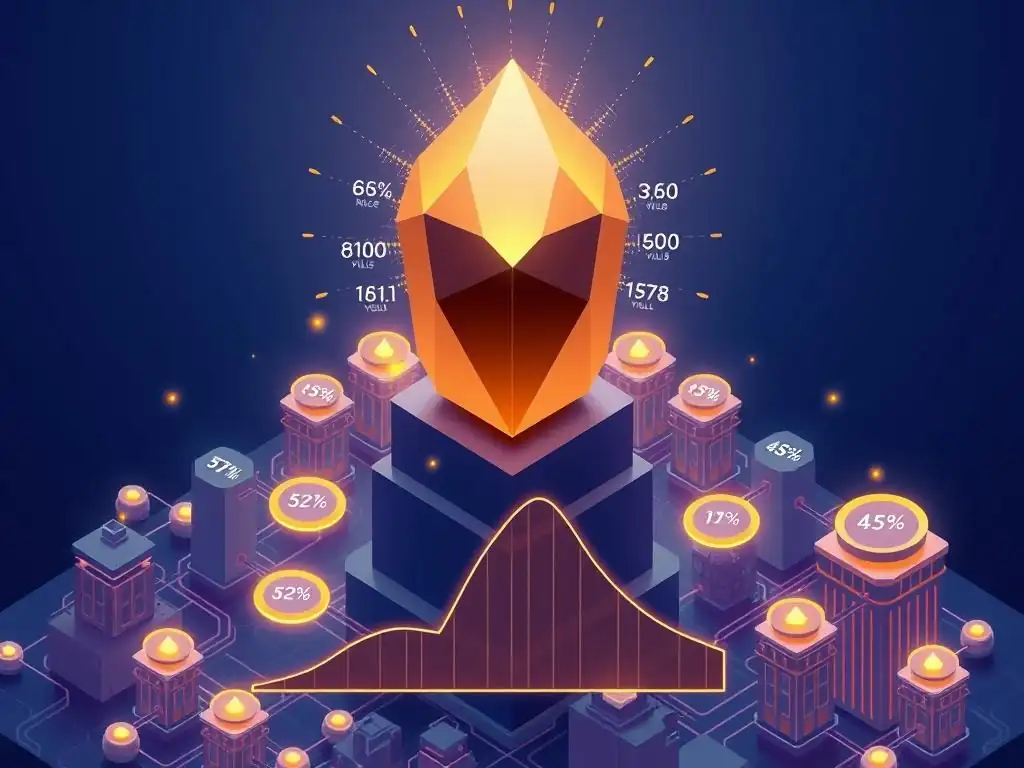
Yield farming with NFTs goes beyond simple staking; it involves leveraging the value or utility of NFTs within broader decentralized finance protocols to earn yield. This can take several forms. One method is using NFTs as collateral on specialized lending platforms.
Protocols like BendDAO, for instance, allow users to deposit blue-chip NFTs (such as Bored Ape Yacht Club or CryptoPunks) and borrow Ether (ETH) against their value, typically up to a certain loan-to-value (LTV) ratio (e.g., 30-40%). The borrowed ETH can then be used in various yield farming strategies, such as providing liquidity on DEXs or staking in other protocols.
Another strategy involves participating in liquidity pools on DEXs that pair project-specific tokens with major cryptocurrencies (like ETH or stablecoins). While this doesn't directly involve the NFT itself in the pool, the value and activity surrounding the NFT collection directly impact the demand and price of its associated token, influencing farming yields. Furthermore, some protocols implement yield-boosting mechanisms where holding or staking a specific NFT provides multipliers or preferential rates on other yield farming activities within their ecosystem. This intertwines NFT ownership with DeFi farming strategies, creating complex but potentially lucrative opportunities in NFT staking yield farming.
Best Practices for Effective Yield Farming
Effective yield farming in the NFT space requires careful planning and risk assessment.
- Thoroughly research any platform or protocol before depositing assets.
- Understand the specific mechanics of how yield is generated and distributed.
- Analyze the tokenomics of the reward token – high inflation can quickly erode the value of earned yield.
- Be aware of impermanent loss if providing liquidity to token pools, especially with volatile project tokens.
- Diversify your strategies; don't put all your valuable NFTs or borrowed capital into a single farming pool.
- Regularly monitor your positions, yield rates, and the health of the underlying protocols.
- Use secure wallets and be vigilant against phishing attempts or smart contract vulnerabilities.
Risk Management in NFT Yield Farming
Yield farming with NFTs, while offering potentially high returns, comes with significant risks that must be managed proactively. Smart contract risk is paramount; vulnerabilities in the code could lead to deposited NFTs or funds being lost or inaccessible. Market risk is also high – the value of both the staked/collateralized NFT and the earned tokens can be extremely volatile. A sharp decline in the NFT's floor price could lead to liquidation if used as collateral, and a crash in the reward token's price can render high APRs effectively worthless.
- [ ] Assess smart contract audit reports before using a platform.
- [ ] Understand the liquidation thresholds if using NFTs as collateral.
- [ ] Monitor the market prices of your NFTs and farmed tokens constantly.
- [ ] Be wary of unaudited or new protocols promising unsustainably high yields (potential rug pulls).
- [ ] Consider the lock-up periods for staking or farming and your need for liquidity.
These steps are crucial for anyone participating in NFT staking yield farming, helping to protect capital in a rapidly evolving landscape.
Comparing NFT Staking vs. Traditional Yield Farming
Key Differences Between NFT Staking and Yield Farming
While both NFT staking and traditional yield farming aim to generate passive income from digital assets, they differ significantly in their mechanics and the assets involved. NFT staking specifically involves locking a non-fungible token to earn rewards, typically native tokens from the NFT project. It's often a more direct and project-specific activity, tying the utility of a unique asset to a simple token emission model. The primary asset generating yield is the NFT itself.
Traditional yield farming, conversely, primarily involves fungible tokens. Users deposit cryptocurrencies (like ETH, stablecoins, or altcoins) into DeFi protocols to provide liquidity, lend assets, or participate in complex strategies across various platforms. While some yield farming might involve tokens associated with NFT projects, the core mechanism revolves around leveraging fungible asset pools. The complexity is generally higher, involving concepts like impermanent loss in liquidity provision or managing collateral ratios in lending. The asset generating yield is the fungible token.
Advantages of NFT Staking Over Conventional Methods
NFT staking offers several distinct advantages, particularly for NFT holders looking to utilize their assets passively. One major benefit is simplicity; the process typically involves fewer steps compared to complex yield farming strategies that might require swapping tokens, depositing into multiple pools, and managing different protocol interfaces. Staking an NFT is often as straightforward as connecting a wallet and clicking a "stake" button on the project's dApp.
Furthermore, NFT staking provides a direct way to add utility to an otherwise idle collectible or asset. Instead of sitting in a wallet, the NFT actively generates income. It also allows holders to directly support the project's ecosystem by locking up assets, potentially contributing to the project's stability and growth. Compared to providing liquidity with volatile token pairs in traditional yield farming, simple NFT staking often avoids the risk of impermanent loss (though the value of the NFT and the reward token are still subject to market risk).
When to Choose NFT Staking vs. Yield Farming
The choice between focusing on NFT staking or broader yield farming strategies depends on an investor's goals, risk tolerance, and the specific assets they hold. NFT staking is generally suitable for individuals who hold specific NFTs from projects that offer staking and wish to earn passive income with minimal complexity.
It's a good option for those who believe in the long-term value of the NFT project and its associated token and want to contribute to its ecosystem while earning rewards. If you have an NFT from a staking-enabled project and prefer a straightforward income stream, NFT staking is likely the preferred route.
Yield farming, including strategies that leverage NFTs as collateral or involve project-specific tokens in liquidity pools, is better suited for investors comfortable with higher complexity and risk in pursuit of potentially higher returns. This approach is for those who want to actively manage their digital assets across different DeFi protocols, potentially using leverage (via borrowing against NFTs) or participating in liquidity provision that requires understanding concepts like impermanent loss.
If you are looking to maximize returns by actively utilizing the value of your NFTs or associated tokens within the wider DeFi landscape, yield farming offers more diverse and complex opportunities.
Top.
Frequently Asked Questions
What is NFT staking and how does it work?
NFT staking involves locking up your NFTs in a platform's smart contract to earn rewards, often in the form of tokens or other NFTs. This process helps secure the network or project and provides passive income.
How does NFT staking relate to yield farming?
NFT staking is a subset of yield farming. While yield farming typically involves providing liquidity with crypto tokens, NFT staking allows you to earn rewards by locking up your NFTs instead.
What are the potential risks associated with NFT staking and yield farming?
Risks include smart contract vulnerabilities, platform rug pulls, and fluctuations in the value of the reward tokens. Researching the platform and understanding the terms are crucial.
What kinds of NFTs are typically eligible for staking and yield farming?
The eligibility depends on the specific platform, but often includes NFTs from popular collections or those associated with gaming and metaverse projects. Check the platform's guidelines for accepted NFTs.
What are the potential benefits of participating in NFT staking and yield farming?
The primary benefit is generating passive income from your digital assets. It can also provide access to exclusive communities, rewards, or increased utility within the project ecosystem.
Final Reflection: The Enduring Potential of Digital Ownership
The exploration of NFT staking and yield farming reveals more than just innovative financial mechanisms; it underscores the fundamental shift in how we perceive and interact with digital ownership. The ability to generate passive income from digital assets, once relegated to the realm of traditional finance, is now democratized and accessible to anyone with an NFT and a willingness to explore the decentralized web. This represents a powerful evolution in the creator economy and the potential for individuals to directly benefit from their digital creations.
This burgeoning field has profoundly impacted the cultural landscape, fostering a deeper connection between creators and collectors. The ability to actively participate in the ecosystem surrounding an NFT, rather than simply holding it as a static asset, cultivates a sense of community and shared ownership. This is more than just an investment; it's a participation in a digital narrative. The future of NFTs isn't just about owning a piece of digital art; it's about being part of a living, breathing ecosystem that rewards participation and creativity.
As we stand at the cusp of this digital revolution, let us not only marvel at the technological advancements of NFT staking and yield farming but also consider the profound implications for the future of ownership, creativity, and community. Embrace the opportunity to learn, experiment, and contribute to this evolving landscape. The power to shape the future of digital ownership lies within each of us. What will you create, and how will you contribute to this exciting new world?
Okay, here's a CTA for a web article titled "NFT Staking and Yield Farming: Earning Passive Income with Your Digital Assets" on the website Blockchain Trends (blockchaintrends.org), adhering to the guidelines provided:
Unlock Your NFT's Potential: Start Earning Today!
Thanks for exploring the world of NFT staking and yield farming with us! We hope you've discovered new ways to make your digital assets work for you. Now it's time to take the next step and turn knowledge into action.
- Jumpstart your earning potential: Research reputable platforms like Nifty Gateway or OpenSea that offer NFT staking programs tailored to your specific NFT collection.
- Dive deeper into the world of DeFi. Explore reputable cryptocurrency exchanges and understand the mechanics of yield farming and liquidity pools.
- Spread the knowledge! Share this article with your friends on social media.
Ready to turn your NFTs into passive income streams? What steps will you take today to explore the potential of NFT staking and yield farming?
Leave a Reply