
Beyond Passwords: How Blockchain is Revolutionizing Identity Management

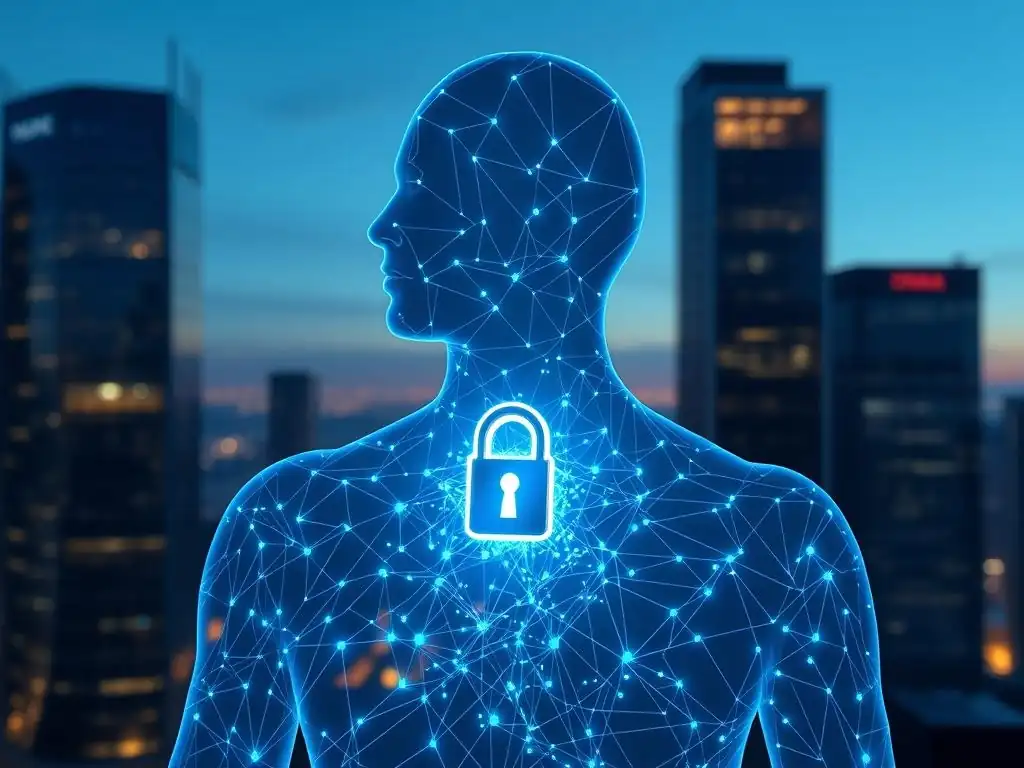
Welcome to Blockchain Trends, your compass in the rapidly evolving world of decentralized technology. Dive beyond the hype and explore the real-world applications shaping our future. In this article, we unravel how blockchain identity management solutions secure your digital life, moving beyond outdated password systems. Are you ready to discover a more secure and user-centric future? Read on to unlock the potential of blockchain in digital identity and how it's transforming the landscape.
- The Limitations of Traditional Identity Management Systems
- Blockchain Identity Management: A New Paradigm
- Benefits of Using Blockchain for Identity Management
- Blockchain Identity Management Use Cases
- Implementing Blockchain Identity Management: Challenges and Considerations
- Examples of Blockchain Identity Management Platforms and Projects
- The Future of Blockchain in Digital Identity: Trends and Predictions
- Conclusion: Embracing the Potential of Blockchain for Secure and User-Centric Identity
-
Frequently Asked Questions
- How does blockchain technology enhance identity management compared to traditional methods?
- What are the key benefits of using blockchain identity management solutions?
- Can blockchain identity management solutions be integrated with existing enterprise systems?
- How do blockchain identity management solutions address concerns about data privacy and GDPR compliance?
- What is the future outlook for blockchain identity management solutions, and what challenges remain?
- Final Reflection: Embracing a Future Secured by Blockchain
- Unlock Your Digital Future: Secure Your Identity with Blockchain!
The Limitations of Traditional Identity Management Systems
Centralized Databases: A Single Point of Failure
Traditional identity management systems often rely on centralized databases to store vast amounts of sensitive user information, including usernames, passwords, personal details, and sometimes even biometric data. This consolidation of data creates a single, highly attractive target for malicious actors.
A successful breach of such a database can expose millions, or even hundreds of millions, of records, leading to widespread identity theft, financial fraud, and significant reputational damage for the organization responsible. For instance, major data breaches in recent years, affecting companies like Equifax (impacting approximately 147 million consumers) or Marriott (potentially exposing data of up to 500 million guests), starkly illustrate the catastrophic consequences of relying on centralized points of vulnerability for identity data.
The inherent risk in centralized storage is amplified by the fact that managing and securing these large databases requires constant vigilance, robust infrastructure, and complex access controls. Despite best efforts, human error, sophisticated cyberattacks (like SQL injection or ransomware), and insider threats remain persistent challenges. Organizations invest heavily in cybersecurity measures, yet the centralized model fundamentally retains this critical weakness, making it difficult to guarantee the long-term integrity and confidentiality of sensitive identity information against determined attackers seeking to compromise traditional identity management solutions.
Password-Based Authentication: Security Weaknesses and User Frustration
Password-based authentication, while ubiquitous, suffers from significant security vulnerabilities and contributes to poor user experience. Users are often required to create complex passwords that are difficult to remember, leading to practices like reusing passwords across multiple services or writing them down, which severely compromises security. Alternatively, if weak passwords are allowed, they become easy targets for brute-force attacks or dictionary attacks. Phishing attempts, social engineering, and keyloggers also pose constant threats to password security, allowing attackers to gain unauthorized access despite basic security protocols.
Beyond security risks, the reliance on passwords creates friction for users. The need to remember numerous unique passwords for different accounts leads to "password fatigue." This often results in frequent password reset requests, which are costly for service providers and frustrating for users. Even with additional layers like two-factor authentication (2FA) or multi-factor authentication (MFA), the foundational reliance on a password as the initial point of entry remains a significant vulnerability that blockchain identity management solutions aim to mitigate by offering more robust and user-friendly alternatives.
The Need for a More Secure and Decentralized Approach to Identity
The escalating frequency and severity of data breaches involving centralized identity stores, coupled with the inherent weaknesses and user frustrations associated with password-based authentication, underscore an urgent need for a paradigm shift in how digital identities are managed. Traditional systems concentrate power and data in the hands of service providers, leaving individuals with limited control over their own information and making them vulnerable to breaches outside of their control.
This model is no longer sustainable in a world where digital interactions are increasingly central to daily life and where the value of personal data is recognized by both legitimate businesses and malicious actors.
A fundamental rethinking is required to build identity systems that are inherently more resilient, private, and user-centric. This necessitates moving away from centralized Honeypots of data towards models where identity information is distributed, secured using advanced cryptographic techniques, and primarily controlled by the individual. Such a decentralized approach is crucial not only for enhancing security and privacy but also for enabling seamless, trustworthy interactions across various digital platforms without relying on a single authority, paving the way for blockchain identity management solutions secure by design.
Blockchain Identity Management: A New Paradigm
What is Blockchain-Based Identity Management?
Blockchain-based identity management refers to the use of distributed ledger technology (DLT), primarily blockchain, to create, manage, and verify digital identities in a secure, decentralized, and user-controlled manner. Instead of storing identity information in a single central database owned by an organization, identity attributes or verified credentials are cryptographically secured and recorded on a distributed ledger.
This ledger is shared across a network of computers, making it highly resistant to tampering and single points of failure. Users typically hold a private key that grants them control over their identity and allows them to selectively share verified information with third parties without exposing all their data.
In this model, identity is not granted or solely managed by an external authority but is built around the concept of self-sovereign identity (SSI), where the individual is the primary controller of their digital persona. Verifiers (like banks or online services) can cryptographically verify the authenticity of claims or credentials presented by the user by interacting with the blockchain, which serves as a trusted, immutable record of issuance and validity, without needing to store copies of the user's sensitive documents themselves.
This fundamental shift empowers individuals and enhances the overall security and privacy of digital interactions, making blockchain identity management solutions secure and appealing.
Key Features of Blockchain Identity Solutions
Blockchain identity solutions are characterized by several core features derived from the underlying technology, which fundamentally differentiate them from traditional systems and contribute to their enhanced security and efficiency. These features collectively enable a more robust, private, and user-centric approach to managing digital identities in various contexts, from personal use to complex enterprise applications.
These key features include decentralization, enhanced security through cryptography, user control over data, and the immutability and transparency inherent in distributed ledgers. Understanding these elements is crucial to appreciating the transformative potential of blockchain in revolutionizing how we manage and interact with digital identities, providing a foundation for blockchain identity management solutions secure enough for widespread adoption.
Decentralization and Distributed Ledger Technology (DLT)
Decentralization is perhaps the most defining characteristic of blockchain identity management. Unlike traditional systems where identity data resides in a central server or database, blockchain identity solutions leverage distributed ledger technology (DLT). This means the identity data, or more precisely, the cryptographic proofs and records related to identity attributes and credentials, are spread across a network of nodes rather than being held in one location. This distributed nature eliminates the single point of failure that plagues centralized systems, making the entire network more resilient to attacks, outages, and censorship.
The distributed ledger acts as a shared, synchronized database that is not controlled by any single entity. Changes or additions to the ledger must be agreed upon by the network participants through a consensus mechanism. This consensus process ensures the integrity and availability of the identity system, as compromising it would require overpowering a majority of the network, a task that becomes increasingly difficult as the network grows. This inherent distribution and consensus mechanism significantly bolster the security and reliability of blockchain identity management solutions secure from many common threats.
Enhanced Security Through Cryptography
Cryptography is the bedrock upon which blockchain identity management solutions secure their data and transactions. Public-key cryptography plays a central role, enabling users to have a pair of keys: a public key that can be shared widely and a private key that is kept secret. The private key is used by the user to sign transactions or verify credentials, proving their ownership and control over the associated identity elements without revealing the private key itself. The public key can then be used by others to verify these digital signatures.
Furthermore, cryptographic hashing is used to create unique digital fingerprints of data. Any attempt to alter the data would result in a completely different hash, making tampering immediately obvious. These hashes are often linked together in a chain (hence "blockchain"), where each block contains the hash of the previous block. This structure makes the ledger immutable; once data is recorded, it is virtually impossible to alter it retroactively without invalidating subsequent blocks and being detected by the network. This cryptographic foundation ensures the integrity, authenticity, and confidentiality of identity-related information managed on the blockchain.
User Control and Data Ownership
A core principle of blockchain identity management, particularly in the context of Self-Sovereign Identity (SSI), is returning control and ownership of identity data to the individual. In traditional systems, users often grant broad permissions to companies to store and use their personal data, often without full transparency or control over how it is shared or monetized. Blockchain-based solutions empower users to manage their digital identity attributes and decide specifically who gets access to what information, and under what conditions.
Users hold their private keys, which are the keys to their digital identity. They can receive verified credentials (like a digital driver's license or degree) from trusted issuers and store them securely in a digital wallet.
When a verifier (e.g., a website requiring age verification) requests information, the user can selectively share only the necessary attribute (e.g., "I am over 18") by cryptographically proving the validity of the credential via the blockchain, without revealing their full date of birth or other sensitive details. This granular control significantly enhances user privacy and autonomy compared to traditional models, making blockchain identity management solutions secure and privacy-preserving by design.
Immutability and Transparency
The immutability of the blockchain is a critical feature for identity management. Once a transaction or record is added to the blockchain and confirmed by the network, it is extremely difficult, if not impossible, to alter or delete it. This creates a tamper-proof audit trail of identity-related events, such as the issuance of a credential or a verification request. For identity systems, this means that verified claims and the history of identity transactions are reliable and cannot be fraudulently modified. This ensures the integrity of the identity system over time.
While the underlying identity data itself might not be publicly visible (depending on the specific implementation and privacy layers), the records of issuance, verification, or revocation of credentials can be transparently viewed on the public ledger (or a permissioned ledger, depending on the network type). This transparency, combined with immutability, builds trust in the system.
Verifiers can independently confirm the validity of credentials by checking the blockchain, reducing reliance on centralized authorities and providing a high degree of assurance in the integrity of the identity information being presented. This contributes significantly to making blockchain identity management solutions secure and trustworthy.
Benefits of Using Blockchain for Identity Management
Increased Security and Reduced Risk of Identity Theft
One of the primary benefits of adopting blockchain for identity management is the substantial increase in security compared to traditional systems. By distributing identity data across a decentralized network and securing it with advanced cryptography, the risk associated with a single point of failure is drastically reduced. A data breach would require compromising a significant portion of the distributed network simultaneously, which is computationally infeasible for most attackers. Furthermore, the cryptographic links between blocks make any tampering with historical data immediately detectable, ensuring the integrity of identity records.
This enhanced security architecture significantly lowers the potential for large-scale identity theft. Instead of attackers targeting a central database containing millions of records, they would have to target individual users, which is a far less scalable endeavor. The use of private keys for authentication and authorization replaces vulnerable passwords, further strengthening security. By moving away from centralized, password-protected honeypots, blockchain identity management solutions secure personal information more effectively against common cyber threats and data breaches.
Improved User Privacy and Data Control
Blockchain identity solutions fundamentally empower users by giving them greater control over their personal data and enhancing their privacy. In traditional systems, users often surrender their data to service providers, who then store, manage, and potentially share it according to their own policies, which may not always align with user privacy preferences. With blockchain-based identity, users hold their private keys, which are the gateway to their digital identity attributes and verifiable credentials.
This model allows users to selectively disclose only the specific pieces of information required for a transaction or service, using cryptographic proofs. For example, instead of sharing their full government ID to prove age, a user can present a verifiable credential issued by a trusted authority that cryptographically attests only to the fact that they are over 18, without revealing their name or date of birth.
This principle of minimal disclosure, combined with data being held by the user rather than a third party, dramatically improves user privacy and aligns with the principles of self-sovereign identity, making blockchain identity management solutions secure and privacy-preserving.
Simplified Identity Verification Processes
Blockchain technology has the potential to significantly streamline and simplify identity verification processes for both users and service providers. Currently, identity verification often involves manual checks, submitting copies of physical documents, or relying on third-party verification services, which can be time-consuming, costly, and prone to errors or fraud. Blockchain enables the creation and verification of digital, tamper-proof credentials issued by trusted entities (like governments, universities, or employers).
Once a user has a verified credential stored in their digital wallet (e.g., a verified academic degree or professional license), they can instantly share cryptographic proof of its validity with any relying party. The relying party can then verify the authenticity and validity of the credential by checking the associated record on the blockchain, without needing to contact the original issuer directly or process physical documents. This accelerates onboarding processes, reduces administrative overhead, and provides a higher level of assurance in the authenticity of presented credentials, making identity verification with blockchain identity management solutions secure and efficient.
Enhanced Interoperability and Cross-Platform Compatibility
Interoperability is a major challenge in traditional identity management, where different systems and services often use proprietary standards or require separate identity verification processes. This leads to fragmented digital identities and a poor user experience, as users have to create and manage multiple accounts and undergo repeated verification steps. Blockchain identity solutions, particularly those based on open standards like Decentralized Identifiers (DIDs) and Verifiable Credentials (VCs), are designed with interoperability in mind.
By adhering to open standards developed by organizations like the W3C, blockchain identity systems can enable seamless interactions across different platforms, applications, and services, regardless of the underlying blockchain or network. A user with a verifiable credential issued on one network could potentially use it for verification on a completely different platform that recognizes the same standards. This creates a more connected and user-friendly digital ecosystem, where a single, portable digital identity can be used across various online and offline interactions, enhancing the utility of blockchain identity management solutions secure for a wide range of applications.
Cost Reduction in Identity Management Operations
Implementing blockchain for identity management can lead to significant cost reductions for organizations involved in identity verification and management. Traditional processes often involve substantial operational costs related to manual data entry, document processing, fraud detection, compliance checks, and maintaining large, secure centralized databases. The need for repeated identity verification across different services also adds to the cumulative cost.
By enabling instant, automated verification of tamper-proof digital credentials via the blockchain, organizations can reduce the need for manual checks and third-party verification services. The decentralized nature reduces the cost and risk associated with maintaining massive centralized databases. Streamlined onboarding processes reduce customer acquisition costs, while enhanced security mitigates potential losses from fraud and data breaches. While initial investment in blockchain infrastructure and integration may be required, the long-term operational efficiencies and reduced risk contribute to a compelling cost-benefit case for adopting blockchain identity management solutions secure and efficient.
Blockchain Identity Management Use Cases
Digital Identity for Individuals: Secure and Portable Credentials
One of the most direct applications of blockchain identity management is providing individuals with secure, portable, and self-sovereign digital identities. This allows people to own and control their digital identities and associated verifiable credentials, such as government IDs (driver's licenses, passports), academic records (degrees, diplomas), professional certifications, employment history, and medical records. These credentials can be issued by trusted authorities (governments, universities, employers) and stored securely in a user's digital wallet on their mobile device.
When an individual needs to prove an attribute about themselves (e.g., their age to access a service, their qualifications for a job application, or their identity for opening a bank account), they can cryptographically present the relevant verifiable credential from their wallet. The relying party can instantly verify the authenticity and validity of the credential by checking the corresponding record on the blockchain.
This eliminates the need to share physical documents or rely on third-party identity brokers, providing a more private, secure, and convenient way for individuals to manage and use their digital identity across various online and offline interactions, making these blockchain identity management solutions secure and user-friendly.
Enterprise Identity Management: Streamlining Access and Security
Enterprises face significant challenges in managing the identities and access permissions of their employees, contractors, and partners. Traditional enterprise identity and access management (IAM) systems are often complex, siloed, and vulnerable to insider threats or phishing attacks targeting employee credentials. Blockchain can revolutionize enterprise identity management by providing a more secure, efficient, and granular approach to managing digital identities and access controls within and across organizational boundaries.
Using blockchain, enterprises can issue verifiable credentials to employees representing their roles, permissions, and qualifications. Access to specific systems, applications, or data can then be granted or revoked based on the cryptographic verification of these credentials directly on the blockchain. This can streamline onboarding and offboarding processes, reduce the risk of unauthorized access due to compromised credentials, and provide a transparent audit trail of access events.
Specific blockchain platforms like Hyperledger Fabric are often used in this context due to their permissioned nature, allowing enterprises to build private, scalable networks for managing internal and B2B identities securely. This demonstrates how blockchain identity management solutions secure enterprise operations effectively.
Supply Chain Management: Verifying Product Authenticity
Blockchain identity management extends beyond human identity to the identity of objects and products within supply chains. Ensuring the authenticity and provenance of goods is crucial in many industries, from luxury items and pharmaceuticals to food and electronics, combating counterfeiting and ensuring consumer safety. Blockchain can provide a secure and transparent way to track the journey of a product from its origin to the final consumer, verifying its identity and authenticity at each step.
Each product, batch, or component can be given a unique digital identity recorded on the blockchain. As the product moves through the supply chain, each handler (manufacturer, distributor, retailer) can add verifiable credentials to its digital identity on the ledger, documenting events like manufacturing date, location, quality checks, and ownership transfers. This creates an immutable and transparent history for each item. Consumers or businesses can scan a QR code on the product to access its blockchain-verified history, confirming its authenticity and origin, thereby leveraging blockchain identity management solutions secure for supply chain integrity.
Healthcare: Secure and Private Patient Data Management

The healthcare industry grapples with the critical need to secure sensitive patient data while enabling seamless and authorized access for medical professionals and patients themselves. Traditional healthcare data systems are often fragmented, lack interoperability, and are vulnerable to breaches, compromising patient privacy and potentially impacting care quality. Blockchain offers a promising solution for managing patient identities and securing health records in a privacy-preserving manner.
Blockchain can be used to create a patient's unique, self-sovereign digital identity, linked to verifiable credentials representing their medical history, prescriptions, allergies, and insurance information. Patients can control who accesses their data and for how long, granting permissions to doctors, specialists, or hospitals using their private key.
The blockchain can record an immutable audit trail of all data access requests and permissions. While the sensitive health data itself might be stored off-chain in encrypted databases, the access control layer and pointers to the data can be managed securely on the blockchain, ensuring patient data privacy and leveraging blockchain identity management solutions secure for health information exchange.
Government Services: Citizen Identity and Voting Systems
Governments are exploring blockchain technology to improve the security, efficiency, and accessibility of citizen identity services and democratic processes like voting. Traditional government ID systems can be costly to issue and verify, and physical documents are susceptible to loss, damage, or counterfeiting. Electronic voting systems face challenges related to security, transparency, and ensuring voter anonymity and preventing fraud.
Blockchain can enable the issuance of official, verifiable digital identities to citizens, accessible via a secure digital wallet. This could streamline interactions with government services, from applying for benefits to renewing licenses. For voting, blockchain can provide a secure and transparent platform where each vote is recorded as a transaction on an immutable ledger.
Cryptographic techniques can ensure voter anonymity while allowing for public verification of the vote count, increasing trust in election results and potentially making voting more accessible. While significant regulatory and technical hurdles remain, the potential for blockchain identity management solutions secure and transparent citizen services is substantial.
Implementing Blockchain Identity Management: Challenges and Considerations
Scalability Issues and Performance Optimization
While blockchain offers significant advantages for identity management, scalability remains a key challenge, particularly for public blockchain networks. Processing the potentially massive volume of identity transactions and verification requests from a large user base can strain network capacity, leading to slow transaction speeds and high costs (e.g., gas fees on some networks). Public blockchains designed for high throughput, or permissioned blockchains tailored for enterprise use cases, are being developed to address these limitations.
Optimizing performance involves various strategies, including using layer-2 scaling solutions (like state channels or sidechains), employing more efficient consensus mechanisms (e.g., Proof-of-Stake variants), or leveraging off-chain storage solutions for large data while using the blockchain for verification proofs and access control. For enterprise or government applications, permissioned blockchains (like Hyperledger Fabric or R3 Corda) often offer better scalability and predictability than public networks, as they involve a limited number of known participants. Addressing scalability is crucial for widespread adoption of blockchain identity management solutions secure and practical for everyday use.
Regulatory Compliance and Data Privacy Laws
Navigating the complex landscape of regulatory compliance and data privacy laws is a significant challenge for implementing blockchain identity management solutions. Regulations like GDPR in Europe, CCPA in California, and similar laws worldwide impose strict requirements on how personal data is collected, stored, processed, and managed, including rights to access, rectification, and erasure. The immutable nature of blockchain can conflict with the "right to be forgotten" principle in some privacy regulations, as data recorded on the ledger is permanent.
Solutions to address this include storing sensitive personal data off-chain in encrypted databases while using the blockchain only for hashes, pointers, and verifiable credentials that do not contain the raw personal information. Access control to the off-chain data can then be managed via the blockchain. Furthermore, legal frameworks are still evolving to specifically address blockchain technology. Implementers must carefully design their blockchain identity solutions to comply with existing and emerging data protection laws, potentially requiring legal and technical innovations to balance blockchain's benefits with regulatory requirements, ensuring blockchain identity management solutions secure user data while remaining compliant.
Interoperability with Existing Systems
Integrating new blockchain identity management solutions with legacy identity systems and existing IT infrastructure is a major practical challenge for organizations. Most businesses and government agencies rely on established databases, directories (like Active Directory), and applications that were not designed to interact with decentralized blockchain networks or process verifiable credentials. Seamlessly connecting these disparate systems is essential for a smooth transition and to realize the full benefits of a blockchain-based approach.
Achieving interoperability requires developing middleware, APIs, and standard protocols that can translate between traditional systems and the blockchain. Adopting open standards for decentralized identifiers (DIDs) and verifiable credentials (VCs), as defined by the W3C, is crucial for ensuring compatibility across different blockchain platforms and existing systems. This allows organizations to gradually integrate blockchain identity features into their current workflows without requiring a complete overhaul of their IT infrastructure, making the adoption of blockchain identity management solutions secure and feasible.
User Adoption and Education
Successful implementation of blockchain identity management solutions heavily relies on user adoption, which requires educating individuals and organizations about the technology and its benefits. For individuals, transitioning from familiar password-based logins to managing private keys and digital wallets can be daunting. Concerns about losing private keys (which can lead to irreversible loss of identity access) or understanding complex cryptographic concepts can hinder adoption.
Organizations also need to understand how blockchain identity fits into their existing processes and security models. Educational initiatives are necessary to build trust in the new technology and demonstrate its ease of use and superior security and privacy features. Designing user interfaces that abstract away the underlying technical complexity, providing robust key management solutions (like secure hardware wallets or social recovery mechanisms), and offering clear support are essential for driving user adoption and ensuring that blockchain identity management solutions secure and accessible to everyone.
Specific Blockchain Platform Considerations: Hyperledger Fabric
When implementing blockchain identity management, organizations must carefully consider the specific blockchain platform that best suits their needs. Public blockchains like Ethereum (especially with scaling solutions) or newer high-throughput chains might be suitable for some use cases, particularly those requiring maximum decentralization and public verifiability. However, for many enterprise or government applications, permissioned blockchains like Hyperledger Fabric are often preferred due to their focus on privacy, performance, and governance within a consortium or private network.
Hyperledger Fabric is a modular, open-source framework designed for enterprise use. It allows participants to have known identities, supports pluggable consensus mechanisms, and enables the creation of private channels for transactions, which is critical for maintaining confidentiality in scenarios involving sensitive identity data.
Its architecture is well-suited for building scalable identity verification networks among trusted parties, such as a consortium of banks or government agencies. Choosing the right platform, based on requirements for privacy, performance, governance, and the need for permissioned vs. permissionless access, is a critical decision in deploying effective blockchain identity management solutions secure for their intended purpose.
Examples of Blockchain Identity Management Platforms and Projects
Civic: Secure Identity Ecosystem
Civic is a well-known blockchain-based identity verification platform focused on creating a secure identity ecosystem. It allows users to get their identity verified once by a trusted identity provider and then securely share proof of that verification with multiple businesses and services without repeatedly providing their underlying personal information. Users manage their verified identity data through the Civic app, which acts as a digital wallet for their credentials.
Civic utilizes blockchain technology to immutably record the fact that a user's identity has been verified by a specific provider, without storing the sensitive identity documents on the chain itself. This enables businesses to instantly verify a user's identity by relying on the cryptographic proof of verification stored on the blockchain, reducing onboarding times and costs while enhancing security and privacy for the user. Civic's approach exemplifies how blockchain identity management solutions secure the verification process while giving control to the individual.
uPort: Self-Sovereign Identity Platform
uPort, built on the Ethereum blockchain, is a platform focused on enabling self-sovereign identity (SSI). It provides users with a secure digital identity and wallet that they control, allowing them to receive and manage verifiable credentials from trusted issuers (like universities, employers, or government agencies). The uPort identity is represented by a Decentralized Identifier (DID) on the blockchain, linked to the user's private key.
Users can use their uPort identity to log into applications, sign transactions, and selectively share verified claims about themselves (e.g., proof of education, employment, or age) with relying parties. The platform leverages smart contracts on Ethereum to manage the lifecycle of DIDs and verifiable credentials. uPort's focus on SSI empowers users to own and control their digital identity, deciding which data to share and with whom, making it a key example of how blockchain identity management solutions secure personal data under user control.
Sovrin: Decentralized Digital Identity Network
Sovrin is a global public utility for decentralized digital identity, built on its own purpose-built distributed ledger. The Sovrin Network is designed specifically for self-sovereign identity, providing a framework for issuing, holding, and verifying verifiable credentials. It is governed by a decentralized consortium of trusted organizations, known as Stewards, who operate the network nodes.
Sovrin utilizes Decentralized Identifiers (DIDs) and Verifiable Credentials (VCs) based on W3C standards, ensuring interoperability. Individuals and organizations can create DIDs on the Sovrin ledger and use them to establish trusted relationships and exchange verifiable credentials.
For instance, a university can issue a digital degree as a verifiable credential to a student's Sovrin identity, and the student can then present this credential to a potential employer, who can verify its authenticity on the Sovrin Network. The Sovrin Foundation oversees the network's governance, aiming to provide a highly secure and reliable base layer for blockchain identity management solutions secure enough for global adoption.
The Future of Blockchain in Digital Identity: Trends and Predictions
Self-Sovereign Identity (SSI) and Decentralized Identifiers (DIDs)
The concept of Self-Sovereign Identity (SSI), where individuals have complete ownership and control over their digital identity, is expected to become the dominant paradigm in blockchain identity management. SSI moves away from federated or siloed identity models towards a user-centric approach. Coupled with Decentralized Identifiers (DIDs), which are new types of global identifiers resolvable on decentralized networks like blockchains, SSI enables users to manage their digital presence independently of any central authority.
Predictions suggest a significant increase in the adoption of SSI frameworks and DID-based solutions across various sectors. As regulatory pressures around data privacy intensify and user demand for greater control grows, the SSI model offered by blockchain identity management solutions secure and private aligns perfectly with future requirements. We will likely see more identity platforms and applications built on open standards for DIDs and Verifiable Credentials (VCs), fostering greater interoperability and enabling a truly portable digital identity.
Integration with Biometrics and Multi-Factor Authentication
While blockchain enhances the security and control of digital identity, it is not a standalone solution for authentication. The future of blockchain identity management will increasingly see integration with biometrics and other forms of multi-factor authentication (MFA) to provide robust identity verification. Biometric data (like fingerprints, facial recognition, or iris scans) can be used to unlock a user's digital wallet containing their blockchain-based identity and credentials, adding a strong layer of security tied to the individual.
This integration means that instead of relying solely on a password, users would authenticate using something they are (biometrics) or something they have (a hardware token or mobile device), in conjunction with their private key secured by blockchain. The blockchain ensures the integrity and control of the identity itself and the credentials linked to it, while biometrics and MFA enhance the initial access security. This combined approach creates exceptionally strong and user-friendly authentication methods, making blockchain identity management solutions secure against a wider range of attacks.
The Rise of Decentralized Autonomous Organizations (DAOs) for Identity Governance
The governance of decentralized identity networks is a critical aspect for their long-term sustainability and trustworthiness. As blockchain identity management solutions evolve, we may see the increased use of Decentralized Autonomous Organizations (DAOs) for governing these networks and identity-related processes. DAOs use smart contracts to automate decision-making and governance rules, allowing network participants to collectively manage upgrades, dispute resolution, and policy changes in a transparent and democratic manner.
Using DAOs for identity governance could decentralize control away from single entities or even consortiums, distributing power among token holders or credential holders within the network. This could foster greater community involvement and ensure that the network operates in the best interest of its users. While challenges exist in designing effective DAO structures for complex identity systems, the trend towards decentralized governance aligns with the core principles of blockchain and SSI, potentially enhancing the resilience and fairness of future blockchain identity management solutions secure and community-governed.
Increased Adoption of Zero-Knowledge Proofs for Enhanced Privacy
Zero-Knowledge Proofs (ZKPs) are cryptographic techniques that allow one party to prove that they know a piece of information or that a statement is true, without revealing the information itself. This technology is poised to play a significant role in enhancing the privacy of blockchain identity management. Currently, even when using verifiable credentials, some information might still need to be shared or linked on the blockchain to verify its validity.
ZKPs can enable users to prove specific attributes or qualifications without disclosing the underlying credentials. For example, a user could prove they are over 18 without revealing their date of birth, or prove they have a specific professional certification without disclosing the certifying body or the certificate ID. This allows for minimal data disclosure while maintaining trust and verifiability. As ZKP technology matures and becomes more accessible, its integration will make blockchain identity management solutions secure and significantly more privacy-preserving, addressing key concerns around data exposure.
Conclusion: Embracing the Potential of Blockchain for Secure and User-Centric Identity
The limitations of traditional, centralized identity management systems—marked by vulnerability to breaches, reliance on weak passwords, and lack of user control—highlight the urgent need for a more robust and decentralized approach. Blockchain technology offers a transformative paradigm shift, providing the foundation for blockchain identity management solutions secure by design, privacy-preserving, and user-centric.
By leveraging decentralization, advanced cryptography, and the immutability of distributed ledgers, blockchain enables individuals and organizations to manage digital identities with unprecedented security and control. Use cases across digital identity for individuals, enterprise management, supply chains, healthcare, and government services demonstrate the broad applicability and significant benefits, including reduced risk of identity theft, improved privacy, streamlined verification, and enhanced interoperability.
While challenges related to scalability, regulation, integration, and user adoption remain, ongoing developments in blockchain technology, such as SSI, DIDs, ZKPs, and integration with biometrics, are paving the way for overcoming these hurdles. Embracing the potential of blockchain identity management solutions secure and empowering is crucial for building a more trustworthy and efficient digital future.
Frequently Asked Questions
How does blockchain technology enhance identity management compared to traditional methods?
Blockchain offers a decentralized and immutable ledger, making identity data more secure and resistant to tampering. This enhances trust and transparency compared to traditional centralized databases, prone to single points of failure. It reduces the risk of identity theft.
What are the key benefits of using blockchain identity management solutions?
Using blockchain for identity management offers enhanced security, improved user control over their data, and reduced reliance on intermediaries. It promotes data privacy through selective disclosure and verifiable credentials.
Can blockchain identity management solutions be integrated with existing enterprise systems?
Yes, while integration requires careful planning, various solutions offer APIs and tools to facilitate integration with existing systems. This enables enterprises to leverage blockchain's security benefits while maintaining operational continuity.
How do blockchain identity management solutions address concerns about data privacy and GDPR compliance?
Solutions often employ techniques like zero-knowledge proofs and selective disclosure to minimize data exposure and comply with regulations. Users retain control over their personal data, granting permission for specific access.
What is the future outlook for blockchain identity management solutions, and what challenges remain?
The future is promising, with increasing adoption in various sectors. Challenges include scalability, standardization, and regulatory uncertainty, which need to be addressed for widespread implementation.
Final Reflection: Embracing a Future Secured by Blockchain
The journey through the landscape of blockchain identity management solutions reveals a profound truth: the future of secure digital identity is inextricably linked to the decentralized power of the blockchain. No longer are we bound by the vulnerabilities of centralized password systems; instead, we stand on the cusp of an era where identity is verifiable, immutable, and controlled by the individual. This shift is not merely technological; it's a fundamental reimagining of trust in the digital age.
The impact of blockchain on identity is already rippling through various sectors, from finance to healthcare, promising enhanced security and privacy. Witnessing this evolution firsthand underscores the urgent need to understand and embrace these technologies. Identity is the new perimeter of security, and blockchain offers a robust and decentralized way to manage it.
This quote encapsulates the core of the revolution: a move towards a more secure, user-centric, and trustworthy digital world.
As we look ahead, let us not be passive observers but active participants in shaping this future. Consider how blockchain identity management solutions can empower you, your community, and your organization. Explore the possibilities, advocate for responsible implementation, and contribute to building a digital landscape where identity is truly secure and sovereign. The power to redefine trust is in our hands; let's use it wisely.
Unlock Your Digital Future: Secure Your Identity with Blockchain!
Thanks for exploring the world of blockchain-powered identity management! We hope you now have a clearer understanding of how this technology is transforming digital security. Now, let's put that knowledge into action!
Here's what you can do to take the next step:
- Explore the potential of self-sovereign identity (SSI) by researching decentralized identity solutions that give you control over your personal data.
- Join the conversation! Share this article with your network to spark discussions about the future of digital identity and its impact on online privacy.
- Discover a real-world blockchain project and start monitoring its development to gain practical insights into blockchain-based identity solutions.
What identity-related problem would you most like to see solved with blockchain technology? Share your thoughts in the comments below!
Leave a Reply