
Mental Health Telemedicine: Privacy and Security with Blockchain Solutions

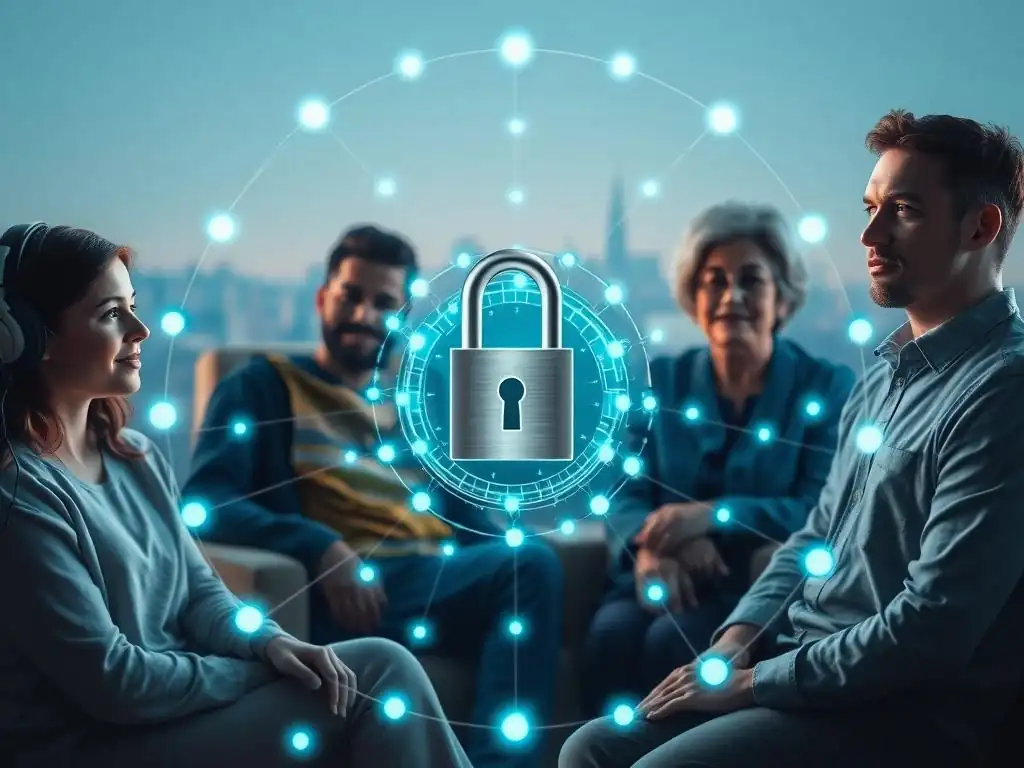
Welcome to Blockchain Trends, your gateway to understanding the revolutionary applications of blockchain technology!
Imagine a future where your mental health telemedicine sessions are not only accessible but also impeccably secure and private. Our deep dive into " Blockchain mental health telemedicine security" explores how this innovative technology is reshaping healthcare, offering unprecedented levels of data protection and patient confidentiality. Intrigued? Discover how blockchain is poised to revolutionize mental healthcare accessibility and security – the possibilities are just beginning. Read on to unlock the potential.
- Blockchain Mental Health Telemedicine Security: Protecting Patient Data
- Understanding the Privacy Risks in Current Mental Health Telemedicine Systems
- Blockchain Technology: A Secure Foundation for Telemedicine
- Blockchain Solutions for Mental Health Telemedicine Privacy
- Implementing Blockchain for Secure Mental Health Telemedicine: Key Considerations
- Benefits of Blockchain in Mental Health Telemedicine
- Case Studies: Blockchain Applications in Mental Health Telemedicine
- Addressing the Challenges of Blockchain Adoption in Telemedicine
- The Future of Blockchain in Mental Health Telemedicine Security
- Conclusion: Securing Mental Health Telemedicine with Blockchain
-
Frequently Asked Questions
- What are the primary privacy concerns in traditional mental health telemedicine that blockchain aims to address?
- How can blockchain enhance the security of patient data in mental health telemedicine?
- Beyond security, what other benefits can blockchain bring to mental health telemedicine?
- Are there any regulatory hurdles or challenges in implementing blockchain solutions for mental health telemedicine?
- How does blockchain support the keyword "Blockchain mental health telemedicine security" in this context?
- Final Reflection: Securing Minds, Securing Futures
- Secure Your Mind: Embrace Blockchain for Mental Wellness
Blockchain Mental Health Telemedicine Security: Protecting Patient Data
The Expanding Role of Telemedicine in Mental Healthcare
Telemedicine has become an increasingly vital component of healthcare delivery, a trend significantly accelerated in recent years. In mental healthcare, it offers unparalleled accessibility, allowing individuals to connect with therapists, psychiatrists, and counselors remotely. This is particularly crucial for underserved populations, those in rural areas, or individuals facing mobility challenges, effectively lowering barriers to receiving necessary mental health support. The convenience and reduced travel time also contribute to higher patient adherence to treatment plans.
The adoption of telemedicine in mental health saw a dramatic increase, with some reports indicating a surge of over 50 times pre-pandemic levels at its peak. While precise, current figures vary, the integration remains substantial. For instance, a study published in JAMA Network Open in 2022 found that while the initial peak subsided, telemedicine use for mental health remained significantly higher than before 2020, highlighting its established role. This expansion, while beneficial for access, simultaneously introduces complex challenges related to the privacy and security of highly sensitive patient data.
Privacy and Security Challenges in Mental Health Telemedicine
The transition of mental health consultations from physical offices to digital platforms inherently exposes sensitive patient information to new vectors of attack. Data transmitted and stored includes not only personal identifiers but also deeply private details about mental states, diagnoses, treatment histories, and therapeutic discussions. This type of information is exceptionally vulnerable and, if compromised, can lead to severe consequences for patients, including discrimination, identity theft, and profound loss of trust in the healthcare system.
Current telemedicine platforms, while designed with security in mind, often rely on centralized databases, making them attractive targets for cybercriminals. Reports consistently show healthcare as a prime target for data breaches due to the valuable nature of patient records. A single breach can impact thousands, sometimes millions, of individuals. For example, the U.S. Department of Health and Human Services Breach Portal lists numerous incidents affecting healthcare providers annually, many stemming from hacking or IT incidents involving electronic protected health information (ePHI) stored on centralized systems. Protecting this sensitive mental health data requires robust and potentially novel security approaches.
Why Blockchain is a Potential Solution for Telemedicine Security
Blockchain technology offers a decentralized, immutable, and transparent ledger system that presents a compelling alternative for addressing the security and privacy challenges inherent in mental health telemedicine. Unlike traditional centralized databases, blockchain distributes data across a network of computers, making it significantly harder for a single point of failure or attack to compromise the entire system. Its core principles of cryptography and distributed consensus enhance data integrity and security.
The potential of blockchain for mental health telemedicine security lies in its ability to create a tamper-evident record of all transactions and data access. This inherent feature provides a high level of auditability and trust. By leveraging blockchain, it becomes possible to manage access controls more granularly and securely, ensuring that only authorized parties can view sensitive mental health information. This capability is particularly relevant for protecting the privacy of individuals seeking mental health support remotely, offering a foundation for building trust in digital healthcare delivery.
Understanding the Privacy Risks in Current Mental Health Telemedicine Systems
Data Breaches and Vulnerabilities in Existing Telemedicine Platforms
Existing telemedicine platforms, while facilitating access, often face significant cybersecurity threats. These platforms, like many cloud-based services, can be susceptible to various forms of cyberattacks, including ransomware, phishing attempts targeting staff, and direct database breaches. The consolidation of large volumes of patient data in central repositories creates high-value targets for malicious actors. The healthcare sector consistently ranks among the most targeted industries for cyberattacks due to the sensitive and valuable nature of patient data.
For instance, the average cost of a healthcare data breach reached approximately $10.93 million in 2023, significantly higher than the cross-industry average. This figure underscores the financial implications but pales in comparison to the potential harm to patients whose mental health information is exposed. Vulnerabilities can arise from software flaws, misconfigured servers, or human error, all of which can be exploited to gain unauthorized access to private therapeutic conversations, diagnoses, and treatment plans, jeopardizing patient confidentiality and safety.
Compliance Issues: HIPAA and Mental Health Data Protection
Protecting mental health data in the U.S. is governed by stringent regulations, primarily the Health Insurance Portability and Accountability Act (HIPAA). HIPAA mandates specific standards for the privacy and security of Protected Health Information (PHI), including mental health records. Telemedicine providers must ensure their platforms and practices comply with the HIPAA Security Rule, which requires administrative, physical, and technical safeguards to protect ePHI. Non-compliance can result in substantial fines, reaching up to $1.5 million per violation category per year for willful neglect.
However, achieving and maintaining full HIPAA compliance in dynamic telemedicine environments is complex. Ensuring that data remains private and secure throughout its lifecycle – from collection during a virtual session, through storage, to sharing with other providers (with patient consent) – presents ongoing challenges. Mental health data is considered particularly sensitive under HIPAA, often requiring even stricter controls regarding its access and disclosure. This regulatory landscape highlights the critical need for robust technical solutions that can demonstrably meet these high standards for blockchain mental health telemedicine security.
The Need for Enhanced Security Measures in Remote Mental Healthcare
The sensitive nature of mental health conditions necessitates security measures that go above and beyond standard data protection. Patients seeking mental health support often disclose deeply personal and vulnerable information, trusting their provider and the platform used for communication to keep it confidential. A security lapse can not only violate privacy but also deter individuals from seeking help in the future, undermining public health efforts.
Enhanced security measures are needed to protect the integrity of virtual consultations, secure the transmission of data, and ensure the safe storage of records. This includes strong encryption, multi-factor authentication, and robust audit trails to monitor access. As mental health telemedicine expands, the systems supporting it must evolve to offer security guarantees that instill confidence in both patients and providers, recognizing that the emotional and social consequences of a breach of mental health data can be particularly devastating. This drive for enhanced protection points towards innovative solutions like blockchain for mental health telemedicine security.
Blockchain Technology: A Secure Foundation for Telemedicine
How Blockchain Enhances Data Security and Integrity
Blockchain technology inherently enhances data security and integrity through its distributed and cryptographic nature. Instead of storing data in a single location, a blockchain network consists of multiple nodes, each holding a copy of the ledger. When new data (a block) is added, it is encrypted and linked to the previous block using cryptographic hashes, forming a chain. Any attempt to alter data in a past block would break the cryptographic link, immediately alerting the network to the tampering.
This distributed consensus mechanism means that for data to be altered, a majority of the network's participants would need to agree on the change, a computationally infeasible task in a well-designed, sufficiently decentralized network. This makes the data stored on the blockchain highly resistant to unauthorized modification or deletion, providing a level of data integrity far surpassing that of traditional centralized databases, which are more susceptible to single-point attacks. This immutability is a cornerstone of blockchain mental health telemedicine security.
Decentralization and Data Ownership in Blockchain-Based Systems
Decentralization is a core principle of blockchain, moving away from central authorities or servers controlling data. In the context of telemedicine, this means patient data is not held in one large database owned and managed by a single entity, which can be a prime target for hackers.
Instead, the data's integrity is maintained across a distributed network. While raw, sensitive data might not be stored directly on the public blockchain due to privacy concerns and scalability limitations, the blockchain can securely store encrypted references, hashes, or metadata pointing to where the actual encrypted data resides (e.g., in secure, patient-controlled storage).
Furthermore, blockchain frameworks can be designed to empower patients with greater control over their health data. Through mechanisms like digital identities and private keys, patients can become the primary controllers of access permissions to their mental health records. This shifts the paradigm from healthcare providers having default control to patients granting explicit, auditable consent for data access and sharing, aligning with principles of patient autonomy and potentially improving blockchain mental health telemedicine security by limiting unnecessary exposure.
Immutability and Audit Trails: Strengthening Data Security
The immutability of blockchain is a powerful feature for security. Once a transaction or data entry is recorded on the blockchain, it cannot be altered or deleted without invalidating subsequent blocks, which is practically impossible in a mature network. This creates a permanent, verifiable history of all data interactions. For mental health telemedicine, this means every access, update, or sharing event related to a patient's record can be logged on the blockchain.
This immutable log serves as a highly reliable audit trail. If there is suspicion of unauthorized access or data tampering, the blockchain provides a transparent and undeniable record of who accessed the data and when. This level of transparency and accountability significantly strengthens data security and aids in compliance and forensic investigations. It provides a foundational layer of trust, ensuring that the history of sensitive mental health data interactions is accurate and verifiable, crucial for maintaining confidence in blockchain mental health telemedicine security.
Blockchain Solutions for Mental Health Telemedicine Privacy
Secure Storage of Mental Health Records on the Blockchain
While storing large volumes of sensitive patient data directly on a public blockchain might not be feasible or desirable due to privacy concerns, scalability, and cost, blockchain technology can be used to secure references to encrypted data stored off-chain. In this model, the actual mental health records are encrypted and stored in secure, potentially decentralized storage systems (like IPFS or private databases), while the blockchain holds immutable hashes, access policies, and audit trails related to these records.
This hybrid approach leverages the security and immutability of the blockchain to protect the integrity and access control of the data, without exposing the sensitive contents publicly. The blockchain acts as a secure index and permission layer.
For example, a patient's mental health history could be encrypted and stored, and the decryption key or access token management could be handled via a blockchain smart contract, ensuring that only parties with the correct permissions (recorded on the blockchain) can access the data. This architecture enhances blockchain mental health telemedicine security by separating data storage from access control logic, making the latter transparent and tamper-proof.
Encryption and Anonymization Techniques for Patient Data
Effective blockchain mental health telemedicine security relies heavily on robust encryption and anonymization techniques applied before any data reference is stored on the blockchain or access is granted. Sensitive details within mental health records must be encrypted using strong cryptographic algorithms. Patient identifiers can be replaced with pseudonyms or cryptographic hashes linked to a decentralized identity system, rather than directly on the blockchain.
Homomorphic encryption, while computationally intensive, is a promising advanced technique that could allow computations (like data analysis for research) to be performed on encrypted data without needing to decrypt it first. This would further enhance privacy. Anonymization techniques, such as K-anonymity or differential privacy, can be applied to aggregated data sets derived from mental health records stored securely, allowing for valuable research or public health analysis without compromising individual patient identities. Combining these techniques with blockchain's secure access control layer creates a powerful defense for mental health data privacy.
Smart Contracts for Access Control and Data Sharing Permissions
Smart contracts, self-executing contracts with the terms of the agreement directly written into code, are fundamental to managing access control and data sharing permissions in blockchain-based systems. In mental health telemedicine, smart contracts can automate and enforce rules regarding who can access a patient's records, under what conditions, and for how long.
For instance, a patient could use a smart contract to grant their therapist access to their records for the duration of their treatment. They could also set permissions for sharing specific parts of their record with a new provider or for research purposes, requiring explicit digital consent managed by the smart contract.
Every instance of access granted or denied would be recorded on the immutable blockchain ledger. This programmable and transparent approach to managing permissions, enforced by code, provides a highly secure and auditable method for controlling access to sensitive mental health information, significantly bolstering blockchain mental health telemedicine security and patient trust.
Implementing Blockchain for Secure Mental Health Telemedicine: Key Considerations

Choosing the Right Blockchain Platform for Telemedicine Applications
Selecting the appropriate blockchain platform is a critical first step for implementing blockchain mental health telemedicine security solutions. Different platforms offer varying features, consensus mechanisms, scalability, and privacy capabilities. Public blockchains like Ethereum or Bitcoin might not be suitable due to their transparency and lower transaction speeds for large-scale healthcare data management.
Private or permissioned blockchains, such as Hyperledger Fabric, R3 Corda, or enterprise Ethereum variants, are often more appropriate for healthcare. These platforms allow organizations to control participation in the network, offering better privacy and scalability. They can also handle the high transaction throughput required for a telemedicine system managing numerous patient interactions and data updates. Evaluating factors like regulatory compliance features, interoperability potential, development ecosystem support, and cost is essential when making this platform choice for a blockchain mental health telemedicine security application.
- Permissioned vs. Public: Healthcare typically requires permissioned networks for privacy and compliance.
- Consensus Mechanism: Choose one that balances security, speed, and energy efficiency.
- Scalability: The platform must handle a growing number of users and data transactions.
- Integration Capabilities: Ease of integrating with existing EMR/EHR and telemedicine systems.
Integrating Blockchain with Existing Telemedicine Infrastructure
Integrating a new blockchain layer with existing, often complex and legacy, telemedicine and Electronic Health Record (EHR) systems presents significant technical and operational challenges. Most healthcare providers already use established software for scheduling, virtual consultations, and record keeping. A blockchain solution must be able to interact seamlessly with these systems without requiring a complete overhaul.
This often involves developing APIs and middleware that can translate data between the traditional systems and the blockchain network. Secure data gateways are needed to ensure that sensitive data is encrypted and handled correctly before any information or hash is recorded on the blockchain. Careful planning is required to map data flows and ensure that the integration maintains compliance with regulations like HIPAA. Successful integration is key to practical blockchain mental health telemedicine security adoption.
Scalability and Performance Considerations for Blockchain-Based Systems
Scalability is a major consideration for any technology deployed in healthcare, and blockchain is no exception. A telemedicine platform needs to handle potentially thousands or millions of patient interactions and data updates daily. Traditional blockchain architectures, particularly public ones, have faced challenges with transaction throughput and latency.
Permissioned blockchains and Layer 2 scaling solutions are being developed to address these issues. Techniques like sharding, state channels, and optimized consensus mechanisms are crucial for ensuring that a blockchain-based telemedicine system can operate efficiently at scale. The performance must be reliable enough to support real-time telemedicine sessions and quick access to necessary patient information, without introducing delays that could hinder care delivery. Designing for scalability from the outset is paramount for effective blockchain mental health telemedicine security implementations.
Benefits of Blockchain in Mental Health Telemedicine
Enhanced Data Security and Reduced Risk of Data Breaches
One of the most significant benefits of implementing blockchain in mental health telemedicine is the substantial enhancement of data security. The decentralized nature and cryptographic principles of blockchain make it inherently more resistant to many types of cyberattacks that plague centralized systems. Data integrity is protected by the immutable ledger, making it virtually impossible for unauthorized parties to alter records undetected.
By securing data references and access logs on a blockchain, healthcare providers can significantly reduce the risk of large-scale data breaches that compromise sensitive mental health information. Even if a single node or storage system is compromised, the integrity of the overall data history and access permissions, as recorded on the blockchain, remains intact. This increased resilience translates directly into improved blockchain mental health telemedicine security, safeguarding patient trust and confidentiality against external threats.
Improved Patient Privacy and Control Over Personal Data
Blockchain technology offers a powerful paradigm shift in how patient data privacy is managed, moving towards a model where patients have greater control. Through decentralized identity and smart contracts, individuals can manage who accesses their mental health records and under what conditions. This contrasts with traditional systems where access control is managed by the healthcare provider's IT department.
Patients can grant temporary access for consultations, permanent access for ongoing treatment, or restricted access for specific purposes like research, all managed and recorded transparently on the blockchain. This granular control over personal data respects patient autonomy and builds confidence in using telemedicine services for sensitive mental health issues. Empowering patients with control over their data is a key advantage of blockchain mental health telemedicine security applications.
Increased Trust and Transparency in Mental Healthcare Delivery
The transparent and immutable nature of the blockchain ledger fosters increased trust among all stakeholders in the mental healthcare ecosystem – patients, providers, and payers. Patients can be confident that their records are secure and that access is strictly controlled and auditable. Providers benefit from a secure and reliable system for managing patient data and verifying credentials.
The ability to audit all data access and sharing events on an immutable ledger provides an unprecedented level of transparency. This can help resolve disputes, ensure compliance, and build a foundation of trust essential for the sensitive nature of mental health treatment. This increased transparency and trust are crucial outcomes of adopting blockchain mental health telemedicine security measures.
Case Studies: Blockchain Applications in Mental Health Telemedicine
Secure Telemedicine Platform Using Hyperledger Fabric
While specific, publicly detailed case studies focused solely on blockchain within mental health telemedicine are still emerging, examples in broader healthcare provide valuable insights. One notable example involves the use of Hyperledger Fabric, a permissioned blockchain framework, to build secure health data exchange platforms. Projects have demonstrated how Hyperledger Fabric can manage consent, track data access, and ensure the integrity of patient records shared between different healthcare providers or systems.
A platform built on Hyperledger Fabric could, in theory, be adapted for mental health telemedicine. It would involve creating channels for secure communication and data storage, managing patient consent for sharing therapy session notes or diagnostic information via smart contracts, and using the distributed ledger to create an immutable audit trail of all system interactions. While specific patient numbers or security metrics for a live mental health deployment might not be public, the underlying technology's capability for permissioned access and data integrity is well-established in healthcare pilots, promising a strong foundation for blockchain mental health telemedicine security.
Pilot Project Using Blockchain for PTSD Treatment Data Management
Another illustrative example comes from pilot projects exploring blockchain for managing sensitive research data, such as that collected during clinical trials for conditions like PTSD. Managing data from PTSD treatments involves highly sensitive information about patient trauma, symptoms, and responses to therapy. Ensuring the privacy and integrity of this data is paramount, especially when it needs to be shared among researchers or institutions.
A pilot project could use a blockchain to record consent for data usage, track data provenance, and manage encrypted data shared across research sites. While not direct telemedicine, the principles apply: the blockchain ensures that consent is recorded immutably, data access is logged transparently, and the integrity of the dataset is maintained. For instance, a pilot might involve tracking data points for 100-200 patients across several clinics, using the blockchain to timestamp and verify data entries, ensuring the integrity of the study results and demonstrating the potential for blockchain mental health telemedicine security in managing sensitive treatment outcomes.
Lessons Learned and Best Practices from Existing Implementations
Lessons from existing blockchain implementations in healthcare, even outside of specific mental health telemedicine contexts, highlight several best practices. Firstly, involving all stakeholders – including clinicians, patients, administrators, and IT professionals – early in the design phase is crucial. Understanding workflow requirements and user needs ensures the technology is practical and usable.
Secondly, focusing on hybrid architectures that combine the blockchain's strengths (immutability, access control) with existing secure data storage solutions is often more practical than attempting to store all data directly on the chain. Thirdly, starting with pilot programs focused on specific use cases, like consent management or secure audit trails, allows organizations to test the technology's viability and scalability before a full-scale deployment. These lessons are vital for successfully implementing blockchain mental health telemedicine security solutions.
Addressing the Challenges of Blockchain Adoption in Telemedicine
Regulatory Hurdles and Compliance Requirements for Blockchain in Healthcare
Implementing blockchain in healthcare, including mental health telemedicine, faces significant regulatory hurdles. While blockchain offers features that can aid compliance with regulations like HIPAA, it also introduces new complexities. Questions arise regarding data storage location (especially with distributed ledgers), the right to be forgotten (difficult with immutable data), and the legal status of smart contracts governing patient data access.
Ensuring that a blockchain solution fully complies with existing privacy laws requires careful legal and technical design. For example, while the blockchain ledger might be immutable, the pointers to off-chain data can be updated, or encryption keys can be revoked to effectively "remove" access to data, addressing the 'right to be forgotten' concept in a practical way. Navigating these legal interpretations and ensuring the technology meets stringent healthcare regulations is a major challenge for blockchain mental health telemedicine security.
Interoperability and Data Sharing Between Different Blockchain Networks
The healthcare industry is characterized by fragmented systems, and the potential adoption of various blockchain platforms by different providers or networks could exacerbate interoperability issues. For mental health telemedicine to be fully effective, patient data (or secure references to it) needs to be shareable between different providers, specialists, or institutions, often operating on different technological infrastructures.
Ensuring that different blockchain networks can communicate and share data securely is a significant challenge. Standards for data formatting, identity management, and cross-chain communication protocols are needed. Developing interoperability layers or using established standards like FHIR (Fast Healthcare Interoperability Resources) in conjunction with blockchain can help bridge the gap and enable seamless, secure data exchange across different systems, crucial for a connected healthcare ecosystem relying on blockchain mental health telemedicine security.
User Education and Adoption of Blockchain-Based Telemedicine Systems
Adopting any new technology requires user education and buy-in, a challenge particularly pronounced with complex technologies like blockchain. Healthcare providers, administrators, and patients need to understand how blockchain works, its benefits for security and privacy, and how to use the new system effectively. Misunderstandings about decentralization, keys, and smart contracts can hinder adoption.
Training programs are needed to educate clinical staff on managing permissions and interacting with blockchain-enabled interfaces. Patients need clear, accessible explanations of how their data is protected and how they can exercise control using the new system. Overcoming inertia and demonstrating the tangible benefits in terms of enhanced privacy and security are essential for driving widespread adoption of blockchain mental health telemedicine security solutions.
The Future of Blockchain in Mental Health Telemedicine Security
Emerging Trends and Innovations in Blockchain Technology
Blockchain technology is continuously evolving, with emerging trends promising further improvements for mental health telemedicine security. Advancements in zero-knowledge proofs (ZKPs), for example, allow verification of information (like patient eligibility or diagnosis) without revealing the underlying sensitive data itself, significantly enhancing privacy.
Developments in Layer 2 scaling solutions and more efficient consensus mechanisms (like Proof-of-Stake variants) are addressing scalability and performance limitations, making blockchain more viable for high-throughput healthcare applications. Furthermore, the integration of decentralized identity solutions with blockchain can provide a secure and privacy-preserving way for patients and providers to authenticate themselves within the telemedicine ecosystem. These innovations are paving the way for more robust and practical blockchain mental health telemedicine security applications.
The Role of Blockchain in Personalized and Preventative Mental Healthcare
Blockchain can play a crucial role in enabling personalized and preventative mental healthcare by securely managing and facilitating the analysis of aggregated, anonymized patient data. By using blockchain to track consent for data usage and ensure data integrity, researchers and public health officials can gain access to larger, more reliable datasets (appropriately anonymized or pseudonymized) to identify trends, predict outbreaks of mental health conditions, and develop more personalized treatment plans.
For example, secure, blockchain-managed access to aggregated data on treatment outcomes for specific conditions could allow AI algorithms to identify which therapies are most effective for certain patient demographics or genetic profiles, leading to more tailored interventions. The blockchain provides the necessary trust layer to manage this sensitive data-sharing ecosystem, ensuring that while insights are gained, individual privacy is maintained, thereby supporting the future of blockchain mental health telemedicine security in driving personalized care.
Predictions for the Long-Term Impact of Blockchain on Telemedicine Security
In the long term, blockchain is poised to fundamentally transform telemedicine security, particularly in sensitive areas like mental health. We can predict a shift towards patient-centric data control models, where individuals are empowered to manage access to their own health records via blockchain-based applications. This will likely increase patient trust in digital healthcare services.
Furthermore, blockchain's immutable audit trails will become the standard for verifying data integrity and compliance in healthcare, reducing fraud and increasing accountability. As interoperability standards evolve, blockchain could facilitate seamless, secure data exchange between different healthcare providers globally, improving care coordination. While widespread adoption will take time, facing regulatory and integration challenges, the foundational security and privacy benefits offered by blockchain position it as a key technology for the future of blockchain mental health telemedicine security.
Conclusion: Securing Mental Health Telemedicine with Blockchain
Recap of the Benefits of Blockchain for Patient Privacy and Security
The expansion of mental health telemedicine offers immense benefits in terms of access to care but also introduces significant challenges regarding patient data privacy and security. Traditional centralized systems are vulnerable to breaches and complex to manage under stringent regulations like HIPAA. Blockchain technology provides a compelling solution by offering enhanced data security through decentralization, immutability, and cryptographic integrity.
Key benefits include reduced risk of data breaches due to the distributed and tamper-proof nature of the ledger, improved patient privacy through granular, smart contract-managed access control, and increased trust and transparency via immutable audit trails. While challenges related to regulation, interoperability, and adoption remain, the core capabilities of blockchain are uniquely suited to address the critical security needs of sensitive mental health data in a telemedicine context.
Call to Action: Exploring Blockchain Solutions for Secure Mental Healthcare
Given the clear benefits and the increasing need for robust protection of sensitive mental health information in the digital age, healthcare providers, technology developers, and policymakers should actively explore and invest in blockchain solutions for mental health telemedicine security. Pilots and proof-of-concept projects are essential steps to understand the practical implementation challenges and refine solutions.
Investing in research and development for scalable, interoperable, and user-friendly blockchain platforms tailored for healthcare is crucial. Collaboration between blockchain experts, cybersecurity professionals, mental health clinicians, and regulatory bodies is necessary to build systems that are not only technologically secure but also compliant and clinically effective. Embracing blockchain technology offers a path towards a more secure, private, and trustworthy future for mental health telemedicine, ultimately benefiting patients by ensuring their most sensitive information is protected.
Frequently Asked Questions
What are the primary privacy concerns in traditional mental health telemedicine that blockchain aims to address?
Traditional mental health telemedicine often relies on centralized databases, making them vulnerable to data breaches and unauthorized access. Blockchain offers a more secure and private alternative by using decentralized and encrypted storage.
How can blockchain enhance the security of patient data in mental health telemedicine?
Blockchain's cryptographic hashing and immutability create a tamper-proof record of patient data. This makes it incredibly difficult for hackers to alter or steal sensitive information, thus boosting data security and patient trust.
Beyond security, what other benefits can blockchain bring to mental health telemedicine?
Blockchain can facilitate secure data sharing among healthcare providers, improve patient data ownership and control, and streamline billing and insurance processes in a transparent manner.
Are there any regulatory hurdles or challenges in implementing blockchain solutions for mental health telemedicine?
Yes, navigating existing data privacy regulations like HIPAA and GDPR, as well as establishing interoperability standards with existing healthcare systems, present significant challenges for broad blockchain adoption.
How does blockchain support the keyword "Blockchain mental health telemedicine security" in this context?
Blockchain provides the security infrastructure needed to protect sensitive patient data in mental health telemedicine. This helps build trust and encourages wider adoption of these remote healthcare services.
Final Reflection: Securing Minds, Securing Futures
The exploration of Blockchain mental health telemedicine security reveals not just a technological solution, but a crucial step towards building trust and accessibility in mental healthcare. In a world increasingly reliant on digital interactions, the promise of secure and private mental health services offered through telemedicine, fortified by blockchain technology, is no longer a futuristic concept, but a pressing necessity to protect vulnerable individuals and foster wider adoption of these vital services.
The impact of this intersection between mental health, telemedicine, and blockchain extends far beyond data encryption. It touches upon the very core of patient autonomy and the sanctity of therapeutic relationships. The ability to control one's own mental health data, knowing it is securely stored and accessible only with explicit consent, is paramount to fostering trust and encouraging individuals to seek the help they need without fear of privacy breaches. Privacy is not an option, and it shouldn't be the price we accept for just getting on the Internet.
- Gary Kovacs. This quote underscores the urgency of integrating robust security measures like blockchain into mental health telemedicine, ensuring that privacy is a fundamental right, not a luxury.
As we stand at the cusp of a new era in mental healthcare, let us not only embrace the technological advancements that promise greater security and accessibility, but also reflect on the ethical responsibilities that accompany them. Consider how you can advocate for the responsible implementation of blockchain in mental health telemedicine, ensuring that it serves as a tool for empowerment and healing, rather than a source of anxiety and vulnerability. The future of mental healthcare hinges on our collective commitment to building a secure and trustworthy digital landscape.
Secure Your Mind: Embrace Blockchain for Mental Wellness
Thank you for exploring how blockchain is revolutionizing mental health telemedicine! You've gained valuable insights into enhancing privacy and security, and now it's time to take action. Let's move from understanding to implementation.
Here's how you can contribute to a more secure and private future for mental healthcare:
- Take the leap: Explore a mental health app that utilizes blockchain technology to safeguard your personal data. Research and choose an option that resonates with your needs and values. This is your primary action – a direct step toward utilizing the discussed technology.
- Spread the word! Share this article with your network to raise awareness about the importance of privacy and security in mental health telemedicine and how blockchain can provide enhanced solutions.
- Join the conversation! Research relevant blockchain forums and share insights and questions. Contribute to the evolving discussion.
What specific privacy concerns do you have regarding current mental health telemedicine platforms, and how do you envision blockchain addressing them?
Leave a Reply