
Architecting DApps for RealWorld Assets: Tokenizing and Decentralizing Physical Assets


Welcome to Blockchain Trends, your guide to understanding the real impact of blockchain technology.
Ever wondered how blockchain can revolutionize more than just digital currencies? In this deep dive, we're unlocking the potential of tokenizing real-world assets on the blockchain. Discover how this groundbreaking application is poised to reshape industries and create unprecedented opportunities. Intrigued? Keep reading to learn how to architect DApps for real-world asset tokenization and decentralize physical assets like never before.
Architecting DApps for Real-World Assets: Tokenizing and Decentralizing Physical Assets
- Introduction: The Convergence of Blockchain and Real-World Assets (RWAs)
- What are Real-World Assets (RWAs) in the Context of Blockchain?
-
Tokenizing Real-World Assets: A Step-by-Step Guide
- Legal Considerations for Tokenizing Assets: Navigating Regulatory Frameworks
- Choosing the Right Blockchain Platform for RWA Tokenization: Ethereum, Polygon, and Solana
- Smart Contract Development for RWA Tokens: Security and Compliance
- Asset Valuation and Oracle Integration: Ensuring Accurate Price Feeds
- DApp Architecture for Tokenized Real-World Assets: A Deep Dive
- Use Cases: Real-World Applications of Tokenized Assets
- Challenges and Considerations for Architecting RWA DApps
- Overcoming Challenges: Best Practices for Secure and Compliant RWA DApps
- The Future of DApps and Tokenized Real-World Assets
- Conclusion: Embracing the Potential of Tokenized Real-World Assets on Blockchain
-
Frequently Asked Questions
- How does tokenizing real-world assets with blockchain work?
- What are the primary benefits of tokenizing real-world assets using blockchain?
- What are some real-world examples of assets that can be tokenized using blockchain technology?
- What are the key regulatory considerations when tokenizing real-world assets on a blockchain?
- How can decentralized applications (DApps) be used to manage tokenized real-world assets?
- Final Reflection: Embracing the Tokenized Future
- Unleash the Potential: Start Tokenizing Your Assets!
Introduction: The Convergence of Blockchain and Real-World Assets (RWAs)
Understanding the Potential of Tokenizing Physical Assets on Blockchain
Tokenizing realworld assets blockchain represents a significant evolution in how value is stored, transferred, and managed. By converting rights or ownership of physical assets into digital tokens on a blockchain ledger, we unlock unprecedented levels of liquidity and accessibility.
This process essentially creates a digital twin on a distributed network, allowing assets traditionally tied to illiquid markets, such as real estate or fine art, to be traded and managed with the efficiency of digital currencies. The potential market size for tokenized assets is vast, with some estimates projecting it could reach trillions of dollars in the coming decade, fundamentally altering global finance and ownership structures.
This transformation goes beyond mere digital representation; it embeds the asset's information, ownership history, and rules governing its transfer directly into the token's smart contract. This inherent transparency and immutability, characteristic of blockchain technology, drastically reduce reliance on intermediaries, thereby lowering costs and increasing transaction speed.
Consider a fractionalized ownership model for a commercial property: traditionally, this involves complex legal agreements and administrative overhead. Tokenizing realworld assets blockchain simplifies this by allowing investors to buy and sell fractional tokens representing a share of the property, potentially enabling investments with much smaller capital requirements, perhaps starting from just a few hundred dollars, compared to traditional real estate investments often requiring tens or hundreds of thousands.
Decentralized Applications (DApps) and the Future of Asset Ownership
Decentralized Applications (DApps) are the operational interfaces and logic layer that make tokenizing realworld assets blockchain practical and user-friendly. Unlike traditional applications running on centralized servers, DApps operate on peer-to-peer blockchain networks, executing logic through smart contracts. This architecture provides inherent resilience and censorship resistance, crucial features when dealing with valuable real-world assets. DApps facilitate the entire lifecycle of a tokenized asset, from issuance and trading to management and eventual redemption or liquidation.
The integration of DApps with tokenized RWAs is paving the way for a future where asset ownership is more democratized and efficient. Imagine a DApp marketplace where users can directly trade tokenized shares of diverse assets – from a piece of vintage wine collection to a solar farm's future energy output – without requiring traditional brokers or exchanges.
This direct peer-to-peer interaction, governed by transparent smart contract rules, reduces counterparty risk and increases market accessibility globally. Platforms built on this model are already emerging, handling transactions worth potentially millions of dollars in niche asset classes, demonstrating the tangible shift towards decentralized asset management facilitated by DApps.
What are Real-World Assets (RWAs) in the Context of Blockchain?
Defining Real-World Assets: From Commodities to Intellectual Property
In the context of blockchain and tokenization, Real-World Assets (RWAs) encompass tangible and intangible assets that exist independently of the digital realm. This broad category includes a diverse range of value stores. Tangible RWAs are physical items like real estate (commercial buildings, residential homes, land), precious metals (gold, silver), commodities (oil, agricultural products), art, collectibles, and infrastructure (bridges, power plants). These assets have physical form and are typically subject to traditional legal frameworks and ownership records.
Intangible RWAs, while not having a physical form, still possess economic value and can be represented digitally. This includes intellectual property (patents, copyrights, trademarks), royalties from creative works, contractual agreements (invoices, supply chain contracts), debt instruments (loans, bonds), and even future cash flows from businesses. The process of tokenizing realworld assets blockchain extends to these non-physical forms of value, creating digital tokens that represent ownership rights, revenue streams, or contractual obligations associated with the original intangible asset. This expansion significantly broadens the scope of what can be brought on-chain and utilized within decentralized finance (DeFi) or other blockchain applications.
The Benefits of Bringing RWAs On-Chain: Transparency, Liquidity, and Efficiency
Bringing real-world assets on-chain through tokenization offers several compelling advantages over traditional asset management methods. Firstly, it dramatically enhances transparency. Blockchain ledgers provide an immutable and publicly verifiable record of ownership history, transactions, and asset characteristics (when embedded or referenced). This eliminates ambiguity and reduces the potential for fraud or disputes often associated with manual record-keeping. For example, tracking the provenance of a luxury good or the ownership chain of a property becomes significantly more straightforward and trustworthy when recorded on a blockchain.
Secondly, tokenizing realworld assets blockchain significantly boosts liquidity. Many RWAs, such as real estate or private equity, are inherently illiquid, requiring lengthy and complex processes to buy or sell. Tokenization allows these assets to be fractionalized into smaller, more affordable units (tokens) that can be traded on secondary markets 24/7, much like cryptocurrencies.
This fractionalization lowers the barrier to entry for investors and creates new opportunities for asset owners to unlock trapped capital. A real estate tokenization platform, for instance, might enable trading fractions of a building's value in minutes, a stark contrast to the months typically required for a traditional property sale. This increased liquidity also leads to more efficient price discovery.
Finally, the efficiency gains from tokenizing realworld assets blockchain are substantial. By automating processes through smart contracts, intermediaries are reduced or eliminated, cutting down on fees, paperwork, and delays. Transferring ownership of a tokenized asset can happen nearly instantaneously on the blockchain, compared to the days or weeks required for traditional asset transfers involving banks, lawyers, and registry offices. Smart contracts can also automate dividend payouts for tokenized stocks or rental income distribution for tokenized real estate, ensuring timely and accurate payments directly to token holders based on predefined rules.
Tokenizing Real-World Assets: A Step-by-Step Guide
Tokenizing realworld assets blockchain is not solely a technical exercise; it requires careful consideration of existing legal and regulatory frameworks, which vary significantly across jurisdictions. The legal nature of the token itself is paramount: does it represent security, a share of ownership, a debt obligation, or something else entirely?
Regulators like the U.S. Securities and Exchange Commission (SEC) or European bodies are actively scrutinizing token offerings, often applying existing securities laws if the token meets criteria like the Howey Test. This necessitates thorough legal analysis to determine if the token constitutes a security and, if so, compliance with registration requirements, disclosure rules, and investor protection laws.
Furthermore, the process of tokenizing an asset involves creating a legal link between the physical or intangible asset and its digital token counterpart. This typically requires establishing a Special Purpose Vehicle (SPV) or similar legal entity to hold the underlying asset and issue the tokens representing shares or rights in that entity or asset.
Legal documentation, such as offering memoranda, subscription agreements, and token holder agreements, must be meticulously drafted to define the rights and obligations of token holders and the issuer. Ensuring that these legal structures are robust and compliant is crucial for the legitimacy and enforceability of tokenized realworld assets blockchain, providing investors with confidence and legal recourse.
Choosing the Right Blockchain Platform for RWA Tokenization: Ethereum, Polygon, and Solana
Selecting the appropriate blockchain platform is a critical decision when architecting DApps for tokenized realworld assets blockchain. The choice impacts factors like transaction speed, cost, security, and the ecosystem of developers and tools available. Ethereum has historically been a popular choice due to its maturity, robust smart contract capabilities (EVM compatibility), and large developer community.
Many early RWA tokenization projects were built on Ethereum, utilizing standards like ERC-20 for fungible assets or ERC-721/ERC-1155 for non-fungible or semi-fungible assets. However, Ethereum's mainnet can face challenges with high transaction fees (gas costs), particularly during periods of high network congestion, and slower transaction finality compared to newer chains.
Alternative platforms like Polygon, a Layer-2 scaling solution for Ethereum, offer significantly lower transaction costs and faster transaction speeds (often fractions of a cent and seconds per transaction) while benefiting from Ethereum's security foundation. This makes Polygon attractive for RWA DApps requiring frequent transfers or micro-transactions.
Solana, another prominent blockchain, offers exceptionally high throughput (potentially thousands of transactions per second) and very low costs, making it suitable for high-frequency trading of tokenized assets or applications requiring massive scale. Each platform has its trade-offs in terms of decentralization, security models (e.g., Proof-of-Stake vs. other consensus mechanisms), and specific features, necessitating careful evaluation based on the specific requirements of the RWA and the DApp's intended use case.
Smart Contract Development for RWA Tokens: Security and Compliance
Developing secure and compliant smart contracts is foundational to successfully tokenizing realworld assets blockchain. These contracts define the rules governing the token's creation, transfer, management, and interaction with the underlying asset or its legal wrapper.
Common token standards like ERC-20 (for fungible assets like shares or debt) and ERC-721/ERC-1155 (for unique assets like real estate or art) provide basic functionalities, but custom logic is often required to incorporate RWA-specific features. This includes mechanisms for handling dividends, interest payments, voting rights, fractional ownership logic, and potentially features related to regulatory compliance, such as transfer restrictions based on investor accreditation or geographical location.
Security is paramount in smart contract development, as vulnerabilities can lead to significant financial losses. Common attack vectors include reentrancy attacks, integer overflows, and access control issues. Rigorous testing, including unit tests, integration tests, and formal verification methods, is essential to identify and mitigate these risks.
Furthermore, integrating compliance features directly into the smart contract is often necessary for tokenizing realworld assets blockchain. This might involve incorporating logic that checks if a recipient address is whitelisted (part of approved investors) before allowing a token transfer, or freezing tokens in case of regulatory requirements or disputes. Audits by reputable third-party blockchain security firms are a standard practice and highly recommended to ensure the contract code is robust and free from critical flaws before deployment.
Asset Valuation and Oracle Integration: Ensuring Accurate Price Feeds
Accurate and reliable asset valuation is crucial for DApps dealing with tokenized realworld assets blockchain, especially for trading, lending, or calculating portfolio values. While some tokenized assets might trade on open exchanges with readily available prices, many RWAs lack continuous public market data. For assets like private equity stakes, real estate, or exotic collectibles, establishing a fair market value requires external data and methodologies. This data often originates off-chain and needs to be securely and reliably delivered to the blockchain where the smart contracts operate.
This is where blockchain oracles play a vital role. Oracles are third-party services that connect smart contracts with real-world data, such as asset prices, interest rates, or event outcomes. For RWA tokenization, oracles can provide valuation data from appraisal services, market indices, or verified data providers.
The design of the oracle mechanism is critical to prevent manipulation; decentralized oracle networks, like Chainlink, aggregate data from multiple independent sources and use cryptographic proofs to ensure data integrity before feeding it to the smart contract. Integrating such robust oracle solutions is essential for DApps to make decisions based on accurate, tamper-proof information regarding the value of the underlying tokenized realworld assets blockchain.
DApp Architecture for Tokenized Real-World Assets: A Deep Dive
Designing a Secure and Scalable DApp Architecture
Designing a DApp architecture for tokenized realworld assets blockchain requires balancing the principles of decentralization with the practical needs of performance, usability, and integration with the physical world. A typical architecture involves several layers: the blockchain layer (where tokens and core smart contracts reside), the smart contract layer (implementing asset logic, rules, and interactions), the off-chain data storage layer (for data not suitable for the blockchain), and the application layer (user interface and backend services). Security must be considered at every layer.
On-chain security relies on well-audited smart contracts and the underlying blockchain's consensus mechanism. Off-chain components, such as databases or APIs, require traditional cybersecurity measures like encryption, access control, and intrusion detection.
Scalability is another major concern. While Layer-1 blockchains like Ethereum have limitations, leveraging Layer-2 scaling solutions (e.g., optimistic rollups, zero-knowledge rollups) or choosing high-throughput chains (like Solana or Polygon) can help. The architecture should also consider how to handle increasing numbers of users and assets.
This might involve sharding data off-chain, optimizing smart contract gas usage, or designing the application layer to efficiently interact with the blockchain without overwhelming nodes. For instance, a DApp facilitating fractional real estate ownership might store large documents (deeds, blueprints) off-chain in decentralized storage like IPFS, while only storing cryptographic hashes of these documents on-chain for verification, thus reducing blockchain storage load and cost.
On-Chain vs. Off-Chain Data Storage: Balancing Decentralization and Performance
A fundamental architectural decision for RWA DApps is determining what data resides on-chain versus off-chain. Storing data directly on a blockchain provides immutability, transparency, and censorship resistance, ideal for critical information like token ownership records, transaction history, and the cryptographic hash linking the token to the underlying asset's documentation. However, blockchains are not designed for storing large volumes of data due to high storage costs, limited block size, and privacy concerns for sensitive information. Storing large files like property deeds, detailed legal contracts, high-resolution art images, or extensive historical transaction logs directly on-chain is generally impractical and expensive.
Therefore, a hybrid approach is common. Essential, tamper-proof data necessary for verifying ownership and executing core smart contract logic is stored on-chain. This includes token balances, smart contract states, and cryptographic proofs. All other data – large files, sensitive personal information (handled according to privacy regulations), detailed asset descriptions, marketing materials, and potentially historical data not needed for active contract execution – is stored off-chain.
This off-chain storage can utilize traditional databases, cloud storage, or decentralized storage solutions (like IPFS or Arweave). The key is maintaining a secure link between the on-chain token and the off-chain data, often by storing a hash of the off-chain data on the blockchain, allowing anyone to verify the integrity of the off-chain data against the on-chain record. This balance optimizes performance and cost while maintaining the necessary level of blockchain-based trust and verification for tokenizing realworld assets blockchain.
Identity Management and KYC/AML Compliance in DApps for RWAs
Unlike purely digital tokens or cryptocurrencies, tokenizing realworld assets blockchain often intersects with regulated financial markets and requires adherence to Know Your Customer (KYC) and Anti-Money Laundering (AML) regulations. This is particularly true for assets like real estate, securities, or debt, where regulators mandate verifying the identity of participants to prevent illicit activities. Incorporating identity management and compliance into a DApp architecture while maintaining a degree of decentralization is a complex challenge. Traditional KYC/AML involves centralized data collection and verification by trusted third parties.
In a DApp context, solutions are emerging that aim to address this. Decentralized Identity (DID) frameworks allow users to own and control their identity data, sharing verified credentials selectively.
Verifiable Credentials (VCs), issued by trusted entities (like identity verification services or governments) and stored by the user, can be used to prove specific attributes (e.g., "is an accredited investor," "is over 18," "resides in a specific country") to a DApp without revealing the underlying personal information. The DApp's smart contracts or backend can then check the validity of these VCs.
This approach allows the DApp to remain permissionless in its core logic (e.g., token transfer function), but require specific permissions (verified via VCs) for certain actions, such as participating in a token sale or trading restricted RWA tokens. Integrating with established identity verification service providers through APIs is also a common practice in the off-chain components of the DApp architecture to fulfill regulatory obligations when tokenizing realworld assets blockchain.
Integrating with Existing Real-World Systems: Bridging the Gap
Architecting DApps for tokenized realworld assets blockchain necessitates robust integration with existing real-world systems and processes. The lifecycle of an RWA token often begins and ends in the physical or traditional financial world. This involves processes like asset origination (identifying and legally structuring the asset), valuation (appraisals, market analysis), legal documentation (deeds, contracts), and asset servicing (collecting rent, managing maintenance, distributing dividends). The DApp and its underlying smart contracts need reliable interfaces to interact with these off-chain activities.
This integration typically involves off-chain backend systems that act as bridges. These systems might connect to traditional databases holding detailed asset information, interact with legal service providers, integrate with payment gateways for fiat currency on/off-ramps, or receive data feeds from valuation services via APIs. Secure oracles, as discussed earlier, are crucial for bringing verified real-world data onto the blockchain.
Furthermore, physical processes, such as transferring physical possession of an asset or updating land registries, still require traditional legal and administrative steps, even after the token is transferred on-chain. The DApp architecture must account for the synchronization between the on-chain token status and the off-chain reality of the asset, potentially using multi-signature transactions or escrow mechanisms tied to the completion of physical actions to ensure atomic swaps or conditional transfers when tokenizing realworld assets blockchain.
Use Cases: Real-World Applications of Tokenized Assets
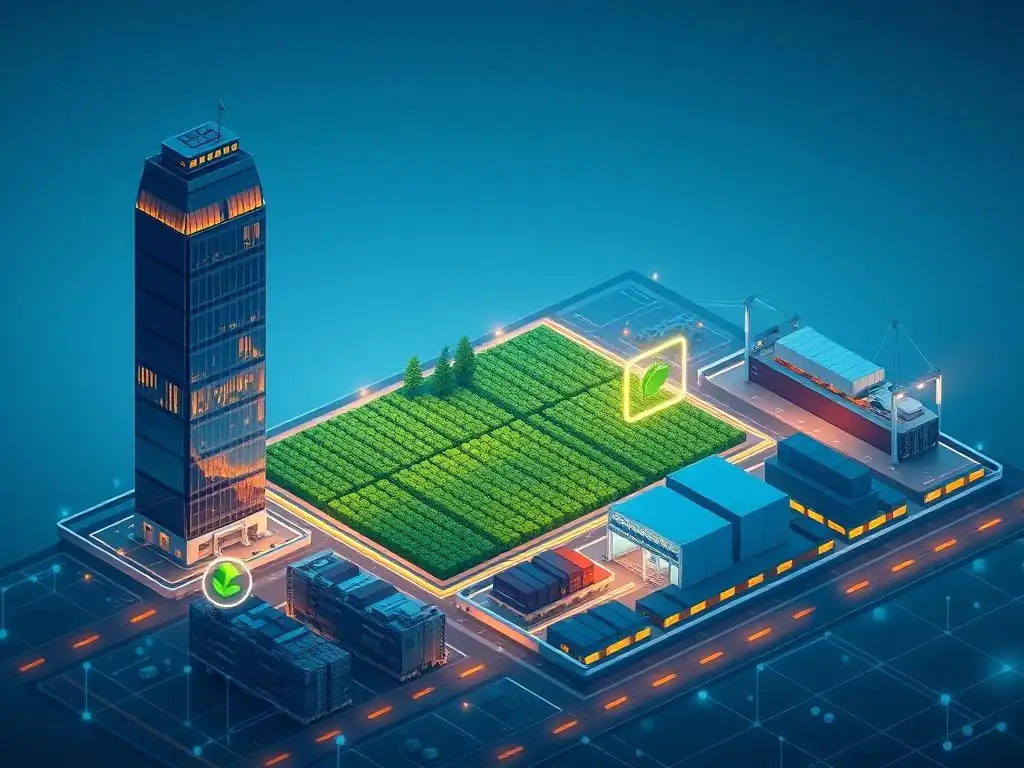
Real Estate Tokenization: Democratizing Property Ownership
Real estate is a prime candidate for tokenizing realworld assets blockchain due to its high value, illiquidity, and often complex ownership transfer processes. Tokenization allows individual properties or portfolios to be represented by digital tokens, often using standards like ERC-20 for fractional ownership. A single property valued at $1 million could be tokenized into 1 million tokens, each representing a $1 share. This fractionalization dramatically lowers the entry barrier for investors who might not be able to afford an entire property, allowing participation with much smaller capital amounts, potentially opening real estate investment to a global pool of investors.
Beyond fractional ownership, real estate tokenization simplifies and speeds up transactions. Instead of a process that can take weeks or months involving lawyers, banks, and title companies, transferring ownership of real estate tokens on a blockchain can occur in minutes, subject to any necessary off-chain legal finalization.
Platforms like Harbor (though now focused elsewhere, demonstrated early potential), Securitize, and others have explored or facilitated tokenizing various types of real estate, from commercial buildings to residential properties, demonstrating the technical feasibility. This use case highlights how tokenizing realworld assets blockchain can democratize access to traditionally exclusive investment classes and increase market efficiency.
Tokenizing Commodities: Improving Supply Chain Transparency and Traceability
Tokenizing commodities, such as gold, oil, or agricultural products, offers significant advantages in supply chain management, transparency, and trading. Each unit or batch of a commodity can be represented by a unique token on the blockchain. For example, a specific bar of gold meeting certain standards could be tokenized, with the token representing verifiable ownership of that physical bar stored in a vault.
This creates a digital, immutable record linked directly to the physical asset. Projects like PAX Gold (PAXG) have successfully tokenized gold, with each token representing one fine troy ounce of London Good Delivery gold stored in secure vaults, allowing users to trade gold digitally with the liquidity and speed of cryptocurrencies.
Applying this to broader commodities and supply chains, tokenization enables granular tracking of assets from their origin to their final destination. As a commodity moves through production, processing, and distribution, its corresponding token can be updated on the blockchain to reflect changes in ownership, location, or condition. This enhanced traceability improves transparency for consumers and regulators, helps verify authenticity, and can mitigate issues like fraud or counterfeiting.
For agricultural products, tokenization could track a batch of coffee beans from the farm to the consumer, with each handler in the supply chain updating the token's metadata on the blockchain, providing verifiable proof of origin and handling conditions. Tokenizing realworld assets blockchain in supply chains creates a verifiable digital twin that mirrors the physical flow of goods.
Art and Collectibles on the Blockchain: Provenance and Fractional Ownership
The art and collectibles market, known for its opacity and issues with provenance verification, is another area significantly impacted by tokenizing realworld assets blockchain. High-value artworks, rare wines, classic cars, or limited-edition items can be tokenized, often as Non-Fungible Tokens (NFTs) due to their unique nature. An NFT representing a physical artwork can serve as a digital certificate of authenticity and ownership, immutably recorded on the blockchain. This provides a verifiable history of the artwork's ownership (provenance), which is crucial for establishing legitimacy and value in the art world, helping to combat fraud and disputes over authenticity.
Furthermore, tokenization enables fractional ownership of expensive art and collectibles. A painting valued at several million dollars, previously only accessible to ultra-high-net-worth individuals or institutions, can be tokenized into thousands or millions of fractional tokens (often using the ERC-1155 standard). These tokens can then be bought and sold by smaller investors on a DApp marketplace.
Platforms like Masterworks have utilized a similar model (though not always purely on-chain for all aspects) to allow fractional investment in blue-chip art. This democratizes access to high-value assets and provides liquidity for asset owners who can sell fractions without parting with the entire piece. Tokenizing realworld assets blockchain in this domain opens up new investment opportunities and enhances market transparency.
Tokenized Debt and Lending Platforms: Decentralized Finance (DeFi) for RWAs
Integrating tokenized realworld assets blockchain into Decentralized Finance (DeFi) is a major area of growth. Traditionally, DeFi protocols have focused on crypto-native assets (like Ether, stablecoins, or other tokens). However, bringing income-generating or stable RWAs on-chain provides DeFi with access to a much larger and less volatile pool of assets. Tokenized debt, such as invoices, real estate mortgages, or corporate loans, can be used as collateral within DeFi lending protocols. A company's future revenue streams might be tokenized, and these tokens could be used to borrow stablecoins on a DApp lending platform without needing traditional bank loans.
Protocols like Centrifuge specialize in bringing RWA-backed assets into DeFi. They allow businesses to tokenize assets like invoices or supply chain payments into Non-Fungible Tokens (NFTs), which can then be pooled and used as collateral in a lending pool (e.g., on their Tinlake platform or integrated with MakerDAO).
This enables businesses to access liquidity from DeFi investors using real-world collateral. This use case demonstrates the power of tokenizing realworld assets blockchain to bridge the gap between traditional finance (TradFi) and DeFi, unlocking new sources of capital and investment opportunities while enhancing the efficiency and transparency of debt financing and lending.
Challenges and Considerations for Architecting RWA DApps
Security Risks and Vulnerabilities in Smart Contracts
Despite the inherent security features of blockchain technology, smart contracts themselves are susceptible to sophisticated security risks and vulnerabilities. Errors or flaws in the smart contract code governing tokenized realworld assets blockchain can lead to devastating consequences, including the loss of tokenized assets, frozen funds, or unauthorized access to sensitive functions. High-profile incidents in the broader DeFi space, such as the DAO hack in 2016 or various exploits on lending protocols resulting in millions of dollars lost, underscore the critical importance of smart contract security.
Specific risks for RWA DApps include vulnerabilities in how off-chain data is handled (oracle attacks), access control issues allowing unauthorized users to mint or transfer tokens, reentrancy bugs enabling repeated withdrawals, or errors in the logic governing asset fractionalization or dividend distribution. Given that RWA tokens represent valuable, often illiquid, real-world assets, the financial impact of a smart contract exploit can be substantial. Therefore, rigorous security practices throughout the development lifecycle are not merely best practice but an absolute necessity when architecting DApps for tokenizing realworld assets blockchain.
Regulatory Uncertainty and Compliance Requirements
One of the most significant hurdles when tokenizing realworld assets blockchain is navigating the complex and often uncertain global regulatory landscape. As discussed earlier, the legal classification of RWA tokens varies by jurisdiction and asset type, and regulatory frameworks are still evolving. What might be permissible in one country could be illegal in another. This creates a challenging environment for DApp architects aiming for global reach. Compliance requirements, particularly concerning KYC/AML, securities regulations, and data privacy (like GDPR), must be meticulously integrated into the DApp's design and operations, even though the core blockchain layer is decentralized.
Ensuring that the DApp facilitates compliance without excessive centralization is a delicate balance. For example, implementing transfer restrictions based on regulatory lists or requiring identity verification before participation can introduce points of control that seem counter to decentralization principles. Furthermore, the responsibility for compliance often falls on the DApp operators or the legal entity associated with the tokenized asset, creating potential liabilities. The constant evolution of regulations requires RWA DApps to be adaptable and prepared to implement changes, adding complexity and cost to development and maintenance.
Scalability and Performance Limitations of Blockchain Networks
While newer blockchains offer improved performance, scalability remains a challenge for many DApps, particularly those built on more decentralized but slower chains. Processing a high volume of transactions for frequently traded tokenized realworld assets blockchain, such as fractional shares or commodities, can strain network capacity, leading to increased transaction times and costs (gas fees). If a DApp experiences significant user adoption and transaction volume, the underlying blockchain might become a bottleneck, impacting user experience and operational efficiency.
For instance, trading fractionalized real estate tokens might not require the same speed as high-frequency stock trading, but delays of minutes or hours and variable, high fees can still deter users accustomed to traditional financial market performance. While Layer-2 solutions and alternative high-throughput blockchains offer potential remedies, they also introduce their own complexities, such as bridging assets between layers or chains, which can add friction and potential security risks. Architecting a DApp that can scale to accommodate a growing number of users and assets while maintaining acceptable performance is a key technical challenge.
Overcoming the Trust Barrier: Verifying Asset Authenticity
A critical challenge for tokenizing realworld assets blockchain is establishing trust in the link between the digital token and the physical or intangible asset it represents. The blockchain can verify the integrity of the token and its transaction history, but it cannot inherently verify the existence, condition, or ownership of the underlying real-world asset. How can a token holder be certain that the token actually represents a genuine, unencumbered asset? This requires bridging the trust gap between the physical world and the digital ledger.
This challenge involves processes like robust legal frameworks ensuring the token represents a legally enforceable claim on the asset, independent third-party custodianship of physical assets (e.g., gold in a vault), professional asset appraisals, and legal due diligence. The DApp architecture must incorporate mechanisms that provide verifiable proof or attestations about the underlying asset.
This might involve integrating with trusted third-party data providers, using decentralized identifiers linked to verified entities, or relying on audits and attestations recorded about the asset, even if the asset itself isn't on-chain. Building user confidence in the authenticity and backing of tokenized realworld assets blockchain is essential for widespread adoption.
Overcoming Challenges: Best Practices for Secure and Compliant RWA DApps
Smart Contract Audits and Formal Verification
To mitigate the significant security risks associated with smart contracts for tokenized realworld assets blockchain, conducting thorough smart contract audits by independent, reputable security firms is a non-negotiable best practice. Audits involve manual code review, automated analysis tools, and penetration testing to identify vulnerabilities before deployment. A comprehensive audit report should be made publicly available to build trust with potential users and investors.
Beyond traditional audits, employing formal verification methods can provide a higher degree of assurance for critical smart contract logic. Formal verification uses mathematical proofs to guarantee that the smart contract code behaves exactly as intended under all possible scenarios, proving the absence of certain classes of bugs. While more complex and resource-intensive, applying formal verification to core modules governing asset ownership, transfers, and value accrual can significantly enhance the security posture of DApps handling valuable tokenized realworld assets blockchain.
Implementing Robust KYC/AML Procedures
Addressing regulatory requirements for tokenizing realworld assets blockchain, particularly KYC/AML, requires implementing robust identity verification procedures. While aiming for decentralization, DApps dealing with regulated assets must ensure they know who their users are to prevent illicit activities. This typically involves integrating with established identity verification service providers via secure APIs in the DApp's off-chain components.
The process should verify user identity against official documents and databases, screen against sanctions lists, and potentially monitor transactions for suspicious activity. While user data should be handled with the utmost care and privacy (potentially using zero-knowledge proofs or verifiable credentials to minimize shared information on-chain), the DApp must comply with legal mandates. Implementing these procedures ensures the DApp operates legally and builds trust with regulators and traditional financial institutions, which is crucial for the broader acceptance of tokenized realworld assets blockchain.
Layer-2 Scaling Solutions for Enhanced Performance
To overcome the scalability limitations of some Layer-1 blockchains when dealing with the potential volume of transactions for tokenized realworld assets blockchain, leveraging Layer-2 scaling solutions is an effective strategy. Optimistic Rollups (like Arbitrum or Optimism) and Zero-Knowledge Rollups (like zkSync or StarkNet) process transactions off-chain in batches and submit cryptographic proofs of these transactions back to the Layer-1 chain, inheriting its security while offering significantly higher throughput and lower costs.
Choosing a DApp architecture that utilizes or is compatible with a Layer-2 solution allows for faster and cheaper trading or transfer of RWA tokens compared to executing every transaction directly on a congested Layer-1. For example, a DApp facilitating fractional stock trading could process thousands of trades per second on a Layer-2, settling them periodically on the main chain. This enhances user experience and makes micro-transactions economically viable, crucial for the liquidity and accessibility promises of tokenizing realworld assets blockchain.
Establishing Trust Through Provenance and Transparency Mechanisms
Building trust in the authenticity and backing of tokenized realworld assets blockchain is paramount. This involves implementing mechanisms that provide verifiable proof of the asset's existence, ownership, and condition. This can include:
- Third-Party Attestations: Integrating data feeds or attestations from trusted third parties like custodians, appraisers, or auditors directly into the DApp or linking to them via verifiable credentials.
- On-Chain Provenance Records: Using the blockchain's immutability to record every step in the asset's history, from origination and valuation to transfers and maintenance events, creating a transparent and verifiable chain of custody.
- Legal Frameworks: Ensuring the token is legally binding and represents a true claim on the underlying asset, supported by robust legal documentation and potentially regulatory oversight.
- Physical Audits: For physical assets, periodic independent audits verifying the existence and condition of the asset held in custody, with audit reports potentially hashed and stored on-chain.
These mechanisms, integrated into the DApp architecture and operational processes, help bridge the trust gap between the digital token and the physical asset, providing confidence to users engaging with tokenized realworld assets blockchain.
- [ ] Implement mandatory smart contract audits.
- [ ] Integrate with a verified identity provider.
- [ ] Design for Layer-2 compatibility or utilize a Layer-2 native approach.
- [ ] Establish processes for verifiable asset attestations.
The Future of DApps and Tokenized Real-World Assets
The Evolution of DeFi with RWA Integration
The integration of tokenized realworld assets blockchain is poised to dramatically expand the scope and stability of Decentralized Finance (DeFi). Currently, DeFi's total value locked (TVL) is primarily based on volatile crypto-native assets. Bringing RWAs, which often have more stable cash flows or tangible backing, into DeFi protocols provides new sources of collateral, yield-generating opportunities, and diversification for DeFi users. Protocols are actively working on frameworks to allow tokenized real estate, invoices, bonds, and other assets to be used for borrowing, lending, and trading within decentralized exchanges and money markets.
This evolution will likely see DeFi TVL increase significantly as trillions of dollars in real-world value become accessible. It also presents opportunities for traditional financial institutions to interact with DeFi, potentially leveraging its efficiency and transparency for specific functions while maintaining compliance. The blending of traditional asset classes with decentralized protocols facilitated by tokenizing realworld assets blockchain is arguably the next major frontier for DeFi, moving beyond niche crypto markets towards a more globally integrated financial ecosystem.
The Impact of Tokenization on Traditional Financial Markets
Tokenizing realworld assets blockchain has the potential to profoundly impact traditional financial markets. By increasing liquidity, reducing transaction costs, and enabling fractional ownership, tokenization can make asset classes previously exclusive or difficult to trade more accessible to a wider range of investors. This could lead to greater market efficiency, potentially narrower bid-ask spreads, and more accurate price discovery for illiquid assets.
Furthermore, the transparency and automation offered by blockchain and smart contracts can streamline post-trade settlement processes, which are currently complex and costly in traditional finance. While regulatory hurdles and integration challenges remain, the long-term impact could see parts of traditional finance infrastructure being replaced or augmented by blockchain-based systems for issuing, trading, and managing tokenized assets. Major financial institutions are already exploring the use of private or permissioned blockchains for tokenizing assets like bonds or syndicated loans, signaling a potential shift in market infrastructure.
The Role of DAOs in Governing Tokenized Asset Ecosystems
Decentralized Autonomous Organizations (DAOs) are increasingly being explored as a governance model for ecosystems built around tokenized realworld assets blockchain. A DAO allows token holders (who could be investors in the tokenized asset) to collectively make decisions regarding the management of the underlying asset, the DApp platform, or the rules governing the token. This could include decisions on asset maintenance, distribution of income, platform upgrades, or even liquidation procedures.
Using a DAO for governance aligns with the decentralized ethos of blockchain and can provide a transparent and democratic way for stakeholders to have a say in the management of assets they collectively own. While challenges exist in ensuring informed participation and preventing governance attacks, well-structured DAOs can offer a compelling alternative to traditional centralized management structures for tokenized RWA pools or platforms. This model enhances transparency and community involvement in the lifecycle of tokenized realworld assets blockchain.
Tokenized Carbon Credits and Environmental Assets
Beyond traditional financial assets, tokenizing realworld assets blockchain is gaining traction for environmental assets, particularly carbon credits. Tokenizing verified carbon credits on a blockchain creates a transparent and immutable record of their issuance, ownership, and retirement. This helps combat issues like double-counting or fraud prevalent in traditional carbon markets. Each token can represent a specific, verified reduction or removal of greenhouse gases, with its unique identity and transaction history recorded on-chain.
Platforms are emerging that facilitate the tokenization and trading of these environmental assets, making them more accessible to a wider range of participants, including individuals and smaller companies. This increased liquidity and transparency can help scale the market for environmental offsets and incentives. Furthermore, other environmental assets like biodiversity credits or water rights could also be tokenized, enabling new market mechanisms for environmental conservation and management through tokenizing realworld assets blockchain.
Conclusion: Embracing the Potential of Tokenized Real-World Assets on Blockchain
The Transformative Power of DApps in Bridging the Gap Between the Physical and Digital Worlds
The convergence of Decentralized Applications (DApps) and tokenized realworld assets blockchain holds immense transformative power. DApps serve as the vital bridge, providing the user interface and operational logic necessary to interact with digital representations of physical and intangible assets on a blockchain. They enable fractional ownership, increase liquidity, enhance transparency, and automate processes that were previously confined to inefficient, centralized systems.
From democratizing access to high-value assets like real estate and art to streamlining supply chains and creating new financial instruments in DeFi, DApps are making the promise of tokenizing realworld assets blockchain a reality. They are reshaping how we perceive and interact with value, blurring the lines between the physical and digital economies.
Key Takeaways for Building Successful RWA Tokenization Platforms
Architecting successful platforms for tokenizing realworld assets blockchain requires a holistic approach that addresses technical, legal, and operational complexities. Key takeaways include:
- Prioritizing legal compliance from the outset, navigating diverse regulatory frameworks and structuring tokens correctly.
- Ensuring robust security through rigorous smart contract development, auditing, and potentially formal verification.
- Designing for scalability by leveraging appropriate blockchain platforms and Layer-2 solutions.
- Implementing reliable oracle mechanisms for accurate asset valuation data.
- Integrating identity management and KYC/AML procedures while balancing decentralization goals.
- Establishing clear processes and technical integrations to bridge the on-chain token with the off-chain asset, including custody, servicing, and legal enforceability.
- Building trust through transparency, verifiable provenance, and independent attestations.
Successfully navigating these areas is crucial for creating platforms that are not only technically sound but also legally compliant and trustworthy for users and investors dealing with valuable tokenized realworld assets blockchain.
The Future Landscape of Blockchain and Real-World Asset Integration
The future landscape of blockchain and real-world asset integration appears bright, albeit with continued challenges. As regulatory clarity improves and technology matures, we can expect to see a significant increase in the volume and variety of tokenized realworld assets blockchain. This will likely lead to deeper integration between traditional finance and decentralized ecosystems, potentially creating hybrid models that leverage the strengths of both worlds.
The development of more sophisticated oracles, identity solutions, and cross-chain interoperability will further facilitate this integration. While widespread adoption will take time and require overcoming existing hurdles related to regulation, technology, and user education, the fundamental benefits offered by tokenizing realworld assets blockchain – increased liquidity, transparency, and efficiency – suggest that this trend is poised to reshape global markets and ownership in the coming years.
Frequently Asked Questions
How does tokenizing real-world assets with blockchain work?
Tokenizing real-world assets on a blockchain involves creating digital tokens that represent ownership of a physical asset. These tokens are then traded and managed on a decentralized blockchain network, providing increased liquidity and transparency.
What are the primary benefits of tokenizing real-world assets using blockchain?
The main benefits include increased liquidity through fractional ownership, reduced transaction costs by eliminating intermediaries, and enhanced transparency due to the immutable nature of blockchain records.
What are some real-world examples of assets that can be tokenized using blockchain technology?
Examples include real estate, artwork, commodities (like gold or oil), and intellectual property. Tokenization allows for easier transfer and fractional ownership of these traditionally illiquid assets.
What are the key regulatory considerations when tokenizing real-world assets on a blockchain?
Regulatory considerations vary by jurisdiction, but typically involve securities laws, KYC/AML compliance, and tax implications. It's crucial to ensure compliance with local regulations before launching a tokenized asset.
How can decentralized applications (DApps) be used to manage tokenized real-world assets?
DApps can automate processes related to asset management, governance, and trading of tokenized assets. They provide a secure and transparent platform for managing ownership records and executing smart contracts related to the assets.
Final Reflection: Embracing the Tokenized Future
The journey of tokenizing real-world assets on the blockchain is no longer a futuristic fantasy, but a tangible reality reshaping industries and investment landscapes. From fractional ownership of real estate to streamlined supply chains, the potential for increased liquidity, transparency, and accessibility is undeniable. This shift represents a fundamental change in how we perceive and interact with value, moving towards a more democratized and efficient global economy.
This transformation is profoundly impacting the cultural and social fabric, democratizing access to previously exclusive asset classes and empowering individuals with greater control over their investments. The ability to fractionalize ownership and trade assets on decentralized platforms fosters a sense of community and shared prosperity. The future of finance is decentralized, and tokenization is the key to unlocking the true potential of real-world assets.
This quote encapsulates the transformative power of this technology, highlighting its capacity to bridge the gap between the physical and digital worlds.
As we stand on the cusp of this tokenized revolution, let us embrace the possibilities and challenges that lie ahead. Consider how you can leverage the power of blockchain to unlock new opportunities, foster innovation, and contribute to a more equitable and transparent future. The time to explore, learn, and actively participate in shaping this new paradigm is now.
Unleash the Potential: Start Tokenizing Your Assets!
Thank you for exploring the exciting world of decentralized applications and real-world asset tokenization. You've gained a solid understanding of how to bridge the gap between the physical and digital realms, opening up new opportunities for accessibility and liquidity. Are you ready to take the next step?
Here are some actions you can consider today:
- Identify a tangible asset—a property, a valuable collection, or a unique skill—that you could conceptually tokenize and develop a small decentralized application around. This hands-on project will enhance your learning.
- Research different blockchain platforms like Ethereum, Cardano, or Solana. Explore their smart contract features and how they can be used for asset management.
- Share this article with your network of investors, entrepreneurs, or tech enthusiasts, and invite them to brainstorm potential real-world asset use cases together. Collaborative ideas often lead to innovative solutions.
What real-world asset do you believe is ready for tokenization, and which blockchain would be best suited for it? Share your thoughts in the comments below!
Leave a Reply