
Navigating the Token Maze: Understanding Utility and Security Token Classifications


Welcome to Blockchain Trends, your compass in the rapidly evolving world of decentralized technology!
Are you ready to cut through the noise and understand the real-world applications of blockchain beyond just cryptocurrencies? We delve into the transformative power of DeFi, explore enterprise adoption, dissect the latest regulatory landscapes, and envision the future of decentralized systems.
In this article, we're tackling a crucial element of the blockchain ecosystem: Utility security token classifications 🚀. The lines are often blurred, and understanding the nuances is key to navigating the tokenized future. Discover the essential frameworks for distinguishing between these token types, and unlock the potential they hold. Intrigued? Let's dive in and unravel the complexities together!
Navigating the Token Maze: Understanding Utility and Security Token Classifications
- Introduction: Decoding the World of Token Classifications
- Utility Tokens: Accessing Functionality and Services
- Security Tokens: Representing Ownership and Investment
- Utility vs. Security Tokens: A Detailed Comparison
- Hybrid Tokens: Blurring the Lines Between Utility and Security
- The Howey Test: A Key Framework for Token Classification
- Future Trends in Token Classification and Regulation
- Conclusion: Making Informed Decisions in the Token Ecosystem
-
Frequently Asked Questions
- How do utility tokens differ from security tokens?
- What are the key regulatory considerations when launching a security token offering (STO)?
- Can a token's classification change over time from utility to security or vice versa?
- What are some practical applications of utility tokens outside of cryptocurrency trading?
- How do Utility security token classifications Impact investment decisions?
- Final Reflection: Decoding the Future of Digital Assets
- Unveil Your Token Strategy: Master the Classification Game!
Introduction: Decoding the World of Token Classifications
The Expanding Landscape of Blockchain Tokens
The proliferation of blockchain technology has led to an explosion in the types and uses of digital tokens. Initially popularized by cryptocurrencies like Bitcoin and Ethereum, tokens have evolved far beyond simple mediums of exchange or speculative assets. Today, they represent a diverse range of digital assets, from loyalty points and in-game items to fractional ownership of real estate and shares in companies. This rapid expansion signifies a fundamental shift in how value, ownership, and access are represented and transacted in the digital realm.
This evolving landscape presents both immense opportunities and significant challenges. The ability to tokenize virtually any asset or right opens up new markets, increases liquidity, and enables innovative business models. However, the sheer variety and novel characteristics of these tokens make clear classification crucial. Understanding the fundamental differences between token types is essential for developers building applications, investors evaluating opportunities, businesses leveraging tokenization, and regulators seeking to establish appropriate oversight.
Why Understanding Token Classifications Matters
Accurate token classification is not merely an academic exercise; it has profound practical implications. The classification of a token – particularly whether it is deemed a utility token or a security token – dictates the regulatory framework it falls under, the compliance requirements it must adhere to, and the legal obligations of its issuers and participants. Misclassifying a token can lead to significant legal penalties, investor protection issues, and operational hurdles.
For businesses considering a token offering, correctly identifying the nature of their token from the outset is paramount for a successful and compliant launch. Investors rely on clear classification to understand the rights and risks associated with their holdings – whether they are buying access to a service (utility) or an ownership stake with potential profit expectations (security). Furthermore, the distinctions between utility security token classifications inform market infrastructure, such as exchanges and trading platforms, which may be restricted in what types of tokens they can list based on their licensing and regulatory status.
Utility Tokens: Accessing Functionality and Services
Defining Utility Tokens: Purpose and Functionality
Utility tokens are digital tokens designed to provide holders with access to a specific product, service, or network. Their primary purpose is not to function as an investment contract or to represent ownership in an underlying asset or enterprise. Instead, they are consumed or used within a particular ecosystem, granting holders specific rights or privileges related to that ecosystem's functionality. Think of them like digital coupons, licenses, or membership cards for a decentralized service or application.
These tokens derive their value from their usability within the network they govern or support. For instance, they might be required to pay for services, access premium features, participate in governance decisions, or gain entry to exclusive content. The demand for a utility token is typically driven by the adoption and usage of the underlying platform or service. As the ecosystem grows and becomes more popular, the demand for the token needed to access it tends to increase, potentially affecting the token's market value, though this is a secondary effect of its utility, not its primary design purpose.
Key Characteristics of Utility Tokens
Utility tokens possess several defining characteristics that distinguish them from other token types. Foremost among these is their functional purpose within a specific ecosystem; they are created to be used, not primarily traded for speculative profit based on the efforts of others. They often grant access rights to a platform's features or services, effectively acting as a form of pre-purchased capacity or privilege.
Another characteristic is that their value is inherently tied to the adoption and usage of the underlying platform. If the platform fails or usage declines, the token's utility and thus its value typically diminishes. Unlike security tokens, utility tokens generally do not convey ownership in the issuing entity, nor do they typically entitle holders to dividends, profit sharing, or liquidation rights in the traditional sense of equity or debt. Their design focuses on facilitating interaction and participation within a decentralized network or application.
Examples of Utility Tokens and Their Use Cases
Filecoin (FIL) - Decentralized Storage Network
Filecoin (FIL) is a prime example of a utility token. It is the native cryptocurrency of the Filecoin network, a decentralized storage system that aims to store humanity's most important information. Users pay FIL tokens to store their data on the network, and storage providers earn FIL for storing data and proving they are doing so over time. The token's utility is directly tied to its function as the medium of exchange for storage and retrieval services on the Filecoin network.
As of late 2023, the Filecoin network boasts significant storage capacity and hosts various data sets. The demand for FIL is driven by individuals and organizations needing decentralized storage, as well as by storage providers who must stake FIL to participate and earn rewards. The token's value is intrinsically linked to the health and activity of the storage market operating on the Filecoin protocol, illustrating how utility is the core driver.
Basic Attention Token (BAT) - Rewarding Users and Publishers in Brave Browser
Basic Attention Token (BAT) is another widely recognized utility token used within the Brave browser ecosystem. BAT is designed to revolutionize digital advertising by fairly distributing value between users, publishers, and advertisers. Users who opt-in to view privacy-preserving ads are rewarded with BAT, which they can then use to tip publishers whose content they appreciate or donate to causes.
Publishers can receive BAT tips and contributions from users, providing them with a new revenue stream independent of traditional, intrusive advertising models. Advertisers purchase ad space and user attention using BAT. The token's utility is its role as the sole unit of exchange for attention and value transfer within the Brave ecosystem. Brave browser reported tens of millions of monthly active users in 2023, driving the utility and demand for the BAT token within its specific application.
Regulatory Considerations for Utility Tokens
While often perceived as less regulated than security tokens, utility tokens are not entirely exempt from regulatory scrutiny. Regulators, particularly in jurisdictions like the United States with the SEC, assess tokens based on their characteristics, not merely the label assigned by the issuer. If a token is marketed or sold primarily as an investment opportunity with the expectation of profit derived from the efforts of others, it may still be deemed a security, regardless of whether it also possesses some utility.
The critical factor often hinges on the context of the token's offering and sale. If the utility is fully developed and immediately usable at the time of sale, and the marketing focuses on this utility, it is more likely to be treated as a utility token.
However, if the token is sold to fund the development of the platform where its utility will eventually reside, and investors are primarily attracted by the potential future value appreciation tied to the platform's success, it bears closer resemblance to an investment contract and could be classified as a security. Navigating utility security token classifications requires careful analysis of the specific facts and circumstances.
Security Tokens: Representing Ownership and Investment
Defining Security Tokens: Digital Securities on the Blockchain
Security tokens are digital assets issued on a blockchain that represent ownership or rights in an underlying asset or enterprise. Unlike utility tokens, their primary purpose is to function as investment contracts, similar to traditional securities like stocks, bonds, or real estate investment trusts (REITs). When you purchase a security token, you are typically buying a stake in something tangible or intangible, with the expectation of receiving a return on your investment, whether through profit sharing, dividends, interest, or appreciation in the value of the underlying asset.
These tokens are essentially tokenized forms of traditional financial instruments or assets. By leveraging blockchain technology, security tokens can offer benefits such as increased liquidity for illiquid assets (like real estate or private equity), fractional ownership, faster settlement times, and greater transparency in ownership records. However, because they represent investment contracts, they are subject to stringent securities regulations designed to protect investors.
Key Characteristics of Security Tokens
The defining characteristic of security tokens is that they represent an investment interest. This means they typically convey rights similar to those associated with traditional securities. These rights might include ownership stakes in a company or asset, entitlement to profit sharing or dividends, voting rights on corporate matters, or claims on assets during liquidation. The value of a security token is primarily derived from the performance and value of the underlying asset or enterprise it represents, rather than from its utility within a specific platform.
Security tokens are almost always subject to securities regulations. This entails requirements for registration (or exemption), disclosure, anti-fraud provisions, and often restrictions on who can invest (e.g., accredited investors). They are typically offered through formal processes like Security Token Offerings (STOs), which must comply with relevant securities laws. The focus is on investor protection and ensuring fair and transparent markets for these digital investment contracts.
How Security Tokens Differ from Traditional Securities
While security tokens represent traditional assets or investment rights, the blockchain technology underlying them introduces key differences compared to their paper-based or digitally centralized counterparts. Firstly, security tokens exist on a distributed ledger, which can offer enhanced transparency regarding ownership history and transactions (though privacy layers can exist). This contrasts with traditional securities, where ownership records might be held by central depositories or brokers.
Secondly, security tokens enable fractional ownership of high-value assets (like real estate or fine art) that were previously difficult to divide, making them accessible to a wider range of investors. This can significantly improve liquidity. Thirdly, the use of smart contracts can automate aspects of security management, such as dividend distribution or cap table management, potentially reducing administrative costs and increasing efficiency compared to manual processes or legacy systems. However, these technological advantages come with the same regulatory obligations as traditional securities.
Examples of Security Tokens and Their Use Cases
tZERO (TZROP) - Tokenized Equity in a Fintech Company
tZERO is a regulated broker-dealer and alternative trading system (ATS) that facilitates the trading of security tokens. Their own equity was tokenized and issued as the TZROP security token. This token represents a form of preferred equity ownership in tZERO Group, Inc., offering holders potential quarterly dividend payouts based on the company's gross profits.
As a tokenized equity, TZROP is subject to U.S. securities laws and trades on tZERO's ATS, which is registered with the SEC. Investors in TZROP are buying a direct stake in the financial performance of the tZERO business, making it a clear example of a security token representing corporate ownership and the expectation of profit sharing derived from the company's efforts.
RealT - Real Estate Tokenization for Fractional Ownership
RealT is a platform that specializes in tokenizing U.S. real estate properties. They purchase properties, place them into a U.S. Limited Liability Company (LLC), and then issue security tokens representing fractional ownership in that specific LLC. Each token corresponds to a share of ownership in the property and entitles holders to a proportional share of the rental income generated by the property.
Investors can buy tokens representing small fractions of a property (e.g., $50 or $100 worth), enabling global, fractional investment in the U.S. real estate market, which was previously difficult. These tokens are classified as securities because they represent an investment in an income-generating asset managed by RealT, with investors expecting passive income (rent) and potential appreciation based on the property's value. RealT tokens demonstrate how security tokens can unlock liquidity and access for traditionally illiquid asset classes.
Regulatory Frameworks Governing Security Tokens
Given their nature as investment contracts, security tokens are subject to strict regulatory oversight globally. The specific regulations vary by jurisdiction, but the underlying principle is consistent: protecting investors and ensuring market integrity.
SEC Regulations and Security Token Offerings (STOs)
In the United States, the Securities and Exchange Commission (SEC) views security tokens as securities and applies existing securities laws to their issuance and trading. The primary test used to determine if a digital asset is a security is the Howey Test (discussed in detail later). Issuing a security token typically requires registration with the SEC or qualification for an exemption from registration (such as Regulation D, Regulation A, or Regulation S). These offerings are known as Security Token Offerings (STOs).
STOs require significant legal and compliance work, including detailed disclosure documents (similar to a prospectus), adherence to rules regarding investor solicitation, and often restrictions on who can invest (e.g., limiting participation to accredited investors in certain exemptions). Trading of security tokens must occur on regulated platforms, such as registered broker-dealers or Alternative Trading Systems (ATS) like tZERO or FINRA-approved platforms.
Global Regulatory Approaches to Security Tokens
Regulatory approaches to security tokens vary internationally. Some jurisdictions have established specific frameworks, while others apply existing securities laws. Switzerland, for instance, has a relatively clear approach, classifying tokens based on their function (payment, utility, or asset/security tokens). The European Union is moving towards a harmonized framework with the Markets in Crypto-Assets (MiCA) regulation, which includes provisions for asset-referenced tokens and e-money tokens, while security tokens generally fall under existing financial regulations like MiFID II.
Other countries like Germany, Singapore, and Malta have also made strides in clarifying the legal status of security tokens, often requiring licenses for issuance and trading activities. The lack of a single global standard for utility security token classifications and regulation presents challenges for issuers and investors operating across borders, necessitating careful consideration of the legal requirements in each relevant jurisdiction.
Utility vs. Security Tokens: A Detailed Comparison
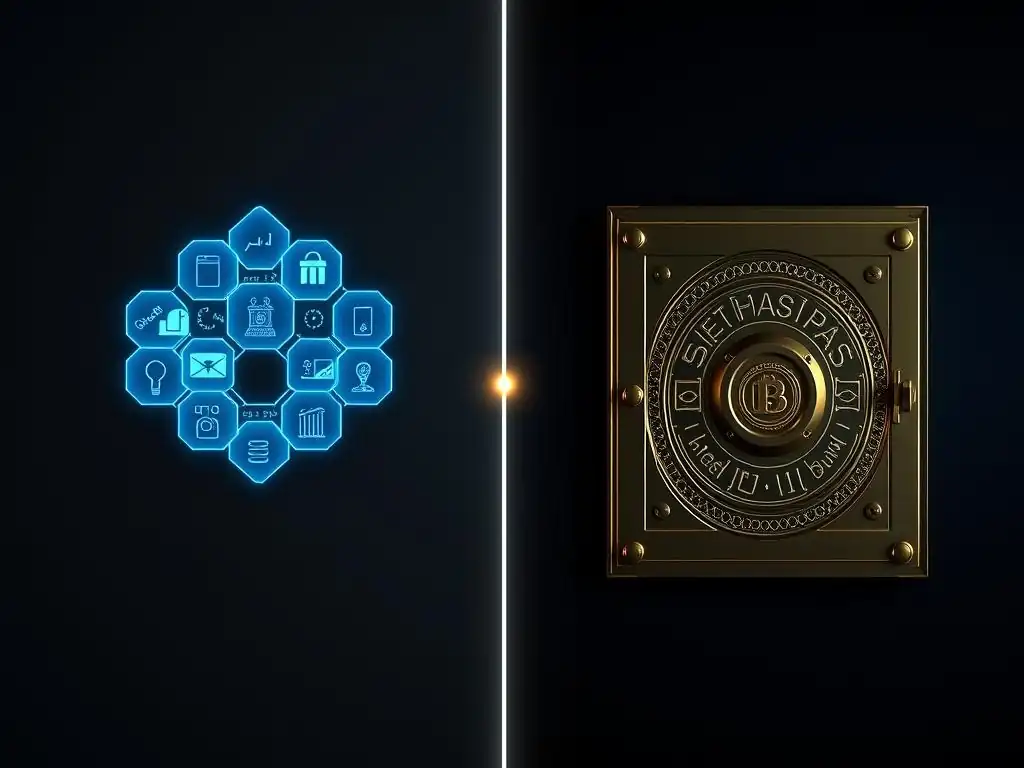
Navigating the world of digital assets requires a clear understanding of the fundamental distinctions between utility and security tokens. While both leverage blockchain technology, their purpose, legal status, and implications for issuers and investors differ significantly.
Key Differences in Purpose and Function
The most fundamental difference lies in their intended purpose. Utility tokens are designed to grant access or provide functionality within a specific ecosystem or platform. Their value is derived from their usability; you acquire them to do something – use a service, play a game, participate in governance, etc. They function like a digital voucher or license for a decentralized application.
Security tokens, conversely, are designed as investment vehicles. They represent ownership rights or a financial stake in an underlying asset, company, or revenue stream. Their value is tied to the performance and profitability of the underlying asset or enterprise. You acquire them with the expectation of a financial return on your investment, not primarily to consume a service. This core difference in function drives many subsequent distinctions in utility security token classifications.
Legal and Regulatory Distinctions Between Token Types
The differing purposes lead directly to vastly different legal and regulatory treatments. Security tokens are subject to securities laws, which are among the most heavily regulated areas of finance. This means issuance (STOs) and trading must comply with strict rules regarding registration, disclosure, anti-fraud measures, and market conduct. Regulators like the SEC treat them like any other security.
Utility tokens, particularly if their utility is functional and available at the time of sale, and they are not marketed as investments, may fall outside the scope of securities regulations in some jurisdictions. However, as noted, the context of the offering is crucial, and regulators scrutinize the facts to determine if the token sale constitutes an investment contract. A token initially intended as utility could be deemed a security if marketed primarily for speculative gain. This regulatory ambiguity around utility security token classifications is a key challenge.
Investor Rights and Protections: Utility vs. Security Tokens
The regulatory distinctions result in significant differences in investor rights and protections. Investors in security tokens benefit from the full suite of protections afforded by securities laws. This typically includes rights to receive comprehensive disclosures about the issuer and the underlying asset, protection against fraud and manipulation, and legal recourse if these rights are violated. Security regulations aim to level the playing field and ensure investors have the necessary information to make informed decisions.
Investors in tokens classified purely as utility tokens generally do not receive these same securities law protections. Since they are theoretically purchasing access to a service rather than an investment contract, they are not protected by regulations designed for financial investments. Their rights are typically limited to the terms of service of the platform issuing the token. If the platform fails or the token loses value due to lack of adoption, investors may have little to no legal recourse under securities law. This disparity highlights the importance of understanding utility security token classifications.
Potential Risks and Rewards Associated with Each Token Type
The risks and rewards also differ based on token type.
Utility Tokens:
- Risks: Value is highly dependent on the adoption and success of a specific platform or ecosystem. If the platform fails, the token may become worthless as its utility disappears. Regulatory uncertainty remains; a token deemed utility today could be reclassified as a security by regulators later, impacting its tradability. Market volatility can be high, driven by speculation as well as utility.
- Rewards: Potential for value appreciation if the underlying platform gains significant traction and usage, increasing demand for the token's utility. Early access or benefits within the ecosystem.
Security Tokens:
- Risks: Subject to market risks of the underlying asset or enterprise (e.g., real estate downturn, company failure). Regulatory compliance failures by the issuer can impact the token's validity or tradability. Liquidity may still be limited compared to major traditional securities markets, although better than the underlying illiquid asset.
- Rewards: Potential for financial returns through profit sharing, dividends, interest, or appreciation of the underlying asset's value. Access to investment opportunities previously unavailable or illiquid. Potential for increased liquidity compared to direct ownership of certain assets.
Understanding these risks and rewards is crucial for investors navigating utility security token classifications.
Hybrid Tokens: Blurring the Lines Between Utility and Security
Exploring the Concept of Hybrid Token Classifications
The clear-cut distinction between utility and security tokens can become blurred in practice, leading to the concept of "hybrid tokens." These are digital assets that appear to possess characteristics of both utility and security tokens. For instance, a token might grant access to a platform and entitle holders to a share of the platform's revenue, or it might be used for governance and represent a fractional claim on underlying assets.
The emergence of hybrid tokens reflects the innovative ways blockchain technology is being applied, creating complex digital assets that don't fit neatly into existing regulatory boxes. This complexity poses significant challenges for issuers attempting to comply with regulations and for regulators trying to apply existing frameworks to novel structures. The classification often depends heavily on the specific design of the token, the rights it grants, and, crucially, how it is marketed and sold to the public.
Examples of Hybrid Tokens and Their Features
Identifying definitive, widely accepted "hybrid" tokens is challenging because regulators often push for a primary classification (either utility or security) based on the dominant characteristics and offering context. However, some tokens exhibit features that could be interpreted as hybrid depending on the jurisdiction and the specific use case being examined.
Consider a token used for governance in a decentralized protocol (utility) that also allows holders to stake their tokens to earn a portion of transaction fees generated by the protocol (akin to passive income from an asset). Or a token required to access a decentralized service (utility) that was sold via an offering structured somewhat like a traditional investment round, with marketing emphasizing potential financial returns (security characteristics). While a regulator might ultimately classify these based on the strongest indicators (e.g., is the income derived from the efforts of others?
), the blend of features exemplifies the hybrid concept. The challenge in analyzing utility security token classifications often lies in these complex cases.
Hybrid tokens present significant regulatory challenges precisely because they don't fit neatly into established categories. Regulators are often forced to apply existing tests, like the Howey Test, to these complex structures, which can lead to uncertainty. The lack of clear guidance specific to hybrid models means issuers face a higher risk of misclassification and potential enforcement actions.
Issuers of tokens with mixed features must be extremely cautious, often seeking extensive legal counsel to determine the most likely regulatory classification in relevant jurisdictions. They may choose to structure their offering to deliberately lean towards one classification (e.g., by removing investment-like features or delaying utility until after the sale) or comply with the more stringent security regulations out of caution. The regulatory landscape for hybrid tokens is still developing, requiring continuous monitoring and careful navigation.
The Howey Test: A Key Framework for Token Classification
Understanding the Howey Test Criteria
In the United States, the primary legal framework used by the SEC to determine whether a transaction involves a "security" is the Howey Test. This test originated from a 1946 Supreme Court case, SEC v. W.J. Howey Co., which involved interests in a citrus grove coupled with a service contract to cultivate the grove. The court defined an "investment contract" (a type of security) as a transaction meeting four criteria.
The four prongs of the Howey Test are:
- An investment of money.
- In a common enterprise.
- With an expectation of profits.
- To be derived solely from the efforts of others.
If a token offering or sale meets all four of these criteria, the SEC will likely consider the token to be a security, regardless of any utility it may possess or what label the issuer applies to it. This test is central to distinguishing utility security token classifications in the U.S.
Applying the Howey Test to Different Token Types
Applying the Howey Test to digital tokens requires interpreting these criteria in the context of blockchain and crypto assets.
- Investment of Money: This is typically met when someone exchanges fiat currency or another cryptocurrency for the token.
- Common Enterprise: This prong is often interpreted as vertical commonality (investor's fortunes are tied to the promoter's efforts) or horizontal commonality (investors' fortunes are pooled and tied to the fortunes of other investors). Many token sales where participants' funds are pooled to develop a project satisfy this.
- Expectation of Profits: This criterion examines whether purchasers are buying the token with the primary goal of financial gain, often through resale on an exchange for a higher price, rather than solely for its immediate utility. Marketing materials emphasizing potential returns are significant here.
- Solely from the Efforts of Others: This is a critical prong for token analysis. It assesses if the expected profits are derived primarily from the actions and management of the issuer or a third party (the "others"), rather than from the purchaser's own efforts or consumption of the utility. For a pure utility token, the value should ideally stem from its use by the purchaser within a functioning network, not from the issuer's efforts to increase its market price.
If a token is sold before the platform is operational, and its value depends entirely on the issuer successfully building the platform, it strongly suggests profits are derived from the efforts of others, leaning towards security classification. Conversely, if the utility is fully functional and the token is primarily used for consumption, it weakens this prong, suggesting a utility classification.
The Howey Test and the Future of Token Regulation
The Howey Test remains the cornerstone of U.S. security token regulation, but its application to the nuances of decentralized networks and evolving token designs is continuously debated. Critics argue that applying an 80-year-old test designed for orange groves to complex digital assets can be challenging and sometimes unclear. Regulators, however, maintain that the test is flexible enough to capture novel investment schemes, regardless of the technology used.
The ongoing challenge is how to apply the "solely from the efforts of others" prong in decentralized contexts where network participants might contribute to the ecosystem's value. The SEC's stance generally emphasizes the role of the issuer or core team's efforts in driving value, even in seemingly decentralized projects, particularly during the initial offering phase. The future of utility security token classifications and regulation will likely involve further interpretations and potential updates to how the Howey Test is applied, possibly alongside new, tailored regulations for certain crypto asset classes.
Future Trends in Token Classification and Regulation
The world of tokenization is dynamic, constantly influenced by technological innovation and evolving regulatory perspectives. Several trends are shaping the future of utility security token classifications and how the token economy operates.
The Evolution of Token Standards and Protocols
The underlying technology supporting tokens continues to evolve. While ERC-20 on Ethereum became the de facto standard for many early tokens (both utility and security), newer standards and blockchain protocols are emerging. Security token-specific standards like ERC-1400 aim to embed compliance features directly into the token itself, such as transfer restrictions based on investor identity or jurisdiction.
The development of interoperability protocols and cross-chain solutions also adds complexity to classification. A token might have utility on one chain but be traded as a speculative asset on another. Future classification frameworks may need to account for token behavior and use across different networks, not just its initial design. This evolution in technical standards will likely necessitate corresponding developments in how utility security token classifications are defined and enforced.
The Impact of DeFi on Token Classifications
Decentralized Finance (DeFi) has introduced new types of tokens and use cases that challenge existing classifications. Governance tokens, which allow holders to vote on protocol changes, are a prominent example. While they provide utility (participation in governance), their value is often highly speculative and tied to the success of the DeFi protocol, which could be seen as deriving from the efforts of the core development team or liquidity providers.
Liquidity provider (LP) tokens and yield-bearing tokens from DeFi protocols also blur lines. These tokens represent a share in a liquidity pool or accrue yield, resembling investment interests (security characteristics), but they are also used to interact with the protocol (utility). The regulatory treatment of DeFi tokens is a major area of focus, with regulators grappling with applying existing utility security token classifications to these novel, often pseudonymous or anonymous, structures.
The Role of Regulation in Shaping the Future of the Token Economy
Regulation will continue to play a critical role in shaping the token economy. As clarity emerges regarding utility security token classifications, it will impact market structure, investor participation, and innovation. Clearer rules could encourage institutional investment and broader adoption by providing legal certainty. Conversely, overly restrictive or unclear regulations could stifle innovation and push activity into less regulated jurisdictions or decentralized spaces that are harder to police.
Future regulatory trends may include:
- Development of bespoke regulatory frameworks for specific crypto asset classes that don't fit neatly into existing categories.
- Increased international cooperation among regulators to address the cross-border nature of tokens.
- Greater focus on decentralized autonomous organizations (DAOs) and their potential legal and regulatory status, which directly impacts tokens used for DAO governance.
- Potential for clearer guidelines or safe harbors for certain types of utility tokens to foster innovation while protecting investors.
The interplay between technological advancement and regulatory response will determine the trajectory of utility security token classifications and the broader tokenized economy.
Conclusion: Making Informed Decisions in the Token Ecosystem
Key Takeaways on Utility Security Token Classifications
Navigating the token maze requires a fundamental understanding of the distinctions between utility and security tokens. Utility tokens are designed for consumption within an ecosystem, deriving value from their functional use. Security tokens represent investment contracts, conveying ownership or rights in an underlying asset, with value tied to the performance of that asset or enterprise. The critical difference lies in their purpose and the rights they grant.
The regulatory landscape, particularly the application of tests like the Howey Test, hinges on the specific facts and circumstances of a token offering and its characteristics. Marketing, functionality at the time of sale, and the expectation of profit from the efforts of others are key factors determining utility security token classifications. Hybrid tokens, possessing characteristics of both, present ongoing challenges for classification and regulation. For all participants – issuers, investors, and developers – understanding these distinctions is crucial for compliance, risk management, and informed decision-making.
Resources for Further Learning about Tokenization
To deepen your understanding of utility security token classifications and the broader world of tokenization, consider exploring resources from reputable sources. Regulatory bodies like the U.S. SEC and their international counterparts often publish guidance and enforcement actions related to digital assets. Academic papers and reports from blockchain research institutions provide in-depth analysis. Industry whitepapers and reports from established tokenization platforms and legal firms specializing in blockchain technology also offer valuable insights into practical applications and compliance considerations. Staying informed is key in this rapidly evolving space.
Frequently Asked Questions
How do utility tokens differ from security tokens?
Utility tokens provide access to a product or service within a specific ecosystem. Security tokens, on the other hand, represent ownership or equity in an asset, subject to securities regulations. Understanding this distinction is crucial for compliance.
What are the key regulatory considerations when launching a security token offering (STO)?
STOs are subject to securities laws, requiring registration with regulatory bodies like the SEC (in the US). This involves detailed disclosures and adherence to investor protection rules.
Can a token's classification change over time from utility to security or vice versa?
Yes, a token's classification can evolve based on its functionality and usage. If a utility token starts offering profit sharing, it may be reclassified as a security token, triggering new compliance obligations.
What are some practical applications of utility tokens outside of cryptocurrency trading?
Utility tokens can be used for loyalty programs, access to premium content, or discounted services within a platform. This allows for innovative business models leveraging blockchain technology.
How do Utility security token classifications Impact investment decisions?
Understanding the classification impacts legal and financial risks. Security tokens offer potential for capital appreciation with regulatory oversight, while utility tokens provide access to specific services.
Final Reflection: Decoding the Future of Digital Assets
The intricate world of utility security token classifications is not merely an academic exercise; it's a crucial framework for understanding the evolving landscape of digital assets and their potential to reshape finance and technology. As we've explored the nuances of these classifications, it becomes clear that a robust understanding is essential for investors, developers, and regulators alike to navigate this complex terrain responsibly and effectively.
The impact of utility and security tokens extends far beyond the digital realm, influencing investment strategies, regulatory frameworks, and even the fundamental nature of ownership. My own journey into this space has underscored the importance of continuous learning and adaptation in a rapidly changing technological environment. The future is already here – it's just not evenly distributed.
- William Gibson. This quote resonates deeply, reminding us that the potential of tokenization is immense, but its benefits will only be realized through informed participation and responsible innovation.
Now, as you step away from this exploration of utility security token classifications, consider how this knowledge can empower you. Reflect on the opportunities and challenges presented by this technology, and ask yourself: how can you contribute to a future where digital assets are used to build a more equitable, transparent, and efficient world? The power to shape that future lies, in part, in understanding the classifications we've discussed, and in applying that understanding with wisdom and foresight.
Unveil Your Token Strategy: Master the Classification Game!
Thank you for exploring the intricacies of utility and security tokens with us. We hope you now feel more confident in distinguishing between these types and understanding their implications. Are you ready to apply your knowledge?
Here are some immediate steps you can take:
- Clearly categorize the tokens in your current or upcoming blockchain project. Proper classification is essential for compliance and strategic development.
- Investigate the legal regulations relevant to token offerings in your jurisdiction. Understanding local laws will help safeguard your assets.
- Share this article with your colleagues and network! Helping others navigate the complexities of token classification fosters informed discussions.
What surprising insights did you discover about token classifications, and how will they influence your future blockchain projects? Share your thoughts in the comments below!
Leave a Reply