
Beyond Price: Evaluating the True Value Proposition of Ethereum, Polkadot, and Cosmos


Welcome to Blockchain Trends, where we delve deeper than market hype to uncover the real transformative potential of blockchain.
Ready to move beyond the buzz and understand how blockchain is revolutionizing industries? Today, we're untangling the complexities of competing platforms to explore the Ethereum blockchain use cases and compare its value proposition against promising alternatives like Polkadot and Cosmos. Intrigued by the possibilities? Read on to discover how these platforms are shaping the future of decentralized systems and what makes them truly valuable.
Beyond Price: Evaluating the True Value Proposition of Ethereum, Polkadot, and Cosmos
- Introduction: Understanding Blockchain Value Beyond Cryptocurrency Price
- Ethereum: Pioneering Smart Contracts and Decentralized Applications
- Polkadot: Interoperability and Scalability Through Parachains
- Cosmos: The Internet of Blockchains and Modular Development
- Comparing Ethereum, Polkadot, and Cosmos: Beyond Transaction Speed
- Evaluating the True Value Proposition: Factors Beyond Market Capitalization
- Ethereum Blockchain Use Cases: A Deep Dive into Specific Applications
- Polkadot and Cosmos: Addressing the Limitations of Ethereum
- Conclusion: The Future of Blockchain Platforms and Their Value
-
Frequently Asked Questions
- What are some of the key Ethereum blockchain use cases beyond just cryptocurrency trading?
- How does Ethereum compare to Polkadot and Cosmos in terms of its Ethereum blockchain use cases and overall value proposition?
- What role does regulation play in shaping the future of Ethereum blockchain use cases?
- In what ways are enterprises leveraging the Ethereum blockchain use cases to improve their operations?
- What is the potential future impact of Ethereum blockchain use cases on decentralized systems and the broader economy?
- Final Reflection: Embracing the Decentralized Future
- Uncover Your Next Blockchain Opportunity!
Introduction: Understanding Blockchain Value Beyond Cryptocurrency Price
The Need to Assess Long-Term Value in Blockchain Platforms
In the dynamic world of blockchain technology, the price of cryptocurrencies often dominates headlines and investor attention. However, focusing solely on market capitalization and short-term price fluctuations provides an incomplete and potentially misleading picture of a blockchain platform's true worth. To genuinely understand the value proposition of these technologies, it is crucial to move beyond speculative trading and delve into their fundamental utility, technological innovation, and real-world applications.
A robust evaluation must consider factors such as the platform's architecture, its ability to solve real-world problems, the strength of its developer community, and its governance model. These intrinsic elements are far more indicative of long-term viability and sustainable growth than fleeting market sentiments.
The blockchain space is rapidly evolving, with new platforms and protocols emerging constantly. Therefore, a critical assessment of long-term value becomes paramount for investors, developers, and businesses alike. Over-reliance on price can lead to misinformed decisions and missed opportunities. Instead, a comprehensive analysis that incorporates technological capabilities, ecosystem maturity, and the potential for future development is essential to discern the true value and make informed choices in this transformative landscape. By looking beyond the price, we can identify blockchain platforms poised for sustained impact and innovation.
Ethereum, Polkadot, and Cosmos: A Comparative Analysis of Value Propositions
Ethereum, Polkadot, and Cosmos stand out as three prominent blockchain platforms, each presenting a unique vision for the future of decentralized systems. While all three aim to advance blockchain technology beyond its initial applications, they differ significantly in their architectural designs, value propositions, and target use cases. Ethereum, as the pioneer of smart contracts, has established a vast ecosystem and a first-mover advantage.
Polkadot focuses on interoperability and scalability through its parachain model, aiming to connect diverse blockchains into a unified network. Cosmos, on the other hand, emphasizes blockchain sovereignty and customizability, offering tools for building independent yet interoperable blockchains.
This article undertakes a comparative analysis of these three platforms, moving beyond the noise of market prices to evaluate their intrinsic value propositions. We will explore their core functionalities, examine their strengths and limitations, and delve into specific use cases that highlight their potential. By dissecting their technological innovations, developer ecosystems, and governance models, we aim to provide a comprehensive understanding of what each platform offers beyond speculative investment opportunities. This exploration will enable a more nuanced perspective on their long-term value and their respective roles in shaping the future of decentralized technology.
Ethereum: Pioneering Smart Contracts and Decentralized Applications
Ethereum's Core Value: A Robust and Mature Ecosystem for dApps
Ethereum's core value lies in its established position as the leading platform for decentralized applications (dApps). Launched in 2015, Ethereum pioneered the concept of smart contracts, self-executing agreements written in code, which enabled the creation of a wide array of decentralized applications. This first-mover advantage has allowed Ethereum to cultivate a massive and mature ecosystem, boasting the largest number of developers, tools, and infrastructure in the blockchain space. The Ethereum Virtual Machine (EVM) has become the de facto standard for smart contract execution, attracting a vast community of builders and innovators.
The robustness of Ethereum's ecosystem is evident in the sheer volume and diversity of dApps built upon it. From decentralized finance (DeFi) protocols to non-fungible token (NFT) marketplaces, Ethereum hosts a wide range of applications that have redefined various industries. This extensive ecosystem provides a strong network effect, attracting more developers, users, and projects to the platform. The availability of comprehensive development tools, extensive documentation, and a vibrant community forum further solidifies Ethereum's position as the go-to platform for building and deploying decentralized applications. This established infrastructure and community support are fundamental aspects of Ethereum's enduring value.
Exploring Ethereum Blockchain Use Cases: From DeFi to NFTs
Ethereum blockchain use cases are incredibly diverse, spanning across numerous sectors and industries. Decentralized Finance (DeFi) represents one of the most prominent and impactful applications built on Ethereum. DeFi protocols aim to recreate traditional financial services in a decentralized and transparent manner, offering services like lending, borrowing, trading, and yield farming without intermediaries. Platforms like Uniswap, Aave, and MakerDAO, all built on Ethereum, have collectively managed billions of dollars in value, showcasing the real-world demand for decentralized financial solutions.
Beyond DeFi, Non-Fungible Tokens (NFTs) have emerged as another significant Ethereum blockchain use case. NFTs provide a way to represent ownership of unique digital assets, ranging from digital art and collectibles to virtual real estate and in-game items. Marketplaces like OpenSea and Rarible, built on Ethereum, have facilitated a booming creator economy, allowing artists, musicians, and creators to monetize their digital work directly. Furthermore, Ethereum's versatility extends to supply chain management, identity solutions, and various enterprise applications, demonstrating its broad applicability and the wide range of Ethereum blockchain use cases being explored and implemented.
The Limitations of Ethereum: Scalability Challenges and Gas Fees
Despite its pioneering status and robust ecosystem, Ethereum faces significant limitations, primarily concerning scalability and high transaction fees, often referred to as "gas fees." Ethereum's original proof-of-work consensus mechanism, while secure, is inherently slow and energy-intensive, resulting in a limited transaction throughput. This scalability bottleneck becomes particularly acute during periods of high network activity, leading to network congestion and soaring gas fees. In peak times, simple transactions can cost tens or even hundreds of dollars, making Ethereum prohibitively expensive for many users and use cases.
These scalability challenges and high gas fees hinder the widespread adoption of Ethereum and limit its potential for mass-market applications. While Ethereum's transition to proof-of-stake (Eth2) and the implementation of layer-2 scaling solutions like rollups aim to address these issues, they are still under development and have not yet fully resolved the scalability limitations.
The ongoing high gas fees and network congestion remain significant obstacles for Ethereum, prompting the exploration of alternative blockchain platforms that offer better scalability and lower transaction costs. These limitations are critical considerations when evaluating the long-term value proposition of Ethereum in comparison to newer platforms designed with scalability in mind.
Polkadot: Interoperability and Scalability Through Parachains
Polkadot's Value Proposition: Connecting Diverse Blockchains
Polkadot's core value proposition lies in its focus on interoperability – the ability for different blockchains to communicate and interact with each other seamlessly. Unlike Ethereum, which operates as a single, monolithic blockchain, Polkadot is designed as a multi-chain network, connecting diverse specialized blockchains, known as parachains, into a unified ecosystem. This architecture addresses the growing need for blockchain networks to work together, breaking down silos and fostering greater collaboration and data exchange across different platforms.
The vision of Polkadot is to create an "internet of blockchains," where different blockchains can exchange value and information in a trustless and decentralized manner. This interoperability unlocks a wide range of potential use cases, enabling cross-chain applications and services that were previously impossible within isolated blockchain ecosystems. Polkadot's Relay Chain acts as the central hub, providing shared security and facilitating interoperability between parachains. This focus on connectivity and cross-chain functionality is a key differentiator for Polkadot and a central pillar of its value proposition.
How Polkadot Addresses Scalability Issues: A Multi-Chain Approach
Polkadot's architecture directly addresses the scalability issues that plague platforms like Ethereum through its multi-chain approach. By distributing transaction processing across multiple parachains, Polkadot achieves parallel processing and significantly increases overall network throughput. Each parachain can be optimized for specific use cases and operate independently, while still benefiting from the shared security and interoperability provided by the Relay Chain. This parallel processing capability allows Polkadot to handle a much larger volume of transactions compared to single-chain architectures.
Furthermore, Polkadot's parachain model allows for horizontal scalability, meaning that the network's capacity can be increased by adding more parachains as needed. This modular and scalable design ensures that Polkadot can accommodate future growth and evolving demands without sacrificing performance. In contrast to Ethereum's layer-2 scaling solutions, Polkadot's parachain approach is built directly into its core architecture, offering a more integrated and potentially more efficient solution to scalability challenges. This inherent scalability is a significant advantage for Polkadot, positioning it as a platform capable of supporting mass adoption and high-throughput applications.
Polkadot Use Cases: Decentralized Finance, Supply Chain Management, and Identity Solutions
Polkadot's interoperability and scalability make it well-suited for a variety of use cases, particularly in areas requiring cross-chain functionality and high transaction volumes. Decentralized Finance (DeFi) is a key focus for Polkadot, with numerous projects building parachains specifically designed for DeFi applications. Polkadot's parachain model allows for the creation of specialized DeFi chains that can optimize for speed, cost, and specific financial instruments, while still being interoperable with other DeFi ecosystems within the Polkadot network and beyond.
Beyond DeFi, Polkadot is also being explored for supply chain management solutions. The ability to connect different blockchains used by various stakeholders in a supply chain can enhance transparency, traceability, and efficiency. For example, a parachain could be designed to track goods across different logistics networks and verify product authenticity across various stages of the supply chain.
Identity solutions are another promising area for Polkadot. A decentralized identity parachain could enable users to manage their digital identities across multiple platforms and services in a secure and privacy-preserving manner, leveraging Polkadot's interoperability to facilitate seamless identity verification across different blockchains. These diverse use cases highlight Polkadot's versatility and potential to address real-world problems across various industries.
Cosmos: The Internet of Blockchains and Modular Development
Cosmos' Value Proposition: Building Independent and Interoperable Blockchains
Cosmos positions itself as the "Internet of Blockchains," emphasizing blockchain sovereignty and interoperability. Unlike Polkadot, which provides shared security for its parachains, Cosmos focuses on enabling the creation of independent blockchains, known as zones, that can interoperate through the Inter-Blockchain Communication (IBC) protocol. This approach prioritizes blockchain autonomy and customizability, allowing developers to build blockchains tailored to specific application requirements while still being able to connect and interact with other blockchains in the Cosmos ecosystem.
The core value proposition of Cosmos is to empower developers to build sovereign blockchains that are not reliant on a central platform for security or governance. This sovereignty is particularly appealing for projects that require a high degree of control over their blockchain's architecture, functionality, and tokenomics. Cosmos provides the tools and framework for building these independent blockchains and then facilitates their connection through IBC, creating a network of interconnected, yet autonomous, blockchains. This focus on sovereignty and interoperability distinguishes Cosmos from other blockchain platforms.
The Cosmos SDK and Tendermint Core: Tools for Custom Blockchain Development
Cosmos provides developers with powerful tools to build custom blockchains, most notably the Cosmos SDK (Software Development Kit) and Tendermint Core. The Cosmos SDK is a modular framework that simplifies the process of building application-specific blockchains. It provides pre-built modules for common blockchain functionalities, such as staking, governance, and token management, allowing developers to focus on building the unique logic of their application. This modularity significantly reduces development time and complexity.
Tendermint Core is a high-performance, Byzantine Fault Tolerant (BFT) consensus engine that powers many blockchains built with the Cosmos SDK. It provides a secure and efficient consensus mechanism, handling the networking and consensus layers of a blockchain, freeing developers to concentrate on the application layer. The combination of the Cosmos SDK and Tendermint Core makes it relatively easy to build robust and customizable blockchains. These developer-friendly tools are crucial to Cosmos' value proposition, lowering the barrier to entry for creating new blockchains and fostering innovation within its ecosystem.
Cosmos Use Cases: Decentralized Exchanges, Stablecoins, and Cross-Chain Bridges
Cosmos' architecture and developer tools lend themselves to specific use cases, particularly those benefiting from blockchain sovereignty and cross-chain communication. Decentralized Exchanges (DEXs) are a prominent use case within the Cosmos ecosystem. Projects like Osmosis, built using the Cosmos SDK, leverage IBC to enable cross-chain trading, allowing users to trade assets across different blockchains seamlessly. The sovereignty of Cosmos zones allows DEXs to optimize their blockchain for trading performance and specific features.
Stablecoins are another important use case for Cosmos. The ability to create application-specific blockchains allows for the development of stablecoins with tailored mechanisms and economic models. Furthermore, Cosmos excels in facilitating cross-chain bridges. IBC enables the creation of secure and efficient bridges between different blockchains, allowing for the transfer of assets and data across previously isolated networks. These cross-chain bridges are crucial for enabling interoperability and unlocking the full potential of a multi-blockchain ecosystem. The focus on sovereignty and IBC positions Cosmos as a strong platform for applications requiring customizability and cross-chain functionality.
Comparing Ethereum, Polkadot, and Cosmos: Beyond Transaction Speed
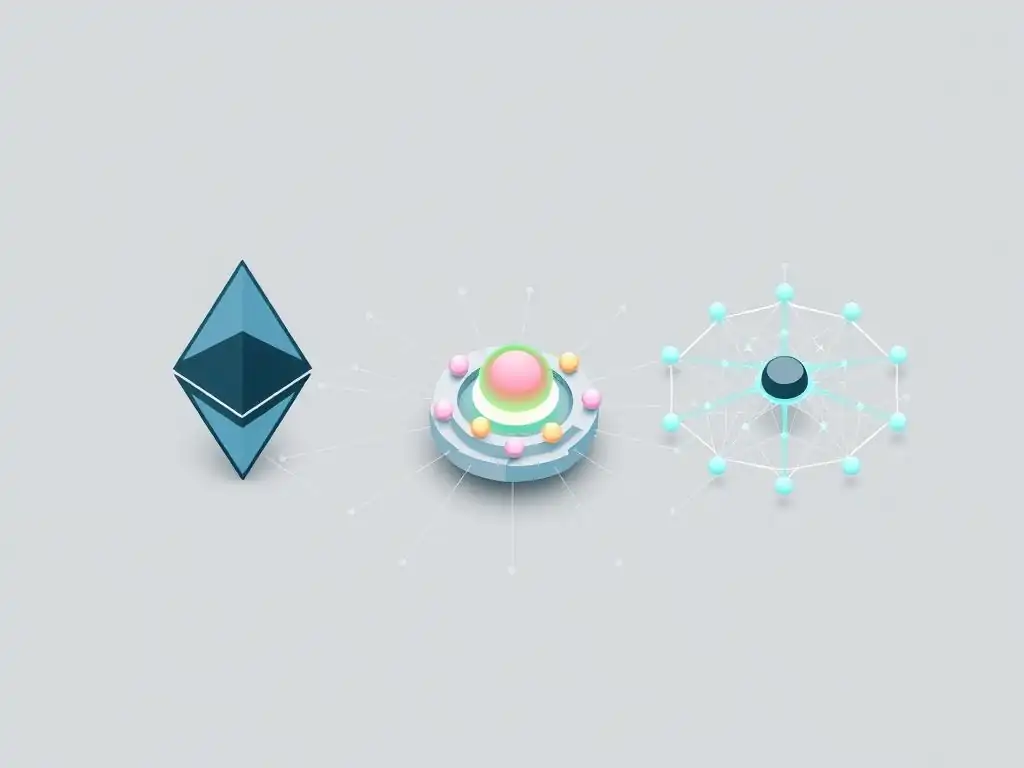
Decentralization and Security: A Comparative Analysis
When comparing Ethereum, Polkadot, and Cosmos, decentralization and security are crucial factors beyond transaction speed. Ethereum, in its current proof-of-work iteration, aims for robust decentralization through a large network of miners. However, the concentration of mining power and the impending shift to proof-of-stake raise ongoing discussions about its true level of decentralization and security in the long term. Polkadot achieves security through its Relay Chain, which provides shared security to all connected parachains. This shared security model strengthens the overall security of the Polkadot network but also introduces a degree of centralized control through the Relay Chain validators.
Cosmos, in contrast, emphasizes sovereign blockchains, meaning each zone is responsible for its own security. While this allows for greater customization and control, it also places the burden of security entirely on individual zones. The security of a Cosmos zone depends on its validator set and consensus mechanism, which can vary significantly between different zones.
Therefore, while Cosmos promotes decentralization in terms of blockchain autonomy, the actual security level can vary greatly across its ecosystem. A comparative analysis reveals that each platform approaches decentralization and security differently, with trade-offs between shared security, blockchain sovereignty, and the level of decentralization achieved.
Developer Ecosystem and Community Support
The strength of the developer ecosystem and community support is a critical indicator of a blockchain platform's long-term viability and growth potential. Ethereum boasts the largest and most mature developer ecosystem in the blockchain space. Its first-mover advantage, extensive tooling, and vast community provide a wealth of resources and support for developers. The Ethereum community is highly active and engaged, contributing to continuous innovation and development within the ecosystem.
Polkadot and Cosmos, while newer, have been rapidly growing their developer communities. Polkadot benefits from the backing of Parity Technologies, a well-respected blockchain development firm, and has cultivated a strong and active community focused on interoperability and parachain development. Cosmos, with its Cosmos SDK, has attracted a community of developers interested in building application-specific blockchains and leveraging IBC.
While both Polkadot and Cosmos have smaller developer ecosystems compared to Ethereum, their communities are highly focused and dedicated to their respective visions, contributing significantly to the growth and evolution of their platforms. The size, activity, and specialization of each community play a significant role in the platforms' future success.
Governance Models and Future Development Roadmaps
Governance models and future development roadmaps are crucial for understanding the long-term direction and adaptability of blockchain platforms. Ethereum's governance has historically been more informal and consensus-driven, often relying on core developers and community proposals. However, as Ethereum matures, there is increasing emphasis on more formalized governance processes to manage upgrades and protocol changes, particularly with the ongoing transition to Eth2.
Polkadot has a more structured on-chain governance system, allowing DOT token holders to participate in decision-making processes, including protocol upgrades and treasury management. This on-chain governance aims to ensure that the platform evolves in a decentralized and community-driven manner. Cosmos also emphasizes on-chain governance for blockchains built with the Cosmos SDK.
Each zone can implement its own governance mechanisms, allowing for flexibility and customization. Furthermore, the Cosmos Hub, the first blockchain in the Cosmos network, has its own governance system that influences the direction of the broader Cosmos ecosystem. Understanding the governance models and development roadmaps of Ethereum, Polkadot, and Cosmos provides insights into their long-term sustainability and their ability to adapt to future challenges and opportunities in the blockchain landscape.
Evaluating the True Value Proposition: Factors Beyond Market Capitalization
Technological Innovation and Potential for Disruption
Evaluating the true value proposition of Ethereum, Polkadot, and Cosmos requires a deep dive into their technological innovation and potential for disruption. Ethereum's innovation lies in pioneering smart contracts and establishing a robust platform for dApps, laying the foundation for the decentralized web. Its potential for disruption is evident in the ongoing transformation of finance (DeFi), art and collectibles (NFTs), and various other industries through decentralized applications.
Polkadot's technological innovation centers around its parachain architecture and focus on interoperability, aiming to solve the fragmentation of the blockchain space and unlock cross-chain use cases. Its disruptive potential lies in creating a truly interconnected blockchain ecosystem, enabling new forms of collaboration and data exchange across different platforms. Cosmos' innovation lies in its Cosmos SDK and IBC protocol, empowering the creation of sovereign and interoperable blockchains.
Its disruptive potential is rooted in enabling application-specific blockchains and fostering a network of independent yet connected ecosystems, offering greater customization and control to developers and projects. Assessing the unique technological innovations and disruptive potential of each platform is crucial for determining their long-term value.
Real-World Adoption and Enterprise Use Cases
Real-world adoption and enterprise use cases are key indicators of a blockchain platform's practical utility and long-term relevance. Ethereum, with its mature ecosystem and extensive tooling, has seen significant real-world adoption, particularly in DeFi and NFTs. Numerous DeFi protocols manage billions of dollars in value, and NFTs have gained traction in art, gaming, and collectibles markets. Enterprises are also exploring Ethereum for supply chain management, identity solutions, and other applications, although enterprise adoption is still in its early stages.
Polkadot, while newer, is actively pursuing enterprise partnerships and developing solutions for supply chain, finance, and identity management. Its interoperability and scalability are attractive features for enterprises seeking to integrate blockchain technology into their operations. Cosmos, with its focus on customizability and sovereignty, is also gaining traction in enterprise use cases, particularly for projects requiring private or permissioned blockchains. Real-world adoption and the development of enterprise-grade solutions are crucial for validating the practical value and long-term sustainability of these blockchain platforms.
The Role of Community and Developer Engagement
The role of community and developer engagement cannot be overstated when evaluating the true value proposition of blockchain platforms. A vibrant and active community fuels innovation, drives adoption, and ensures the long-term health of the ecosystem. Ethereum benefits from a massive and highly engaged community of developers, users, and researchers, contributing to continuous development and innovation. This strong community is a significant asset and a key driver of Ethereum's success.
Polkadot and Cosmos also boast dedicated and growing communities. Polkadot's community is focused on interoperability and parachain development, actively contributing to the growth of the Polkadot ecosystem. Cosmos' community is passionate about blockchain sovereignty and the development of application-specific blockchains, fostering innovation within the Cosmos network. Community engagement, developer activity, and the overall health of the ecosystem are vital factors in assessing the long-term value and potential of Ethereum, Polkadot, and Cosmos, often outweighing short-term market fluctuations.
Ethereum Blockchain Use Cases: A Deep Dive into Specific Applications
DeFi (Decentralized Finance) Applications on Ethereum
Ethereum blockchain use cases in Decentralized Finance (DeFi) are vast and transformative. Lending and borrowing platforms like Aave and Compound allow users to earn interest on their crypto assets or borrow against them without intermediaries. Decentralized exchanges (DEXs) such as Uniswap and SushiSwap enable peer-to-peer trading of cryptocurrencies without relying on centralized exchanges, offering greater transparency and control. Yield farming protocols incentivize users to provide liquidity to DeFi platforms, earning rewards in the form of additional tokens. For instance, Yearn Finance automates yield farming strategies to maximize returns for users.
Stablecoin issuers like MakerDAO provide decentralized stablecoins pegged to fiat currencies, facilitating stable value transfer within the DeFi ecosystem. Derivatives platforms such as Synthetix allow for the creation and trading of synthetic assets representing real-world assets like stocks or commodities. These diverse DeFi applications on Ethereum are reshaping the financial landscape, offering users greater access, transparency, and control over their finances. The total value locked (TVL) in Ethereum DeFi protocols has reached tens of billions of dollars, demonstrating the significant adoption and impact of these Ethereum blockchain use cases.
NFTs (Non-Fungible Tokens) and the Creator Economy on Ethereum
Ethereum blockchain use cases extend significantly into the realm of Non-Fungible Tokens (NFTs) and the creator economy. NFTs have revolutionized digital ownership and created new avenues for creators to monetize their work. Digital art NFTs, traded on marketplaces like OpenSea and SuperRare, allow artists to sell their digital creations directly to collectors, bypassing traditional art intermediaries and establishing provenance and authenticity on the blockchain. Collectibles NFTs, such as CryptoPunks and Bored Ape Yacht Club, have gained immense popularity, representing unique digital items with verifiable ownership and community-driven value.
Gaming NFTs are transforming the gaming industry, enabling players to own in-game assets and trade them freely, creating play-to-earn models. Virtual land NFTs in metaverse platforms like Decentraland and The Sandbox represent ownership of virtual real estate, creating new digital economies and experiences. Music NFTs allow musicians to sell limited edition songs or albums directly to fans, fostering closer artist-fan relationships and new revenue streams. These diverse NFT applications on Ethereum are empowering creators, fostering new forms of digital ownership, and driving the growth of the creator economy.
Supply Chain Management and Enterprise Solutions on Ethereum
Beyond DeFi and NFTs, Ethereum blockchain use cases are also emerging in supply chain management and enterprise solutions. Blockchain technology can enhance transparency and traceability in supply chains, allowing businesses to track products from origin to consumer, verifying authenticity and preventing counterfeiting. Platforms like VeChain, built on Ethereum, are being used to track products across various industries, improving supply chain efficiency and accountability. Identity management solutions on Ethereum can provide decentralized and self-sovereign identity systems, empowering individuals to control their digital identities and data.
Enterprise-focused Ethereum solutions are being explored for various applications, including data management, intellectual property protection, and secure communication. Consortium blockchains, like Hyperledger Besu (an Ethereum client), are being used by enterprises to build permissioned blockchain networks for specific industry use cases. While enterprise adoption of Ethereum is still evolving, the potential for blockchain to improve efficiency, transparency, and security in enterprise operations is significant, and Ethereum, with its mature ecosystem, remains a leading platform for exploring these solutions.
Polkadot and Cosmos: Addressing the Limitations of Ethereum
How Polkadot's Parachains Enable Scalable DeFi Solutions
Polkadot's parachain architecture directly addresses the scalability limitations of Ethereum, particularly in the context of DeFi solutions. By allowing for the creation of specialized DeFi parachains, Polkadot enables the development of DeFi protocols that can handle significantly higher transaction volumes and lower fees compared to those built on Ethereum's main chain. These parachains can be optimized for specific DeFi use cases, such as lending, borrowing, or trading, allowing for greater efficiency and performance.
For example, Acala and Moonbeam are parachains on Polkadot focused on DeFi. Acala aims to be a DeFi hub on Polkadot, offering a suite of financial products, while Moonbeam provides Ethereum compatibility, allowing Ethereum-based DeFi projects to easily deploy on Polkadot and benefit from its scalability. By distributing DeFi activity across multiple parachains, Polkadot creates a more scalable and cost-effective environment for decentralized finance, potentially overcoming the limitations of Ethereum's main chain congestion and high gas fees for DeFi applications.
Cosmos' Inter-Blockchain Communication (IBC) Protocol for Cross-Chain Applications
Cosmos' Inter-Blockchain Communication (IBC) protocol provides a solution for cross-chain applications, addressing another limitation of Ethereum's isolated ecosystem. IBC enables secure and trustless communication between independent blockchains, allowing for the transfer of assets and data across different networks. This cross-chain interoperability unlocks new possibilities for DeFi and other applications, enabling the creation of services that leverage the strengths of multiple blockchains.
For instance, Osmosis, a DEX built on Cosmos, utilizes IBC to allow for cross-chain trading, enabling users to trade assets from different blockchains within a single decentralized exchange. Cross-chain bridges built using IBC can connect Ethereum to Cosmos chains, allowing for the transfer of assets between these ecosystems and expanding the reach of both platforms. IBC's focus on secure and efficient cross-chain communication addresses the fragmentation of the blockchain space and enables the development of truly interoperable applications that can leverage the unique capabilities of different blockchains.
The Potential for Polkadot and Cosmos to Complement Ethereum
Polkadot and Cosmos are not necessarily direct competitors to Ethereum, but rather platforms that can complement and enhance the broader blockchain ecosystem. While Ethereum excels in its mature ecosystem and wide range of applications, Polkadot and Cosmos offer solutions to scalability and interoperability challenges that Ethereum currently faces. Polkadot's parachain model provides a scalable infrastructure for DeFi and other high-throughput applications, while Cosmos' IBC protocol enables cross-chain communication and interoperability.
Ethereum can continue to thrive as a hub for core dApp development and high-value transactions, while Polkadot and Cosmos can provide the infrastructure for scaling and connecting different blockchain ecosystems. Layer-2 solutions on Ethereum, combined with the interoperability offered by Polkadot and Cosmos, can create a more robust and interconnected blockchain landscape. The future of blockchain may not be a winner-takes-all scenario, but rather a multi-chain ecosystem where Ethereum, Polkadot, and Cosmos, along with other platforms, each play distinct and complementary roles, contributing to the overall growth and adoption of blockchain technology.
Conclusion: The Future of Blockchain Platforms and Their Value
Investing in Blockchain Technology: Looking Beyond Short-Term Gains
Investing in blockchain technology requires a long-term perspective, moving beyond the allure of short-term price gains and focusing on the fundamental value and potential of these platforms. The cryptocurrency market is inherently volatile, and relying solely on price speculation can lead to risky and uninformed investment decisions. Instead, a more prudent approach involves understanding the underlying technology, evaluating the platform's use cases, and assessing its long-term growth potential.
Blockchain technology is still in its early stages of development and adoption, and the true impact and transformative potential of these platforms are yet to be fully realized. Investing in blockchain should be viewed as a long-term strategy, similar to investing in the early internet, focusing on platforms with strong fundamentals, innovative technology, and a clear vision for the future. By looking beyond short-term price fluctuations and focusing on long-term value drivers, investors can make more informed decisions and participate in the growth of this transformative technology.
The Long-Term Potential of Ethereum, Polkadot, and Cosmos
Ethereum, Polkadot, and Cosmos each possess significant long-term potential within the blockchain landscape. Ethereum, despite its current limitations, remains the leading platform for dApp development and has a strong first-mover advantage and a massive ecosystem. Its ongoing transition to Eth2 and the development of layer-2 scaling solutions aim to address its scalability challenges and solidify its position as a foundational platform for the decentralized web.
Polkadot's focus on interoperability and scalability positions it as a key player in connecting diverse blockchain ecosystems and enabling cross-chain applications. Its parachain architecture and strong community support contribute to its long-term growth potential. Cosmos, with its emphasis on blockchain sovereignty and customizability, empowers the creation of application-specific blockchains and fosters a network of independent yet interoperable ecosystems. Its Cosmos SDK and IBC protocol provide valuable tools for developers and contribute to its long-term relevance. Each of these platforms offers a unique value proposition and contributes to the overall evolution and maturation of blockchain technology.
Choosing the Right Blockchain Platform for Specific Use Cases: A Strategic Approach
Choosing the right blockchain platform for specific use cases requires a strategic approach, considering the unique strengths and limitations of each platform. For projects requiring a mature ecosystem, extensive tooling, and a large developer community, Ethereum remains a strong choice, particularly for DeFi and NFT applications. However, for applications demanding high scalability and low transaction fees, platforms like Polkadot may be more suitable, especially for DeFi and enterprise solutions requiring high throughput.
For projects prioritizing blockchain sovereignty, customizability, and cross-chain interoperability, Cosmos offers a compelling framework with its Cosmos SDK and IBC protocol. Ultimately, the "best" blockchain platform depends on the specific requirements of the use case, and a strategic approach involves carefully evaluating the technological capabilities, ecosystem maturity, and long-term vision of each platform. The future of blockchain is likely to be multi-chain, and understanding the strengths and weaknesses of different platforms is crucial for making informed decisions and leveraging the full potential of this transformative technology.
Frequently Asked Questions
What are some of the key Ethereum blockchain use cases beyond just cryptocurrency trading?
Ethereum's utility extends far beyond cryptocurrency. Common use cases include decentralized finance (DeFi) applications like lending and borrowing, non-fungible tokens (NFTs) for digital ownership, and supply chain management for increased transparency.
How does Ethereum compare to Polkadot and Cosmos in terms of its Ethereum blockchain use cases and overall value proposition?
While all three offer blockchain solutions, Ethereum boasts a larger ecosystem for Ethereum blockchain use cases and developer community. Polkadot and Cosmos focus on interoperability and customizable blockchains, respectively, offering different value propositions.
What role does regulation play in shaping the future of Ethereum blockchain use cases?
Regulatory clarity is crucial for the mainstream adoption of Ethereum blockchain use cases. Ambiguity can hinder innovation and investment, while clear regulations can foster responsible growth and consumer protection.
In what ways are enterprises leveraging the Ethereum blockchain use cases to improve their operations?
Enterprises are exploring Ethereum blockchain use cases to enhance transparency, security, and efficiency. Examples include supply chain tracking, digital identity management, and secure data sharing using its decentralized nature.
What is the potential future impact of Ethereum blockchain use cases on decentralized systems and the broader economy?
Ethereum blockchain use cases could revolutionize various industries by enabling more transparent, secure, and efficient systems. This could lead to new business models, increased trust, and greater financial inclusion in the global economy.
Final Reflection: Embracing the Decentralized Future
The exploration of Ethereum, Polkadot, and Cosmos reveals that their true value extends far beyond mere price speculation. While market fluctuations capture headlines, the underlying potential of these platforms to reshape industries and empower individuals remains the most compelling narrative. The future of blockchain isn't just about digital assets; it's about building a more transparent, efficient, and equitable world.
The ongoing evolution of these ecosystems profoundly impacts our cultural and social landscape. Witnessing the emergence of innovative Ethereum blockchain use cases, from decentralized finance to verifiable digital identities, underscores the transformative power of this technology. The future is already here – it's just not evenly distributed.
- William Gibson. This quote resonates deeply as we consider the potential for these platforms to democratize access to resources and opportunities, bridging divides and fostering greater inclusivity.
Now, as you reflect on the possibilities presented by Ethereum, Polkadot, and Cosmos, consider how you can contribute to this decentralized future. How can you leverage these technologies to solve real-world problems, empower your community, or simply become a more informed and engaged participant in this rapidly evolving landscape? The power to shape this future lies within each of us.
Uncover Your Next Blockchain Opportunity!
Thank you for exploring the value propositions of Ethereum, Polkadot, and Cosmos with us. We hope you've gained a deeper understanding of these innovative platforms and their potential beyond just price movements. Are you ready to deepen your engagement?
Here are a few ways to immerse yourself further in the world of blockchain:
- Start building! Begin a small side project using one of these platforms. Even creating a simple decentralized application can help you better understand their unique features.
- Join the conversation. Share this article with a friend or colleague who is passionate about blockchain technology.
- Explore the Cosmos ecosystem. Investigate new chains built on the Cosmos SDK and consider contributing to their open-source development.
Which platform’s ecosystem excites you the most, and what challenges are you eager to tackle? Share your thoughts in the comments below!
Leave a Reply