
Navigating the Landscape of Blockchain Scalability Solutions: A Comprehensive Overview


Welcome to Blockchain Trends, your compass in the ever-evolving world of decentralized technology. Beyond the hype of cryptocurrencies, we delve into the real-world applications and transformative potential of blockchain. Are you ready to unravel the complexities surrounding blockchain scalability solutions challenges? This article offers a comprehensive overview of the hurdles and innovations shaping the future of blockchain's widespread adoption. Prepare to explore the critical issues and promising breakthroughs that are defining The Future of Blockchain, sparking a revolution across industries.
Navigating the Landscape of Blockchain Scalability Solutions: A Comprehensive Overview
- Introduction: Understanding the Blockchain Scalability Problem
- Current Blockchain Scalability Solutions Challenges
- Comparing Blockchain Scalability Solutions: A Detailed Analysis
- Addressing Blockchain Scalability Solutions Challenges
- Real-World Applications and Use Cases of Scalable Blockchains
- The Future of Blockchain Scalability
- Conclusion: Choosing the Right Blockchain Scalability Solution
-
Frequently Asked Questions
- What are the main challenges hindering blockchain scalability?
- What are some prominent Blockchain scalability solutions currently being explored?
- How do Layer-2 solutions like Rollups contribute to blockchain scalability?
- What role does sharding play in addressing blockchain scalability challenges?
- How might regulation impact the development and adoption of blockchain scalability solutions?
- Final Reflection: Embracing the Scalable Future of Blockchain
- Embark on Your Blockchain Scaling Journey!
Introduction: Understanding the Blockchain Scalability Problem
The Bottleneck: Why Blockchain Scalability Matters
Blockchain technology, while revolutionary in its ability to create decentralized, immutable ledgers, faces a fundamental limitation often referred to as the "scalability problem." This challenge arises because traditional blockchain designs, like Bitcoin's and early Ethereum's, prioritize security and decentralization by requiring every node in the network to validate every transaction. As the number of users and transactions grows, this consensus mechanism becomes a significant bottleneck, leading to slow transaction speeds and high fees. Without effective blockchain scalability solutions challenges persist, hindering mainstream adoption for applications requiring high throughput, such as global payment systems or large-scale decentralized applications (dApps).
Consider the contrast with centralized payment systems. Visa, for example, reports handling an average of around 1,700 transactions per second (TPS) globally, with peak capacities potentially exceeding 24,000 TPS. Early blockchain networks, in comparison, process significantly fewer transactions: Bitcoin typically handles around 7 TPS, and Ethereum (before its transition to Proof-of-Stake) averaged about 15-30 TPS.
This vast difference in processing capacity highlights the critical need for robust blockchain scalability solutions challenges must be overcome for the technology to compete with or replace existing infrastructure on a global scale. The inability to handle a large volume of transactions efficiently limits the types of applications that can run on the blockchain and restricts its potential for widespread use across various industries.
Defining Blockchain Scalability: Transactions Per Second (TPS) and Beyond
Blockchain scalability is often primarily measured by the network's ability to process a high volume of transactions per second (TPS). This metric is crucial because it directly impacts the network's capacity to support a large user base and handle complex applications. However, scalability is not solely defined by TPS.
It also encompasses factors like latency (the time it takes for a transaction to be confirmed) and the overall cost per transaction (gas fees). A truly scalable blockchain should be able to handle increasing demand efficiently, quickly, and affordably. The blockchain scalability solutions challenges often involve optimizing these interconnected factors simultaneously.
Beyond raw transaction speed, scalability also relates to the network's ability to grow in terms of data storage and computational load without compromising performance or increasing the burden on individual nodes to an unreasonable degree. As the blockchain grows larger, synchronization and validation can become more resource-intensive, potentially leading to centralization if only powerful entities can afford to run full nodes. Therefore, effective blockchain scalability solutions must also consider the long-term sustainability of the network's infrastructure and ensure that it remains accessible and decentralized even as it expands to accommodate millions or billions of users and transactions.
The Trilemma: Security, Decentralization, and Scalability
The blockchain trilemma, a concept popularized by Ethereum co-founder Vitalik Buterin, posits that decentralized networks must sacrifice one of three core properties when optimizing for the other two: security, decentralization, and scalability. Security refers to the network's resilience against attacks and manipulation. Decentralization means the network is distributed among many participants, preventing single points of control or failure. Scalability, as discussed, is the ability to handle a high volume of transactions efficiently. Overcoming the blockchain scalability solutions challenges often involves navigating this trilemma, as enhancing one aspect can negatively impact the others.
For instance, simply increasing block size in Bitcoin (a potential Layer-1 solution) might boost TPS but could make it harder for average users to run full nodes due to increased storage and bandwidth requirements, potentially leading to greater centralization. Similarly, some highly scalable Layer-1 protocols might achieve speed by relying on a smaller, more powerful set of validators, potentially reducing decentralization compared to networks with thousands of dispersed nodes. Finding the right balance among these three pillars is a central objective for developers exploring various blockchain scalability solutions challenges in designing and implementing these technologies.
Current Blockchain Scalability Solutions Challenges
Layer-1 Scalability Solutions: Modifying the Blockchain Protocol
Layer-1 scalability solutions involve making fundamental changes directly to the core blockchain protocol itself. These modifications aim to increase the network's capacity without relying on off-chain mechanisms. While promising, implementing these changes is often complex and requires significant consensus from the network's participants, presenting one of the primary blockchain scalability solutions challenges at this level. Successful Layer-1 scaling can significantly boost the base throughput of the network.
Examples of Layer-1 approaches include altering consensus mechanisms, increasing block parameters (like size or frequency), or implementing sharding. Modifying the core protocol requires careful consideration of potential side effects on security and decentralization. For example, changing the consensus mechanism from Proof-of-Work (PoW) to Proof-of-Stake (PoS), as Ethereum did with "The Merge," significantly reduced energy consumption and increased potential throughput, but it also introduced new considerations regarding validator centralization and staking dynamics, highlighting inherent blockchain scalability solutions challenges.
Sharding: Dividing the Blockchain for Parallel Processing
Sharding is a technique borrowed from traditional database partitioning, adapted for blockchain. It involves dividing the blockchain network into smaller, more manageable segments called "shards." Each shard can process transactions and maintain its state independently and in parallel with other shards. Instead of every node validating every transaction on the entire network, nodes are assigned to specific shards and only need to process transactions within their assigned shard. This parallel processing dramatically increases the overall throughput of the network.
Ethereum 2.0 (now the Beacon Chain and execution layer) is implementing sharding as a key component of its long-term scalability roadmap, though the initial focus was on the PoS transition. The plan involves dividing the network into numerous shard chains that communicate with a central Beacon Chain. While theoretically offering high scalability, implementing sharding introduces significant complexity, particularly in ensuring secure cross-shard communication and preventing attacks that target individual shards. These complexities represent considerable blockchain scalability solutions challenges that developers are actively working to address in live implementations.
Proof-of-Stake (PoS) and its Variants: Enhancing Efficiency
Proof-of-Stake (PoS) is a consensus mechanism where validators are chosen to create new blocks and validate transactions based on the amount of cryptocurrency they "stake" (hold and lock up) in the network. This contrasts with Proof-of-Work (PoW), which relies on computational power (mining). PoS is significantly more energy-efficient than PoW and can potentially achieve higher transaction speeds and lower costs because it doesn't require solving complex cryptographic puzzles. Ethereum's transition to PoS is a prime example, aiming for greater efficiency and setting the stage for future scaling upgrades like sharding.
Various PoS variants exist, such as Delegated Proof-of-Stake (DPoS), Nominated Proof-of-Stake (NPoS), and Pure Proof-of-Stake (PPoS). DPoS, used by networks like EOS and Tron, involves token holders electing a smaller set of delegates to validate transactions, potentially offering very high speeds (e.g., EOS has reported peak TPS much higher than Ethereum's PoW era) but raising concerns about centralization among the limited number of delegates.
Algorand's PPoS aims to maintain decentralization by randomly selecting validators from the entire pool of stakers. Each variant presents its own set of blockchain scalability solutions challenges related to balancing speed, security, and the degree of decentralization.
Block Size Increases: Trade-offs and Considerations
One of the most straightforward Layer-1 approaches to increasing throughput is simply increasing the maximum size of blocks in the blockchain. A larger block can contain more transactions, thus increasing the number of transactions processed per block interval. This was a central debate in the Bitcoin community, leading to forks like Bitcoin Cash, which significantly increased its block size limit (currently 32 MB, compared to Bitcoin's effective limit around 1-4 MB depending on SegWit usage). Bitcoin Cash proponents argued this was necessary for on-chain scaling and lower transaction fees.
However, increasing block size presents significant blockchain scalability solutions challenges and trade-offs. Larger blocks require more bandwidth and storage for nodes to download, verify, and store. This increased resource requirement can make it more expensive and difficult for individuals to run full nodes, potentially leading to fewer full nodes and thus reducing the network's decentralization. Furthermore, larger blocks can take longer to propagate through the network, potentially increasing the risk of orphaned blocks and security vulnerabilities. The debate over block size highlights the delicate balance required when modifying core protocol parameters.
Layer-2 Scalability Solutions: Building on Top of the Blockchain
Layer-2 scalability solutions operate on top of the main blockchain (Layer-1) rather than modifying the base layer itself. These solutions process transactions off-chain and then periodically settle or report the results back to the Layer-1 chain, leveraging the base layer's security and finality. Layer-2 approaches aim to significantly increase transaction throughput and reduce costs without compromising the security or decentralization of the underlying Layer-1 network. Addressing blockchain scalability solutions challenges through Layer-2 offers flexibility and innovation.
Examples of Layer-2 technologies include state channels, sidechains, and rollups. These solutions divert a large volume of transactions away from the main chain, processing them in a more efficient off-chain environment. Only the final state or aggregated proof of these transactions is recorded on Layer-1. This significantly reduces the load on the base chain, enabling higher transaction volumes and lower fees. However, Layer-2 solutions introduce their own complexities, such as managing funds locked in Layer-2, ensuring the security of off-chain computations, and challenges related to user experience when moving assets between layers.
State Channels: Direct, Off-Chain Communication
State channels allow participants to conduct multiple transactions off-chain without broadcasting each one to the entire network. A state channel is established by participants locking a portion of their funds in a multi-signature contract on the Layer-1 chain. Once the channel is open, participants can transact directly with each other off-chain, updating a shared state. Only the initial opening and the final closing transaction (or a dispute) are recorded on the main chain. The Lightning Network for Bitcoin and the Raiden Network for Ethereum are prominent examples, primarily used for payment channels.
The key advantage of state channels is extremely high transaction speed and virtually zero transaction fees once the channel is established. Transactions within the channel are instant and private between participants. However, state channels are best suited for repeated interactions between a fixed set of participants. They require participants to be online to receive payments and manage their channel state, and withdrawing funds back to the Layer-1 chain requires closing the channel, which can incur Layer-1 fees and delay. These limitations represent specific blockchain scalability solutions challenges for wider application.
Sidechains: Independent Blockchains Linked to the Main Chain
Sidechains are independent blockchain networks that are connected to a main blockchain via a two-way peg. This peg allows assets to be transferred between the main chain and the sidechain. Transactions on the sidechain are processed independently using its own consensus mechanism (which might be different from the main chain, potentially optimized for speed). Periodically, the state or batches of transactions from the sidechain can be anchored back to the main chain for added security or finality. Polygon's Plasma and PoS chains, although sometimes debated regarding their classification, function similarly to sidechains in offloading transactions from Ethereum.
Sidechains offer significant flexibility as they can be designed with different features and consensus rules optimized for specific use cases (e.g., high throughput for gaming or enterprise). They can process a much larger volume of transactions than the main chain. However, sidechains typically rely on their own set of validators, which might be smaller and less decentralized than the main chain's validator set. This can introduce different security assumptions and potential vulnerabilities compared to the main chain. The security of assets transferred to a sidechain is dependent on the sidechain's security model, presenting distinct blockchain scalability solutions challenges.
Rollups: Bundling Transactions for On-Chain Verification
Rollups are a prominent Layer-2 scaling solution that executes transactions off-chain but bundles hundreds of these off-chain transactions into a single batch. This batch is then "rolled up" and submitted to the Layer-1 chain as a single transaction. Crucially, rollups post transaction data or validity proofs to the Layer-1 chain, inheriting its security properties. This allows the Layer-1 chain to verify the correctness of the off-chain computations or reconstruct the state if necessary. Rollups are currently seen as a key part of Ethereum's scaling strategy.
Rollups significantly increase throughput compared to the Layer-1 chain because the bulk of computation and state storage happens off-chain. They also benefit from the strong security guarantees of the Layer-1 chain because data or proofs are available on-chain. There are two main types of rollups, differing in how they guarantee the validity of the off-chain state transition: Optimistic Rollups and Zero-Knowledge Rollups. Each type has its own technical complexities and trade-offs, contributing to the ongoing blockchain scalability solutions challenges in their widespread adoption and optimization.
Optimistic Rollups: Assumptions and Fraud Proofs
Optimistic Rollups assume that all transactions in a batch are valid by default ("optimistic"). The batch is posted to the Layer-1 chain, and there is a time window during which anyone can challenge the validity of a transaction in the batch by submitting a "fraud proof" to the Layer-1 contract. If a fraud proof is successful, the invalid transaction is reverted, and the party who submitted the incorrect batch is penalized. Examples include Optimism and Arbitrum on Ethereum.
This optimistic approach allows for simpler initial implementation compared to zk-Rollups. However, the challenge period for fraud proofs introduces a withdrawal delay, typically ranging from several days to a week, when moving assets from the Layer-2 rollup back to Layer-1. This delay can be a significant drawback for users needing quick access to their funds on the main chain. Furthermore, ensuring the robustness and efficiency of the fraud proof mechanism itself is one of the key blockchain scalability solutions challenges for Optimistic Rollups.
Zero-Knowledge Rollups (zk-Rollups): Validity Proofs and Privacy
Zero-Knowledge Rollups (zk-Rollups) compute the state transition off-chain and then generate a cryptographic validity proof (specifically, a SNARK or STARK proof) that verifies the correctness of all transactions in the batch. This validity proof is then posted to the Layer-1 chain along with a small amount of data representing the state change. The Layer-1 contract verifies the proof, and once verified, the state transition is considered final. Examples include zkSync and Polygon's zkEVM.
Zk-Rollups offer faster finality than Optimistic Rollups because validity is proven before posting to Layer-1, eliminating the need for a challenge period (withdrawals can be processed much faster). They also offer strong privacy guarantees for certain types of transactions depending on the specific implementation of the zero-knowledge proofs. However, generating these validity proofs is computationally intensive and complex, requiring specialized hardware or significant processing power. The complexity of developing and deploying zk-Rollup technology represents a significant technical hurdle and one of the more difficult blockchain scalability solutions challenges currently being addressed.
Other Scalability Approaches
Beyond the widely adopted Layer-1 and Layer-2 categories, other architectural approaches and specific technologies aim to address blockchain scalability solutions challenges by fundamentally altering the data structure or processing model. These alternatives often explore different trade-offs between decentralization, security, and speed, pushing the boundaries of distributed ledger technology. While some are still experimental, others have found niche applications or offer unique advantages.
These alternative methods demonstrate the breadth of research and development in the blockchain space aimed at overcoming performance limitations. They highlight that the pursuit of scalability is not limited to a few established paradigms but involves exploring diverse computational and structural models. Understanding these different approaches provides a more complete picture of the ongoing efforts to make decentralized systems capable of supporting global-scale applications.
Directed Acyclic Graphs (DAGs): An Alternative to Blockchains
Directed Acyclic Graphs (DAGs) offer an alternative data structure to the linear chain of blocks used in traditional blockchains. In a DAG-based ledger, such as IOTA's Tangle or Nano's Block Lattice, transactions are linked directly to one or more previous transactions, forming a graph rather than a chain. There are no blocks in the traditional sense, and often no miners or validators competing for block creation. Instead, submitting a new transaction requires verifying a small number of previous transactions.
DAGs theoretically offer high scalability because transactions can be processed in parallel without waiting for block confirmation. As more transactions are added, the network can potentially process more transactions simultaneously. Projects like Nano claim very fast transaction speeds and zero fees. However, DAGs face different blockchain scalability solutions challenges related to security (preventing double-spending without global consensus mechanisms like PoW or PoS), maintaining network synchronization, and achieving strong finality compared to blockchains. Some DAG implementations also rely on a central coordinator or checkpointing system, raising decentralization concerns.
Plasma: Off-Chain Computation with Root Chain Anchoring
Plasma is a framework for creating scalable decentralized applications, first proposed by Joseph Poon and Vitalik Buterin. It involves creating a tree of smaller blockchains (called Plasma chains) that branch off a main Layer-1 root chain (like Ethereum). Each Plasma chain is essentially a separate blockchain that processes transactions off-chain. Periodically, commitments to the state of these Plasma chains are anchored to the root chain. This allows Plasma chains to handle a large volume of transactions efficiently.
Plasma utilizes fraud proofs similar to Optimistic Rollups to ensure security. If an invalid state transition occurs on a Plasma chain, users can exit the chain by submitting a proof of the invalidity to the root chain, recovering their funds.
While offering potential for high throughput, Plasma implementations face significant blockchain scalability solutions challenges, particularly regarding the complexity of the exit game mechanism (which can be slow and resource-intensive) and handling complex operations beyond simple transfers. Projects like Polygon's Plasma implementation have shown its viability for specific use cases, but its complexity has led to less widespread adoption compared to rollups for general-purpose computation.
Comparing Blockchain Scalability Solutions: A Detailed Analysis
Comparing different blockchain scalability solutions requires evaluating them across several key dimensions. Each solution involves trade-offs, and the optimal choice depends heavily on the specific requirements of the application or network. Understanding these nuances is crucial for navigating the landscape and selecting the most appropriate approach to address specific blockchain scalability solutions challenges. A comprehensive analysis considers not just theoretical performance but also practical implications for security, decentralization, cost, and ease of implementation.
This comparative analysis helps to highlight why no single solution is a silver bullet for all blockchain scalability solutions challenges. Different methods excel in different areas. For instance, Layer-1 sharding aims for base-layer capacity increase, while Layer-2 rollups focus on off-chain execution with Layer-1 security. Sidechains offer flexibility but may trade off decentralization. State channels are ideal for specific use cases like payments but less so for general computation.
Throughput and Latency: Measuring Scalability Performance
Throughput, typically measured in transactions per second (TPS), is a primary metric for scalability. Layer-1 solutions like sharding or optimized PoS variants aim to increase the base TPS of the main chain. For example, Solana, a high-performance Layer-1 blockchain using a form of PoS and other optimizations, reports peak theoretical capacities significantly higher than traditional blockchains, sometimes cited in the tens of thousands of TPS, although sustained real-world performance can vary.
Layer-2 solutions like rollups and state channels can achieve even higher effective throughput by processing transactions off-chain. Optimistic Rollups and zk-Rollups can process thousands or even tens of thousands of transactions per second within their Layer-2 environment, posting only batched updates to Layer-1.
Latency, the time from initiating a transaction to its final confirmation, is another critical performance indicator. Traditional PoW blockchains like Bitcoin have confirmation times measured in minutes (e.g., ~10 minutes per block). PoS networks often have much faster block times and thus lower latency (e.g., Ethereum blocks are finalized in roughly 13 seconds).
Layer-2 solutions can offer near-instantaneous transaction speeds within the Layer-2 environment (e.g., state channels). However, withdrawing funds from Layer-2 back to Layer-1 can introduce latency (e.g., withdrawal delays in Optimistic Rollups or waiting for a transaction batch to be finalized in zk-Rollups). Addressing both high throughput and low latency simultaneously are significant blockchain scalability solutions challenges.
Security Considerations: Evaluating Vulnerabilities
Security is paramount in blockchain, and scalability solutions must not compromise the network's integrity. Layer-1 scaling methods like sharding introduce complexities related to cross-shard communication security and preventing attacks targeting individual shards. While PoS is energy-efficient, its security relies on economic incentives and the distribution of staked value, raising concerns about potential centralization of staking power or subtle attack vectors like 'nothing-at-stake' issues (though these have mitigation strategies). Increasing block size can potentially make the network more susceptible to denial-of-service attacks or make it harder for nodes to stay in sync.
Layer-2 solutions inherit the security of the Layer-1 chain to varying degrees, but they also introduce new potential vulnerabilities. State channels require participants to monitor the chain for disputes. Sidechains' security is often independent of the main chain, relying on their own validator set, which might be less secure.
Rollups rely on the security of fraud proofs (Optimistic Rollups) or validity proofs (zk-Rollups) and the Layer-1 contract that verifies them. Bugs in the Layer-2 smart contracts or implementation flaws in the proof systems represent significant blockchain scalability solutions challenges that could be exploited, potentially leading to loss of funds. Auditing and formal verification are critical for these complex systems.
Decentralization Impact: Balancing Efficiency and Governance
Decentralization is a core tenet of blockchain technology, preventing single points of failure and censorship. However, many scalability solutions involve trade-offs that can impact decentralization. Layer-1 changes that increase resource requirements (like larger blocks) can reduce the number of participants able to run full nodes. Some high-speed Layer-1 PoS variants or DAGs might rely on a smaller, more centralized set of validators or nodes to achieve performance, potentially concentrating power.
Layer-2 solutions generally aim to preserve the decentralization of the underlying Layer-1. However, the operation of Layer-2 sequencers (who order and batch transactions) or the infrastructure required to generate complex proofs (in zk-Rollups) could potentially introduce new points of centralization if controlled by a limited number of entities. The ease or difficulty of users running their own Layer-2 nodes or participating in the Layer-2 consensus (if applicable) also impacts the overall decentralization of the ecosystem. Balancing the need for high performance with maintaining a wide distribution of network control is a continuous challenge among blockchain scalability solutions challenges.
Implementation Complexity: Ease of Adoption and Development
The technical complexity of implementing and deploying blockchain scalability solutions varies significantly. Layer-1 protocol changes are often the most complex, requiring extensive research, development, testing, and network-wide consensus for activation (like a hard fork). Implementing sharding, for example, is a multi-year effort for Ethereum. Developing new consensus mechanisms or optimizing existing ones also requires deep expertise.
Layer-2 solutions, while not requiring changes to the Layer-1 protocol itself, are also technically complex to build and maintain. Developing robust state channel protocols, secure sidechain bridges, or sophisticated rollup contracts and proof systems requires specialized cryptographic and engineering skills. The complexity of integrating dApps with Layer-2 solutions and ensuring a smooth user experience when moving assets between layers also presents blockchain scalability solutions challenges for widespread adoption. Solutions that are easier for developers to build upon and for users to interact with are more likely to gain traction.
Cost Efficiency: Transaction Fees and Operational Expenses
Transaction fees are a direct consequence of scalability limitations on congested networks. When demand for block space exceeds supply, fees skyrocket (e.g., Ethereum gas fees reaching hundreds of dollars during peak network usage for NFTs or DeFi). Scalability solutions aim to reduce transaction costs by increasing the supply of transaction processing capacity. Layer-1 scaling can increase the total number of transactions processed per unit of time on the base layer, potentially lowering fees, though high demand can still push them up.
Layer-2 solutions are particularly effective at reducing user transaction fees because the cost of processing transactions off-chain is significantly lower than on Layer-1. Users pay minimal fees within a state channel or on a rollup, and the cost of the single batched transaction posted to Layer-1 is amortized across hundreds or thousands of Layer-2 transactions. However, there are still operational costs associated with running Layer-2 infrastructure, generating proofs, or managing the Layer-1 contracts, which are factored into the overall economics. Minimizing these costs while maintaining security and performance is a key objective in addressing blockchain scalability solutions challenges.
Addressing Blockchain Scalability Solutions Challenges
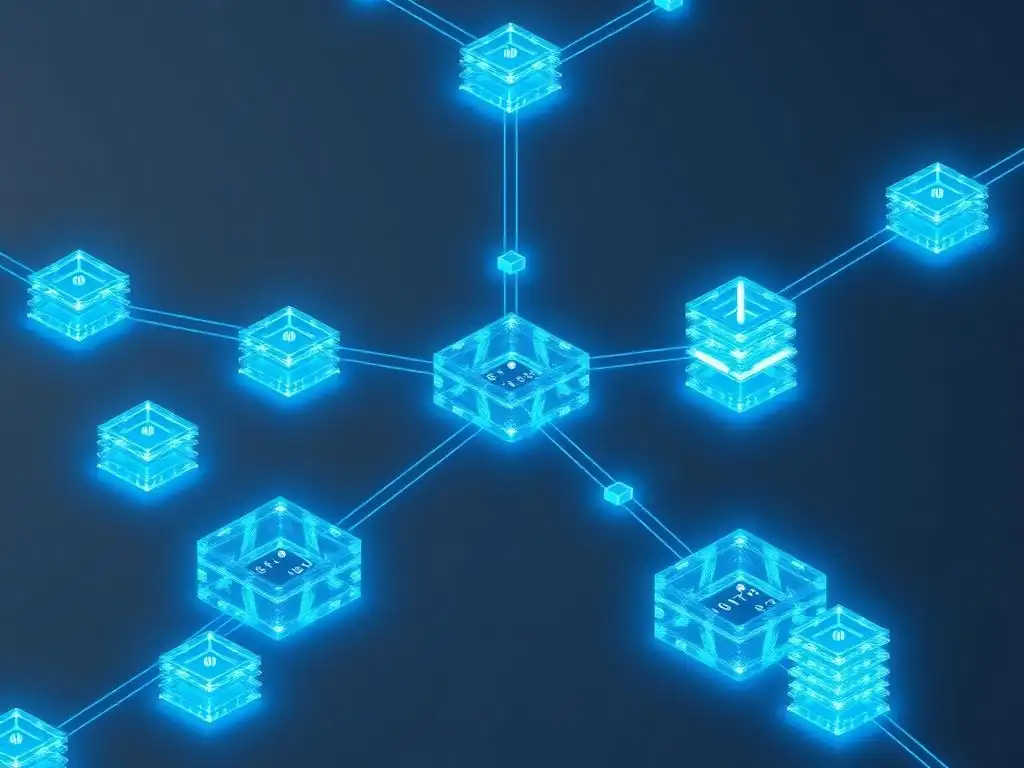
Overcoming the inherent limitations and complexities associated with scaling decentralized networks is an ongoing process. The development and refinement of blockchain scalability solutions challenges developers, researchers, and the wider community to innovate and collaborate. Addressing these issues is not just about achieving higher TPS numbers but also about ensuring that scaling methods are secure, maintain decentralization, and are practical for real-world use.
The path forward involves continuous research, rigorous testing, and careful implementation to mitigate risks. It also requires education and adoption efforts to ensure that users and developers can effectively utilize these scaling technologies. Each challenge presents an opportunity for improvement and iteration, driving the evolution of blockchain infrastructure towards greater efficiency and usability.
The Challenge of Interoperability Between Scalability Solutions
As various Layer-2 solutions and Layer-1 scaling methods emerge, a significant challenge is ensuring interoperability between them. Users and applications might reside on different rollups, sidechains, or even different sharded chains within the same Layer-1 network. Moving assets or information seamlessly between these different scaling environments without incurring high costs or long delays is complex. For example, transferring tokens from an Optimistic Rollup to a zk-Rollup, or from a sidechain back to Layer-1, requires bridges or specific protocols that add complexity and potential points of failure.
Lack of interoperability can lead to fragmentation of liquidity and user bases across different scaling solutions. Developers building dApps face the challenge of deciding which Layer-2 or Layer-1 shard to deploy on, potentially limiting their reach. Standards and protocols for cross-layer and cross-solution communication are being developed, but achieving truly seamless interoperability while maintaining security and decentralization remains one of the key blockchain scalability solutions challenges that needs widespread adoption.
Security Vulnerabilities in Layer-2 Solutions: Mitigation Strategies
While Layer-2 solutions leverage Layer-1 security, they introduce their own attack vectors. Bugs in the Layer-2 smart contracts deployed on Layer-1 (e.g., rollup contracts, bridge contracts), vulnerabilities in the off-chain execution environments, or flaws in the proof systems (fraud proofs or validity proofs) can all be exploited. For example, attackers could potentially submit invalid state transitions or manipulate withdrawal processes if the Layer-1 verification logic is flawed.
Mitigation strategies include rigorous smart contract auditing by multiple reputable firms, formal verification of critical code components, and bug bounty programs to incentivize security researchers to find vulnerabilities. For Optimistic Rollups, robust monitoring systems are needed to detect fraudulent transactions and submit fraud proofs promptly. For zk-Rollups, the complexity of generating and verifying proofs requires highly specialized cryptography and hardware, increasing the risk of subtle implementation errors. Continuous monitoring, rapid response capabilities, and progressive decentralization of Layer-2 components (like sequencers) are essential to address these blockchain scalability solutions challenges related to security.
The Trade-off Between Scalability and Decentralization
The blockchain trilemma highlights the inherent tension between scalability and decentralization. Many approaches to increase throughput risk concentrating power or increasing the barrier to entry for participation. For example, running a full node on a chain with massive block sizes requires significant resources. High-speed Layer-1 chains might rely on a smaller set of powerful validators.
Addressing this challenge requires finding innovative designs that minimize the impact on decentralization while increasing capacity. Research into decentralized sequencing for rollups, light client technologies that allow verification without downloading the entire chain history, and consensus mechanisms that can scale with a large number of participants are crucial. The community must also actively work to maintain a diverse and geographically distributed set of nodes and validators. The ongoing debate and development reflect the difficulty in truly solving this core aspect of the blockchain scalability solutions challenges.
The Complexity of Implementing and Managing Scalability Solutions
Implementing and managing complex blockchain scalability solutions is a significant hurdle for both developers and users. Building dApps on Layer-2 solutions often requires different development frameworks and understanding new transaction models compared to simple Layer-1 interactions. Developers need to consider how users will deposit and withdraw funds, how to handle potential delays, and how to ensure interoperability if their application needs to interact with other layers or chains.
For users, interacting with Layer-2 solutions can add steps and potential confusion compared to direct Layer-1 transactions. Managing assets across multiple layers or understanding withdrawal periods requires a higher degree of technical understanding. The infrastructure required to support some scaling solutions, such as running sequencer nodes for rollups or participating in complex consensus mechanisms, can also be technically demanding. Simplifying the developer experience and creating intuitive user interfaces are essential steps in overcoming these practical blockchain scalability solutions challenges to facilitate wider adoption.
Real-World Applications and Use Cases of Scalable Blockchains
The successful implementation of blockchain scalability solutions is unlocking a wide range of real-world applications that were previously limited by the throughput constraints of early networks. As blockchains become capable of handling more transactions quickly and affordably, they can move beyond speculative use cases and power mainstream applications in finance, gaming, supply chains, and more. The ability to overcome blockchain scalability solutions challenges is directly correlated with the expansion of blockchain's practical utility.
These examples demonstrate that scalability is not just a technical metric but a fundamental enabler for blockchain technology to achieve its transformative potential across various sectors. From facilitating high-volume financial transactions in DeFi to managing complex logistics in supply chains, scalable blockchains are proving their value.
DeFi (Decentralized Finance) Applications
Decentralized Finance (DeFi) has been a major driver for the need for blockchain scalability solutions. Early DeFi protocols on Ethereum often suffered from extremely high gas fees and slow transaction times, making simple actions like swapping tokens or managing collateral prohibitively expensive for many users. Scalable solutions, particularly Layer-2 rollups like Arbitrum, Optimism, and zkSync, have become crucial for hosting DeFi applications.
These Layer-2 platforms allow users to perform complex financial operations, such as trading, lending, and yield farming, with significantly lower fees (often fractions of a dollar compared to tens or hundreds on Layer-1) and faster confirmation times. For example, Uniswap, a major decentralized exchange, has deployed on several Layer-2 networks, enabling a much larger volume of trades at a lower cost. This increased efficiency is essential for DeFi to compete with traditional finance and reach a broader audience, directly addressing blockchain scalability solutions challenges that previously limited its accessibility.
Enterprise Blockchain Solutions
Enterprises exploring blockchain technology for supply chain management, inter-company settlements, or data sharing require networks that can handle high transaction volumes and maintain consistent performance. Public blockchains like Ethereum, even with Layer-1 scaling, might not yet meet the throughput requirements for large-scale enterprise deployments, and privacy is often a concern. This has led to the development of private/consortium blockchains or the use of scalable public Layer-1 or Layer-2 solutions tailored for business needs.
Solutions like Polygon (with its various chains and focus on enterprise partnerships) or specific enterprise-focused Layer-1 protocols offer the scalability needed for business use cases. For instance, a supply chain application tracking millions of goods globally would generate a vast number of transactions (recording movements, ownership changes, sensor data). A scalable blockchain infrastructure is essential to process this volume efficiently and economically, overcoming the blockchain scalability solutions challenges that would make such applications infeasible on less capable networks.
Gaming and NFTs (Non-Fungible Tokens)
The boom in blockchain gaming and Non-Fungible Tokens (NFTs) highlighted the urgent need for scalability. Minting, buying, selling, and trading NFTs, as well as in-game transactions, can generate massive transaction volumes. Networks like Ethereum experienced severe congestion and extremely high fees during peak NFT activity, pricing out many users and making gameplay expensive.
Scalable solutions like sidechains (e.g., Ronin, specifically built for the game Axie Infinity), specialized Layer-1 chains focused on gaming (e.g., Flow), and Layer-2 rollups are now widely used for NFT marketplaces and blockchain games. These platforms enable faster, cheaper transactions for minting, trading, and in-game actions, creating a smoother and more accessible user experience. For example, moving Axie Infinity's transactions to the Ronin sidechain dramatically reduced fees and increased transaction speed, demonstrating how addressing blockchain scalability solutions challenges can directly enable new market segments.
Supply Chain Management
Blockchain's immutability and transparency offer significant advantages for supply chain management, enabling tracking of goods, verifying provenance, and automating payments. However, a global supply chain involves millions of transactions daily, far exceeding the capacity of early blockchains. Scalable solutions are necessary to record the journey of products from origin to destination, including details like location updates, quality checks, and customs information.
Enterprise-focused blockchain platforms and scalable public networks are being explored and implemented for supply chain use cases. Recording every step of a product's journey on a blockchain requires high throughput and low transaction costs. For instance, tracking pharmaceuticals or high-value goods across complex international routes necessitates a scalable ledger that can handle millions of data points generated by various participants in the supply chain. Overcoming the blockchain scalability solutions challenges is key to leveraging blockchain for increased efficiency, transparency, and trust in complex logistical networks.
The Future of Blockchain Scalability
The pursuit of greater blockchain scalability is a dynamic and continuous process. Research and development are constantly pushing the boundaries of what's possible, exploring new architectures, cryptographic techniques, and economic incentives. The future of blockchain technology is intrinsically linked to its ability to scale to meet the demands of a global, interconnected world. The evolution of blockchain scalability solutions challenges the status quo and drives innovation.
Emerging trends suggest a multi-faceted approach, combining improvements at the Layer-1 level with increasingly sophisticated Layer-2 technologies. The focus is not just on raw speed but also on creating a scalable ecosystem that is secure, decentralized, and user-friendly, ultimately paving the way for mass adoption.
Emerging Trends and Innovations in Scalability
Several emerging trends are shaping the future of blockchain scalability. One significant area is the continued advancement of Zero-Knowledge proofs, leading to more efficient and versatile zk-Rollups (like zkEVMs that are fully compatible with Ethereum's Virtual Machine). These aim to provide high throughput with strong security guarantees and faster finality. Another trend is the development of Layer-3 solutions, which could build on top of Layer-2 rollups to offer application-specific scaling or further enhance privacy and interoperability between different Layer-2 networks.
Interoperability solutions, such as cross-chain bridges and communication protocols between different Layer-2s and Layer-1s, are also becoming increasingly sophisticated to combat fragmentation. Furthermore, research into novel consensus mechanisms and data availability layers continues to explore ways to increase the base capacity and efficiency of Layer-1 chains while maintaining decentralization. These innovations collectively aim to address the multifaceted blockchain scalability solutions challenges from multiple angles.
The Role of Scalability in Mass Adoption of Blockchain Technology
Scalability is arguably the most critical factor for blockchain to achieve mass adoption beyond niche communities and speculative trading. For blockchain-based applications to compete with or replace existing centralized services (like social media, e-commerce platforms, or traditional banking), they must be able to handle millions or billions of users and transactions seamlessly and affordably. Slow transaction times and high fees are major barriers to entry for the average user.
Achieving high throughput, low latency, and minimal transaction costs through effective blockchain scalability solutions is essential for creating user experiences that are comparable to or better than centralized alternatives. When users can transact instantly and cheaply, the friction associated with using decentralized applications is dramatically reduced, opening the door for widespread use in everyday life, from payments and remittances to digital identity and online interactions. Overcoming blockchain scalability solutions challenges is synonymous with unlocking the full potential of decentralized technology for everyone.
Predictions for the Evolution of Blockchain Scalability Solutions
Predicting the exact trajectory of blockchain scalability is challenging, but current trends suggest a future where a combination of Layer-1 and Layer-2 solutions co-exist and specialize. Layer-1 chains may evolve to provide a secure, decentralized base layer optimized for finality and data availability (potentially through sharding), while Layer-2 solutions like rollups will handle the vast majority of transaction volume and computation.
We are likely to see continued specialization in Layer-2s, with some optimized for specific use cases like gaming, DeFi, or enterprise, potentially building on different types of proofs or architectures. Interoperability between these layers and solutions will improve, creating a more unified ecosystem. While significant blockchain scalability solutions challenges remain, ongoing research and competition between different approaches are driving rapid progress. The future will likely involve a modular blockchain architecture, where different layers and components are optimized for specific functions, collectively providing the required scalability.
Conclusion: Choosing the Right Blockchain Scalability Solution
Navigating the complex landscape of blockchain scalability solutions requires careful consideration of specific needs and trade-offs. There is no one-size-fits-all answer to the blockchain scalability solutions challenges. The optimal solution or combination of solutions depends on the requirements of the particular application or network being built. Factors such as the required transaction volume, acceptable latency, cost sensitivity, security requirements, and the importance of decentralization all play a role in the decision-making process.
Developers and projects must assess these factors to determine whether a Layer-1 approach, a specific type of Layer-2 solution, or a combination thereof is most suitable. Furthermore, the rapidly evolving nature of this field means that staying informed about the latest research and implementations is crucial. The ongoing effort to refine and deploy effective scaling technologies will continue to shape the future capabilities of decentralized systems.
Assessing Your Specific Scalability Needs
The first step in choosing a blockchain scalability solution is to thoroughly assess the specific needs of the application or project.
- Transaction Volume: How many transactions per second or per day does the application need to handle? Does it have peak usage periods?
- Transaction Cost: What is the acceptable cost per transaction for users? Is it for micro-payments where fees must be near zero, or for higher-value transactions where slightly higher fees are acceptable?
- Latency/Finality: How quickly do transactions need to be confirmed? Is near-instant finality required (like in trading), or are delays of minutes or hours acceptable?
- Security Requirements: What is the value being transferred or managed? How critical is it to prevent fraud or censorship? Does the solution need to inherit the full security of a highly decentralized Layer-1?
- Decentralization Requirements: How important is it that the solution is highly decentralized, with many independent participants? Can it tolerate some degree of centralization for performance gains?
- Development Complexity & Ecosystem: How easy is it for developers to build on the solution? What is the existing developer community and tooling like?
Answering these questions provides a framework for evaluating which blockchain scalability solutions challenges are most relevant and which technologies offer the most promising trade-offs for the specific use case.
The Importance of Continuous Innovation in Blockchain Scaling
The field of blockchain scalability is characterized by rapid innovation. New research, improved cryptographic techniques, and novel architectural designs are constantly emerging. The ongoing development of zk-Rollups, the exploration of Layer-3 concepts, and continued improvements in Layer-1 protocols demonstrate that the efforts to overcome blockchain scalability solutions challenges are far from over.
This continuous innovation is vital for the long-term success and widespread adoption of blockchain technology. As new use cases emerge and existing applications grow, the demands on the underlying infrastructure will increase. A commitment to research, experimentation, and collaboration across the blockchain ecosystem is necessary to develop the next generation of scaling solutions that can support a truly global, decentralized future. The challenges are significant, but the pace of innovation suggests that increasingly effective ways to scale blockchains will continue to be discovered and implemented.
Frequently Asked Questions
What are the main challenges hindering blockchain scalability?
The primary challenges include transaction throughput limitations, high transaction fees, and the need to maintain decentralization and security as the network grows. Solving these is crucial for widespread adoption.
What are some prominent Blockchain scalability solutions currently being explored?
Layer-2 solutions like Rollups and State Channels, sharding, and consensus mechanism improvements are among the leading approaches. These aim to increase transaction processing capacity.
How do Layer-2 solutions like Rollups contribute to blockchain scalability?
Rollups process transactions off-chain and then bundle them into a single transaction on the main chain, reducing congestion and fees. This dramatically improves scalability.
What role does sharding play in addressing blockchain scalability challenges?
Sharding divides the blockchain network into smaller, manageable pieces (shards), each capable of processing transactions independently. This parallel processing boosts overall throughput and reduces node burden.
How might regulation impact the development and adoption of blockchain scalability solutions?
Regulatory uncertainty can slow down innovation and investment in scalability solutions. Clear and supportive regulations can foster a more stable and predictable environment for development.
Final Reflection: Embracing the Scalable Future of Blockchain
The exploration of blockchain scalability solutions, as detailed in this article, is not merely an academic exercise; it is a critical imperative for the widespread adoption and transformative potential of blockchain technology. The challenges we face in scaling these systems are not just technical hurdles, but rather roadblocks that prevent blockchain from reaching its full potential as a decentralized, secure, and efficient platform for a multitude of applications.
The ongoing quest for effective scalability solutions profoundly shapes the cultural and social landscape, influencing everything from financial systems to supply chain management. The ability to transact quickly and affordably on a blockchain network is fundamental to its usability and acceptance by the masses. The future of blockchain lies not just in its revolutionary concept, but in its ability to adapt and scale to meet the demands of a globalized world.
This quote underscores the necessity of overcoming these challenges to unlock the true power of decentralized technologies.
As we conclude this overview, consider the role you can play in shaping the future of blockchain. Reflect on the potential impact of scalable solutions on your own life and the broader community. How can you contribute to the development, adoption, and understanding of these technologies? The journey towards a truly scalable blockchain future requires collective effort, informed discussion, and a willingness to embrace innovation. Let us all strive to be active participants in building a more decentralized and efficient world.
Embark on Your Blockchain Scaling Journey!
Thank you for exploring the world of blockchain scalability. We hope this overview has given you a clearer understanding of the challenges and solutions shaping the future of decentralized technology. Now, it's time to take that knowledge and apply it.
- Dive Deeper: Explore a specific Layer-2 solution that aligns with your project or area of interest. Learn about its features and real-world applications to gain practical insight.
- Contribute to the conversation! Share this article with your network to encourage discussion and collaborative learning.
- Discover lesser-known scalability solutions. You might find the perfect fit for your niche application.
What scaling solution are you most excited to see implemented, and why? Let's discuss in the comments below!
Leave a Reply