
Exploring the Potential of BlockchainBased Carbon Credits and Offsetting

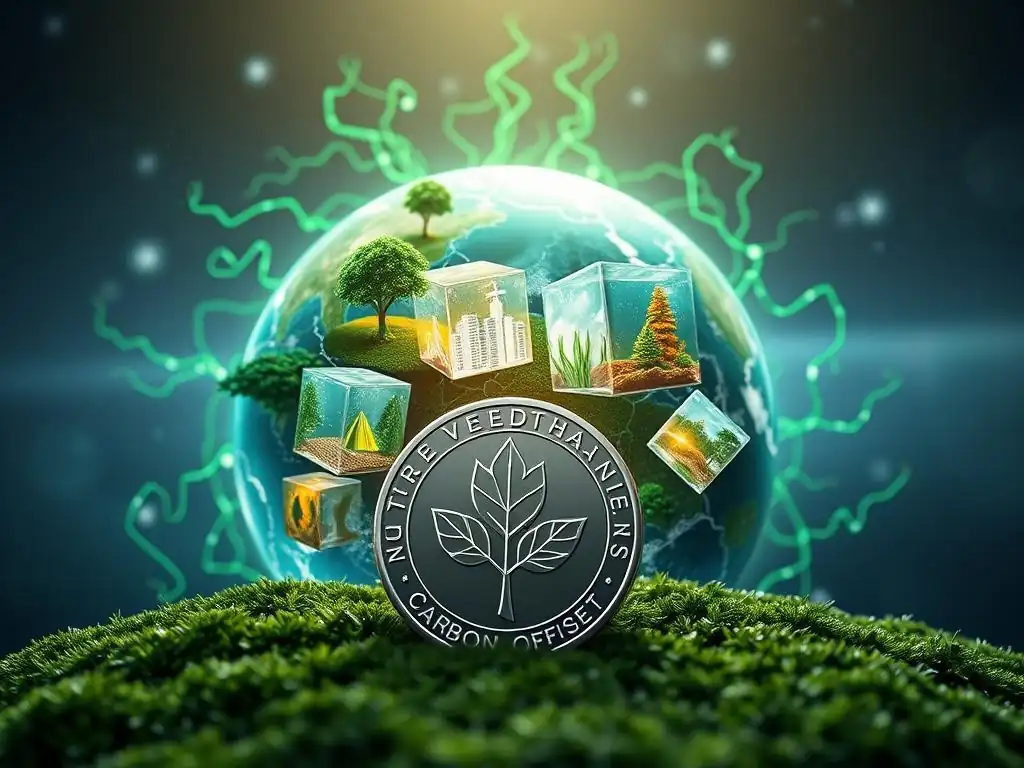
Welcome to Blockchain Trends, your guide to the ever-evolving world of decentralized innovation.
Delve into how blockchain is reshaping industries far beyond just cryptocurrencies. In this article, we explore a fascinating application within the environmental sector: blockchain carbon credits offsetting. Can this technology revolutionize how we tackle climate change? Discover the potential – and the challenges – of using blockchain to create a more transparent and effective carbon market and what this means for the future of sustainability. Intrigued? Keep reading to unlock the possibilities!
Exploring the Potential of Blockchain-Based Carbon Credits and Offsetting
- Introduction: The Intersection of Blockchain and Carbon Markets
- Blockchain Carbon Credits: A Deep Dive
- Benefits of Blockchain in Carbon Offsetting
- Challenges and Considerations for Blockchain Carbon Offsetting
- Real-World Applications and Case Studies
- The Future of Blockchain in Carbon Markets
- Conclusion: Harnessing Blockchain for a Sustainable Future
-
Frequently Asked Questions
- How can blockchain technology improve the carbon credit market?
- What are the key benefits of using blockchain for carbon credits offsetting?
- What are some of the potential challenges in implementing blockchain-based carbon credit systems?
- Can blockchain help verify the authenticity of carbon offsets?
- How might DeFi (Decentralized Finance) integrate with blockchain carbon credits offsetting?
- Final Reflection: Decentralizing a Greener Future
- Unlock Your Carbon Offset Journey
Introduction: The Intersection of Blockchain and Carbon Markets
Understanding the Growing Importance of Carbon Offsetting
Carbon offsetting has become a crucial element in global strategies aimed at reducing greenhouse gas emissions. With increasing climate change awareness, numerous governments and corporations are now adopting measures to compensate for their carbon footprints. This shift toward sustainability has highlighted the importance of carbon offsetting as a tool to achieve net-zero emissions targets.
As emissions standards tighten and consumer demand for environmental responsibility grows, carbon offset markets are expanding rapidly. Companies are investing in renewable energy projects, reforestation, and sustainable practices to reduce their overall impact on the environment. This trend signifies a critical move towards integrating environmental accountability within corporate strategies, making carbon offsetting an essential pillar in modern environmental policy.
The Challenges of Traditional Carbon Credit Systems
Traditional carbon credit systems often suffer from issues such as opacity and inefficiencies. Manual record-keeping and centralized databases can lead to delays, inaccuracies, and even fraudulent activities. The lack of robust monitoring and auditing processes has raised concerns about the reliability of carbon credits.
Moreover, traditional systems struggle with verifying the actual environmental impact of offset projects. Without clear, tamper-proof mechanisms in place, stakeholders often find it challenging to trust the legitimacy of transactions in these systems. These challenges underscore the need for innovative solutions that ensure consistency, traceability, and integrity in carbon credit management.
How Blockchain Technology Can Revolutionize Carbon Offsetting
Blockchain technology introduces a new paradigm by offering secure, transparent, and immutable transaction records. This capability is transforming the landscape of carbon offsetting by providing real-time tracking and verification of carbon credit transactions. Blockchain systems allow all stakeholders to observe the entire lifecycle of a credit, from issuance to retirement.
Integrating blockchain into carbon markets can drastically reduce inefficiencies by eliminating intermediaries and streamlining processes. The decentralized nature of blockchain ensures that every transaction is recorded on a public ledger, offering higher levels of accountability and reducing the risk of double counting. With blockchain carbon credits offsetting, businesses and individuals can participate more confidently, knowing that their contributions are verifiable and secure.
Blockchain Carbon Credits: A Deep Dive
What are Blockchain-Based Carbon Credits?
Blockchain-based carbon credits represent digital tokens that certify the reduction or removal of carbon dioxide from the atmosphere. These tokens leverage blockchain’s inherent strengths—transparency, immutability, and decentralization—to assure users of their authenticity. Each token tracks the origin, lifecycle, and retirement of carbon credits, ensuring an uninterrupted audit trail.
By digitizing carbon credits, blockchain platforms enable seamless and instantaneous validation of each credit. This digital transformation simplifies the carbon marketplace while providing a scalable solution for monitoring global carbon offset efforts. The tokenization process facilitates the integration of traditional carbon credits into new, technology-driven financial ecosystems that are more secure and efficient.
Tokenizing Carbon Credits: Benefits and Mechanisms
Tokenization involves converting tangible carbon credits into digital tokens that can be traded, tracked, and verified on a blockchain network. The key benefit here is the significant reduction in administrative overhead and the corresponding increase in market liquidity. By transforming physical credits into digital assets, platforms can offer real-time pricing and transparent transaction histories.
Additionally, tokenization allows for fractional ownership, enabling even small-scale participation in global carbon offsetting markets. This democratizes access both for individual investors and small enterprises. Advanced protocols are in place to automatically record every transaction, ensuring that each credited carbon reduction is uniquely verifiable. Such mechanisms provide all stakeholders with confidence in the environmental impact and financial integrity of their investments.
Ensuring Transparency and Traceability with Blockchain
The transparent nature of blockchain ensures that every transaction is recorded in a public ledger, which can be audited by any interested party. This level of traceability drastically reduces the chances of fraud and ensures that carbon credits are neither double-counted nor misrepresented. Every transaction, once recorded, is immutable, providing an unparalleled level of trust within the market.
Furthermore, decentralized ledger technology eliminates reliance on centralized authorities that can be prone to errors or manipulations. Blockchain systems establish a standardized process for verifying carbon credits, ensuring that the data is consistent and available for real-time analysis. This robust framework not only promotes accountability but also supports regulatory compliance and a higher overall standard of environmental reporting.
Benefits of Blockchain in Carbon Offsetting
Enhanced Transparency and Accountability in Carbon Markets
Blockchain’s public ledger offers unprecedented transparency, allowing stakeholders to trace each carbon credit from issuance to retirement. This transparency is crucial for building trust, as it provides clear evidence of the environmental benefits realized through offsetting efforts. Enhanced traceability ensures that companies and investors can confidently claim and verify their contributions to sustainability.
Moreover, the integration of blockchain carbon credits offsetting into traditional systems introduces a uniform source of truth. By automating verification processes and reducing reliance on intermediaries, the blockchain ensures that every action is accountable. This analytical approach not only minimizes errors but also reinforces the integrity of carbon markets globally.
Increased Efficiency and Reduced Transaction Costs
Blockchain technology streamlines the entire lifecycle of carbon credits by automating transactions and reducing manual interventions. Enhanced efficiency translates into faster settlements, lower administrative burdens, and overall cost savings. By eliminating middlemen, transactions become more direct and cost-effective, fostering a more vibrant market ecosystem.
Additionally, the reduction in transactional friction makes international trade in carbon credits more feasible. Smart contracts, powered by blockchain, can autonomously execute agreements when predefined conditions are met. This capability not only speeds up the process but also ensures that every transaction abides by strict compliance standards, providing further assurance in blockchain carbon credits offsetting initiatives.
Improved Verification and Validation Processes for Carbon Credits
Blockchain’s immutable ledger provides robust verification and validation tools that can significantly reduce fraudulent activities. Each carbon credit is assigned a unique identifier that residents on an unalterable ledger, ensuring every credit is genuine and valid. Advanced cryptographic techniques secure these records against tampering and unauthorized changes.
Regulators and environmental watchdogs now have access to real-time data, making it easier to monitor compliance and validate the legitimacy of offset projects. This enhanced verification process fosters a higher degree of confidence among participants, ensuring that investments in carbon credits contribute directly to meaningful, verifiable environmental improvements.
Democratizing Access to Carbon Offsetting for Individuals and Businesses
By leveraging blockchain, carbon offset markets are becoming more accessible to a broader audience. Small businesses and individual investors now have the opportunity to participate in verified, impactful environmental projects without the traditionally high entry barriers. This democratization is key to attracting diverse funding sources and increasing overall market participation.
Blockchain platforms also facilitate micro-transactions, enabling fractional ownership of carbon credits. This means that even modest contributions can be aggregated to drive significant environmental benefits. Such inclusivity bolsters the market’s sustainability, making it resilient and adaptive to the evolving needs of a global clientele invested in combating climate change.
Challenges and Considerations for Blockchain Carbon Offsetting

Regulatory Uncertainty and Standardization
Despite the promising potential of blockchain-based carbon credits offsetting, regulatory environments around the world remain fragmented. Different jurisdictions have varying guidelines for digital assets, making global standardization a significant hurdle. Without a unified regulatory approach, it becomes challenging to ensure uniform compliance across borders.
Furthermore, policy frameworks have yet to fully address the integration of blockchain into existing carbon markets. This uncertainty can discourage innovation and slow down the adoption of blockchain solutions. Industry stakeholders must work closely with regulators to craft policies that foster technological growth while safeguarding environmental and financial interests.
Data Security and Integrity Concerns
While blockchain is celebrated for its immutable ledger, it is not completely impervious to security risks. Potential vulnerabilities in smart contract code or mismanagement of private keys can expose systems to cyber threats. Securing sensitive data becomes even more critical in a field where environmental credits and financial transactions intersect.
Moreover, ensuring the integrity of off-chain data that feeds into the blockchain remains a persistent challenge. Reliable oracles and verification services must be established to cross-check and validate off-chain events accurately. As blockchain carbon credits offsetting evolves, continuous improvements in cybersecurity measures will be essential to maintain stakeholder confidence.
Scalability and Interoperability of Blockchain Solutions
For blockchain carbon credits offsetting to achieve mainstream adoption, the underlying technology must address scalability concerns. Many current blockchain networks face issues with congestion, which can lead to delays during peak usage periods. These delays can undermine the efficiency gains promised by the technology.
Interoperability between various blockchain platforms is another critical factor. Without standardized protocols, cross-chain transactions could become cumbersome and risk-prone, limiting the fluidity of global carbon markets. Developers must innovate scalable, interoperable solutions that harmonize different systems, ensuring a seamless experience for all users.
Addressing Potential for Greenwashing and Double Counting
One of the significant risks in the carbon credit market is the potential for greenwashing—where organizations overstate their environmental contributions. Blockchain-based systems aim to mitigate this by providing verifiable records, yet the complexity of measuring environmental outcomes can still result in inaccuracies. Clear, enforceable standards are necessary to combat this issue.
Double counting is another concern that can undermine the credibility of carbon markets. Blockchain technology can help here, but only if each transaction and carbon credit is meticulously tracked and validated. Stakeholders must adopt rigorous auditing processes to ensure that each offset is unique, thereby maintaining the integrity and trustworthiness of the system.
Real-World Applications and Case Studies
Examples of Blockchain Carbon Credit Platforms
Several innovative platforms have already begun leveraging blockchain for carbon credits offsetting. These platforms are designed to offer transparency, efficiency, and security. They employ blockchain’s decentralized ledger to ensure each carbon credit is uniquely recorded and immutable, promising a reliable alternative to traditional systems.
For instance, blockchain-based platforms now offer end-to-end visibility of the carbon credit lifecycle—from generation to redemption. This comprehensive approach not only simplifies regulatory compliance but also improves overall market confidence. These platforms exemplify how blockchain can bridge the gap between environmental goals and financial incentives.
Case Study 1: Toucan Protocol Implementing Blockchain for Carbon Offset Tracking
Toucan Protocol has emerged as a pioneer in integrating blockchain into carbon offset tracking. This platform offers a robust framework for the tokenization and trading of carbon credits, ensuring that every token represents a real-world reduction in carbon emissions. By leveraging blockchain, Toucan Protocol creates a verifiable and secure record that instills trust among market participants.
The protocol’s implementation has demonstrated a tangible reduction in administrative overhead and transaction costs. For example, companies engaging with Toucan Protocol have reported more efficient tracking of their environmental impacts. This case study underscores the significant role that blockchain can play in making carbon markets more accessible and reliable, ultimately contributing to more effective climate action.
Case Study 2: Moss.Earth Using Blockchain for Carbon Credit Issuance
Moss.Earth is another notable example of blockchain carbon credits offsetting in action. Known for its innovative approach to environmental sustainability, Moss.Earth uses blockchain to manage the issuance and retirement of carbon credits for projects across Brazil and beyond. By securing data on an immutable ledger, the platform ensures that every issued credit reflects a genuine environmental benefit.
The project has successfully attracted global attention by providing a transparent system that verifiably tracks the impact of reforestation and conservation efforts. Moss.Earth’s model not only reinforces trust among investors but also illustrates the scalability and precision that blockchain solutions bring to global carbon markets. Its success is a clear indicator of the future potential for widespread adoption of blockchain in effectively managing carbon credits.
The Future of Blockchain in Carbon Markets
Potential for Integration with IoT and Smart Contracts
The convergence of blockchain with the Internet of Things (IoT) and smart contracts is set to revolutionize the monitoring and execution of carbon offset projects. IoT devices can provide real-time data from environmental sensors, which, when integrated with blockchain, creates a dynamic system for monitoring carbon reduction efforts. This innovative blend allows for automated responses through smart contracts, thereby increasing efficiency and responsiveness.
Smart contracts can autonomously verify that environmental criteria are met before releasing funds or issuing carbon credits. This automated mechanism ensures compliance and drastically reduces the potential for human error. As these technologies mature together, their integration is expected to form the backbone of future blockchain carbon credits offsetting systems, providing a seamless and fully automated operational model for global carbon markets.
The Role of Blockchain in Achieving Global Climate Goals
Blockchain technology holds significant promise in aligning economic incentives with global climate objectives. By bringing transparency and accountability to carbon markets, blockchain platforms empower both public and private sectors to track progress toward emission reduction targets. Clear, immutable records of environmental transactions provide stakeholders with the reliable data needed to drive policy and investment decisions.
Moreover, blockchain’s ability to scale across global networks positions it as a key tool in achieving international climate goals. Enhanced monitoring and verification will not only boost investor confidence but also ensure that climate action initiatives are producing measurable results. With its data-driven approach, blockchain has the potential to transform how the world quantifies and combats climate change while ensuring that every decarbonization effort is documented and celebrated.
Exploring Integration with Decentralized Finance (DeFi) for Carbon Credit Trading
The integration of blockchain carbon credits offsetting with decentralized finance (DeFi) platforms presents an exciting frontier for innovation. DeFi protocols can introduce liquidity and dynamic financial instruments to the carbon credit market, providing new avenues for risk management and investment. This fusion of technologies allows carbon credits to be traded with greater speed, transparency, and security.
Beyond mere speculation, integrating DeFi with carbon credits can catalyze a sustainable financial ecosystem. Investors can earn returns by participating in eco-friendly projects, while businesses have easier access to funding for sustainability initiatives. This marriage between blockchain and DeFi highlights a future where traditional finance supports environmental goals, creating a win-win scenario for both the economy and the planet.
Conclusion: Harnessing Blockchain for a Sustainable Future
The Transformative Power of Blockchain in Carbon Markets
Blockchain technology stands at the forefront of a revolution in carbon markets, offering innovative solutions to long-standing issues of transparency and efficiency. Its adaptability has facilitated the creation of new platforms that not only track carbon credits but also ensure their integrity throughout their lifecycle. The integration of blockchain into environmental initiatives demonstrates a decisive shift towards embedded sustainability in financial mechanisms.
As we witness the transformative power of blockchain, it becomes clear that technology is essential for modernizing carbon offsetting practices. Through secure ledger systems and automated verification processes, blockchain redefines how environmental impact is measured and reported, making a profound contribution towards global sustainable development.
Key Takeaways and Future Outlook for Blockchain Carbon Credits Offsetting
Blockchain-based carbon credits offsetting offers significant advantages in terms of security, transparency, and efficiency. This evolving technology is set to bridge critical gaps in traditional carbon markets, allowing for more reliable and accessible environmental solutions. Stakeholders across industries are increasingly recognizing the potential of blockchain to transform how carbon credits are managed and traded.
Looking forward, continuous innovation and stronger regulatory frameworks will further cement blockchain's role in achieving global climate targets. As integration with IoT, smart contracts, and DeFi deepens, the future of carbon credits is poised to become more interactive, resilient, and environmentally impactful. The blockchain revolution in carbon markets is not just an emerging trend—it is a critical pathway towards a sustainable and verifiable future for global climate initiatives.
Frequently Asked Questions
How can blockchain technology improve the carbon credit market?
Blockchain enhances transparency and traceability in the carbon offsetting process, ensuring that carbon credits are genuine and not double-counted. This improves trust and market integrity.
What are the key benefits of using blockchain for carbon credits offsetting?
The main benefits include increased transparency, reduced risk of fraud, and improved efficiency in the carbon credit trading process, ultimately leading to greater environmental impact.
What are some of the potential challenges in implementing blockchain-based carbon credit systems?
Challenges include the lack of standardization across different blockchain platforms, regulatory uncertainty, and the need for interoperability with existing carbon offsetting schemes.
Can blockchain help verify the authenticity of carbon offsets?
Yes, blockchain's immutable ledger can track the entire lifecycle of a carbon offset, from its generation to its retirement, providing verifiable proof of its environmental impact and authenticity.
How might DeFi (Decentralized Finance) integrate with blockchain carbon credits offsetting?
DeFi platforms can create innovative financial instruments linked to carbon credits, such as lending protocols and tokenized carbon offsets, fostering greater liquidity and investment in carbon offsetting projects.
Final Reflection: Decentralizing a Greener Future
The exploration of blockchain-based carbon credits and offsetting reveals a potent intersection of technology and environmental responsibility, and its relevance is undeniably heightened in our current climate crisis. The potential for increased transparency, efficiency, and accessibility in carbon markets offered by blockchain is no longer a futuristic concept, but a pressing necessity. The challenges of climate change demand innovative solutions, and blockchain presents a compelling pathway towards a more equitable and effective global carbon offsetting system.
This technology's capacity to reshape the carbon market extends beyond mere efficiency; it promises a fundamental shift in how we perceive and value environmental stewardship. The ability to trace and verify carbon credits with unprecedented accuracy fosters trust and accountability, empowering individuals and organizations to actively participate in climate action. We are the first generation to feel the effect of climate change and the last generation who can do something about it.
- Barack Obama. This quote underscores the urgency and the responsibility we bear to leverage every tool at our disposal, including the transformative potential of blockchain.
As we conclude this exploration, I invite you to consider your own role in shaping a sustainable future. How can you leverage the principles of transparency and accountability, inherent in blockchain, to drive positive change in your own life and community? The future of carbon offsetting lies in our collective willingness to embrace innovation and demand integrity. Let us all strive to be active participants in building a greener, more equitable world, empowered by the transformative potential of blockchain technology.
Unlock Your Carbon Offset Journey
Thank you for exploring the innovative world of blockchain-based carbon credits! You now have a better understanding of how this technology can promote environmental sustainability. Are you ready to take action?
Here are some steps you can consider:
- Research reputable platforms that offer verifiable blockchain-based carbon credits. Learn about the projects they support and the positive impact you can help achieve.
- Share this article with your network to encourage discussions about the future of carbon offsetting through blockchain technology. Let’s raise awareness together!
- Attend blockchain-related events to connect with professionals involved in the carbon credit market.
What is one small change you can make today—either in your personal life or your business—to reduce your carbon footprint and possibly benefit from blockchain-based offsetting? Share your ideas in the comments below!
Leave a Reply