
The Role of Yield Farming in DeFi Governance: Empowering Token Holders


Welcome to Blockchain Trends, your compass in the evolving world of decentralized innovation! Are you ready to delve beyond the buzzwords and uncover the true power of blockchain?
In this insightful piece, we unravel the intricate relationship between DeFi yield farming and governance. Discover how the strategies used to earn rewards are fundamentally reshaping the way decentralized platforms are controlled, and what this means for the future of user empowerment. Intrigued? Let's explore the future of finance, together.
- The Role of Yield Farming in DeFi Governance: Empowering Token Holders
- Yield Farming: A New Paradigm for DeFi Governance
- Empowering Token Holders Through Yield Farming in DeFi
- Benefits of Integrating Yield Farming into DeFi Governance
- Case Studies: Successful Implementations of Yield Farming Governance
- Potential Risks and Challenges of Yield Farming Governance
- The Future of DeFi Governance: The Continued Evolution of Yield Farming Models
- Optimizing Your DeFi Governance Strategy with Yield Farming
-
Frequently Asked Questions
- What is the fundamental connection between DeFi yield farming and governance?
- How does yield farming empower token holders in DeFi governance?
- What are some potential risks associated with using yield farming to influence DeFi governance?
- What role does regulation play in the intersection of DeFi yield farming and governance?
- How might the future of DeFi governance evolve with continued innovation in yield farming?
- Final Reflection: Cultivating Decentralized Futures
- Supercharge Your DeFi Influence!
The Role of Yield Farming in DeFi Governance: Empowering Token Holders
What is DeFi Governance? A Decentralized Approach
DeFi governance refers to the system by which decentralized finance protocols make decisions about upgrades, parameter changes, fee structures, and other critical aspects of their operation. Unlike traditional financial systems where decisions are made by centralized entities like banks or corporations, DeFi protocols aim for decentralized control. This is typically achieved through a governance token system, where holders of the protocol's native token can propose and vote on changes. The goal is to distribute power among the network's participants, fostering resilience and preventing single points of failure or censorship.
This decentralized decision-making process is fundamental to the ethos of DeFi. It seeks to create financial applications that are open, transparent, and community-owned. Governance token holders essentially act as shareholders, collectively guiding the future development and direction of the protocol. Proposals range from minor technical adjustments, such as changing interest rate models on a lending platform, to significant strategic shifts, like integrating new asset types or altering the tokenomics. The effectiveness of this system hinges on active and informed participation from a broad base of token holders.
The Significance of Token Holder Participation in DeFi
Active participation from token holders is paramount for the health and legitimacy of DeFi protocols. When a significant portion of the token supply is involved in governance, it ensures that decisions reflect the collective interests of the community rather than being dominated by a few large holders or insiders. High participation rates lead to more robust decision-making processes, as diverse perspectives are brought to bear on complex issues. This distributed engagement is a core tenet of decentralization, preventing potential collusion or malicious actions that could harm the protocol or its users.
Moreover, active token holder participation builds trust and legitimacy within the DeFi ecosystem. Users and developers are more likely to build upon or interact with protocols where governance is transparent, fair, and responsive to community needs. Low participation, conversely, can lead to voter apathy, allowing small groups to disproportionately influence outcomes or even pass proposals that are detrimental to the wider community. Ensuring broad and meaningful engagement is therefore a critical challenge for all decentralized protocols, directly impacting their long-term viability and security.
Challenges in Traditional DeFi Governance Models
Traditional DeFi governance models, often relying solely on token-weighted voting, face several significant challenges that can hinder effective decentralization. One major issue is the concentration of voting power. A small number of large token holders, sometimes referred to as 'whales,' can control a disproportionate amount of voting power, potentially dominating governance decisions and overriding the will of smaller participants. This can lead to concerns about plutocracy, where influence is tied directly to wealth, undermining the principle of decentralized control and potentially leading to outcomes that favor large holders over the broader community.
Another challenge is voter apathy and low participation rates among smaller token holders. The process of participating in governance, which often involves understanding complex technical proposals and paying gas fees to vote, can be cumbersome and costly for individuals holding smaller amounts of tokens.
This inertia means that many token holders, particularly retail users, may not engage in governance at all, further concentrating power in the hands of those willing and able to participate. This dynamic creates a feedback loop where low participation exacerbates the influence of large holders, making it harder for smaller participants to feel their vote matters.
Yield Farming: A New Paradigm for DeFi Governance
How Yield Farming Works: Earning Rewards for Liquidity Provision
Yield farming is a process in decentralized finance that allows users to earn rewards by providing liquidity to DeFi protocols. Essentially, users deposit crypto assets into liquidity pools or lending protocols, and in return, they receive a yield, often paid out in the protocol's native governance token or other cryptocurrencies.
These deposited assets are then used by the protocol for various functions, such as facilitating swaps on decentralized exchanges (DEXs) or providing capital for lending markets. The yield earned can come from transaction fees generated by the protocol, interest paid by borrowers, or emissions of newly minted governance tokens specifically designed to incentivize liquidity.
The core mechanism involves users locking up their funds, thereby contributing to the protocol's operational capacity. For example, on a DEX like Uniswap or SushiSwap, users provide pairs of tokens (e.g., ETH and DAI) to a liquidity pool, enabling others to trade between those assets. In return, liquidity providers (LPs) earn a share of the trading fees. Many protocols enhance this by distributing their governance tokens to LPs, creating a powerful incentive structure. This token distribution model is key to connecting yield farming with governance, as it puts governance tokens directly into the hands of active protocol users.
The Synergistic Relationship Between Yield Farming and Governance
The relationship between yield farming and governance is deeply synergistic, particularly in the context of DeFi yield farming governance. Yield farming acts as a powerful mechanism for distributing governance tokens widely among the protocol's active user base, specifically those providing essential services like liquidity. By earning governance tokens as a reward for yield farming activities, users become token holders and thus gain the right to participate in the protocol's governance. This process organically aligns the interests of liquidity providers with the long-term success and decentralized control of the protocol they support.
This synergy addresses some of the challenges faced by traditional governance models. Instead of requiring users to purchase governance tokens solely for voting, yield farming allows them to earn these tokens while simultaneously contributing valuable resources (liquidity) to the protocol. This not only broadens the distribution of governance power but also ensures that the individuals with voting rights are those actively using and supporting the protocol's core functions. It transforms passive token holders into active participants who have a tangible stake in the protocol's future performance and governance outcomes.
DeFi Yield Farming Governance: A Definition
DeFi yield farming governance is a model where participation in yield farming activities directly grants or enhances a user's ability to participate in and influence the governance of a decentralized finance protocol. This is typically achieved by protocols distributing their native governance tokens as rewards to users who provide liquidity or engage in other yield-generating activities on the platform. These earned tokens then confer voting rights, allowing the yield farmers to propose, vote on, and shape the future development and parameters of the protocol.
In essence, DeFi yield farming governance creates a direct link between contributing value to the protocol's operations (through yield farming) and gaining influence over its direction. It moves beyond simple token-weighted voting by using yield farming as the primary, or a significant, channel for governance token distribution. This approach aims to cultivate a governance structure where the most active and invested users are also the most empowered to make decisions, fostering a more engaged, decentralized, and meritocratic system compared to models relying solely on open market token purchases for governance power.
Empowering Token Holders Through Yield Farming in DeFi
Increased Participation in Governance Decisions
Yield farming significantly boosts participation in DeFi governance by distributing governance tokens directly to active users. When users earn tokens simply by providing liquidity or staking assets, they automatically become stakeholders with voting rights. This lowers the barrier to entry for governance participation compared to models where users must actively purchase tokens specifically for voting purposes. For example, protocols like Aave and Compound initially distributed tokens via liquidity mining, resulting in governance tokens being held by tens of thousands of unique addresses, many of whom were active users of the lending platform, thereby broadening the potential voter base.
This broad distribution mechanism encourages more diverse participation beyond just early investors or large funds. Retail users who engage in yield farming, even with smaller amounts of capital, accumulate governance tokens over time. This cumulative earning empowers a wider segment of the community to participate in proposal discussions and voting, leading to a more representative governance process. The visibility of token earnings also serves as a constant reminder of their potential governance power, motivating users to learn about and engage with the voting process.
Enhanced Voting Power for Active Yield Farmers
Protocols employing DeFi yield farming governance often structure their token distribution and governance mechanisms to specifically enhance the voting power of active yield farmers. Beyond just distributing tokens, some systems might implement mechanisms that further incentivize long-term staking of earned governance tokens, sometimes offering boosted voting power or additional rewards for doing so. This encourages farmers not just to dump their earned tokens but to hold and stake them for governance, aligning their short-term yield-seeking behavior with long-term protocol health.
Furthermore, the continuous nature of yield farming emissions means that active farmers are constantly accumulating more governance tokens, naturally increasing their voting weight over time relative to inactive holders. This mechanism rewards consistent contributions to the protocol's liquidity and usage with greater influence in its decision-making. It directly links ongoing value creation (providing liquidity) with increasing governance power, ensuring that the individuals most crucial to the protocol's operational success are also the most influential in its governance. This structure aims to combat voter apathy by making the link between participation and influence clear and rewarding.
Incentivizing Long-Term Commitment to DeFi Protocols
One of the key benefits of integrating yield farming into DeFi governance is its ability to incentivize long-term commitment from users. By distributing governance tokens as yield rewards, protocols encourage users to maintain their liquidity positions for extended periods to maximize token accumulation. Holding and staking these earned governance tokens for voting further solidifies this commitment, as users gain a direct stake in the protocol's stability and growth. This contrasts with short-term yield farming strategies where participants might move funds frequently between protocols based solely on the highest immediate yield, often referred to as "farming and dumping."
Protocols employing effective DeFi yield farming governance often design their tokenomics and staking mechanisms to reward long-term token holders and stakers. For instance, some protocols implement vesting periods for earned tokens or offer higher yields/voting power for longer staking durations. This encourages users to become sticky liquidity providers and engaged governors, rather than just transient farmers. This long-term alignment helps build a stable user base and a dedicated community invested in the protocol's sustained success, which is crucial for decentralized governance to function effectively over time.
Benefits of Integrating Yield Farming into DeFi Governance
Improved Security and Decentralization
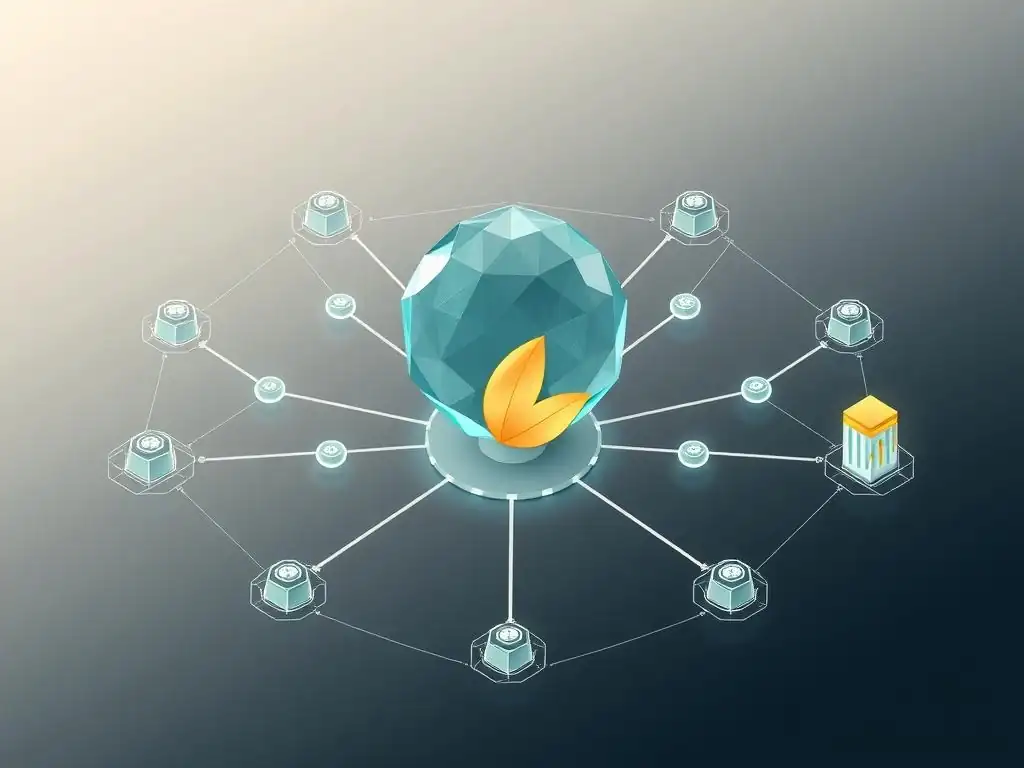
Integrating yield farming into DeFi yield farming governance models significantly enhances both security and decentralization. By distributing governance tokens widely among active users through yield farming rewards, protocols reduce the concentration of voting power in the hands of a few large entities.
This broader distribution makes the protocol less susceptible to malicious attacks, such as a 51% attack on governance where a single party acquires enough voting power to unilaterally pass harmful proposals. A more distributed set of token holders means attackers would need to acquire a much larger amount of tokens from diverse sources, increasing the cost and difficulty of such an attack.
Furthermore, decentralization is inherently improved as more individuals and smaller entities gain a voice in governance. When governance tokens are earned through participation rather than solely purchased, it allows users of varying financial capacities to accumulate influence based on their contribution to the protocol's functionality.
This leads to a more resilient and censorship-resistant system, as control is not vested in a single point but spread across a multitude of engaged participants. For example, protocols like yearn.finance have benefited from a highly engaged community of strategists and users, many of whom earned YFI tokens through early participation, contributing to a robust and decentralized governance process from the ground up.
More Inclusive and Representative Governance
Yield farming fosters a more inclusive and representative governance model by enabling a wider range of users to acquire governance tokens and participate in decision-making. Traditional models often favor those with significant capital to purchase tokens, potentially excluding smaller users or those primarily interested in using the protocol rather than speculating on its token. DeFi yield farming governance allows users who are actively providing liquidity, borrowing, lending, or performing other core functions to earn their way into governance. This ensures that the voices of those who are most familiar with the protocol's practical usage and needs are heard.
This inclusivity leads to governance outcomes that are more representative of the entire user base, not just the largest investors. Decisions on parameter changes, fee structures, or new feature implementations are more likely to reflect the needs and preferences of the actual users who interact with the protocol daily. For instance, adjustments to interest rates or swap fees might be more appropriately calibrated when influenced by the collective input of both large liquidity providers and smaller borrowers/traders who earned governance tokens through their activity. This leads to a more user-centric and ultimately more successful protocol ecosystem.
Fostering a More Engaged and Active Community
A direct consequence of empowering users through DeFi yield farming governance is the cultivation of a more engaged and active community. When users earn governance tokens for their participation, they gain a direct financial and influential stake in the protocol's success. This motivates them to stay informed about governance proposals, participate in discussions on forums or Discord, and cast their votes. They are no longer just passive users but become active contributors to the protocol's evolution.
This heightened engagement extends beyond just voting. An active, token-holding community is more likely to contribute in other ways, such as identifying bugs, suggesting improvements, creating educational content, and promoting the protocol. This organic community support is invaluable for decentralized projects, providing a decentralized marketing force, a distributed support system, and a continuous source of innovation. Protocols like Synthetix, which utilized inflationary rewards (akin to yield farming) to distribute SNX tokens and incentivize staking, have built notoriously active and engaged communities deeply involved in protocol governance and development.
Case Studies: Successful Implementations of Yield Farming Governance
Compound's Governance Model and COMP Distribution
Compound is often cited as a pioneering example of integrating yield farming with governance, specifically through its COMP token distribution. In June 2020, Compound began distributing COMP tokens to users who were borrowing or lending assets on the platform. This was a form of liquidity mining or yield farming focused on lending/borrowing activity rather than just DEX liquidity. The distribution was proportional to the interest accrued by users (both borrowers and lenders), effectively rewarding active protocol usage with governance tokens.
This distribution method rapidly decentralized Compound's governance. Within weeks, the majority of COMP tokens were in the hands of protocol users. This enabled a vibrant governance process where users could propose and vote on significant changes, such as adding new assets (like UNI or AAVE) to the protocol's supported list or adjusting the collateral factors for existing assets. While challenges arose, such as users optimizing for COMP yield over efficient borrowing/lending, the model successfully kickstarted decentralized control, demonstrating how yield farming could effectively distribute governance power beyond initial investors.
MakerDAO's Stability Fee Adjustments Through Governance
While not a pure yield farming protocol in the same vein as liquidity mining for DEXs, MakerDAO's governance model provides an early example of how user-driven participation influences critical protocol parameters. MakerDAO's governance token, MKR, is used to vote on key decisions, most notably the Stability Fee for borrowing DAI against various collateral types. MKR holders are incentivized to participate because poor governance decisions could devalue the DAI stablecoin or the protocol, impacting their own MKR holdings.
Although MKR isn't earned through automated yield farming in the same way as COMP or UNI, its distribution among those with a vested interest in the protocol's stability (often early users, strategic partners, and investors) and the direct link between holding MKR and influencing the Stability Fee illustrates a fundamental principle relevant to DeFi yield farming governance: linking economic stake to governance power. The ongoing process of adjusting Stability Fees and Debt Ceilings through MKR holder votes demonstrates a functional, albeit manually driven, system of decentralized parameter control, where token holders directly impact the protocol's financial mechanics.
Lessons Learned from Existing Implementations
Existing DeFi yield farming governance implementations offer valuable lessons. One key lesson is the power of direct distribution in bootstrapping decentralized control. Protocols like Compound and Uniswap (with its UNI airdrop/distribution) showed how quickly governance power could be spread among a broad user base. However, they also highlighted potential pitfalls, such as the risk of governance tokens being immediately sold by short-term farmers, leading to price volatility and a less engaged voting base. This points to the need for mechanisms that incentivize holding and staking earned tokens.
Another lesson is the complexity of designing fair and effective distribution mechanisms. Simply distributing tokens based on activity can lead to unintended consequences, like "governance farming" where users optimize their behavior solely to earn tokens, sometimes at the expense of genuine protocol usage. Future DeFi yield farming governance models need to consider more sophisticated distribution rules that reward long-term value alignment and active governance participation, perhaps through vesting periods, quadratic voting, or reputation systems, to ensure earned governance power translates into responsible stewardship.
Potential Risks and Challenges of Yield Farming Governance
Governance Token Inflation and Dilution
A significant risk associated with DeFi yield farming governance models that rely heavily on token emissions for rewards is governance token inflation. To incentivize participation, protocols often mint new governance tokens and distribute them to yield farmers. While this is effective for distributing tokens and bootstrapping liquidity, continuous high emissions can lead to significant inflation of the total token supply. This inflation can dilute the value of existing tokens held by non-farming participants or long-term holders, potentially offsetting the benefits of earning yield for some users.
Furthermore, excessive inflation can put downward pressure on the token's market price, especially if a large portion of earned tokens are sold immediately by farmers seeking to realize profits. This "sell pressure" can undermine the economic stability of the governance token, which is crucial for aligning incentives within the governance system. Protocols must carefully balance the need to incentivize liquidity and distribute tokens with the long-term economic health of the token and the prevention of excessive dilution for existing token holders.
The Risk of Sybil Attacks and Malicious Governance
While DeFi yield farming governance aims to decentralize power, it is not immune to attacks. One potential risk is a Sybil attack on governance, where a single entity creates numerous small addresses to accumulate a disproportionate amount of governance tokens through farming. If the cost of acquiring sufficient tokens through farming is low enough, an attacker could potentially gain enough voting power to pass malicious proposals that benefit themselves at the expense of the protocol, such as draining treasury funds or altering critical contract parameters.
This risk is particularly relevant in early-stage protocols with a small total value locked (TVL) and high token emissions. An attacker could provide a significant portion of the liquidity, earn a large share of the governance tokens, and then use that concentrated power for harmful purposes. While a full 51% governance attack is costly for large protocols, even smaller concentrations of power can disrupt decision-making or push through unfavorable changes. Designing yield farming distribution to favor long-term, diverse participation and implementing safeguards like time locks on proposal execution are crucial for mitigating this risk in DeFi yield farming governance.
Mitigating Risks Through Smart Contract Audits and Community Oversight
Mitigating the risks inherent in DeFi yield farming governance requires a multi-faceted approach, including rigorous technical measures and robust community engagement. Thorough smart contract audits are paramount to ensure the governance modules, token distribution mechanisms, and yield farming contracts are secure and function as intended. Independent audits by reputable firms can identify vulnerabilities that could be exploited by malicious actors to gain undue influence or harm the protocol. Protocols should commit to regular audits, especially before deploying significant upgrades or changes to the governance system.
Beyond technical audits, active and vigilant community oversight is essential. An engaged community of token holders, developers, and users can act as a decentralized monitoring system. Through forums, social media, and governance dashboards, the community can scrutinize proposed changes, identify suspicious activity, and raise alarms about potential attacks or flaws in the governance process. Fostering a culture of transparency and open discussion around governance is crucial. Mechanisms like proposal discussion periods, transparent voting records, and accessible information about token distribution can empower the community to act as a check on potential abuses within the DeFi yield farming governance framework.
The Future of DeFi Governance: The Continued Evolution of Yield Farming Models
Emerging Trends in Yield Farming Governance
The landscape of DeFi yield farming governance is continuously evolving, with new trends emerging to address existing challenges and improve effectiveness. One significant trend is the move towards more complex and nuanced token distribution models. Simply rewarding raw liquidity provision is being supplemented or replaced by mechanisms that reward specific behaviors deemed beneficial for the protocol's long-term health, such as providing liquidity for less common pairs, staking tokens for extended periods, or actively participating in governance discussions and voting.
Another emerging trend is the integration of non-financial incentives or reputation systems alongside token rewards. Some protocols are exploring ways to grant governance influence based on factors beyond token holdings, such as protocol usage history, contribution to development, or participation in community activities. This aims to create a more meritocratic system where influence is earned through active engagement and value creation, not solely through capital. Furthermore, the development of more user-friendly governance interfaces and off-chain signaling tools is increasing accessibility and lowering the barriers to participation for a wider audience in DeFi yield farming governance.
The Role of DAOs in Decentralized Governance
Decentralized Autonomous Organizations (DAOs) are the organizational structure underpinning much of DeFi governance, and their role is central to the future of DeFi yield farming governance. DAOs provide the framework for token holders to collectively manage a protocol, including its treasury, upgrades, and rules. As yield farming distributes governance tokens, it effectively distributes membership and voting power within the DAO. The effectiveness of yield farming governance is therefore inextricably linked to the robustness and maturity of the DAO managing the protocol.
The future will likely see more sophisticated DAO tooling and frameworks that better support the nuances of yield farming-driven governance. This includes on-chain and off-chain voting mechanisms that are gas-efficient and secure, treasury management systems controlled by token holder votes, and formal processes for proposal submission, discussion, and execution. DAOs are evolving from simple voting platforms to comprehensive organizational structures capable of managing complex protocols, and DeFi yield farming governance is the engine that powers the decentralized participation within these structures.
Predictions for the Future of DeFi Yield Farming Governance
Looking ahead, the future of DeFi yield farming governance is likely to be characterized by increased sophistication and a focus on sustainability. We can predict a shift towards yield farming models that are more capital-efficient and less reliant on perpetual high token emissions, perhaps incorporating fee-sharing mechanisms or protocol revenue distribution as a larger component of the yield. This would help mitigate inflation concerns and better align incentives with protocol profitability and long-term value.
Furthermore, governance participation itself may become a more integrated and rewarded activity within yield farming models. Protocols might offer boosted yields or additional token incentives for users who stake their earned tokens and actively vote on proposals. This would explicitly reward engaged governance, fostering a more responsible and informed token-holding base. The integration of identity solutions (like soulbound tokens) or reputation systems could also play a role in differentiating active, constructive participants from mercenary farmers, leading to more resilient and effective DeFi yield farming governance systems.
Optimizing Your DeFi Governance Strategy with Yield Farming
Tips for DeFi Projects Implementing Yield Farming Governance
For DeFi projects looking to implement DeFi yield farming governance, careful design is paramount. Firstly, clearly define the goals of your yield farming program – is it primarily for bootstrapping liquidity, distributing governance tokens, or both? Design the token emission schedule and distribution rules to align with these goals, avoiding excessively high initial emissions that could lead to rapid sell-offs and dilution. Consider vesting periods or time-weighted rewards to incentivize long-term holding and staking of earned governance tokens.
Secondly, build robust and user-friendly governance infrastructure. Ensure the process for submitting proposals, discussing them, and voting is accessible and transparent. Provide clear documentation and educational resources for token holders on how to participate. Actively engage with the community through forums, social media, and community calls to solicit feedback and encourage participation. Finally, implement security measures like timelocks on executed proposals and multi-signature requirements for critical operations, even those approved by governance, to provide a safety net against potential malicious outcomes in your DeFi yield farming governance model.
Tips for Token Holders Participating in Yield Farming Governance
For token holders involved in DeFi yield farming governance, active engagement is key to protecting your investment and shaping the protocol's future. Don't just farm tokens and sell them; understand that these tokens grant you influence. Take the time to learn about the protocol's governance system and the proposals being discussed. Follow community forums and discussions to understand the arguments for and against different proposals.
Critically evaluate proposals based on their potential impact on the protocol's long-term health, security, and value, not just short-term token price fluctuations. Use your earned governance tokens to vote on proposals that align with your vision for the protocol. Consider staking your tokens if the protocol offers incentives for doing so, as this often increases your voting power and demonstrates commitment. Your participation in DeFi yield farming governance is crucial for maintaining decentralization and ensuring the protocol evolves in a direction that benefits the broader community.
Conclusion: Yield Farming as a Catalyst for Decentralized and Empowered Governance
Yield farming has emerged as a powerful catalyst for decentralized and empowered governance within the DeFi ecosystem. By distributing governance tokens as rewards for active protocol participation, it effectively transfers control from centralized entities or early large investors to the users who provide essential services like liquidity. This model of DeFi yield farming governance increases participation, broadens token distribution, and aligns the incentives of users with the long-term success of the protocols they support.
While challenges such as token inflation and potential governance attacks exist, ongoing innovation in tokenomics design, DAO tooling, and community engagement strategies are continuously improving the robustness and effectiveness of these systems. As DeFi matures, the integration of yield farming with governance is set to become an even more sophisticated mechanism for building truly decentralized, community-owned, and resilient financial protocols, empowering token holders to play a direct and meaningful role in shaping the future of finance.
Frequently Asked Questions
What is the fundamental connection between DeFi yield farming and governance?
Yield farming often involves receiving governance tokens as rewards for providing liquidity. These tokens then grant holders voting rights within the DeFi protocol, shaping its future direction. This creates a direct link between participation and control.
How does yield farming empower token holders in DeFi governance?
By actively participating in yield farming, users accumulate governance tokens, thereby increasing their influence on the protocol's decisions. This allows them to propose changes, vote on proposals, and directly contribute to the evolution of the DeFi ecosystem.
What are some potential risks associated with using yield farming to influence DeFi governance?
One risk is that large holders (whales) could accumulate a disproportionate amount of governance tokens, potentially leading to centralized control. Another concern is the focus on short-term gains, potentially neglecting long-term sustainability of the protocol.
What role does regulation play in the intersection of DeFi yield farming and governance?
Regulation is still evolving, but it's likely to focus on transparency, security, and investor protection. Regulators may scrutinize governance models to prevent manipulation and ensure fair participation, impacting yield farming incentives.
How might the future of DeFi governance evolve with continued innovation in yield farming?
We might see more sophisticated governance models that incorporate delegated voting, quadratic voting, or other mechanisms to promote broader participation and prevent whale dominance. Yield farming could become more integrated into sustainable governance structures.
Final Reflection: Cultivating Decentralized Futures
The exploration of DeFi yield farming governance reveals a powerful shift in how decentralized finance operates, moving beyond simple yield generation to actively engaging token holders in shaping the future of these protocols. This evolution is not merely a technical advancement; it represents a fundamental democratization of financial power, placing control directly in the hands of the community.
The impact of this shift resonates deeply within the cultural and social landscape of finance. Witnessing individuals actively participate in governance decisions, shaping the very protocols they rely on, fosters a sense of ownership and responsibility that traditional financial systems often lack. This empowerment is crucial for the long-term sustainability and ethical development of DeFi. The future of finance is decentralized, and the future of decentralization is governance.
As we conclude this exploration of DeFi yield farming governance, I invite you to consider your own role in this evolving landscape. How can you leverage your understanding of these mechanisms to contribute to a more equitable and transparent financial future? Embrace the opportunity to participate, to learn, and to shape the decentralized world that is being built, brick by digital brick, by the collective effort of its community.
Supercharge Your DeFi Influence!
Thank you for exploring the significance of yield farming in decentralized finance governance. You now see how active participation can help shape the future of the DeFi ecosystem. Are you ready to make a difference?
Here's how you can immediately increase your influence in DeFi governance:
- Engage directly by staking your tokens and voting on proposals within your favorite DeFi protocols. Your votes can have a real impact on the platform’s direction.
- Discover lesser-known DeFi projects with accessible staking requirements. These communities may offer new opportunities to grow your governance power.
- Share this article with fellow enthusiasts and start conversations about effective strategies for empowering token holders. Spreading knowledge strengthens the entire movement.
Which governance proposal are you most passionate about influencing, and what actions will you take to ensure your voice is heard?
Leave a Reply